Cowhide provides consistency, but elk leather offers a distinct technical advantage: a porous fiber structure that remains “sponge-soft” without sacrificing tensile strength. This makes it the superior choice for products requiring immediate comfort and heavy-duty abrasion resistance, from luxury accessories to industrial lineman gloves.
However, sourcing this material requires navigating unique supply chain variables. Unlike farm-raised cattle, commercial elk hides often originate from regulated wildlife management programs, meaning designers must anticipate natural surface markings and strict documentation requirements regarding species origin.
This guide covers the functional differences between elk and deer skin, specific grading criteria for premium manufacturing, and how tanning methods impact wet-dry performance. We also provide a sourcing framework to manage yield loss, compliance, and lead times.
If you’re planning a custom run and want help evaluating materials, use our contact form. https://www.leelinebags.com/contact-us/
To effectively source this material, we must first analyze the physical properties that separate elk hide from other wild game leathers.

Table of Contents
What is Elk Leather?
Elk leather is the tanned hide derived from the North American Elk (Cervus canadensis) or, in European naming conventions, the Moose (Alces alces). Unlike the tight, stiff fiber weave of cowhide, elk skin possesses an open, porous structure. It behaves like dense memory foam: naturally thick and durable, yet offering a “bouncy” flexibility that does not require a break-in period.

Common Sourcing Misconceptions
Buyers often encounter ambiguous terminology in RFQs. Clarify these distinctions to avoid costly sourcing errors:
- “Elk Tan” is a Color: In footwear marketing, “Elk Tan” usually refers to a yellowish-brown dye applied to standard cowhide. Unless specified as “Genuine Elk,” the material is likely bovine.
- Splits vs. Full Grain: An “Elk Split” is the bottom, weaker layer of the hide. It lacks the premium grain character and water resistance of full grain elk hide.
Core Material Characteristics
- Tactile Feel: Famous for a soft, glove-like hand that conforms immediately to shape.
- Grain Structure: A deeply pebbled or fissured surface that naturally camouflages wear.
- Thermal Properties: Porous fibers trap air, providing higher insulation than steerhide.
Key Terminology for Buyers
Use these standard terms to define material specifications:
| Term | Definition |
|---|---|
| Full Grain | The unbuffed top layer contains the strongest fibers and natural markings. |
| Temper | The pliability of the leather. Elk is classified as Soft Temper. |
| Pull-up | A finish where the leather lightens in color when stretched or folded. |
| Nap | The soft, suede-like texture on the flesh side (reverse). |
Sustainability & Supply Chain
Elk leather is predominantly sourced as a byproduct of seasonal wildlife management rather than industrial farming. Harvest is regulated by agencies like the U.S. Fish and Wildlife Service, ensuring population stability.
This wild sourcing method means the supply chain is seasonal and hides often feature natural markers like scars. If you’re developing a custom bag line, understanding material behavior early reduces sampling cycles and ensures your design accommodates these unique biological traits.
💡 Key Insight: Genuine elk leather offers superior comfort and insulation due to its porous structure, but it requires precise specification in RFQs to distinguish it from “elk-colored” cowhide.
Core Concepts: Engineering and Sourcing Elk Leather

To successfully integrate elk leather into a production line, designers must look past the aesthetic and understand the material’s internal architecture. Unlike bovine leather, which relies on a dense, interlocking fiber network for rigidity, elk leather is defined by a looser, longer fiber structure.
Think of standard cowhide as a tightly woven canvas: stiff, predictable, and uniform. In contrast, elk hide functions more like a heavy-gauge knit: it possesses inherent loft, high elasticity, and exceptional thermal insulation. This structure dictates everything from dye absorption to sewing behavior.
3.1 Grain, Fiber Structure, and Temper
The primary visual identifier of elk is the grain. It features a distinct fissured or pebbled surface that offers immediate visual depth. In luxury applications, this texture scatters light, creating a matte, velvety appearance that hides minor scuffs better than smooth calfskin.
Mechanically, this fiber looseness results in a soft temper.
- Elasticity: Elk have significant give. It stretches during the lasting process, which is excellent for fitted goods (gloves) but challenging for structured items.
- Manufacturing Implication: Because fibers are less densely packed, elk has less natural structure than cowhide. Designers must mitigate stretch by using stabilizers or non-stretch linings, such as dobby fabric, to prevent panels from bagging out.
3.2 Full Grain vs. Splits: Sourcing Specifications
Specifying the correct cut is critical for cost and performance.
- Full Grain Elk Hide: Includes the outer epidermis and the fiber immediately beneath it. Offers the highest tensile strength, natural water resistance, and the signature grain character required for luxury storytelling.
- Elk Splits: The fibrous underside separated from the grain. While cost-efficient, splits lack the protective grain layer. They provide a suede-like hand but perform poorly in high-abrasion zones unless heavily finished.
⚙️ Technical Detail (Thickness Guide):
- 0.8–1.0 mm (2–2.5 oz): Fine gloves, lined wallets.
- 1.2–1.4 mm (3–3.5 oz): Standard for bags/garments (balance of drape/strength).
- 1.6+ mm (4 oz+): Heavy-duty usage (moccasins, unlined workwear).
3.3 Elk vs. Deer Leather vs. Cowhide
Use this framework to weigh yield against performance.
| Feature | Elk Leather | Deer Leather | Cowhide |
|---|---|---|---|
| Hand Feel | Plush, sponge-like, heavy drape. | Very soft, lightweight, thin drape. | Firm, stiff (unless milled). |
| Structure | Low (needs reinforcement). | Very Low (garment/glove focus). | High (supports own shape). |
| Fiber Density | Looser weave; traps air (insulates). | Very loose weave; prone to stretch. | Tight weave; abrasion resistant. |
| Yield Efficiency | Variable: Wild sourcing means scars/holes reduce cutting yield. | Low: Small hides + wild scarring. | High: Large, clean panels. |
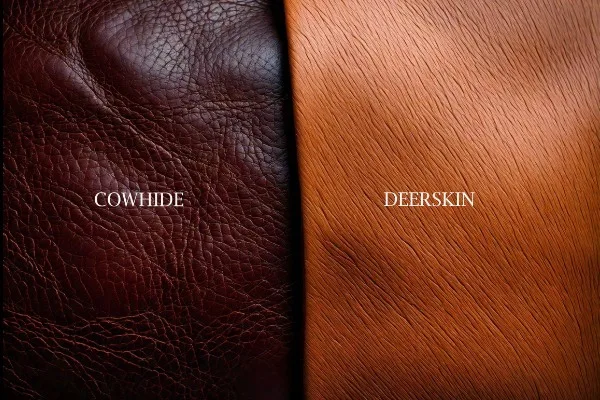
🧠 Expert Insight: The technical distinction in elk vs deer leather is density. Elk offers the softness of deer skin but with significantly higher tensile strength and thickness, making it viable for bags where deer skin would be too fragile.
3.4 Tanning Pathways and Wet-Dry Performance

Elk is famous for staying soft after wetting, but this requires specific chemical engineering. When leather dries, collagen fibers naturally bond together, causing stiffness.
- Chrome Tanning: The industrial standard. Chromium salts permanently space out collagen fibers, ensuring a stable, glove-soft temper that resists water and heat.
- Brain / Oil Tanning: A heritage method where emulsified oils lubricate fibers to prevent bonding. It offers extreme breathability but can bleed color when wet.
Sourcing Checklist:
- Tannage: Chrome (commercial stability) vs. Oil (heritage appeal).
- Fatliquor Level: Ask for higher oil content for maximum suppleness.
- Validation: Request water resistance data based on ASTM D2099 or similar physical standards.
3.5 Finish Types and Edge Behavior
- Aniline: Dyes penetrate without a topcoat, showcasing natural grain but leaving the hide vulnerable to staining. Best for premium touch.
- Pigmented: A polymer topcoat creates uniform color and scratch resistance but masks the unique fissured texture.
⚠️ Edge Warning: Because elk is fibrous, cut edges remain “fluffy” and resist burnishing. Specify folded (turned) edges or multiple layers of high-viscosity edge paint for a clean finish.
3.6 Product-Fit Examples
Match the property to the SKU:
- Gloves: The gold standard. Thickness provides protection; loose structure ensures dexterity without break-in.
- Soft Luggage: Ideal for custom duffle bags. The leather’s drape allows the bag to collapse slightly when empty, a desirable luxury trait.
- Backpacks: Requires structural support. Use elk for flaps or pockets, but reinforce back panels to prevent sagging under load. (See: Custom Backpacks).
- Rigid Goods: For items like suitcases, use elk only as a veneer over a rigid shell.
3.7 B2B Evaluation Workflow
Mitigate the risks of wild-harvested material with this protocol:
- Chemical Compliance: Confirm the tannery meets EU REACH restricted substances or California Prop 65 standards for lead/chromium.
- Graded Sampling: Order Grades A, B, and C to calculate realistic cutting yield (accounting for bullet holes or scratches).
- Pattern Testing: Test specific panel shapes against the hide’s stretch direction.
- Stitch Pilot: Run 50 units to test stitch-holding; specify a 3–4mm margin to prevent pull-through.
Visual Directive: Macro Photo Checklist
- Grain Close-up: Verify natural fissuring vs. print.
- Fold Test: Check for “loose grain” wrinkles.
- Scratch Test: Fingernail scratch to test finish durability.
- Wet-Dry Comparison: Side-by-side of dried strips to verify softness retention.
Key Benefits: Strategic Value of Sourcing Elk Leather
For product developers, elk leather offers a high-value alternative to the saturated cowhide market. It provides a rare intersection of extreme tactile softness and heavy-duty resilience, allowing brands to justify premium price points through superior material performance rather than artificial marketing.
Delivers Instant Sensory Appeal
Elk leather possesses a unique, sponge-like fiber structure that cowhide cannot replicate without heavy chemical processing. The Commercial Impact: This creates a “zero break-in” period. For gloves and lined accessories, the immediate comfort directly influences conversion rates and reduces returns associated with stiff, uncomfortable fit.
Engineers Superior Product Longevity
Despite its plush hand feel, the non-linear fiber network provides exceptional tensile strength. Elk leather durability outperforms standard deerskin in abrasion tolerance while retaining insulating properties, even when wet.
Creates Visual Differentiation
The natural grain creates immediate shelf separation. Unlike smooth, corrected-grain leathers, elk hide features a deep, pebbled texture that naturally camouflages minor scuffs. The Merchandising Angle: This supports a “rugged luxury” aesthetic that maintains visual value over years of use, eliminating the need for artificial distressing in production.
Validates a “Wild Harvest” Narrative
Sourcing nordic elk leather products allows brands to tap into a circular economy story. Hides are typically byproducts of necessary wildlife population management (hunting quotas) rather than industrial farming, converting potential waste into luxury goods.
🚀 Strategic Insight: Manage Yield Expectations Wild-harvested hides often feature natural scarring (thorn scratches, tick marks). Rather than cutting around them—which lowers yield—incorporate them. Market these markings as “signatures of authenticity” to validate the wild origin and protect your margins.
Challenges & Limitations: The Realities of Sourcing Wild Hides
While the tactile appeal of elk leather is unmatched, integrating wild-harvested material into a B2B supply chain introduces friction points that do not exist with standardized bovine leather. Sourcing elk requires a tolerance for irregularity and a rigorous approach to yield calculation.
Challenge 1: Surface Inconsistency & Scarring
Wild elk are not raised in protected environments. Consequently, hides inherently feature healed scars, insect bites, and scratch marks. For luxury brands requiring pristine, uniform panels, elk presents a significant obstacle. Designers face a binary choice: accept these marks as “signatures of authenticity” or face high rejection rates trying to cut around them.
Challenge 2: High Cutting Yield Loss
The economics of elk leather are often miscalculated during the RFQ phase. Hides are irregular in shape, often containing bullet holes or thinning at the belly. A low “cost per hide” is misleading; the usable yield is frequently 20–30% lower than bovine sources, driving up the true cost per square foot.
🛡️ Mitigation: Never rely on raw square footage pricing. Always request a marker efficiency test on a sample hide to calculate the true cost per usable unit.
Challenge 3: Procurement Volatility
Sourcing relies on managed hunting seasons rather than continuous industrial farming. This creates volatility in lead times, particularly for orders exceeding 1,000 units. Additionally, because wild animals have varying diets and genetics, maintaining consistent dye lots across different batches is statistically more difficult than with cattle.
Challenge 4: Regulatory Compliance
Labeling a material as a “byproduct” does not exempt it from international trade regulations. Buyers must verify supply chain safety:
- Chemical Safety: Tanning must comply with EU REACH restricted substances, specifically regarding Chromium VI limits.
- Regional Testing: Goods destined for the US often require California Prop 65 testing for lead and cadmium.
- Export Documentation: While North American Elk (Cervus canadensis) are generally not endangered, shipments may be flagged for USFWS verification to ensure they are not a protected sub-species.
Challenge 5: Structural Limitations
Elk leather has a “soft temper,” meaning it lacks the rigidity to support its own weight. If used for the body of a large travel bag without heavy reinforcement, the product will sag and lose its profile. It is best utilized for “slouchy” aesthetics or specific touchpoints (flaps and handles) rather than load-bearing bases.
If your design demands a rigid silhouette, specialized construction methods are required to counterbalance the leather’s natural softness.
Conclusion: Is Elk Leather Right for Your Production Run?
Ultimately, elk leather represents a specialized tier of material sourcing. It bridges the gap between the rugged durability of wild game hides and the luxury tactile experience of premium glove leather. Its signature fissured grain and inherent “spongy” softness make it unrivaled for comfort-first applications like moccasins and soft-structure travel bags.
However, because it is wild-harvested rather than farm-raised, it demands a supply chain strategy that anticipates yield variability and strict compliance standards. It is a material that rewards intention, not mass uniformity.
The Sourcing Verdict
Use this checklist to finalize your material selection:
- Choose Elk Leather If: Your priority is immediate tactile softness and thermal insulation, and your brand aesthetic can embrace natural character marks (scars and grain variations) as a sign of authenticity.
- Choose Cowhide If: Your product requires rigid structural support (standing up on its own), pristine surface uniformity across high-volume orders, or the lowest possible cost per usable square foot.
Elk is best positioned not as a universal replacement for bovine leather, but as a strategic differentiator for high-margin, heritage-focused collections.
Navigating the yield loss and technical constraints of wild hides requires an experienced manufacturing partner. To ensure your design is viable before committing to bulk material, request a swatch pack, spec review, and production feasibility estimate.
FAQs for Elk Leather
Q1. How does elk leather age compared to cowhide?
Elk leather develops a natural patina over time, deepening in tone and enhancing its pebbled surface. Unlike cowhide, which often shows creases or surface cracking when dry, elk leather maintains its suppleness thanks to its naturally high oil content. Regular conditioning accentuates this aged richness without stiffening the hide.
Q2. Is elk leather suitable for vegan or eco-conscious brands?
While not vegan, elk leather can align with eco-conscious values when sourced from regulated wildlife management programs. These hides usually come from animals harvested within population control initiatives, minimizing waste and supporting sustainable ecosystem practices. Transparency in sourcing documentation can strengthen a brand’s ethical positioning.
Q3. Can elk leather be machine-stitched, or does it require handcrafting?
Elk leather can be machine-sewn, but adjustments are necessary. Its soft temper and stretch require stabilized seams and slightly lower stitch tension to prevent puckering. For thicker grades (over 1.4 mm), an industrial walking-foot machine or leather needle set is recommended for consistent stitch quality.
Q4. How resistant is elk leather to temperature extremes?
Elk leather performs exceptionally well in both cold and moderate heat conditions. Its porous structure traps air, helping it stay pliable even in freezing climates. Extended exposure to direct heat, though, can still dry out the oils in the fibers—periodic reconditioning prevents that issue.