
Three garment bags in green, dark red and black hanging from a rail inside a wooden wardrobe, a brown suit jacket on a hanger beside them, lit by window light across a blue wall
Full-Height Zip · Reinforced Hanger Neck

Custom Garment Bag Manufacturer Breathable in Store, 10,000 Cycles on the Zip.

A garment spoils in a cover two ways: damp trapped inside a sealed bag that mildews a wool suit over a season, and a long zip that parts at the hanger neck after a few hundred openings. The cloth settles the first — a grade that breathes for storage, a barrier for a wet trip — and the closure settles the second.

  • 0.1–0.5 mmcover material, thin to heavy-duty
  • 72 hwater resistance, barrier grade
  • 100pieces minimum, any construction

Garment bag types

Cover Formats, Cut to the Garment

The garment bag formats this floor builds most — a folded travel carrier, a clear laundered-return cover, a long bridal bag, a printed economy cover. Each carries its own pattern. A shape that is not here is still workable: the pattern is drafted from a sketch or a reference cover the same way.

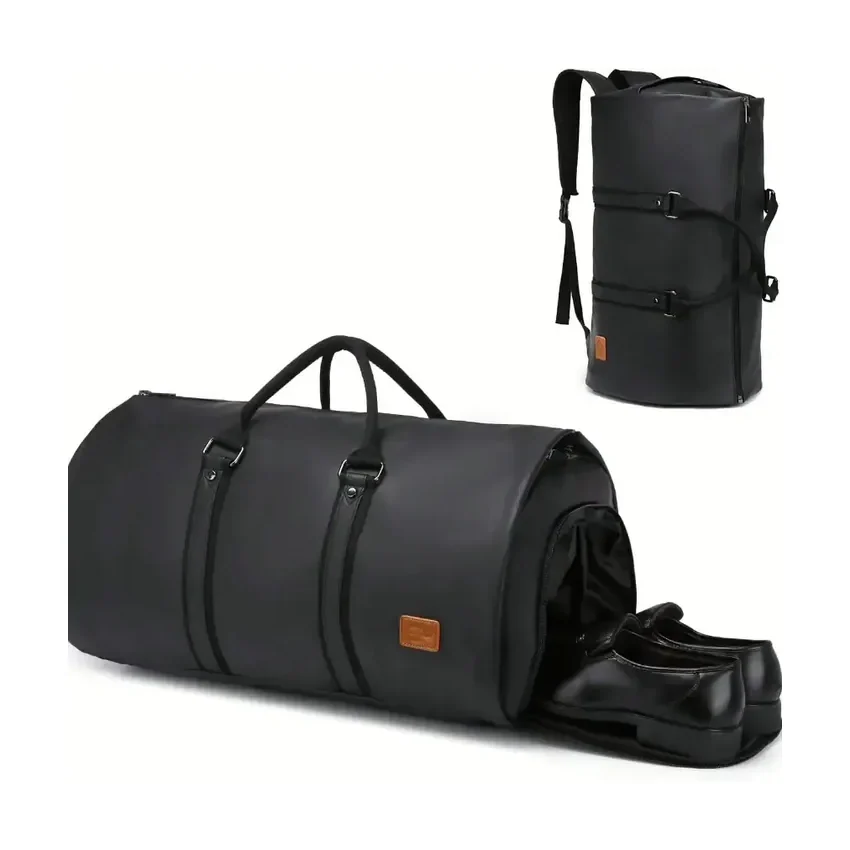
  • A black leather-look travel garment bag rolled shut on a carry handle, with a matching backpack behind it and a pair of shoes in the open end

    Travel Garment Bag

    • A carrier that rolls into a case.
    • Shoes and a suit share one bag.
    • A split end keeps them apart.
    • A carrier that rolls into a case.
    • Shoes and a suit share one bag.
    • A split end keeps them apart.
  • A rail of clear-fronted garment covers holding a range of suits and coats, each on its own hanger

    Storage Garment Bag

    • A breathable cover for a rail.
    • Sealed film mildews wool.
    • Air moves through, so nothing sours.
    • A breathable cover for a rail.
    • Sealed film mildews wool.
    • Air moves through, so nothing sours.
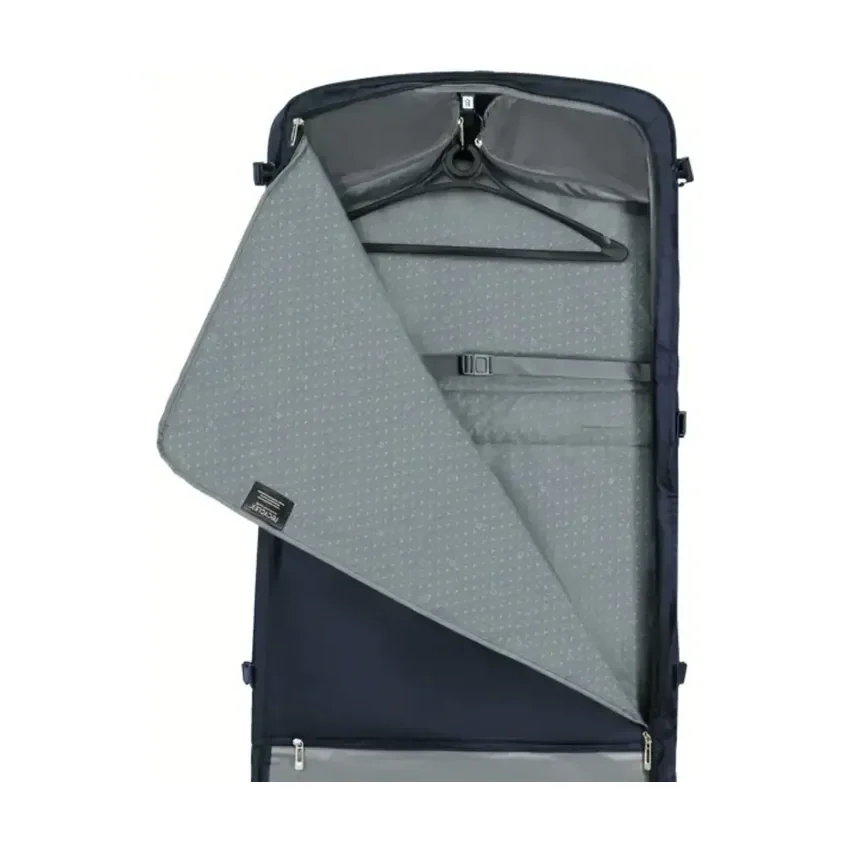
  • A grey packable garment bag shown open, its folded interior and a suit hanger exposed

    Professional Garment Bag

    • Packs flat once the suit is out.
    • A loose cover lets the suit slide.
    • An interior strap holds it.
    • Packs flat once the suit is out.
    • A loose cover lets the suit slide.
    • An interior strap holds it.
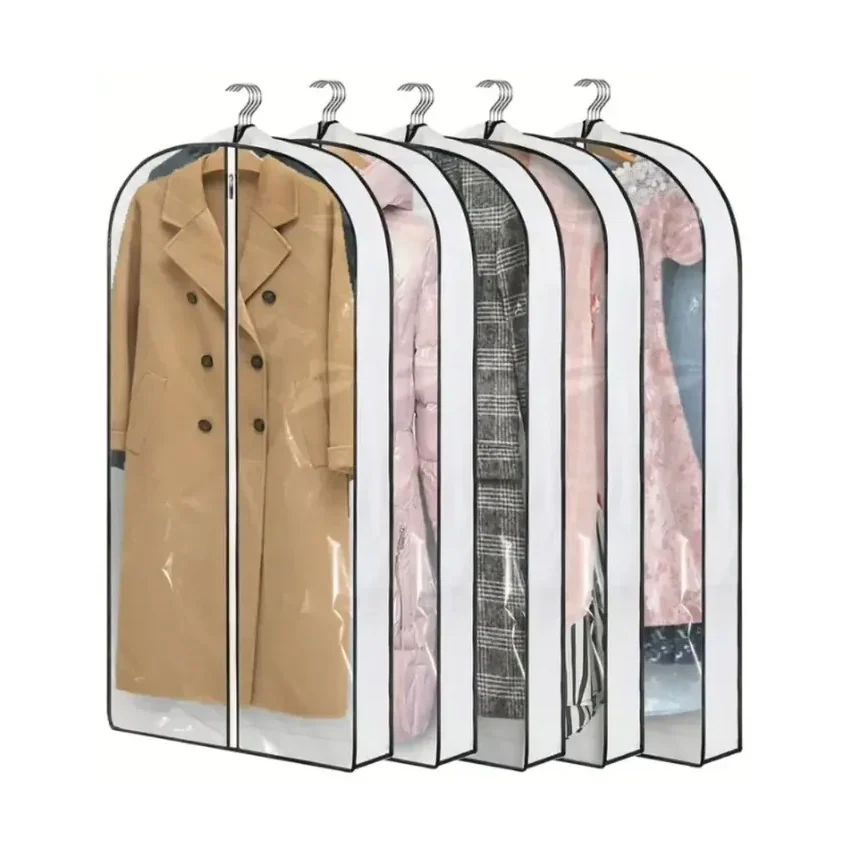
  • A run of clear vinyl garment covers, each with a full-length zip down the front

    Standard Clear Vinyl Garment Bag

    • A transparent vinyl cover.
    • One build, no pattern change.
    • A clear front reads at a counter.
    • A transparent vinyl cover.
    • One build, no pattern change.
    • A clear front reads at a counter.
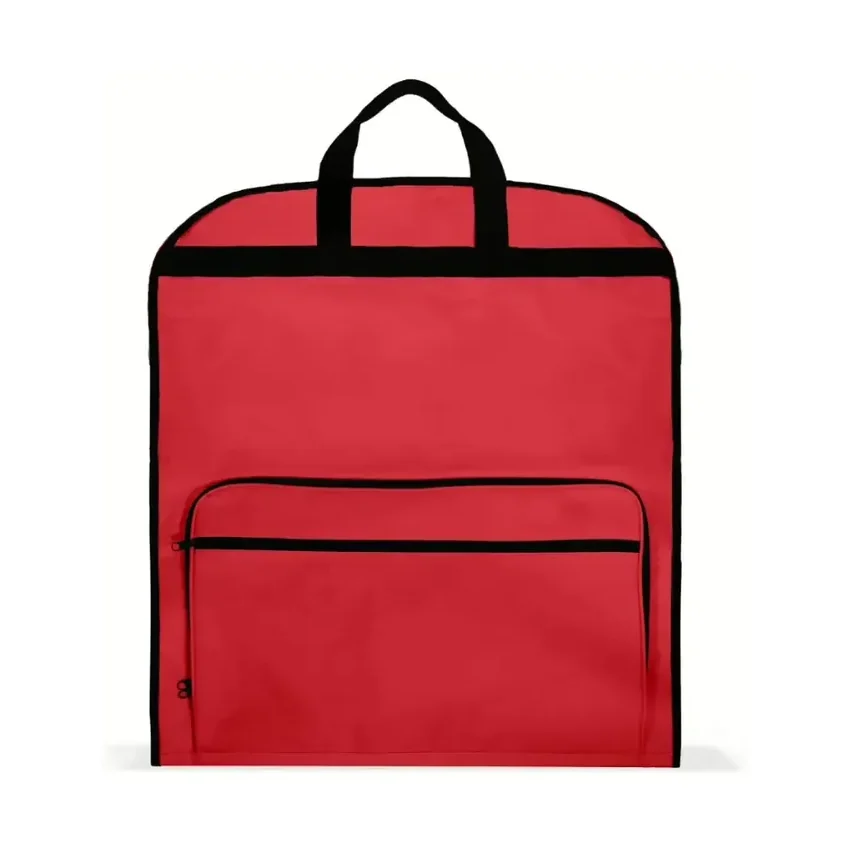
  • A red non-woven garment bag with a zipped front pocket and a carry handle

    Economy Garment Bag

    • A low-cost non-woven cover.
    • Retail still needs a printed cover.
    • One colour keeps the run cheap.
    • A low-cost non-woven cover.
    • Retail still needs a printed cover.
    • One colour keeps the run cheap.
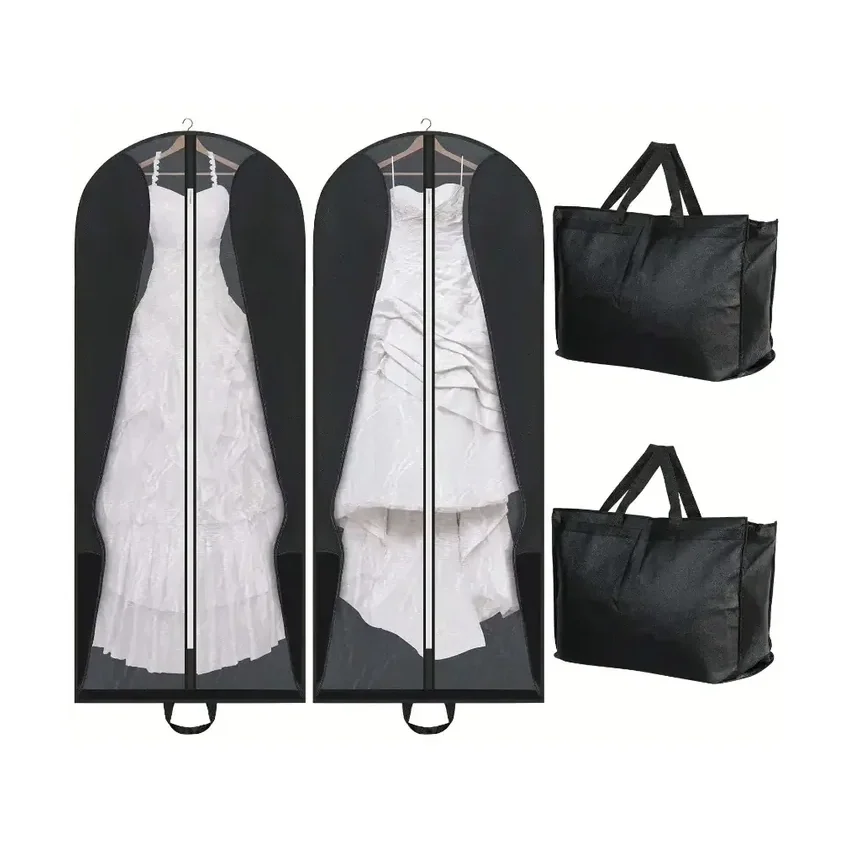
  • Two long white gown covers holding bridal dresses, a three-quarter-length and a full-length gown, with two drawstring pouches beside them

    Wedding Gown Garment Bag

    • A long cover cut for a train.
    • A tight bag crushes a skirt.
    • A deep gusset lets it hang free.
    • A long cover cut for a train.
    • A tight bag crushes a skirt.
    • A deep gusset lets it hang free.
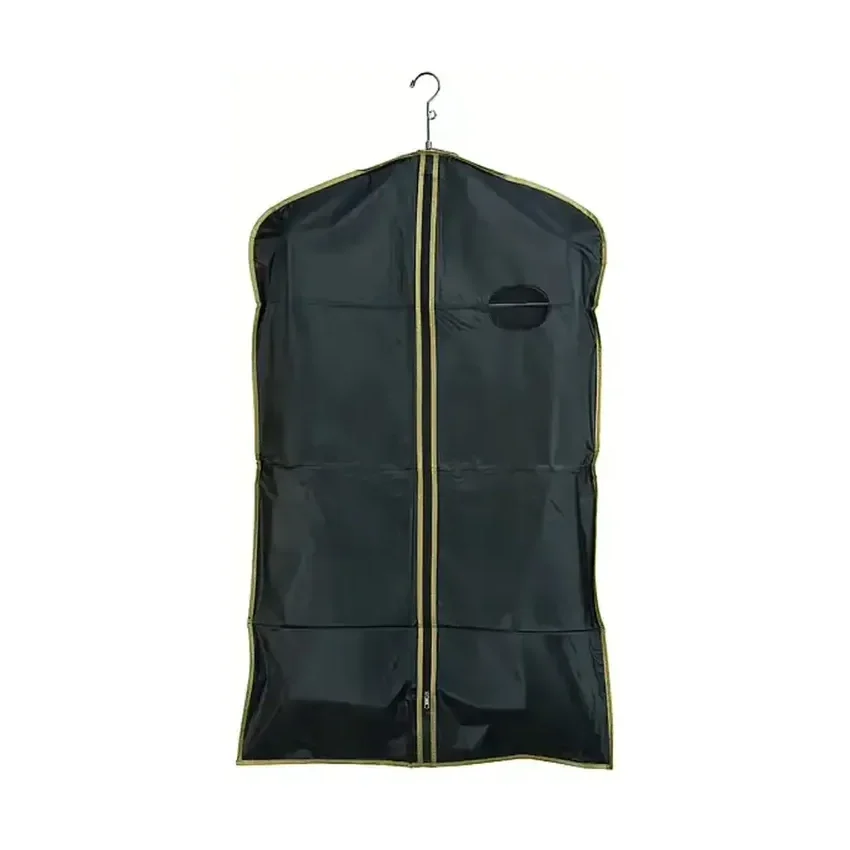
  • A black vinyl garment cover with a full-length zip, a top carry handle and a mesh front pocket

    Black Vinyl Garment Bag

    • An opaque black vinyl cover.
    • A clear cover shows any crease.
    • The garment stays hidden.
    • An opaque black vinyl cover.
    • A clear cover shows any crease.
    • The garment stays hidden.
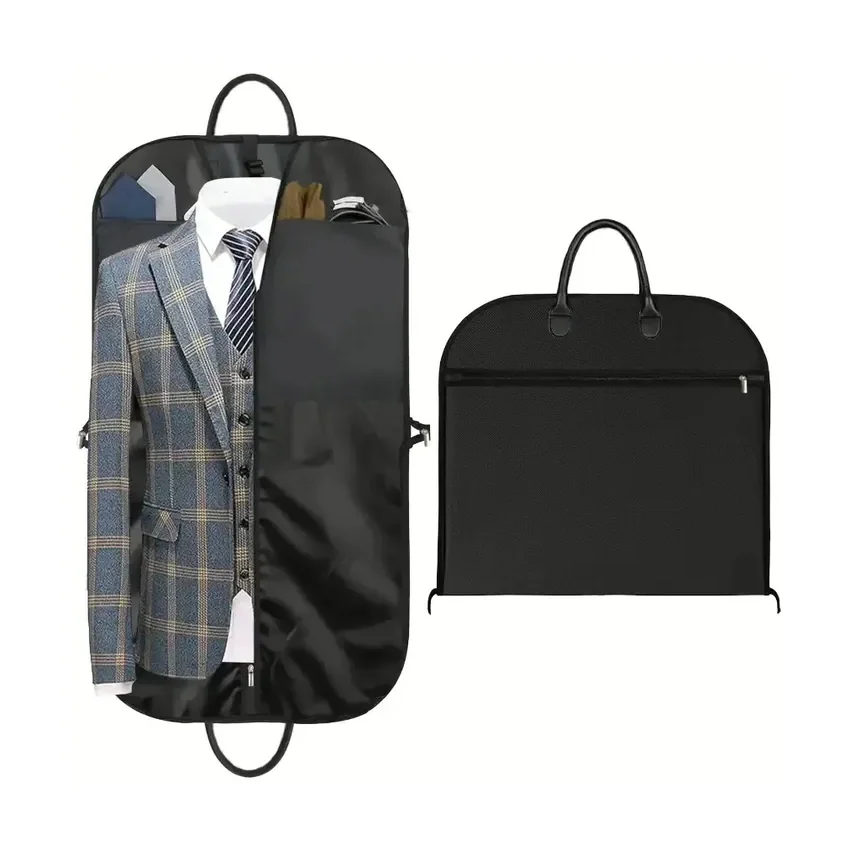
  • A luxury suit cover in black quilted cloth holding a check suit and tie, with a plain carry case alongside it

    Custom Luxury Garment & Suit Cover Bag

    • A quilted suit cover for display.
    • A plain cover looks cheap on a shelf.
    • Woven label, print or emboss.
    • A quilted suit cover for display.
    • A plain cover looks cheap on a shelf.
    • Woven label, print or emboss.
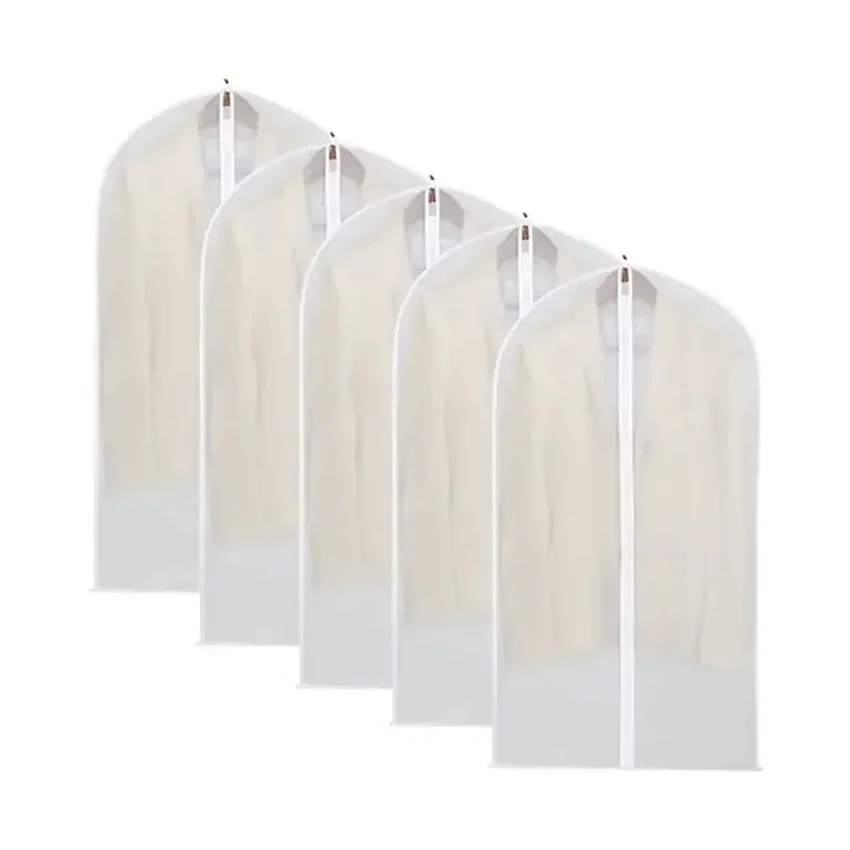
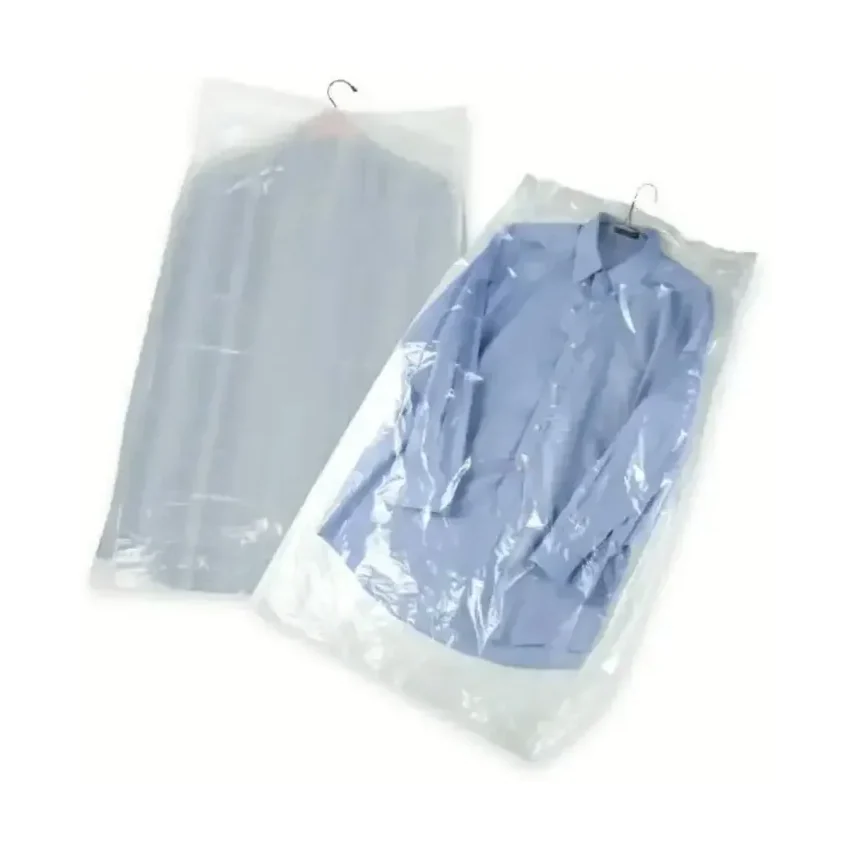
  • Two thin polyethylene garment covers, one empty and one over a folded shirt, showing the transparent film

    Polyethylene Garment Bag

    • A thin transparent PE film.
    • The cheapest cover made.
    • A shirt or a knit, never a suit.
    • A thin transparent PE film.
    • The cheapest cover made.
    • A shirt or a knit, never a suit.

What the cover does to the garment

Stored Wool Needs Air, Never a Seal

A cover that keeps a garment for a season is doing a different job from one that carries it through a rainstorm. Both are sold as garment bags, and the wrong one is a slow failure: wool held under a sealed film for months takes on the damp it was meant to be protected from.

Breathe

A breathable cover, for a garment that is stored

The grade that lets a garment sit for a season without spoiling.

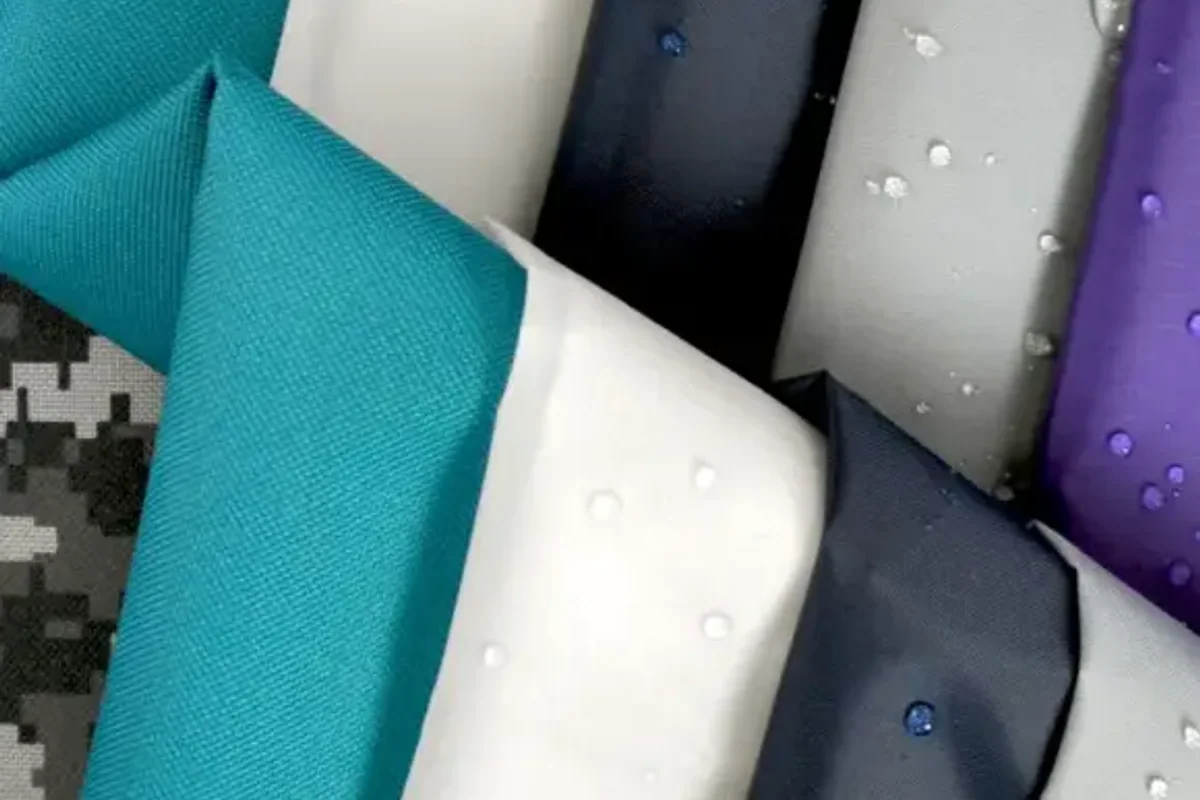
  • Non-woven PP, cotton, canvas and RPET all pass air through the cloth.
  • Air through the wall carries moisture vapour out with it, which is what holds mildew off wool, silk and a stored uniform.
  • The trade-off is water: a breathable cover sheds a splash and soaks a soaking.
Barrier

A barrier cover, for a garment that travels

The grade that closes a wet journey out.

  • PEVA and PVC film are non-breathable by construction — that is the point of them.
  • The film holds a wet journey out, so a cover survives a rain-soaked transfer.
  • The trade-off is air: sealed over wool for months it traps the damp it was meant to keep off.

Closure and stress points

The Long Opening Is Where a Cover Gives Out

A garment cover is a bag with one seam and one hanger neck doing all the work. The zip runs the full height, so it is the longest closure on any bag this floor makes, and the neck carries a coat or a gown from a single opening — the two places a cover is judged on after a year of use.

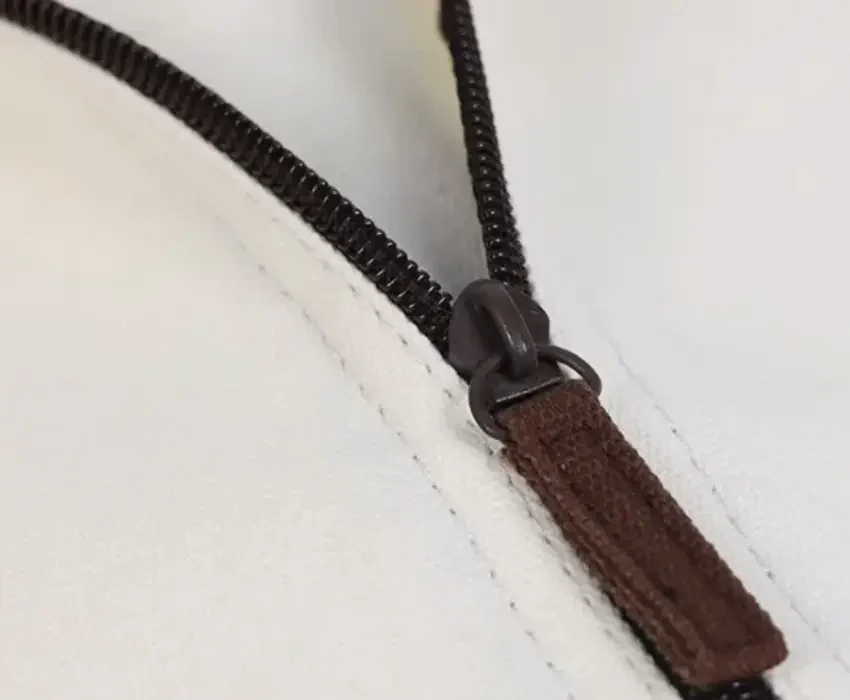
A close view of a full-length zip running down a cream cotton cover, the coil and the pull set into the cloth

Zip grade against the cycles it will take

#3 nylon coil
Lightweight and budget
A short cover opened now and then, printed in one colour.
#5 nylon coil
The suit-shop standard
The workhorse for a coat, a uniform or a dress cover in daily handling.
#8 heavy-duty coil
Travel and gown
Rated to 10,000 opening cycles on a full-length cover carrying weight.
Metal
A luxury finish
A foil to the cloth on a shelf build — heavier, and read as jewellery, not as a workhorse.

Where a garment cover fails first

01

The hanger opening

The single point carrying the whole garment,and the first place a cover tears.

The fixA metal grommet set through a backing patch bonded behind the neck, so the load spreads into the cloth instead of cutting a slot in it.

02

The zip ends

Where the coil meets the panel and the track peels away under load.

The fixThe tape is run past the gusset and both ends are closed with a patch, so the track cannot start a tear.

03

The handle or strap root

A folded cover hangs from a handle,and the root pulls out when it is filled.

The fixBar-tacks at the root over a reinforced patch, so the pull lands on the backing and not on the seam line.

04

The top fold on a plastic cover

Film fatigues where it creases at the hanger, and a tired fold splits.

The fixThe film is run a grade heavier at the hanger and the top fold, which is a local change that costs little per unit.

Size and structure

Cut to Length, Depth to the Fold

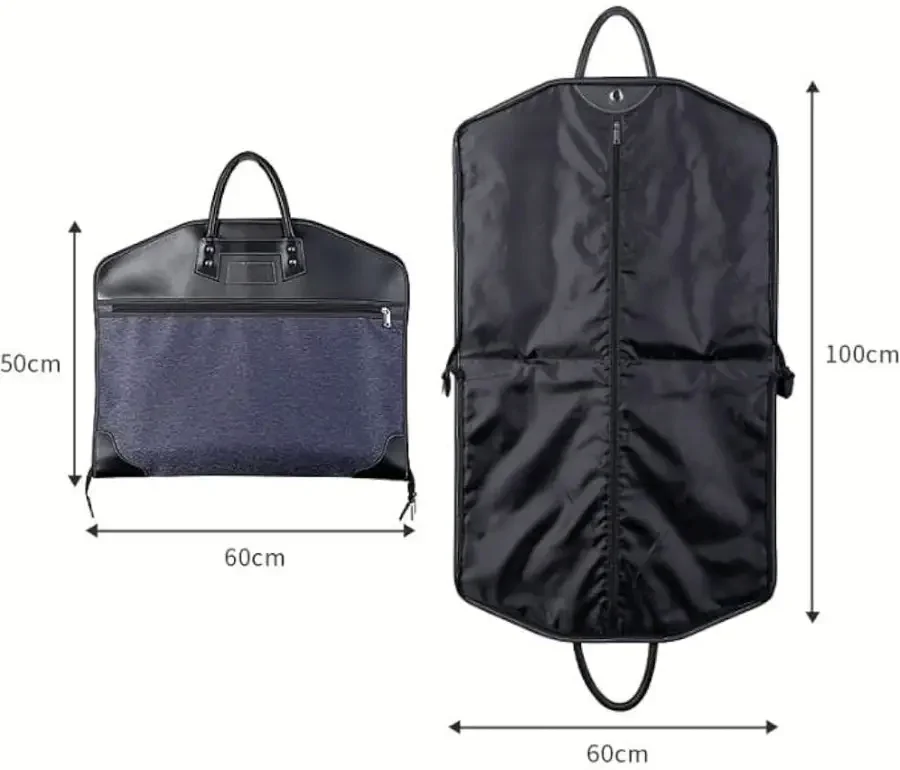
Two numbers and a shape specify a garment bag: how long it has to hang, how deep it has to sit, and whether it hangs flat or folds into a case. A suit, a long coat, a gown and a uniform sit in their own band, and the gusset is what tells a flat cover and a gusseted one apart.

40–45 inSuits, jackets, short coatsFlat, or a shallow gusset
54–60 inLong coats, standard dressesA shallow gusset for a layered item
65–72 inBridal gowns, evening dresses, bulky buildsA deep gusset for a train and a full skirt
Half or tri-foldSuits carried as luggage, uniforms, a multi-piece setA folded carrier, not a flat cover
Under 40 inChildren’s wear, dance costumes, sample garmentsFlat, closed, often with a name slot
Two garment covers shown with their dimensions marked — a flat carrier measured 60 by 50 cm and a long cover measured 60 by 100 cm

A flat cover

Two panels and a full-length zip. The lightest and cheapest build, right for a garment that hangs alone.

A gusseted cover

Side and base depth so a full skirt or a padded coat sits without being crushed. Depth is set by the garment, not by a stock size.

A folded carrier

A half-fold or tri-fold in Oxford or a heavy non-woven, with a handle, an internal strap to hold the fold, and a zip a case can take.

Materials, branding and packaging

Cloth, Mark and the Pack

What a garment bag is cut from, what it is marked with, and what it ships in — three decisions made in that order, and chosen together so a range reaches the customer looking like one.

Fabrics

Material Options

Cloth is most of what a cover costs, so the fabric is the price and the brief at once. These are the families a first run draws from — what a family is, and where it earns its cost.

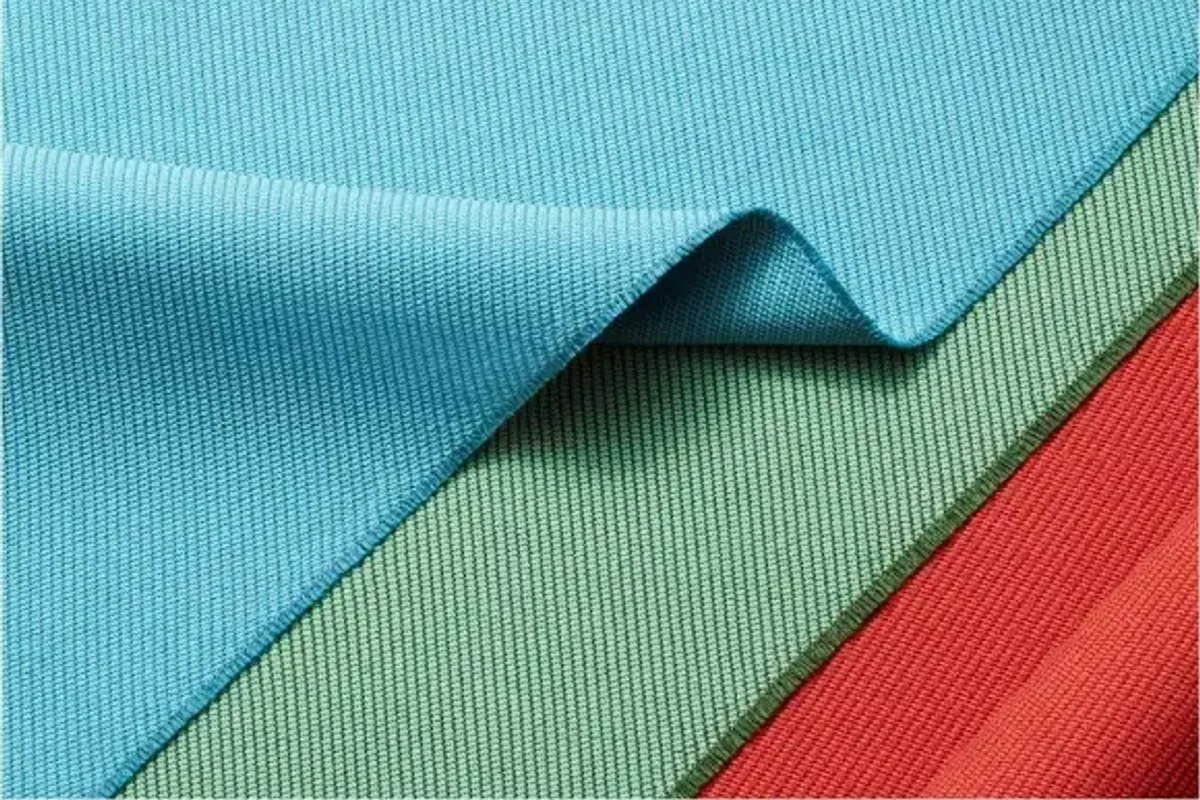
  • A close view of pale blue Oxford cloth showing its basket weave
  • Woven

    Oxford Cloth

    • A woven shell built for weight and travel
    • Rated in denier — 210D through 600D
    • The shell for a cover that carries a garment inside a case
  • Woven

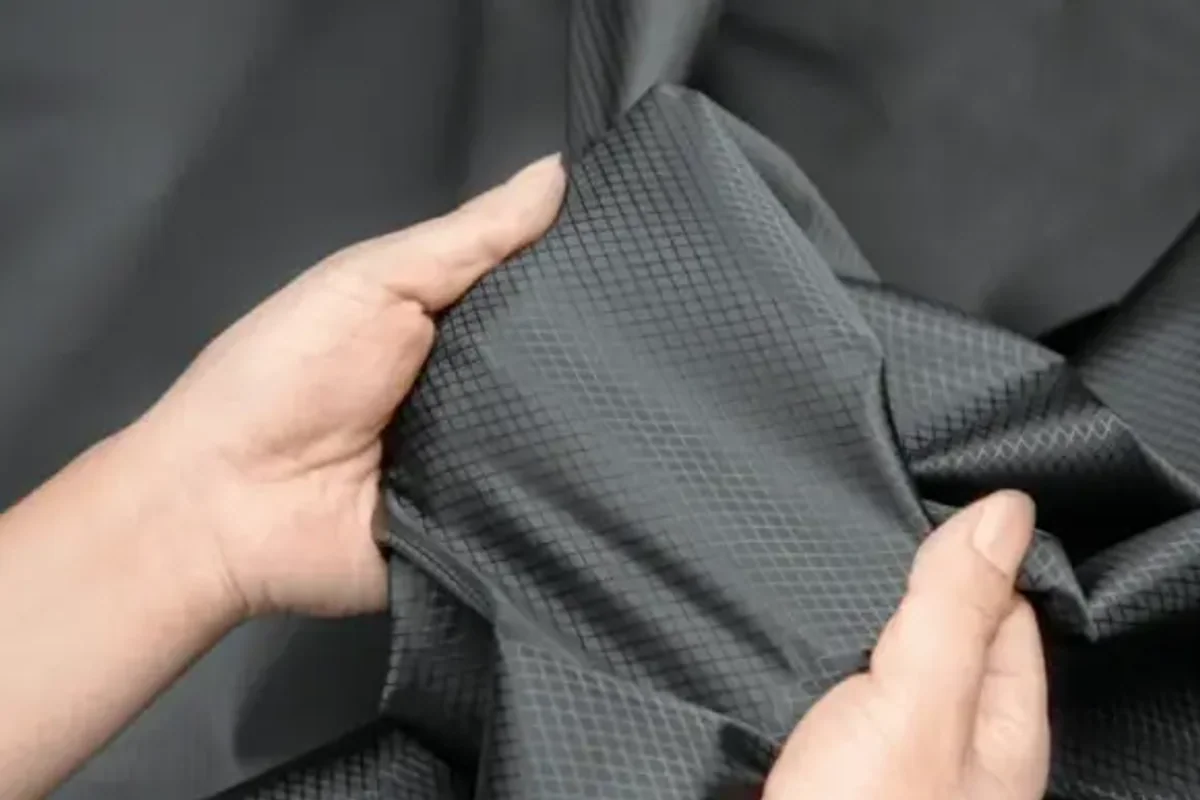
    Nylon

    • The lightest of the woven shells
    • Abrasion-resistant for repeated travel
    • Packs down small when the cover is stowed
  • Synthetic

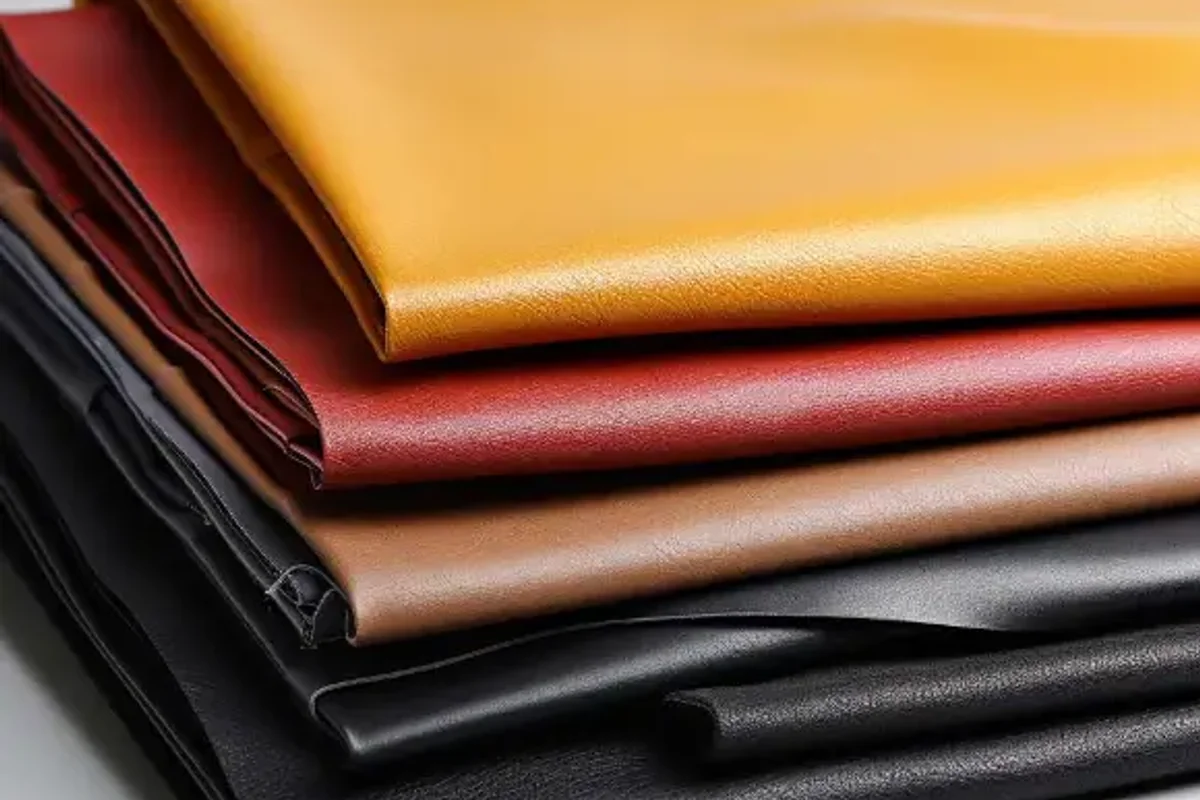
    PU Leather

    • A smooth, uniform face for a premium presentation
    • Embossed or plain; takes a foil or a raised patch
    • Wipes clean, where a cloth cover stains
  • Film

    PEVA

    • A barrier film that sheds water off a wet trip
    • Light and flexible, sealed with a full-length zip
    • Non-chlorinated — the cleaner film beside clear vinyl
  • Recycled

    RPET

    • Woven from recycled PET, for a sustainability claim
    • Same handling and finishing as virgin polyester
    • Backed by a GRS-certified supply
  • Natural

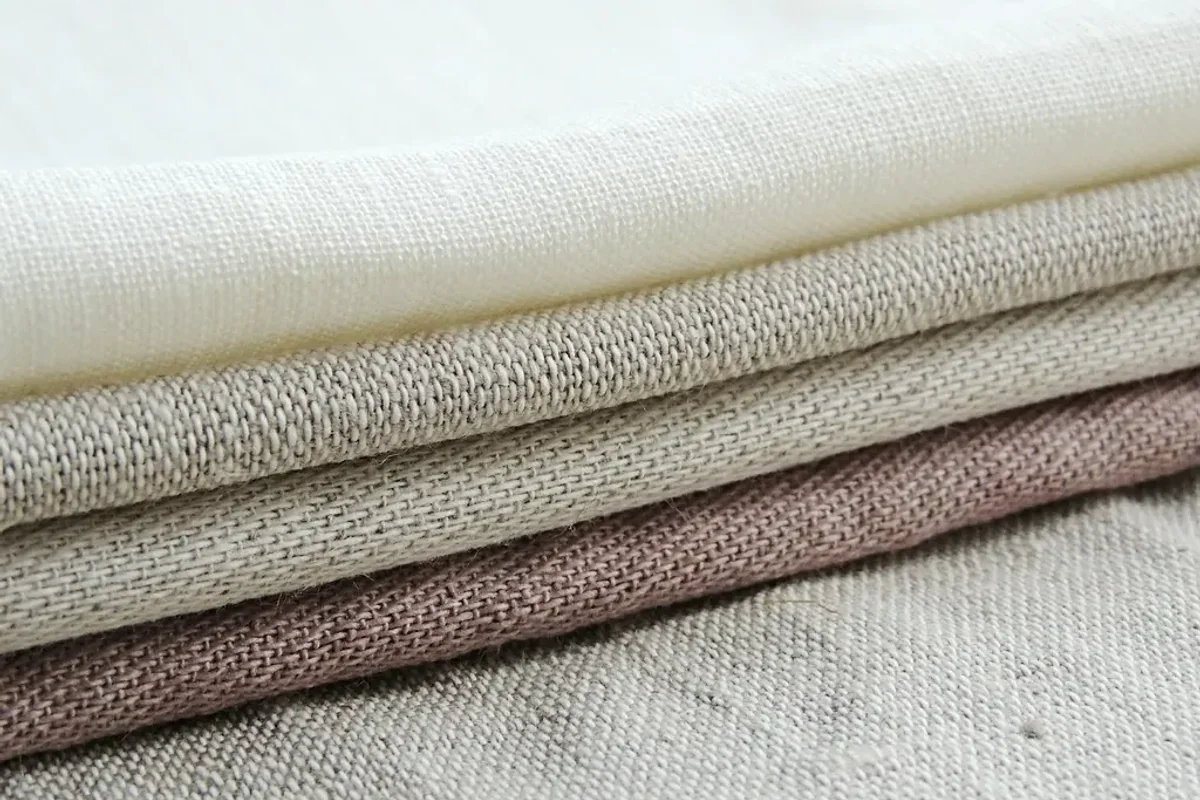
    Linen

    • A textured natural face for a refined cover
    • Breathable, for a garment stored long
    • Takes a woven label or a tonal print
  • Natural

    Cotton

    • Breathable enough to store a suit for a season
    • Soft hand; takes a screen print or an embroidered mark
    • Washable, so it is bought for repeat use
  • Synthetic

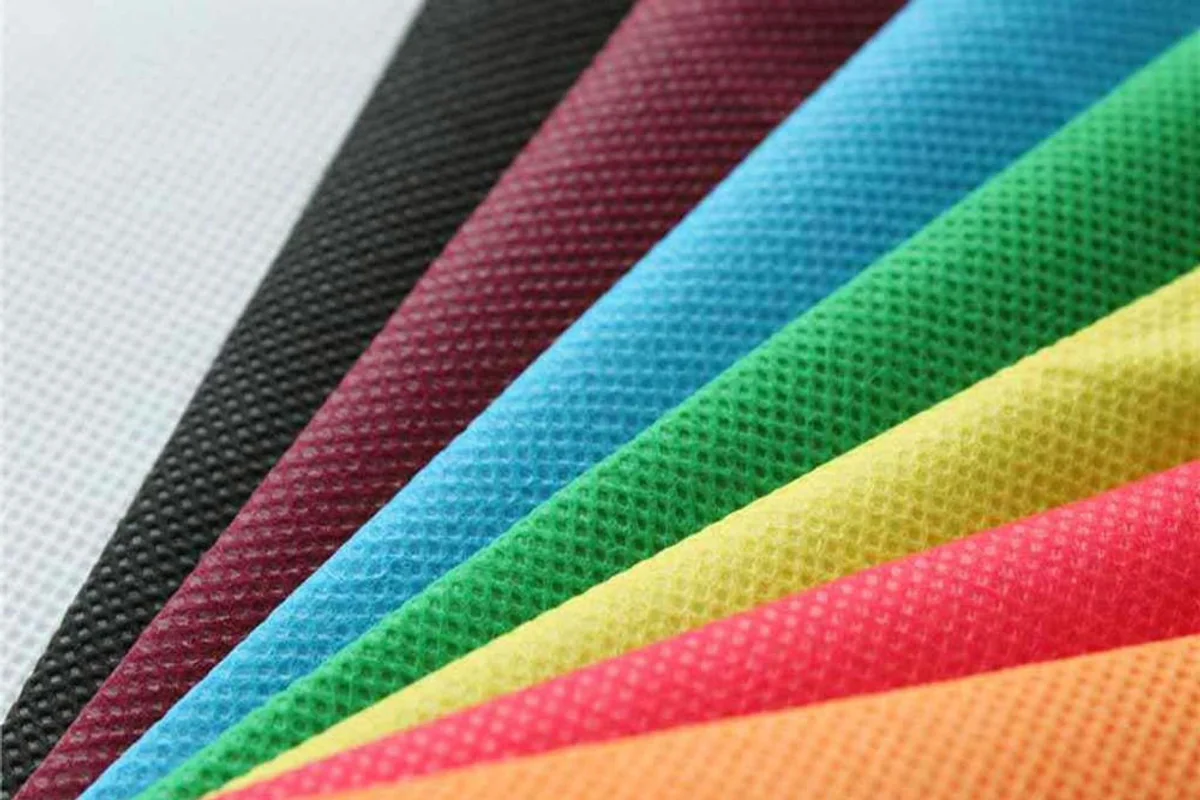
    Non-woven

    • The lowest-cost cover for retail and one-trip protection
    • Light, but holds a crease and a one-colour mark
    • Bought by the thousand for laundered return covers
  • Synthetic

    Polyester

    • Light and hard-wearing for everyday use
    • Takes a heat-transfer print or a woven label
    • A step up from non-woven where the cover is reused

Branding

Logo Printing & Branding

The mark is chosen against the life the cover leads, not the swatch book — what it survives on a folded cover for months, and what it costs to run.

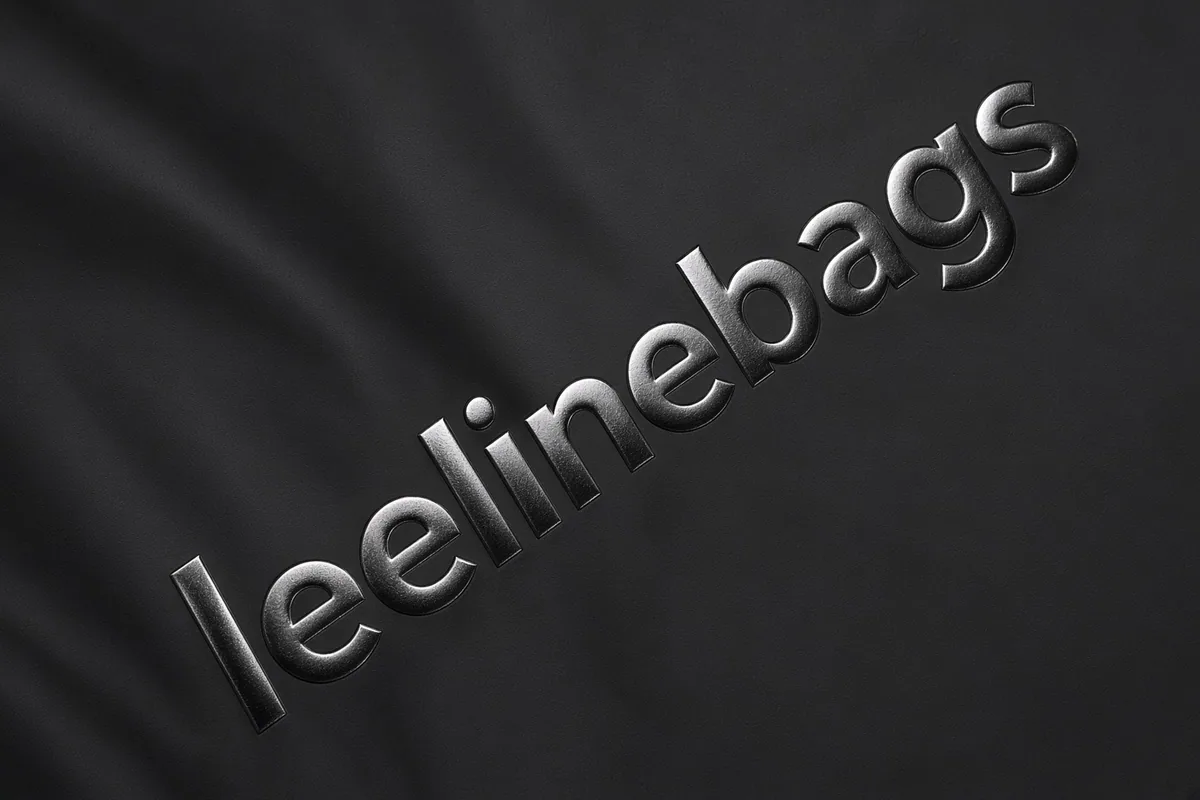
  • A raised metallic leelinebags wordmark printed on a dark coated fabric
  • Print

    Screen Printing

    • A solid-colour mark, cheapest at volume
    • Right for a one or two-colour logo
    • Sits on the flat face, off the crease line
  • Stitch

    Embroidery

    • Thread to 0.5 mm, raised and sewn
    • Reads as tailoring on a cotton or canvas cover
    • Needs a stable cloth — it can pucker a thin non-woven
  • Stitch

    Woven Labels

    • Sewn in, so it outlasts the cover
    • Carries fine detail, a name and a care line
    • The usual answer for a laundered cover
  • Print

    Heat Transfer Printing

    • Up to eight colours and fine detail
    • Right for a photographic or multi-colour crest
    • Sits on the cloth, so it lifts first at the fold on a plastic cover
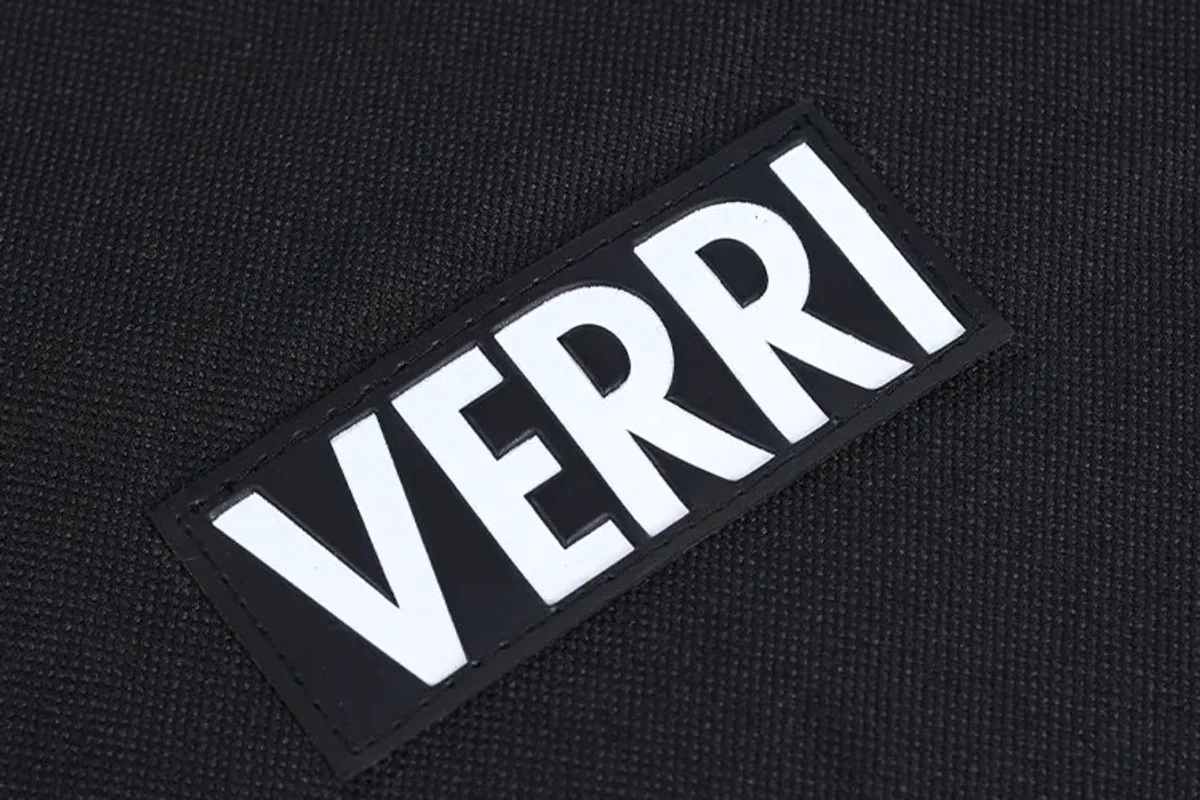
  • Patch

    Rubber & PU Patches

    • A raised, dimensional badge
    • Moulded or embossed to shape
    • Sewn or heat-set onto the panel
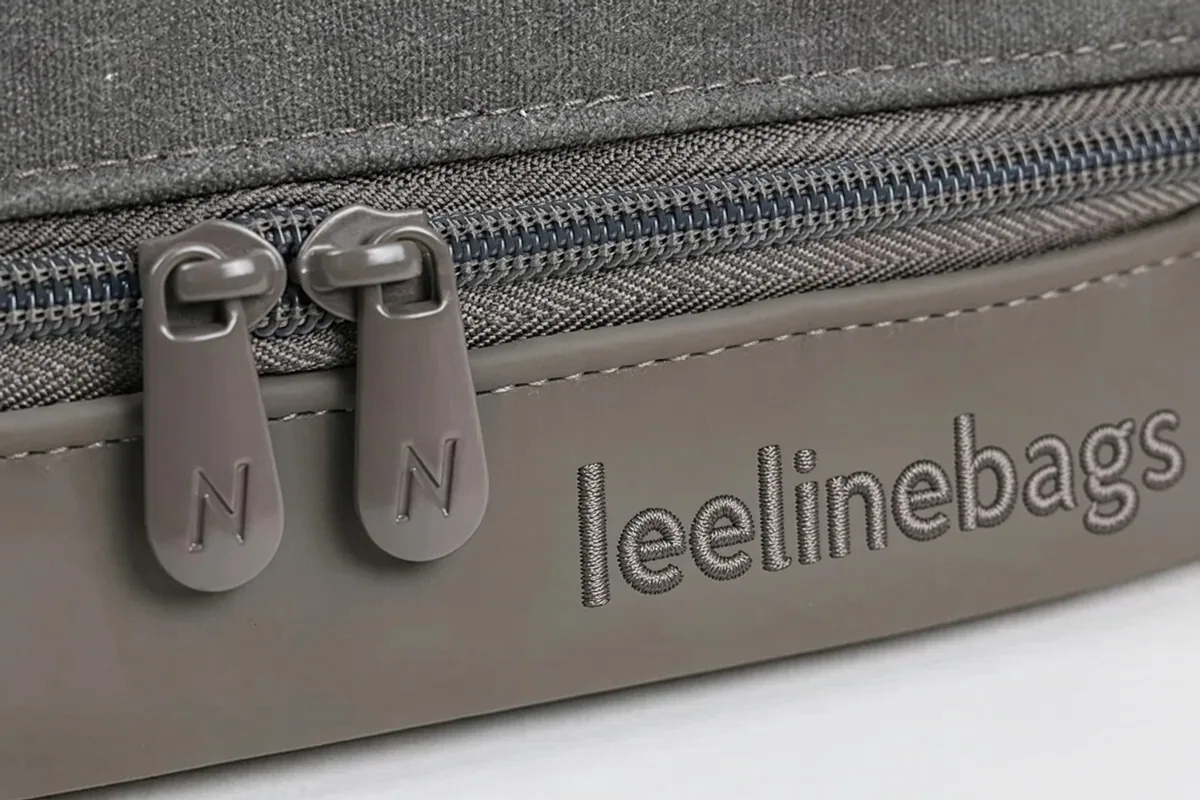
  • Hardware

    Custom Zipper Pulls

    • The pull, cut to the brand’s own shape
    • Metal, rubber or cord, with the logo set in
    • A small mark that sits in the hand whenever the cover opens

Packaging

Packaging Solutions

A cover rarely ships on its own. Here are the boxes, bags and details that carry it to the customer, ordered to one brand sheet so the range arrives as one.

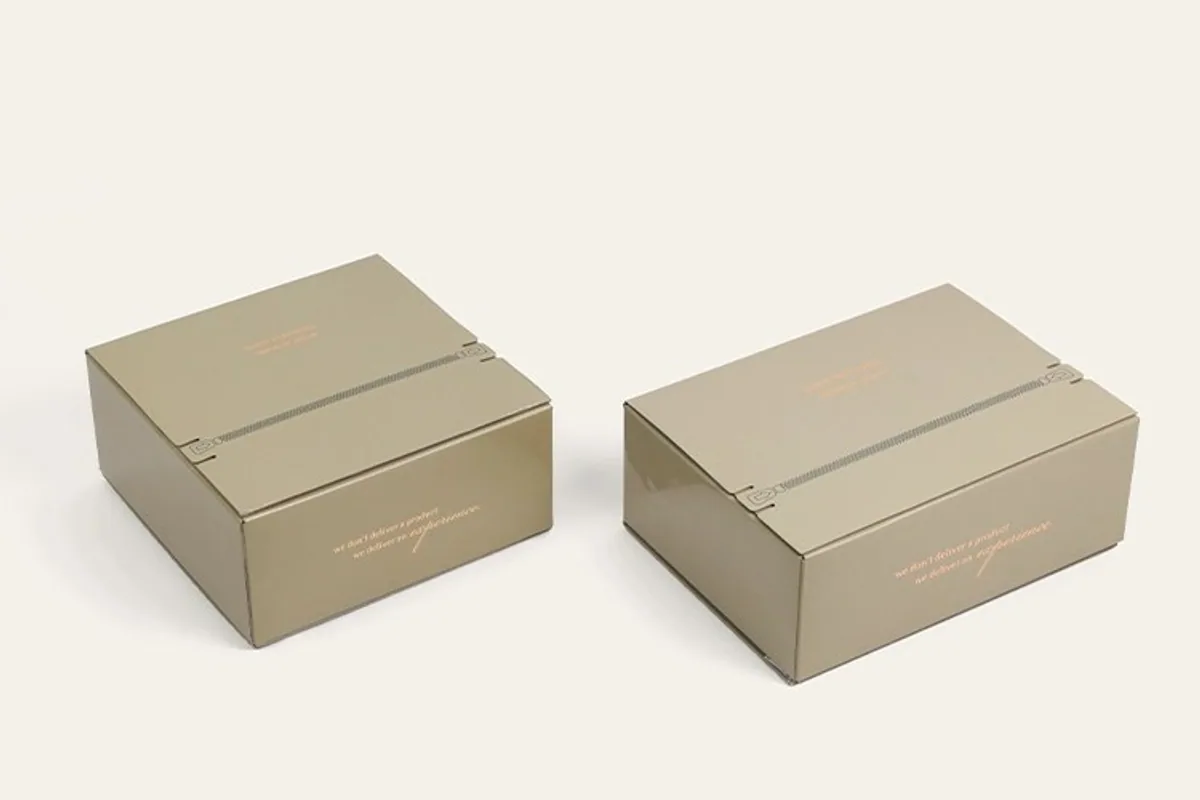
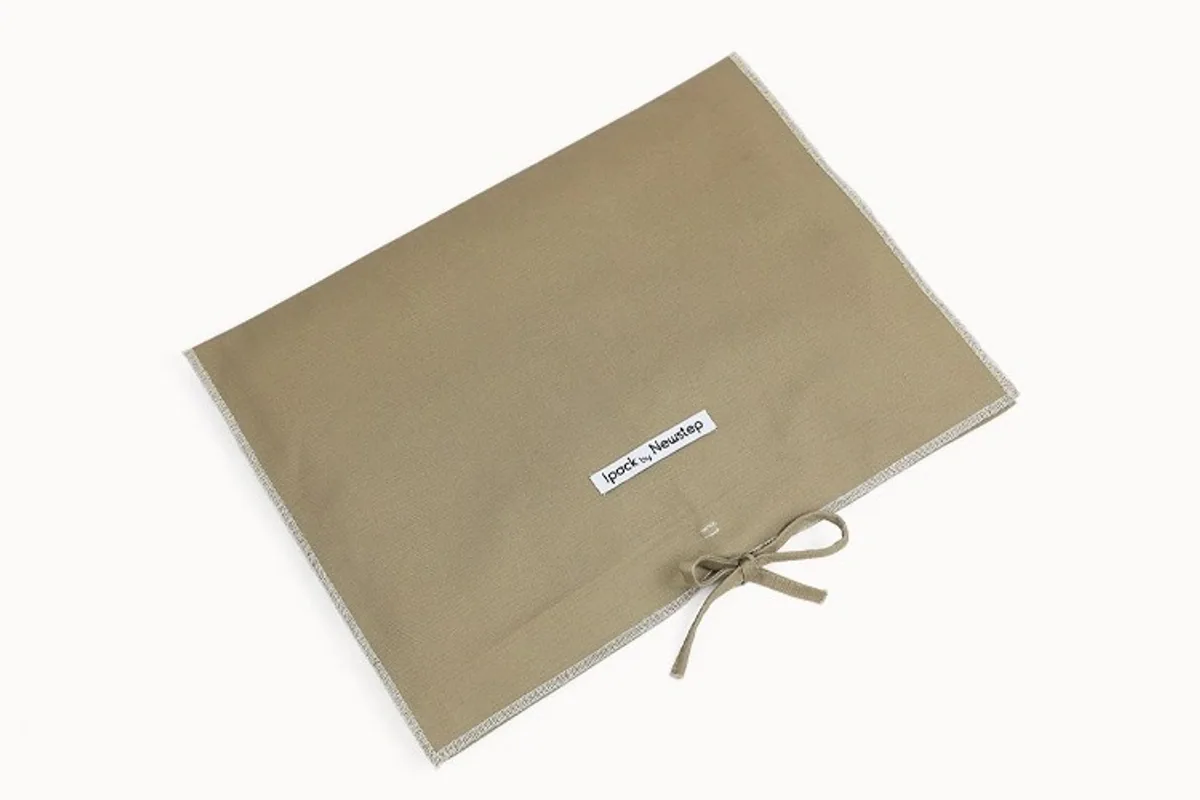
  • Custom rigid boxes and a luxury packaging set
  • Box

    Garment Boxes

    • Rigid, printed boxes for retail and gifting
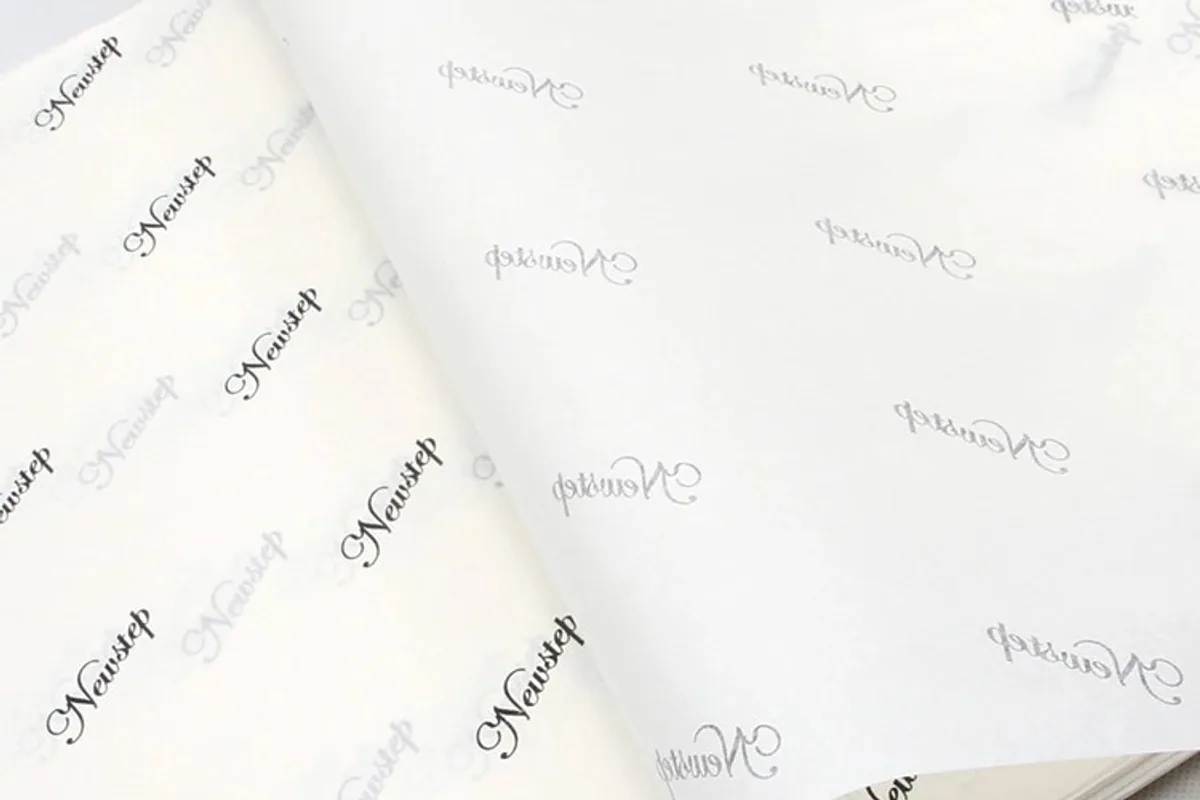
    • Tissue, insert and sleeve matched to the box
    • Built to the garment’s folded size
  • Box

    E-commerce Boxes

    • Corrugated and foldable, for the post
    • Printed inside and out for the unboxing
    • Flat-packed, so a stock run stores small
  • Bag

    Paper Bags

    • Paper carrier bags for boutiques and events
    • Rope, ribbon or die-cut handles
    • Finished to match the box and the cover
  • Pouch

    Dust Bags

    • Drawstring or flap pouches
    • Cloth or non-woven, for shoes, bags and small goods
    • The low-cost layer inside a box
  • Detail

    Packaging Accessories

    • Tissue, ribbon, tags and seals
    • The printed details that finish the pack
    • Ordered to one brand sheet with the box
  • Bag

    Cotton Bags

    • Cotton carriers for retail and promotions
    • Printed or embroidered with the mark
    • Reused by the customer, so the brand travels
  • Bag

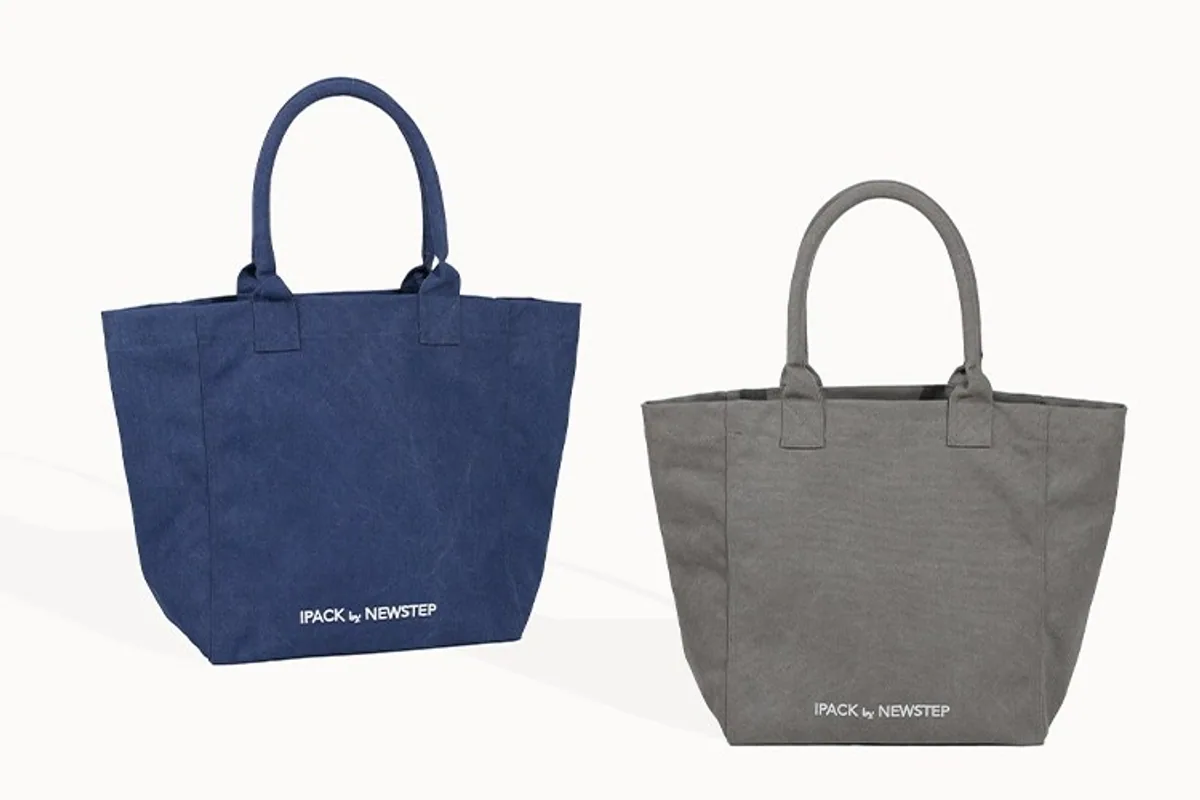
    Tote Bags

    • Woven totes for events and campaigns
    • Cut and handle length set to the use
    • The cheapest reusable carrier in the set
  • Bag

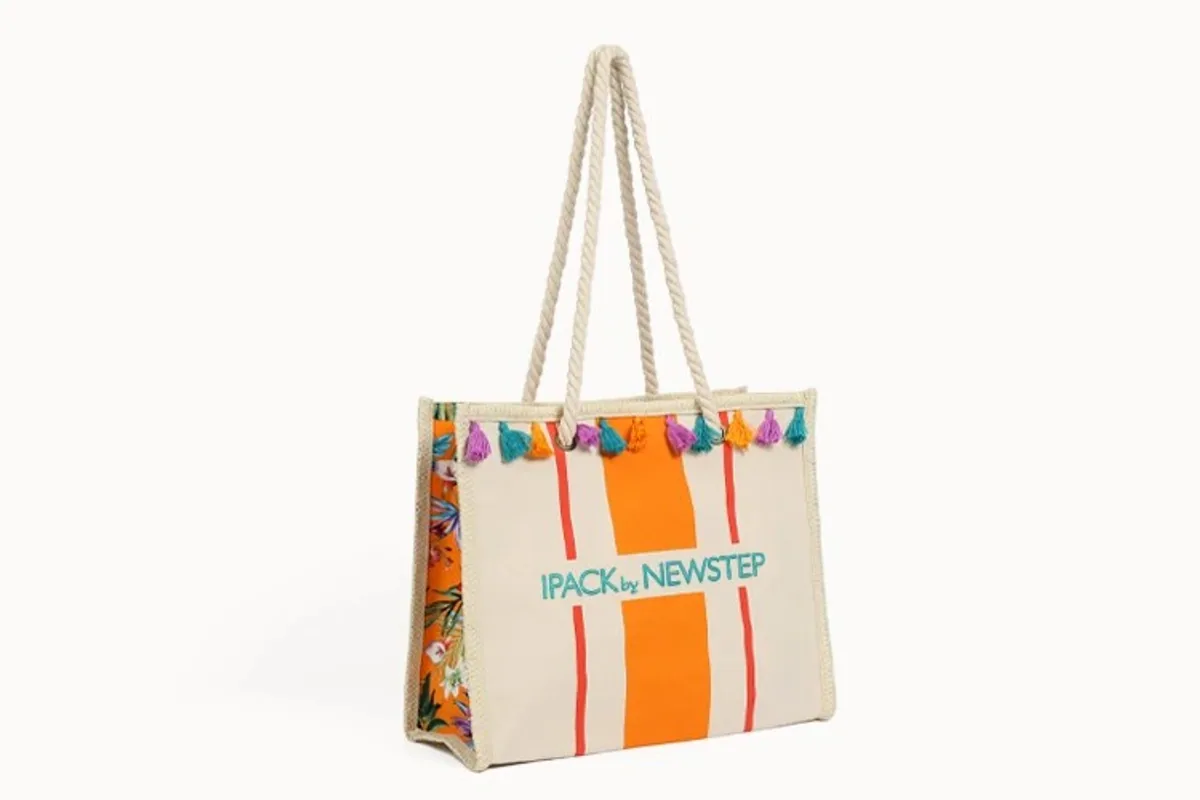
    Beach Bags

    • Roomier carriers for swim and resort
    • Water-friendly shells and linings
    • Printed for a seasonal drop

Acceptance

Accepted to a Number, Drawn to a Plan

A cover is passed on a defect map the buyer agrees before the run, not on an inspector’s mood on the day. A garment cover sits against clothing for months, so the levels here matter more than the price of the cloth.

Class / AQLWhat lands in it
Critical0.0A broken needle left in the cloth, a sharp exposed grommet edge, chemical residue past the signed limit. A critical stops the lot; nothing ships.
Major2.5A zip that jams under load, a hanger grommet off centre, a mark in the wrong place, a colour outside the signed shade.
Minor4.0A thread tail over three millimetres, a crease line down a panel, a fold in the binding tape that would brush out in the hand.

The checks a cover runs through

  1. 01Incoming cloth is checked against the signed swatch under a light box before it is cut.
  2. 02Panels are cut and bundled by size, with a card that travels with them to the line.
  3. 03Seams, the zip setting and the grommet are checked inside the run, not saved for the end.
  4. 04Zip, pull and grommet are function-tested on the finished cover against the approved sample.
  5. 05The finished lot is drawn to the sampling plan the contract names and measured to tolerance.
  6. 06Packed covers are checked against the buyer’s own packing list before the cartons are sealed.
2,000+
brands supplied
50+
countries shipped to
98%
accounts that reorder
~10 million
garment covers a year
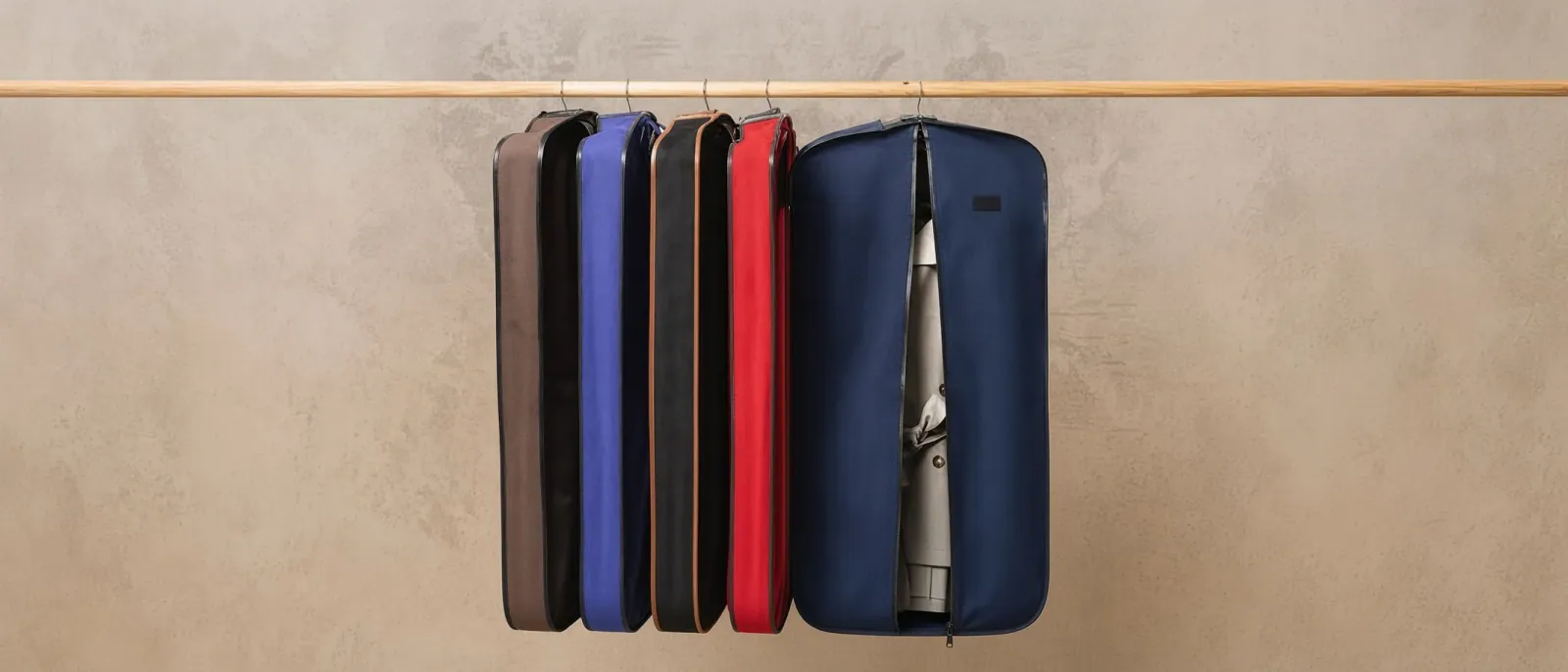
A rail of garment covers in brown, black, blue, red and navy, hung from a wooden rail against a bare plaster wall

Brief to costed cover

Send the Programme. Back Comes the Cover.

Name the garment, the length it hangs and the grade it needs. Back comes the costed cover, the marking proof and a sample at a hundred pieces.

Buyer programmes

The Programme, and the Cover It Asks For

A traveller, a wardrobe in store and a dry-cleaning counter all buy a garment cover, and none of them buys the same one. What changes is the job the cover is handed — and the cover is built around that.

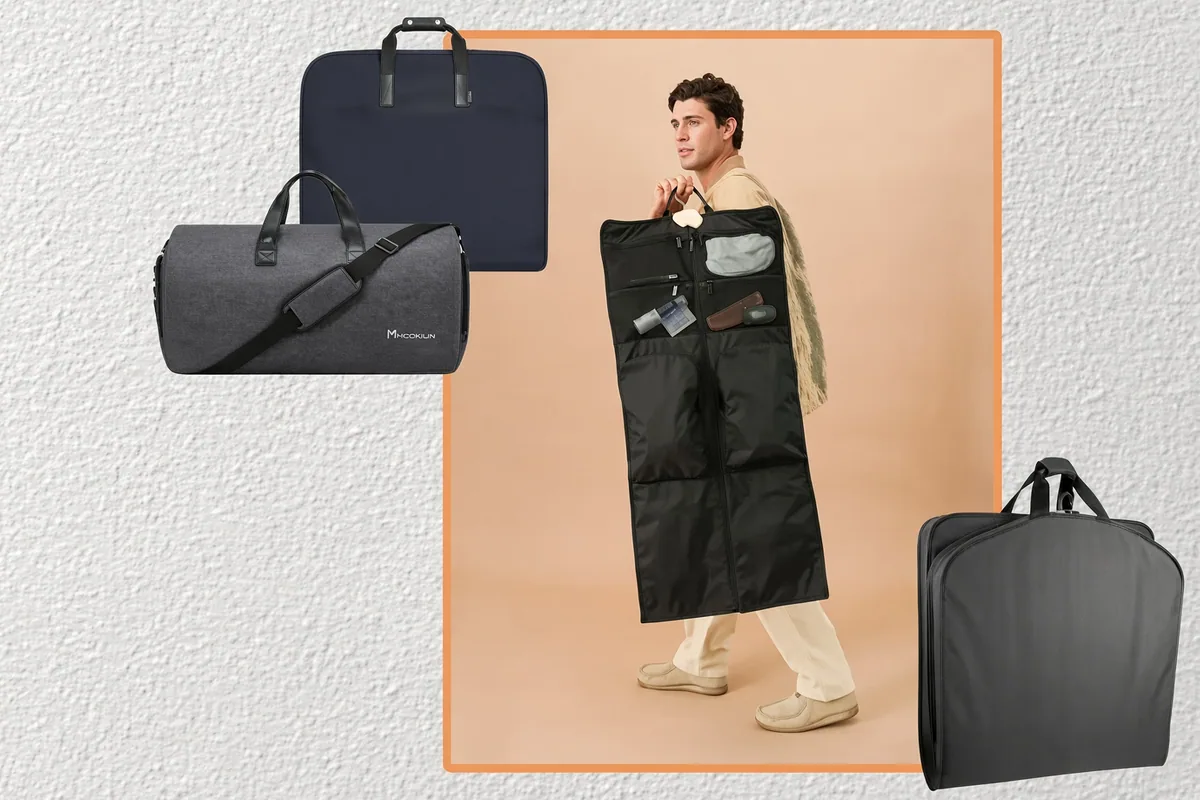
A grey garment bag carried over a shoulder, with a folded suit cover, a duffle and a weekender beside it

Travel Garment Bags

Folds into a case, so it is a carrier, not a hanging bag.

  • Rolls or folds flat to fit an overhead bin, so a filled case goes onboard.
  • A split end and a shoe pocket keep the pressed suit clear of the shoes.
  • A heavy coil zip takes a packed, pressed case without strain at the pull.
A woman fitting white and clear-fronted garment covers over suits on a rail

For Seasonal Clothing Storage

Held for a whole season, so the cloth has to breathe.

  • A breathable grade keeps mold and mildew off wool.
  • A clear window shows what is inside without opening it.
  • Hangs a suit or a coat straight, so it stays crease-free.
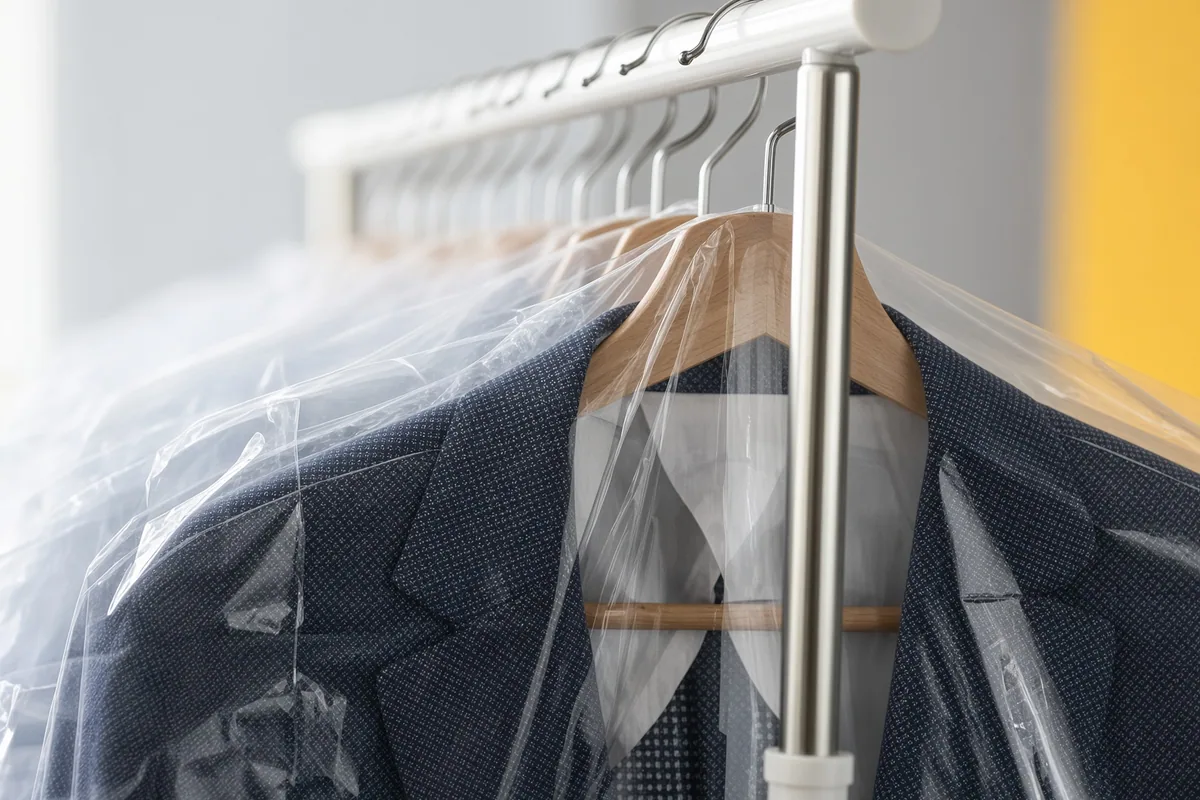
Suits under clear covers on wooden hangers along a metal rail at a dry cleaner

Dry cleaners and tailors

The hardest life on the page — handled across a counter all day.

  • A light non-woven at the lowest cost a one-colour mark allows.
  • An ID window or a printed number, to sort a rack without opening a bag.
  • A woven label, not a printed face, so the mark survives the round trip.

Buyer accounts

What the Buyers Said About the Cover

Two accounts from garment programs — a label holding gowns for months and a laundered cover a counter hands back week after week — and what the fabric and the closure had to hold.

Olivia MartinezOperations Manager, Luxe Apparel

Gowns hold a full season between fittings, so cotton was the grade that passed air — a breathable cover cut to a 62 × 154 cm gown length with a deep gusset for the train.

One beaded gown bent the hanger neck from a single loop until it tore. Metal grommets set through a backing patch spread the load, and the monthly repair stopped.

Sewn low on the flat face, a woven label outlasted a print that lifted at the fold on the first sample.

Daniel RobertsMarketing Director, GreenTech Clothing

A recycled line shipped in a light non-woven — the lowest-cost rung for a cover that goes out in volume.

That non-woven wore the mark through at the counter inside a season. A woven label and a step up — non-woven to a heavier Oxford shell — ended the returns.

Across a counter a laundered cover opens all day, so the zip was graded to the #8 heavy coil and its 10,000-cycle rating.

Garment cover questions

Frequently Asked Questions About Custom Garment Bag Manufacturer

The questions that come up on most garment cover enquiries. Where a figure already appears in a section above, the answer points at it, never repeats it a second time down the page.

Will a sealed cover mildew a suit kept in it for a season?

It can, and that is why the grade is a decision, not a detail. A PEVA or PVC film is a barrier by construction — it holds water out and holds damp in, so wool held under one for months takes on the moisture it was meant to be protected from. The condition band above splits the two grades on exactly this: a breathable cloth for a garment that is stored, a barrier film for one that travels. A gown or a suit that sits in store wants the breathable grade.

Which zip grade does a long cover need, and how many cycles will it take?

The closure band grades the zip to the cycles the cover will see, not to the price of the coil, and sets the grade by length and use — a light coil for a budget cover, a #5 as the suit-shop workhorse, and a heavy coil for a full-length cover carrying weight or a travel carrier zipped shut with a case inside. The ladder above states the rating a grade is bought against, so a buyer can name the figure in the brief and hold the floor to it.

Where does a garment cover tear first, the hanger opening or the zip end?

In practice the hanger opening, because it carries the whole garment from a single point, and the zip ends run a close second. Both are in the failure map in the closure band, with the fix written against them — a metal grommet set into a backing patch at the neck, and the tape run past the gusset with both ends closed with a patch. A cover repaired at those two places typically outlasts the cloth around them.

Can one cover hold a gown and a suit, or does the gusset split?

A gown wants a depth a suit does not. The sizing band sets the length band and the gusset to the garment, so a bridal cover runs long with a deep gusset for a train and a full skirt, while a suit cover runs flat or with a shallow one. Both can come off the same pattern set, but they are quoted as their own constructions — the depth changes the cloth consumption and the seam, so folding the two into a single line hides a real cost.

Will a printed mark survive the fold and the dry-cleaning round trip?

A print on a laundered cover is where marks fail — a thin ink film wears at the fold and lifts at the crease under repeated handling. The branding band above states the methods against that life: a woven label outlasts the cover and is the usual answer for a laundered one, while a screen print or a heat transfer is right for a shelf or a promotional cover handled once.

What non-woven grade suits a dry-cleaning chain’s return covers?

A laundered return cover sits at the light end of the non-woven range — enough body to hang a jacket straight and carry a one-colour mark, at the lowest cost the cloth allows. It is the fabric a chain buys by the thousand, and moving up to a woven shell buys a heavier cover than the round trip needs. The material band lists non-woven against the other families a first run draws from.

Start a garment cover run

Your Range, Covered.
Cut for the Rail.

A garment type, a length and a grade are enough to open the run — a reference cover or a measurement sheet shortens it. The quote comes back with the spec, the mark placed on the face and a sample in a hand.

Get a Quote