
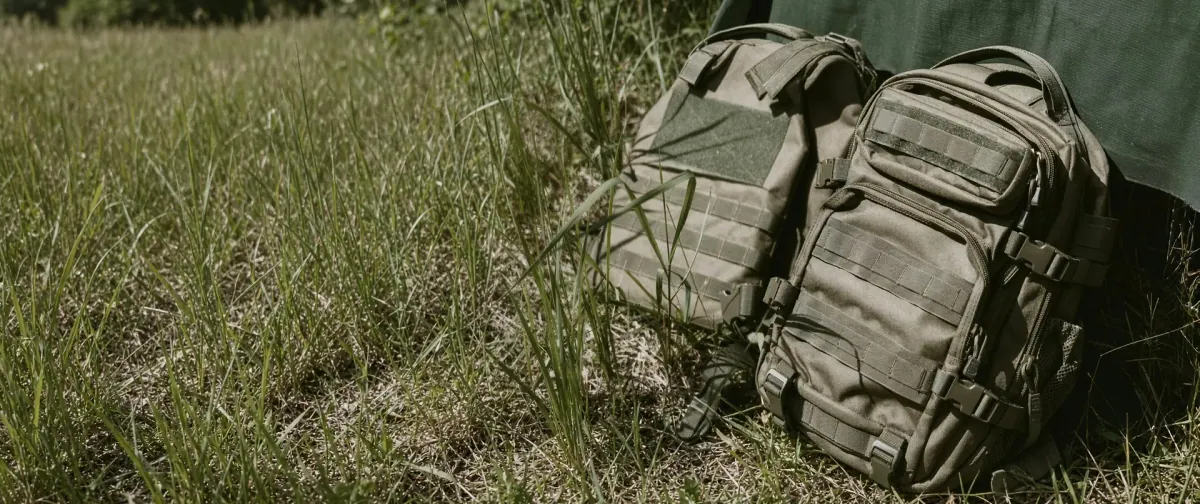
Custom Tactical Backpack 500D–1000D Outlasts the Webbing — the Load Stays on the Panel.
Send the platform, the shell and denier, the vest or belt the pack rides, and the weight it has to carry. A design that reads in a photograph can still fail on a moving body, because the pull is settled at the pattern, so the same fit holds on any body and under any load, not just on the sample.
- 1 inPALS webbing width
- 7 daysSample cut from bulk cloth
- 100 pcOrder floor, per platform
Mission formats
The Platforms, and the Loads They Take
The platforms this floor runs most often, drawn from the packs an outfitter, a security contract or an EDC label actually shelves. A platform that is not here is still workable — the pattern is drafted to a sketch or a reference pack the same way.
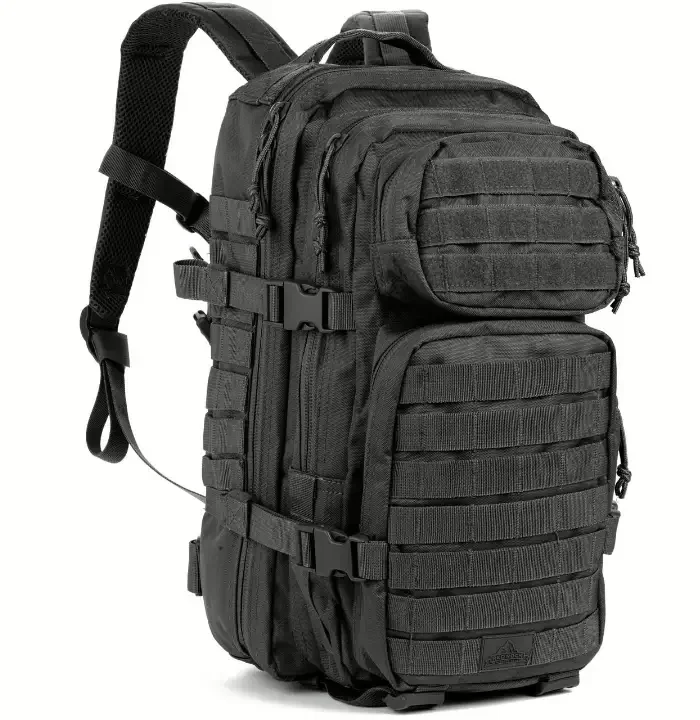
Assault Tactical Backpack
- Three stacked front pouches cut as free panels, so one can be swapped alone.
- Side compression buckles draw a part-full body in, so a packed load stays put.
- Three stacked front pouches cut as free panels, so one can be swapped alone.
- Side compression buckles draw a part-full body in, so a packed load stays put.
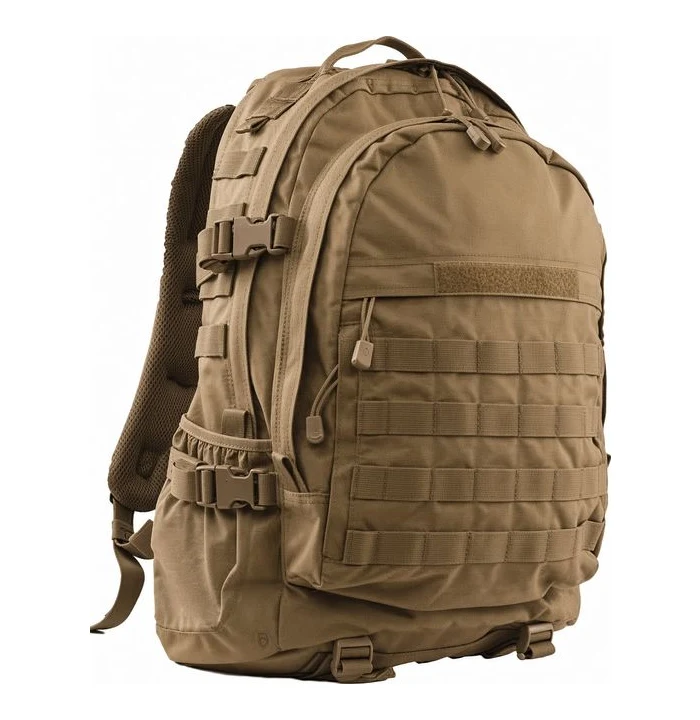
3-Day Tactical Backpack
- Cut to a three-day load, not a scaled-up daypack — so the weight sits right.
- A loop patch panel above the webbing carries an identifier without stealing a row.
- Cut to a three-day load, not a scaled-up daypack — so the weight sits right.
- A loop patch panel above the webbing carries an identifier without stealing a row.
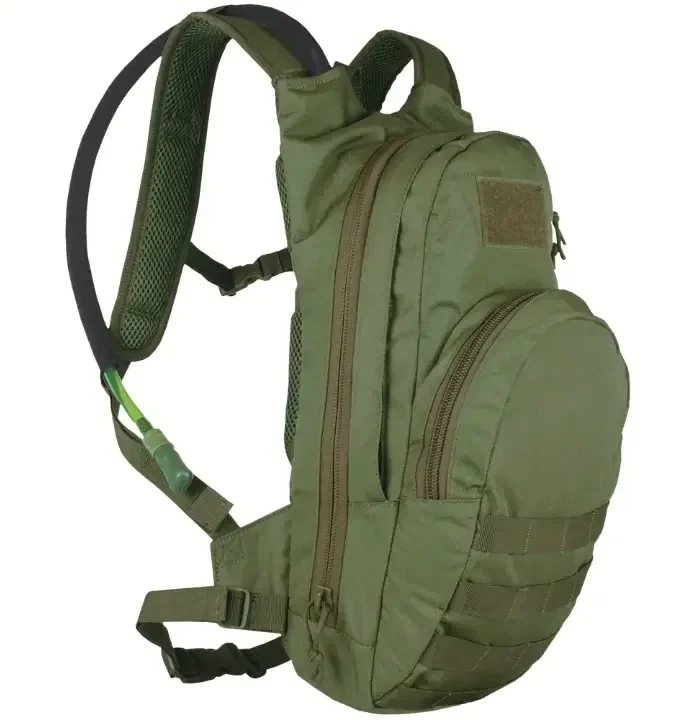
Hydration Tactical Backpack
- A reservoir sleeve at the spine keeps a full bladder off the lower back.
- The drink tube exits over the shoulder, clear of the webbing a pouch mounts to.
- A reservoir sleeve at the spine keeps a full bladder off the lower back.
- The drink tube exits over the shoulder, clear of the webbing a pouch mounts to.
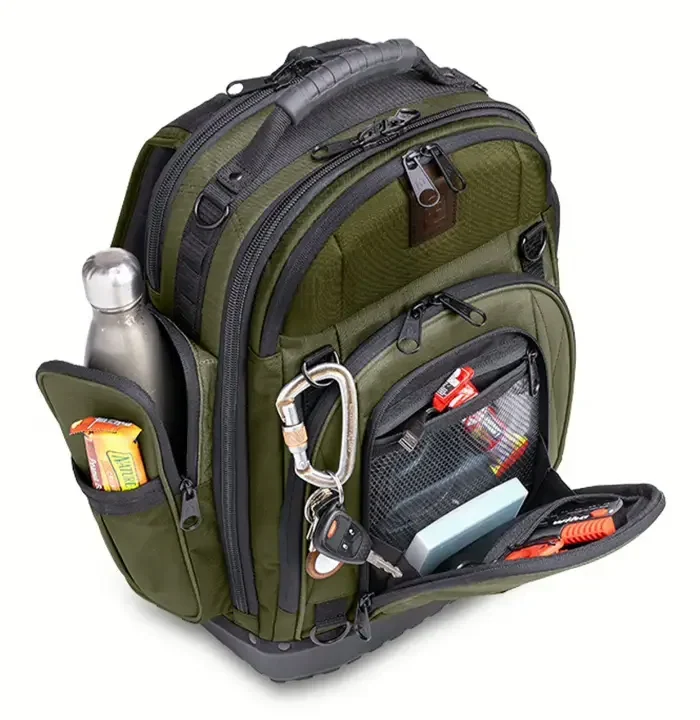
EDC (Everyday Carry) Tactical Backpack
- A concealed admin panel drops open to tools, so a wearer reaches in, not around.
- Boxed side pockets stand a bottle upright instead of letting it roll.
- A concealed admin panel drops open to tools, so a wearer reaches in, not around.
- Boxed side pockets stand a bottle upright instead of letting it roll.
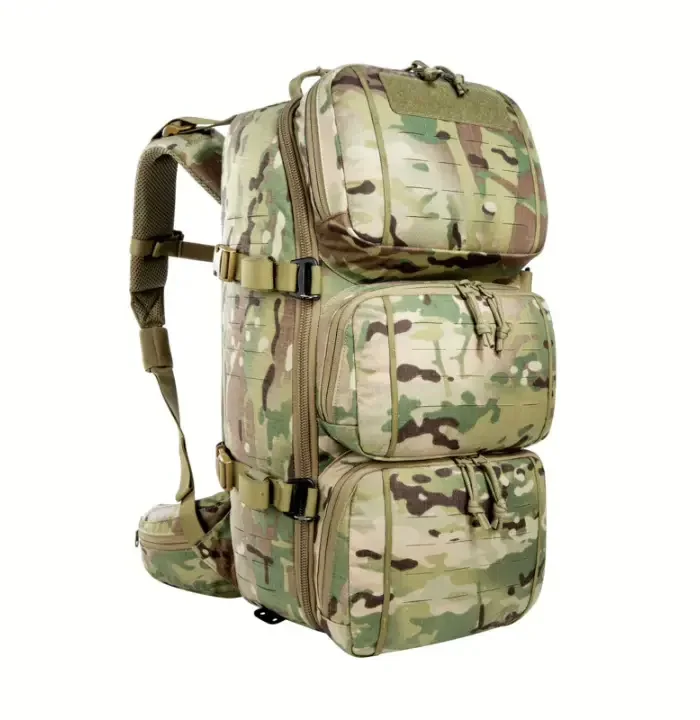
Modular MOLLE Tactical Backpack
- A full webbing face frees a pouch to mount wherever the load calls for it.
- Side pouches detach as organisers, so a worn-up kit reconfigures without a rebuild.
- A full webbing face frees a pouch to mount wherever the load calls for it.
- Side pouches detach as organisers, so a worn-up kit reconfigures without a rebuild.
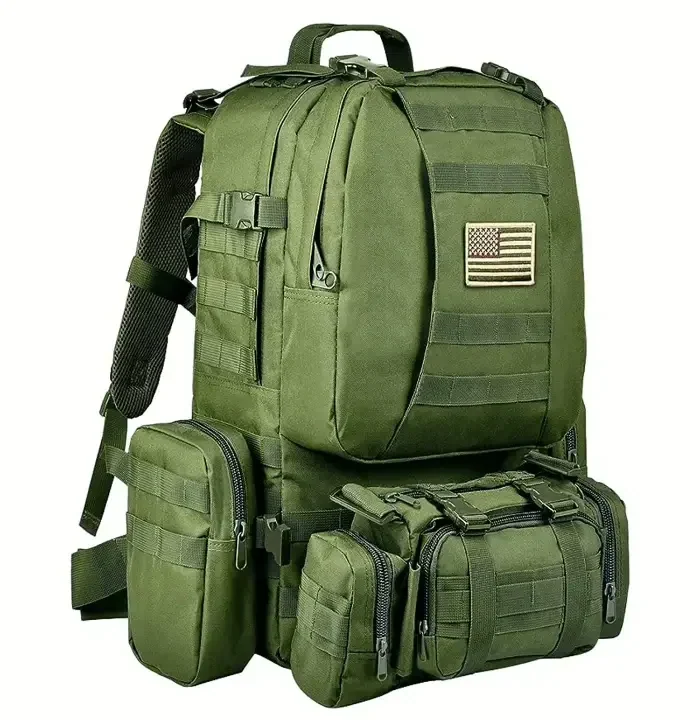
Heavy-Duty Military Tactical Backpack
- A high-denier body on a wide padded strap spreads a heavy load across the back.
- The base is a pouch column, so the pack stands when it is set down.
- A high-denier body on a wide padded strap spreads a heavy load across the back.
- The base is a pouch column, so the pack stands when it is set down.
Load path
The Pull, and the First Failure
A loaded tactical backpack hangs its weight off a harness and hands the pull to the webbing, and the shell takes what is left. Three parts carry one load, and they do not fail together.
The harness carries the weight
- Shoulder straps are cut to an S-curve over closed-cell foam laminated to thickness, with a sternum strap set across the chest.
- Above the weight a brief names, a padded hip belt takes part of the load onto the hips, keeping it off the shoulders.
On a worn packOn a worn pack, the load sits on the shoulder yoke and the belt, so the shell is never asked to carry what a harness should.
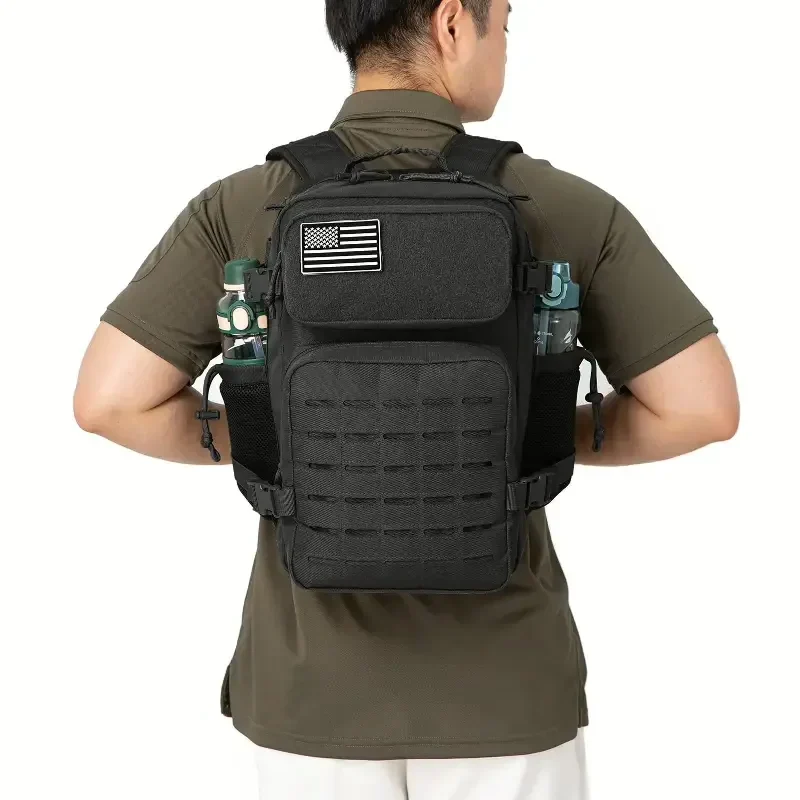
The webbing hands the pull to the panel
- The ladder is a grid of one-inch PALS webbing, bar-tacked along the row ends and stitched to a reinforcement panel beneath it, never to the shell alone.
- A row is a mounting point drawn on the pattern, so a pouch lands where the load calls, not where it happens to fit.
On a worn packOn a worn pack, a mounted pouch pulls into the panel through the ladder, and the shell behind it barely feels the pull.
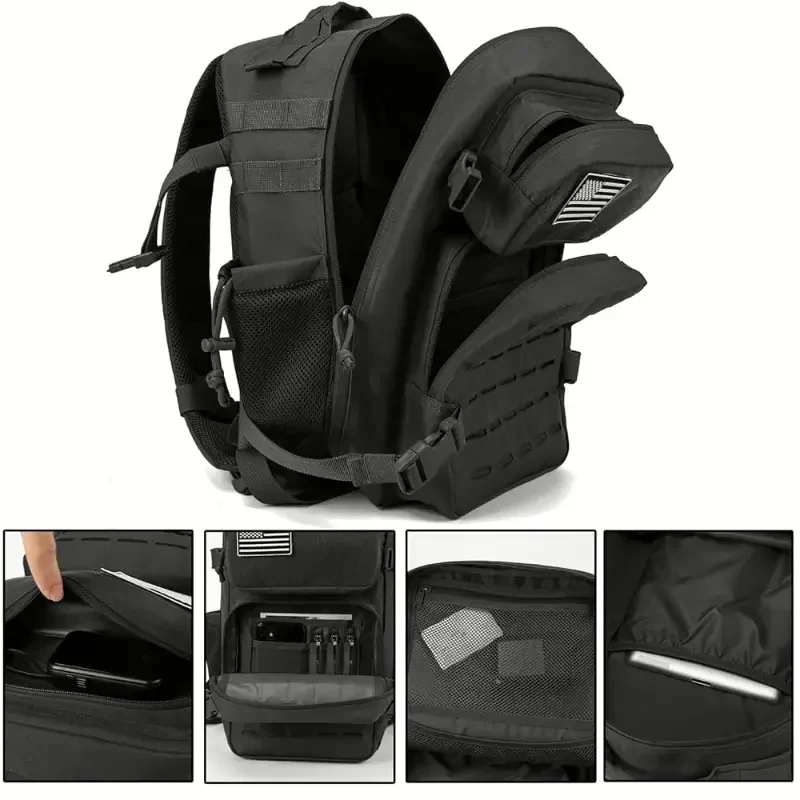
The shell is the last to give
- The body is cut in 500D–1000D Cordura or ripstop, in a water-repellent finish or a woven, coated and taped body where the brief needs the shell itself to be the barrier.
- The base and the ground-contact faces carry an abrasion panel, keeping the corner that meets a floor the last face to wear through.
On a worn packOn a worn pack, the shell outlives the webbing above it. Denier can read high on a spec sheet while the row ends beneath it were never checked at all.

Customization
Decided at the Order, Before the Pattern Is Cut
The build of a tactical backpack is settled before a panel is cut: what the body is built from, what it mounts and carries, and how it is marked. Nothing is left to the machine.
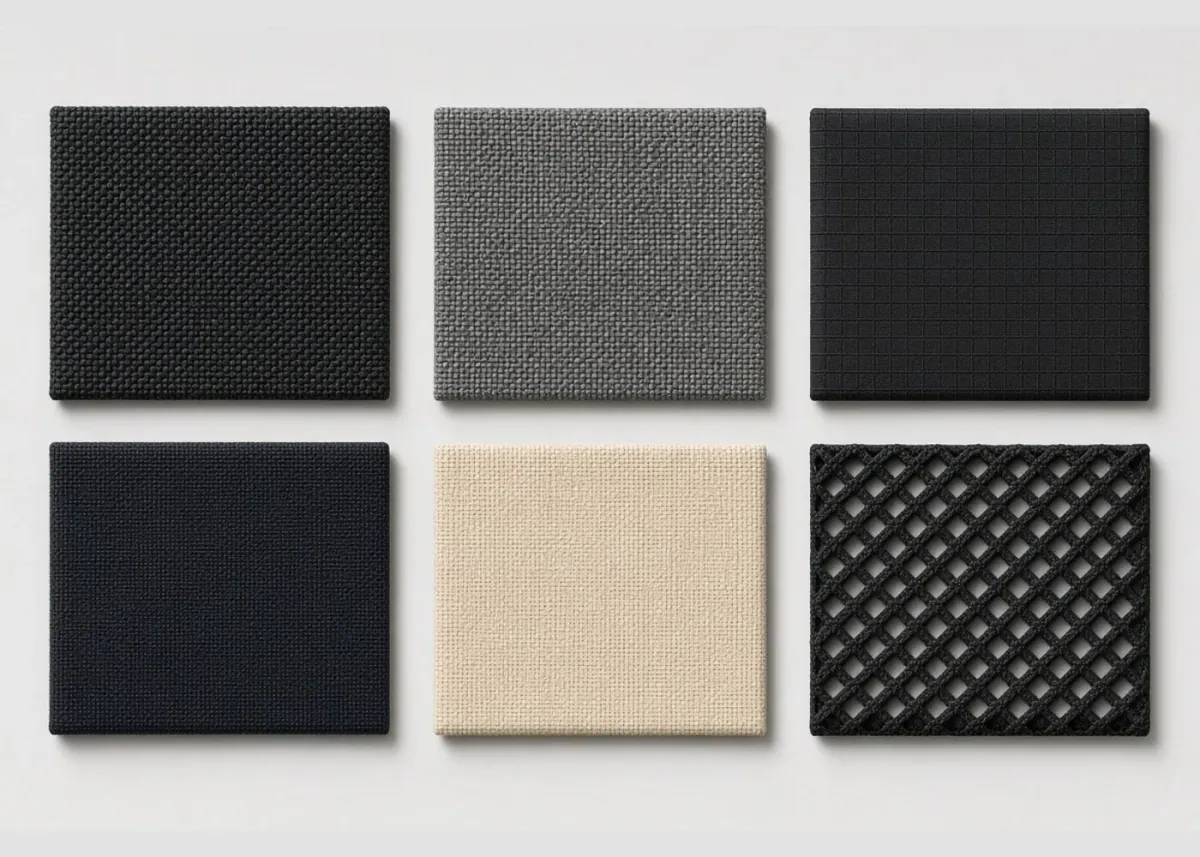
Materials Selection
- Cordura, ripstop and coated shells, selected against the load the pack has to carry.
- Buckles, D-rings and cord locks specified by the reference the buyer approves, ordered as one set.
- Lining, foam and stiffener proposed as a cut swatch and a spec sheet, never as a catalogue.
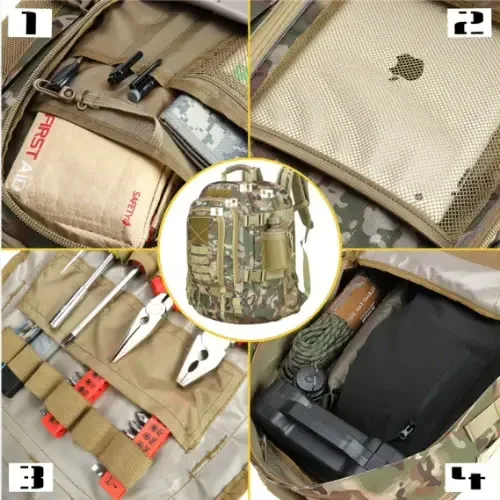
Tactical Features
- Concealed and admin compartments cut as their own panels, so the tools inside stay organised.
- The MOLLE- and laser-cut webbing grid fixes where a pouch lands on the face.
- Reinforced carry handle, webbing anchors and load points are drawn on the pattern.
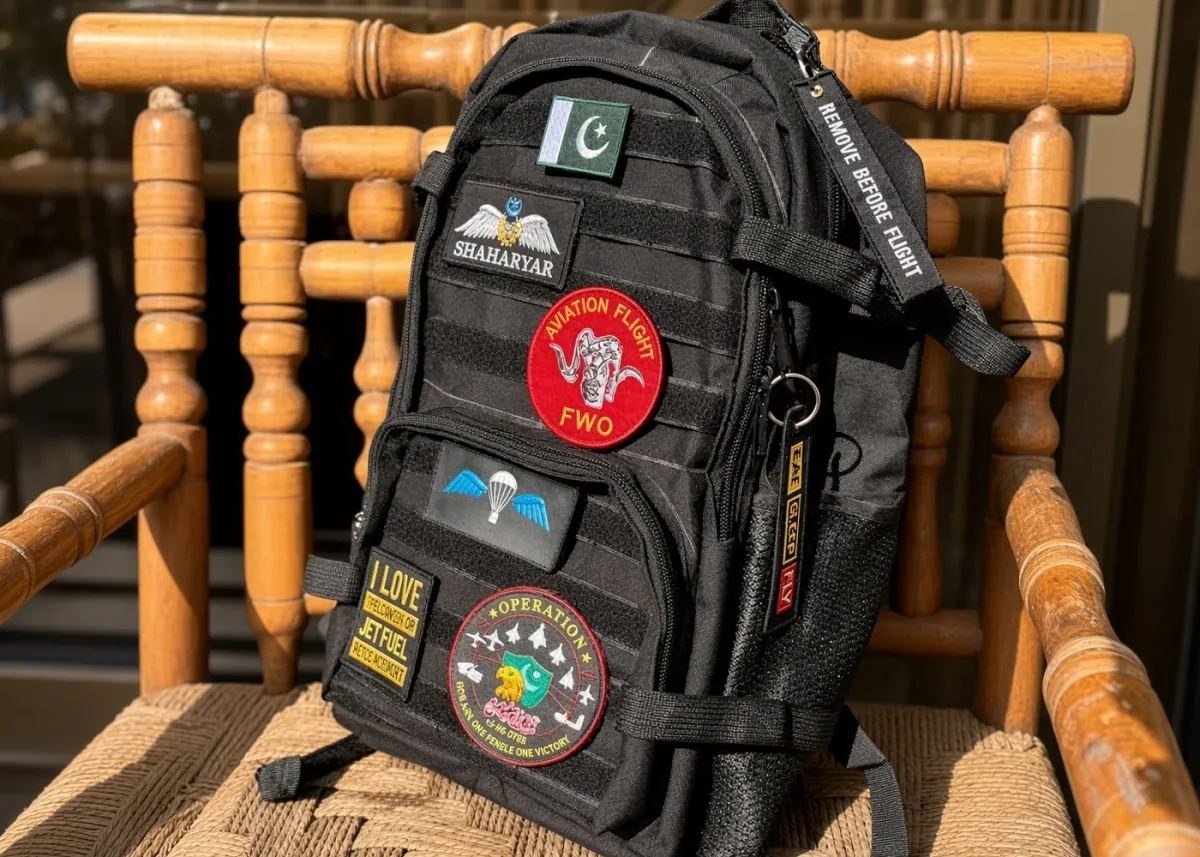
Branding Options
- Embroidery, heat transfer and screen print, named to the panel it lands on.
- Woven and rubber labels, a PVC patch and a metal plate, plus hook-and-loop for removable identification.
- Hang tags, polybags and cartons cut to the artwork the buyer supplies.
Spec to quote
Send the Platform. It Comes Back Specified to the Load.
Name the shell and denier, the harness and what the webbing carries. Back comes the build sheet and a quote costed the same way.
Colour and pattern
Shell Finish, Matched or Made
The finish on a tactical backpack shell is met one way or the other: a supplied sample is matched at the mill, or a pattern is drafted to a Pantone reference and proofed before the run. Neither route needs a licensed stock pattern behind it.

Coyote brown
A warm earth solid, dye-matched across a mixed run.

Ranger green
The muted field green most service contracts ask for.

Black
A flat, dull finish that hides scuffs on a duty pack.
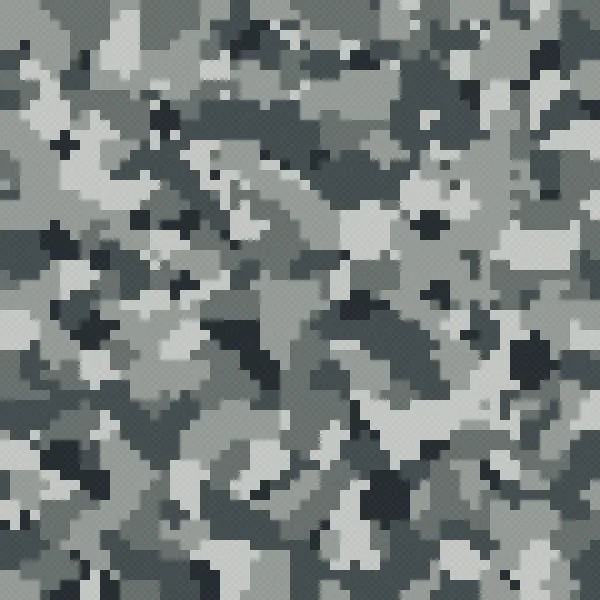
Digital
A pixelated multi-tone, proofed on the woven shell.
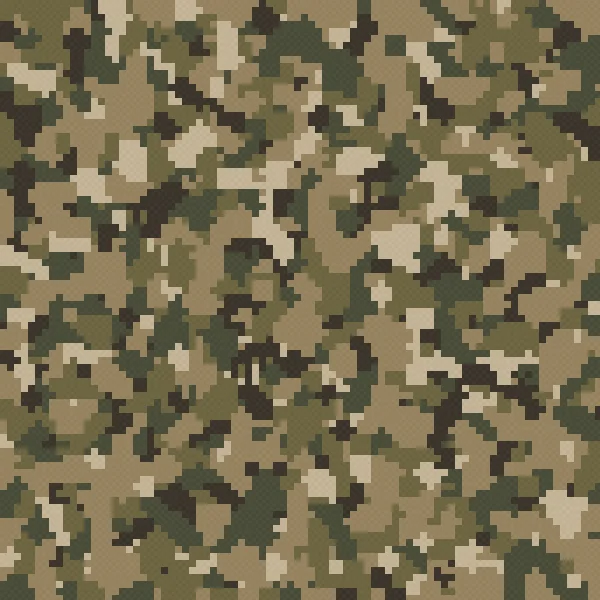
Woodland multi-tone
A layered leaf-and-neutral pattern for temperate ground.

Night geo
A low-contrast dark pattern for urban and dark-load kits.
Buyer accounts
The Packs Came Back for a Second Run
Two programmes, on what a tactical pack had to clear before it was issued: a webbing ladder that had to hold under load, a harness set to a range of wearers, and what a second order says that a first cannot.
 Colonel James D.Special Operations Equipment Director
One 1000D field pack opened the programme, its face cut as a PALS-spaced webbing ladder and its harness built for a load carried over distance.
Seven days later the sample came cut from the bulk cloth, its webbing rows, the reinforcement panel beneath them and the strap drop all measured with the pack loaded.
Bar-tacks at the row ends, stitched into the reinforcement panel instead of the shell, are what a season did not move — the reorder matched the first on PALS pitch.
 Dr. Elena V.Global Emergency Response Coordinator
Field teams ordered one 500D shell, one mark, and an admin panel that had to hold medical kit in a fixed layout across the batch.
Cutting the admin and organiser compartments as separate panels before the pattern is drawn, not at the machine, put tools in the same place in all 100 issued units.
A harness set against the fitted sample rode the hips through a long carry, and the second order went in on that same graded pattern without a single fresh one.
Tactical questions
Frequently Asked Questions About Custom Tactical Backpack
The questions that come up on most tactical enquiries. Where a build already sits in a section above, the answer points at it, so nothing is stated twice.
Does a webbing row pull out of the panel, or does the shell behind it tear?
The row pulls out, and at the stitch, not along the strip. A mounted pouch hands the row end a shear load, so a bar-tack carried into a reinforcement panel takes the pull while the shell behind it barely feels it. Screen a pack on fabric alone and the part checked is the one that never gives first — the load-path section above sets out the order the three fail in.
Ladder webbing or laser-cut — how does a brief choose?
By what the load does, not by what the machine prefers. Woven ladder webbing is stitched on and stands proud of the face, so a pouch threads behind it and lifts off again; a laser-cut panel drops the row into the shell itself, which sheds weight and sits flat but calls for a shell that takes the cut without fraying. Gear mounted and pulled off on a rotation leans woven; a weight-driven build leans laser-cut.
Does a full reservoir shift when the pack is set down or swung on?
Not while the sleeve holds it against the spine. A collapsed reservoir is the one that migrates once a pack is off the shoulder, so the sleeve is cut to the reservoir the brief names, with the hold set to the same pattern as the rest of the pack. Swung on, the mass reads at the wearer's back rather than moving as the pack moves.
Riding a plate carrier or a duty belt — what has to change in the pack?
The harness, and it moves at the pattern, not on the strap. A pack cut to sit over a carrier is spaced for the thickness beneath it, and the belt height is read off the carrier instead of quoted as a strap length. Change the body under the pack and the harness has to change with it, so it is settled before the panel is drawn.
A camouflage brief — does it need a licensed pattern behind it?
No. Sample-matching and Pantone drafting are both worked from the brief itself, and neither leans on licensed artwork. A brand pattern is a different question — that artwork belongs to its owner — so a brief built on a sample or a reference has nothing to clear.
Can a loadout stay identical across a whole issued run?
That is what the separate panels are there for. A fixed layout — the same admin panel, the same tool positions, the same pouch heights — is held by the pattern, not by the operator, so a kit issued to a hundred wearers lands the same way in the last pack as the first. Bulk and reorder both come off that one pattern.
One harness, a whole issued size band — can a single pattern cover it?
Grading the pattern, not stretching one build across the band. The shoulder yoke, the sternum span and the belt height are set against a fitted sample, then moved together across the size band the contract names — so a small wearer’s load lands where the reference put it, not where a single build happened to fall.
When a fitting fails in service, will the replacement match the run?
Only where the fittings were drawn from one reference set. Buckles, adjusters, cord locks and D-rings held to the approved part numbers and their finishes, so a replacement goes back onto its own run — not onto whatever the shelf carries that week. A failed bar-tack is reworked where the panel allows it, and the unit replaced where it does not.