


The Channel
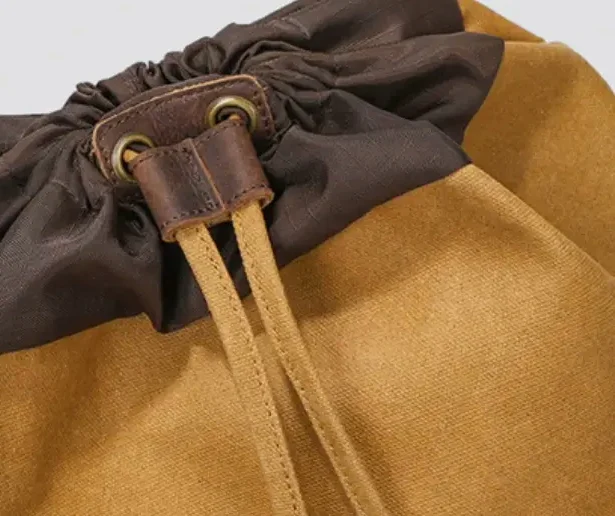
- The tunnel the cord runs through at the mouth.
- A turned channel 12 mm to 18 mm deep, bar-tacked at both ends.
- Too wide, the cord tangles; too narrow, the mouth locks part-open.
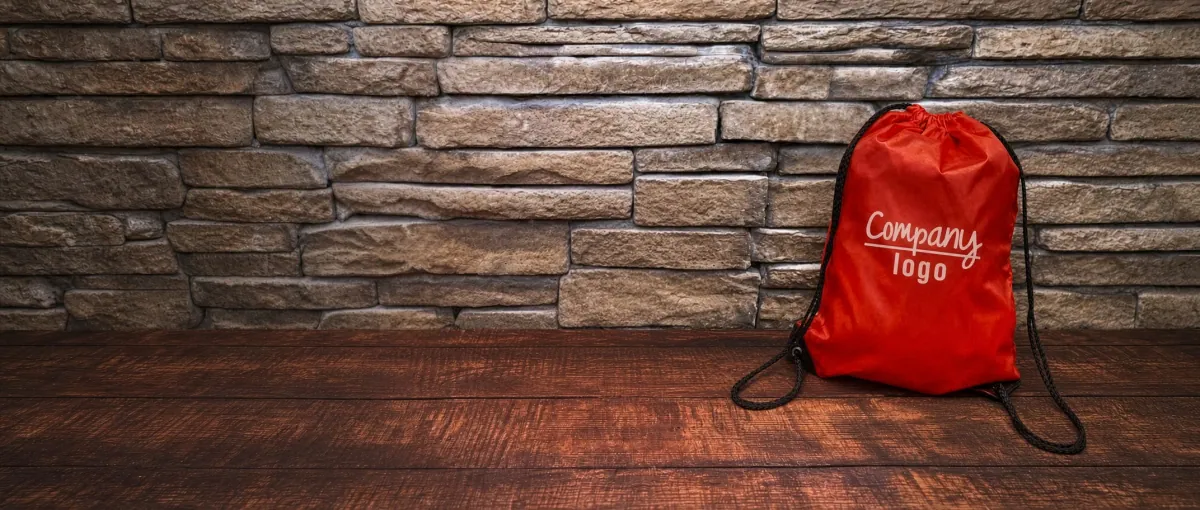
The closure carries no fitting at all — a drawstring shuts on a running cord pulled by hand, and that cord is the part that fails first. Send the fabric, the print and the size, and the quote returns in 48 hours: the channel cut 12 mm to 18 mm deep, the eyelet set to its cord, the ends specified — the sample inside seven days.
Drawstring formats
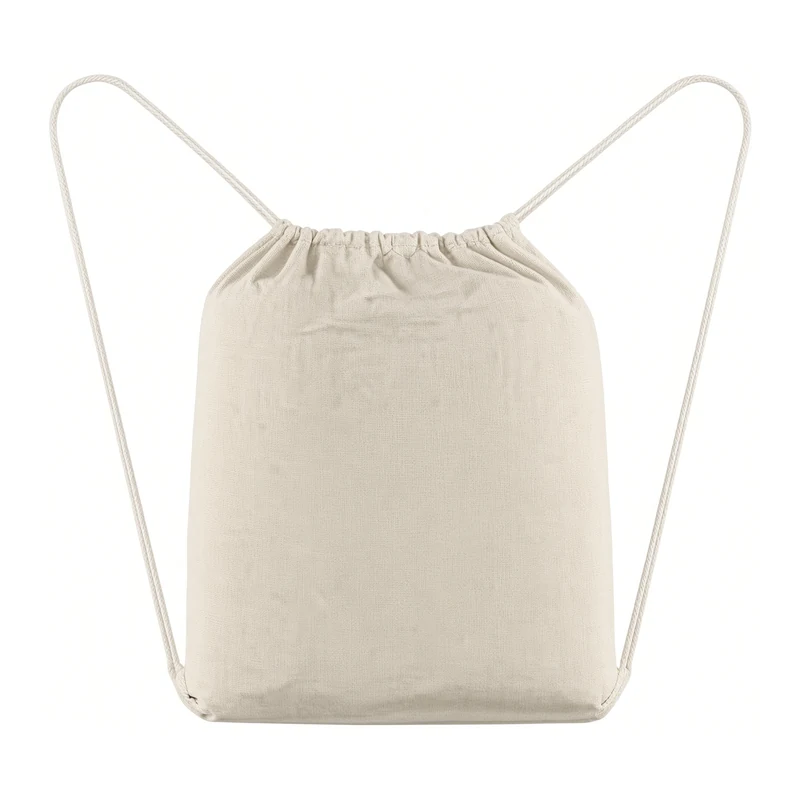
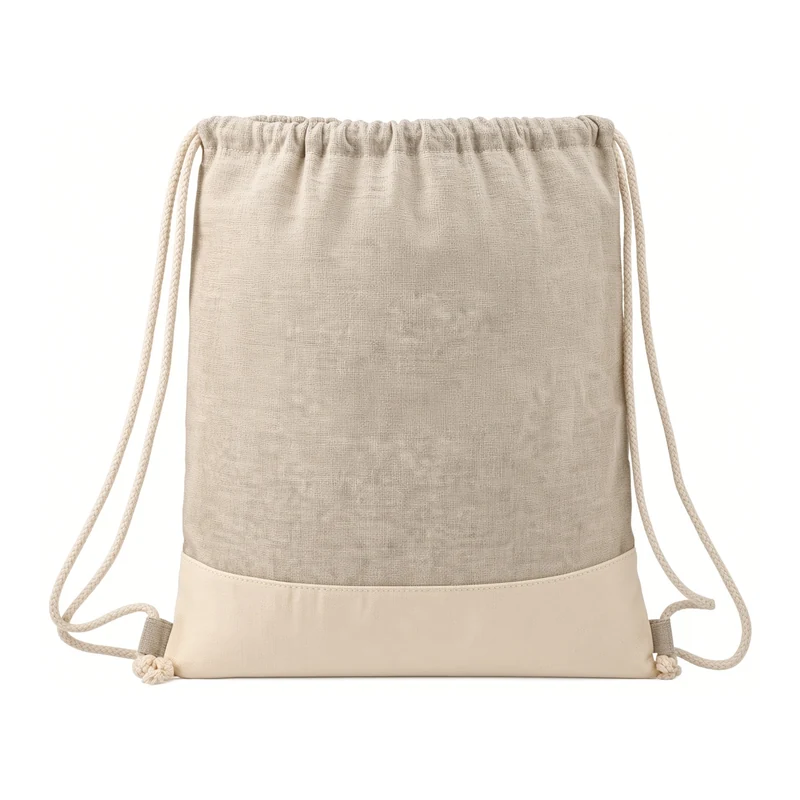
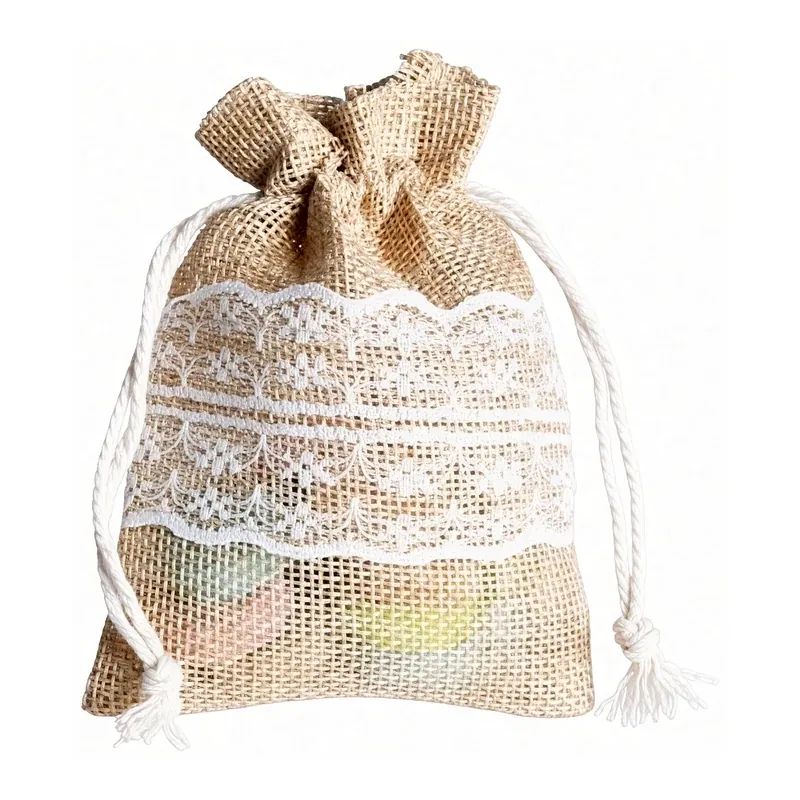
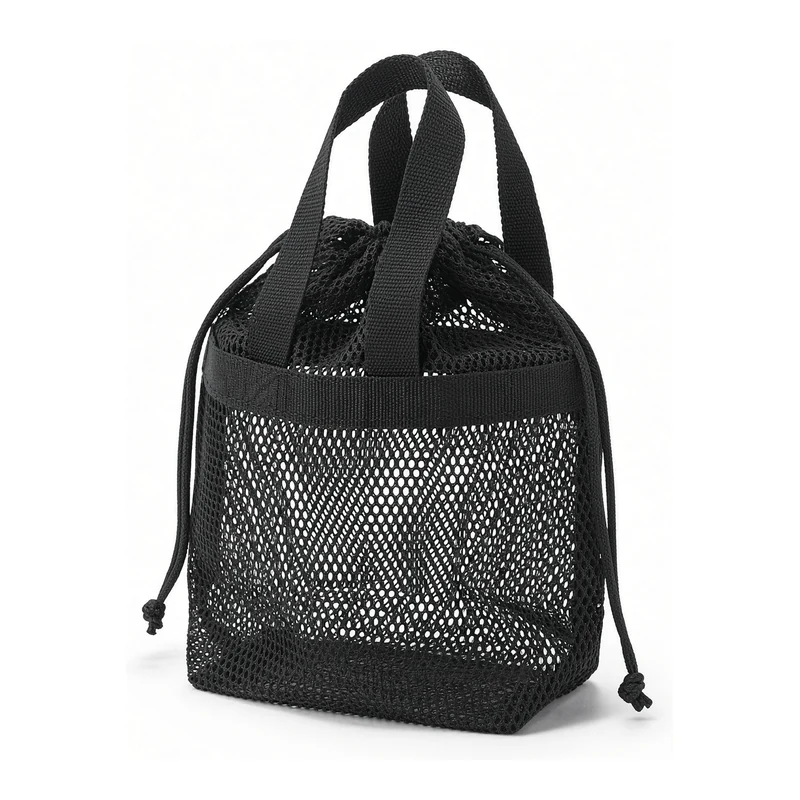
One cord closes all of these drawstring bags. What a shape is cut for is on the tile.
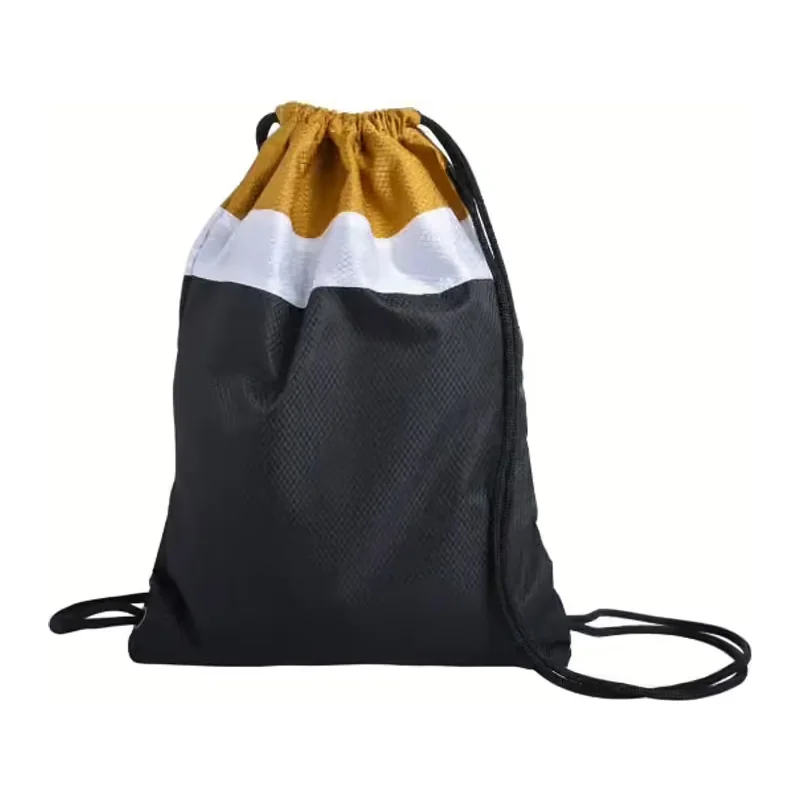
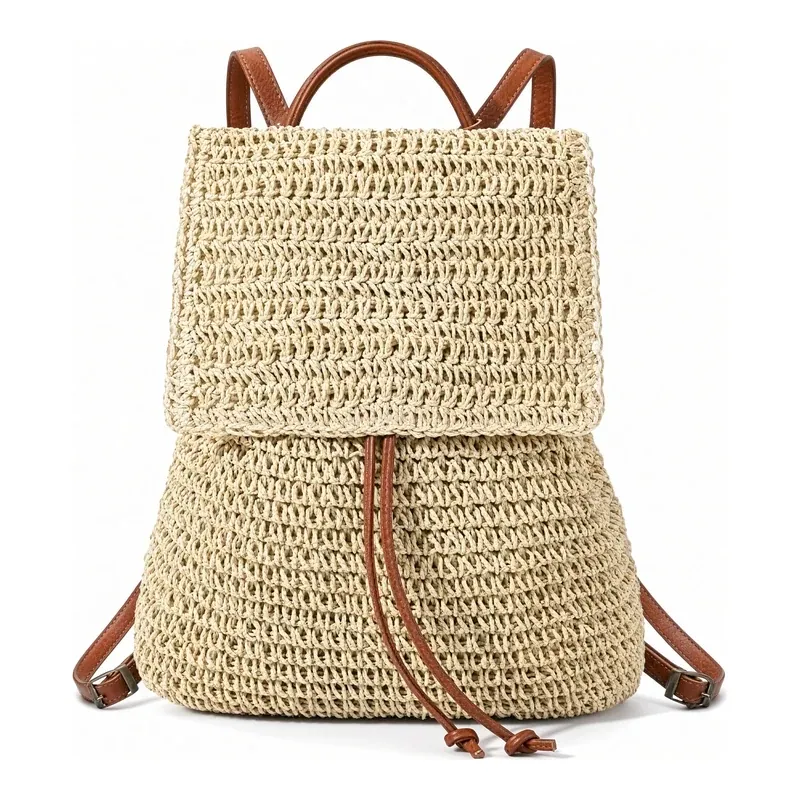
Styles of Custom Drawstring Bags
A single cord closes the range; what changes is the job the drawstring bag is bought to do.

The closure
No fitting closes this drawstring bag. The mouth shuts on a cord pulled by hand, and the cloth does the closing — which is why the four parts below carry their own limit. The point that holds a filled bag is not the point that survives it being opened and shut a thousand times.
Material options
The stocks a drawstring range is built on, with jute, velvet or satin for a premium run. Because the bag closes on cloth and not on a fitting, what decides the fabric is how it behaves at the mouth — whether it gathers evenly on the cord, and whether it frays inside the channel.
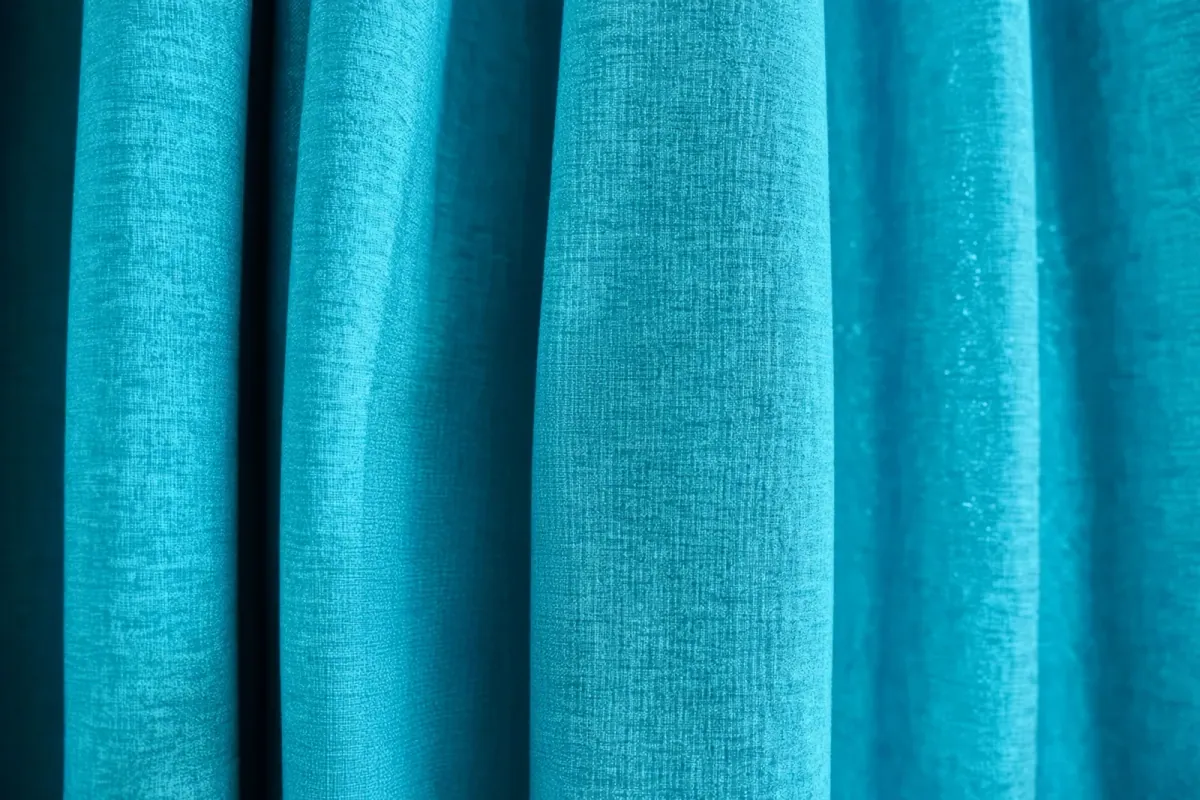
The cheapest of the wovens: a 210D or 420D Oxford, water-resistant, with a tight weave that resists fraying in the channel.
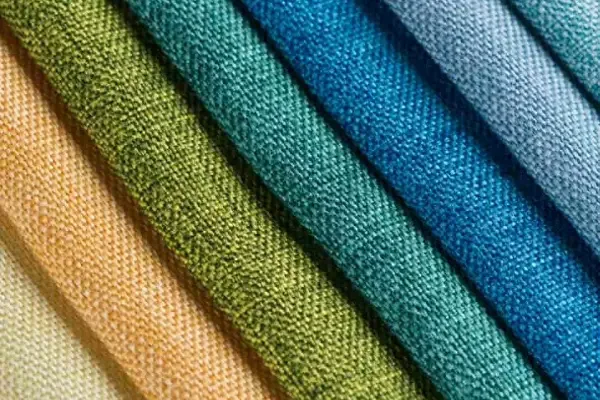
Stronger than polyester at the same weight, with a weave that holds its edge when the cord is pulled hard.
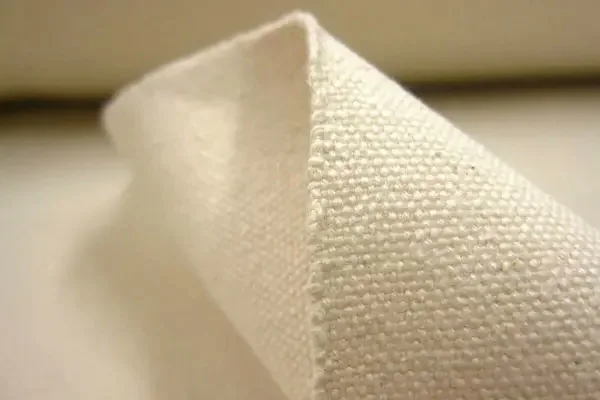
A natural fibre that breathes and takes a print, gathering into a deep, even fold on the cord.
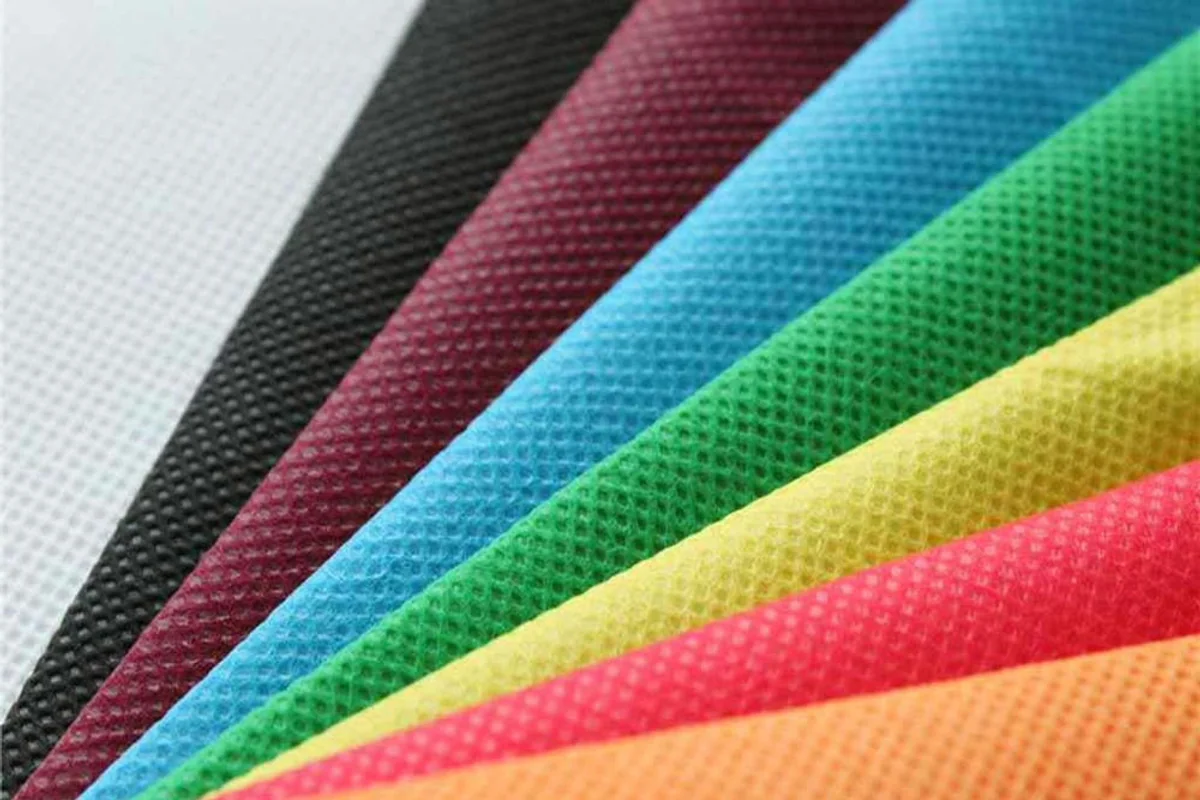
Bonded polypropylene at the lowest unit cost; it holds a crease instead of draping and can shed fibre at a cut edge.
Size range
A drawstring is bought on what it has to carry, so the range spans a small hand pouch and a full kit sack, and anything between them is cut to a brief. The dimension below is the body; the cords take up the rest of the drop.
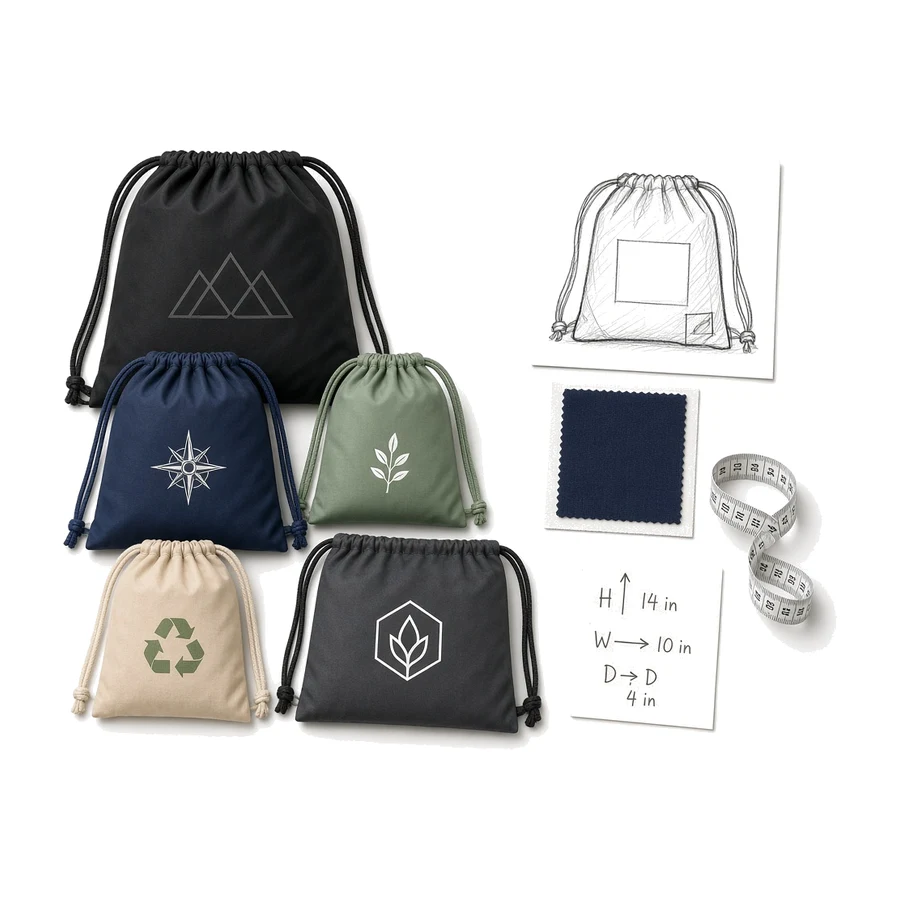
A hand-sized pouch, light enough to be carried on its own cords across the shoulder.
Toiletries, small accessories, a tablet, and single-item gifting.
The everyday sack: enough room for a change of clothes and a pair of shoes, and small enough to hang at the back.
Commuting, gym kit, school supplies and merchandise runs.
A kit sack for bulky loads, with the cords taking the heavier pull at the shoulder.
Sports equipment, team gear and outdoor kit.
Any dimension outside the three above is cut to a brief, from a sketch, a sample or a set of measurements.
Corporate merchandise, campaign runs and a shape built around a specific product.

Spec to quote
For a drawstring run the reply sets the cord, the eyelet and the channel depth against the fabric and the load — a matched spec, not a price alone.
Buyer accounts
A promotional distributor and an outdoor brand, on what a drawstring closure had to survive before the first run went out.
 Naomi LeeBuyer, promotional distributor
Six thousand convention sacks, two colourways, one-colour print on the front, three venues on one fixed show date. A plain bag — the closure is the whole risk.
A prior run came back with the mouth not staying shut: a stretched cord and an eyelet cutting into it. The fix was an eyelet matched to its cord, the cord pre-shrunk before the cut.
Two seasons on, the only sacks replaced were lost, not failed. The reorder came on the same cord and eyelet setting, so three events read as one campaign.
 Grant HayesFounder, outdoor brand
Printing onto a gathered face is what most factories miss — the mark has to be placed for the closed bag, not the open one. This one sits on a 210D nylon sack held on a 3–5 mm cord.
The first sample ran the mark too high, so it broke up in the fold. A re-sample put the mark lower and took the cord ends to a heat-sealed aglet in place of a plain knot.
Shipped, then worn through a full season: almost nothing came back for a closure fault, which for a bag opened and shut all day is the only number that matters.
Drawstring questions
The questions that come up on most drawstring enquiries, answered where the figure already sits above.
From the load and the fabric, before the pattern is cut. A drawstring has no fitting to set the opening — the size of the mouth is the length of cord left free to run, and it is decided against how the filled bag gathers. Too little and the bag will not seat; too much and the mouth hangs slack and takes a second pull to shut. That is why the channel and the eyelet positions are cut from the opening and not adjusted afterwards, which is the order the closure section sets out.
The cord ends, and they loosen long before the bag does. They take the wear of the open-close cycle while the fabric is usually still sound — the closure section sets out why the ends carry the cycle test and the body does not.
Because the panel gathers. A mark positioned for the open bag falls into the fold once the cord is pulled, so placement is set for the closed bag as well — decided with the fabric and the print area, before the run is cut.
A zip, a snap and a lock are fittings: bought, sized and stitched on, and a part that can seize or fail on its own. A cord is part of the bag itself, so the closure carries nothing extra to stock or replace, and the mouth opens as wide as the cord is long. The trade is that the cloth does the closing, which is why the strain sits on the eyelet and the cord ends, not on a fitting — the four parts the closure section sets out.
Yes, and on a drawstring it is worth specifying because the cord is the part that wears first. A cord run as a single continuous loop can be pulled out and re-threaded through the channel by hand, which makes it a replaceable part and not a reason to retire the bag — the most checkable sustainability claim this page makes. A cord cut in two and knotted at the eyelets is not replaceable the same way, so which of the two is wanted is settled at the sample stage.
Yes, and sharing it is usually the right call. One cord, one eyelet setting and one channel depth across a range means the bags in the line gather the same way and close with the same feel in the hand, and not as several closures separately matched. The shapes still keep their own pattern and opening size, because the mouth is cut to the body — what is shared is the cord standard, not the channel.
The plant runs to ISO 9001, with BSCI, OEKO-TEX 100, GRS and REACH available on request, and whether a given brief can be met against one of them is settled against the brief, never claimed in advance. Where a claim matters to a market — a recycled content figure, or a restricted-substance limit — the requirement is named at the quote and not after the run is cut, because it decides the fabric the bag is made from.
Start a drawstring run
The fabric, the print area and the size the bag has to carry are enough to quote from, and enough to start.