
A model carrying three custom handbags — an orange leather tote, a red leather tote and a tan shoulder bag — against a blue studio backdrop
96-Hour Hardware · Won’t Rust

Custom Handbag Manufacturer 60 kgf at the Handle, Nothing Comes Back.

A pattern shop as much as a factory: a sketch, a reference bag or a full tech pack goes in, and a cuttable pattern plus a sample in seven days comes out. Every run closes on the same pattern, hardware lot and AQL 2.5 inspection — so the reorder matches the first order.

  • 100pieces minimum
  • 7day sample
  • 2colourways minimum

Product range

The Handbag Range, Built to Order

These are the handbag types we build most, but the range is not closed. A shape that is not shown here starts the same way — send the sketch or the reference bag and the pattern gets drafted to it.

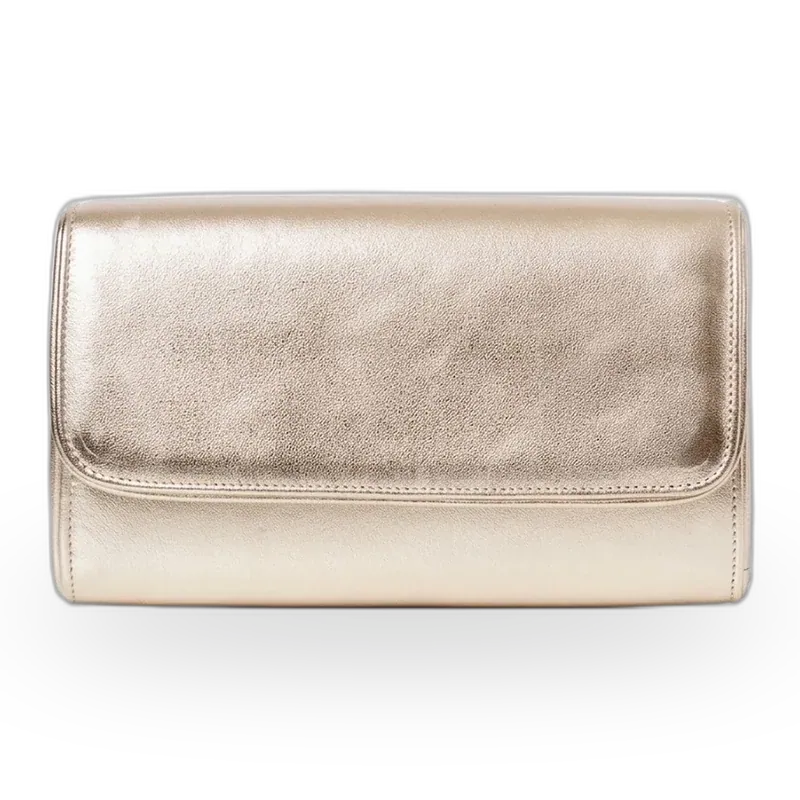
  • A gold-metallic clutch bag made as a custom sample

    Clutch bags

    • Evening, oversized and fold-over shapes, with or without a wrist strap
    • Snap closures let go under a loaded clutch before the leather shows any wear
    • Magnetic or framed closure set to your spec, tested at full load
    • Evening, oversized and fold-over shapes, with or without a wrist strap
    • Snap closures let go under a loaded clutch before the leather shows any wear
    • Magnetic or framed closure set to your spec, tested at full load
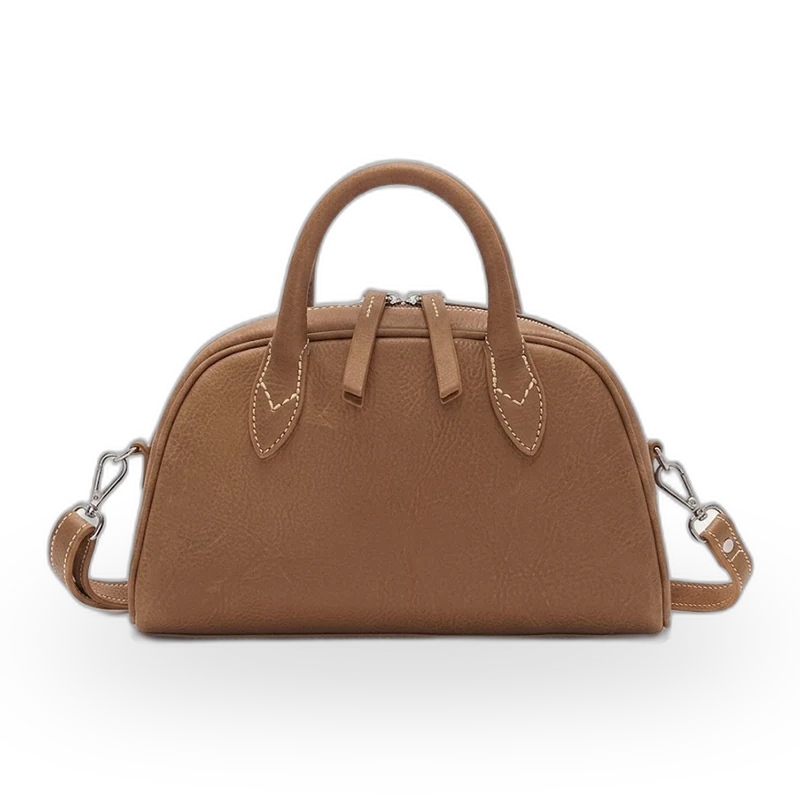
  • A tan leather mini handbag with a top handle and crossbody strap

    Mini handbags

    • Mostly bought as a second bag — gifting, evening and add-on orders
    • Panels this small leave a seam nowhere to hide; every millimetre is visible
    • Tolerances held at ±1.5 mm so the shape stays square in the hand
    • Mostly bought as a second bag — gifting, evening and add-on orders
    • Panels this small leave a seam nowhere to hide; every millimetre is visible
    • Tolerances held at ±1.5 mm so the shape stays square in the hand
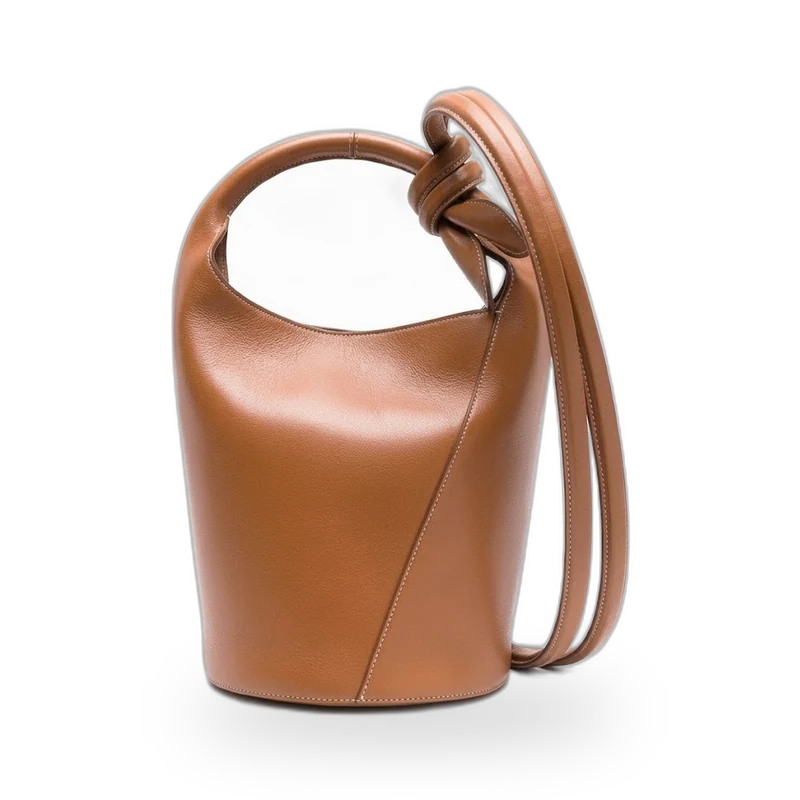
  • A tan leather bucket bag with a knotted handle

    Bucket bags

    • Drawstring cinch over a soft, unstructured body
    • The cinch slackens with use, and the base sags the moment it is loaded
    • Reinforced base panel and a cord channel that holds its tension
    • Drawstring cinch over a soft, unstructured body
    • The cinch slackens with use, and the base sags the moment it is loaded
    • Reinforced base panel and a cord channel that holds its tension
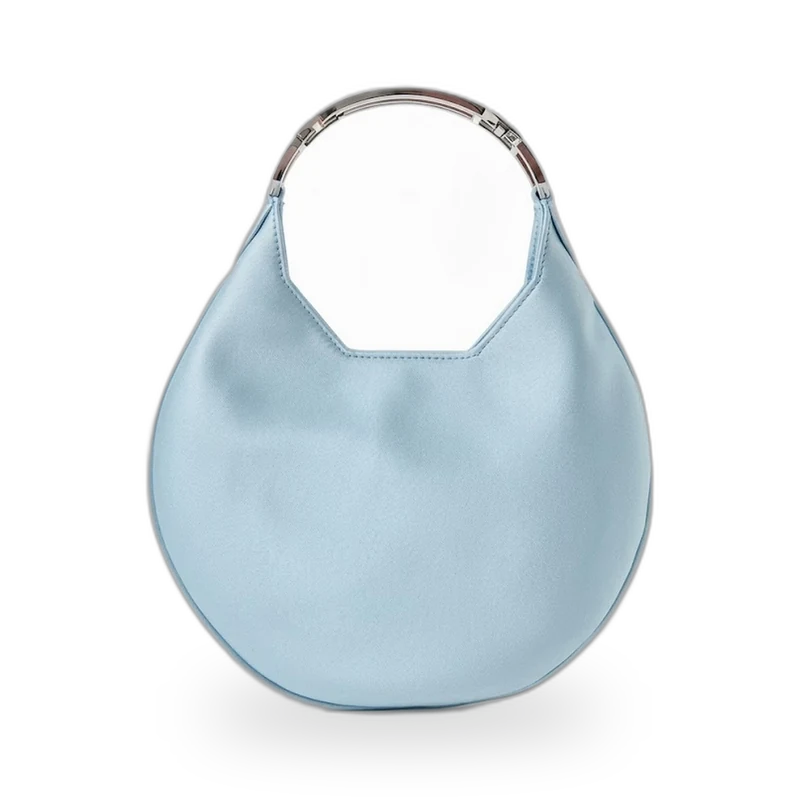
  • A pale blue satin evening handbag with a metal frame handle

    Evening handbags

    • Chain or satin strap, satin lining, framed or flap closure
    • The metal frame edge catches satin, and that is where the wear starts
    • Bound frame edges and a sealed lining so the wear does not start
    • Chain or satin strap, satin lining, framed or flap closure
    • The metal frame edge catches satin, and that is where the wear starts
    • Bound frame edges and a sealed lining so the wear does not start
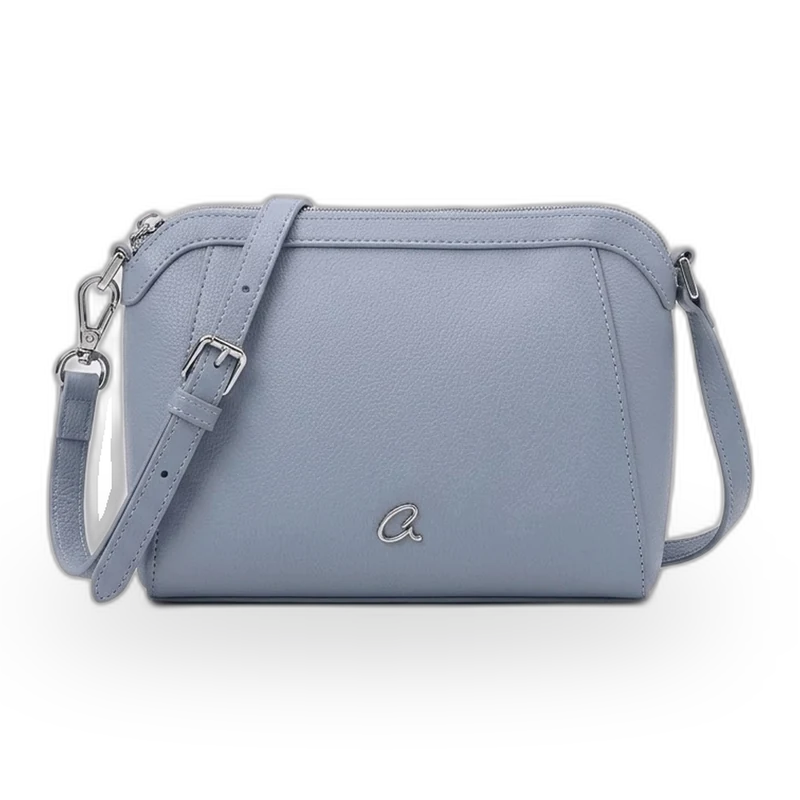
  • A pale blue leather crossbody bag with an adjustable strap

    Crossbody bags

    • Adjustable or detachable straps, 90 cm up to 145 cm
    • The strap-to-body joint carries the entire load, and it works loose
    • 60 kgf held at every attach point, hardware and stitching included
    • Adjustable or detachable straps, 90 cm up to 145 cm
    • The strap-to-body joint carries the entire load, and it works loose
    • 60 kgf held at every attach point, hardware and stitching included
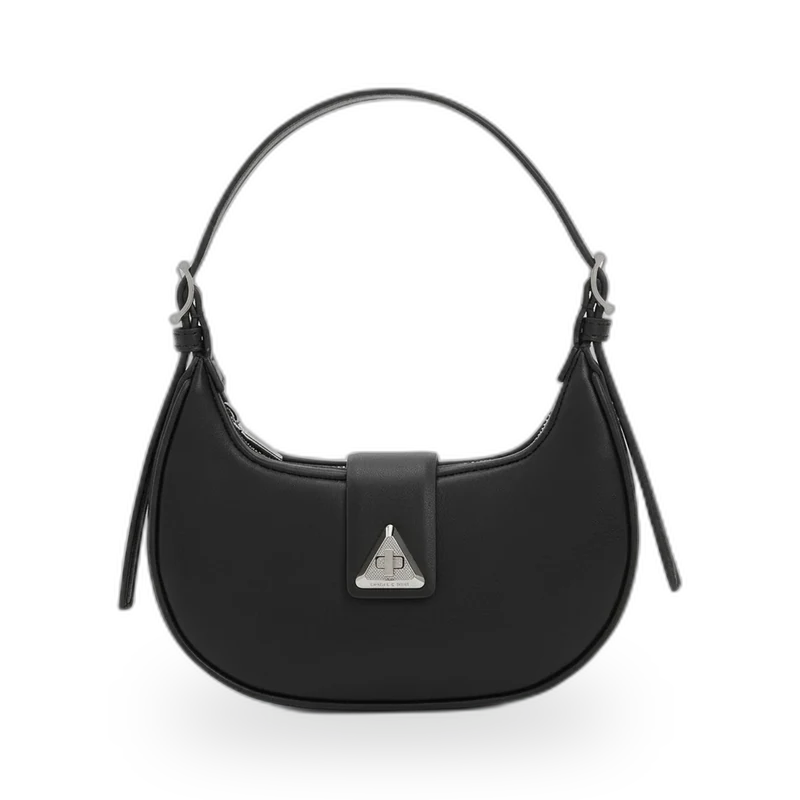
  • A black leather shoulder bag with a crescent hobo shape

    Shoulder bags

    • Hobo, slouch and flap shapes, single or double strap
    • Specify the lining badly and a soft body collapses the moment it is filled
    • Interfacing weight chosen per silhouette so the drop holds its line
    • Hobo, slouch and flap shapes, single or double strap
    • Specify the lining badly and a soft body collapses the moment it is filled
    • Interfacing weight chosen per silhouette so the drop holds its line
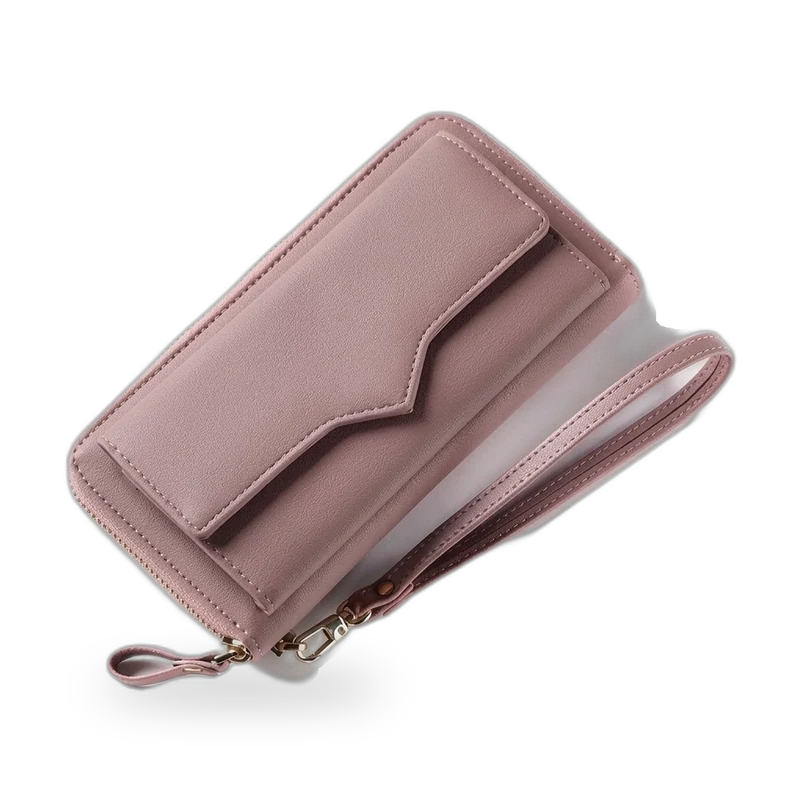
  • A dusty pink zip purse with a wrist strap

    Purses

    • Zip, snap and framed mouths, with card slots and note sleeves
    • Zip teeth that catch the lining will not last a full season
    • Lining wrapped clear of the teeth, zipper tape stitched both sides
    • Zip, snap and framed mouths, with card slots and note sleeves
    • Zip teeth that catch the lining will not last a full season
    • Lining wrapped clear of the teeth, zipper tape stitched both sides
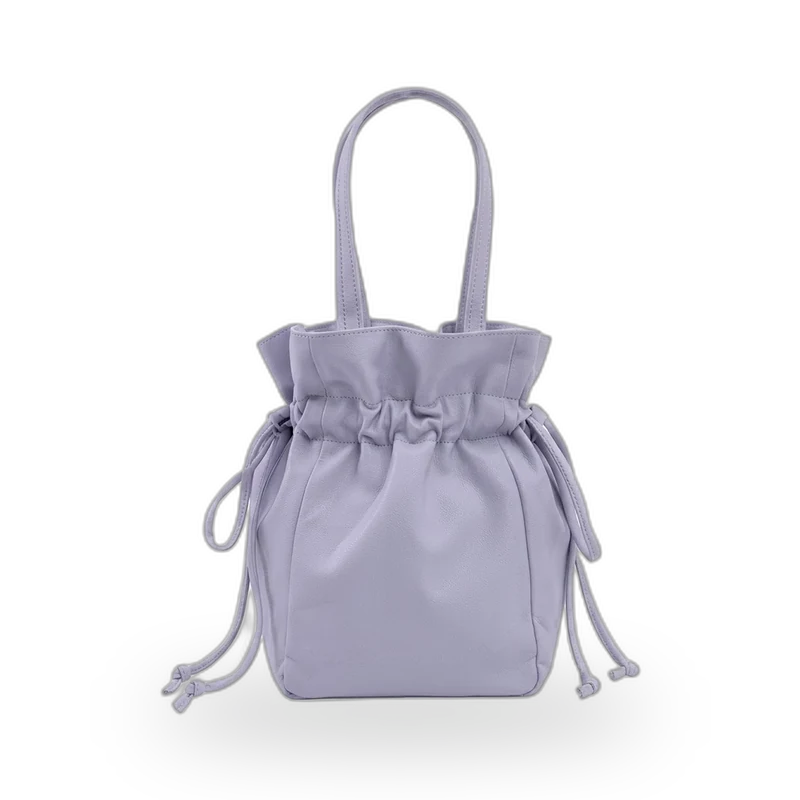
  • A lilac leather drawstring pouch bag with a top handle

    Drawstring bags

    • Luxury and promotional grades, drawcord through the top channel
    • Cord ends fray, then escape through the channel grommet
    • Eyelets set with the cord, tested through 5,000 open-close cycles
    • Luxury and promotional grades, drawcord through the top channel
    • Cord ends fray, then escape through the channel grommet
    • Eyelets set with the cord, tested through 5,000 open-close cycles
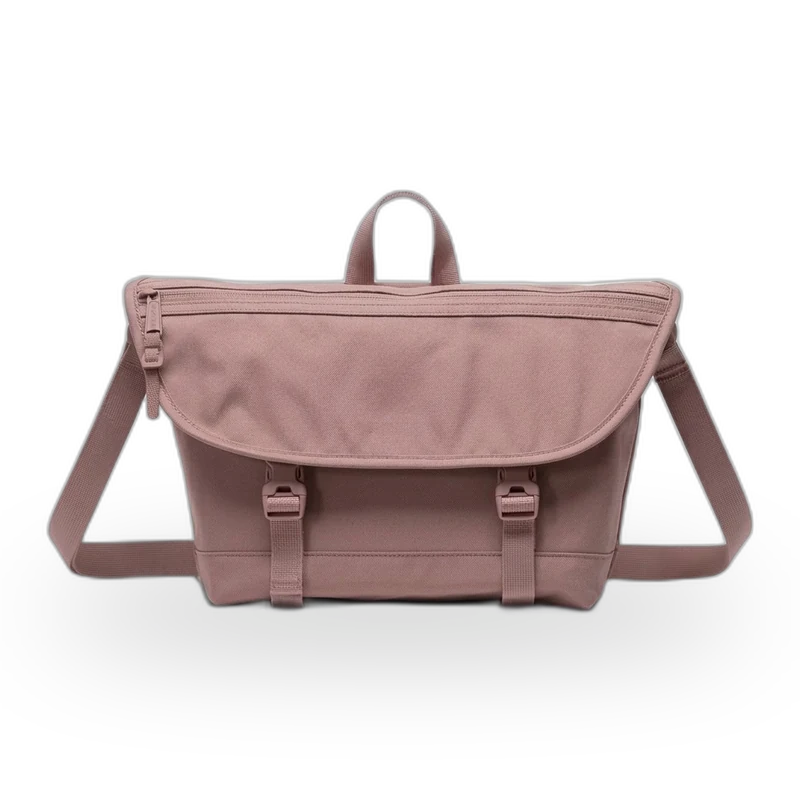
  • A rose canvas messenger bag with a flap closure and buckles

    Messenger bags

    • Flap or zip closure, with a padded sleeve sized to your device list
    • The flap’s leading edge and the corners take the most abrasion
    • Edge-taped flap and reinforced corners on the wear points
    • Flap or zip closure, with a padded sleeve sized to your device list
    • The flap’s leading edge and the corners take the most abrasion
    • Edge-taped flap and reinforced corners on the wear points

Not sure which type?Describe how the bag will be used and we will come back with the two or three most likely types.Start with the use case

OEM & ODM

Bring Your Design — or Pick Ours

The OEM ODM handbag production process differs only at the front: who owns the pattern. Everything after sampling — cutting, stiffening, edge finishing, fittings, inspection — runs identically.

OEM

You bring the design

A tech pack, a sketch, a competitor sample or a CAD file goes in. A cuttable pattern, a bill of materials and a costing come out — before anything is committed to a production line.

You supply
Tech pack, sketch, reference bag, or dimensions and a photo
We build
Pattern, grading, material and finishing selection, construction spec
Sampling
Structured prototype built with production fittings and edge finishing
Costing
Per-unit cost itemised by material, fittings and labour
Approval
You sign the pre-production sample; that sample becomes the quality contract
ODM

You pick from ours

Nine silhouettes already have patterns on file. Change the leather, the lining, the edge paint, the fittings and the logo, and the development time comes out of the timeline.

You choose
Silhouette, leather, lining, fittings and logo method
We hold on file
Patterns, board specs, fittings references, approved swatches
Minimum
Set per silhouette, not per order, so colourways can share it
Tooling
Custom logo plates and frames are tooled to your mark
Reorder
Same construction and fittings spec, so the second run matches the first

Construction

Where a Handbag Is Won or Lost

Stiffening, hardware attachment, carry modes and the interior are where a handbag is won or lost. Settle them before the pattern is cut — after that, each one is a re-cut rather than an edit.

  • 01

    What sits between outer and lining

    A tote can collapse and still work. A handbag is judged on a shelf, empty and upright, so this is the first decision the pattern has to absorb.

    • PE board, paperboard, EVA foam or buckram between outer and lining
    • Reinforced base panel, stiffened separately from the body
    • Pattern engineered so panels meet square at the gusset
  • 02

    Which hardware, and how it is attached

    A turn lock is the first thing a customer touches and the first thing to come back as a complaint. It is also the part most factories treat as an aftermarket purchase — which decides how much of the failure is yours.

    • Turn locks, magnetic snaps, metal frames, chain handles
    • Six finishes: gold, silver, rose gold, gunmetal, antique brass, matte black
    • One finish matched across a multi-style collection
    • Screw-post or riveted attachment, per silhouette
  • 03

    How many ways it is carried

    One handbag SKU usually ships as two or three configurations in one box. A second carry mode is another load path that has to be engineered, not added.

    • Top handle plus a detachable shoulder strap as standard
    • Optional crossbody strap on a swivel snap hook
    • Each carry mode pull-tested as one assembly, fittings included
  • 04

    The inside is what a buyer opens first

    After the exterior, this is what a buyer opens, photographs and writes about. It is more complex on a handbag than on any other bag category. For what each lining fabric does to feel, wear and unit cost, see our guide to handbag lining types.

    • Centre divider, zip pocket, slip pockets, card slots, key leash
    • A zip guard behind each tape, so the teeth never run on the lining
    • Lining set in as its own cut piece, so it does not pucker at the gusset

Test data

The Test Data Other Factories Leave Out

The figures below are the standards a lot is held to, quoted with the limit that releases it. A supplier who will not name theirs has answered the question.

Final inspection sampling

ISO 2859-1 · general inspection level II · AQL 2.5 on major defects

  • 501 – 1,200n = 80 · accept 5 · reject 6
  • 1,201 – 3,200n = 125 · accept 7 · reject 8
  • 3,201 – 10,000n = 200 · accept 10 · reject 11
  • 10,001 – 35,000n = 315 · accept 14 · reject 15

Draw a 2,000-piece handbag lot and 200 finished bags come off the line at random. Ten major defects pass; eleven stop the shipment. Critical defects — a failing closure, a detached handle — reject on the first one, at any lot size. Third-party inspection houses are welcome to run the same plan in our plant.

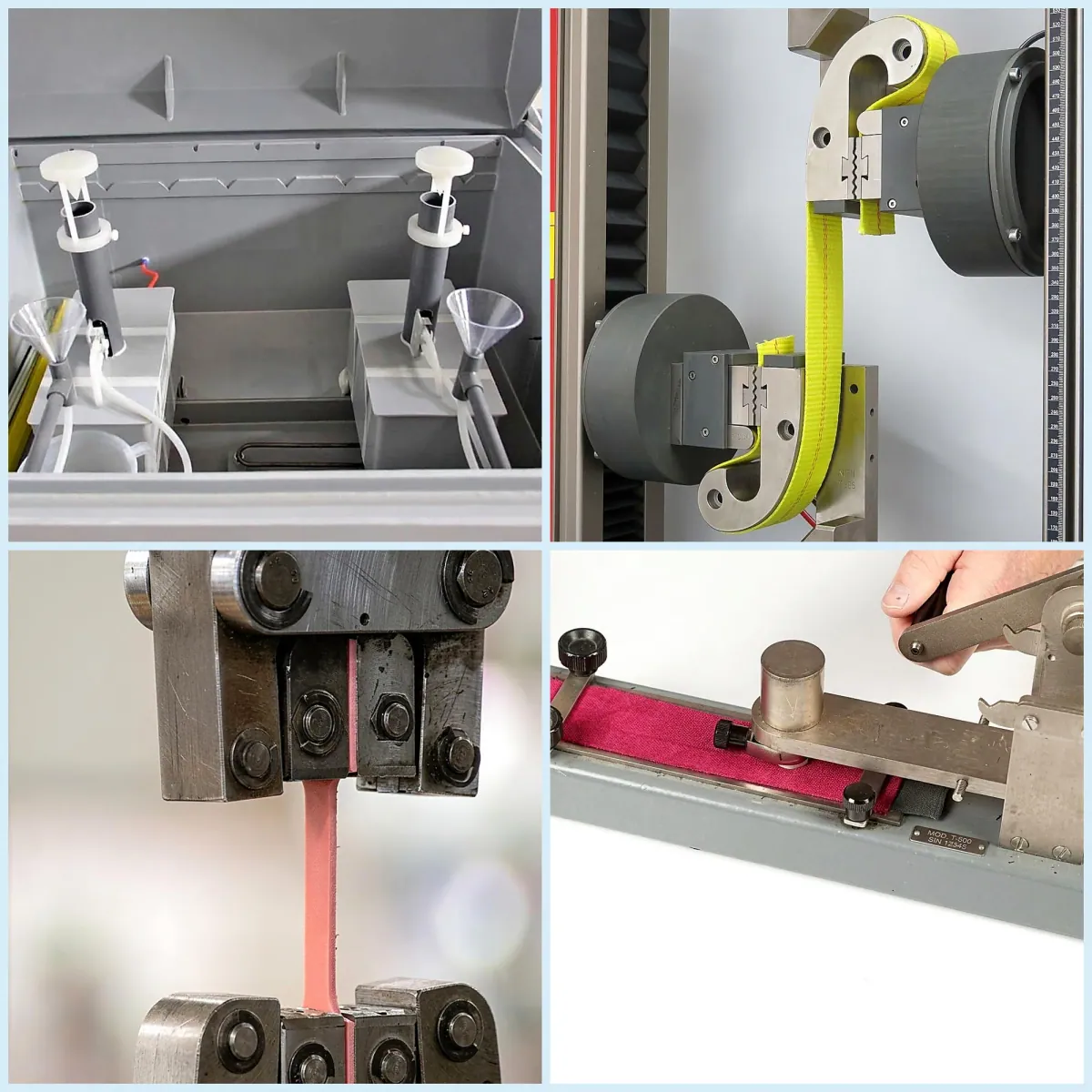
What a handbag is tested for

  • ASTM B117

    Hardware corrosion

    96 h, no red rust

    Cheap plating rusts in humid markets; salt-fogged as an assembled part

  • ASTM D6770

    Strap and handle pull

    60 kgf held 10 s

    A handle fails with a full bag in it; pulled as a whole assembly

  • ISO 11644

    Edge paint adhesion

    2 coats, cured between

    Edge paint chips in the hand; coats and colour checked first

  • ISO 17075

    Chromium VI in leather

    < 3 mg/kg

    Chrome VI is EU-restricted; a hide screened to REACH

  • ISO 3376

    Leather tensile strength

    ≥ 15 N/mm²

    The wrong hide sags or tears at a seam; measured before cutting

  • ISO 11640

    Colour fastness to rubbing

    ≥ 4 dry / ≥ 3 wet

    A dark bag marks a pale coat; dry and wet rub graded up front

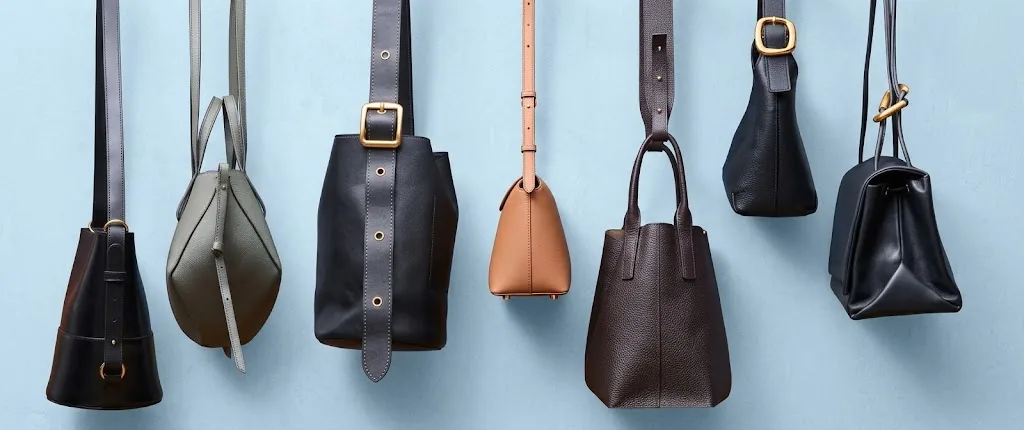
Seven custom leather handbags in tan, olive, black and brown hanging from their straps against a pale blue wall

Route to market

Stock Held Close to Your Market

Stock held closer to your market, on the production PO rather than a forwarder you have to manage.

Branding

Where Your Logo Meets the Bag

You pick the placement; the material sets the method. Four places a mark can sit on a handbag, and what each one asks of it.

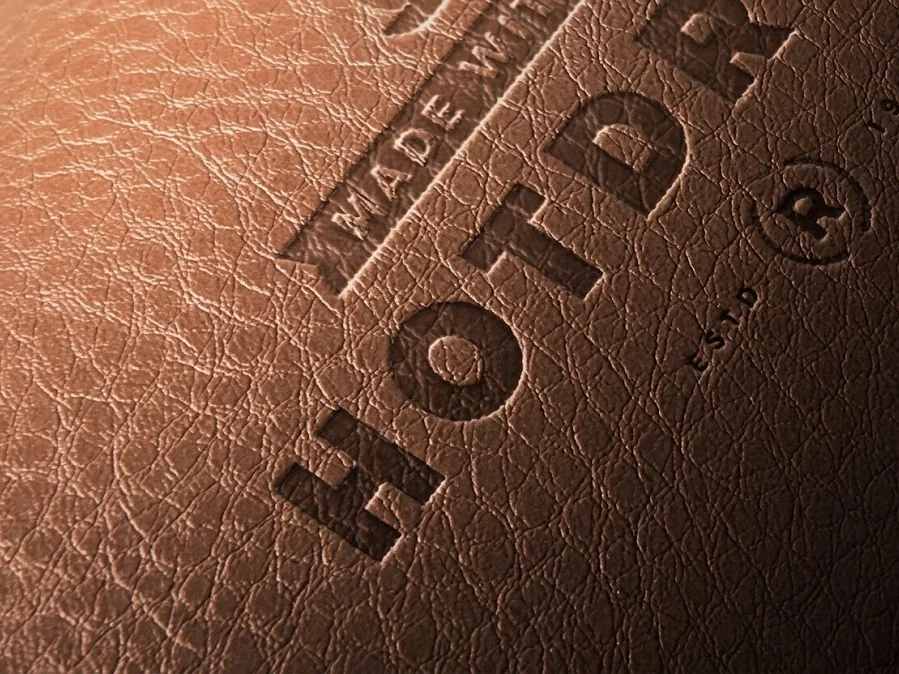
  • A debossed logo pressed into the pebble grain of a tan leather handbag panel
    Front exterior

    Pressed into the leather, or printed

    • A deep pebble grain swallows fine type; a smooth calf holds it
    • One die presses blind and foil, so switching costs no new tooling
    • Where there is no grain to press into, the mark is printed instead
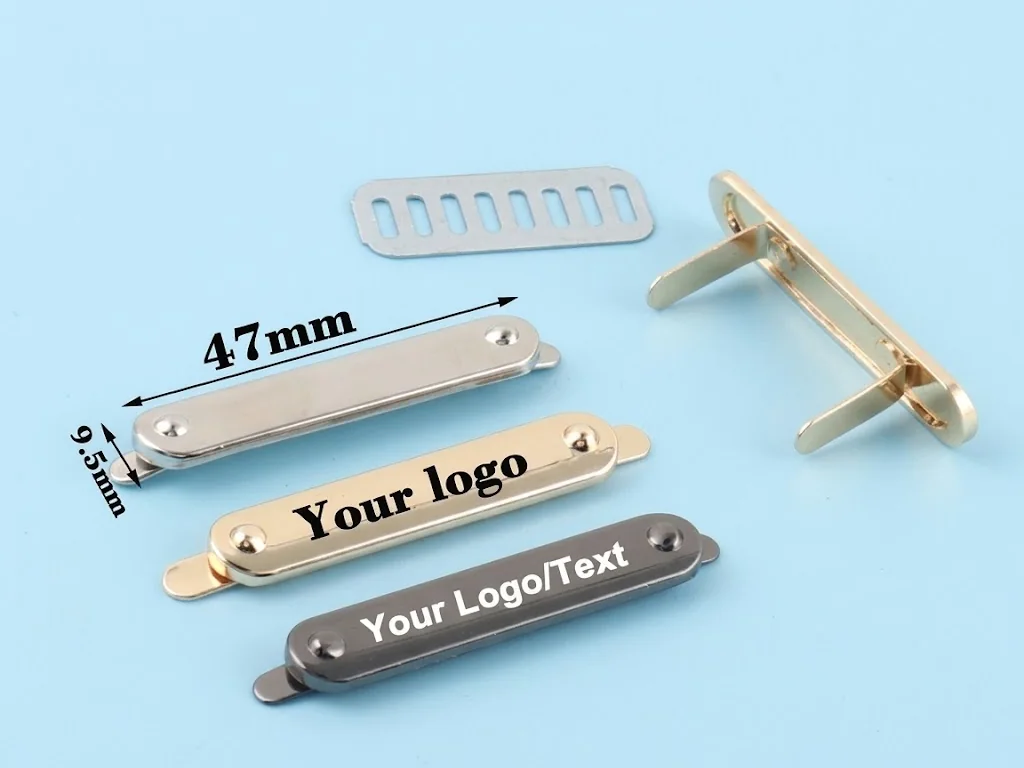
  • Metal logo plates and a cast metal frame fitting in silver, gold and gunmetal finishes
    Hardware

    A separate piece, or cast into the fitting

    • An applied plate is the most durable exterior mark, and the heaviest
    • Cast is the closure or zip puller itself — nothing sits proud of the bag
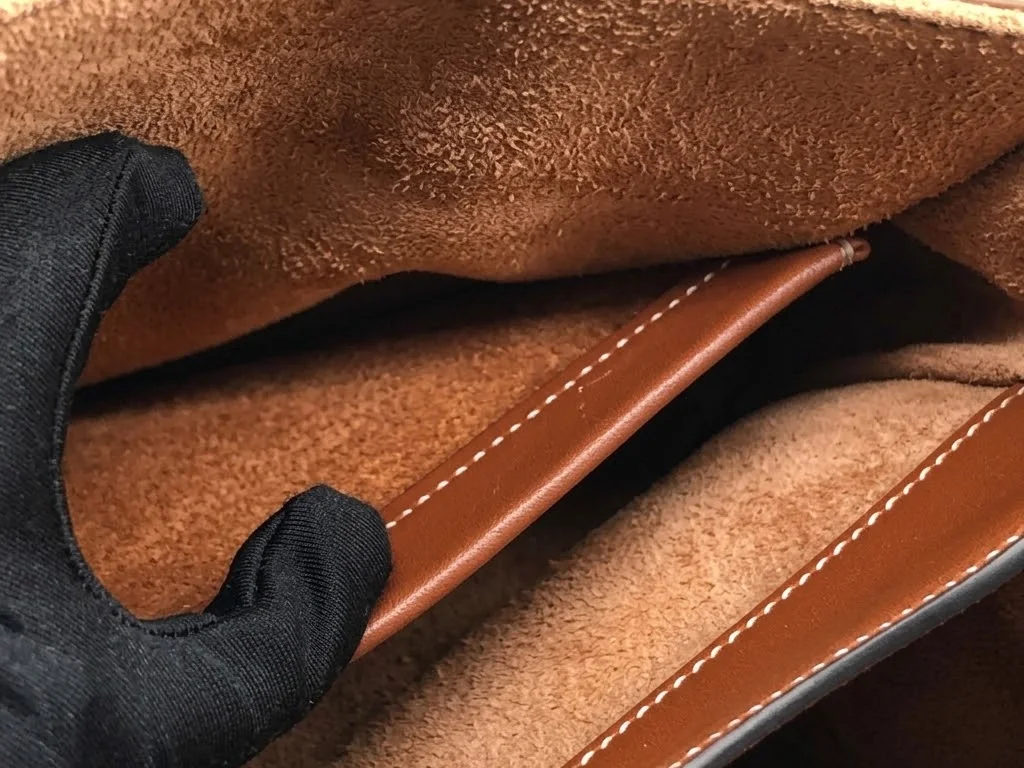
  • A gloved hand lifting the inner flap of a leather handbag to show its suede lining and stitched edge trim
    Interior

    The mark on the inside

    • A printed lining, a debossed panel, or an engraved plate on the interior hardware
    • It costs less than any exterior method
    • It is the one a buyer sees whenever the bag is opened
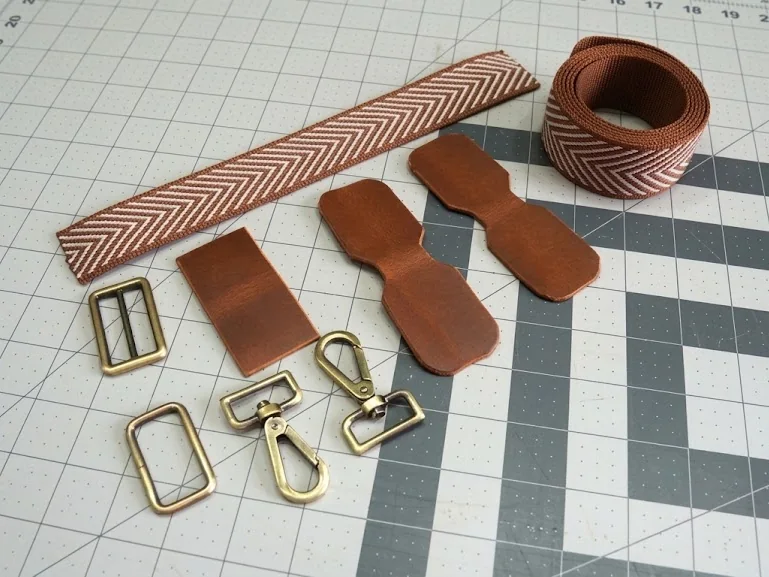
  • A woven webbing strap, leather strap tabs and antique brass buckles and snap hooks laid out on a cutting mat
    Strap & trim

    The mark that travels with the bag

    • An embossed strap shows in wear, on the shoulder
    • A stitched label needs a stable backing, or the stitch line puckers the webbing

Who this is for

Worth a Run. Or Worth Passing On.

Most handbag briefs that go wrong do so at the start, when a factory says yes to a job it should have turned down. Each row below is one of the boundaries — taken one way, declined the other.

You have a bag, not a tech pack

A moodboard, a reference handbag or a sketch is enough to start. It gets reverse-engineered into a cuttable pattern and quoted per unit at the minimum, so a line can start small and reorder against the same pattern.

You need 25 pieces

Below the minimum the pattern, board and tooling set-up does not amortise, and saying so beats quoting a price that disappoints. The minimum is stated under what 100 pieces buys, along with what it takes to get there.

You give the date

Production is scheduled against your sell-through rather than you fitting around a batch filled for convenience. Four silhouettes on one PO and one inspection standard across all of them is a normal order, not a special one.

You need it in three weeks

Sampling and production are not steps that compress, and edge finishing is a hand process that sets the floor under the timeline rather than a buffer to trim. The two windows are published above.

You want a better bag for the money

Lining and edge finishing priced where they are and itemised line by line, so the number you approve is the number you pay. One finish held across a many-SKU range is what keeps a collection reading as one family. What each lining fabric costs against the others is set out in our handbag lining comparison.

Unit price is the only variable you move

This is not the lowest quote in Guangzhou. When the fittings, lining and edge finishing have to come out of the cost, a trading company will serve you better here — and will give you a truer price than this one would.

Why choose us

The Details Decide It

A handbag run goes wrong in the details, not the headline: how the parts that fail first are built, whether the quantity follows your sell-through, and how it turns up at the door.

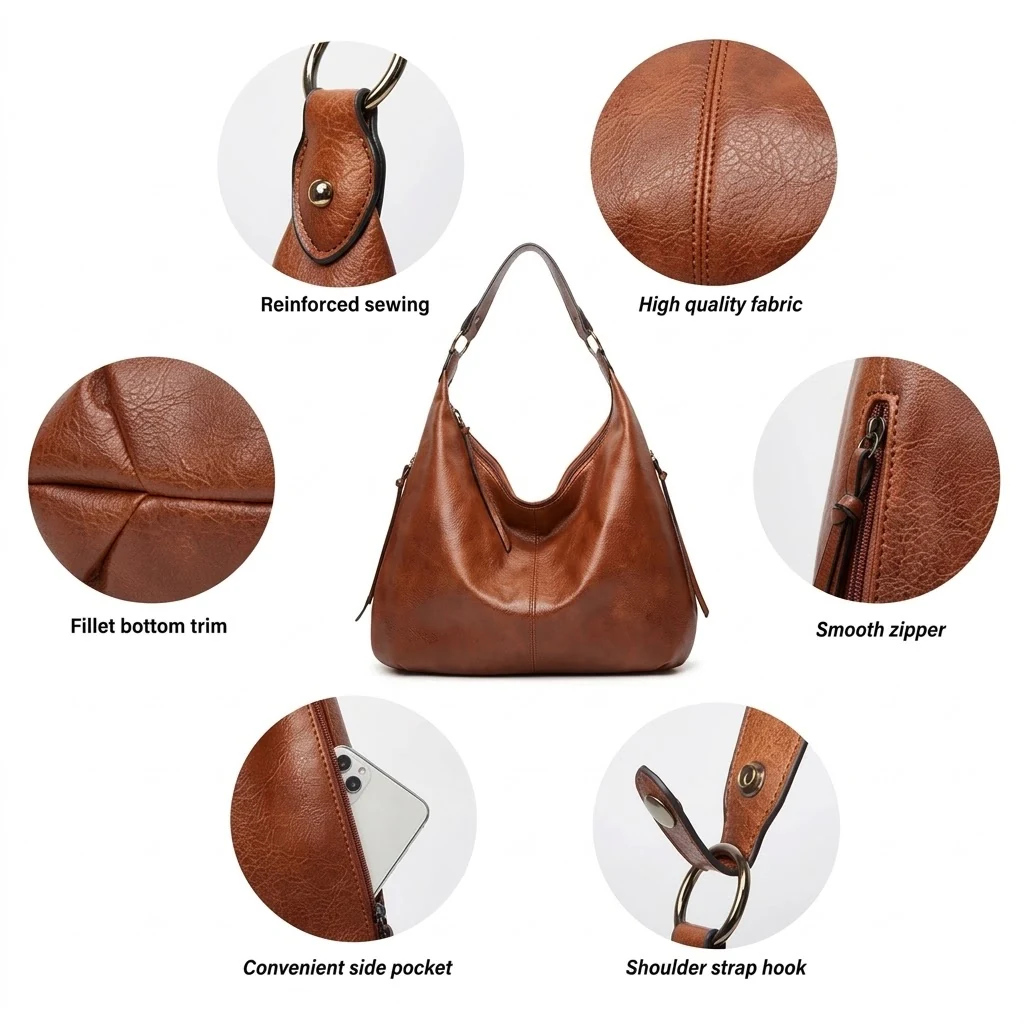
Callouts on a tan leather hobo bag showing reinforced sewing, grain quality, fillet bottom trim, smooth zipper, side pocket and shoulder strap hook

Build

Made to Take a Daily Beating

  • Reinforced stitching — bar-tacked at every load point

  • Quality zippers — smooth-running and held clear of the lining

  • Adjustable straps — crossbody drop set to your spec

  • Padded interior — for a laptop, tablet or valuables

  • Waterproofing — specified for all-weather use

  • Anti-theft closure — a lockable closure option for travel ranges

  • Feet studs — so the base never sits on the ground

  • Edge finishing — burnished and sealed against cracking

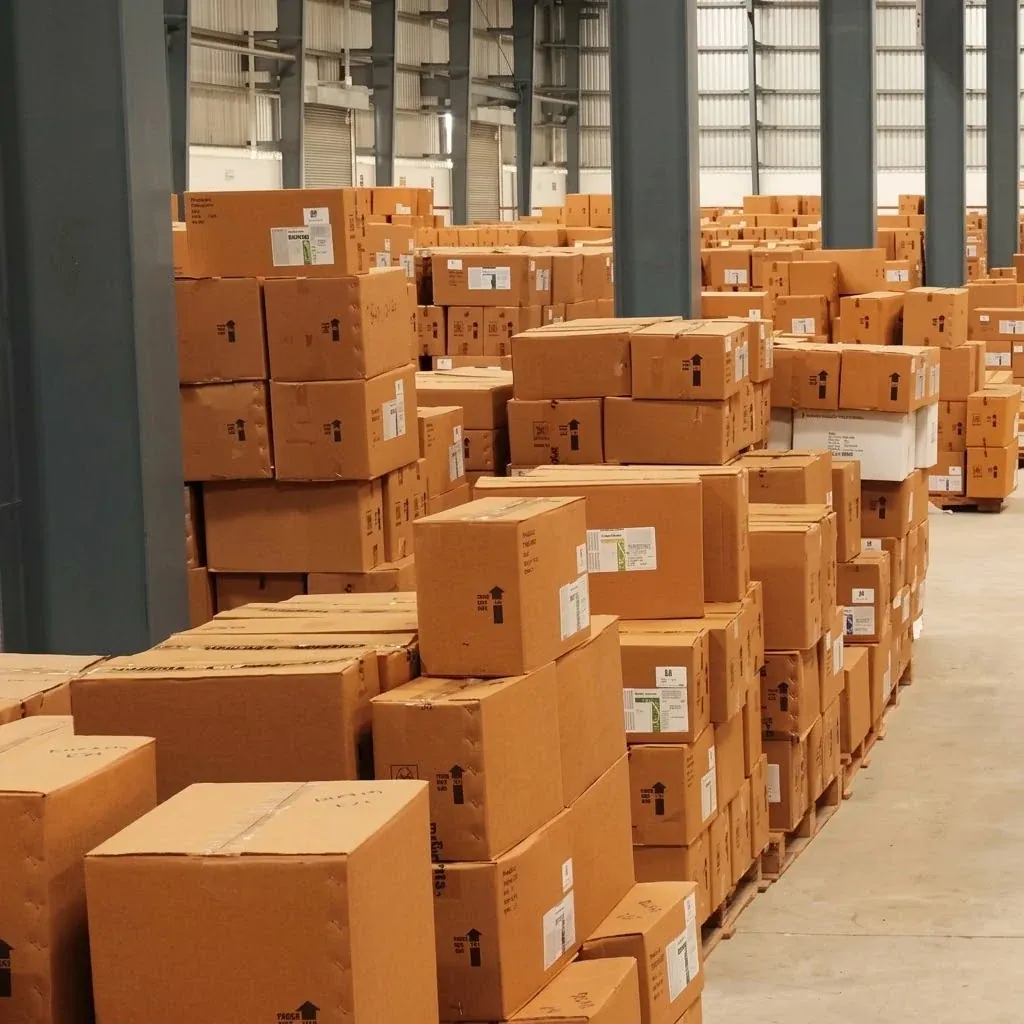
Stacked and labelled shipping cartons on pallets in a warehouse aisle

Inventory

Order What You Can Actually Sell

  • Real-time tracking — status at cutting, sewing and packing

  • Inventory forecasting — production planned to your numbers, not ours

  • Split ship dates — a line can follow your market, not the other way round

  • No deadstock risk — nothing left sitting unsold at your end

  • Just-in-time production — cuts storage cost without stretching lead time

  • Reorder windows — a repeat run booked against your sell-through date

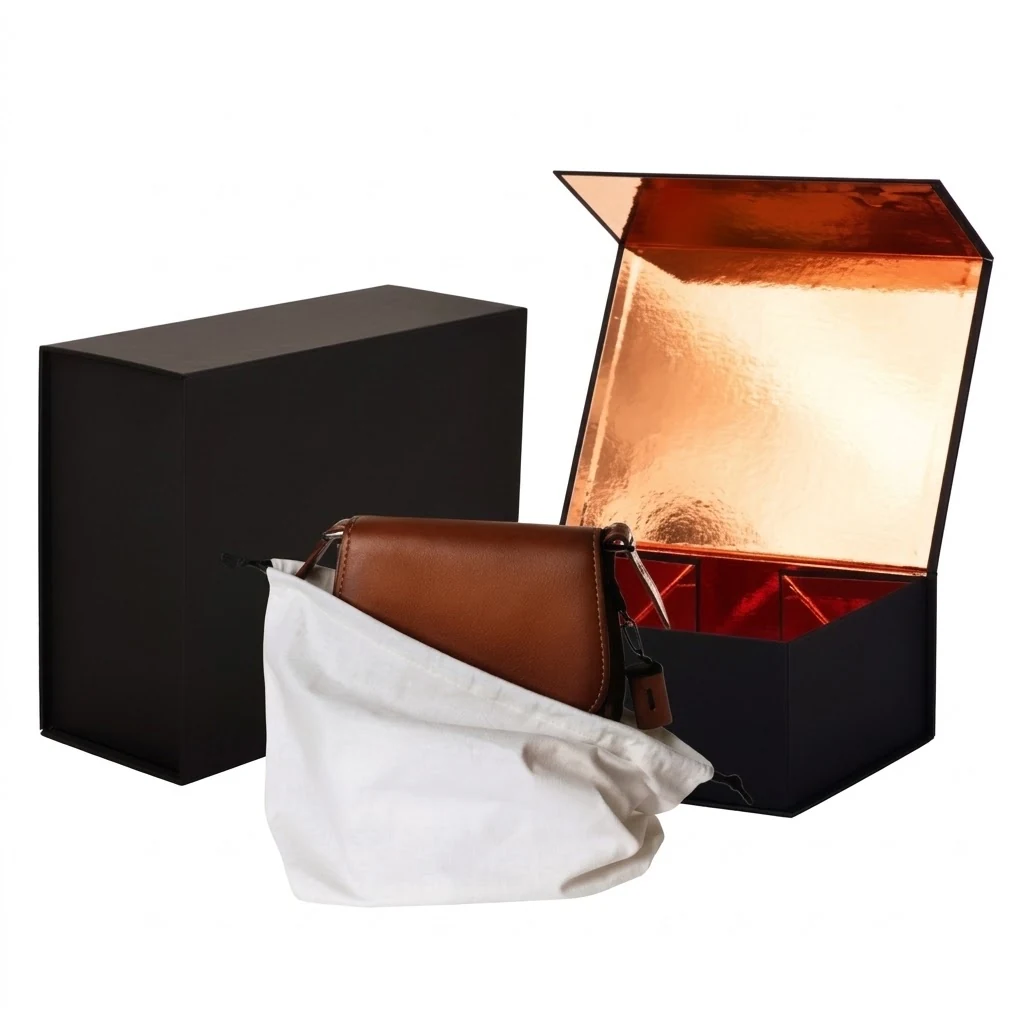
A magnetic gift box with a copper foil interior, a branded cotton dust bag and a tan leather handbag

Packaging

It Arrives the Way It Left

  • Printed logos — your mark on the outer packaging

  • Gift boxes — a rigid box for the unboxing

  • Dust bags — fabric bags that protect the handbag in storage

  • Shipping cartons — cut to size so nothing shifts in transit

  • Recycled paper — recyclable board available as standard

  • Biodegradable options — compostable alternatives on request

Order terms

The Unit Price, Line by Line

The per-unit band a run lands in, and the fixed costs that sit outside it — tooling, sampling, packaging. Both are settled before you commit to a PO, and every line on the table has a cost of its own.

What a handbag costs, per unit

Indicative FOB bands at 100–1,000 pieces. A specific bag is quoted from its tech pack.

  • Structured PU / vegan

    $8 – $35

    Retail, promotional and own-label ranges.

  • Leather handbag / tote

    $40 – $120+

    Premium, gifting and flagship ranges.

Per unit · FOB

Paid once, before the first unit

Fixed costs that sit outside the per-unit band. Tooling is reused on reorders, and spreading these across a larger run is what pulls the unit price down.

  • Logo die or stamp$80 – $150

    reused on every future reorder

  • Custom hardware tooling$200 – $600

    only for fully custom hardware; stock has none

  • Sample development$50 – $200

    per sample, by complexity

  • Custom packaging$0.50 – $2.00

    per unit; eco-friendly $0.75 – $1.50

Trade-offs

Every Spec Asks Something Back

The handbag specifications this page argues for, and what each one asks you to give up in return. A quote only means something once both sides are on the table.

  • 01

    Full-grain leather is heavier than PU

    The same silhouette in full-grain carries noticeably more in the hand. If the brief is a light bag, full-grain works against you — say so at sampling and a lighter upper will be quoted instead of upselling the hide.

  • 04

    The minimum is what a per-order sample calendar is built on

    Production is scheduled to your date rather than batching several buyers into one long run and asking you to fit around it. Holding that open for a small order is what the minimum is for — below it a fit date cannot be quoted honestly.

  • 02

    A bag that stands up empty is a bag that costs more and takes longer

    The internal stiffening behind the structured silhouettes is extra panels, extra passes and extra labour. Softness is a legitimate choice, but you cannot have the shelf presence and the softer price at the same time.

  • 05

    Hand-applied edge paint varies slightly between batches

    Edge finishing is done by hand, so the depth of sheen can differ a little between batches. That is the same hand work that keeps the finish from cracking — a machine edge is more even and wears faster.

  • 03

    Two plating finishes on one order cost you volume and time

    Switching hardware finishes mid-run means clearing the line between them. That pushes both the minimum and the ship date out, which is why a single finish across a collection gets quoted — it is cheaper for you, not just tidier for the floor.

  • 06

    Sampling has no short cut

    Structured samples are built with the production hardware and the finishing the bulk will use, and the edge coats have to cure between passes. Rush the sample and it stops predicting what the run will look like.

Buyer sign-off

The Buyers Write Back

The people who signed the inspection report, on what the numbers looked like once the run was in their hands. One finish across a whole range, a strap anchor that cleared its pull test, an AQL report that arrived with the packing list.

The brief was a nine-SKU vegan-leather collection, one shade of antique brass across the whole range, MOQ 100 per SKU on every one of them.

What held it together was the hardware: all nine styles came back from salt-spray at 168 hours against the 72 we'd asked for, and the antique brass read as one family on the shelf instead of nine variations of a colour. Zipper pulls averaged 3,100 cycles against a 2,500 threshold — two SKUs went to a second run with no re-spec.

Round one needed a strap-drop adjustment on the mini crossbody; round two was approved on sight. Three reorders since — same finish, same weight, same pattern.

Priya Raman

Head of Product · Accessories label, Singapore

Full-grain briefcases and weekenders for a men's line — no tech pack, just a reference bag, a leather swatch and the hardware pulled off an old satchel.

Nothing was quoted until the leather was cut. The hand-finished full-grain came back at 1.4–1.6 mm, matched to our swatch closely enough that the pre-production sample went out to our own team as the finished article. Strap anchors cleared the 60 kgf pull test — roughly four times a full week's load — and the zipper tape was the only flag: a shade off, corrected before bulk.

AQL 2.5 II — zero majors on the lot that landed, minors inside the limit — and the inspection report came with the packing list rather than three days after it. That part matters more than the numbers in it.

Marcus Oyelaran

Product Development Lead · Leather goods label, Lagos

Handbag questions

Frequently Asked Questions About Custom Handbag Manufacturer

The questions that come up on most handbag enquiries. If yours is not here, it will be answered in the first reply.

What is the minimum order quantity for a custom handbag?

The minimum applies per silhouette rather than per order, which is what lets one run cover several colourways of the same shape. A style that needs new tooling — a custom frame, or a logo plate cut to your mark — carries a set-up cost on top of the unit price, quoted with the sample.

Can you build a handbag from a competitor sample or just a sketch?

Yes, and both happen on most first orders. A sketch, a reference bag already selling, or a full tech pack are all workable starting points. A physical reference bag gets reverse-engineered: we cut it into panels, measure the construction, and rebuild it as a manufacturable pattern with your own hardware and lining. A sketch gets a pattern drafted from the silhouette, then a prototype.

Which leathers work for a structured handbag?

Full-grain and top-grain at 1.2–2.0 mm hold a structured body best, and vegetable-tanned leather is the usual choice for a rigid frame bag because it takes a fired edge. Softer nappa suits a hobo or a slouch, where the bag is meant to collapse. If the range needs a vegan line, PU and bio-based microfibre are built on the same patterns with a different stiffening weight — the construction does not change.

Will the hardware plating survive daily use?

Plating is the first thing to fail in a humid or coastal market, so it is specified before the finish colour is chosen, not after. The finished part is corrosion-tested against humid-market conditions and the lot is held to that before it is released — the threshold and the standard are published in the test lab section above.

How long does a handbag order take, sample through to shipment?

Long enough that the timeline is committed in writing before cutting starts, rather than promised in an email. Both windows are in the figures at the top of this page; what matters more is why they do not move — edge finishing is a hand process, and the date is set against your sell-through rather than against a batch we would rather fill.

What are the payment terms?

Thirty per cent on order, with the balance before shipment. The pre-production sample is signed off before cutting starts, so nothing goes into bulk until you have approved the piece you will actually receive. Third-party inspection before loading is welcome on any order, at cost.

Can one order cover several handbag silhouettes?

Yes, and sharing a construction across silhouettes is how most brands keep an order efficient. Four shapes built on one box bag construction share patterns, board templates and hardware, so the set-up is amortised across the whole PO rather than charged four times. One inspection standard and one hardware finish then hold the range together on a shelf.

Which tests do you run on a handbag, and to which standards?

Six, and the thresholds they are held to are published in full above. Reports ship with the order, and an independent inspector is free to audit the lot in our plant.

Can the strap be detachable, and will it hold?

Detachable straps are standard on satchels, box bags and minis, usually on swivel snap hooks or a screw-post anchor. Every attachment point is pull-tested on the assembled bag rather than on the metal alone, because the joint is where failure actually happens. A detachable strap is a load path you can remove, not a weaker one.

Start a handbag run

Send the Sketch.
We Draft the Spec.

A tech pack, a reference sample, or a moodboard is enough to start. Back comes a manufacturable pattern, a landed quote at MOQ 100, and a physical sample you can put in a buyer's hand.

Get a Quote