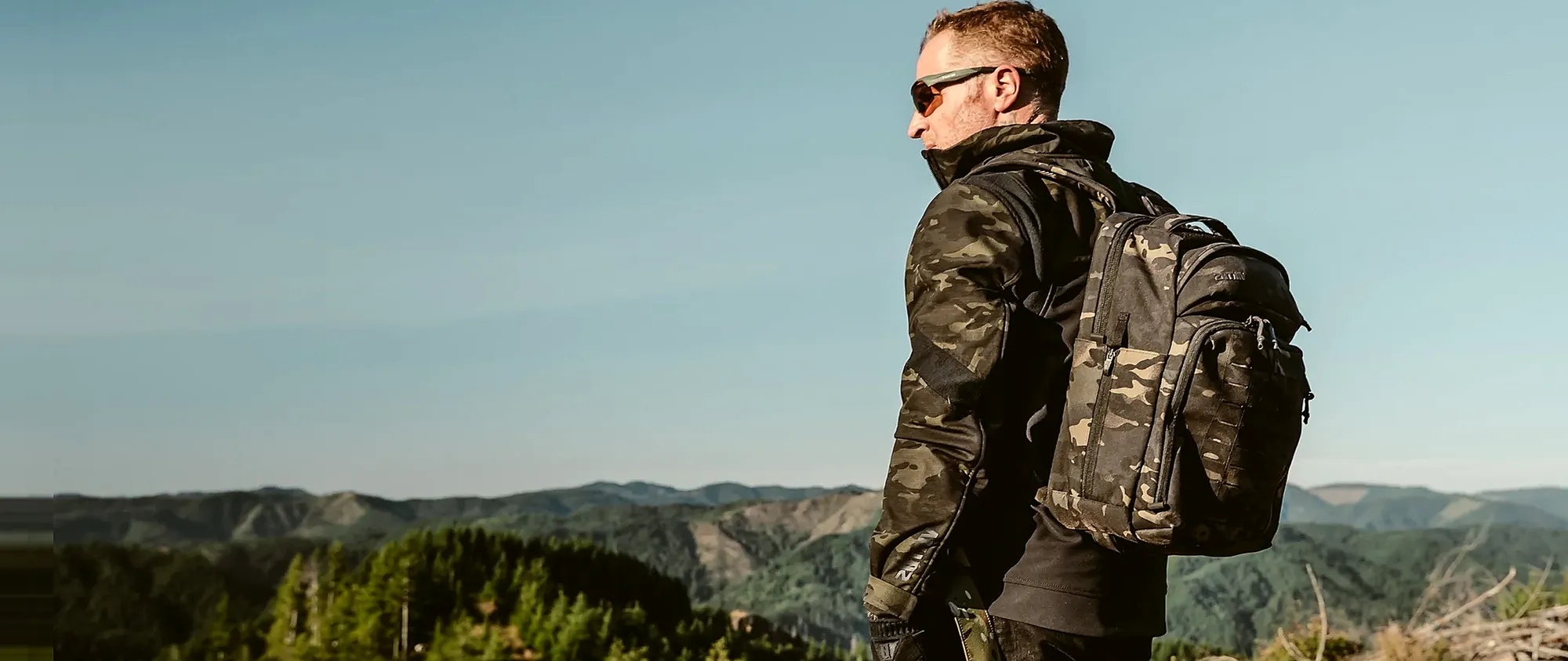
A hiker wearing a camouflage backpack on a mountain ridge, its padded shoulder straps and load-bearing back panel in view
OEM & Private Label · One Pattern Per Build

Custom Backpack Manufacturer Strap Roots Fail, Shells Don’t — the Pattern Draws the Load Path.

Send the format, shell and denier, and who carries it. A sample passes easily; the bulk run is where the order goes wrong — what ships is what was signed off, and a reorder runs off the same pattern. The quote returns in 48 hours with the load-bearing joints specified, the sample in seven days, bulk on a six-to-eight-week window.

  • 2–3Sample rounds before sign-off
  • 7-dayWorn sample, built to the spec
  • 100 pcOrder floor per construction

Where a run is decided

A Run Is Signed Off Before the Bulk Cut

A backpack is four assemblies that have to agree with each other. Get that agreement wrong and no amount of final inspection recovers it.

Three gates

  1. 01

    The requirements fix the pattern

    Fabric, denier and backing, the foam and its thickness, the closure and its gauge, and where the mark sits. Change any one of them after the pattern is cut and the backpack is re-sampled.

  2. 02

    The sample fixes the tolerance

    The pattern is proved on a worn backpack, not on a photo. Strap drop, panel contact, bar-tack placement and zip travel are all measured on it and become the reference the bulk run is held to.

  3. 03

    The run is checked against the sample

    Goldens are held by both sides. The bulk run is held to the signed unit and not to a description of it, so every backpack is judged against a physical bag both sides have handled.

2015
Manufacturing since
500+
Staff on the bag lines
500K
Units a month
50,000 m²
Factory floor

Formats

Formats This Plant Runs, and Where to Start

The formats this floor runs most often. A format that is not here is still workable — the pattern is drafted to a sketch or a reference bag the same way.

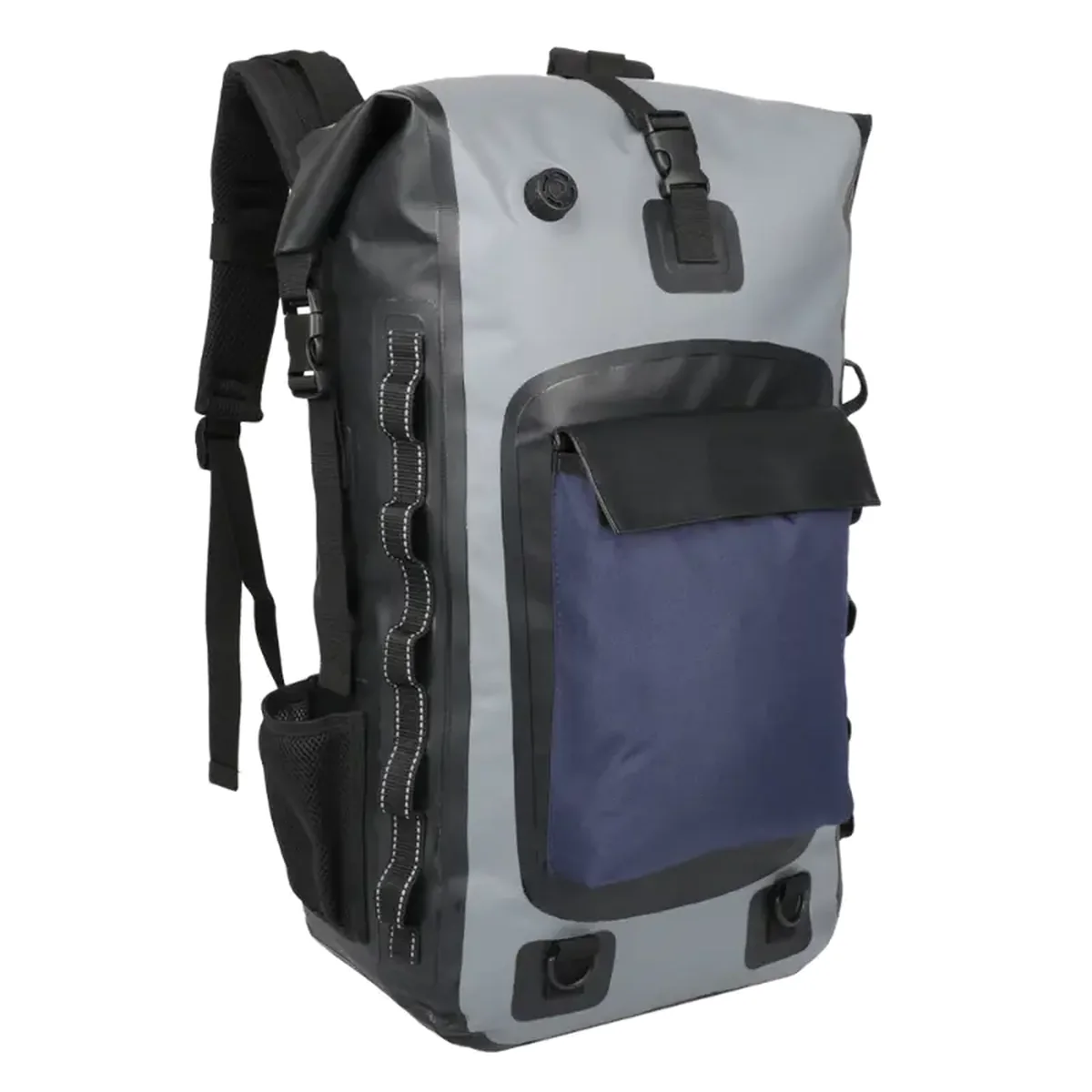
  • A custom grey rolltop backpack with a welded body panel, a side pocket and buckle compression straps

    Waterproof Backpack

    • A rolltop over a coated body, closed and cinched with compression buckles.
    • The side pocket is a separate panel, stitched on and not welded in.
    • A rolltop over a coated body, closed and cinched with compression buckles.
    • The side pocket is a separate panel, stitched on and not welded in.
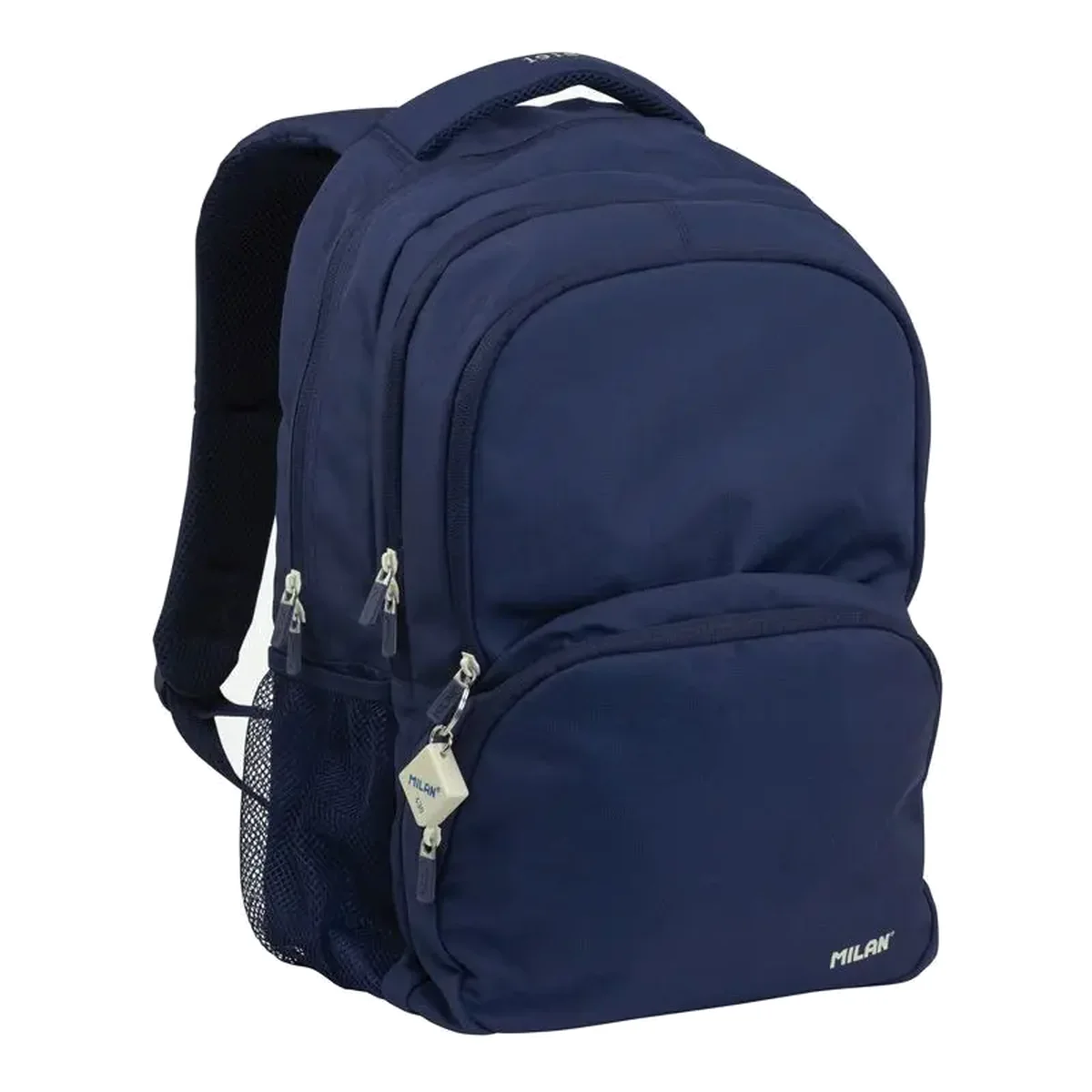
  • A custom navy school backpack with a front zip pocket, a padded handle and a metal zip puller

    School Backpack

    • A two-zone school pack on a padded handle and colour-matched zip pullers.
    • The front pocket is cut flat against the body so the print panel stays readable.
    • A two-zone school pack on a padded handle and colour-matched zip pullers.
    • The front pocket is cut flat against the body so the print panel stays readable.
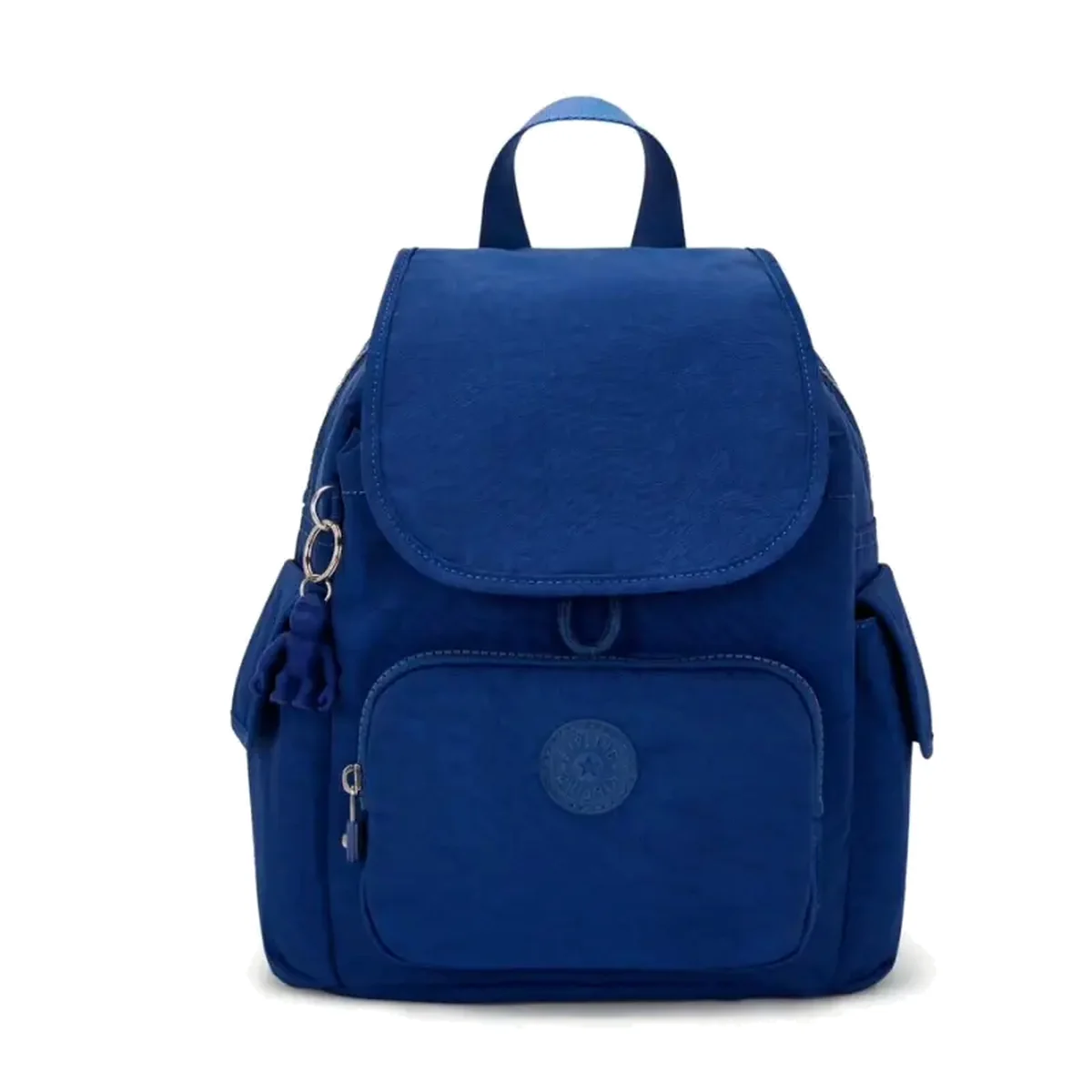
  • A custom blue everyday daypack with a top flap, a zip pocket and an embossed round mark on its face

    Daypack

    • A two-pocket pack with a flap over the body and a flat, uncut front face.
    • The face carries a single pressed mark, so the panel is left free of seams.
    • A two-pocket pack with a flap over the body and a flat, uncut front face.
    • The face carries a single pressed mark, so the panel is left free of seams.
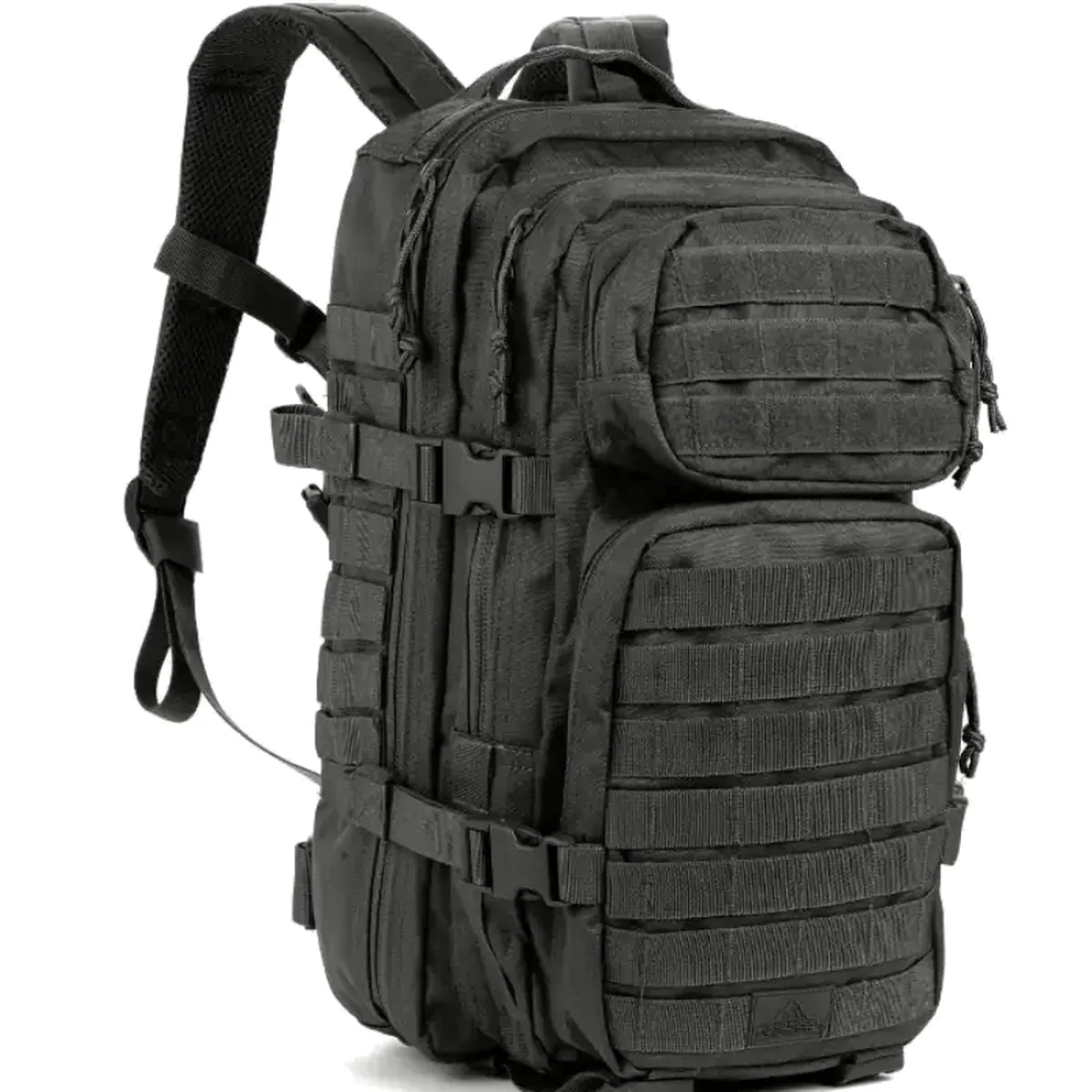
  • A custom black tactical backpack with padded shoulder straps and a large front pocket

    Tactical Backpack

    • A high-denier body on a wide, heavily padded strap and back assembly.
    • The front pocket is built as a boxed panel so it holds shape when it is empty.
    • A high-denier body on a wide, heavily padded strap and back assembly.
    • The front pocket is built as a boxed panel so it holds shape when it is empty.
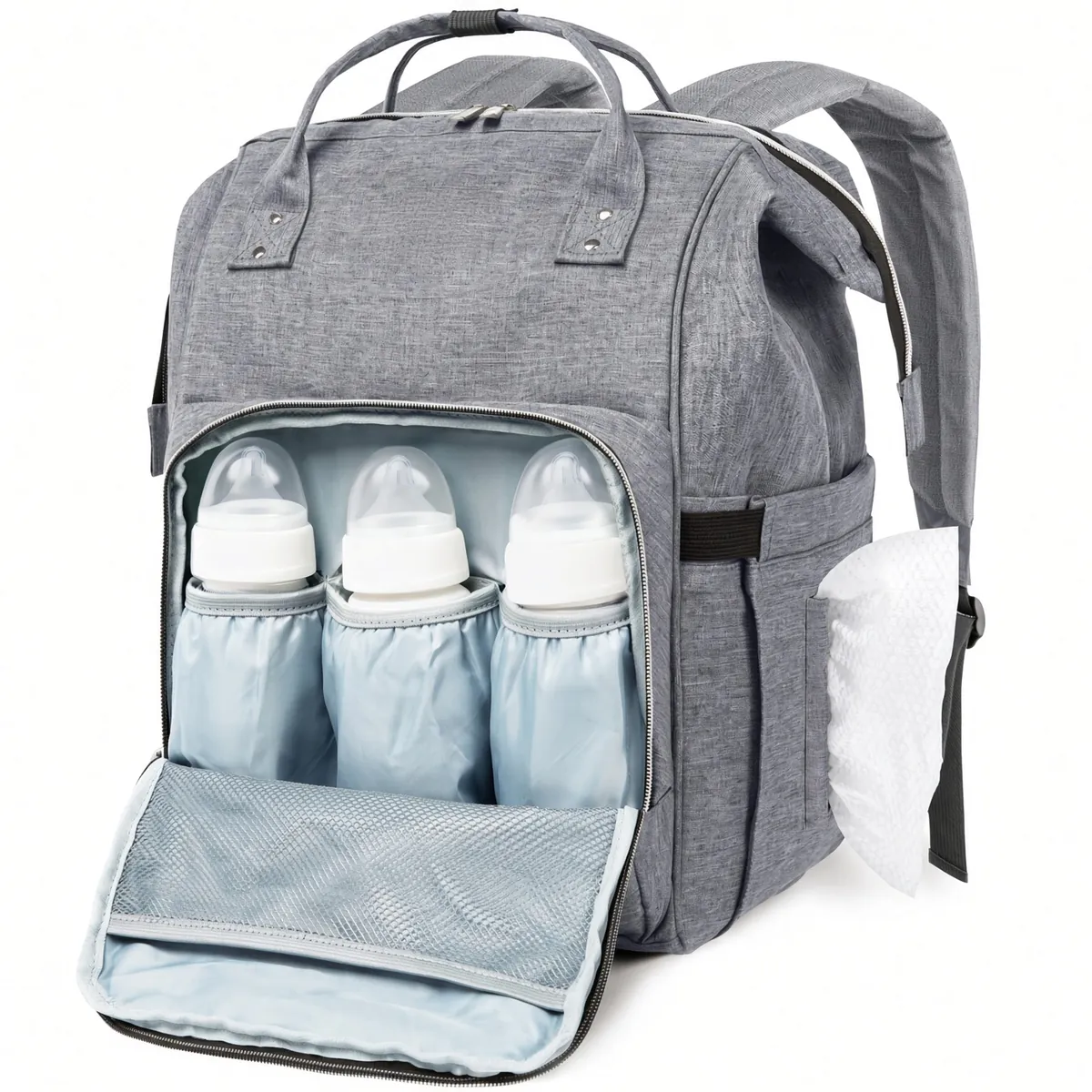
  • A custom grey multi-compartment nappy backpack with a wide opening front panel

    Diaper Backpack

    • A wide-opening front panel, so the inside is reached without unpacking the top.
    • The interiors are cut as separate organisers, never as one open compartment.
    • A wide-opening front panel, so the inside is reached without unpacking the top.
    • The interiors are cut as separate organisers, never as one open compartment.
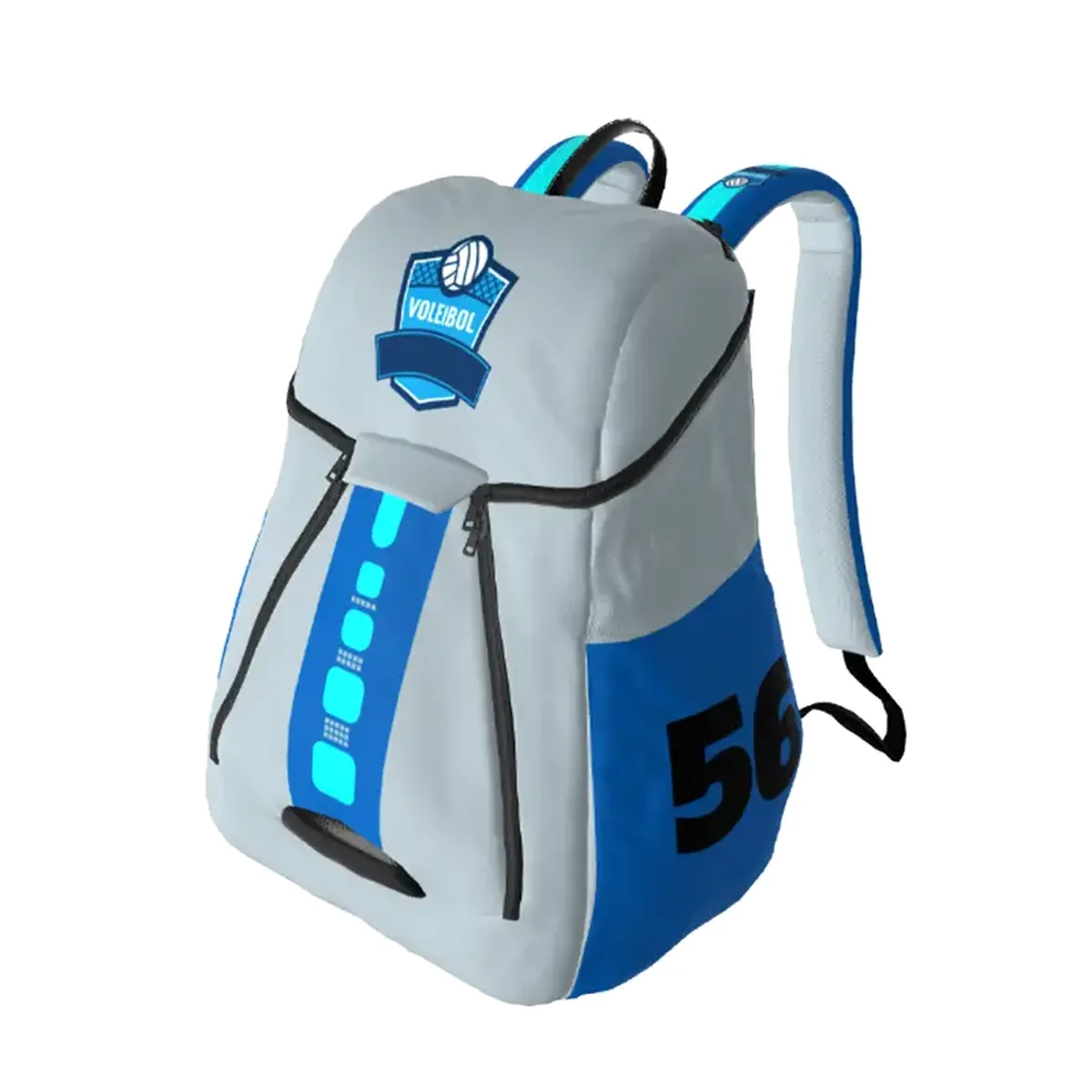
  • A custom grey and blue ball backpack with a bungee front, a mesh base panel and webbing tabs

    Sports Backpack

    • A bungee cord across the face, for a ball that has to be carried dry.
    • The base runs a mesh panel, so a wet kit drains through the bag.
    • A bungee cord across the face, for a ball that has to be carried dry.
    • The base runs a mesh panel, so a wet kit drains through the bag.
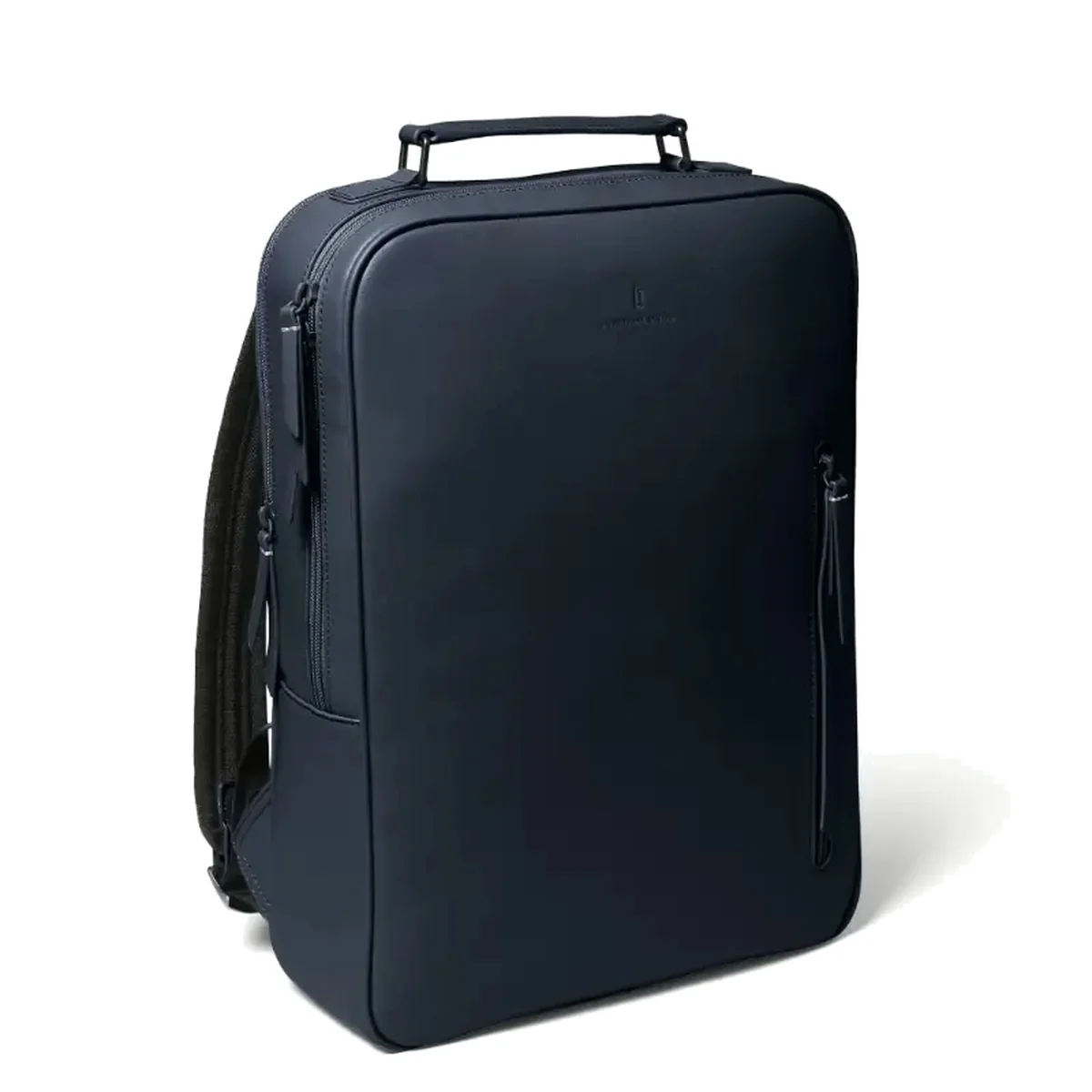
  • A custom black slim laptop backpack with a top carry handle and a flat-fronted body

    Laptop Backpack

    • A slim, flat-fronted body, cut to sit the pack against the back, not away from it.
    • The sleeve is cut to the device it has to hold, so the foam is set to that depth.
    • A slim, flat-fronted body, cut to sit the pack against the back, not away from it.
    • The sleeve is cut to the device it has to hold, so the foam is set to that depth.
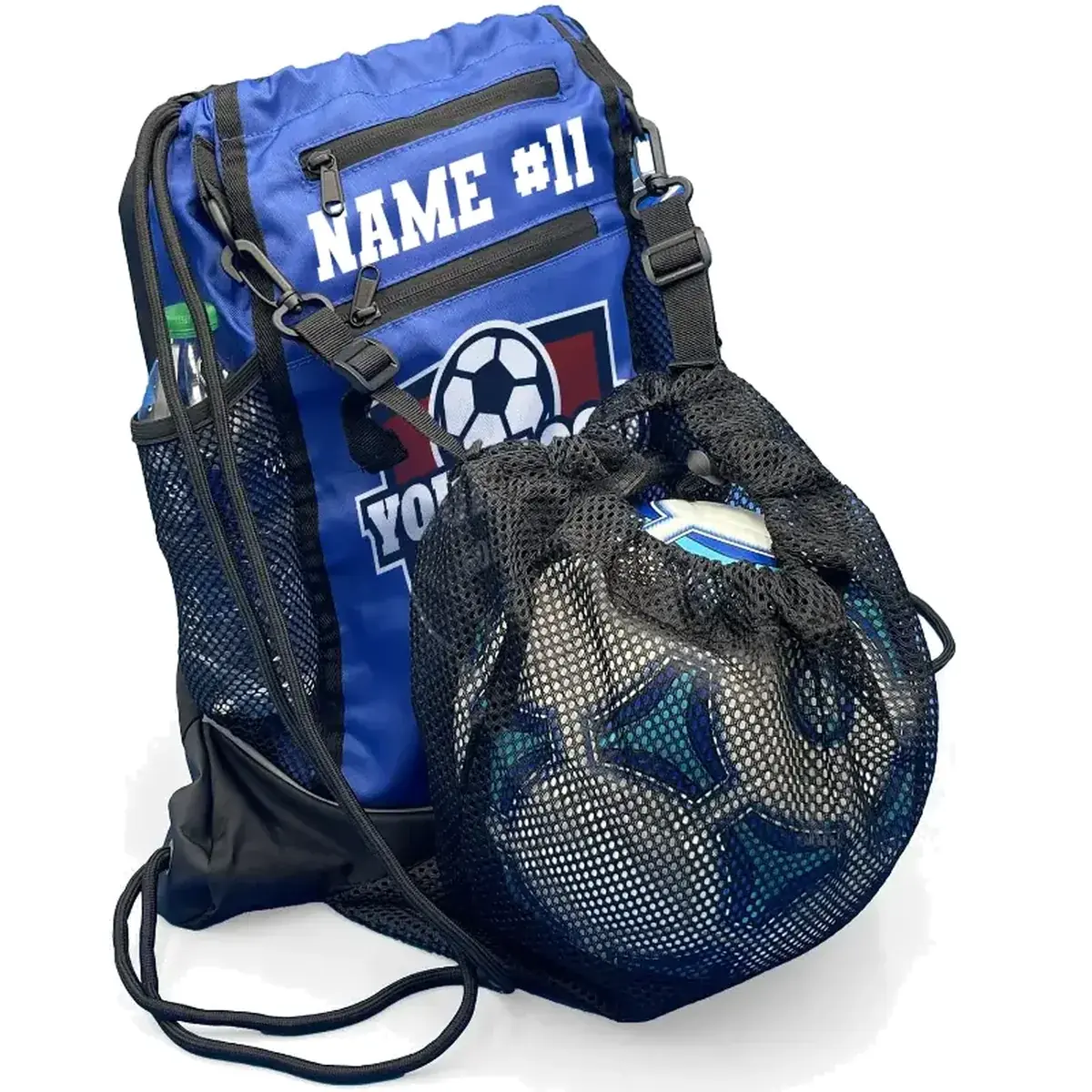
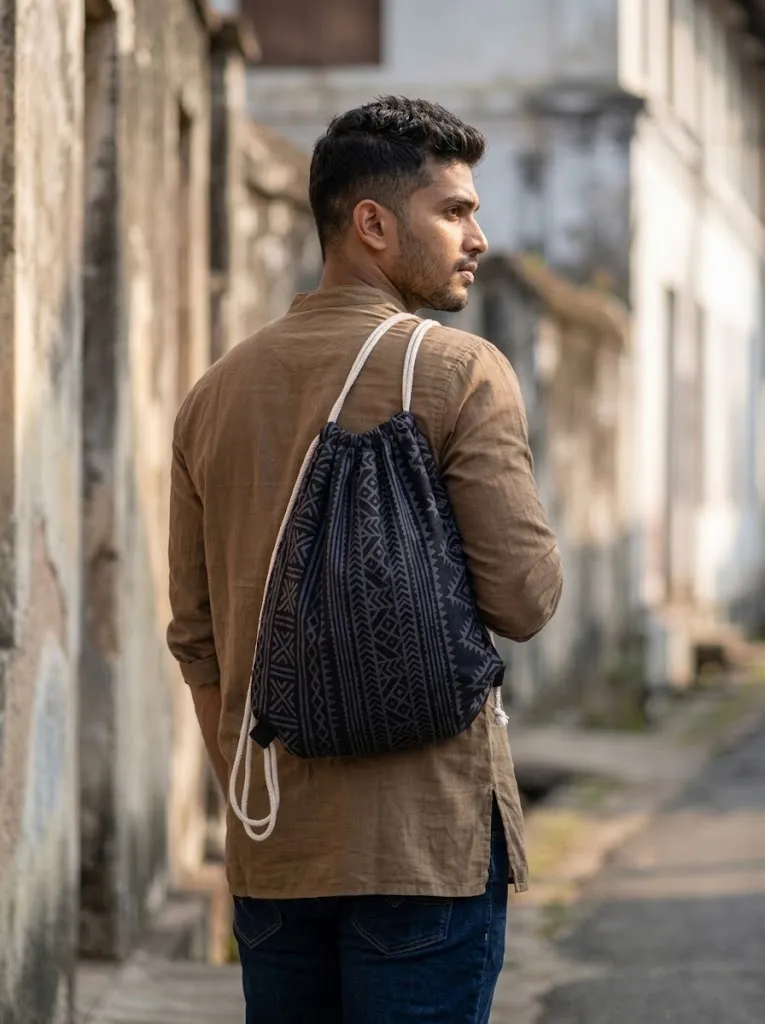
  • A custom blue printed drawstring bag carrying a sports-club print, with a mesh outer pocket

    Drawstring Backpack

    • A single-layer bag closed on a cord, so the whole face is available for print.
    • The cords double as the shoulder straps, which is what caps the weight it can carry.
    • A single-layer bag closed on a cord, so the whole face is available for print.
    • The cords double as the shoulder straps, which is what caps the weight it can carry.
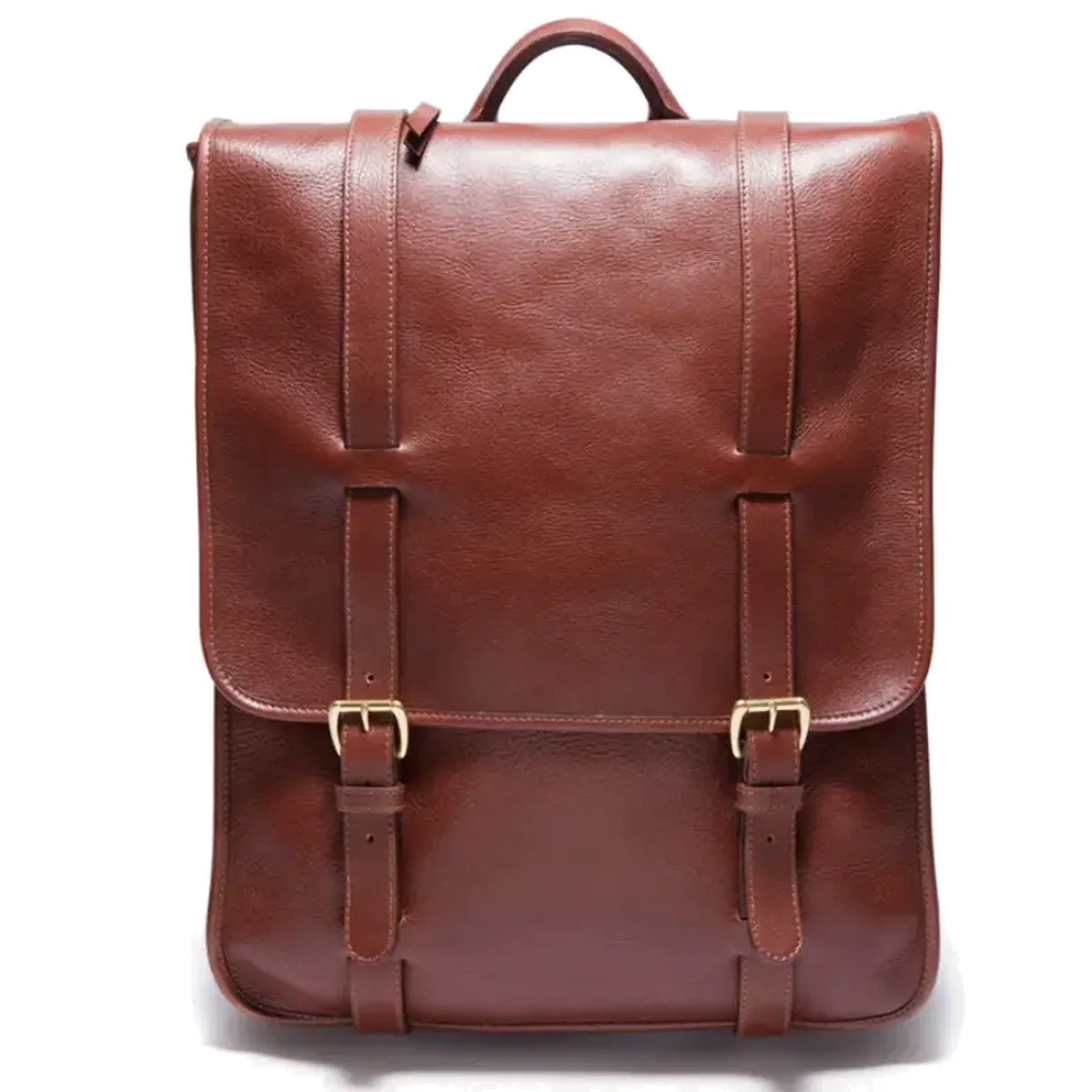
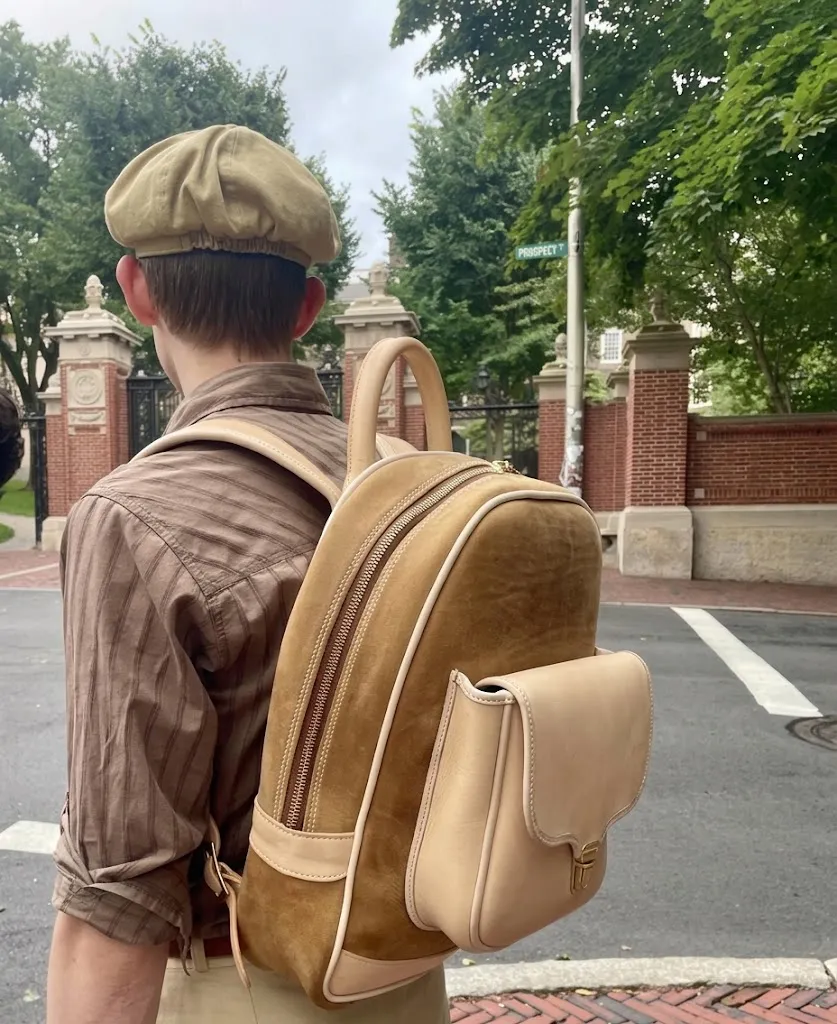
  • A custom brown leather flap backpack with two buckle straps and a rolled top handle

    Leather Backpack

    • A hide body under a flap, closed on two straps, not on a zip.
    • The straps are cut in one piece with the flap, so grain direction is fixed at the pattern.
    • A hide body under a flap, closed on two straps, not on a zip.
    • The straps are cut in one piece with the flap, so grain direction is fixed at the pattern.

Specification

The Build Sheet Behind the Run

What a backpack is specified to before anything is cut, grouped by the assembly that carries it. No row promises a figure the plant has not confirmed; a row states the variable the order settles.

01

Body and shell

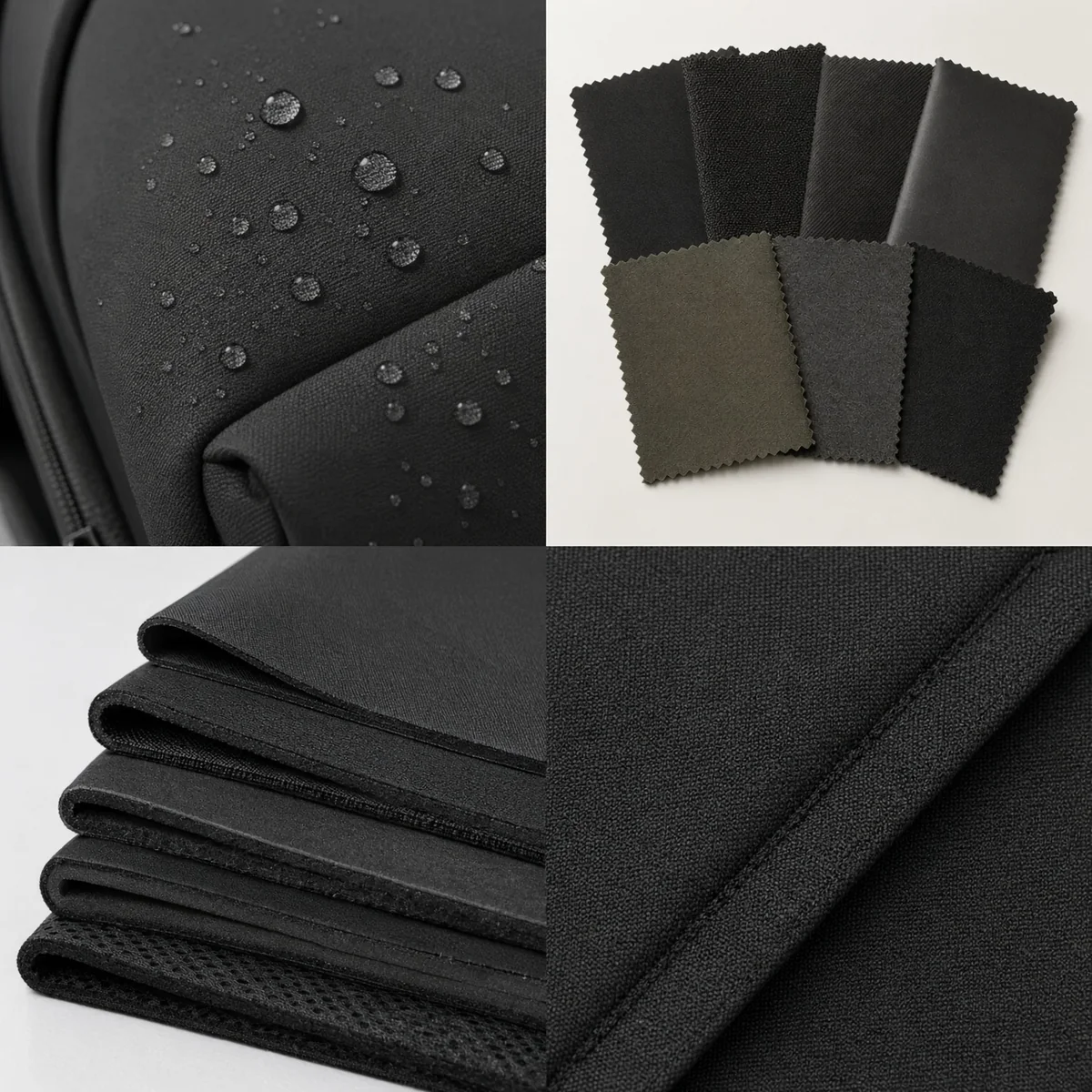
Shell fabric
Polyester, nylon, Oxford, canvas, coated tarpaulin, PU or leather, in the denier the brief names, which moves abrasion life and unit cost together.
Fabric weight
Grams per square metre, stated separately from denier. Two shells can share a denier and still differ in weight and drape.
Water resistance
A water-repellent finish, or a coated and taped body. The first sheds rain on a woven shell; the second makes the shell itself the barrier.
Interior build
A woven lining on the panels, a separate spec where a device sleeve is lined, and the stiffener that holds the shape when the backpack is empty: a PE board in the base, a laminate in the back.
Four views of a backpack shell: water beading on a coated panel, a fan of fabric swatches at different deniers, folded padded panels, and a woven face at close range
02

Carry system

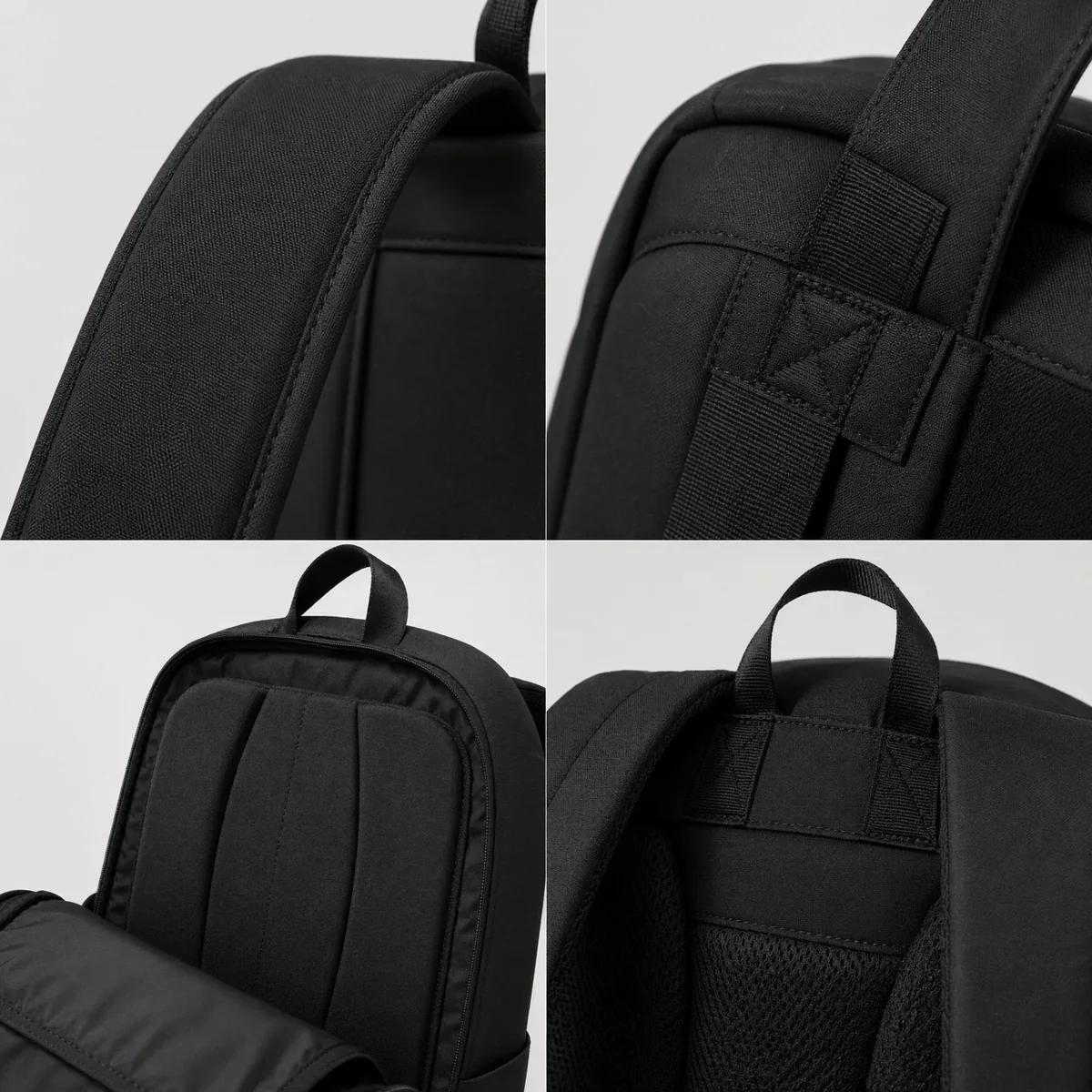
Shoulder straps
Cut to an S-curve or a straight padded form in the width the load tier asks for, over closed-cell foam laminated to thickness before the strap is sewn. The curve is a pattern decision, not a cutting one.
Anchoring
Bar-tacks at the strap root, on a reinforced patch and not on the shell alone. Where the anchor lands is drawn on the pattern.
Back panel
Flat padded, contoured, or moulded, with the covering mesh specified separately. Contact area and airflow channels are laid out on the pattern.
Load transfer
A sternum strap and, above the brief’s weight tier, a padded hip belt, so part of the load comes off the shoulders and onto the hips.
Four views of a backpack carry system: a padded S-curve strap, the bar-tacked anchor where the strap root meets the panel, the contoured back panel, and the shoulder straps at the top of the pack
03

Storage and closure

Main opening
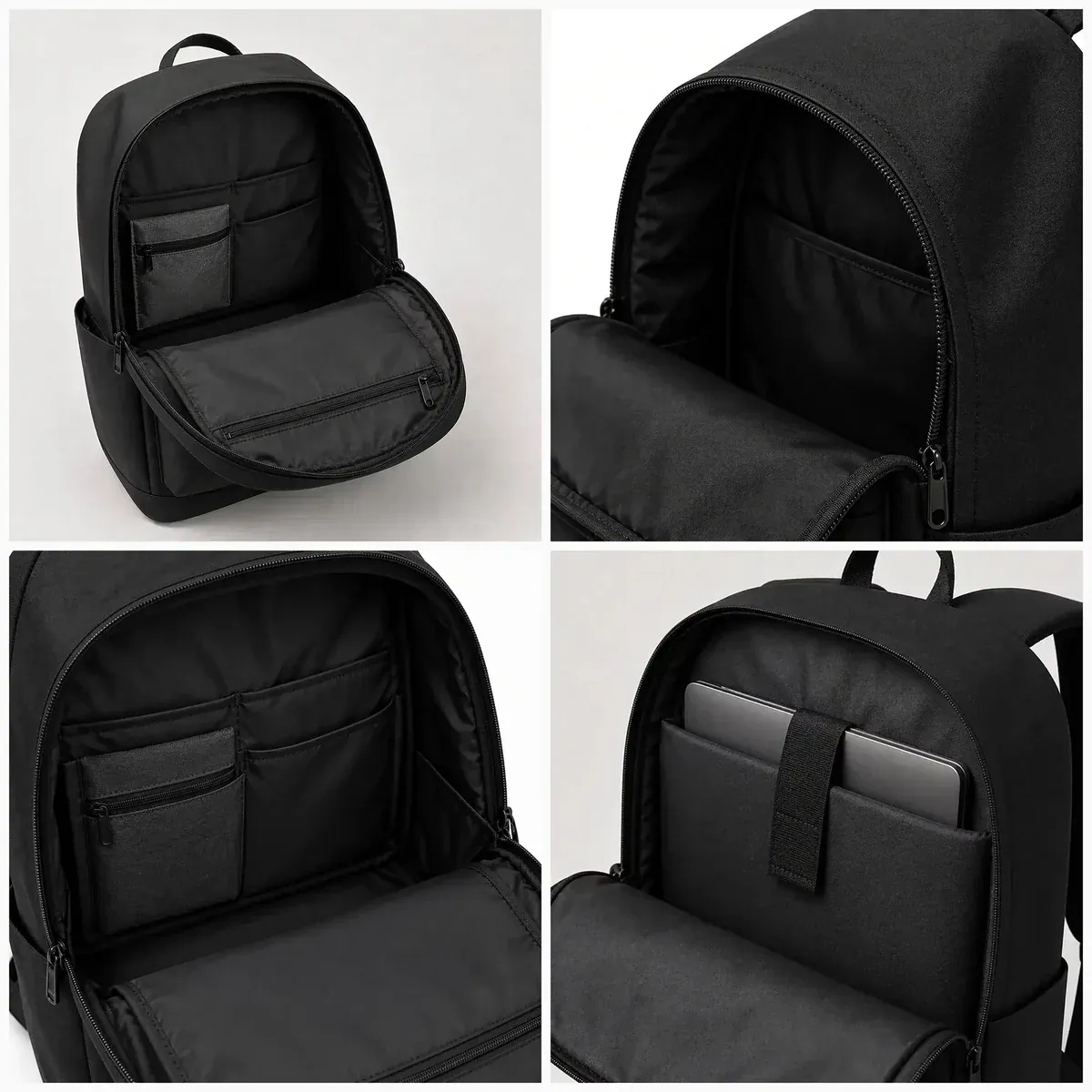
A top zip, a flap, a rolltop or a clamshell. The backpack body is cut for the one that was chosen, so the opening is settled before the panel is drawn, not after it.
Device sleeve
Position, foam thickness and suspension set to the device it holds, with a fleece face where the tier asks for it and a reinforced seam behind it.
Organisation
Front pocket, side pockets, mesh, hidden rear pocket. Each is a panel on the pattern, not a pocket sewn onto a finished backpack, so it is priced at the order.
Closure
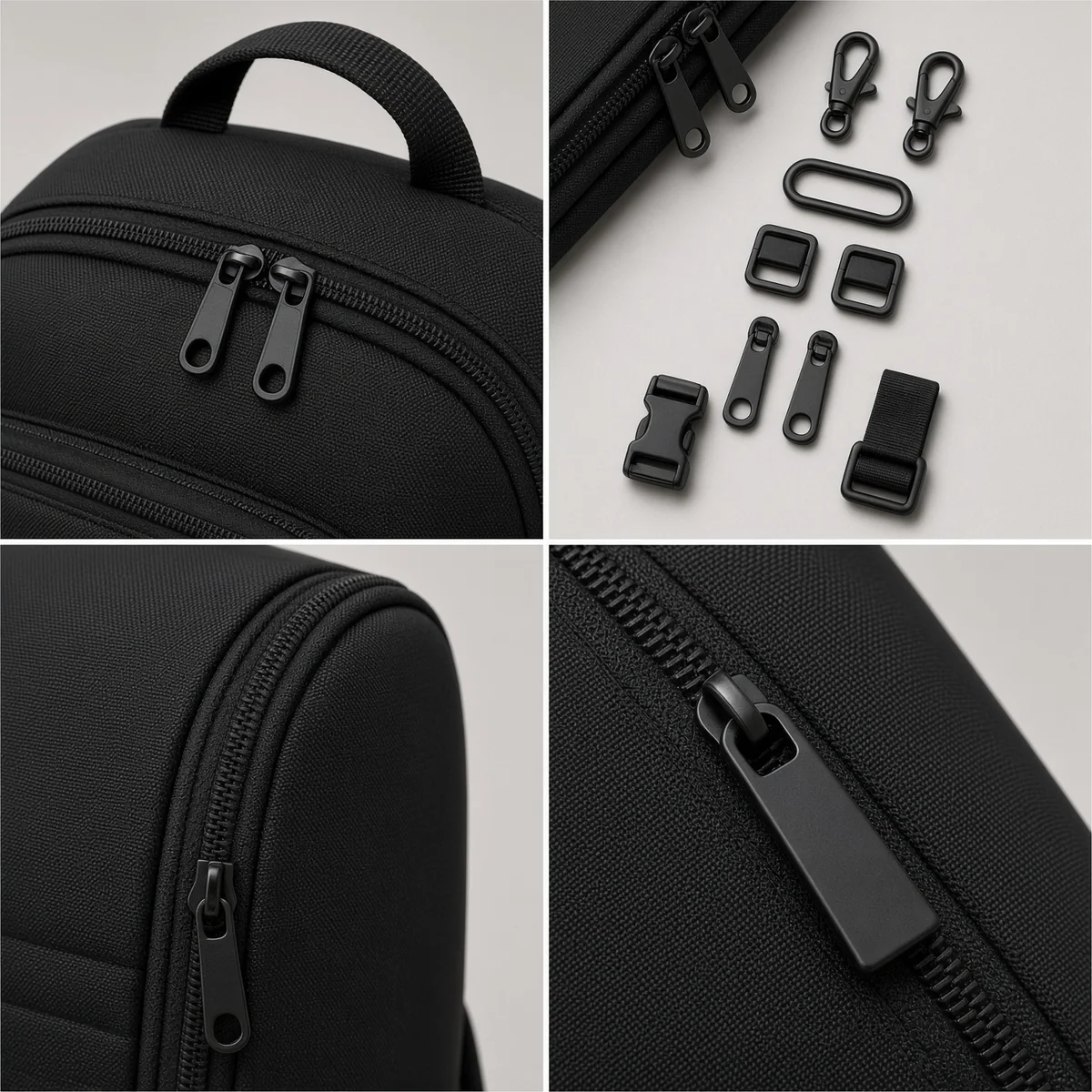
Zip gauge and tape, or a flap and buckle, specified as a matched set and ordered together.
Four views into an open backpack: the main zip and interior organiser pockets, the opening seen straight on, the sleeve and slip pockets, and a device seated in the padded sleeve
04

Hardware and marking

Hardware
Buckles, adjusters, cord locks, D-rings and feet, specified by the reference the buyer approved, so a restock matches the run.
Trim and pulls
Zip pullers, cord ends and any branded metal or rubber, chosen to match the hardware they sit on and ordered with it, so nothing is sourced at the machine.
Marking
Embroidery, print, a heat transfer, a woven or rubber label, a metal plate, a deboss, or branded hardware. The method sets the panel it lands on.
Private label
Woven neck labels, size and care labels, hangtags, polybags and cartons, all cut to the buyer’s artwork.
Four views of backpack hardware: twin zip pulls on a top closure, a laid-out set of buckles, D-rings, slider and cord lock, a zip run along a curved seam, and a metal slider at close range

Spec to quote

Send the Spec. It Comes Back Priced by Assembly.

What decides the price is already in the order: the backpack format, the shell and denier, the closure, what has to fit inside and who carries it. Back comes the build sheet specified to it, with the quote broken out the same way.

Spec to sample

How a Spec Sheet Becomes a Worn Sample

Six steps between a tech pack and a unit that can be worn, loaded and photographed. Each one states what it produces, so a buyer can see where the calendar is actually spent.

  1. 01Day 1

    The requirements are read against the pattern

    • Backpack format, dimensions, shell, closure and marking are checked against each other.
    • The question that returns is usually the closure or the fabric weight.

  2. 02Day 1–2

    Materials are proposed

    • Shell, lining, foam, zip gauge, hardware and marking method, all named.
    • A recycled order gets the recycled shell, and its certificate travels with it.
  3. 03Day 2–5

    The pattern is cut, the sample made

    • Backpack straps are laminated, anchors bar-tacked through their patches, the closure set.
    • The sample is made in the bulk cloth, never in a substitute.
  4. 04Day 6–7

    The sample is worn and measured

    • Panel length, anchor landing, belt height and strap drop are measured loaded.
    • A change that moves the pattern means a remake, never a bench adjustment.
  5. 05On sign-off

    Materials are ordered to the run

    • Fabric, foam, webbing, zips and hardware are ordered to the approved references.
    • Both sides hold goldens, and nothing is cut until the cloth is on site.
  6. 06At the floor

    The run is cut and checked to the plan

    • Panels are cut and the carry system is assembled to the approved backpack pattern.
    • Units are checked against the signed reference, then packed to the carton marks.

Buyer accounts

The Buyers Came Back for a Second Run

Two programmes, on what the pack had to clear before it reached a shelf: an anchor that had to hold under load, a panel that had to fit a range of wearers, and what a second order says that a first cannot.

Sarah ThompsonFounder of EcoTravelGear

The programme opened on a recycled-shell daypack, 100 pieces, with the mark embroidered on a front panel cut clear of the seams.

Seven days later the sample came back in the bulk cloth, not a substitute. Panel length and strap drop were measured on it with the pack loaded, and those figures became the reference the run was checked against.

What held was the anchor: a bar-tack through a reinforcement patch, not into the shell, drawn on the pattern. A season on, the reorder ran off that same pattern and matched the first on stitch and dimension.

Michael ReynoldsDirector of Corporate Gifts Inc.

A bulk order of 500 packs, one shell, one mark, and a sleeve that had to hold a 15-inch machine without the pack bulging off the back.

Sizing closed before the pattern was cut. The sleeve was cut to that screen size and not to a generic band, and panel length was set against the fitted sample so the load sat where it was meant to.

Closure gauge and slider were ordered as one set, so neither could be swapped at the machine. The 500 arrived inspected against the signed sample, and the second order went in without a new sample.

Backpack questions

Frequently Asked Questions About Custom Backpack Manufacturer

The questions that come up on most backpack enquiries. Where a figure already sits in a section above, the answer points at it, so the number is stated once.

What actually fails on a backpack, and where does it fail first?

The anchor, almost always. A loaded pack hangs its whole weight off two points where the shoulder straps meet the back panel, so that joint and the reinforcement behind it take a load nothing else on the bag sees. The panel seam that the anchor hands the pull to is the second place. The shell is rarely the failure: a tear through the body of a heavy-denier fabric is uncommon, while a strap root that pulls out of a sound shell is one of the most common field failures in the category. That is why the pattern draws the anchor and the bar-tack instead of leaving them to the machine.

How is a laptop sleeve sized so the pack does not bulge off the back?

To the device it has to hold, not to a generic band. The sleeve is a panel with its own foam and its own suspension, set so the device rests against the wearer’s back, never at the outside face, with its depth taken from the machine and not from the pack. A sleeve cut to a nominal size is what makes a loaded pack pull away from the back, and that is a pattern fault no amount of final inspection corrects.

Is a rolltop the same as a waterproof backpack?

No, and the difference is construction, not degree. A rolltop closes by folding the top of the bag on itself, which keeps water out of the opening and leaves the rest of the body to whatever fabric it is cut from. A waterproof body means the shell itself is the barrier, which is a coated and taped build. A rolltop in a woven shell, which is most of what is sold under the name, sheds rain from the opening and wets through the panels.

Why does a backpack make the wearer’s back sweat, and can the panel be built against it?

Because a flat panel lies across the whole back and traps the air that would otherwise move. The answer lies in construction, not fabric: a contoured or moulded panel touches in channels instead of across a flat face, so air moves where the foam is relieved, and the covering mesh is specified separately from the foam beneath it. Where the contact lands and where the channels run are drawn on the pattern, so a buyer can ask for them by name instead of hoping for them.

Why does a half-full backpack slump, and how is the shape held?

An empty or half-packed body has nothing inside to hold it up, so it folds along its softest line and collapses into the base. That is why the stiffener is a specification, not an afterthought: a PE board in the base keeps the floor flat under a load, and a laminate in the back keeps the panel standing when the pack is not full. Each is cut as its own panel, so the shape is fixed at the pattern and never recovered at packing.

What keeps the main zip from failing on a full pack?

A top-loading pack presses its whole load against the main opening, so the zip takes a tension a side-opening bag never sees, and a gauge chosen for looks is where it gives. Zip gauge and slider are specified as a matched set with the tape, not ordered separately, because a slider that does not match its tape is what jams or splits under load. The opening is settled at the pattern, so a zip that cannot carry the packed weight is caught before the body is cut.

What happens if an anchor fails on a finished backpack?

The fault is classed before anything is done about it, because a pulled anchor and a cosmetic mark are not the same problem. A unit whose strap root has failed is reworked where the panel allows it and replaced where it does not, and the lot it came from is re-inspected instead of the one unit being swapped and the lot waved through. The count of each class, and what was done about it, travels with the shipment and does not stay in the factory.

Start a backpack programme

Name the Pack.
The Build Sheet Follows.

Send the format, the shell and denier, the closure, what has to fit inside and who carries it. Back comes the build sheet specified to those, the marking method and a worn sample at the hundred-piece floor.

Get a Quote