
A blue hardshell suitcase and a matching soft duffel travel bag against a pale travel illustration
Shells · Fittings · Customisation

Custom Travel Bag Manufacturer 10 kg of Pull, and the Panel Behind It Takes the Strain.

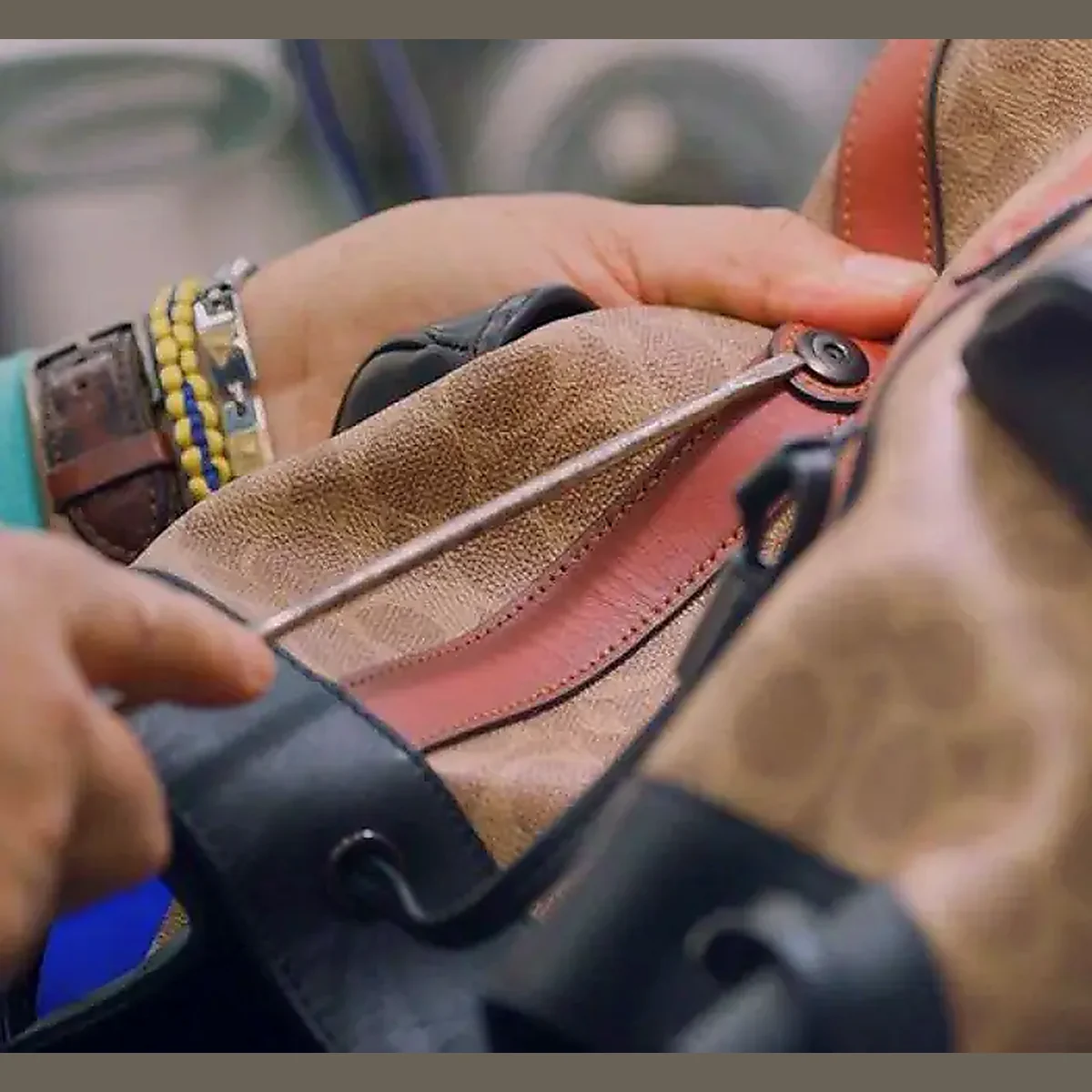
Handle anchors, the two zip ends, the seam a packed load pulls on — the parts a bag is judged on rarely reach the spec sheet. Each is written into the brief, set to a published limit, and checked before the run is released: a main zip that runs three times end to end, a handle held to 1.5 cm of play at full extension and jerk-tested to the QB/T 2155 method. Send the format and how the bag is carried; the sample comes back inside seven days at the hundred-piece floor.

  • 1.5cm handle wobble allowed at full extension
  • 90–120cm drop-test height, where a build rolls
  • 30–50N zipper pull-off at ninety degrees

Travel bag types

Name the Travel Bag Type You Need Built

The travel bag formats this floor runs most often, spanning a leather carry and a packed foldable. One that is not here is still workable — the pattern is drafted to a sketch or a reference bag the same way.

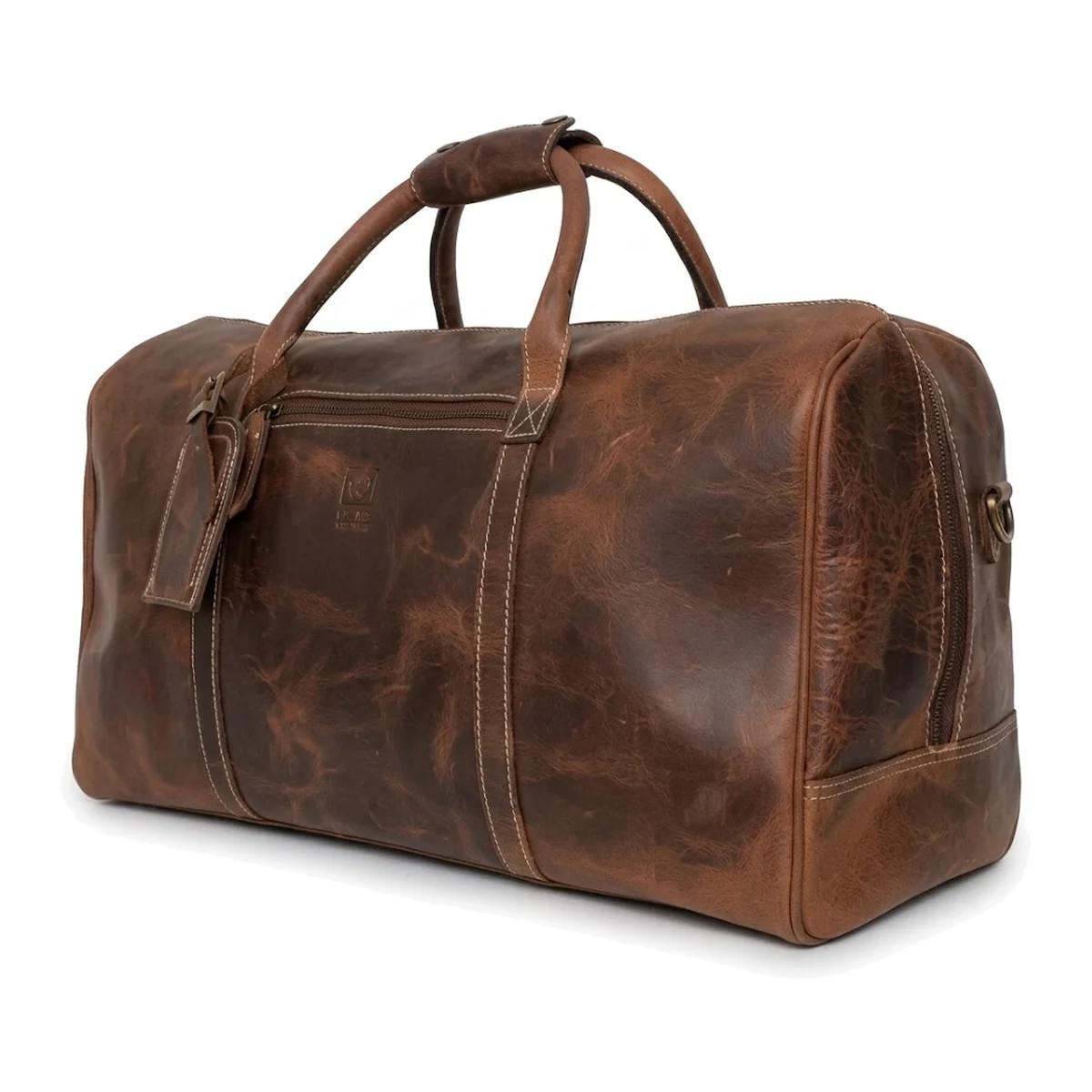
  • A custom leather travel bag with stitched handle roots and a leather-bound base, on a white ground

    Leather Travel Bag

    • A full leather body, with the carry handles stitched straight into the hide.
    • The base is bound in the same leather, so the packed weight rests on it.
    • A full leather body, with the carry handles stitched straight into the hide.
    • The base is bound in the same leather, so the packed weight rests on it.
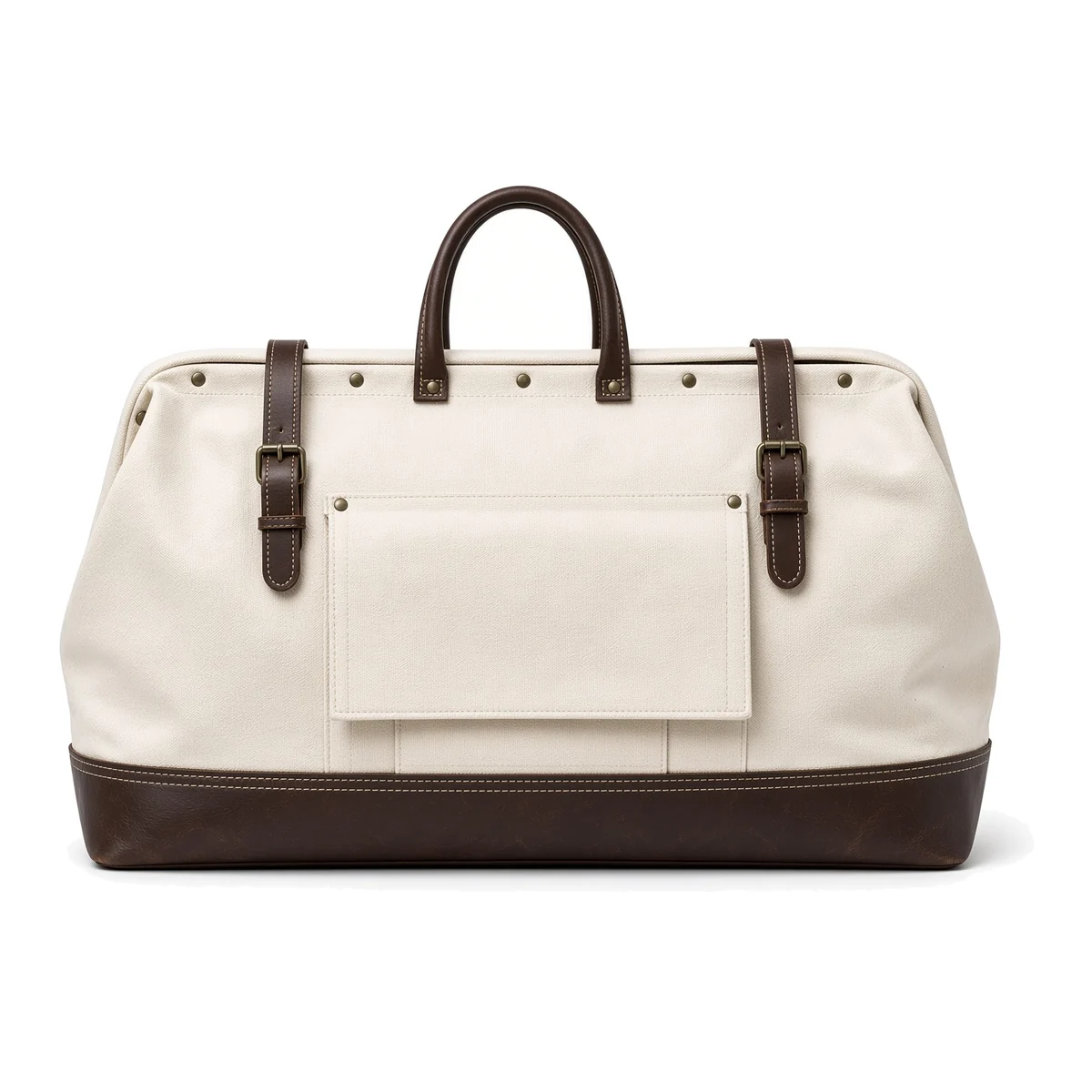
  • A custom canvas travel bag with leather handles, a leather-bound base and buckled side straps

    Canvas Travel Bag

    • A heavy canvas body, trimmed in leather at the handles and the base.
    • Buckled side straps let the bag be cinched down as it fills.
    • A heavy canvas body, trimmed in leather at the handles and the base.
    • Buckled side straps let the bag be cinched down as it fills.
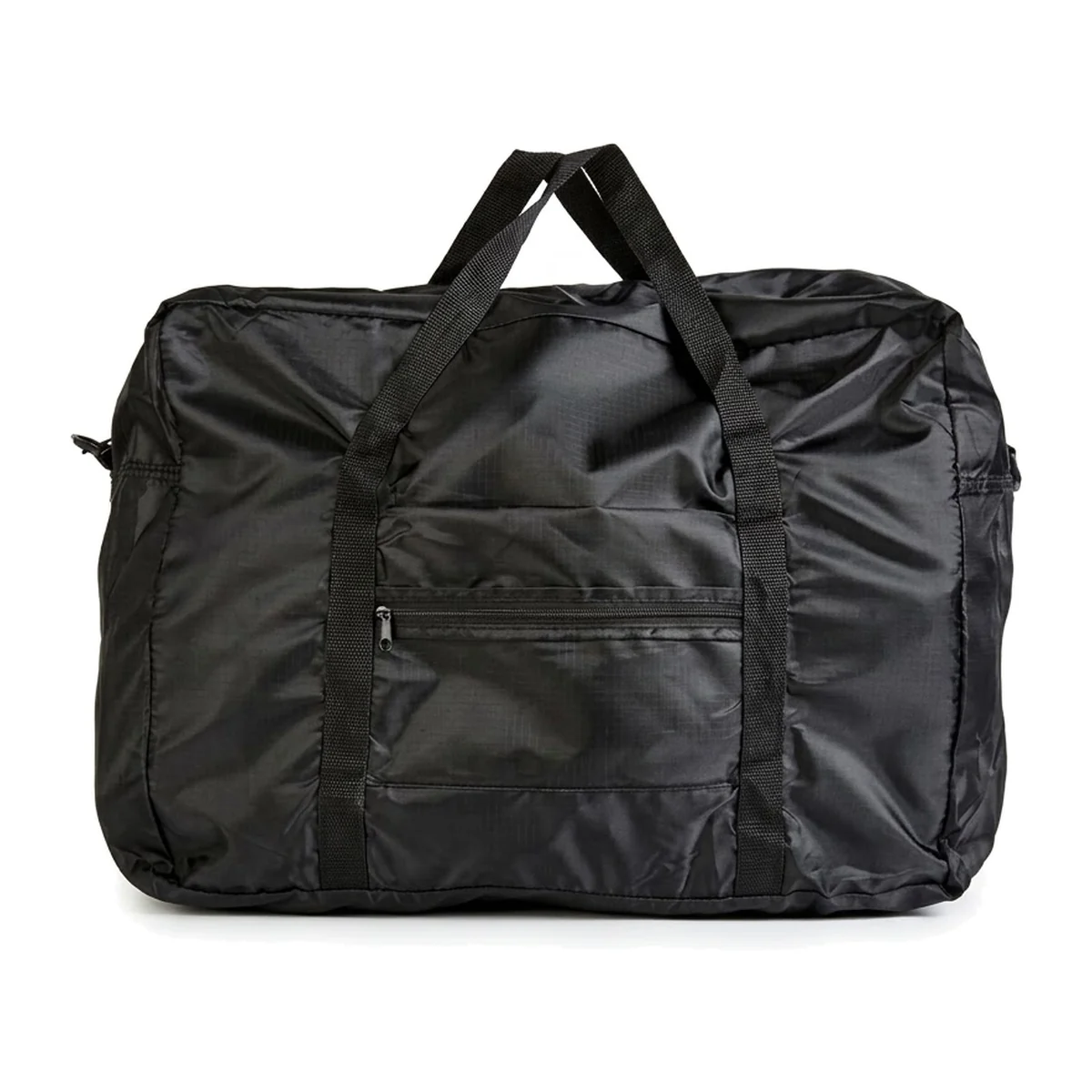
  • A packable foldable travel bag in a single dark shell with webbing handles

    Foldable Travel Bag

    • A single-layer woven shell with no frame or board in it.
    • Webbing handles and a zip pocket, built to fold flat into a case.
    • A single-layer woven shell with no frame or board in it.
    • Webbing handles and a zip pocket, built to fold flat into a case.
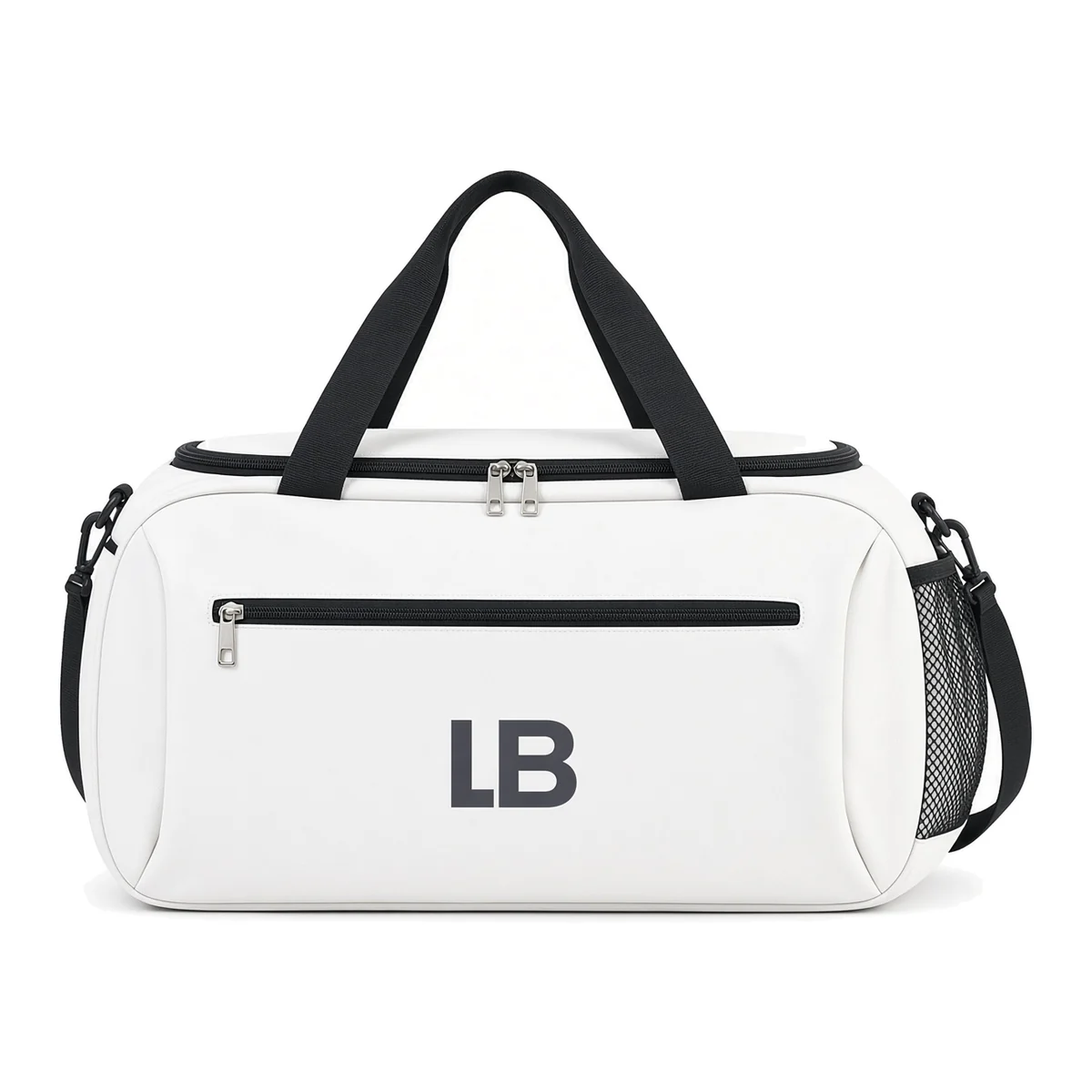
  • A custom duffel travel bag with a printed monogram on its face and a mesh side pocket

    Monogrammed Duffel Travel Bag

    • A barrel body with a face panel that carries the mark.
    • A dual-slider top zip and a mesh pocket on the end.
    • A barrel body with a face panel that carries the mark.
    • A dual-slider top zip and a mesh pocket on the end.
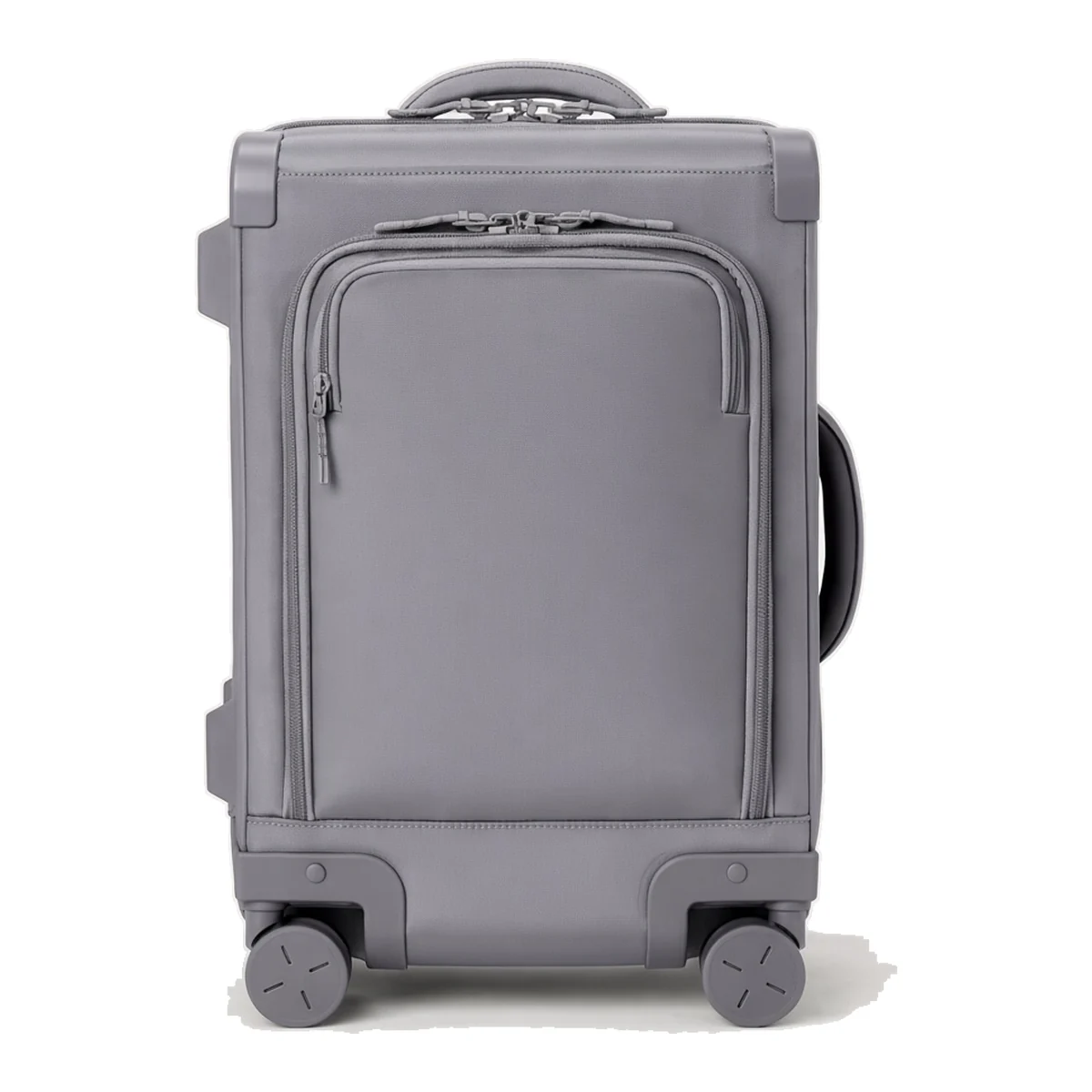
  • A custom softside suitcase standing on four spinner wheels with a zipped front pocket

    Suitcase

    • Packed upright and stood on four spinner wheels, which take the load between them.
    • A zipped front pocket sits on the shell ahead of the main compartment.
    • Packed upright and stood on four spinner wheels, which take the load between them.
    • A zipped front pocket sits on the shell ahead of the main compartment.
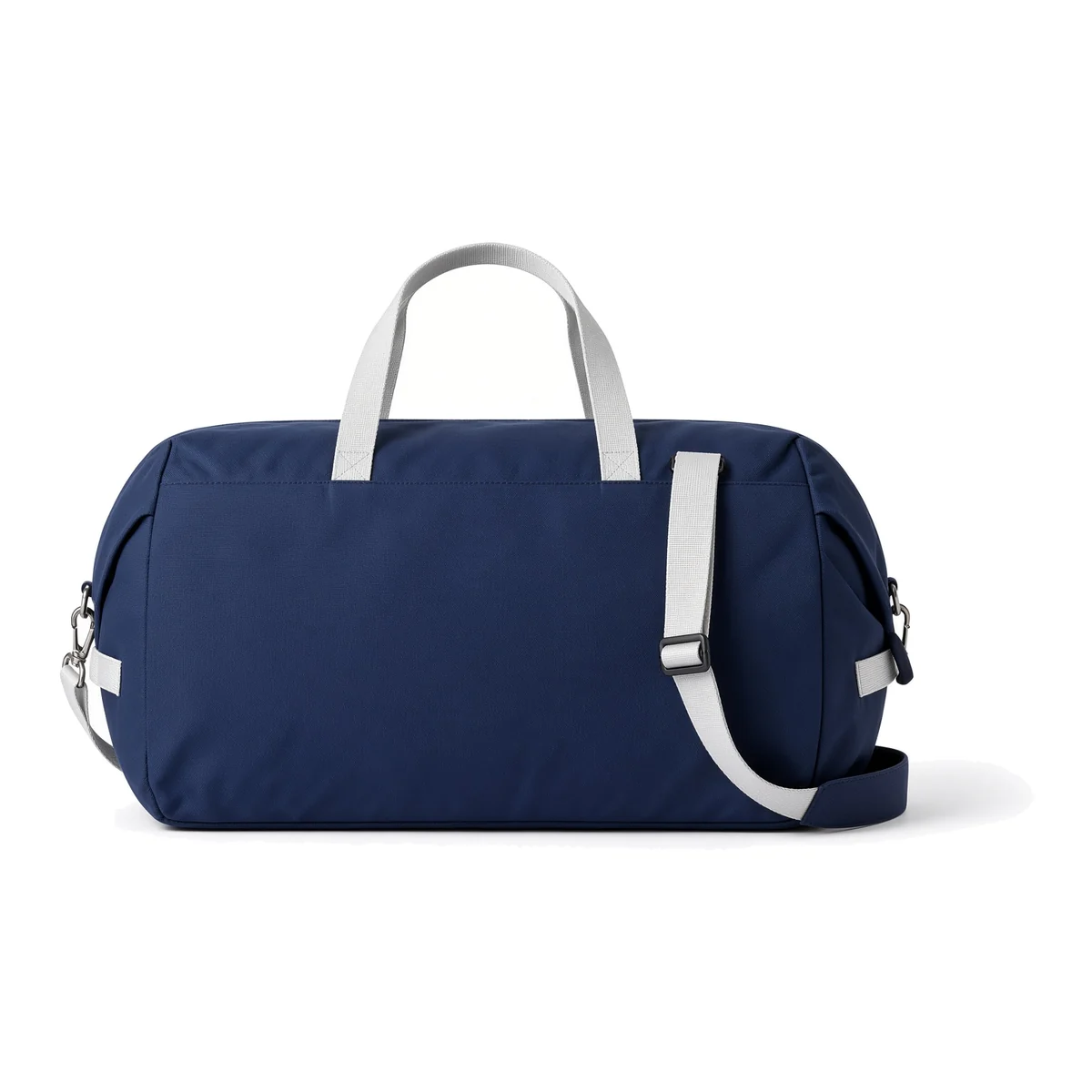
  • A custom nylon travel bag with contrast webbing handles and a shoulder strap

    Nylon Travel Bag

    • A smooth woven shell, cut in one colour with contrast webbing.
    • An adjustable shoulder strap, so it carries over the shoulder or by hand.
    • A smooth woven shell, cut in one colour with contrast webbing.
    • An adjustable shoulder strap, so it carries over the shoulder or by hand.
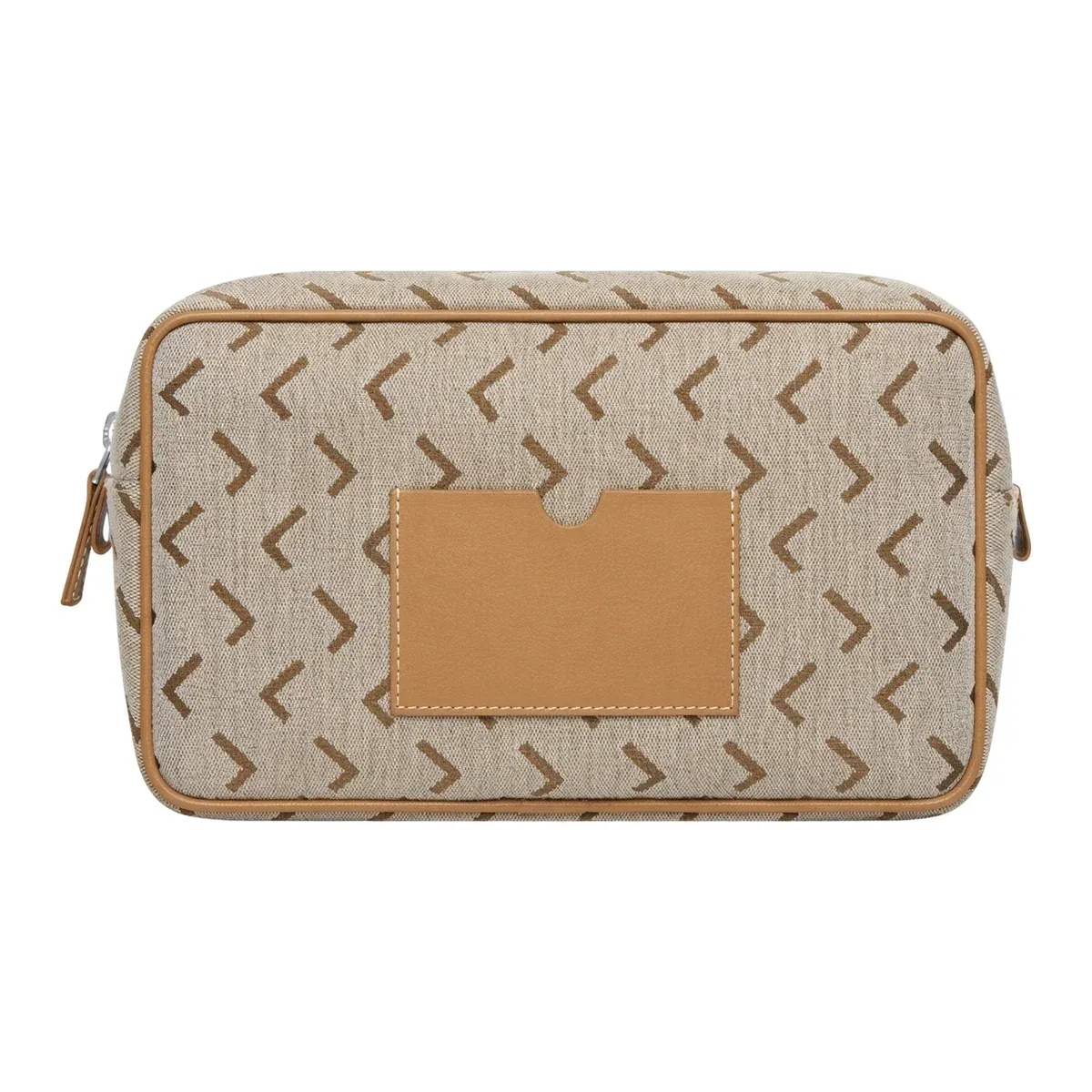
  • A custom travel toiletry pouch in a printed shell with a leather patch pocket

    Travel Toiletry Bag

    • A small zipped pouch, sized to travel inside the main bag.
    • A leather patch pocket on the face, clear of the zip.
    • A small zipped pouch, sized to travel inside the main bag.
    • A leather patch pocket on the face, clear of the zip.
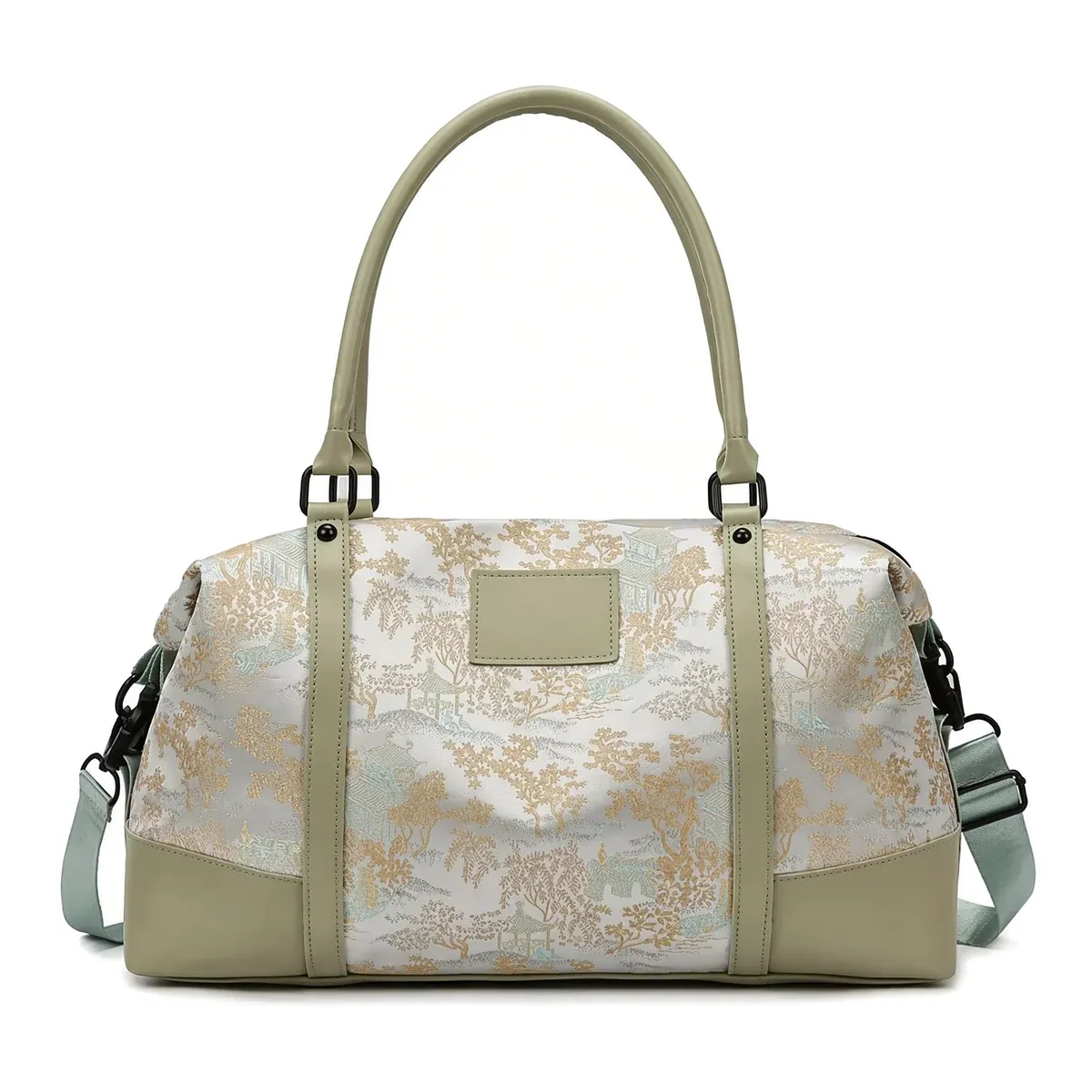
  • A custom travel bag in a printed, pattern-woven shell with leather trim and handles

    Embroidered Travel Bag

    • A pattern-woven shell, with the border and corner panels bound in leather.
    • The roll handles are leather too, colour-matched to the trim.
    • A pattern-woven shell, with the border and corner panels bound in leather.
    • The roll handles are leather too, colour-matched to the trim.
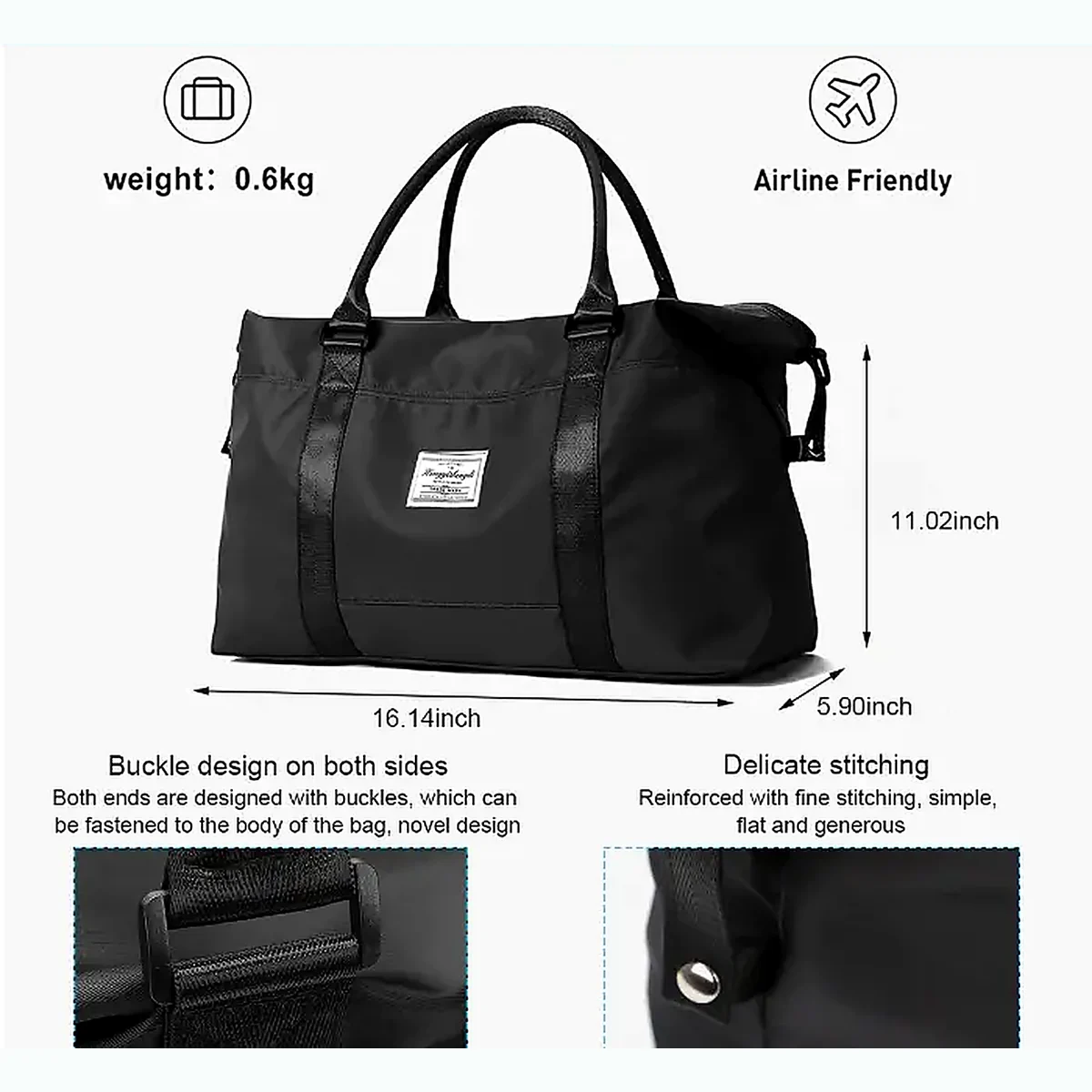
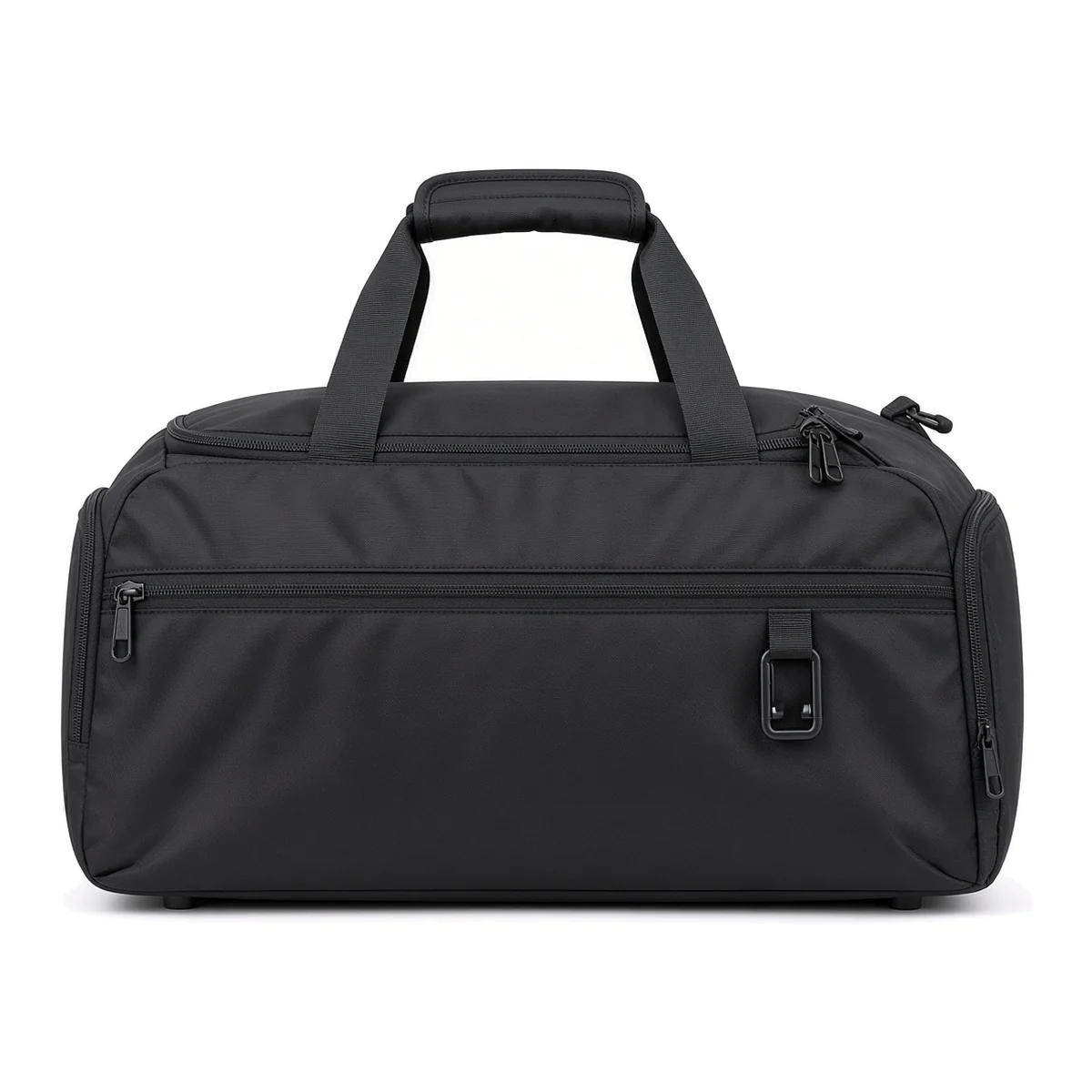
  • A custom black softside travel bag with a top zip, a front pocket and riveted feet

    Waterproof Travel Bag

    • A wipe-clean shell closed on a zip, on feet that keep the base off the ground.
    • A trolley strap on the back, so it rides on a rolling case.
    • A wipe-clean shell closed on a zip, on feet that keep the base off the ground.
    • A trolley strap on the back, so it rides on a rolling case.

Where it fails

A Travel Bag Fails in Four Places

The pattern across the category is consistent: travel bag returns cluster on a few load points rather than spreading across the body. These are the four parts that carry the load, and the rest of this page is written around them.

The load path
  1. Packed loadenters here
  2. Base to seamcarried up
  3. The carryleaves here

The Carry

The handle, grip or shoulder strap a loaded bag is lifted and towed by

It carries the whole weight of a packed bag — and on a towed build it does it at an angle the bag was never designed to hang at.

  • A soft or fixed handle on a bag that is lifted; a telescopic shaft on two or three locking stages where the build is towed.
  • A loaded bag hangs off this part alone, so its anchors and the cloth behind them take the pulling load.
  • Lateral play is what the buyer feels first on a towed build; the tubing is rarely what gives.

The carry ages at its attachment, not in the handle — the rivets, the bar-tacks and the panel underneath them loosen before the part itself bends.

The Base and Its Stiffening

What the bag rests on: the base panel, its feet, and the wheels where the build rolls

It takes the impact the bag is set down with, and on a softside build it is what holds the whole body in shape.

  • A stiffened base sheet behind the shell, with feet, a plain base or a wheel assembly fixed through it.
  • Where the build rolls, the wheels run on brackets fixed through that sheet rather than through the shell alone.
  • The base carries the impact when the bag is set down or dropped, so its stiffness is part of the wheel decision and of the rest of them.

Most base failures come from the fixing rather than the fitting — a bracket cracks or an anchor tears out of the sheet while the wheel itself is still sound.

The Closure

The zip, and any lock or slider riding on it

It has to take the compressive load of an over-packed bag and still open on demand at an inspection desk.

  • A main zip in a heavy gauge, on dual sliders where a lock is wanted, plus the lock body itself.
  • A zipped softside bag is under tension along its whole length, so the chain takes load even when it is shut.
  • This is the part most often chosen for the wrong reason — for the look of a padlock rather than for what a lock can actually do.

A zip fails at the slider and the pull tab long before the teeth, and a lock fails at its shackle, not its dial.

The Body and Its Seams

The shell, the base panel and the stitching joining them

It carries the packed load into the handle, the wheels and the strap anchors, which is why the seams matter more than the cloth.

  • A coated woven shell over a stiffened base, joined by stitched and reinforced seams rather than by a single run.
  • The load path runs from the base, up the end panels, into the handle housing — the same route in a duffel, a suitcase or a weekender.
  • Heavy-denier shells are over-engineered for how a travel bag is actually used; the cloth is what buyers screen on and what the bag rarely fails through.

A body fails at a load point rather than in the middle of a panel — the seam the handle pulls on, or the anchor a shoulder strap is bar-tacked into.

What carries the load

The Fittings That Take the Pull

The four parts above are held to the limits below. These are the travel bag fitting properties worth writing into a brief, and the limit each is built and checked to.

PropertyWhere it is checkedThe limit
The handle fixingOn the first unit built, before the bulk runWhere a handle is specified, its stages extend and retract without binding and the shaft holds under a ten-kilogram pull with no slipping at the anchors.
Lateral play, where a handle is fittedMeasured with the bag packed to its rated load, before the run is releasedNo more than 1.5 cm of side-to-side movement at full extension, checked before the run is released.
Strap and handle anchorsAt the assembly station and again at final inspectionBar-tacked at the anchor points and reinforced behind the fixing, so the pull lands on cloth that was built for it rather than on a single seam.
The two zip endsOn the first unit and at final inspection, applied to any closureThe closure is the busiest joint on any bag here: a zip fails at the slider and the pull tab long before the teeth, so both ends and the sliders are checked on the first unit and again on the run.
Jerk and fatigue, on towed buildsBench test on the extension rod, to the QB/T 2155 travelling-bag methodUnder an alternating up-and-down dynamic load, as when a loaded bag is pulled up steps, the locking button neither slips nor collapses.
The wheel build, where the bag rollsFixed at the brief, before the pattern is cutSkate wheels, two fixed under the base, are what most weekenders and rolling duffels run; upright wheels, two larger at the back corners, are set where the body packs deep; spinner wheels carry four brackets and take the most base-sheet stiffness, so the build decides the base.
Anchor alignmentFinal inspection, before packingBoth anchors square to their panel, so a strap pulls straight and a towed bag tracks true rather than pulling to one side.

Why the pull figure is a rangeThe right pull force depends on the grade of the bag. A light lifestyle piece and a heavy rolling duffel do not take the same load at their anchors, so the force is set to the build rather than fixed: the brief names how the bag fills and how it is carried, and the limit is fixed from there before a unit is made.

Spec to quote

Send the Build. It Comes Back Costed and Specified.

Send the format, the shell, how the bag is carried and what has to fit inside it. Back comes the fittings and their limits, the closure, the marking method and a quote broken out line by line.

Lock and zip

What a TSA Lock Does, and What It Does Not

A TSA lock is the one piece of travel-bag hardware that is routinely sold for a job it cannot do. It is worth specifying — for a reason most pages leave out — so the two columns below say what it does and what it does not, at the same length.

What the lock is for

  • Lets an inspection happen without cutting

    A security officer opens a TSA-accepted lock with a master key and closes it again. Without one, a bag that has to be opened is opened by force.

  • Keeps the bag intact through transit

    The value to a brand is not security but continuity: the bag arrives sealed, with the same zip it left with, rather than cut and retaped.

  • Holds a dual-slider zip closed

    It joins the two sliders of a main zip so the opening cannot drift apart under the load of an over-packed bag.

  • Re-closes and re-locks at the desk

    The combination is set and reset by the owner, the dial clicks through its positions, and the shackle takes an impact near its release buttons without popping open.

What it will not do

  • Stop a determined thief

    The same master key that opens the bag for an officer opens it for anyone who has one. A TSA lock is a controlled-access fitting, not a security device.

  • Protect an unsupported zip

    The pen-through-the-teeth attack works on a zip that a lock is holding shut, because the lock secures the sliders and not the chain. Nothing on the market changes that.

  • Replace a hard case

    Where a buyer needs contents that cannot be got at, the answer is a different format, not a better padlock on a softside bag.

  • Anchor the bag itself

    A lock on a checked bag is the thing that marks it as worth a look. It does nothing to keep the bag on the belt.

Zip gauge and sliderThe main compartment takes a heavy-gauge zip on self-repairing sliders, on a dual slider where a lock is wanted. A lockable dual slider is what makes the lock usable — it secures the sliders, so a single slider cannot carry one.

How the zip is checkedThe full track is run three times end to end, which must be smooth and must not catch the lining; the pull tab takes a pull of 30–50 N at ninety degrees before it is passed; and the chain is checked crosswise to the ASTM D2061 and JIS-S3015 methods before the run is released.

Shell and colour

The Fabrics, and the Colour Across Them

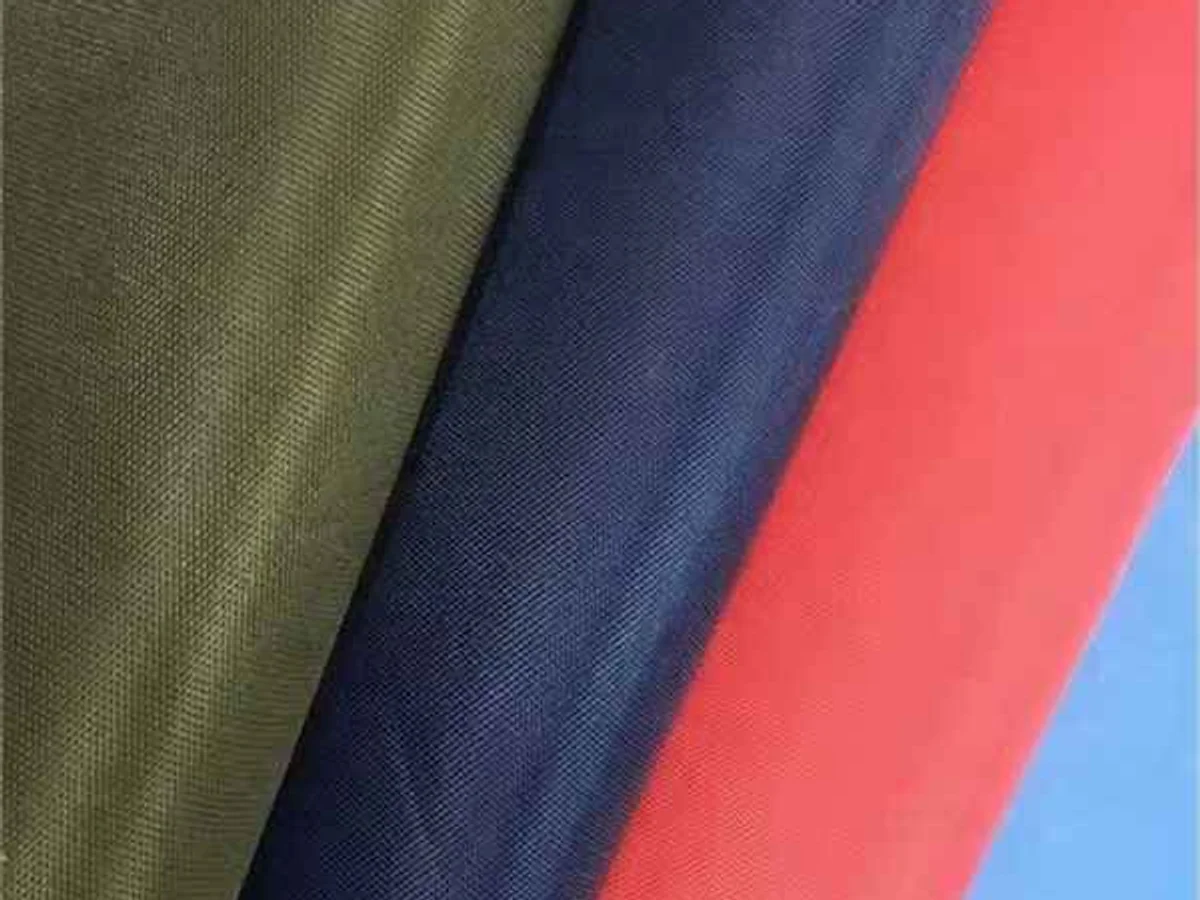
A travel bag brief starts at the shell. These are the fabric families a first run is cut from, the grade a buyer writes into a brief, and what the family is actually good for.

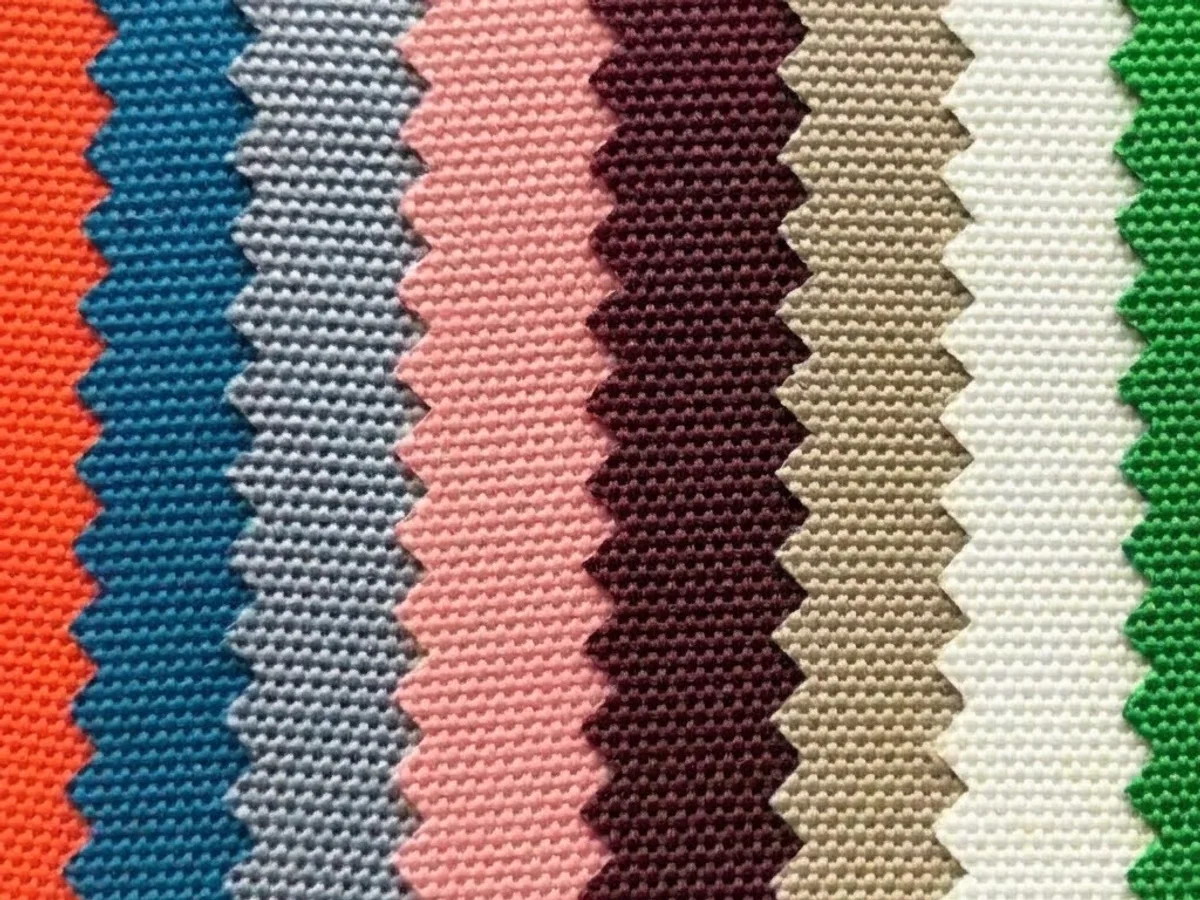
  • A fan of coated polyester webbing swatches in a range of printed colours
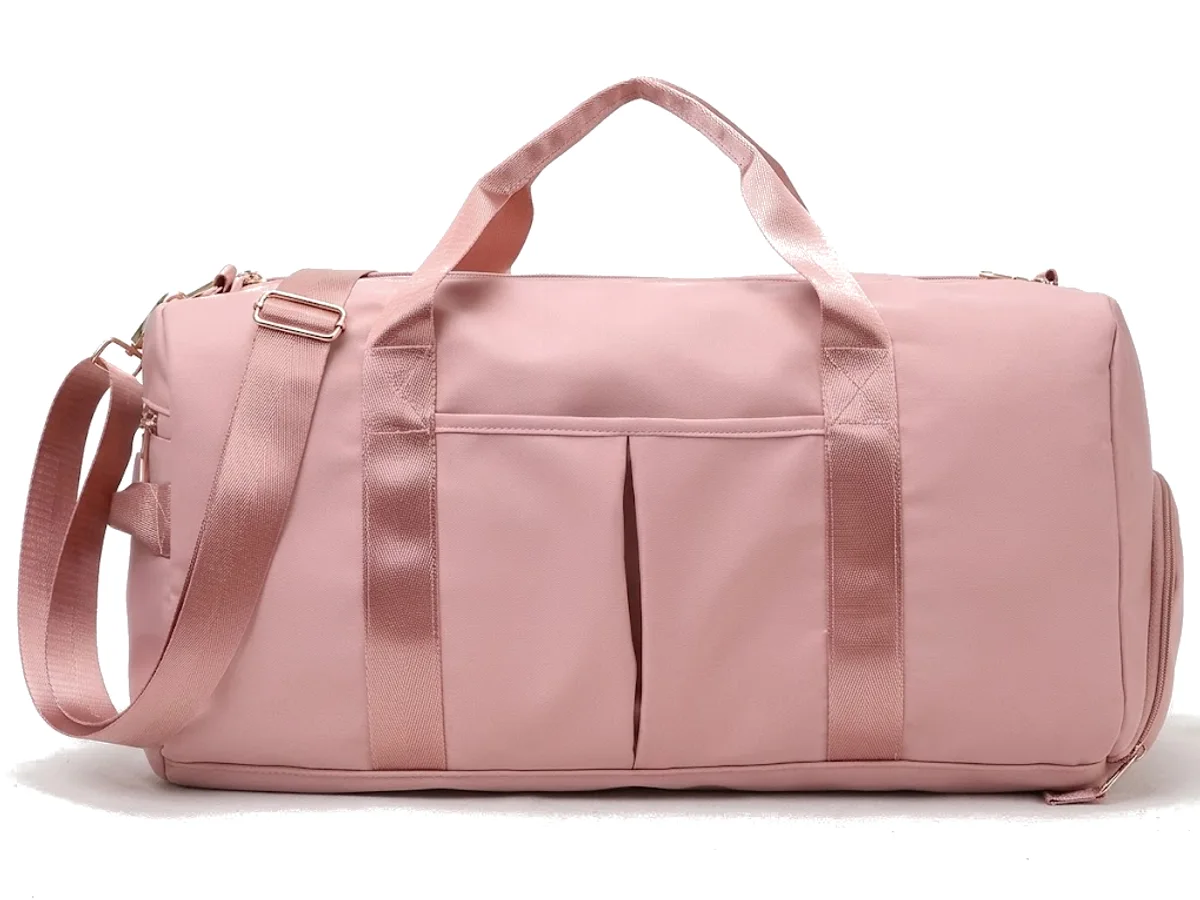
    A pink coated polyester travel duffel photographed on a plain ground

    600D · 900D · 1680D

    Polyester

    The workhorse travel bag shell, and the denier is the decision.

    • 600D is light — a weekender or a cabin piece.
    • 900D is the usual weight for a travel bag that is packed and thrown about.
    • 1680D is a dense, near-woven face for a business piece.
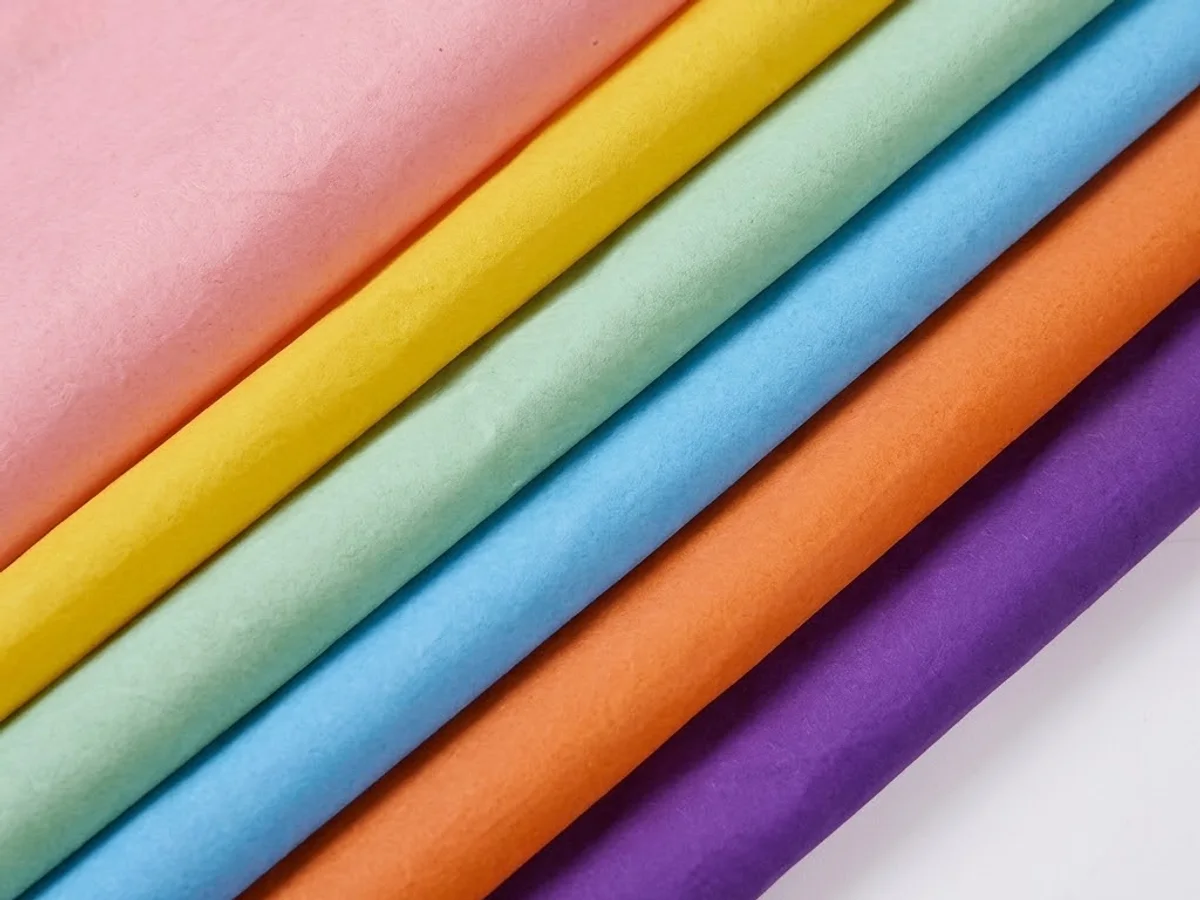
  • Fan-folded nylon in a range of colours, photographed to show its even sheen
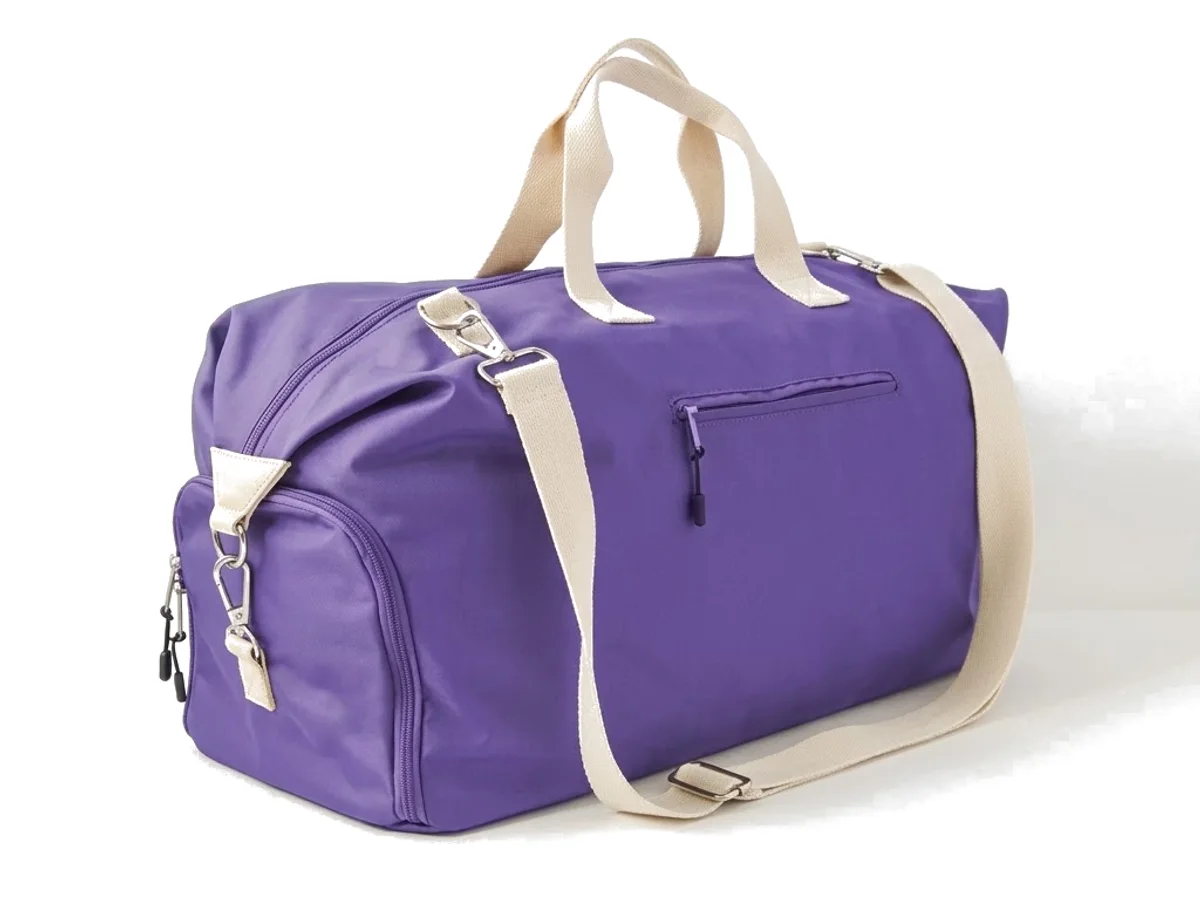
    A purple nylon travel duffel with webbing handles on a plain ground

    Oxford · ripstop

    Nylon

    A finer yarn than polyester at the same strength, so a travel bag body drapes where polyester holds a crease.

    • Oxford is the plain-weave default for a business piece.
    • A ripstop face carries the grid that stops a tear running.
    • It takes colour and lamination evenly, so it suits a printed or bright shell.
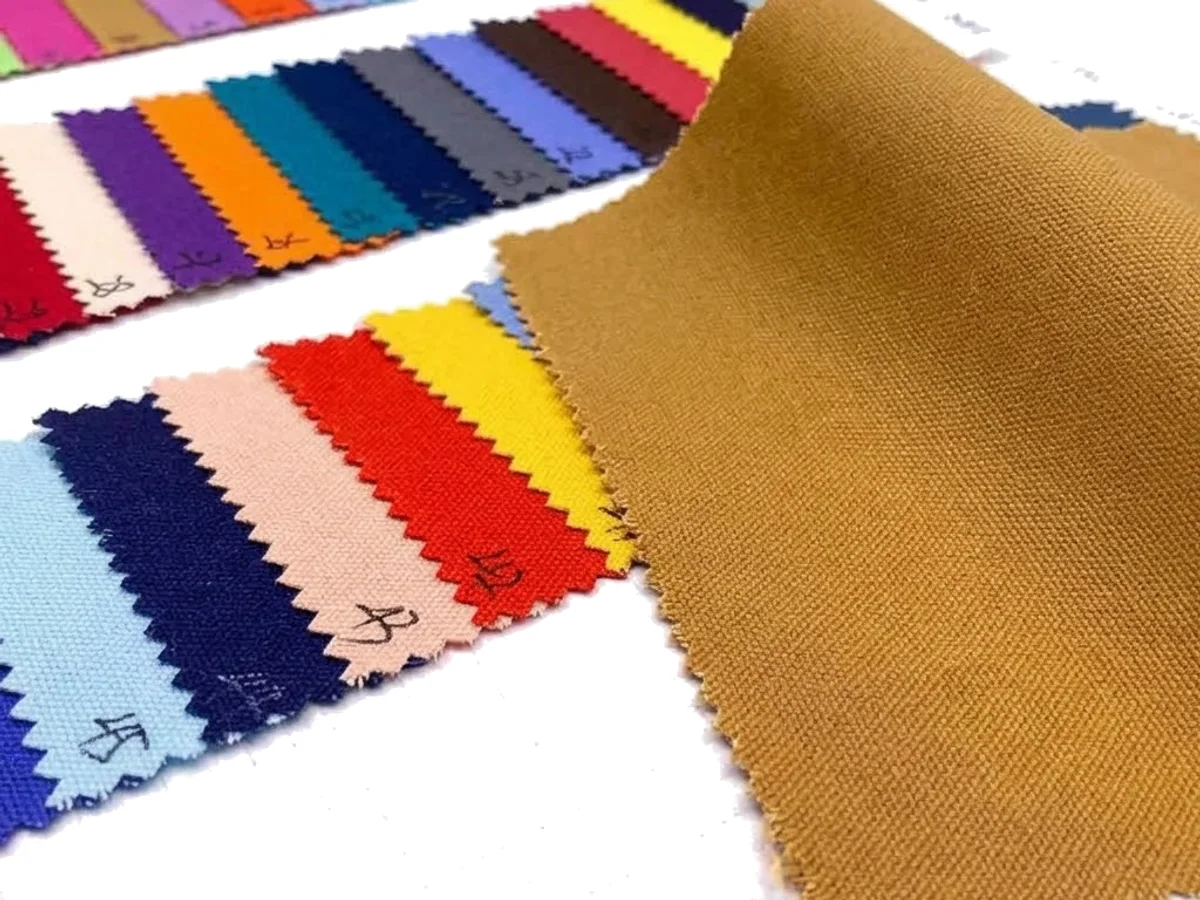
  • A cotton canvas fabric swatch fan beside a woven canvas panel
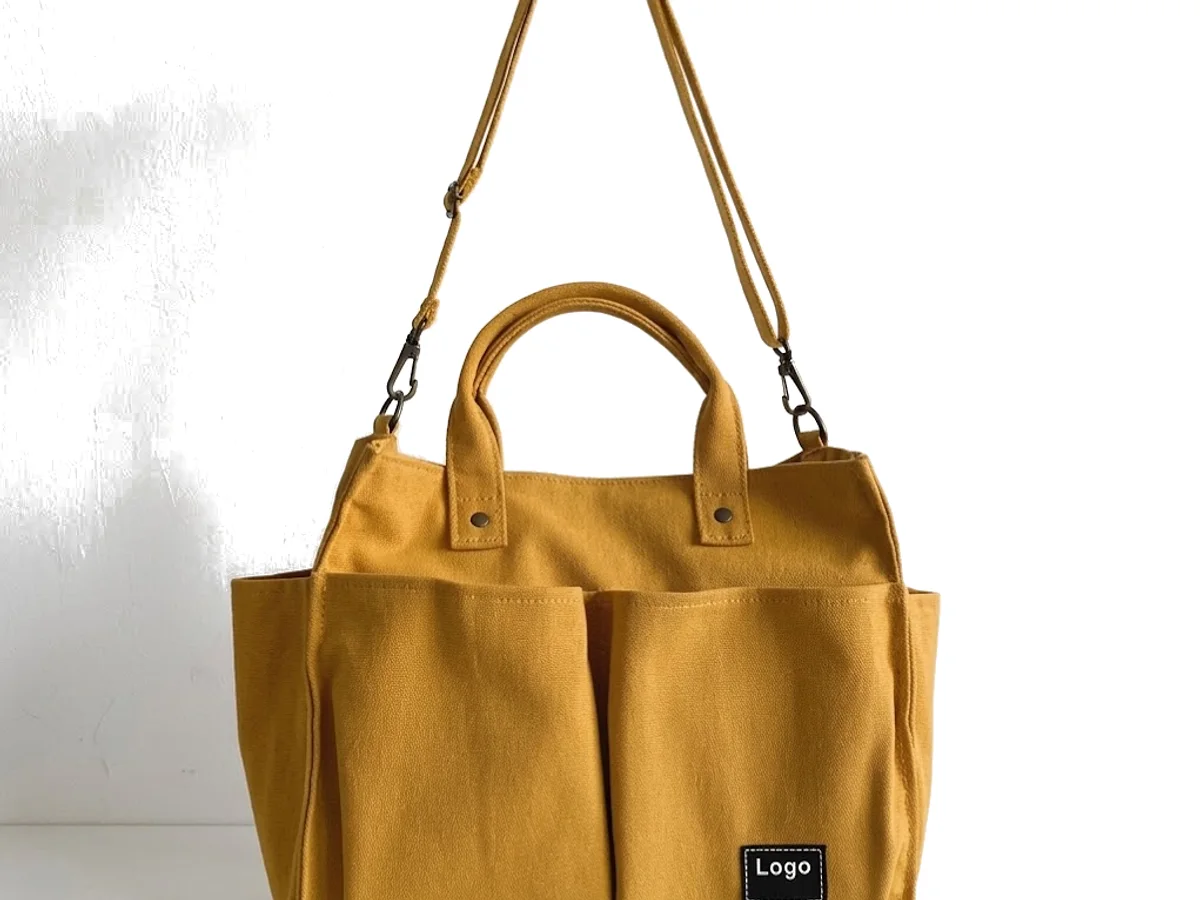
    A mustard cotton canvas tote travel bag with a blank label patch on a plain ground

    Cotton · waxed

    Canvas

    A woven cotton body with a hand no coated shell gives — the reason a heritage piece is specified this way.

    • Plain canvas takes a print cleanly and softens with use.
    • A waxed face adds water resistance and develops a patina.
    • It is a decision about the brand, not only about the weather.
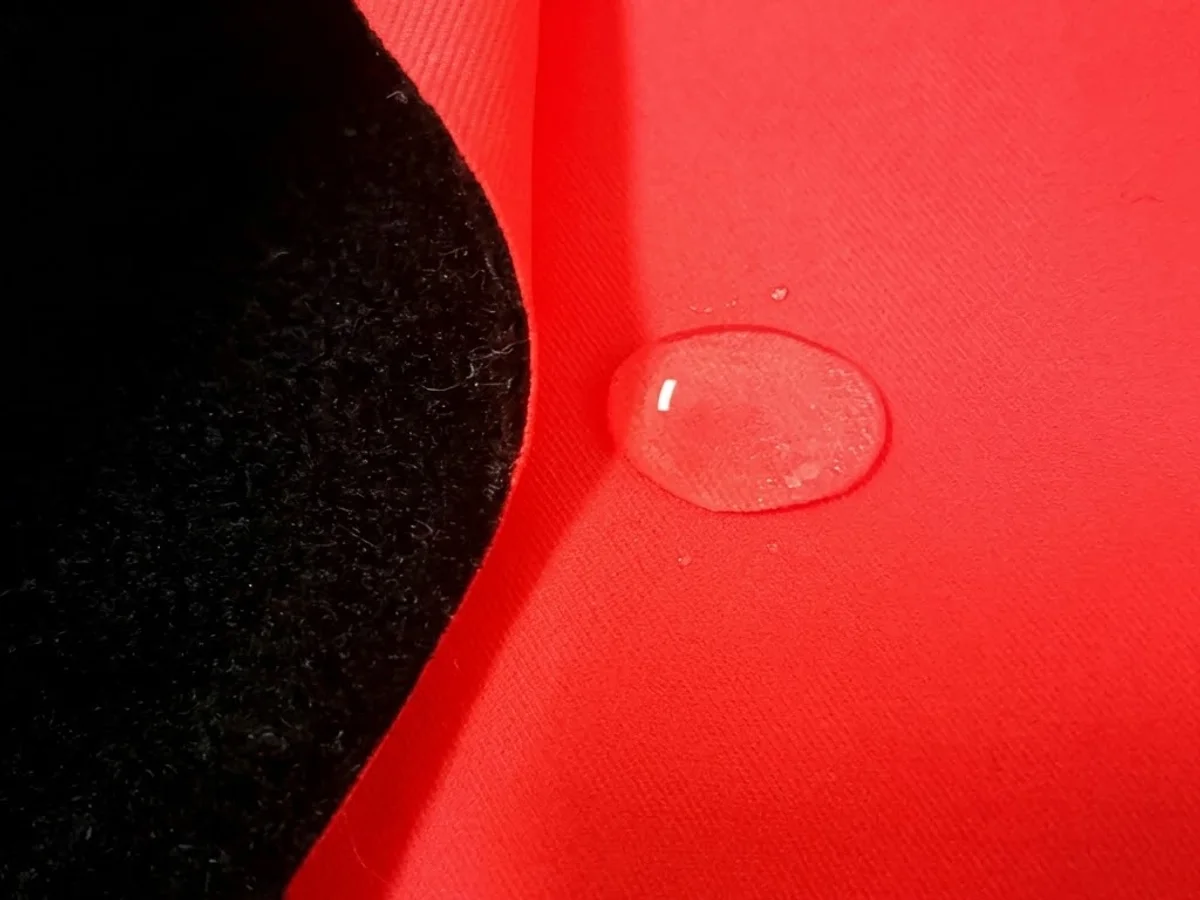
  • A waterproof coated tarpaulin face photographed close enough to show water beading on it
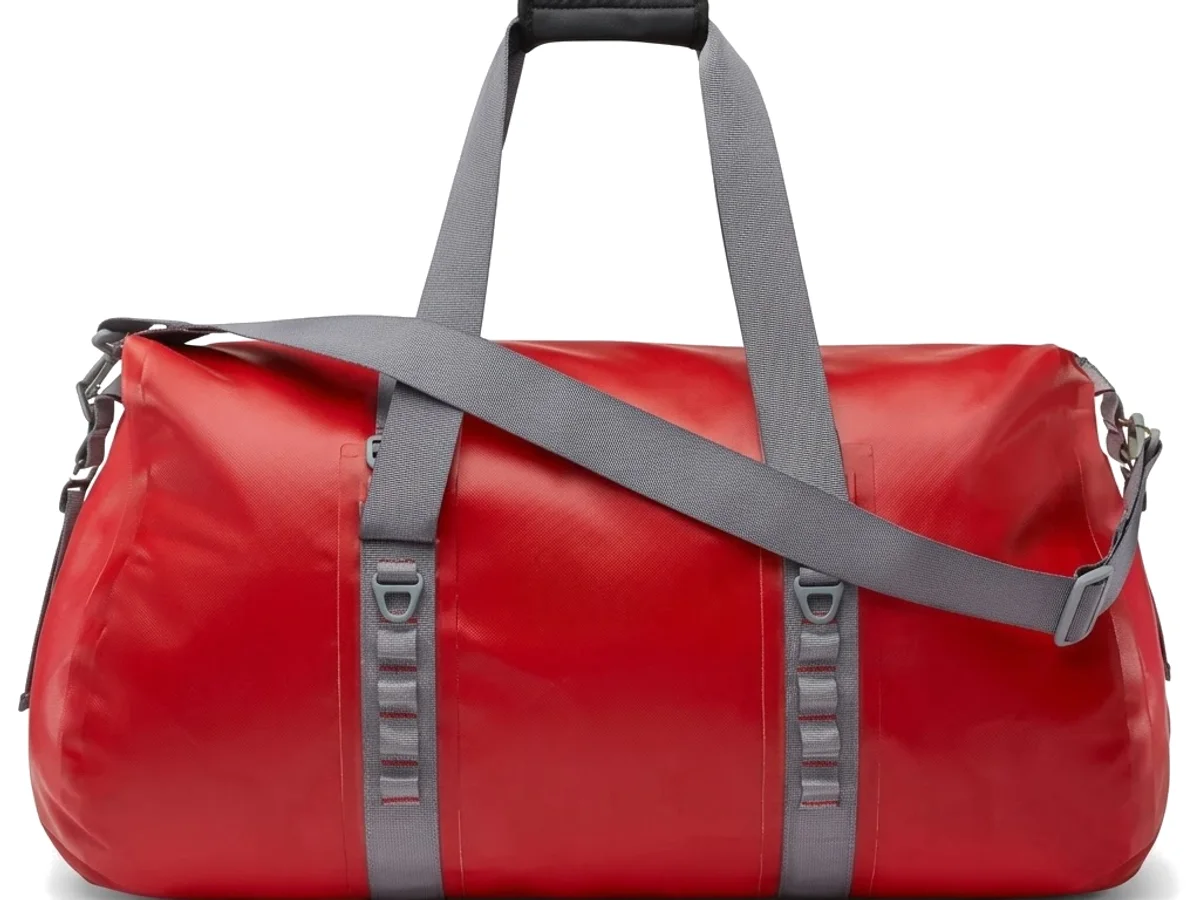
    A red coated tarpaulin travel duffel with webbing handles on a plain ground

    TPU · PVC · laminated

    Tarpaulin and coated film

    A laminated or coated body on a heavier base cloth, for a bag that is expected to be wet.

    • A TPU face stays flexible cold and holds up in transit and in store.
    • A PVC face is cheaper and stiffens with age.
    • The backing is specified to the bag rather than assumed.
  • A polished leather hide photographed close enough to show its grain and sheen
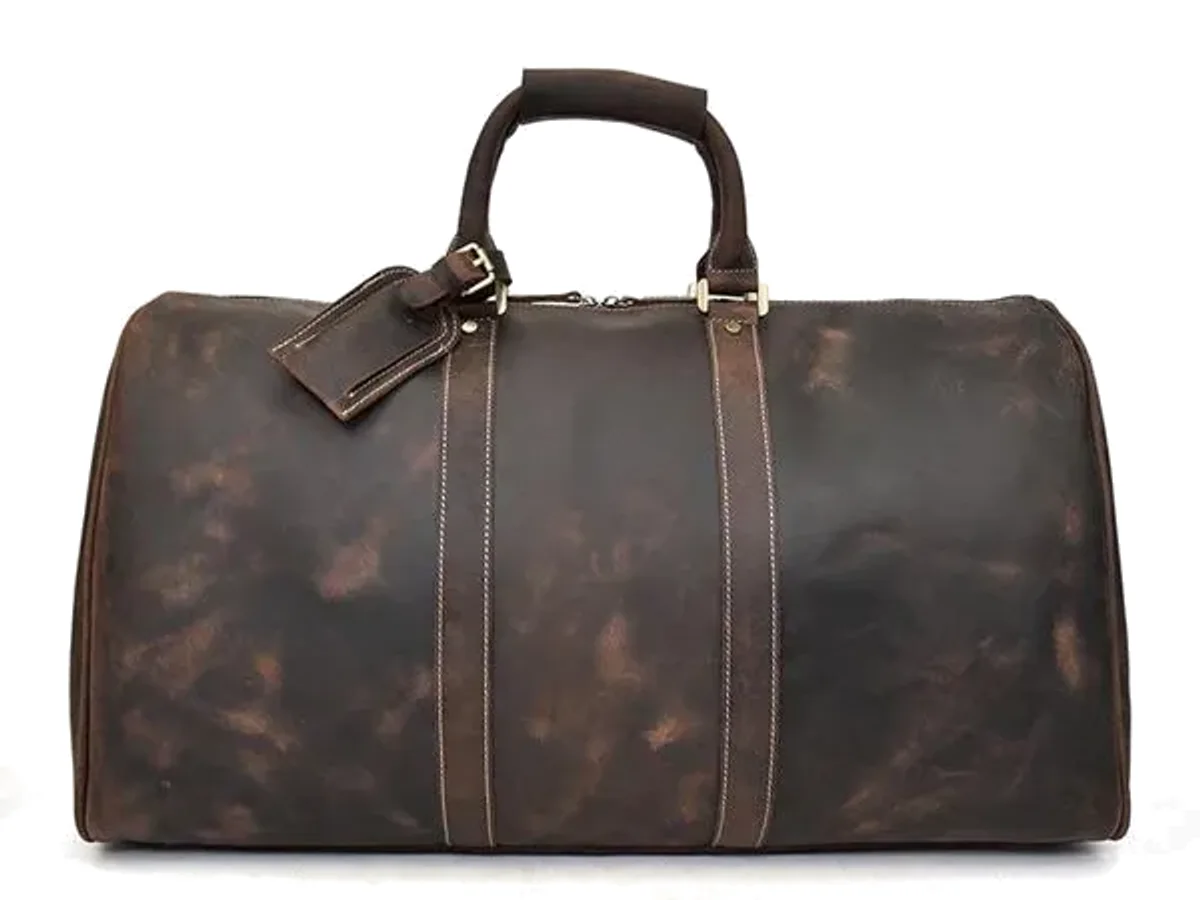
    A brown leather barrel travel duffel with a luggage tag on a plain ground

    PU · split · genuine

    Leather and PU

    A leather or polyurethane body, for the piece sold on its material rather than on its capacity.

    • A PU face is uniform and takes an even colour across a run.
    • Split leather sits between: a natural feel with a polished finish.
    • A genuine hide varies panel to panel — the point of it, or a reason not to.
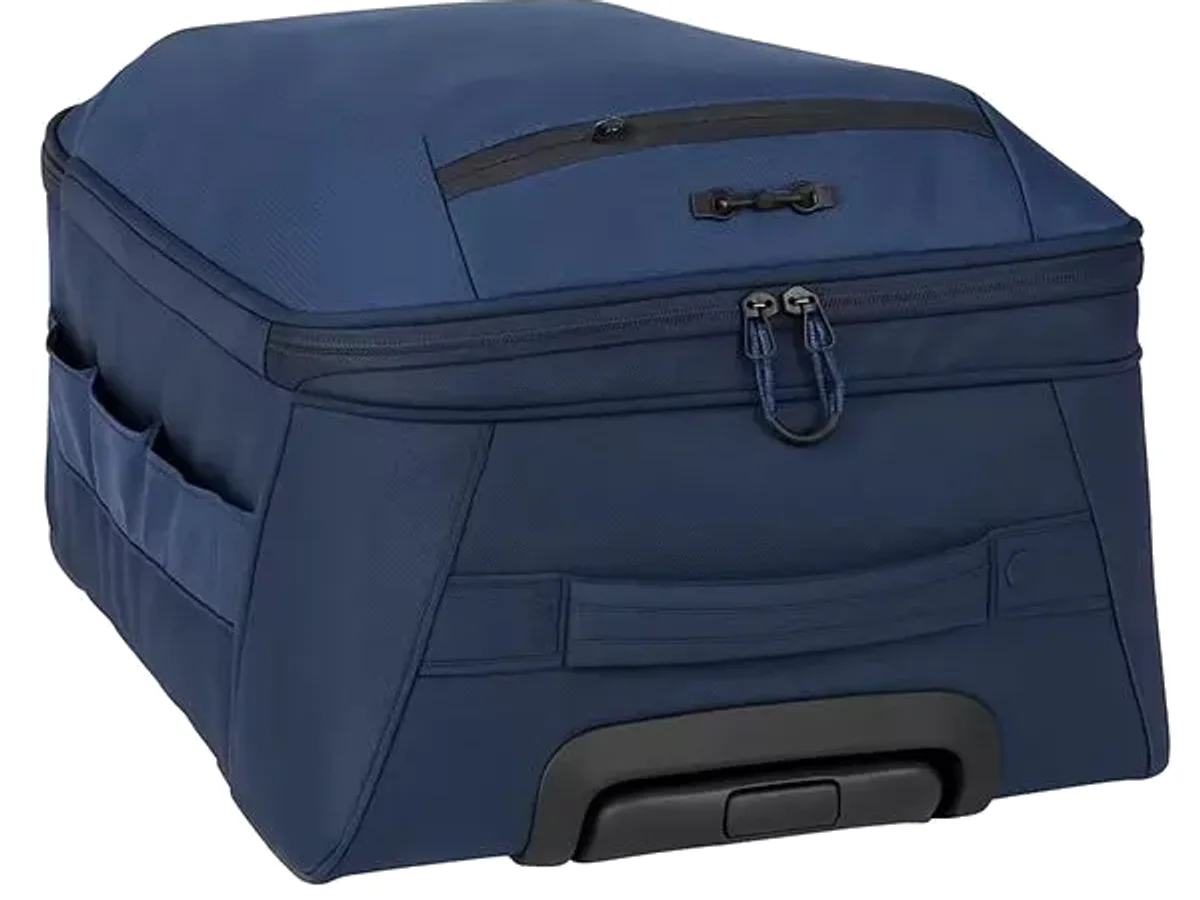
  • RPET recycled fabric fan-folded in several colours beside a clear pouch
    A navy RPET recycled travel case with a wheeled base on a plain ground

    RPET shell

    Recycled content

    A shell woven from reclaimed bottle flake rather than virgin polymer, spun to a comparable denier and coated the same way.

    • It behaves like the equivalent virgin fabric.
    • Specified where a brief is sold on its recycled content.
    • The certificate is supplied as a document with the order.

Build and backing

Built to the Brief, Backed After the Run

Three questions sit behind a travel bag order: what the build can do, how far it can be changed, and what happens once the bags have shipped. These are the three answers.

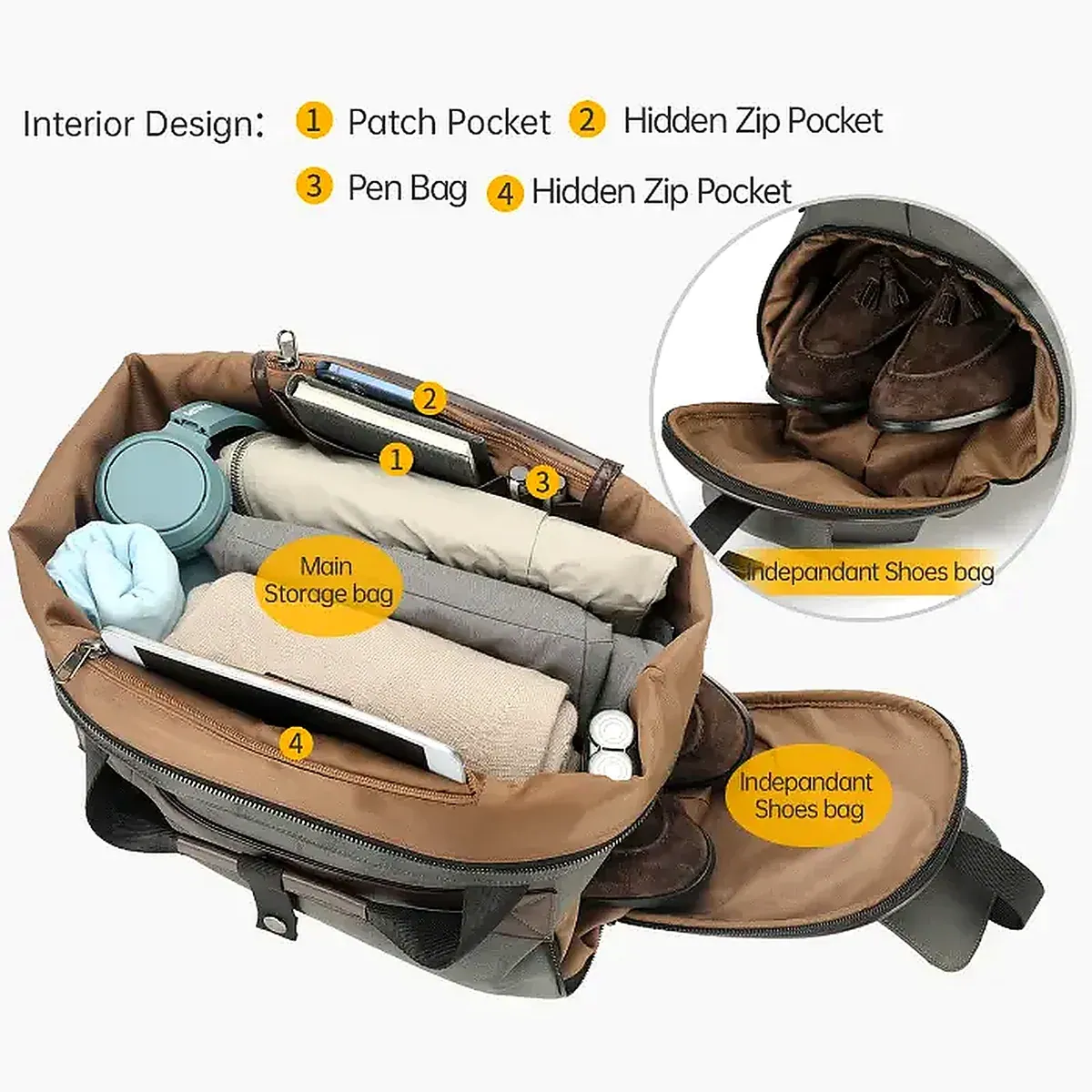
  • The interior of a custom travel bag opened to show its patch pocket, hidden zip pockets and a separate shoe compartment
  • 01

    Technical features settled in the spec

    Stitching reinforcement
    Double-stitched at the stress points: handles, straps and base anchors.
    Water resistance
    A water-resistant shell or a waterproof coating, for a wet hold or a sudden shower.
    Strap adjustability
    Adjustable shoulder straps cut to an ergonomic fit for a long carry.
    Handle strength
    Padded, reinforced handles sized for a packed bag, so they do not dig in.
    Thermal insulation
    On an insulated build, a temperature-holding layer cut to the interior.
  • 02

    Customized to the brand, not to a catalogue

    Material
    Chosen from the shell families in the section above — leather, canvas and the recycled weaves included — where a claim has to hold up.
    Size
    Cut to the market the bag sells into: a day bag, a backpack or a travel duffel.
    Colour
    Matched to the brand, or built as a custom combination carried across the range.
    Logo
    Set by embroidery, print or engraving, whichever reads best on the shell.
    Interior design
    Compartments for laptops, hardware or travel items, drawn before the pattern is cut.
  • 03

    Service that runs past delivery

    Response
    A defect is troubleshot first, so the fix is the shortest route back to a working order.
    Repair
    A worn part is renewed on the line parts rather than the bag written off.
    Replacement
    A product that misses the brief is replaced rather than argued over.
    Warranty and spares
    Extended warranty and spare parts are available on request.
    Care guide
    A care guide ships with the order, covering how to clean, store and maintain the bags.

Before it is cut

See the Bag Before It Is Sewn

A travel bag brief is signed off twice before bulk: once as a drawing and once as a physical sample. The drawing comes first, because proportion, panel layout and where the mark sits are cheaper to argue about on a screen than on a first sample.

Visualise the Bag Before It Is Cut

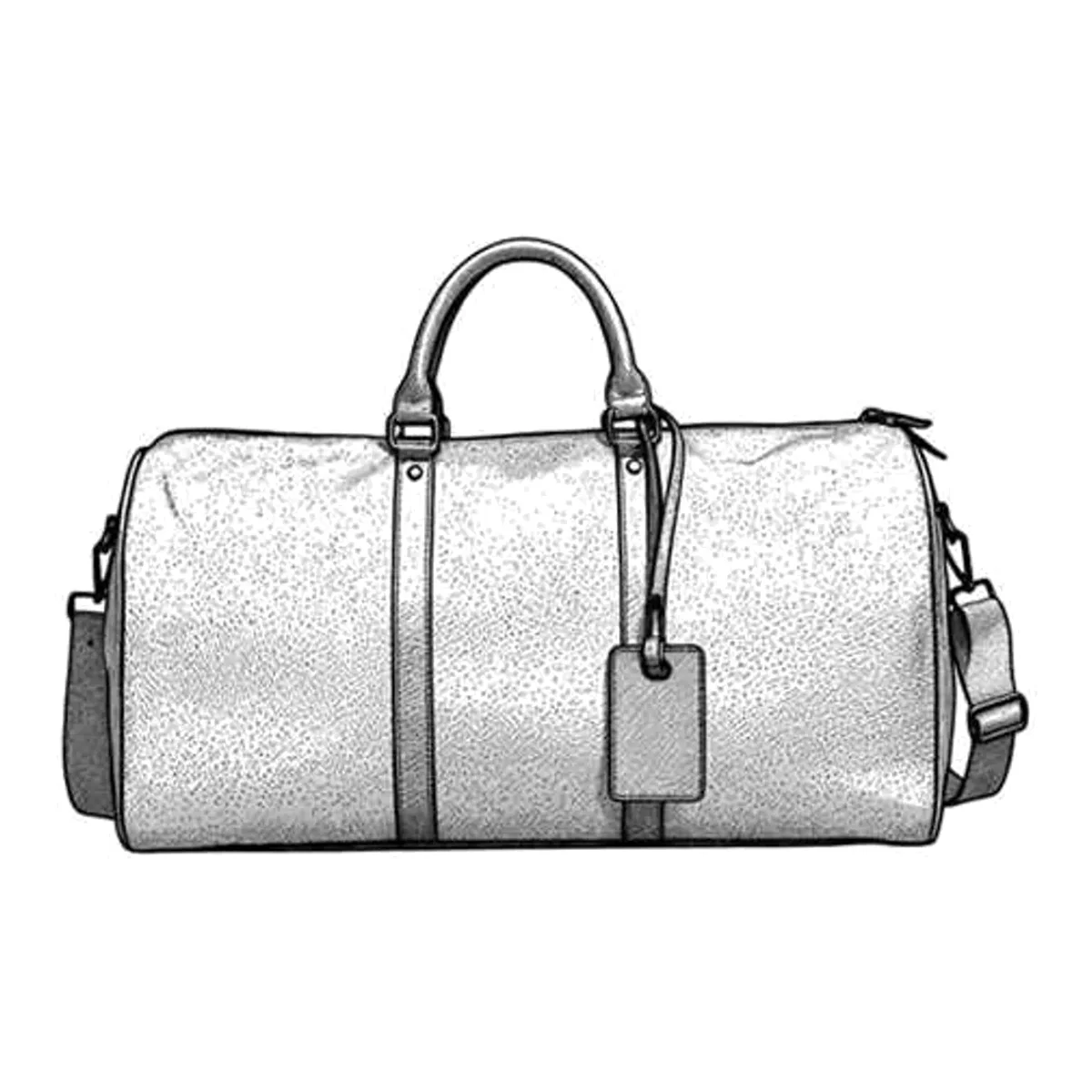
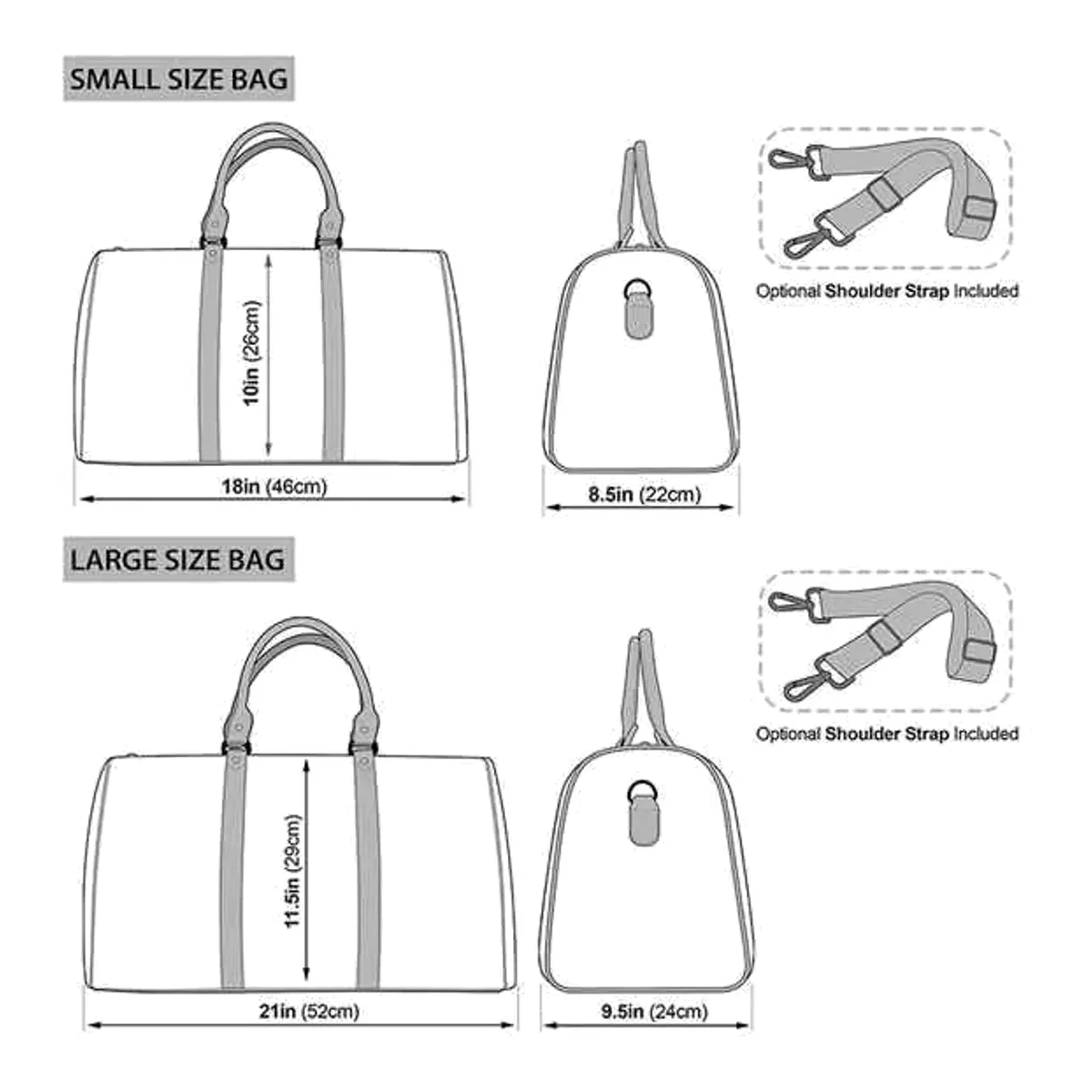
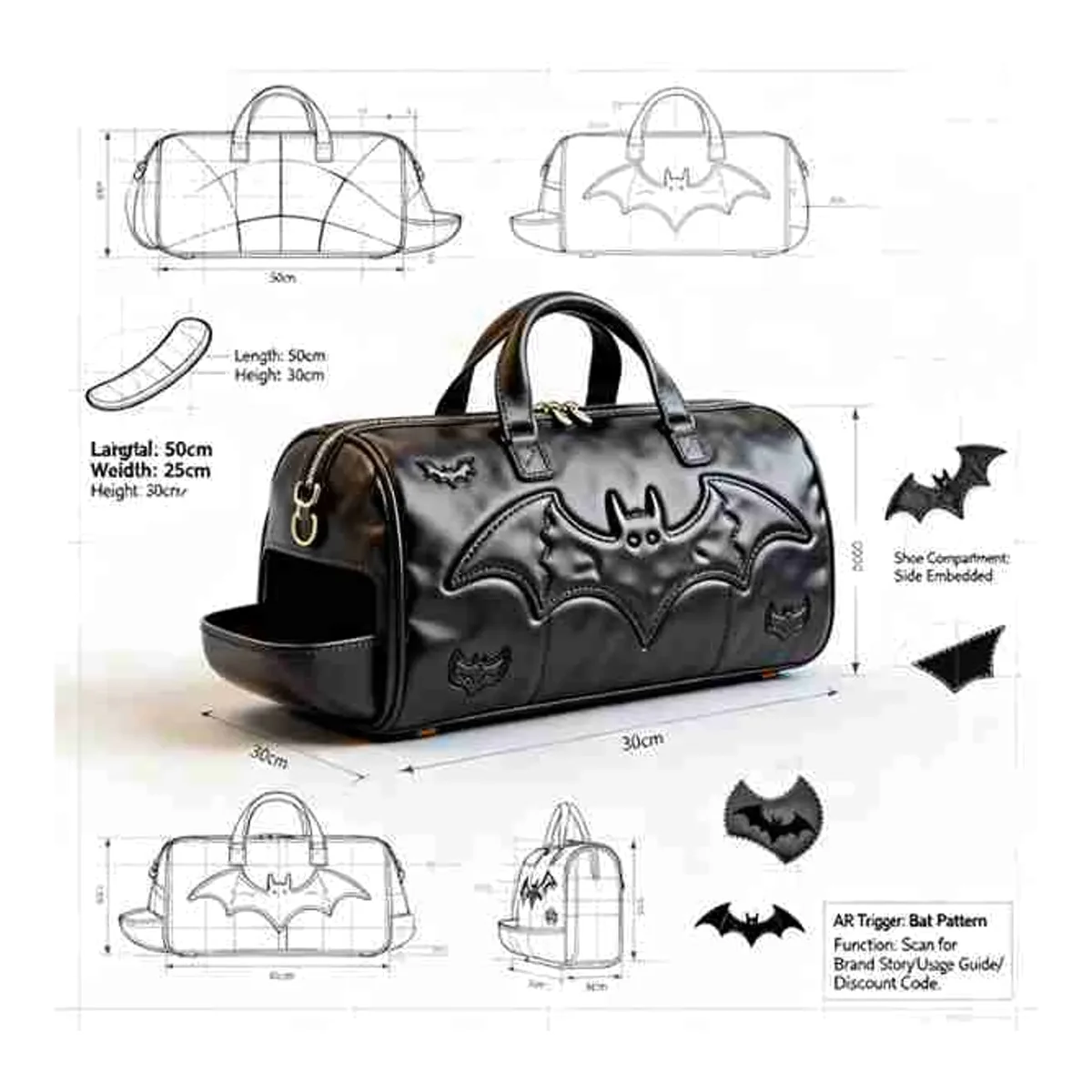
A drawing is where a brief stops being words. These four take a travel bag through the stages on the way to a pattern: the shape and the panels it is cut on, the sizes it is run in, the surfaces a motif sits on, and the colourways its shell comes in. A drawing settles a decision that is cheaper to make on a screen than on a cut panel.

  • Proportion, size and colour are agreed on the drawing, so the sample is judged on the build rather than on the layout.
  • OEM, ODM and private-label buyers read the same sheet, which shortens the questions that come back.
  • A round of changes is spent on the layout rather than on a cut pattern, and the colour is matched as the drawing is approved.

Fewer revisions, and a faster run to the first sample.

  • A line rendering of a barrel duffel travel bag showing its barrel body, panel seams, handle, shoulder strap and luggage tag
  • Dimensioned technical drawings of a travel duffel at a small and a large size, with length, depth and height marked, and an optional shoulder strap
  • A rendered travel duffel in black with an applique motif across the front panel, shown with front, back and end elevations and a callout for an embossed shoe compartment
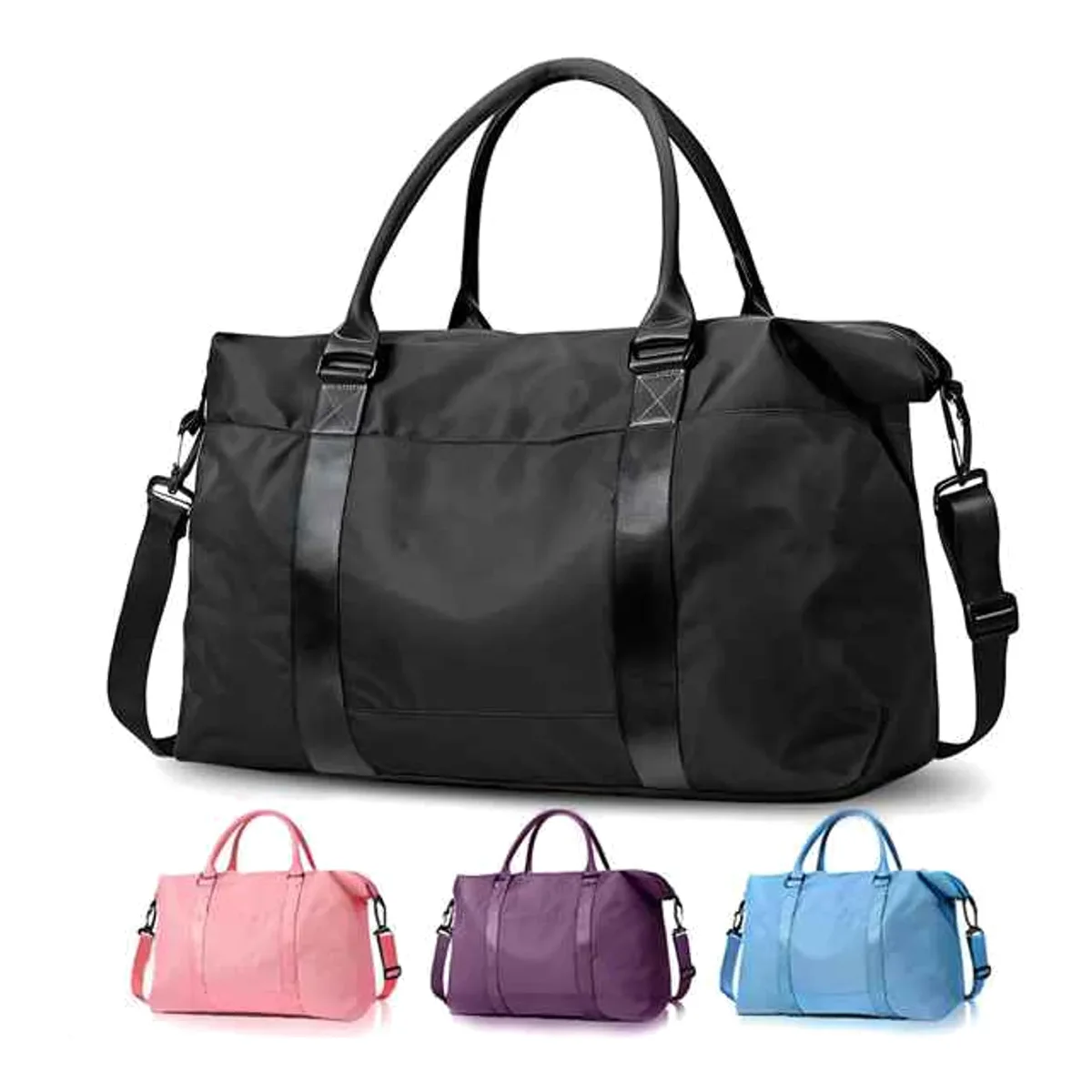
  • A rendered travel duffel in a black shell shown with the same bag in pink, purple and blue colourways

Buyer accounts

What the Buyers Said Once the Run Landed

Two travel bag runs, on what the build had to clear before the bags reached a shelf — an embossed hide that had to hold its edge, a carry-on that had to clear a cabin ceiling, and what a second order says that a first cannot.

Sarah ThompsonCreative Director at LuxeWear

Pressed into the hide rather than printed on it: the house mark on a leather travel bag, opening at the hundred-piece floor. The hide narrowed to a full-grain that would take the impression, and embossing held the mark’s edge where a print patch would sit on the surface.

Sample came back inside seven days, and nothing was cut in quantity until that unit was signed off; it then became the reference the whole run was measured against. The closure was specified alongside it — a lockable dual slider, both ends of the main zip run three times end to end, the pull tabs at 30–50 N at ninety degrees.

A season on, the second order repeated the first exactly — same hide, same mark, off the one pattern. The stitching and the zippers came back as the sample had.

James PatelFounder of UrbanTrek Gear

A summer collection needed a carry-on that would clear the cabin ceiling of the airlines it was sold to fly on, opening at the hundred-piece floor. Naming the cabin dimensions in the brief rather than assuming them let it clear the smaller of the two common envelopes and still pack to the capacity it was sold on.

Samples arrived inside seven days, in the bulk cloth. The shell was a lightweight, water-resistant weave, and the closure was specified rather than accepted — a heavy-gauge zip on self-repairing sliders, both ends checked on the sample before the run opened.

Top seller of the line that summer, and the reorder went in on the pattern number alone. A hundred pieces opening a line, then repeating on the same construction, is what lets a small retailer commit to a range.

Travel bag questions

Frequently Asked Questions About Custom Travel Bag Manufacturer

The questions that come up on most travel bag enquiries. Where a figure already appears in a section above, the answer points at it rather than repeating it a second time down the page.

How long will a telescopic handle stay tight?

That is decided at the sample, not at the end of the run. The limit this build is checked to is 1.5 cm of lateral play at full extension with the bag packed, and a sample that already shows more than that is a pattern problem rather than something the handle will grow out of. The tubing is rarely what fails first — the rivets and the panel behind the housing are, which is why a reinforcement patch sits on the inside of the back panel and why the housing is checked square at final inspection.

Is a TSA lock worth specifying, and what does it actually protect?

It is worth specifying, but not for the reason most pages give. A TSA lock does not stop a thief — the same master key that lets an officer open the bag for inspection opens it for anyone who has one, and a padlock is what marks a checked bag as worth opening. What it buys is continuity: a bag that has to be searched is opened with a key and closed again, rather than cut open and retaped. The lock also secures the zip sliders, so it needs a dual-slider main zip to be usable at all.

A wheel breaks on bags we already sold. Can it be replaced?

Yes, and it is the reason a build that rolls is worth running rather than a plain one. Where the bag rolls, the wheel and its bracket come off the base sheet as one unit, the trolley assembly unscrews from the back panel, and the zip sliders are replaceable without opening the bag — all line parts, so a worn fitting is a repair rather than a write-off. On a bag that does not roll the same principle holds for the parts it does carry: sliders, buckles, feet and strap anchors are all specified as separate pieces that can be renewed. A spare wheel set per carton can be named in the brief and run on the same components as the bags, which is the cheapest line on an order and the one that saves a repair.

How is a bag drop-tested, and onto which part?

Onto the parts that take the impact, from 90 cm to 1.2 m, with the bag packed. Corners, faces and the base are all landed on, because they fail differently: a corner tests the shell and the base seam, a face tests the panel, and where the build rolls the wheels test the brackets and the base sheet they are fixed into. Frame cracking, bracket fracture and fabric tearing are what the test is looking for. It is run before the bulk run, on the same unit the base and bracket check is done on.

Why do you say the shell is not what fails?

Because on a heavy-denier bag it almost never is. True structural tears through the body of a 1000D or a ballistic-nylon shell are a microscopic fraction of the returns across this category, while the great majority come from hardware — sliders and wheels — and from seams at the points that carry load. That is why the effort goes where it does: bar-tacks at the handle, strap and base anchors, a named thread specification, and a backing that will not hydrolyse in storage. A buyer screens on the shell and the bag fails at the seam.

How does a framed bag survive a shipping container?

By being packed as a stack rather than as a pile. A framed bag — a rolling build, or any bag carrying a stiffened base sheet — does not compress the way a soft duffel does, and its base is what takes the weight above it. Bags are packed to the carton marks agreed at quote, and the carton mark is what decides how a pallet is built and what the freight costs. A run that arrives crushed has usually been packed to a cube that did not match the bag.

Will one cabin size fit most airlines?

Not from one dimension. Cabin ceilings are not standard across carriers — the two common envelopes differ enough that a bag cut to the larger one is refused by airlines using the smaller, which is why cabin dimensions are named in the brief rather than assumed. Underseat, cabin and checked sizes are cut to the ceiling a given bag has to clear. The interior depth is then a separate figure from the external size, so the bag can be cut to a ceiling and still pack to the capacity it is sold on. A trolley sleeve is sized to pass a standard telescopic handle and is cut on reinforced webbing rather than on the shell.

What does a travel bag tech pack carry that another bag’s does not?

A travel bag pack carries what a tote or a duffel brief never does — and where the build rolls, more again. Any format here needs the format itself, the shell and its denier, the carry and how the bag is set down, the closure and whether a lock is wanted, the lining, the pocket and compartment layout, and the marking method and its position. A rolling build adds the handle stages and the height the bag is towed at, the wheel build and whether the base sheet is stiff enough to stand on them, and the cabin ceiling the bag has to clear with the interior depth as a separate figure.

Start a travel bag run

Name the Format.
The Brief Follows.

Send the format, how the bag is carried and what has to fit inside it. Back comes the shell, the fittings and the limits they are checked to, the seam specification, the marking method and a sample at the hundred-piece floor.

Get a Quote