

Custom Leather Laptop Backpack Soft Leather Marks a Lid — 13–17-inch Machines Never Touch It.
A commute puts a device through an hour of weight and weather a workday long, so what protects it is a sleeve framed as its own bay and suspended off the outside face, not a pocket padded after the shell is cut. Send the device, the shell and the routine — the sleeve, the panel layout and the mark come back on a physical sample.
- 3–5 mmbay wall, foam behind the lid
- ~22 Ltypical daypack shell
- 100pieces minimum, any build
The builds
Six Builds Cut Along the Working Week
A leather laptop programme separates on how the bag is carried and what has to travel with the device, not on a colour card. The sleeve, the panel layout and the mark position all follow from the build.
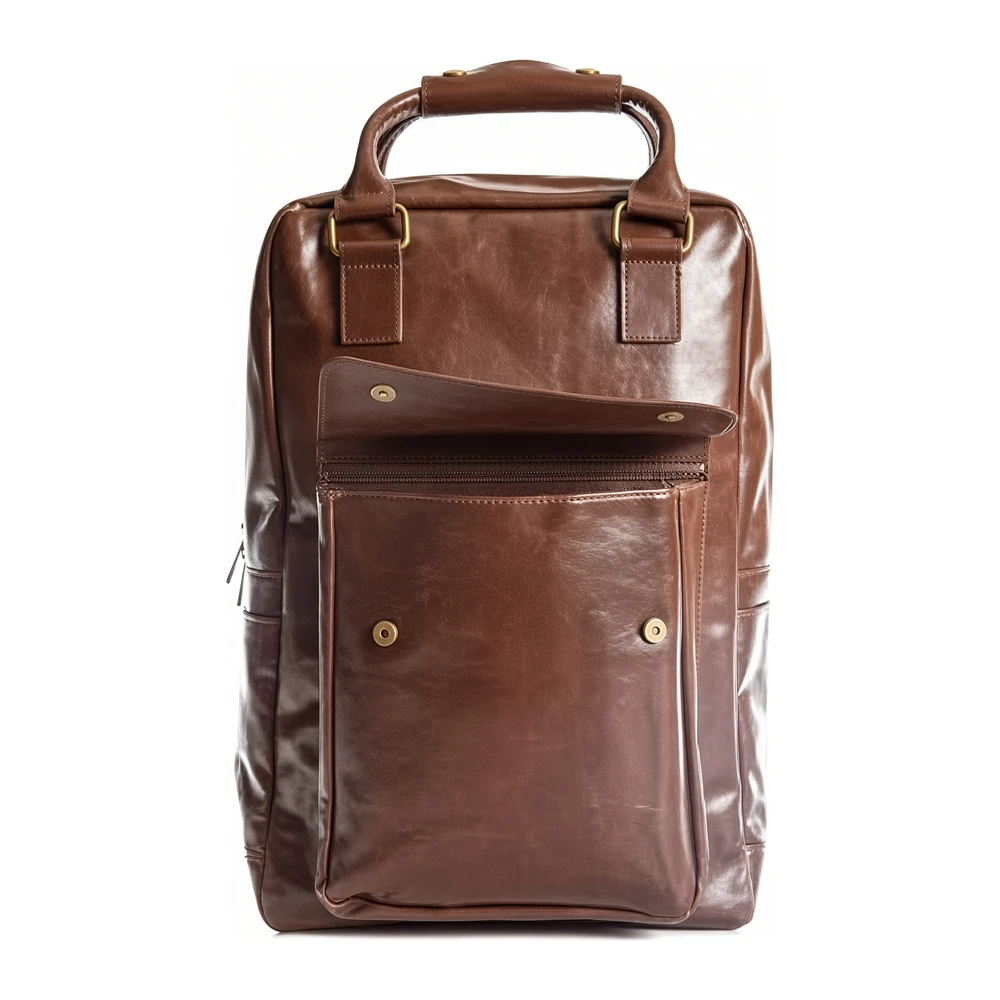
Executive Leather Laptop Backpacks
- A slouchy shell cheapens the room — this one holds a structured line across a conference table
- Takes a deboss cleanly, so a monogrammed run needs no second pattern
- A slouchy shell cheapens the room — this one holds a structured line across a conference table
- Takes a deboss cleanly, so a monogrammed run needs no second pattern
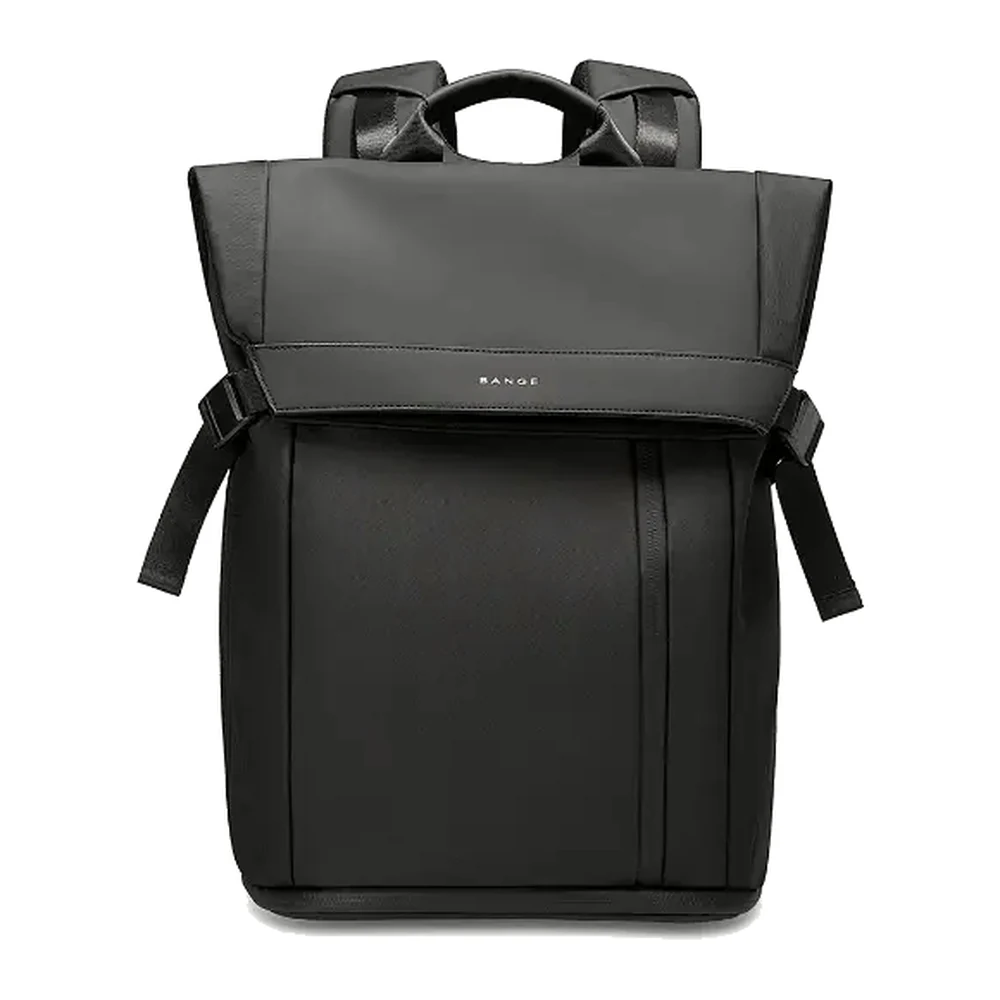
Commuter Series
- A standing carriage punishes a heavy bag — this shell is cut slim and light
- Badge, phone and keys come out of one front pocket, without unpacking the shell
- A standing carriage punishes a heavy bag — this shell is cut slim and light
- Badge, phone and keys come out of one front pocket, without unpacking the shell
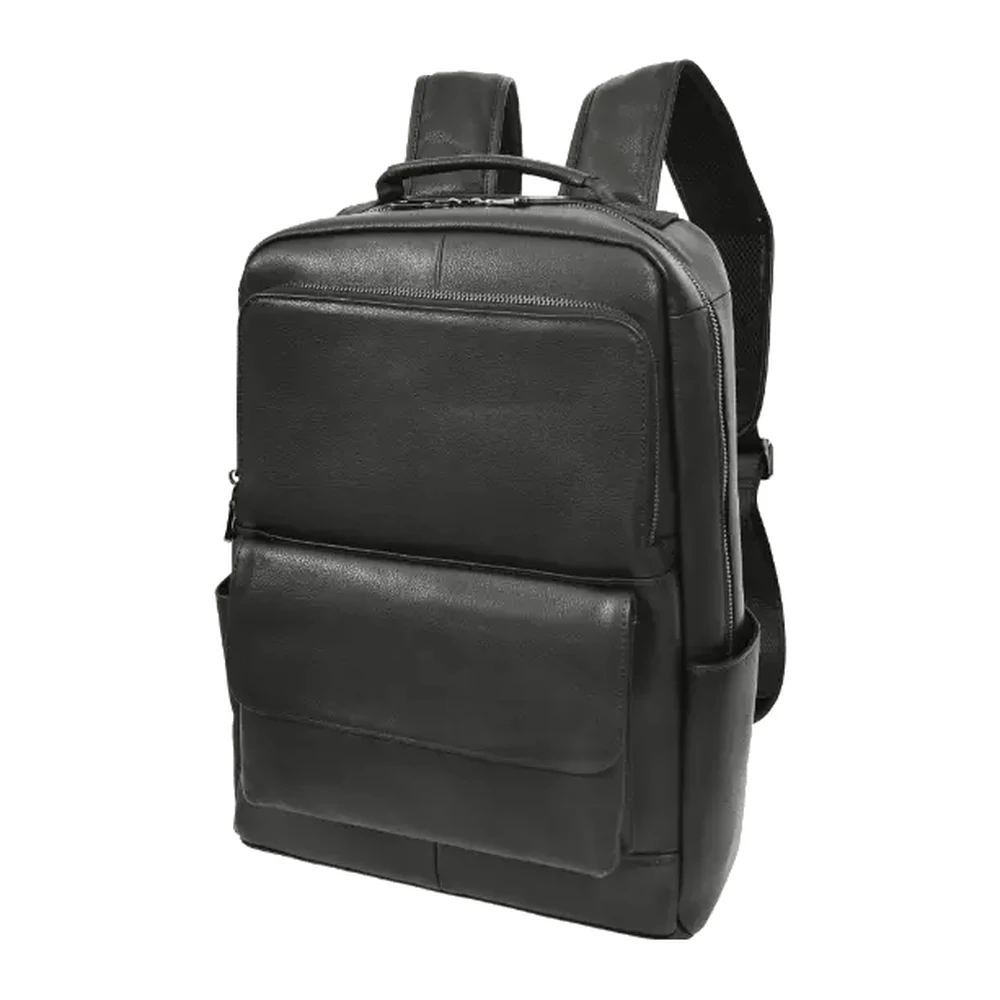
Travel Professional
- The bay opens flat on its own, so it is presented at a check without unpacking
- A trolley strap and a reinforced base, because this is the build that leaves the office
- The bay opens flat on its own, so it is presented at a check without unpacking
- A trolley strap and a reinforced base, because this is the build that leaves the office
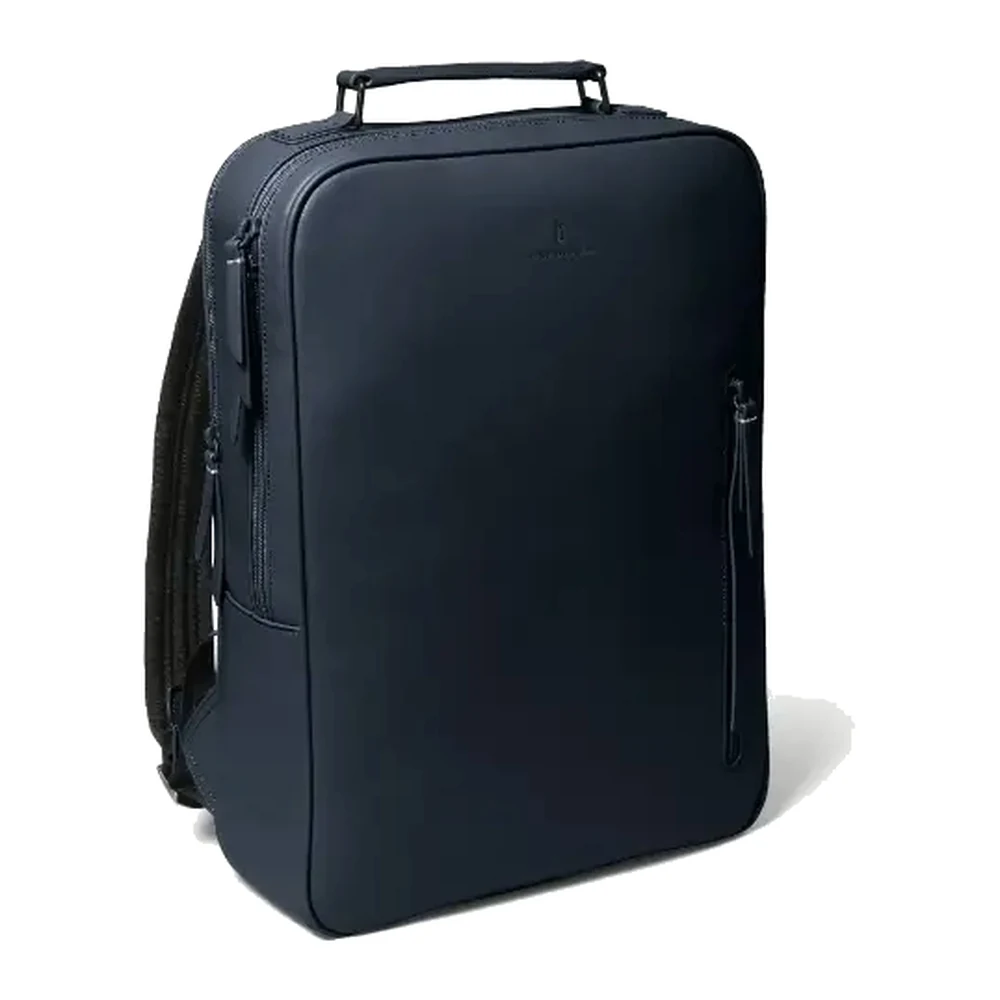
Modern Minimalist
- The same lining and organiser as the other builds, so minimal is not a stripped bag
- Takes one large mark cleanly, which suits a logo-led programme
- The same lining and organiser as the other builds, so minimal is not a stripped bag
- Takes one large mark cleanly, which suits a logo-led programme
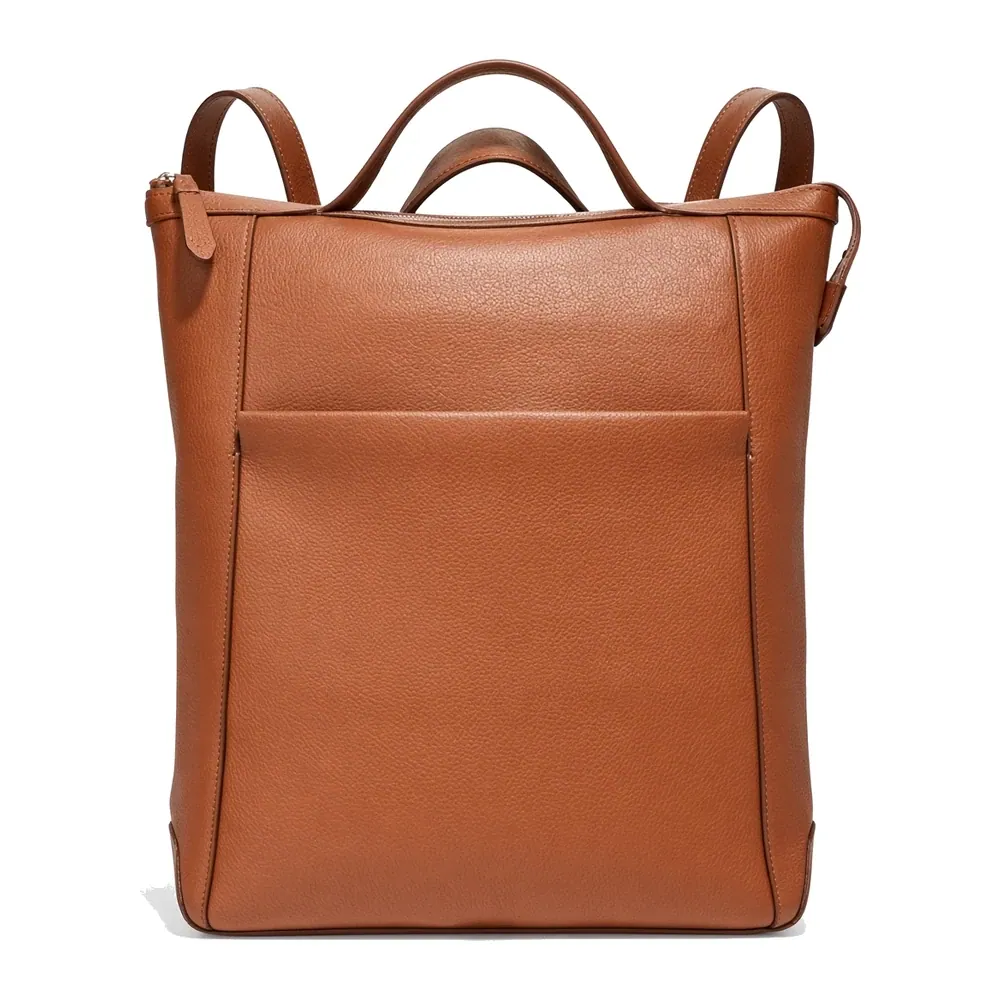
Convertible
- Swap the carry before the meeting, not the bag — the straps tuck away for a briefcase hold
- One harness re-hung as a shoulder strap, so a sales run covers both without a second bag
- Swap the carry before the meeting, not the bag — the straps tuck away for a briefcase hold
- One harness re-hung as a shoulder strap, so a sales run covers both without a second bag
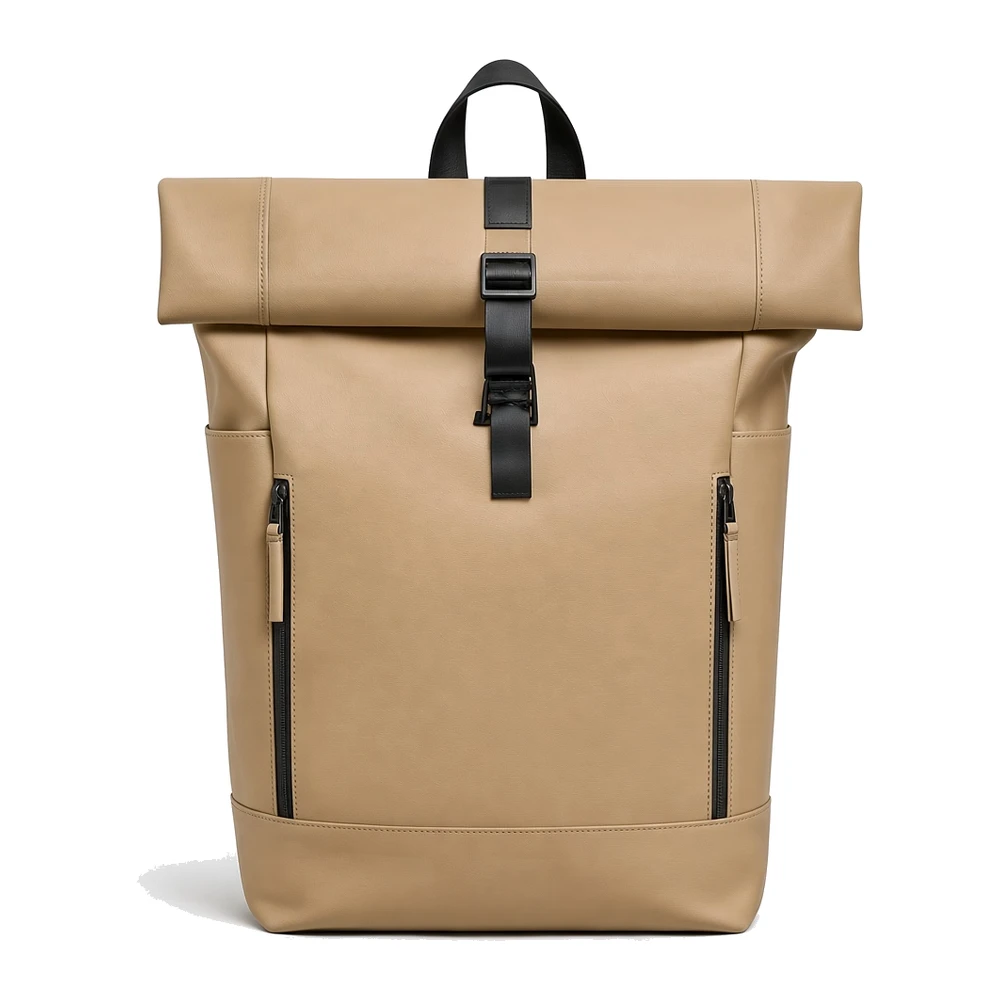
Roll-Top
- Shrug the roll taller on a trip day instead of packing a second shell
- A separate wet slot for a damp gym kit or a coiled cable, sealed off from the bay
- Shrug the roll taller on a trip day instead of packing a second shell
- A separate wet slot for a damp gym kit or a coiled cable, sealed off from the bay
What protects the device
A Device Has No Give, So the Sleeve Has to
A laptop is rigid, flat and glass-fronted, and the two ways it gets damaged inside a leather laptop backpack come from opposite directions: a corner impact from the ground, and a panel pressing in on the lid. The sleeve is built as a bay that answers both, not as a pocket padded after the shell is cut.
Framed, not sewn on
- Its own edges, foam and suspension — a panel in its own right.
- Joined into the shell, not stitched onto a finished lining.
Suspended off the outside face
- Its own floor above the base, so a set-down passes under it.
- Hangs against the back, never on the knock-taking face.
Cut to the device, not a size band
- Foam and face set against it — fleece where leather could mark a lid.
- A reinforced seam behind the bay takes the pull.
Materials and weather
The Hide and the Finish Decide How It Ages
A leather laptop backpack is chosen on the hide and the way its face is finished, because that finish is also what the rain meets. Four lines make the outer build, from the grade of the skin to the system that sheds water off it.
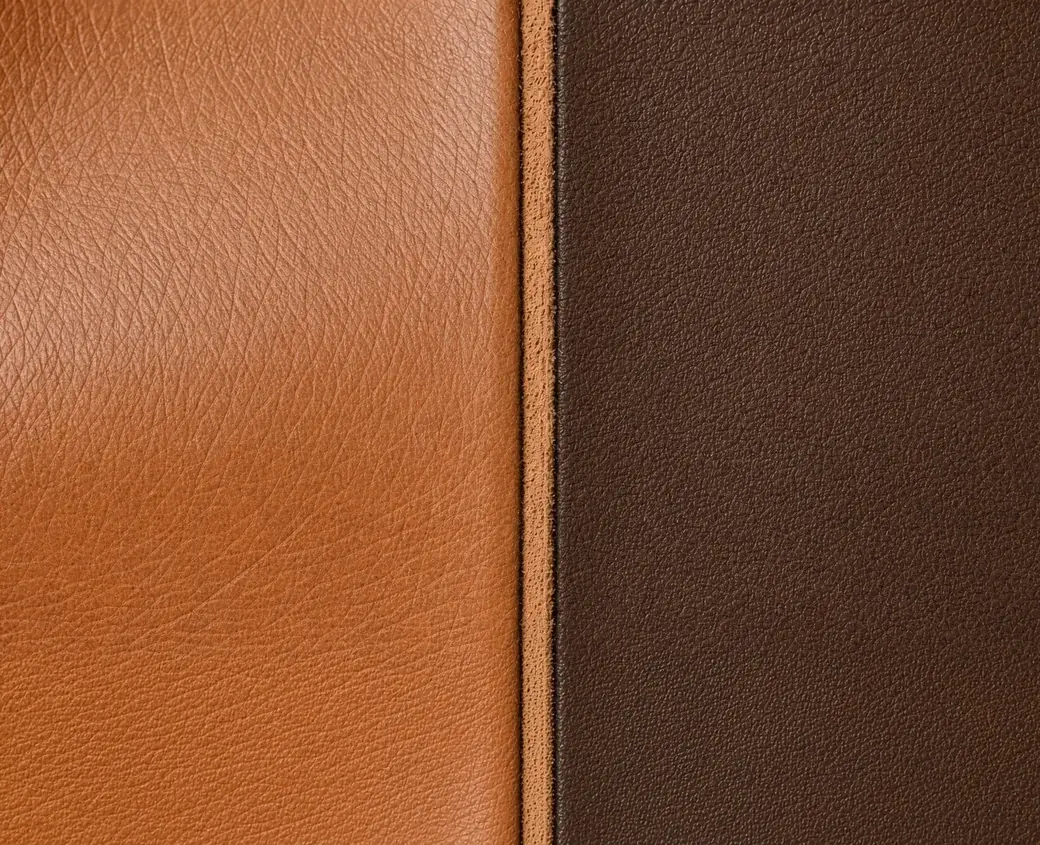
Full-grain and top-grain
- The two grades a laptop shell is cut from: full-grain keeps the whole grain face, and top-grain is sanded to a uniform sheet.
- Grade shows on the outside face and in how the skin folds at a zip, so it is named in the brief before the hide is cut.
- A softer-milled skin drapes closer to the body, and a firmer one resists scuffing where the pack rests on the ground.
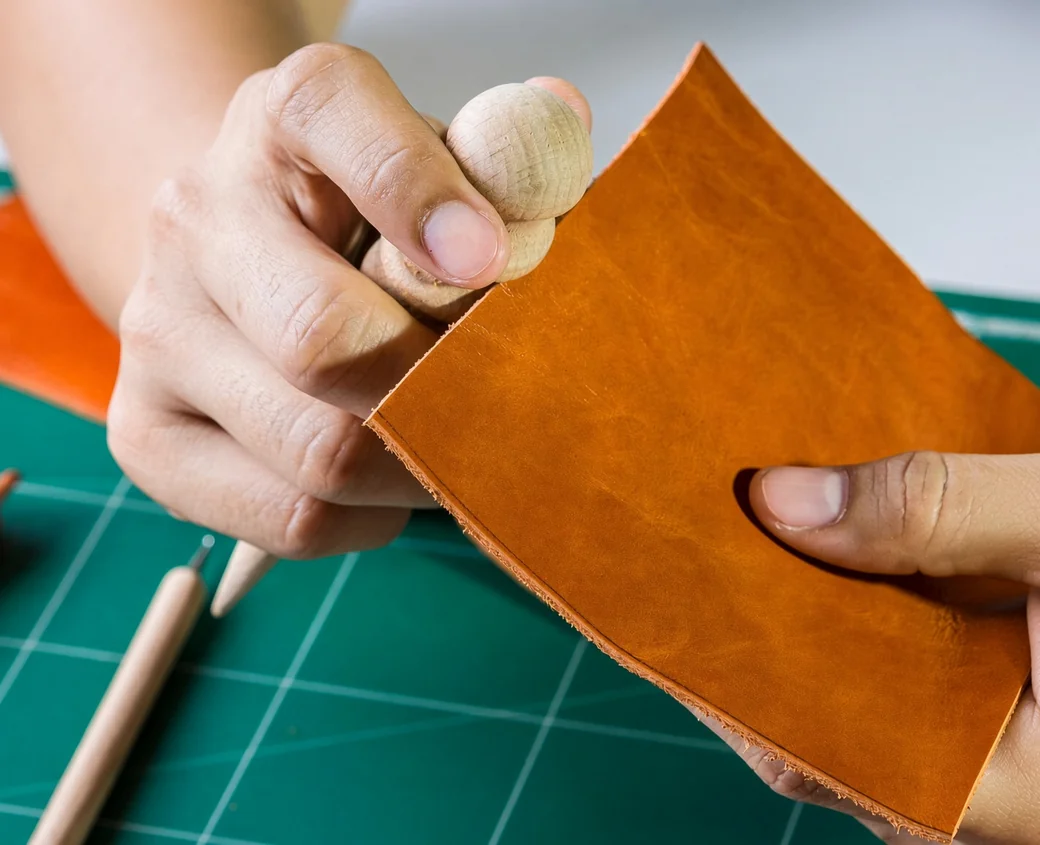
Finishes and thickness
- The finish sets how the face ages over a season: an aniline one shows the wear, and a pigmented one hides it.
- Thickness and temper are quoted with the finish, because the same skin at two thicknesses behaves differently around a zip.
- A commute build often takes the more forgiving finish, where the wear lands and not where the light does.
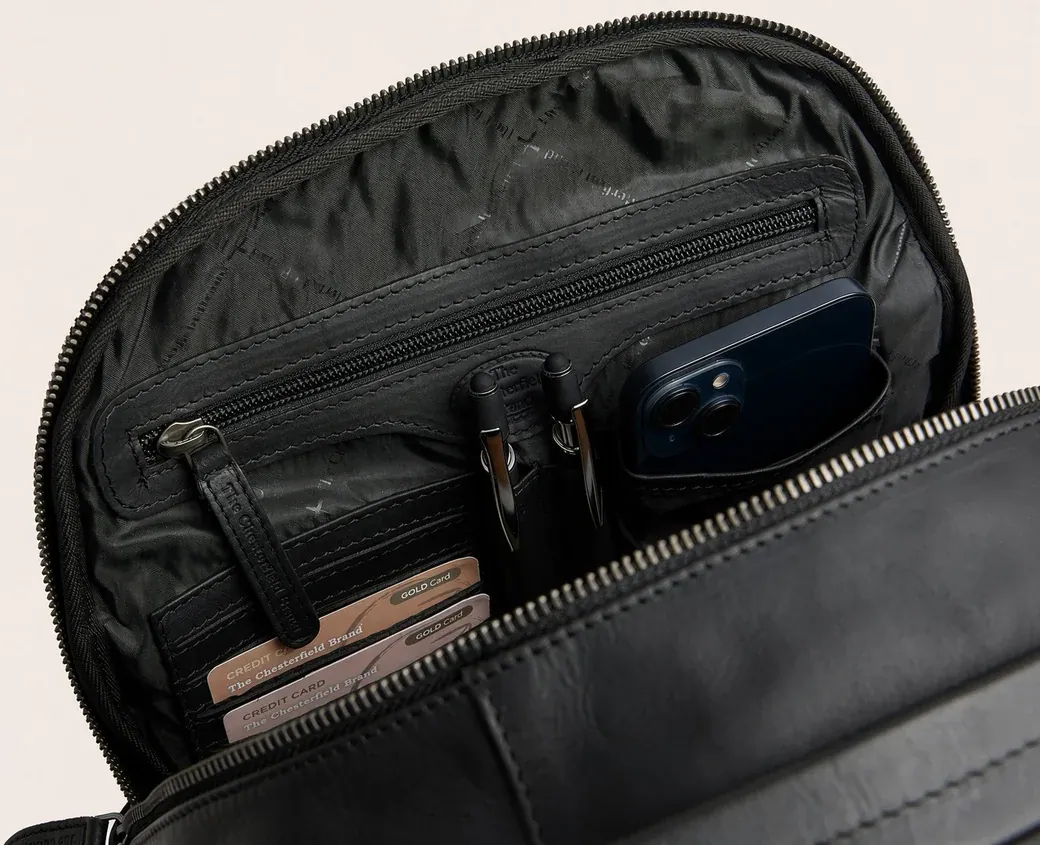
Nylon and technical panels
- A technical cloth carries the panels the leather should not: the back panel, the base and the internal structure.
- A hybrid shell keeps leather on the face that is seen and a coated cloth where the pack meets the ground or the wearer.
- The choice is settled with the leather, so the two materials read as one build and not two halves.
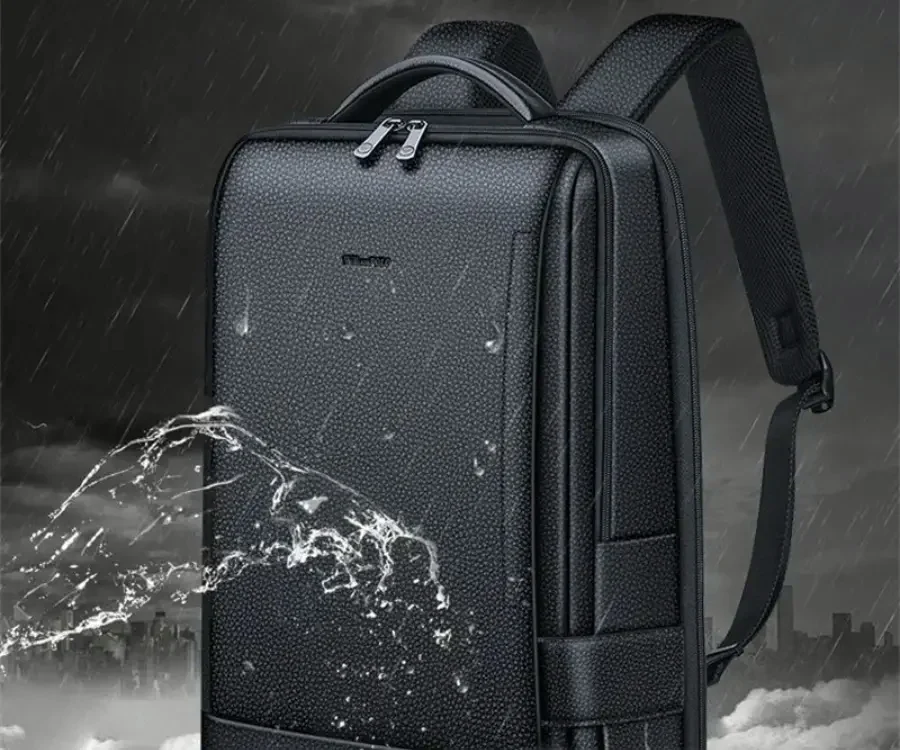
Weather system
- A water-repellent finish on the leather face sheds rain while keeping the grain, without coating the face into a plastic.
- Critical seams are backed and the zips are set with a flap that channels water away from the opening and not into it.
- A coated and taped shell is the alternative where the build has to be waterproof and not only water-resistant.
01 / 04
Swipe to turn the page
The mark on leather
The Surface Decides Which Mark Holds
A leather face is marked by working the material, not by printing on it, so the finish chosen in the band above is what decides which of the four marks a leather laptop backpack can carry — and how the mark reads once the pack has been carried for a year.
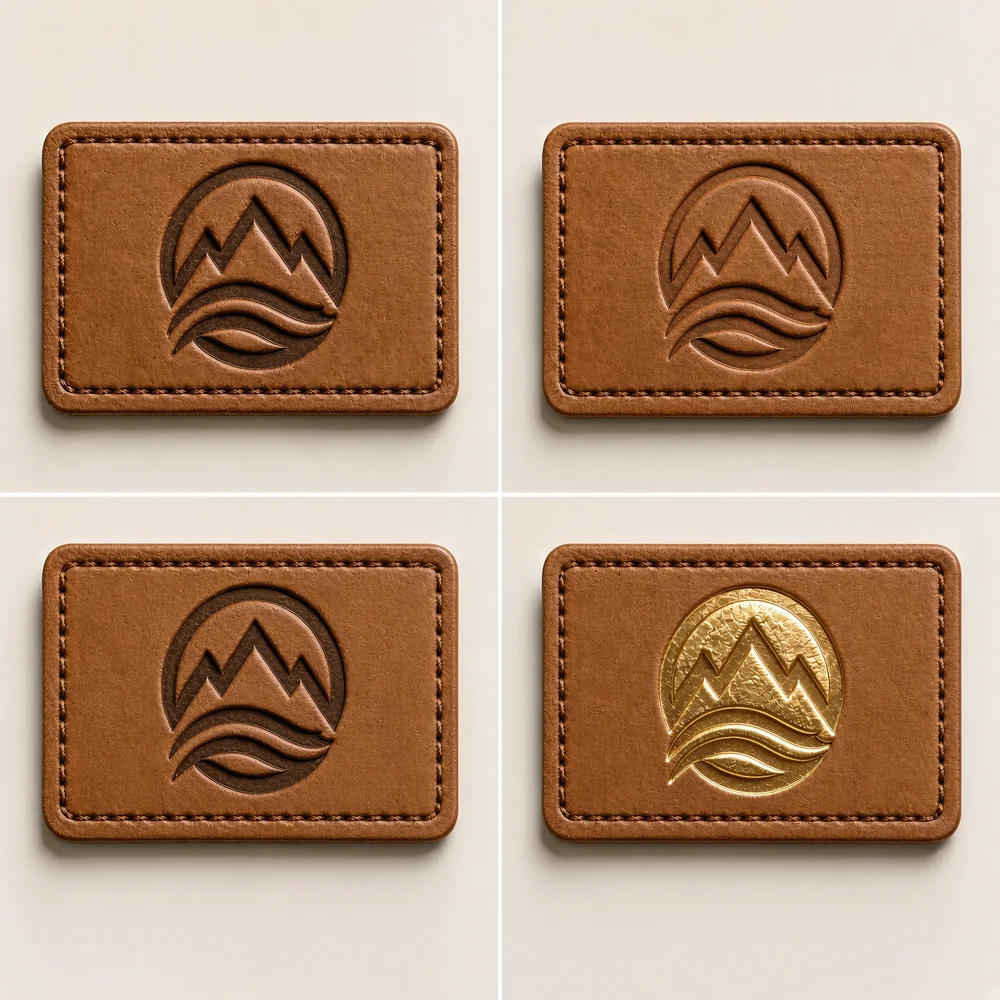
Deboss
- Pressed into the leather under heat, so the mark sits below the grain
- Reads as part of the hide, not as a badge on top of it
- The quietest of the four, and what a monogrammed build usually takes
Emboss
- The reverse of a deboss: the mark stands proud of the surface
- It is raised on a plate, so it catches light and shadow
- Reads on a dark finish, where a pressed mark would go flat
Laser engraving
- A controlled beam cuts and darkens the surface
- The method for fine detail, small text and a repeating pattern
- Permanent, and it does not fade with wear
Foil stamping
- A metalised film bonded to the face under heat, in gold or silver
- The one finish that sits on the leather and not in it
- Specified where a mark has to meet a spec across a production run
Build to quote
Name the Device and the Week. The Build Sheet Comes Back.
Send the device, the build and the marking — the sleeve, the panel layout and the quote come back at the hundred-piece floor.
Where it goes
Built for the Room, Not Just the Road
The same builds land in different rooms. Who carries the leather laptop backpack, and what the room asks of it, is as much a part of the brief as the device and the shell.
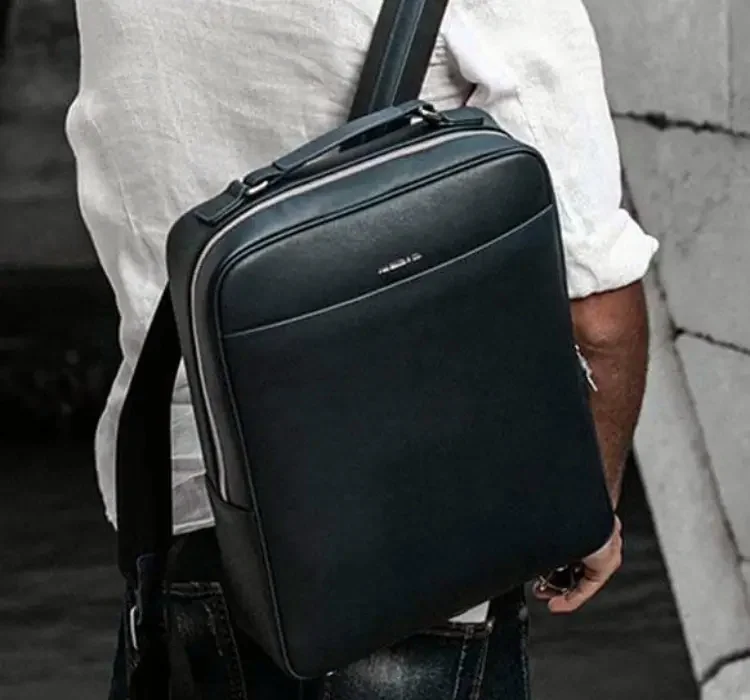
Corporate and executive
- A structured body, a flat front face, a light dress mark
- A top handle and an adjustable strap for hand or shoulder
- Reads across a meeting table before a word is said
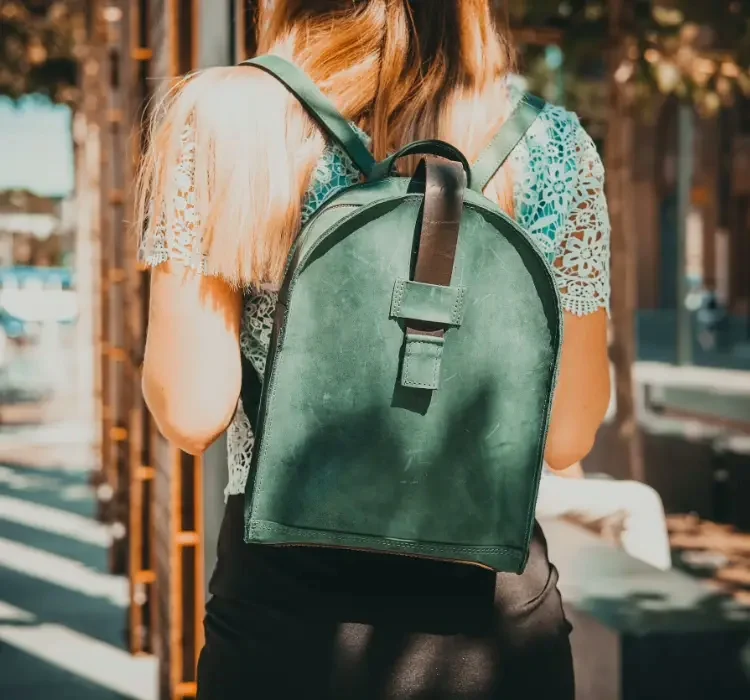
Academic and creative
- A softer, lighter shell in deep green, milled not rigid
- A rounded top and a single leather strap closure
- A studio bag one day, a lecture hall the next
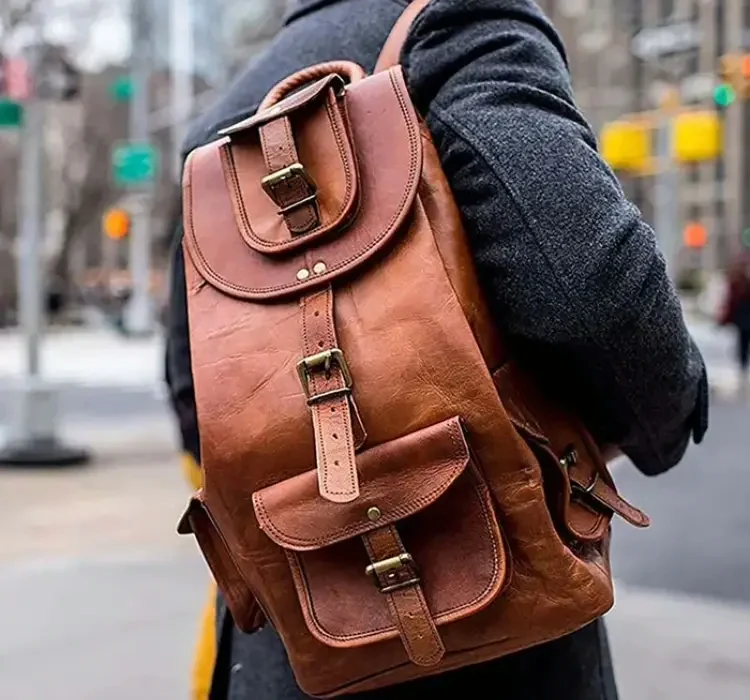
Travel and commute
- A weathered tan shell wrapped around a buckled front pocket
- Flap and buckle closures that hold their line when full
- The street between the platform and the office door
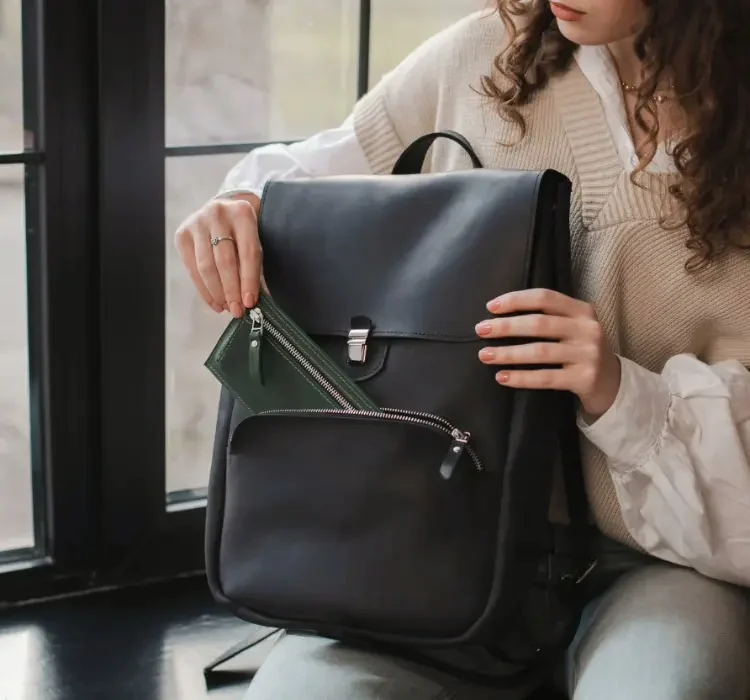
Client-facing roles
- A clean black face and a straight flap with no ornament
- A zipped front pocket that opens one-handed at a doorway
- Carries into the room before a handshake is offered
Buyer accounts
What the Buyers Said Once the Sleeve Was Cut
Two accounts from the original run — a corporate gifting programme and a boutique line — and what the pack had to do with the device it carried.
 Jennifer L.Procurement Director, Corporate Gifting
A corporate gifting order fixes two points the pack must meet: the device the recipient actually carries, and the date the first day lands on.
Cut to the 13"–17" band, the sleeve held the machine flat to the back panel, so the device landed where a compartment was expected. A deboss matched the line with no second tooling.
Running from one hide lot and one press setup at the hundred-piece floor, a team’s hand-out read as one order, not several. A second run proves the hide and the mark held.
 Michael R.Founder, Retail Label
Retail lives or dies on the second order, so the first question a new range answers is whether the build holds a price worth charging.
Water-repellent leather made the call. A face that sheds rain without reading as coated gave the shelf a story, and the grain stayed visible where a coated panel would have gone flat.
Framed as its own bay, the sleeve let a slim pack carry a laptop without the padded bulge, and the deboss sat on the front pocket. A reorder meets the same hide and the same bay.
Laptop backpack questions
Frequently Asked Questions About Custom Leather Laptop Backpack
The questions that come up on most leather laptop backpack enquiries. Where a figure already appears in a section above, the answer points at it instead of repeating it a second time.
Why is the device bay sized before the shell is cut?
Because the bay is a panel, not a pocket, and where it sits in the depth of the pack is a pattern decision. The protection section sets out the three moves — the framing, the suspension off the outside face and the fit to the machine — and all three are drawn before the shell is cut. A bay sized to a nominal laptop after the fact is a sleeve that pulls off the back the first time the pack is full.
Does a leather shell hold a device as safely as a moulded one?
It holds it better, and the reason is give. A moulded shell has none, so an impact travels straight into the device; a leather shell absorbs a knock in the hide and hands the load to the bay behind it. What a leather shell needs in return is the framed bay and the base suspension the protection section describes, because the same softness that absorbs the impact will also let a loose device move if the bay is not a panel of its own.
Will the front panel mark where the device presses against it?
Not if the bay is set to the outside face, which is why the sleeve sits against the back and not against the front. On a soft leather face a device pressed from behind shows through as a flat patch over a season, so the depth is taken from the machine and the bay is placed so the device never loads the front panel. That placement is drawn on the pattern, in the same decision the protection section describes.
Does the bay still open wide once the shell is packed full?
That is the first thing a stuffed shell takes away. A padded pocket run onto a lining closes inward as the pack fills, so the machine has to be forced past fabric — and pushed back the same way at the far end of the day. The framed bay carries its own foam wall and bound edges, so the mouth keeps its width against the load around it and the machine seats one-handed with the pack as full as it will travel. The stiffness comes from the bay being a panel, which is set when the pattern is drawn and not padded in afterwards.
Where does the charger and its cable go?
A charger is the second hard object in a bag argued around one, and it does not belong in the bay. The bay is cut to the machine alone, so the brick takes its own pocket — the front pocket or a side slip — and the cable a channel with a tie, so it never coils against the lid. Where the brick sits is settled with the panel layout so the weight rides low and forward, off the bay and off the wearer’s spine. A run that leaves it loose inside is the one that arrives with a screen pressed against a plug.
What happens to the fit if the device changes after the sample is approved?
The bay is re-cut and the sample is re-run, because the sleeve is sized to the machine and not to a band. A change from one device to another of a different size moves the panel, the suspension and, where the depth changes, the shell — it is not a matter of adjusting a pocket. That is why the brief names the device before the hide is cut, and why a range that has to hold two devices is quoted on two bay sizes from the start.
Must the machine come out of the bay to pass a security check?
On most leather builds it does, so the bay placement is what decides how the lane feels. A bay set deep behind the organisers makes the machine a two-hand pull and worse to seat again with a queue waiting. Set at the head of the shell, the machine clears the opening on its own and slides back without the pack leaving the shoulder. Where the bay sits in the depth is drawn on the pattern — the same placement the protection section turns on — and a checkpoint is only the place it shows.