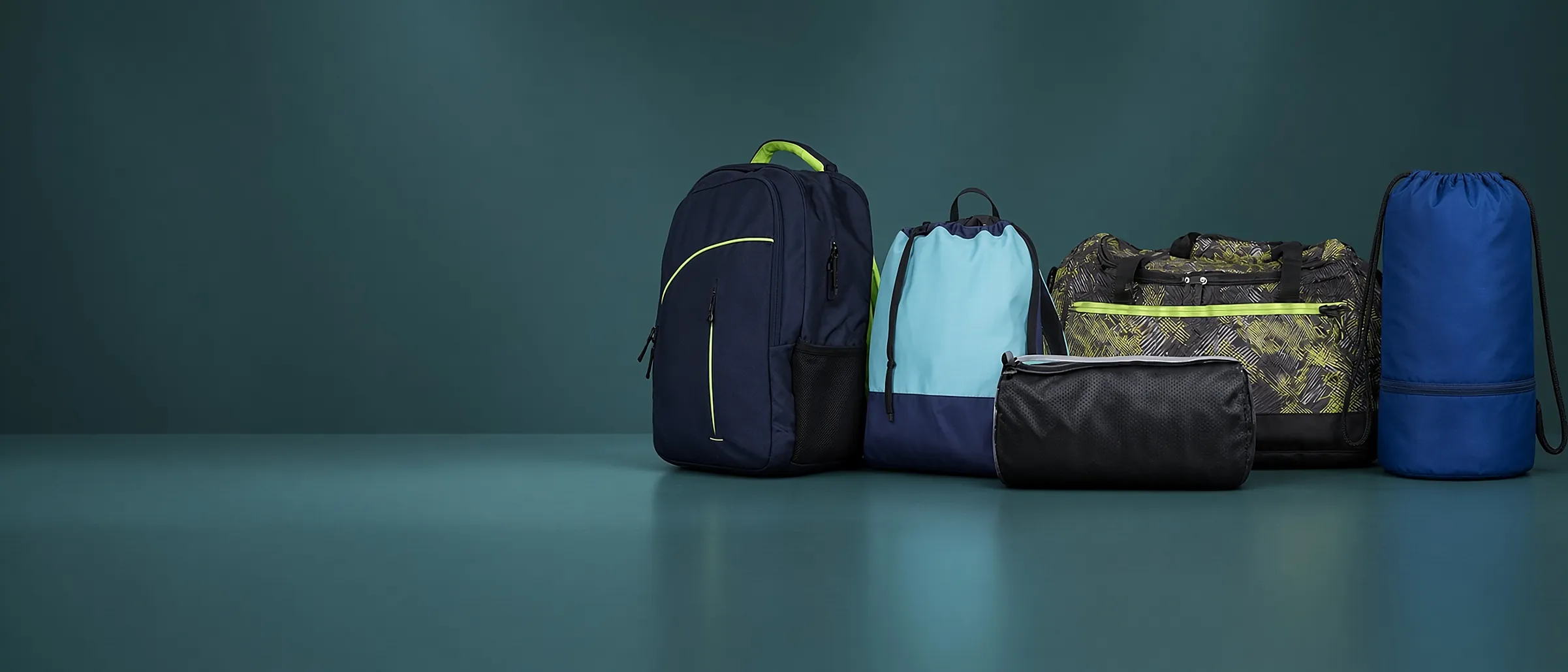
Five sports bags in a row against a deep teal studio wall — a navy backpack, a pale-blue drawstring pack, a black barrel duffle, a patterned holdall and a blue stuff sack
Team Kits · From 100 Pieces

Custom Sports Bag Manufacturer Sweat Stays Sealed In, the Anchor Holds 20 kg

The wet zone and the loaded strap are where a sports bag gives out — a liner that wicks through its stitching, an anchor that tears out of the panel. Both are settled at the sample stage, down to the odour check that seals used kit for 48 hours; the bulk run then repeats the signed sample, so nothing drifts between the two.

  • 9–11SPI on load seams
  • 0.10–0.15mm TPU film
  • 6–8weeks, sample to shipment

Sports types

Shaped by the Gear, Not the Volume

Equipment sets the pattern — a stick has a length, a bat a barrel, a racquet head — and the sports bag is drafted around whichever one the order is built for. Anything not listed here is still workable: it is drafted from the sketch or the reference bag the same way.

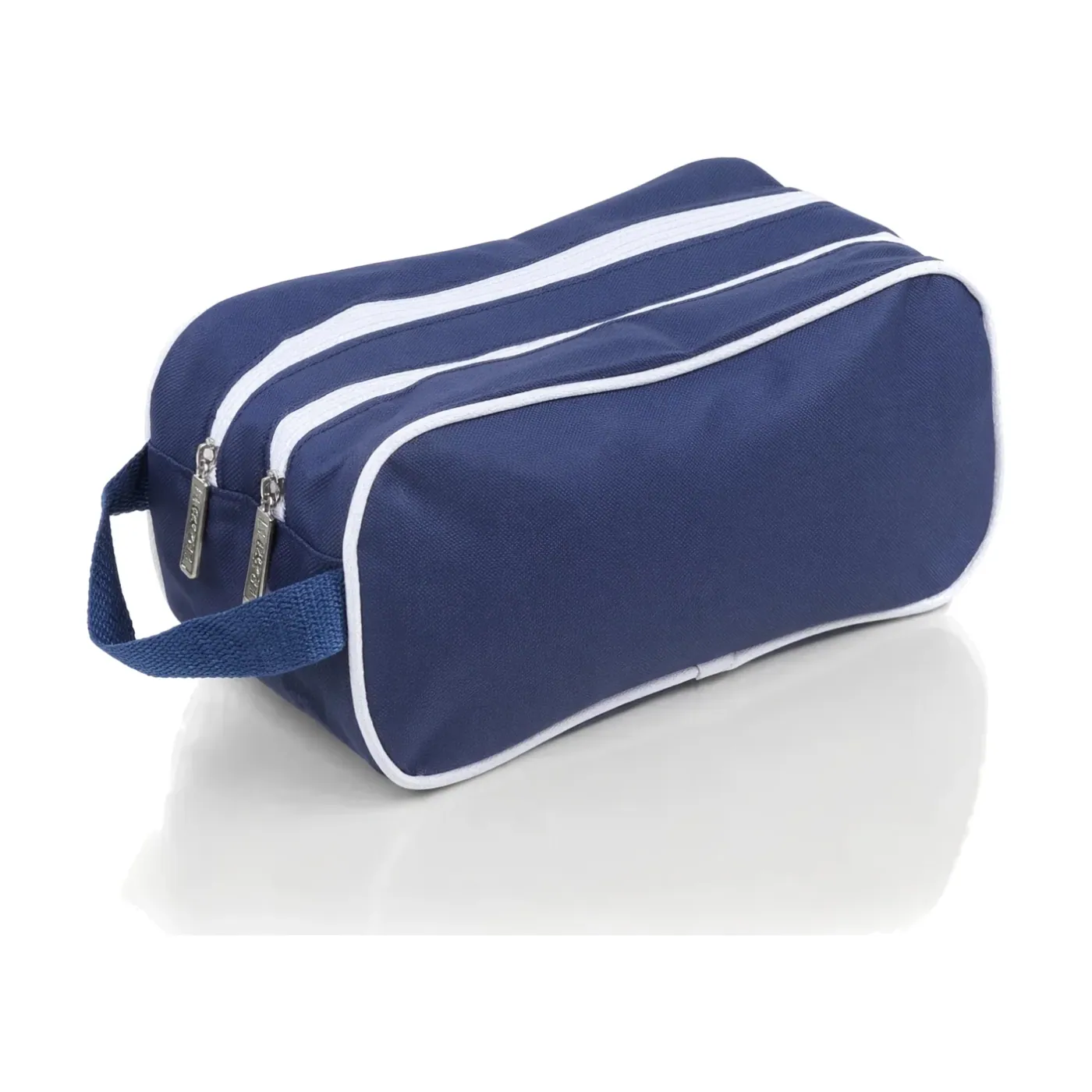
  • A navy hockey bag with two full-length parallel zips, white piped edges and a webbing grab loop on the end panel

    Hockey Bags

    • Low box, so sticks and guards lie flat
    • Two full-length zips open the whole side
    • End grab loop — pulled, not lifted
    • Low box, so sticks and guards lie flat
    • Two full-length zips open the whole side
    • End grab loop — pulled, not lifted
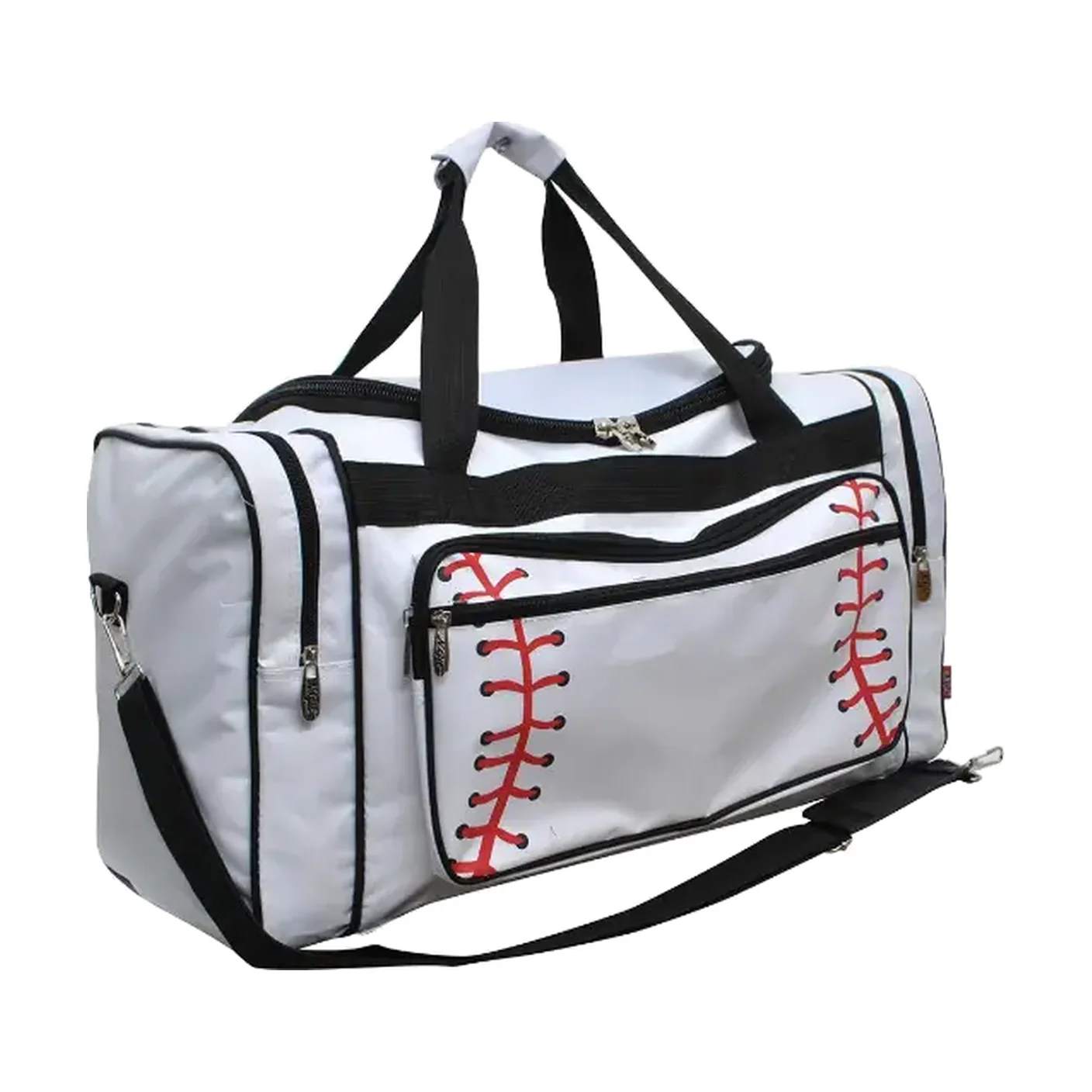
  • A grey baseball duffle with white end panels and red stitch detailing shaped like a baseball seam

    Baseball Bags

    • Bat sleeves sized to the barrel
    • Separate vented cleat pocket
    • Deeper body for the helmet
    • Bat sleeves sized to the barrel
    • Separate vented cleat pocket
    • Deeper body for the helmet
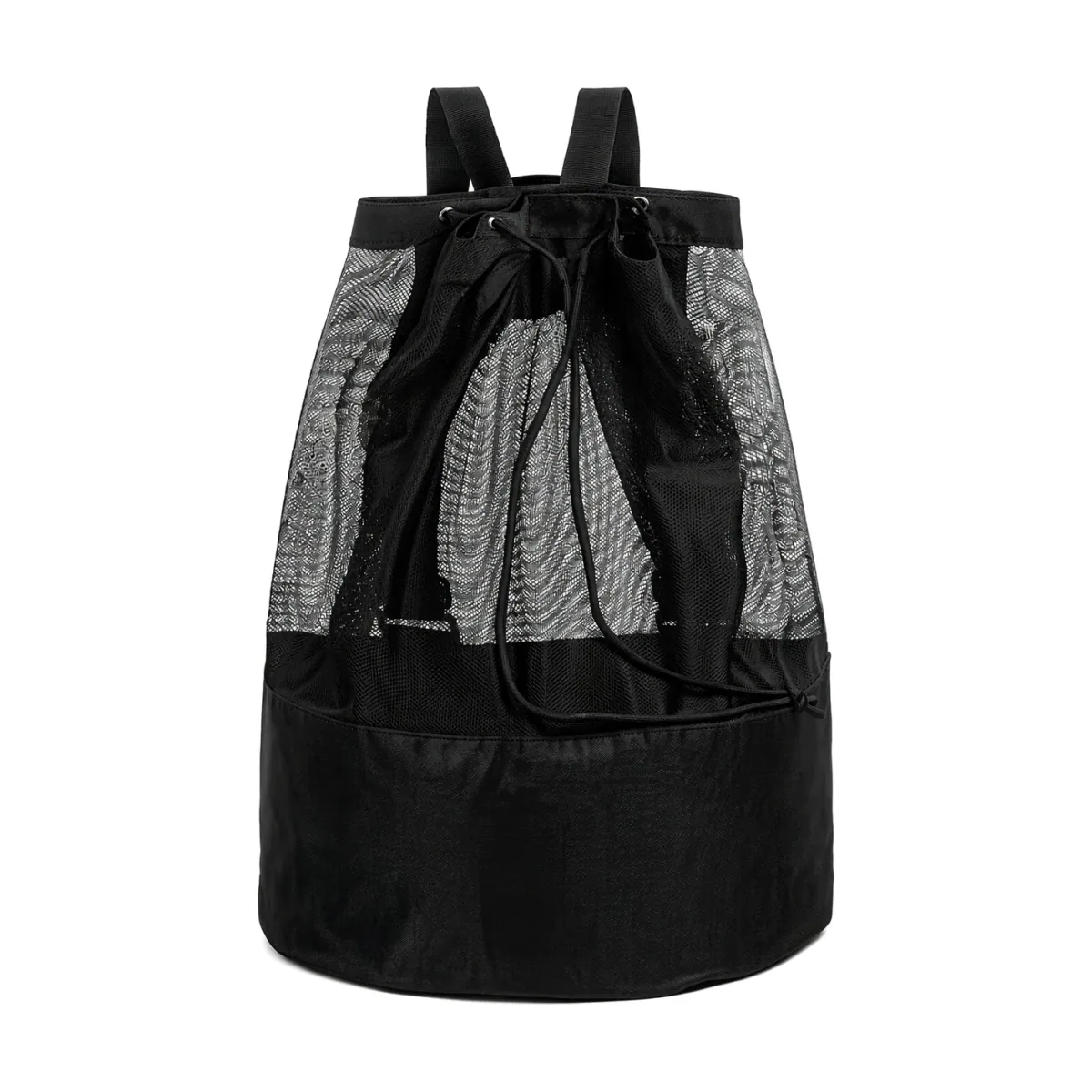
  • A black football kit carrier with a drawstring top, a mesh upper panel and a solid cloth lower section on shoulder straps

    Soccer Bags

    • Drawstring top over a mesh panel, so it vents
    • Solid cloth base where the wear is
    • Shoulder straps — worn, not carried
    • Drawstring top over a mesh panel, so it vents
    • Solid cloth base where the wear is
    • Shoulder straps — worn, not carried
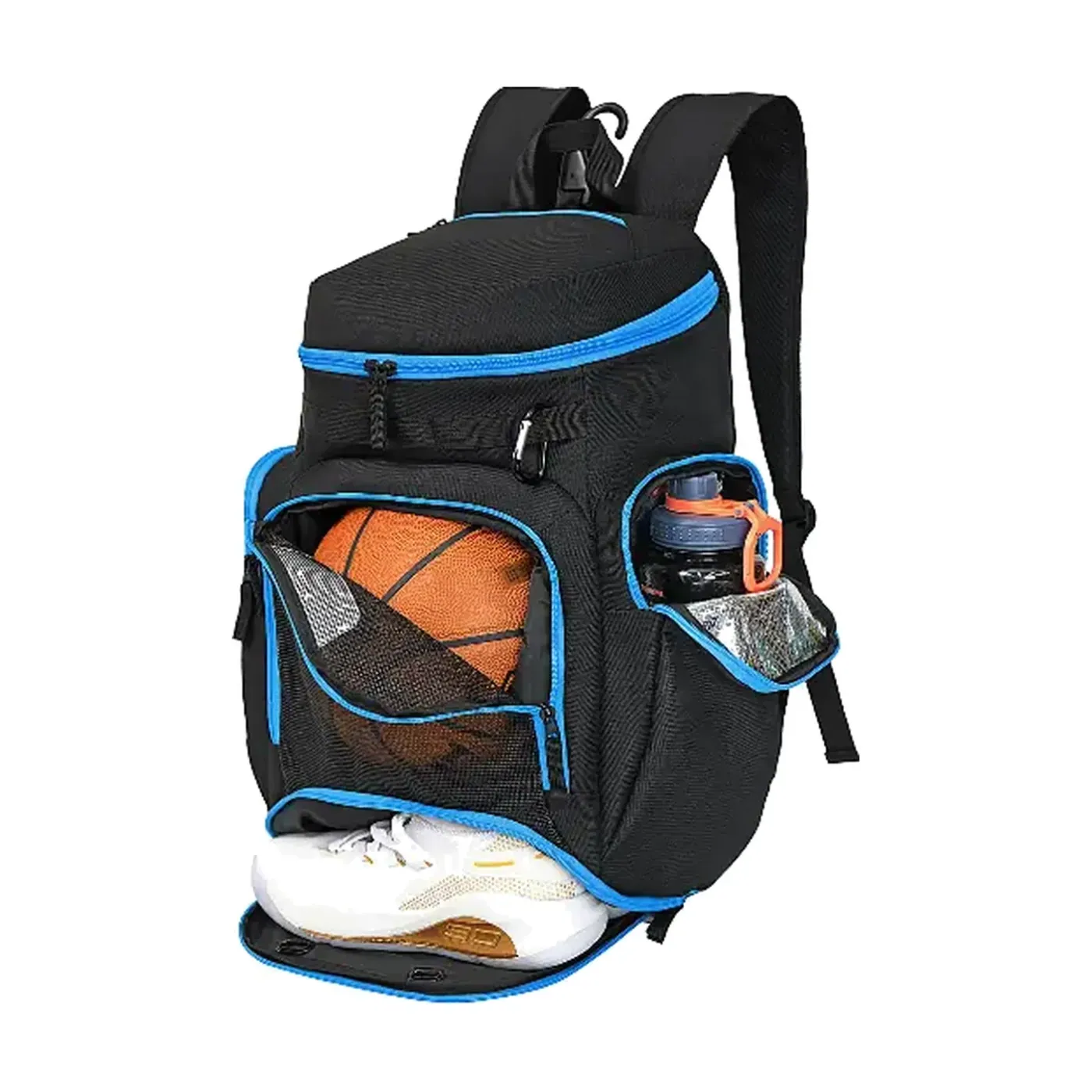
  • A black basketball backpack with a ball held behind a mesh panel on the front and pockets on both sides

    Basketball Bags

    • Ball held behind front mesh — takes no kit space
    • Side pockets for a bottle and shoes
    • Sternum hook stops the loaded pack swinging
    • Ball held behind front mesh — takes no kit space
    • Side pockets for a bottle and shoes
    • Sternum hook stops the loaded pack swinging
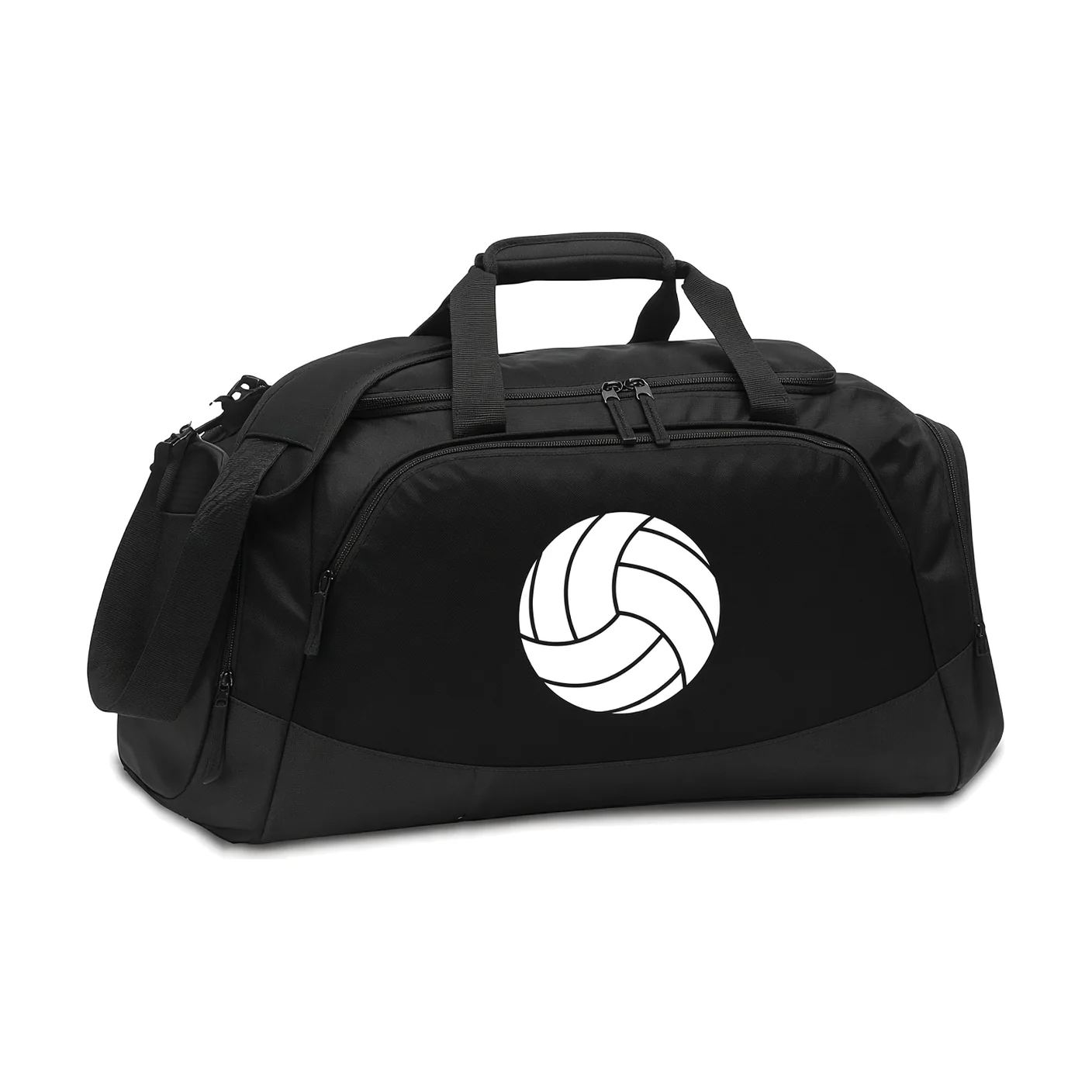
  • A black volleyball duffle with a printed volleyball graphic across the side panel

    Volleyball Bags

    • Broad flat face takes a full team print
    • Grows wider for the net and pads
    • Separate ball pocket, so it rolls nowhere
    • Broad flat face takes a full team print
    • Grows wider for the net and pads
    • Separate ball pocket, so it rolls nowhere
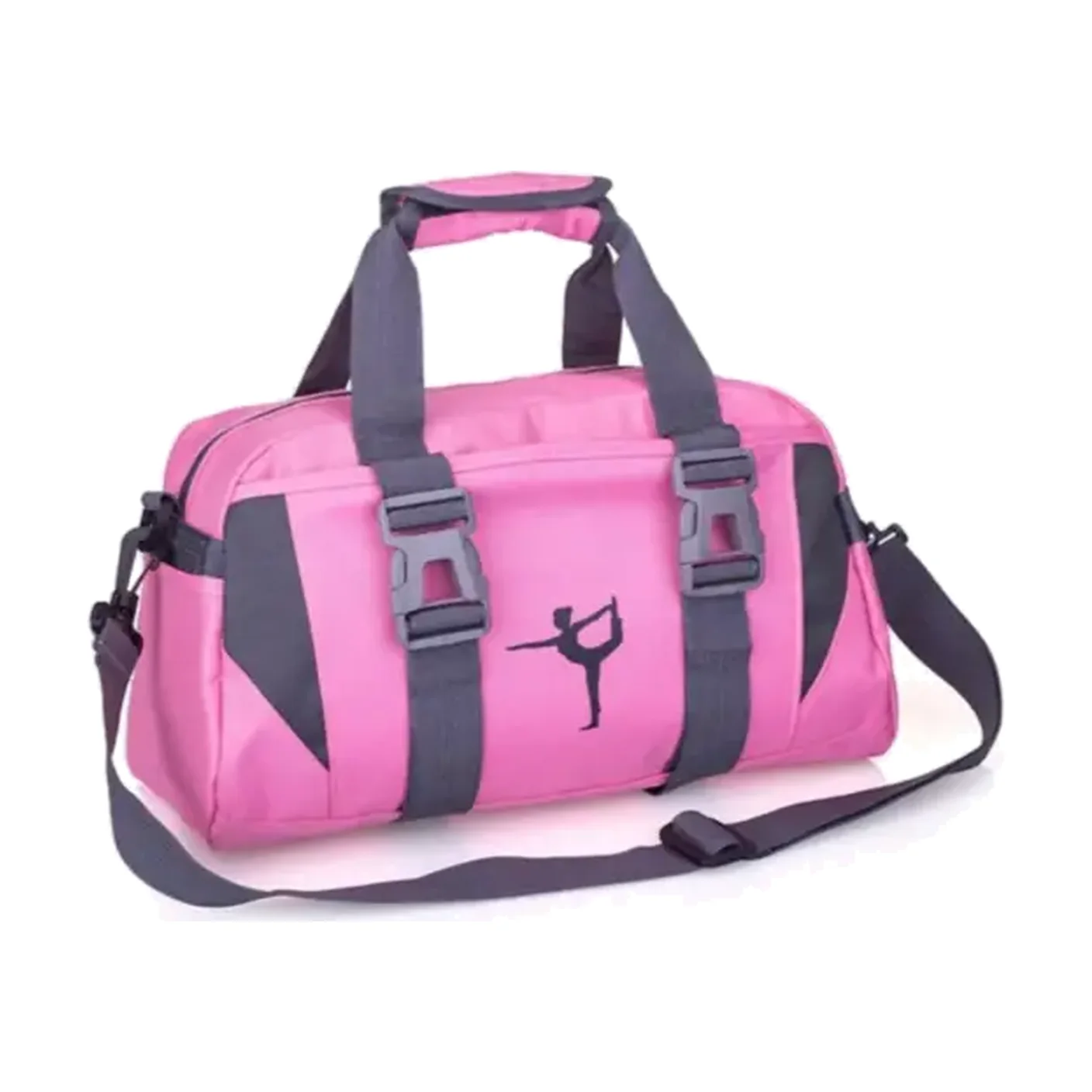
  • A pink dance duffle with grey webbing handles, a printed dancer motif and a wide soft body

    Dance Bags

    • Long flat fold, so a costume is laid in
    • Stays soft — no hardware against the garment
    • Slip pockets keep pointe shoes separate
    • Long flat fold, so a costume is laid in
    • Stays soft — no hardware against the garment
    • Slip pockets keep pointe shoes separate
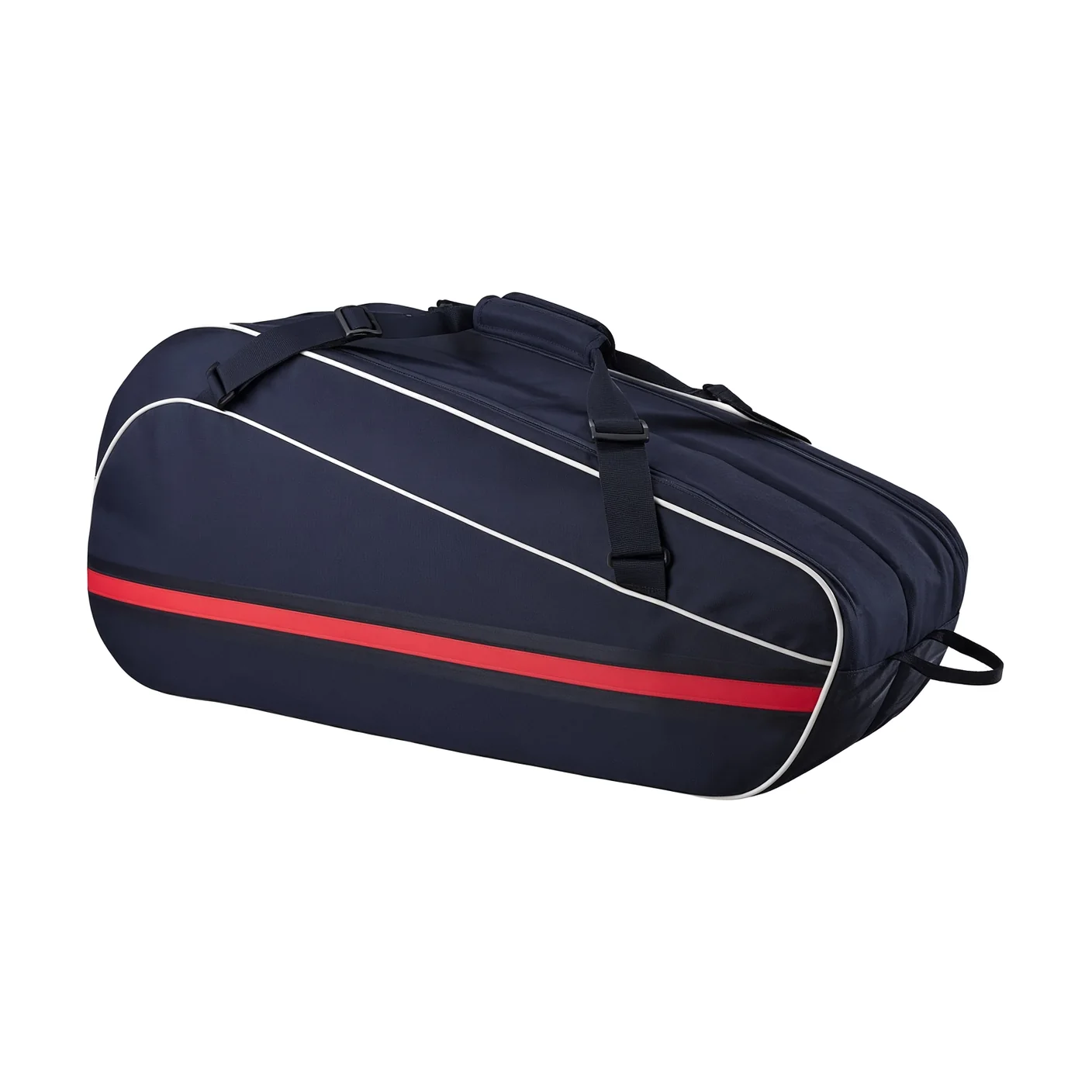
  • A navy tennis racquet bag with a red stripe along the base, a central carry handle and a shoulder strap across the top face

    Tennis Bags

    • Cut long and shallow to a racquet head
    • Full-length top strap for the walk in
    • One zip opens the whole long face
    • Cut long and shallow to a racquet head
    • Full-length top strap for the walk in
    • One zip opens the whole long face
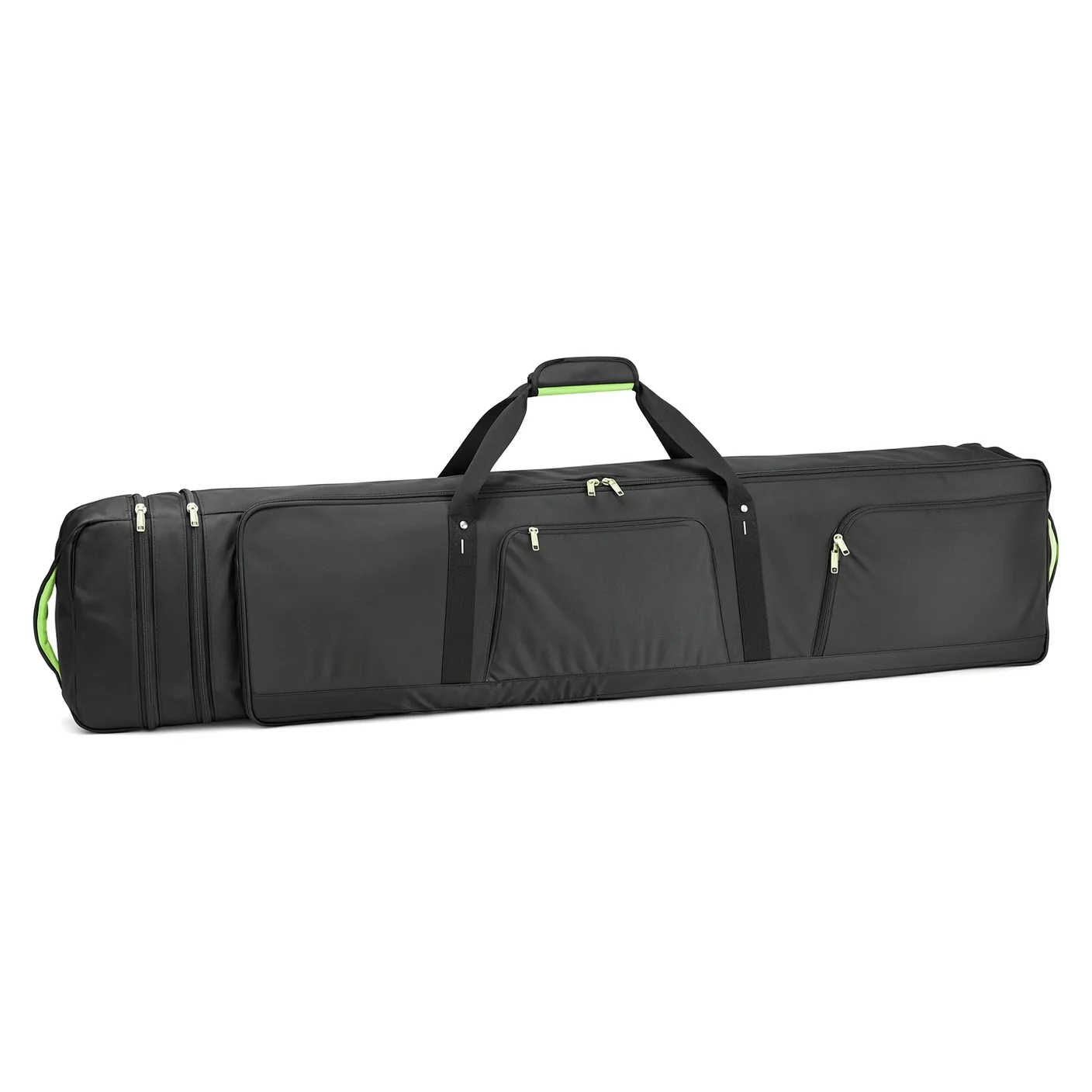
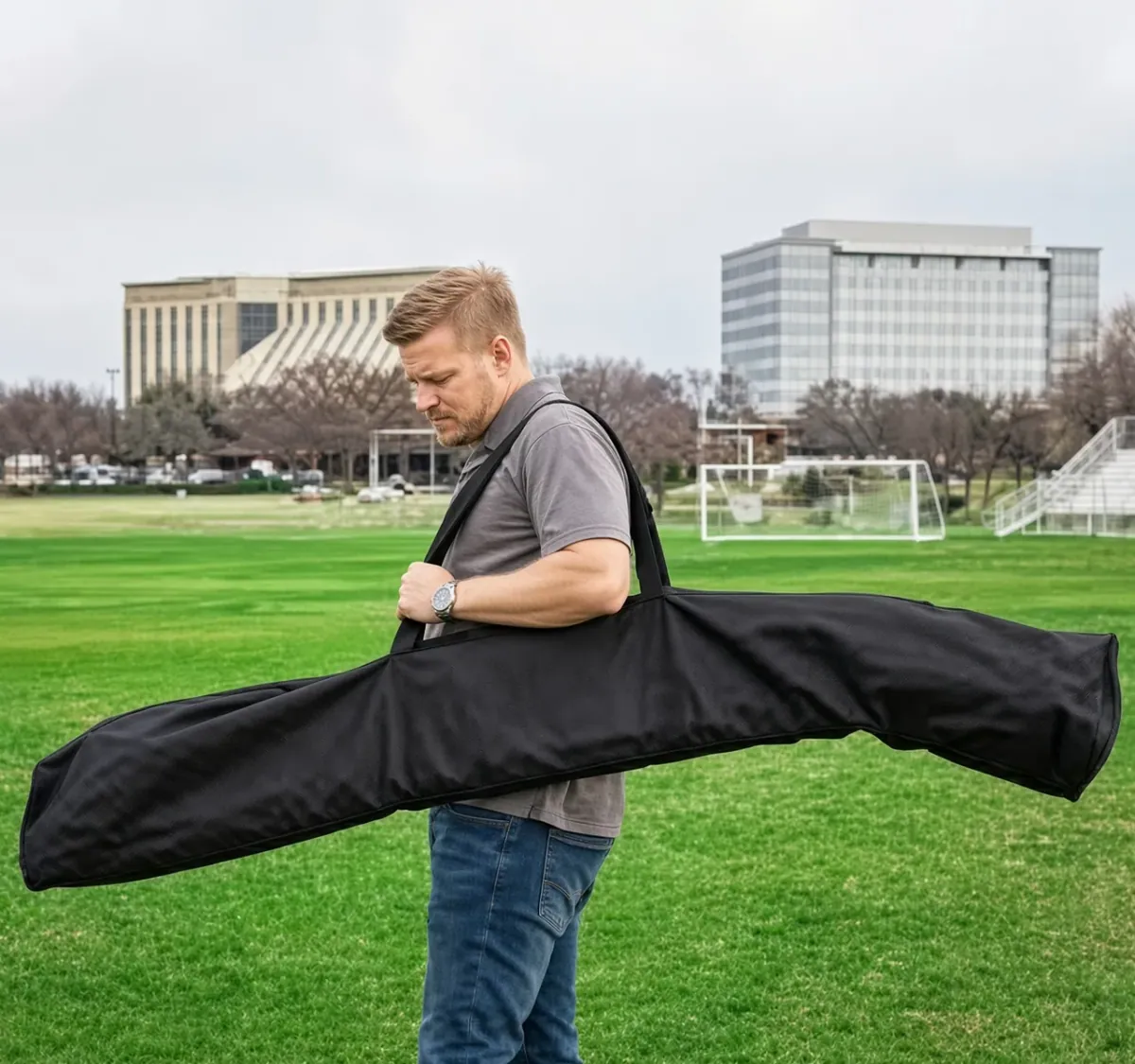
  • A long black ski bag with a padded centre handle, two zip pockets on the face and green piping along the seams

    Ski & Snow Bags

    • Length set by the ski — a long low tube
    • Centre handle, so it hangs level
    • Face pockets for goggles
    • Length set by the ski — a long low tube
    • Centre handle, so it hangs level
    • Face pockets for goggles
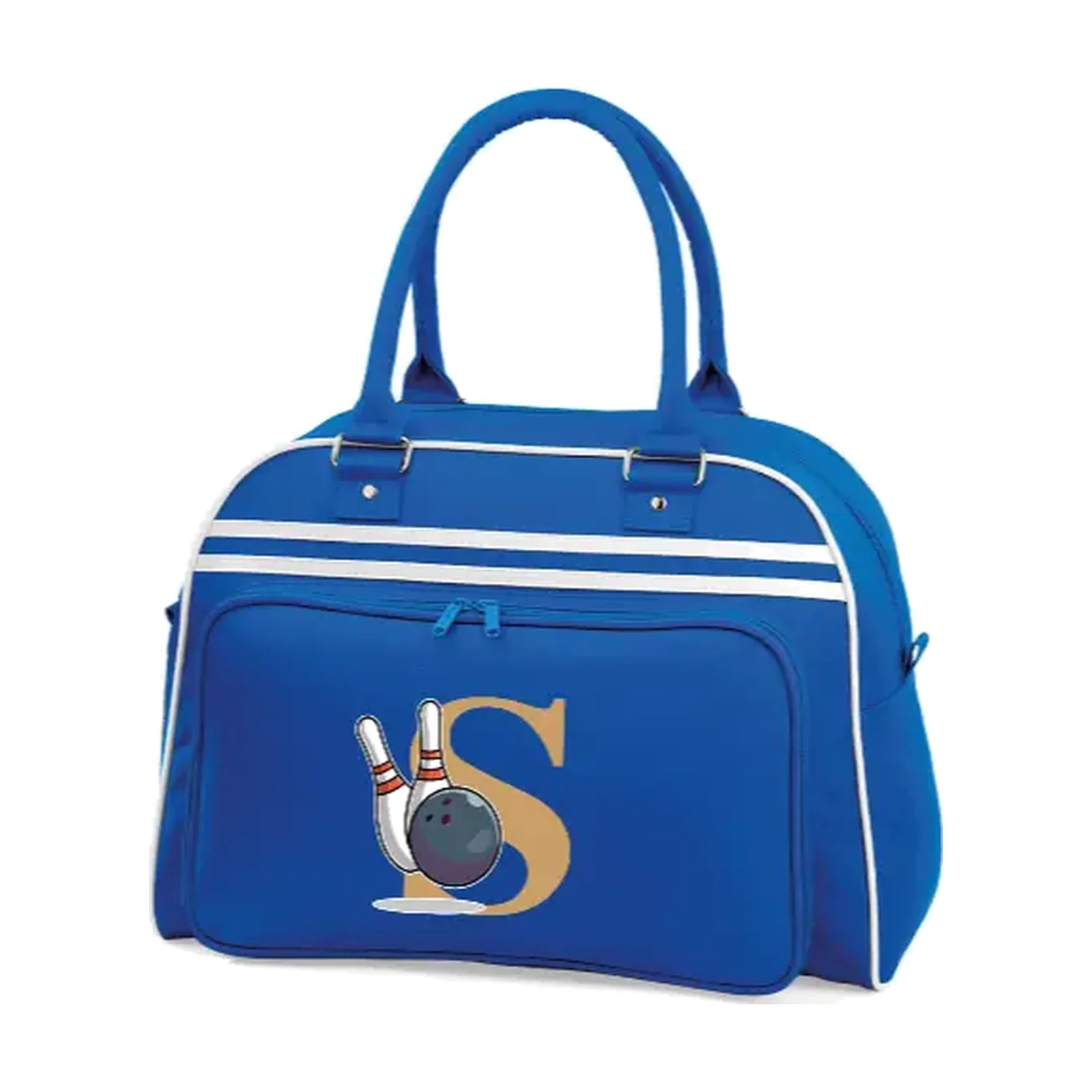
  • A blue bowling bag with white piping, twin handles and a printed ball-and-pins panel on the front

    Bowling Bags

    • Ball sits in a formed cradle, so it cannot roll
    • Vented shoe bay beside the ball
    • Handle at the balance point
    • Ball sits in a formed cradle, so it cannot roll
    • Vented shoe bay beside the ball
    • Handle at the balance point

The wet zone

Divided Into Zones, Only One Seals

Wet kit, soaked training gear and boot grit all ride in one shell, and none should touch the clean load. Keeping them apart is a question about lining and seam construction in a sports bag, not about how many pockets the pattern carries.

Clean zone

  • Towel, spare kit and electronics ride here.
  • Held off the wet by a PU-coated backing panel.
  • A leak runs down the liner, away from the load.

Wet zone

  • Sweat-soaked kit, swimwear and a rinsed rash guard go here.
  • Separated by a welded or taped liner pouched in the shell.
  • Not a stitched pocket — it wicks through the needle holes.

Shoe zone

  • Trainers, boots and mud sit in a vented end compartment.
  • Grommets vent it and a wipeable lining holds grit.
  • Clean it from the outside, without emptying the bag.
Wet-zone lining options compared — what a lining is good for, when to choose it, and how it fails
LiningWhat it is good forChoose it whenWhere it fails
PEVA filmSplash and damp kit. The economical film for gear that comes home damp, never soaked.Damp towel, swimsuit, rinsed top — never standing water.Flexing at a fold — an unbacked film creases white and splits.
PU coatingRain and everyday damp. Bonded to the shell face, so the least cost and weight.Incidental wet, with the pocket open to the air.Humid storage. Sprayed on, not laid over — it hydrolyses and breaks down on the shelf.
TPU laminationA bonded film at 0.10–0.15 mm light, 0.30 mm and up heavy — the liner for soaked kit.Soaked kit sits for hours, or the bag must outlast a season.A stitched seam. Stitching perforates the film, and the seam wets through.
Welded assemblyA pocket that holds standing water — seams welded and taped, fused, not pierced.The brief says waterproof, not water-resistant.Nothing in the seam. The cost is in the process, priced as its own item.

The load path

A Strap Fails at the Anchor, So the Load Is Spread

Load a sports bag and carry it a season, and the failure shows up where the strap meets the panel. A heavier thread does not fix that — a denser stitch line perforates the cloth, so spreading the pull over an area does.

LOADpulls upBAR-TACKbelow the boxBACKINGinside the panel

Shoulder-strap anchors

  • Where the strap webbing meets the end panel — the point a loaded bag hangs from.
  • Webbing runs onto a backing patch inside the panel, box-X stitched and bar-tacked at the root.
  • The pull spreads over the whole patch, not tearing out of four holes.
  • Signed off against a 15–20 kg static pull.

Handle roots

  • The two ends of the carry handle on a duffle or kit bag.
  • One continuous piece run under the bag or onto a full-height webbing run.
  • Stitched at 9–11 SPI in #40/#60 bonded nylon or polyester.
  • Nothing hangs off a loop sewn to a panel face — so there is no root to pull out.

Shoulder-strap hardware

  • The D-ring, swivel hook or side-release buckle the strap clips into.
  • Mounted on webbing, not on the shell, so the shell takes no point load.
  • A worn clip is a line part that can be renewed.

Colour and marking

One Team Colour, Repeated Across the Kit

What makes a squad run read as one team is repetition — one crest, in the club colour, in the same spot on every piece in the kit — together with a mark built to survive a season of wash, sweat and abrasion.
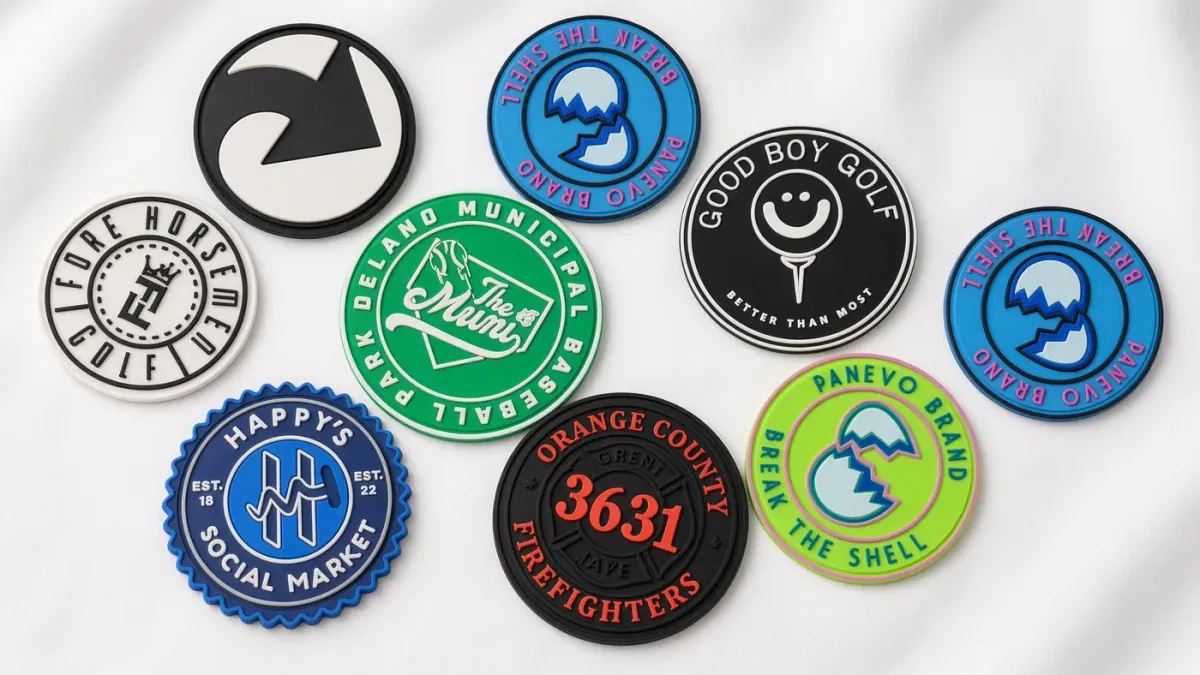
A flat-lay of nine moulded rubber and silicone bag badges in blue, black, green and white

Silicone or rubber badge

  • Moulded rubber, bonded firmly onto the panel’s outer face
  • Sweat-proof and wipe-clean, where a patch stitched on absorbs
  • Raises the panel beneath, so the bag loses flex
  • A separate cured mould per crest design
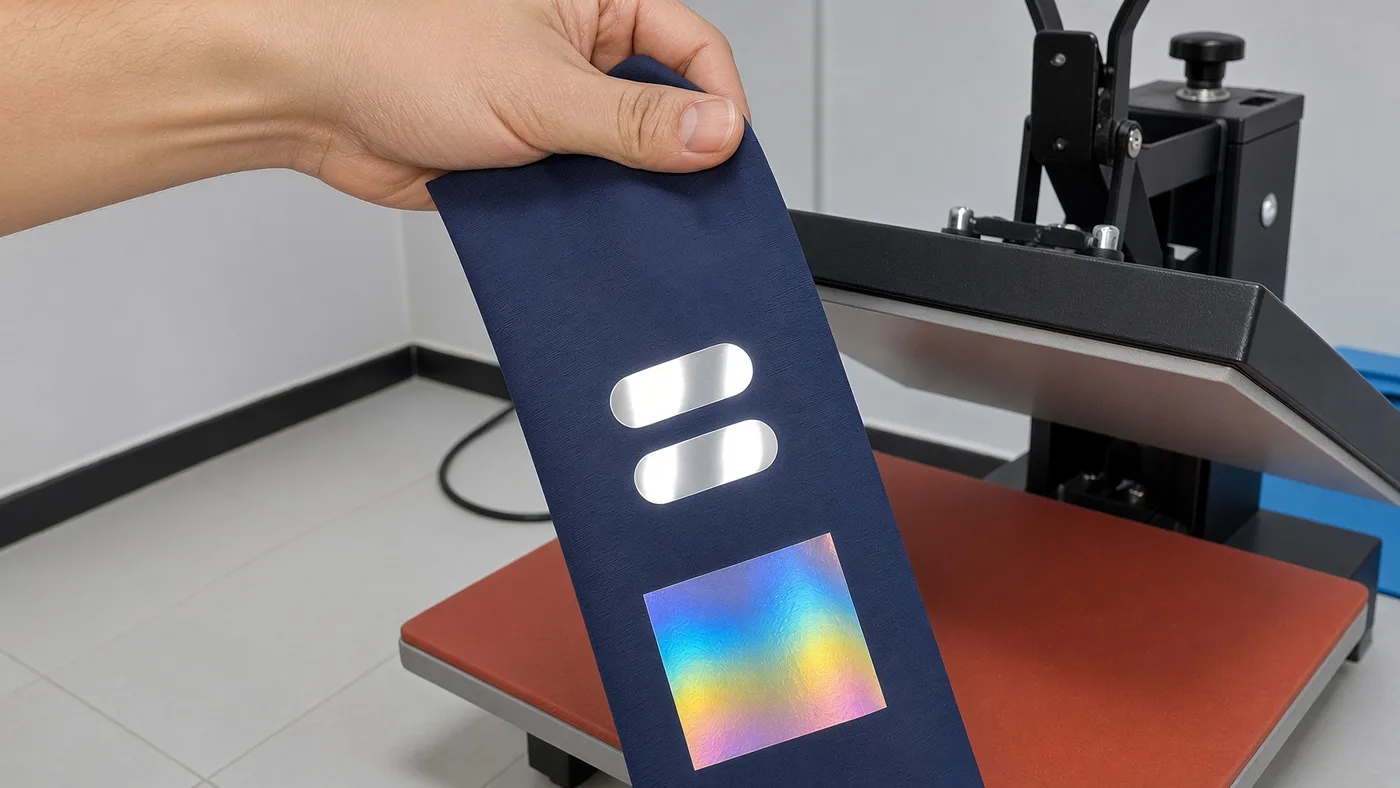
A hand holding a navy webbing strap printed with two reflective silver bars above a rainbow holographic patch, over a heat press

Heat-transfer reflective

  • Reflective film pressed into the cloth under high heat
  • Returns light to a headlight, so the runner reads
  • Reads grey by day, loses shine off the light
  • One grade of film per garment type for consistency
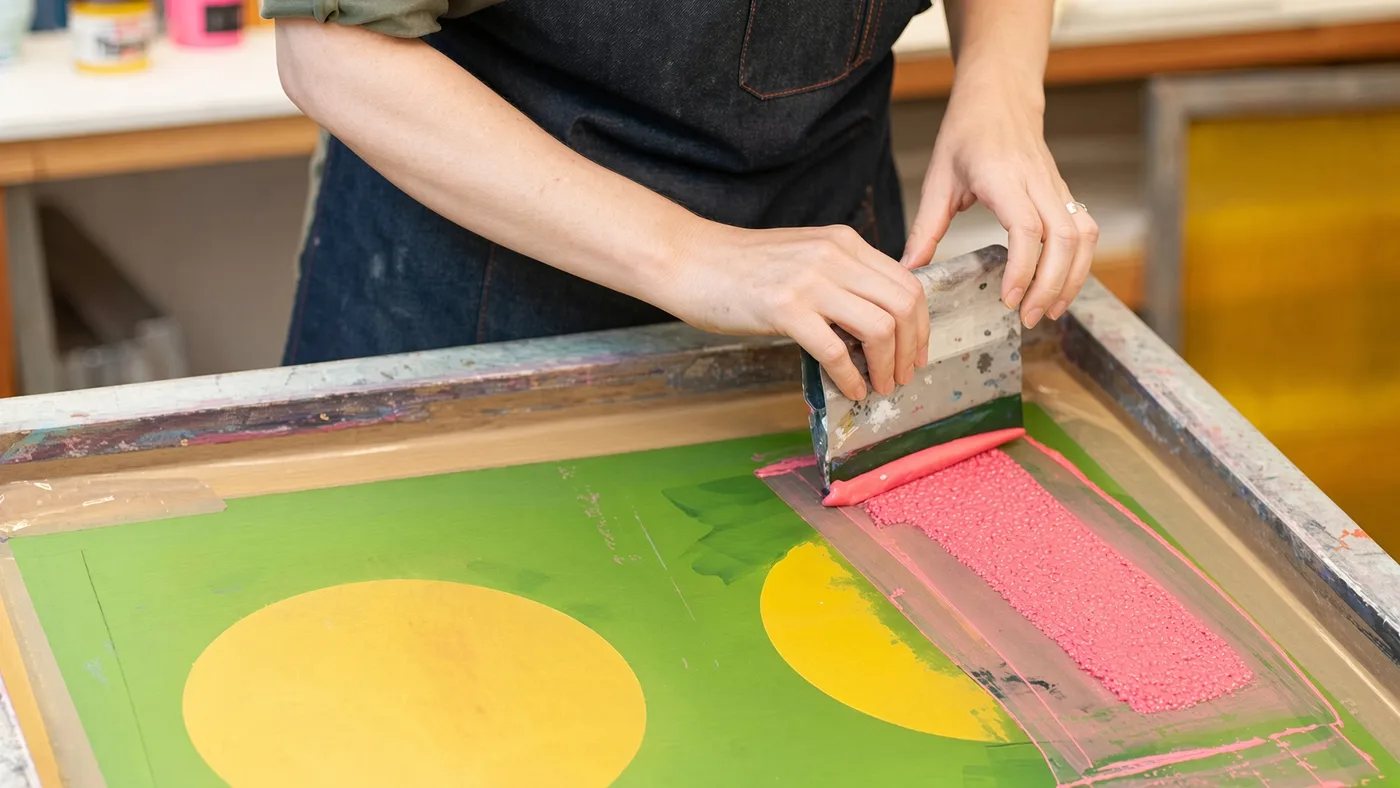
Hands pulling a squeegee across a screen printing frame, laying pink ink onto a green mesh over the bench

Screen printing

  • Ink pushed through a mesh screen onto the cloth
  • Bold graphics at the lowest unit cost per piece
  • Sits on the surface, first finish to show wear
  • A proof on the shell before the run starts
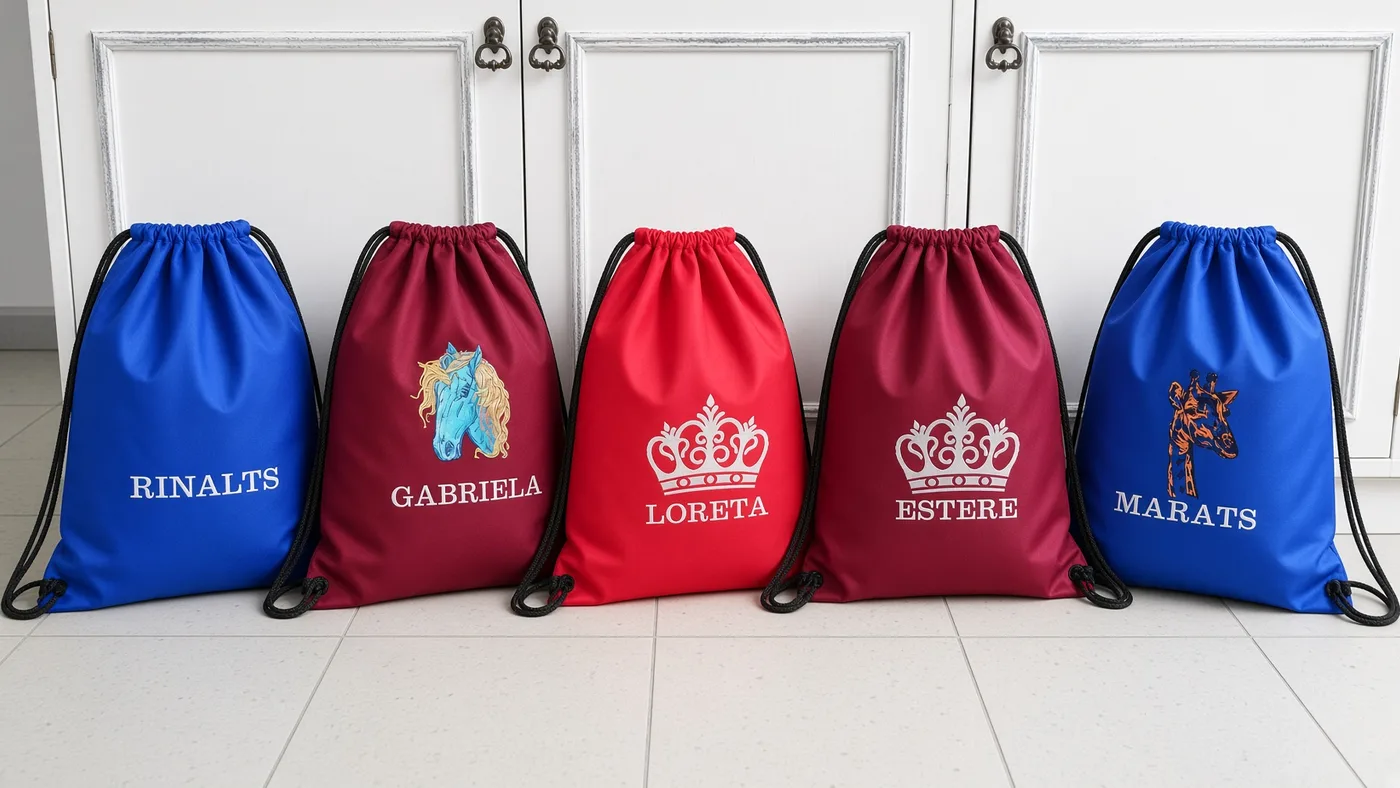
Five drawstring bags in blue, red and burgundy standing in a row, embroidered with names and motifs

Embroidery

  • Thread stitched directly into the panel’s face and backing
  • Reads as the premium mark and survives repeated laundering
  • Perforates the panel wherever the needles stitch through it
  • An engineered backing patch sits behind the embroidered crest

Testing

The Test Each Figure Here Has to Pass.

Sold on its numbers and returned on its failures — a sports bag has to hold both to the same list. What follows is the instrument, the method and the figure the run is checked to: the register a buyer can ask to see the output of.

  • 3–5 mintissue dry

    Wet-zone spray

    A dry tissue goes into the compartment, the exterior takes a low-pressure spray, and the tissue is checked on completion

  • 1–2 hrated load held

    Anchor pull

    A static load is hung on the shoulder-strap anchor and the handle root with the bag packed to its rating

  • 20–50inline · 1,000+ to life

    Zipper cycling

    The slider is run end to end on a reciprocator — sampled inline during the run, and taken to life on the approved sample

  • 48 hsealed · no transfer

    Odour isolation

    Used kit is sealed in the wet zone for two days with the bag closed, then the clean zone is checked for transfer

Credentials, on file

Sport to quote

Send the Sport and the Squad. It Comes Back Costed.

Name the sport, the kit it holds and the squad size. Back comes the build, the cost and a sample at a hundred pieces.

Set combinations

A Range Cut From One Lot of Shell

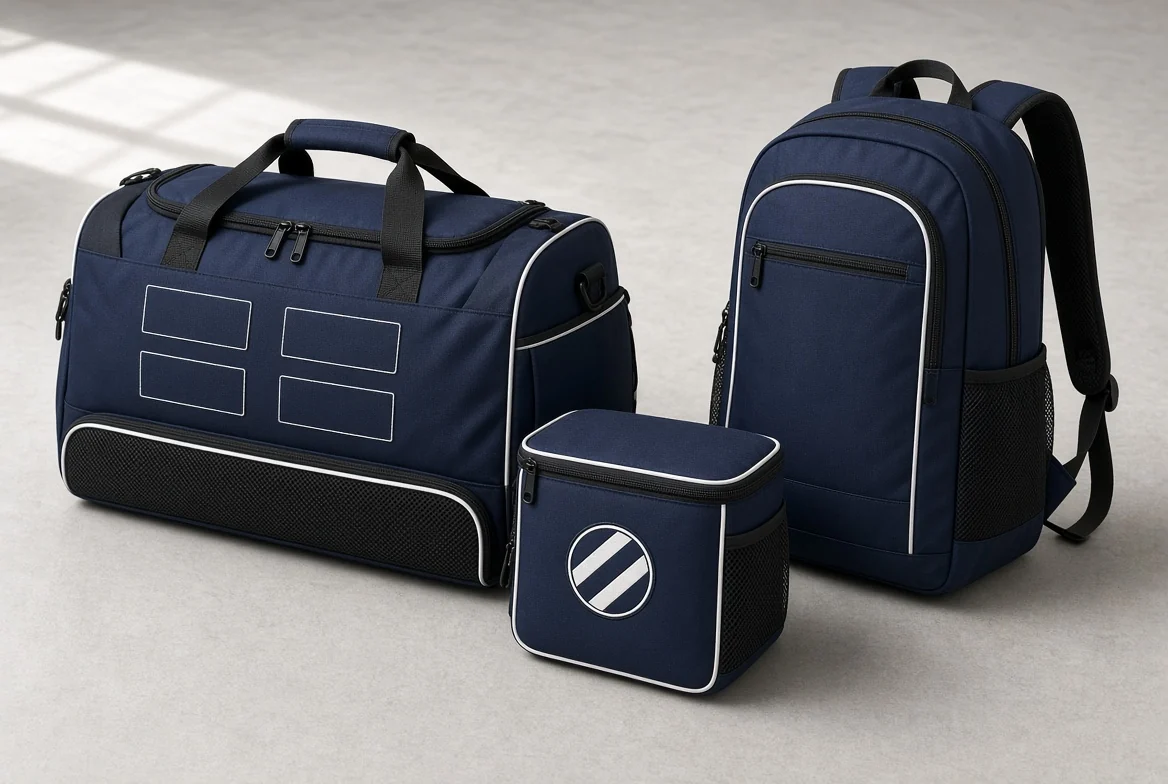
One shell lot, one hardware run and one print setup cover the whole range, so three separate minimums and three separate cartons collapse into one — and the sports bag pieces arrive together, not a month apart.
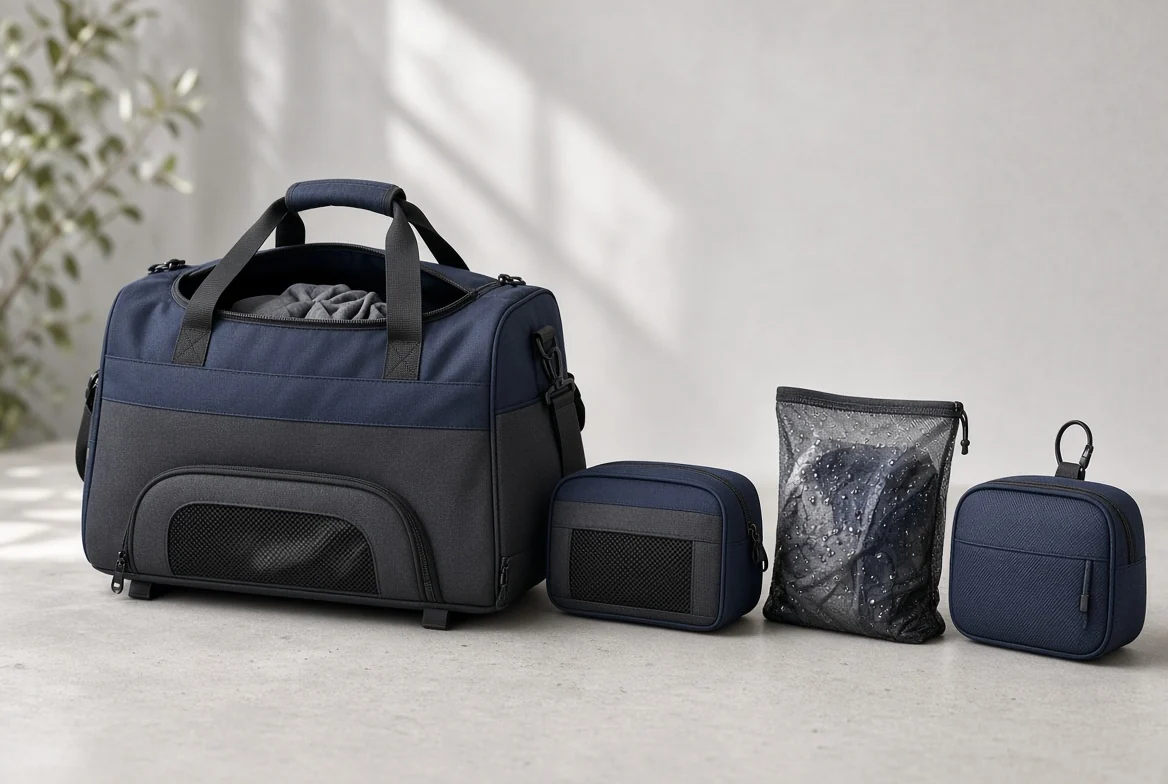
  • Gym essentials set: a navy-and-charcoal gym duffle with a vented base compartment, a matching shoe bag, a mesh wet bag and a wash bag with a hook loop.
  • 01

    Gym Essentials Set

    The everyday training kit, built around one duffle and the three pieces that always travel with it.

    • 1 ×Gym duffle, 35–40 L, with the vented shoe compartment at the base
    • 1 ×Shoe bag, 8–14 L, matching shell and trim
    • 1 ×Wet bag, sized to one or two soaked sets
    • 1 ×Wash bag with a hook loop, for the post-session kit

    Independent labels and gym welcome packs

  • 02

    Team Kit Set

    The pieces a club issues to every player, ordered as one squad.

    • 1 ×Team duffle, 50–60 L, with a vented boot compartment and four marking positions
    • 1 ×Boot bag carrying the club crest
    • 1 ×Training-day backpack, 30 L, for the lighter sessions

    Sports clubs, school teams and league sponsors

  • 03

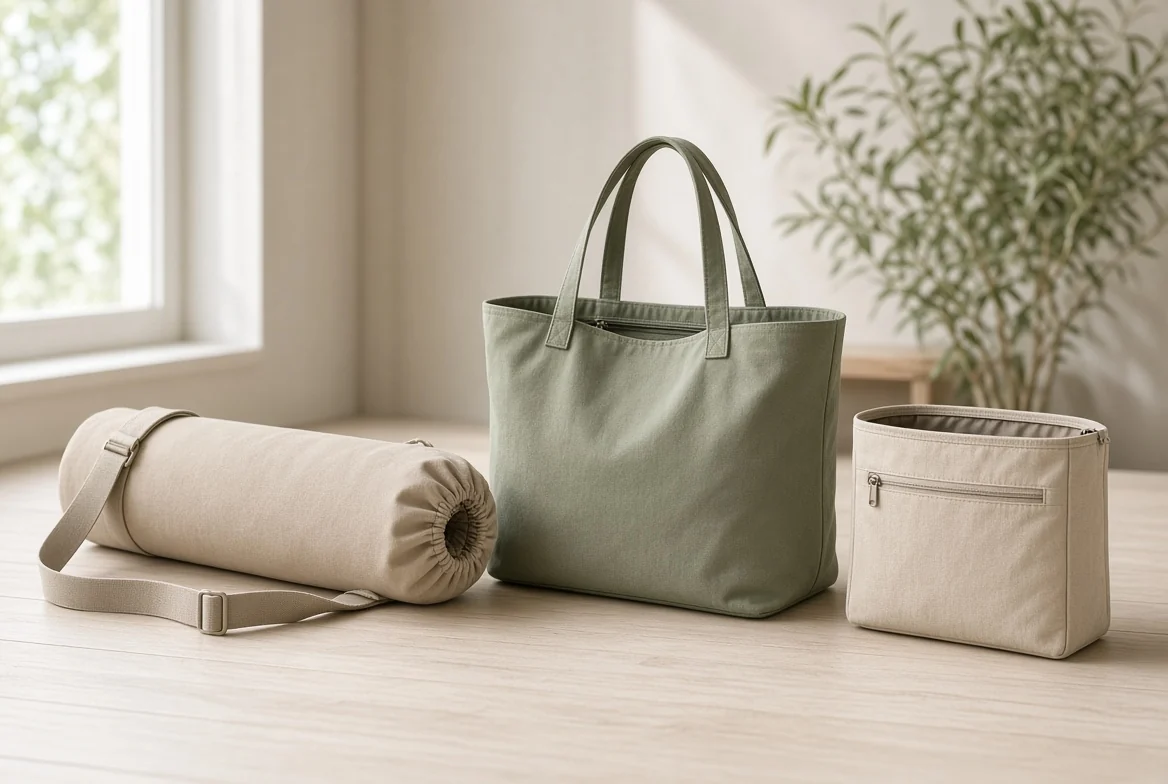
    Studio Set

    A studio merchandise range — softer construction and a lighter load than a gym kit.

    • 1 ×Mat bag on an adjustable strap, cut for a 61–66 cm mat
    • 1 ×Studio tote, 15–25 L, open top with an internal zip pocket
    • 1 ×Organiser pouch for the small items that otherwise roll loose

    Yoga and Pilates studios and wellness retreats

  • 04

    Corporate Wellness Set

    A programme that issues kit across a whole workforce, not a single team.

    • 1 ×Branded duffle or backpack, per the programme
    • 1 ×Running belt for the group sessions and company runs
    • 1 ×Bottle pouch, insulated, carried on the belt
    • 1 ×Drawstring laundry bag, the cheapest piece to re-mark year after year

    Corporate wellness programmes and onboarding kits

Buyer accounts

What the Buyers Said After the Squad Order

Accounts from the original run — a volleyball academy kitting a whole roster and a climbing team moving specialist gear — and what the sports bag had to survive.

Elena RodriguezPerformance Director, Apex Volleyball Academy

A volleyball roster carries its own weather: knee pads still damp, shoes full of court grit, a phone that has to sit somewhere dry — all in one duffle.

The load splits three ways. A welded liner fitted as an inner bag takes the wet kit, a mesh-backed well at the base takes the shoes, and a coated divider keeps the dry half dry.

The handle root took the second specification. Thirty bags lift by the same grab point, so the webbing is stitched over a reinforcement inside the end panel and signed off against a 15–20 kg pull.

A season on, thirty bags still read as one set — same shell, same liner, same grab point. That sameness is the part a roster notices.

Jack ThorntonEquipment Coordinator, Summit Extreme Climbing Team

An alpine kit bag is not a fashion bag with a logo on it. It gets dragged over rock and snow, packed to a weighed figure, and asked to hold a rope clear of the dry kit.

The wear question went to the base and the end faces. A 1680D ballistic base panel was run against the ground cloth the bag is built to sit on, not a lab worst case.

Carry was specified the same way. Packed to the top of its range, the shoulder-strap anchor held a 15–20 kg pull for over an hour, and the main zip cleared 1,000 cycles.

Three expeditions on, the shells were still on the original hardware and the base panels had taken the rock without a repair. A third season is where an equipment list earns its keep.

Sports bag questions

Frequently Asked Questions About Custom Sports Bag Manufacturer

The questions that come up on most sports-bag enquiries. Where a figure already appears in a section above, the answer points at it, never repeats it a second time down the page.

Can one bag serve a gym-goer and a team player, or are those two patterns?

Two patterns, and the difference is the ball. Everything a sports bag for a gym-goer needs — a vented shoe zone, a wet liner, a bottle sleeve, a hand-sized quick-draw pocket — can be built into one of those patterns, which is why a hybrid is worth running when a buyer sells into both. What does not transfer is the equipment volume: a bag built to hold a ball, a bat or a racquet in a compartment of its own is a different cut, not a bigger cut. A range usually ends up as one hybrid and one sport-specific, cut from the same shell and hardware so they read as one line.

How does a wet pocket stay separate from the rest of the bag after a month of use?

By being held to a process, not to a sample. The liner is fixed at a single clipped point so it can be pulled out, washed and hung, and the build itself is specified in the wet-zone section above. What keeps the separation honest after a month is that it is checked on a carton pulled at random, not only on the approved sample — a liner can be watertight on the day it is signed off and still fail once it is in use.

What actually makes a strap pull out of a bag, and what stops it?

The load concentrating in a small area. A strap stitched straight to a panel face puts the whole pull into a line of stitches, and a line of stitches in a coated or woven shell is a perforation the cloth eventually tears along. Surviving that is a question of geometry rather than thread: the pull is spread over an area instead of a line. The load-path section above states the build that does it and the static pull it is signed off against.

Is a water-repellent zip the same thing as a waterproof one?

No, and that is the most expensive misunderstanding in this category. A PU-laminated water-repellent zip keeps rain off the teeth and is what most suppliers mean when they write waterproof zipper, but it is not hermetic. Where a pocket genuinely has to hold water, the answer is a welded assembly or a zip specified for submersion — and a stitched seam leaks through its needle holes whatever zip runs in it. If a brief asks for a waterproof pocket, the question to settle at sampling is how the seam is closed, not which zip is on it.

What does a sports bag tech pack carry that a tote or a duffle brief does not?

The sport itself, named as the piece of equipment the bag is cut around, not as a category. A sports bag tech pack has to give that item’s real dimensions — a bat barrel, a racquet head, a boot to EU 46, a mat at 61–66 cm — because those figures set the pattern before any pocket is placed. On top of that it carries the zone split and how a zone is closed, the anchor build at the strap root, the marking method and its position on a face that survives abrasion, and the piece list of any set the order ships as.

How is a team colour held across a whole squad order?

By pulling the whole order from one lot. The colour is matched to the club or school reference at the mill before the first shell is cut, and the whole order — duffle, boot bag and training pack alike — is cut from that lot, not from whatever is on the shelf that week. A reorder is matched against the original swatch, not against a bag that has been in use, because a shell fades and a swatch does not. That is what keeps a second squad kitted a season later looking like the first.

Can a duffle, a shoe bag and a wet bag ship as one set inside a single tooling cost?

The builds are quoted separately but share one tooling and colour lot, so a set of four carries one marking setup and one shell order, not four. Where the set pays is the shell: an accessory, a wet bag or a shoe bag cut from the cloth the duffles already run adds labour and almost nothing else. The order still holds a hundred pieces per construction — the set-combinations section above shows how that lands across a gym range and a team kit.

Start a sports run

Your Sports Range,
Sealed and Load-Rated.

One brief starts it — the sport, the kit it holds and the order size. The build, the marking and the anchor are settled up front, so the first run is the one that ships.


Get a Quote