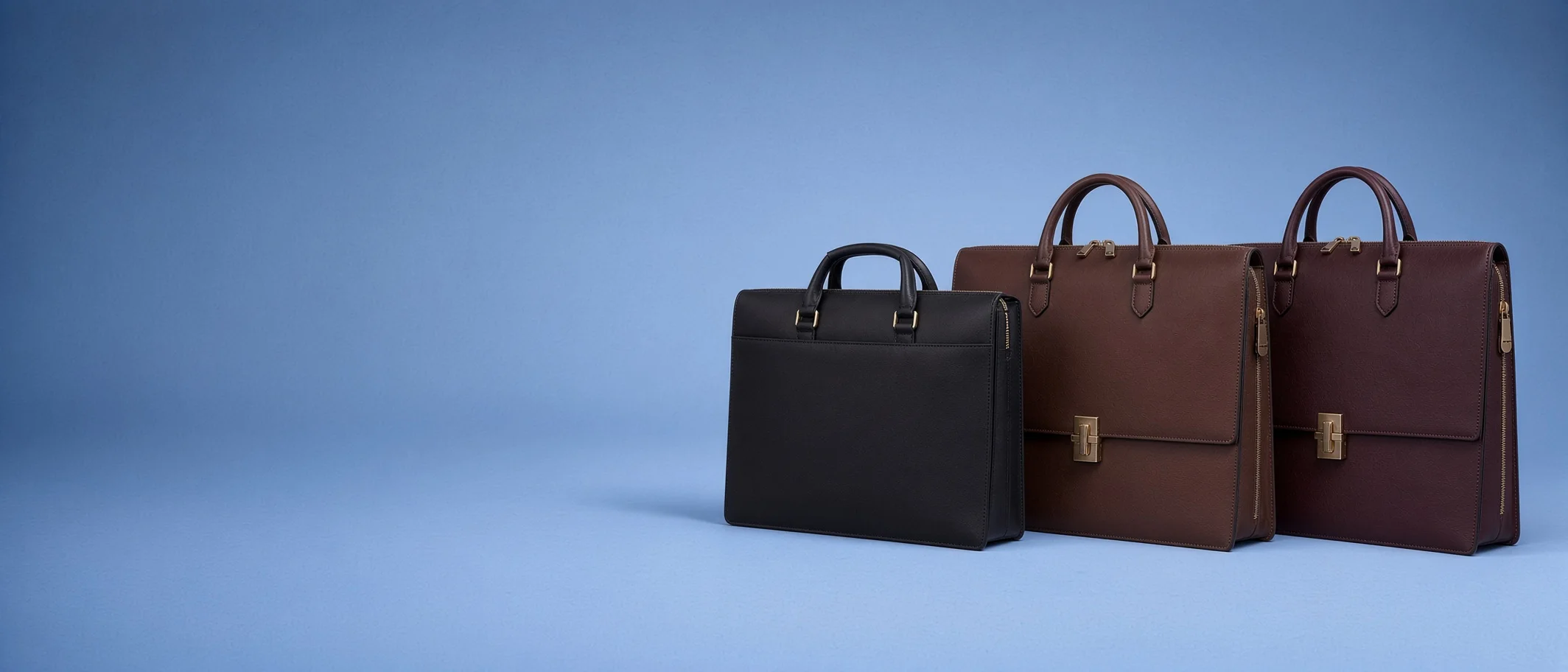
Three leather contract folios in black, brown and oxblood standing on a blue studio sweep
Signed Pre-Production Gate · From 100 Pieces

Custom Contract Bag Manufacturer Source the Floor,Skip the Middleman

Bulk drifts from the sample in degrees a buyer only sees at the docks — a shade off, a stitch short, a marking a few millimetres out. What reaches the pallet is the signed original, not the run that came nearest to it. Send the spec and a sample lands inside seven days; bulk follows the approved build.

  • 50,000m² under one roof
  • 500+staff, pattern to inspection
  • 2015building for global brands

Contract bag types

The Range One Floor Runs

Document and conference bags sit beside the woven and coated styles a promotion is built on — the contract bag range a bulk run is drawn from. A shape is drafted to the buyer’s spec rather than pulled off a shelf.

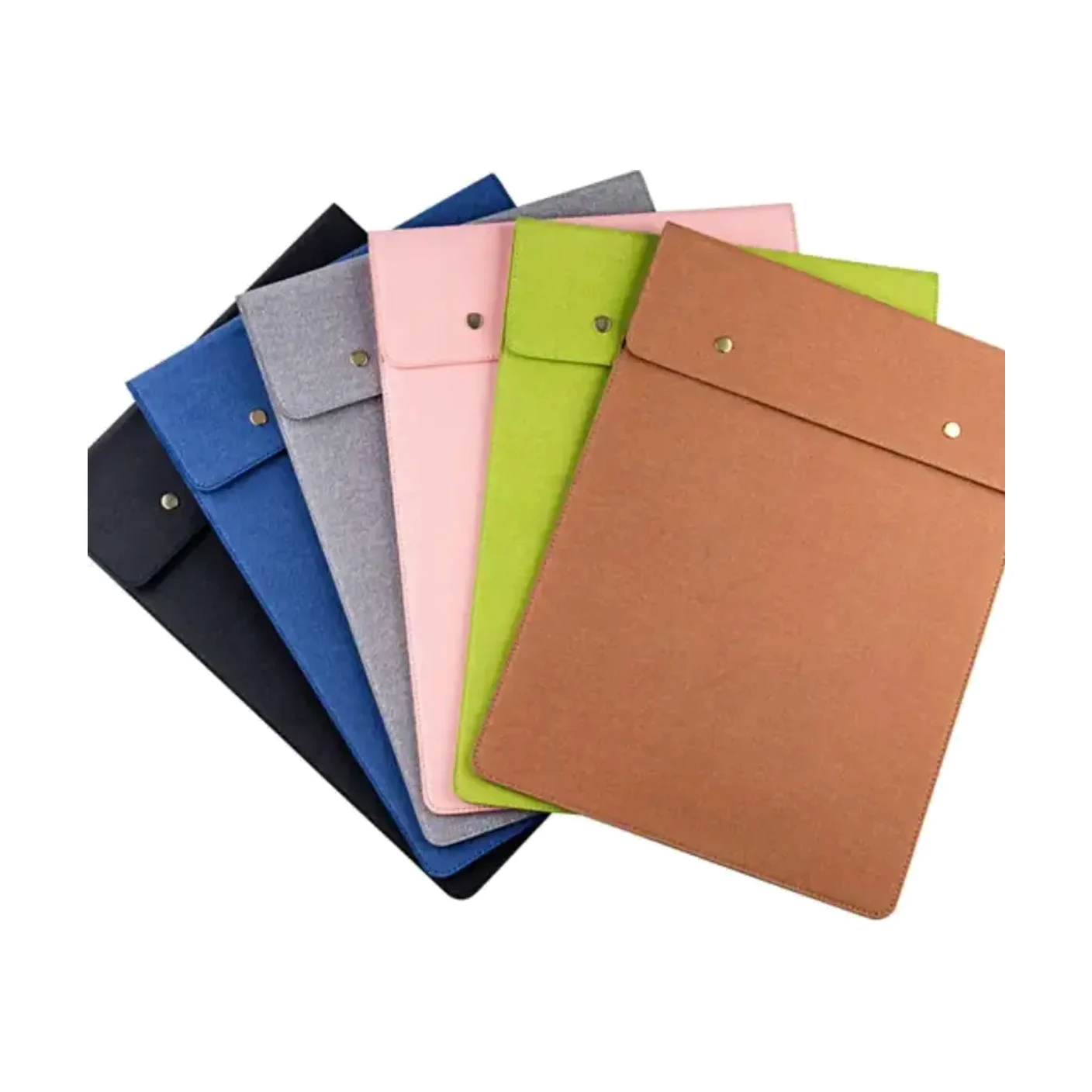
  • A fanned set of board document folders with snap-stud flaps, in black, grey, pink, green and brown

    Paper Contract Bags

    • Board folders for a document pack
    • Cut to A4 or letter, no custom die
    • Snap-stud flap over a colour range
    • Board folders for a document pack
    • Cut to A4 or letter, no custom die
    • Snap-stud flap over a colour range
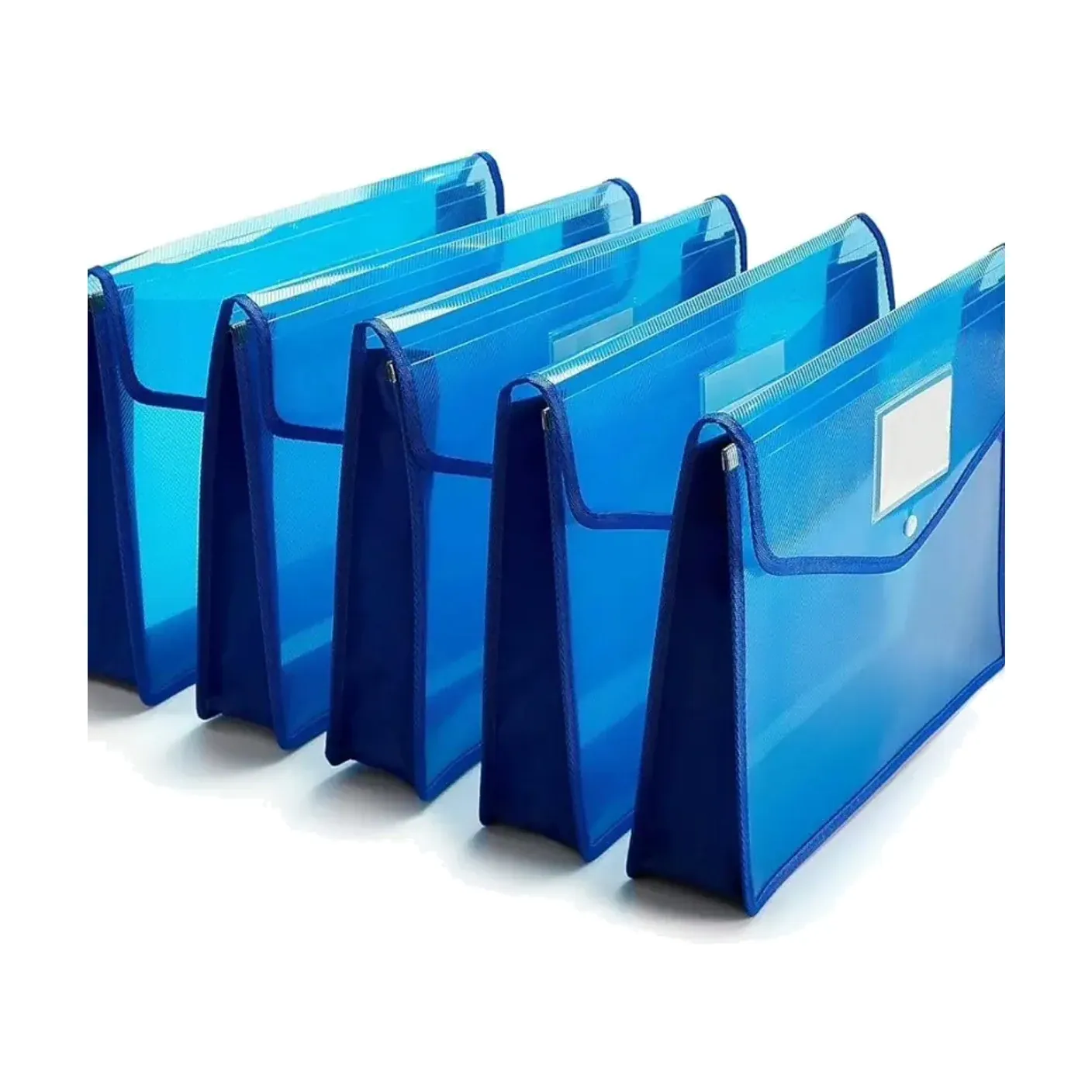
  • Four translucent blue plastic document wallets, each with a white label window on its flap

    Transparent Folders

    • Wallets that show the contents through
    • Welded at the edge, no stitch to fray
    • A label window set into the flap
    • Wallets that show the contents through
    • Welded at the edge, no stitch to fray
    • A label window set into the flap
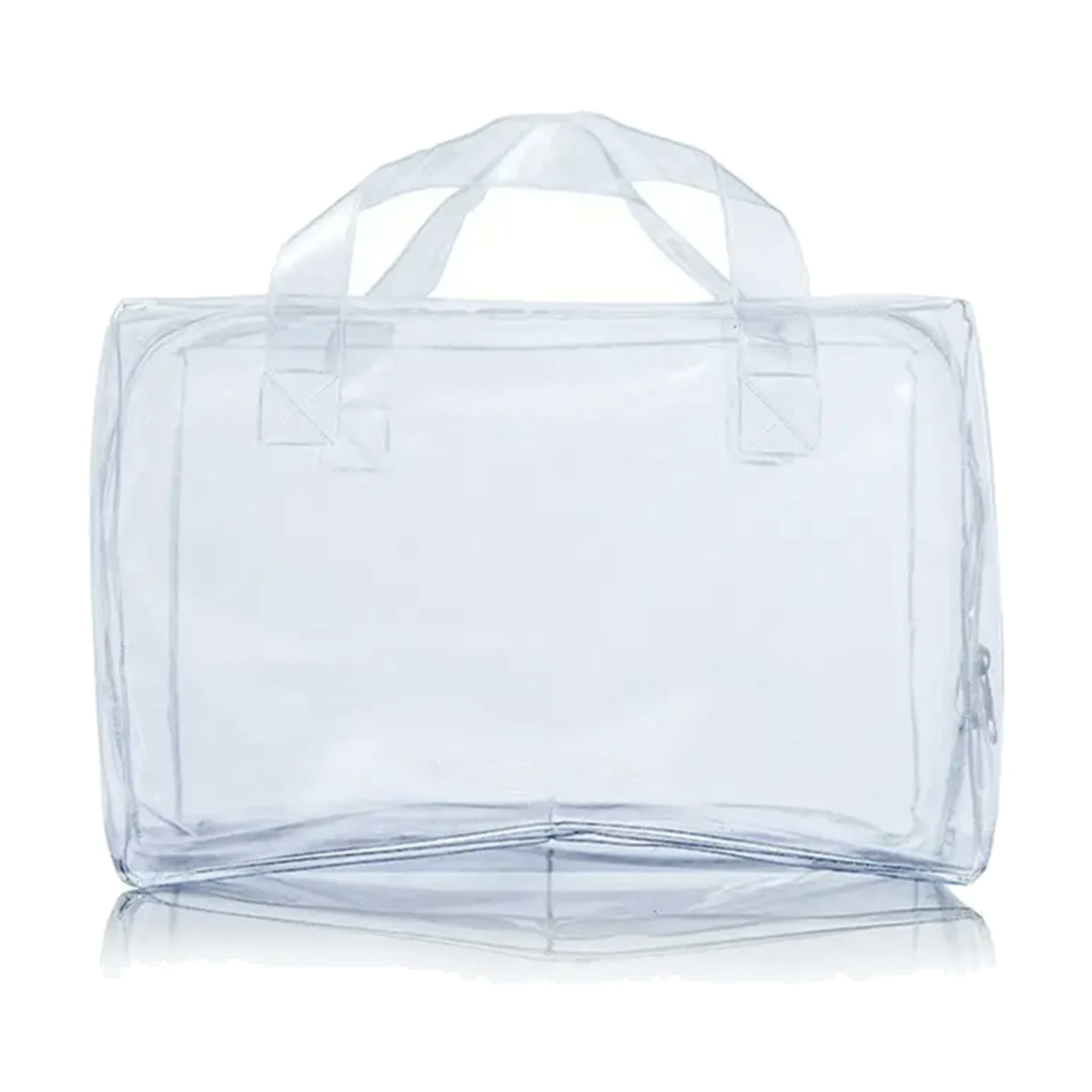
  • A clear plastic conference carry bag with twin woven handles on a white ground

    Plastic Contract Bags

    • A clear carry for a conference pack
    • Contents read without opening it
    • Woven handles on a welded seam
    • A clear carry for a conference pack
    • Contents read without opening it
    • Woven handles on a welded seam
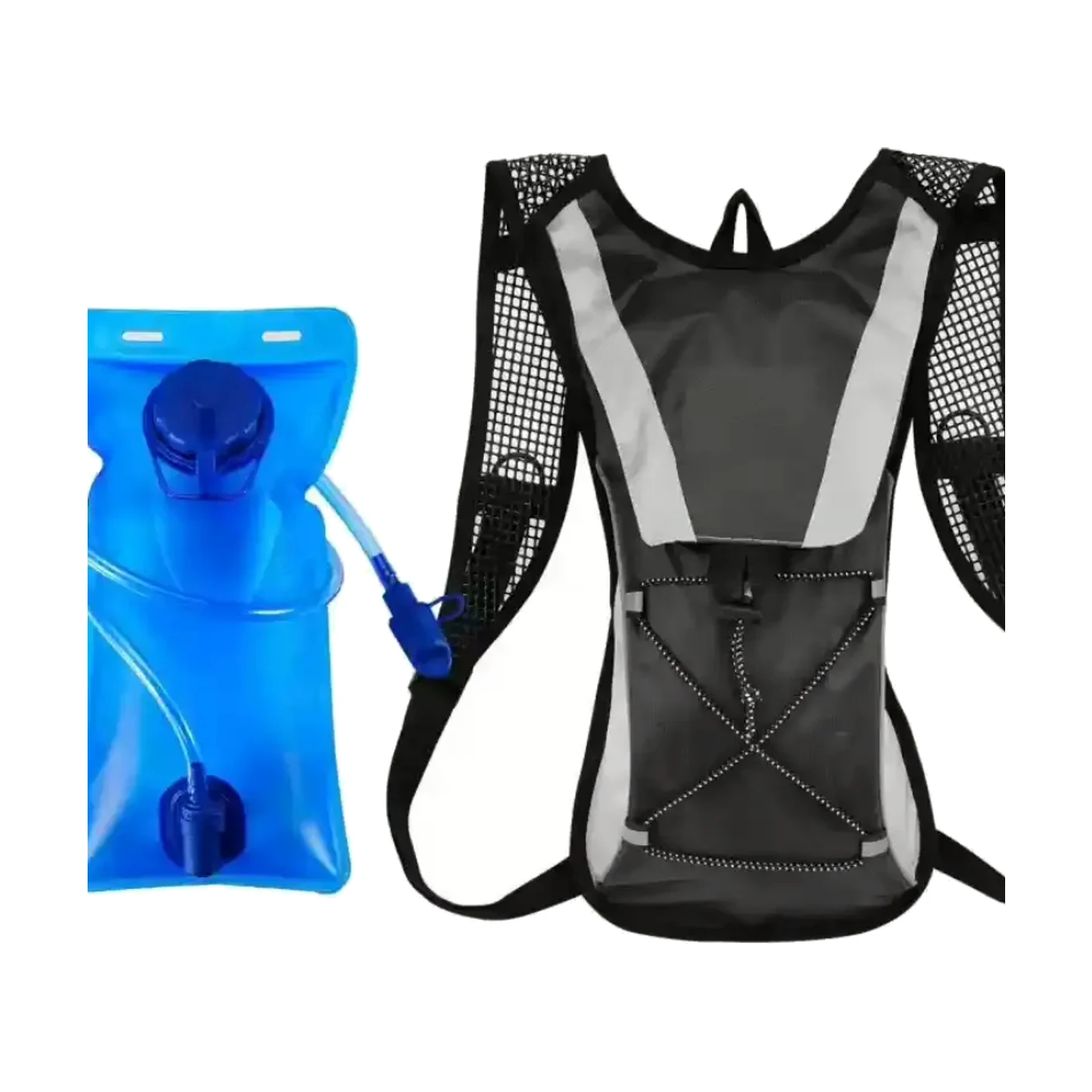
  • A black mesh hydration backpack beside a blue water reservoir with a drinking tube and bite valve

    Hydration Packs

    • A carry for trail and event crews
    • The reservoir sleeve runs behind the back
    • Bungee across the face takes a wet layer
    • A carry for trail and event crews
    • The reservoir sleeve runs behind the back
    • Bungee across the face takes a wet layer
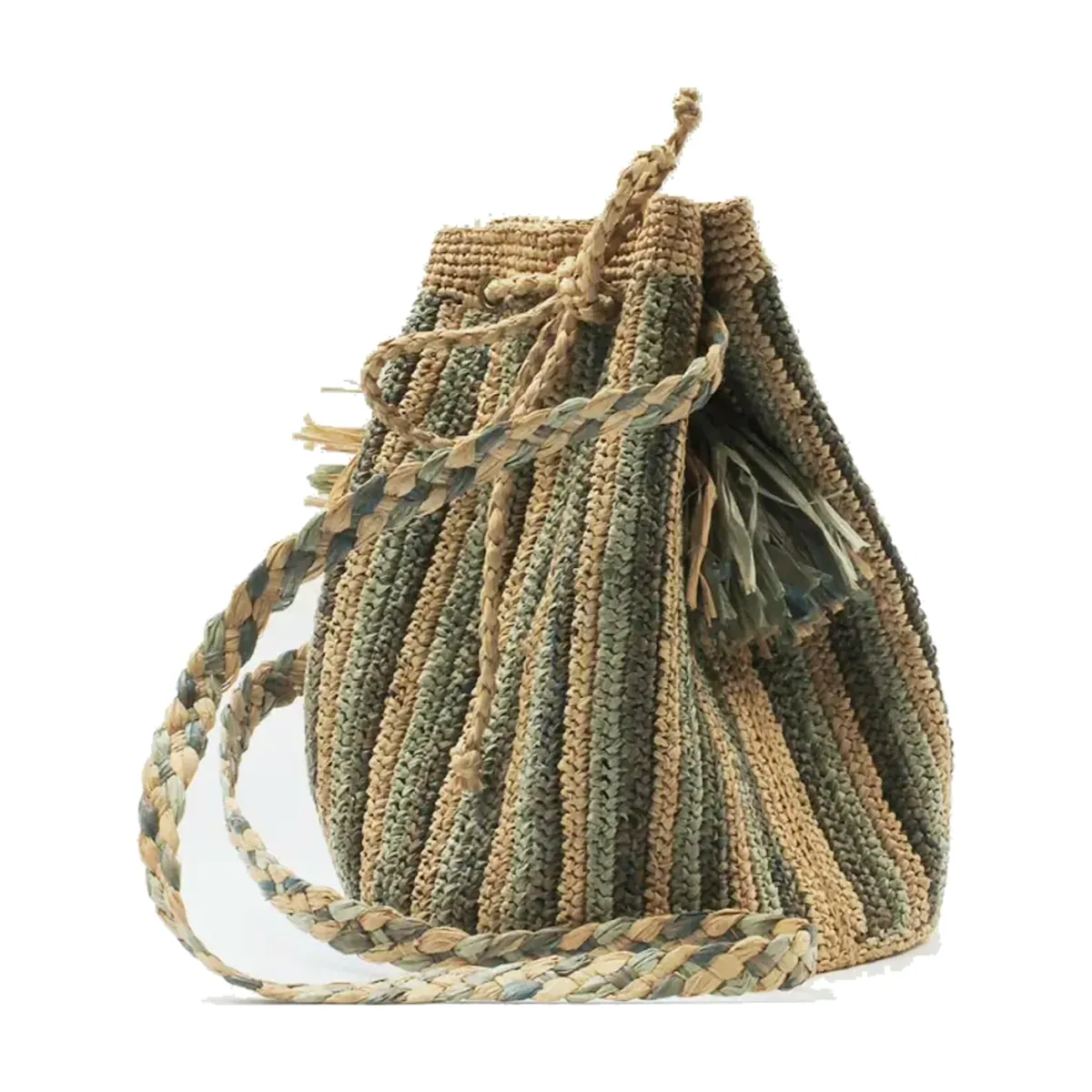
  • A woven raffia drawstring bag with a plaited rope handle, on a white ground

    Rafia & Rope Bags

    • A summer gift shape, not a stock tote
    • Woven raffia on a plaited rope
    • No hardware, so nothing to rust or chip
    • A summer gift shape, not a stock tote
    • Woven raffia on a plaited rope
    • No hardware, so nothing to rust or chip
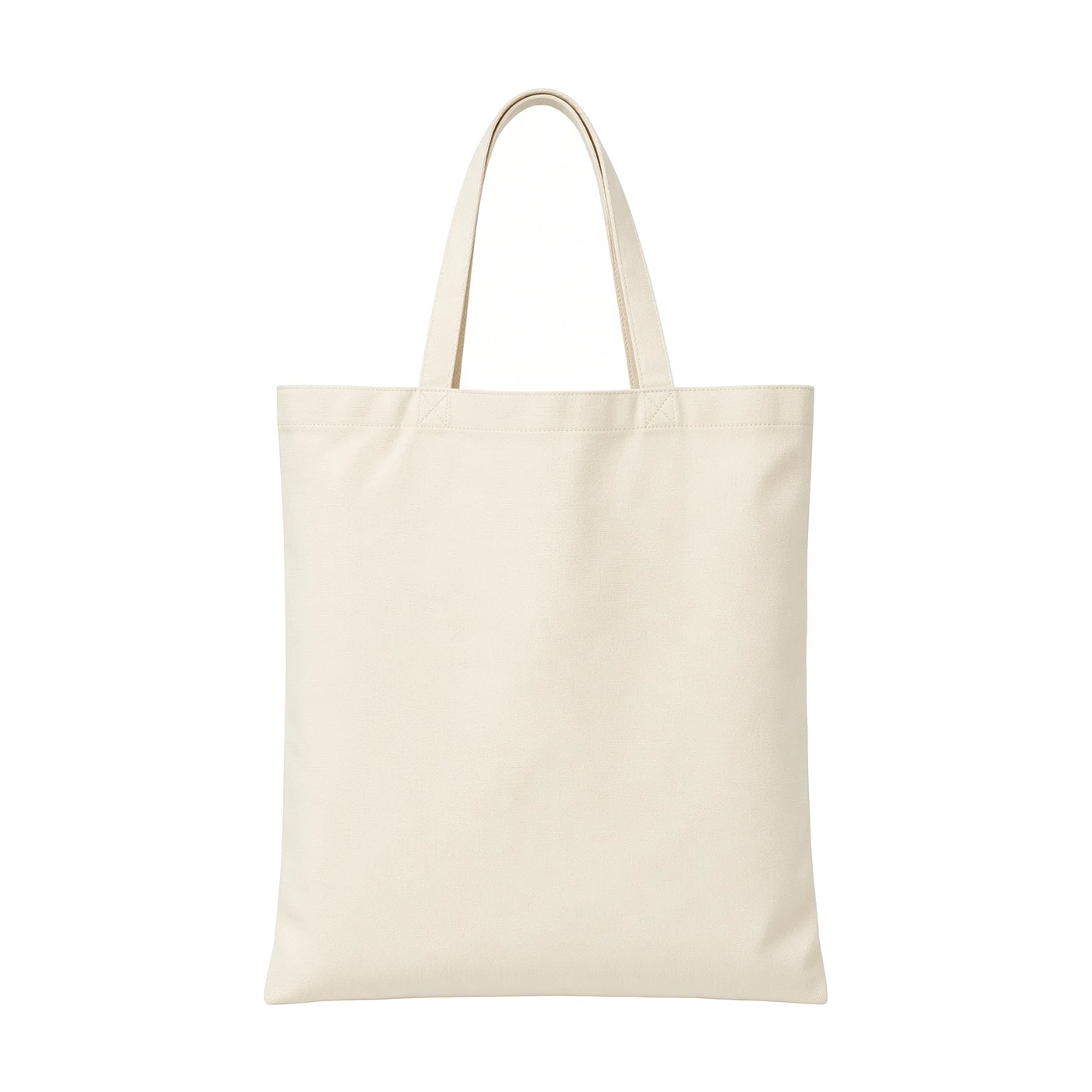
  • A plain cream cotton canvas tote bag with two stitched handles, on a white ground

    Cotton & Canvas Bags

    • The everyday tote a launch hangs on
    • Heavy canvas, box-stitched handles
    • Printed, embroidered or left plain
    • The everyday tote a launch hangs on
    • Heavy canvas, box-stitched handles
    • Printed, embroidered or left plain
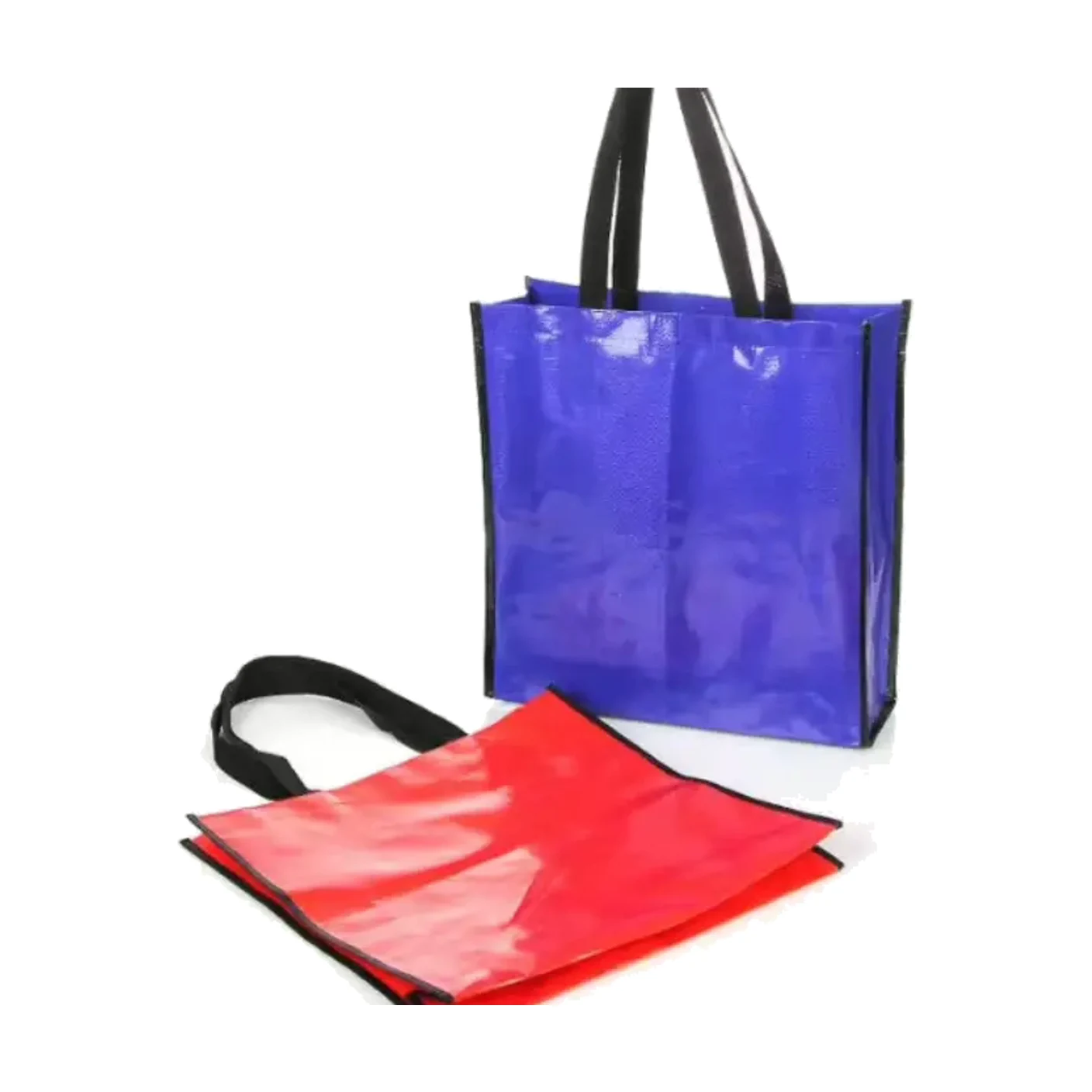
  • Two non-woven polypropylene bags, one printed purple and one plain red, against a white background

    Polypropylene Bags

    • The giveaway that stays in budget
    • Non-woven PP, heat-sealed at the seams
    • A laminated face takes a full-bleed print
    • The giveaway that stays in budget
    • Non-woven PP, heat-sealed at the seams
    • A laminated face takes a full-bleed print
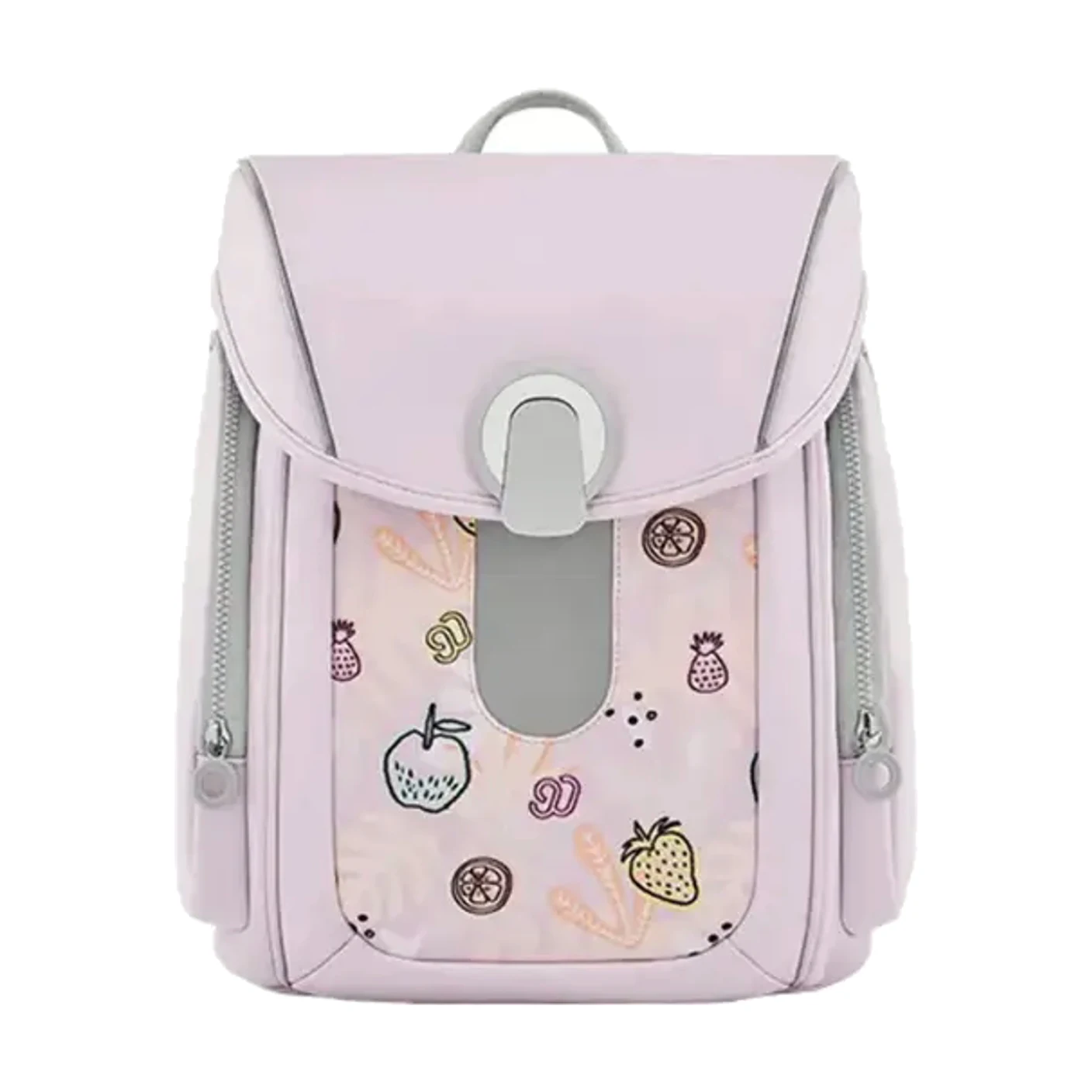
  • A pale pink children’s backpack with a front flap and a printed fruit motif, against a white background

    School Bags

    • A school-age carry in a small frame
    • Padded straps, sized to a child
    • A front flap over a zip bay
    • A school-age carry in a small frame
    • Padded straps, sized to a child
    • A front flap over a zip bay
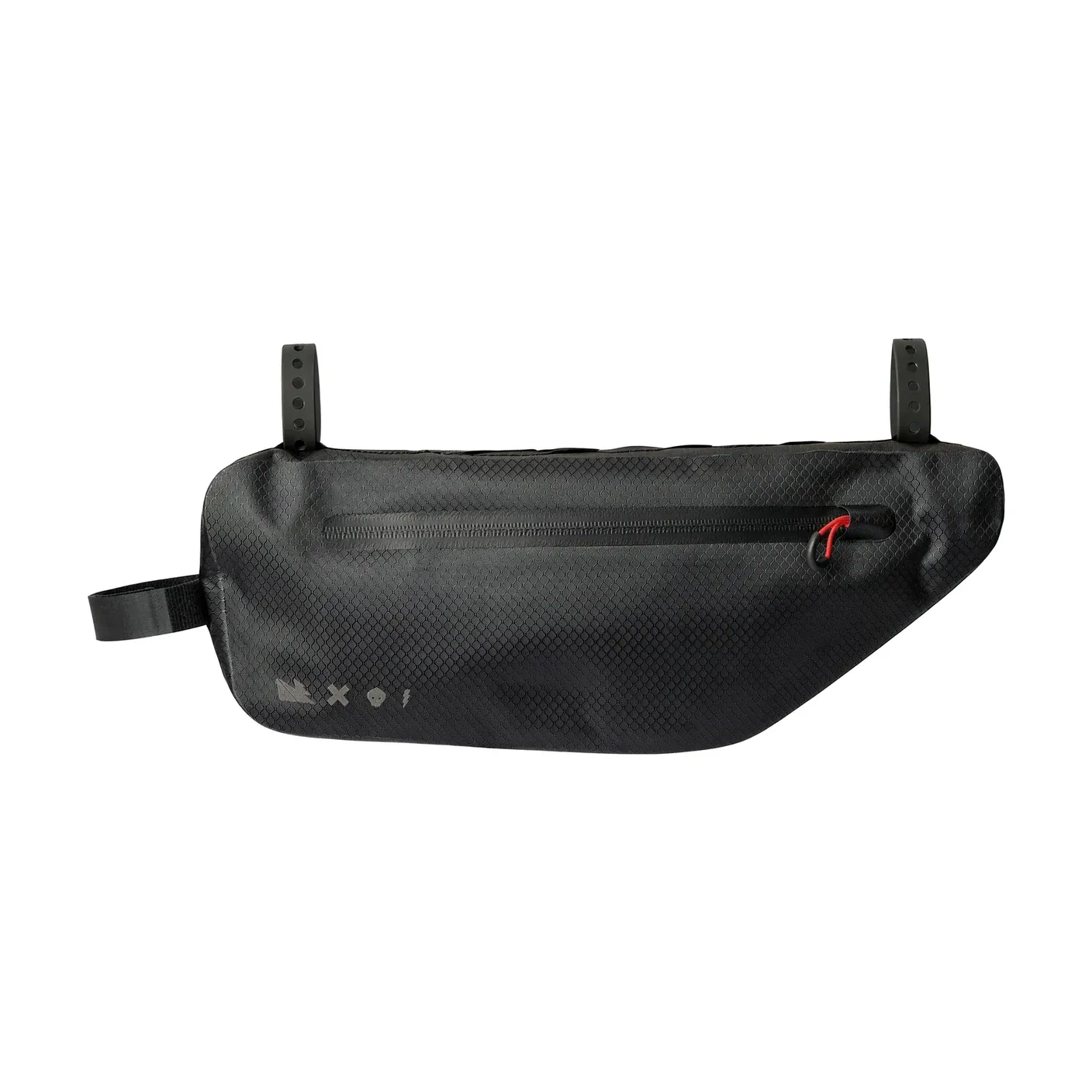
  • A black ripstop bike frame bag with two mounting straps, a zip with a red pull, and small printed icons on the face

    Bicycle Bags

    • A frame bag, off the body not on it
    • Straps cinch it to the top tube
    • A ripstop face, wired at the seam
    • A frame bag, off the body not on it
    • Straps cinch it to the top tube
    • A ripstop face, wired at the seam

What the brand sets

What Stays Open After the Shape Is Fixed

Once the shape of a contract bag is settled, the run still leaves the cloth and trim, the size and form, and the way the mark goes on. The choice on any of them is a trade-off a buyer has to make deliberately, because a choice that suits one panel is wrong on the next.

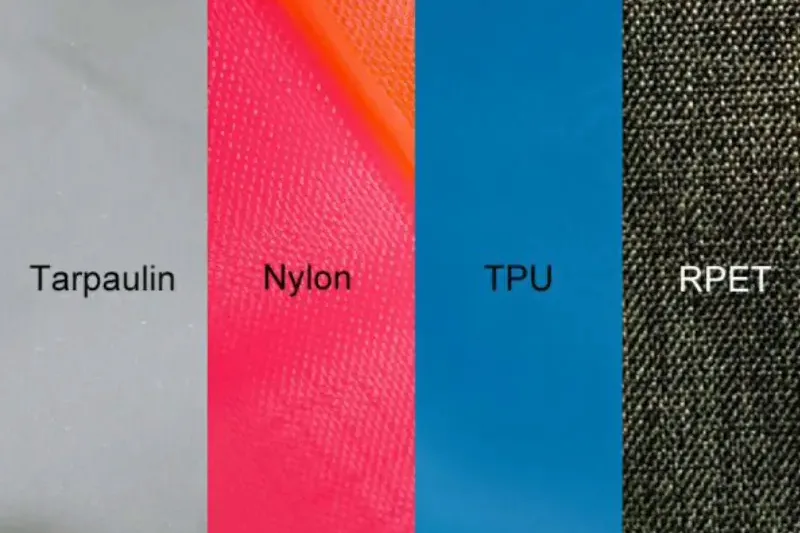
Four material swatches laid side by side — tarpaulin, nylon, TPU and RPET — labelled under a material options board
Cloth

Picked to the price, not the other way round

  • Shell, lining and trim are chosen against the shelf price
  • A lighter denier still holds that price point
  • The load seams are specified to the weight carried

Polyester and nylon, PVC-free coated cloths, RPET, canvas, jute, PU and leather
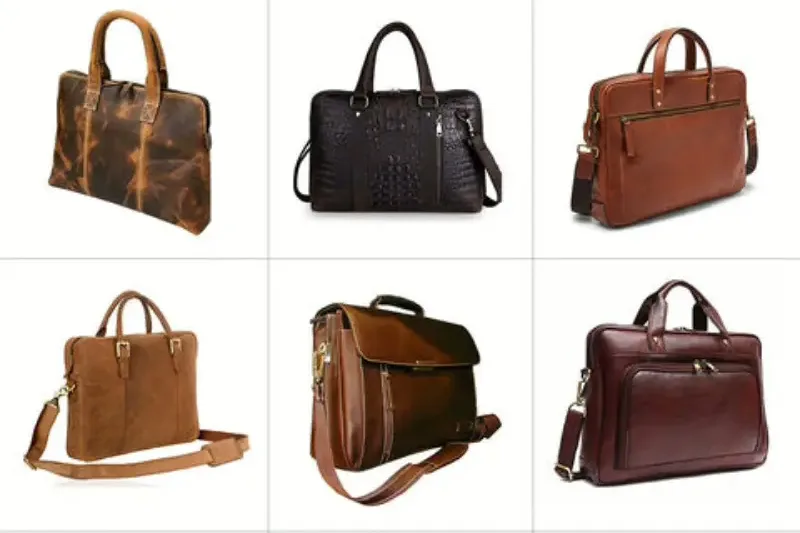
A grid of six briefcase and tote shapes in different leathers on a white background, showing a range of forms
Size and shape

The pattern is cut to the buyer’s own dimensions

  • A run is not limited to a stock size
  • A tote to a litre, a sleeve to a named device
  • One shape is the cleanest run to start on

One construction per pattern — a second shape means a fresh pattern and its own marking run

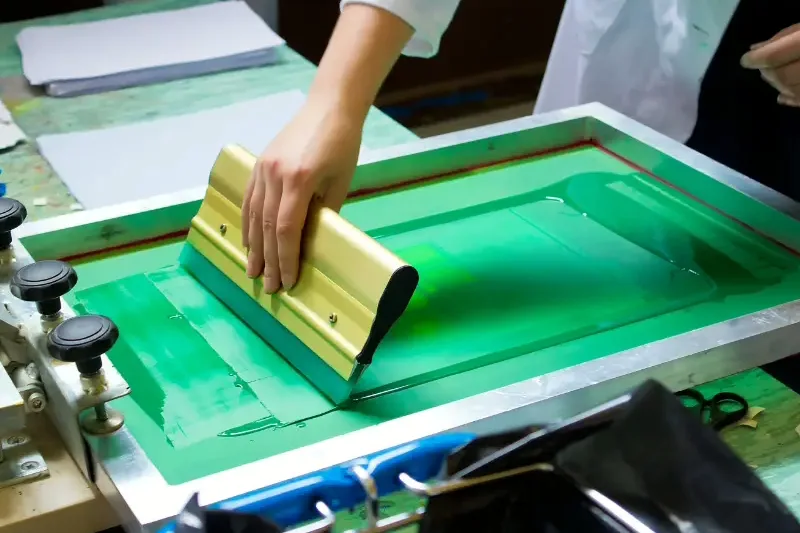
A printer pulling a squeegee across a green screen-printing frame to apply a logo to cloth
Marking

The method is the one the panel will take

  • A woven badge sits flat on a coated shell
  • Dense embroidery pulls the same cloth in
  • The panel picks the method, and the spot follows

Embroidery, screen and heat print, woven and rubber badges, metal plates, emboss, zip pulls

The pre-production gate

Nothing Is Cut Until the Sample Is Sealed

Bulk goes wrong the moment the build in the buyer’s head and the build on the line drift apart. On a contract bag run the gate against that is procedural: a pre-production sample sealed, tagged and signed by both sides before the marker is laid — so what ships is the piece that was approved.

ABCJOINT SIGN-OFFBULK CUTTING HELD
A

Factory master

The reference the QC line measures every bulk bag against

Retained at the plant
B

Brand archive

The permanent record of what was approved

Shipped to the buyer’s office
C

Test copy

The piece the third-party lab destroys or retains

Sent to the testing house

What opens the gate

  • Two signatures land on one approval sheet
  • The sheet names cloth, trims, thread and marking spot
  • Neither side can release the run alone

How a copy is tagged

  • All three copies are bagged and tamper-marked
  • A bag drawn at inspection is held to one
  • That master is untouched since the day it was signed

What is controlled before cutting

  • Cloth from different dye lots is kept apart
  • A finished bag is never built across two reels
  • A first-in, first-out store is keyed to the lot number

How the run moves

A Signed Spec, Cut and Shipped

Between the gate and the shipment a contract bag build passes through five stages, and each stage hands the brand something it can check — a pattern, a bundle card, a photograph, a marking check, a packing list. The process is stated as deliverables rather than as steps, because that is what a buyer can hold a plant to.

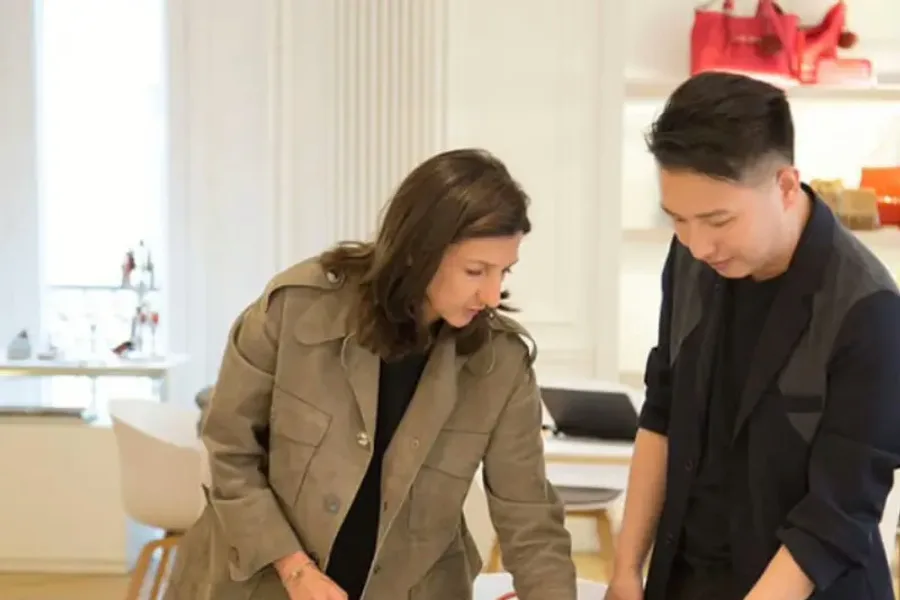
A brand buyer and a pattern maker reviewing cloth swatches and a colour card at the design table
01Pattern and sample

The tech pack becomes a pattern

  • A drawing and a reference bag become pattern pieces
  • Seam allowance and stretch are set, not guessed flat
  • The run stops at the gate before a bulk panel is cut

CheckpointApproved pattern and a signed master sample, held at the plant

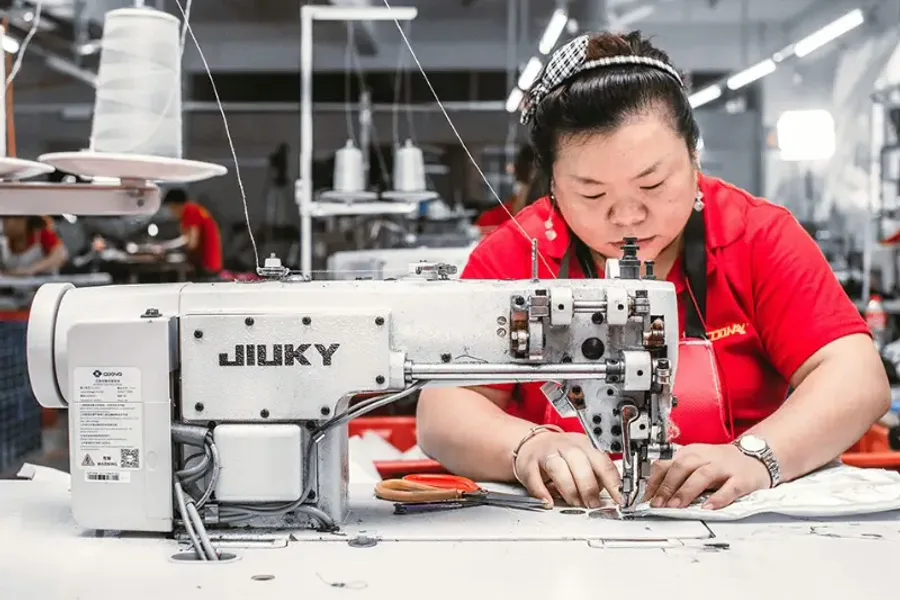
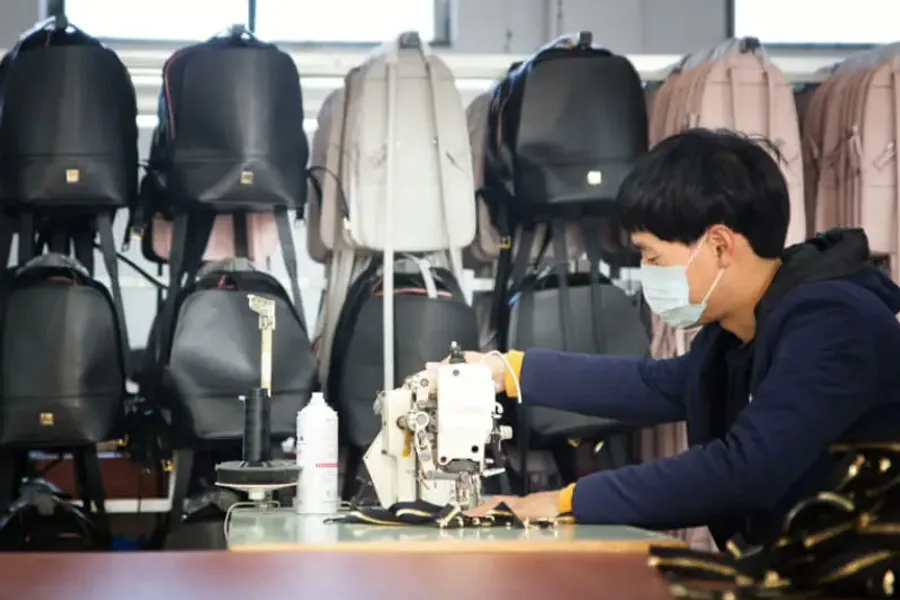
A machinist binding a bag panel at an industrial flat-bed sewing machine on the production line
02Cutting and sewing

The marker is laid to the signed build

  • The marker nests the panels to cut the waste
  • Panels are bundled by size, so a stack cannot mix
  • Load seams are stitched at the density the sample carried

CheckpointA bundle card travels with its stack, so a mis-picked panel is caught before it is closed

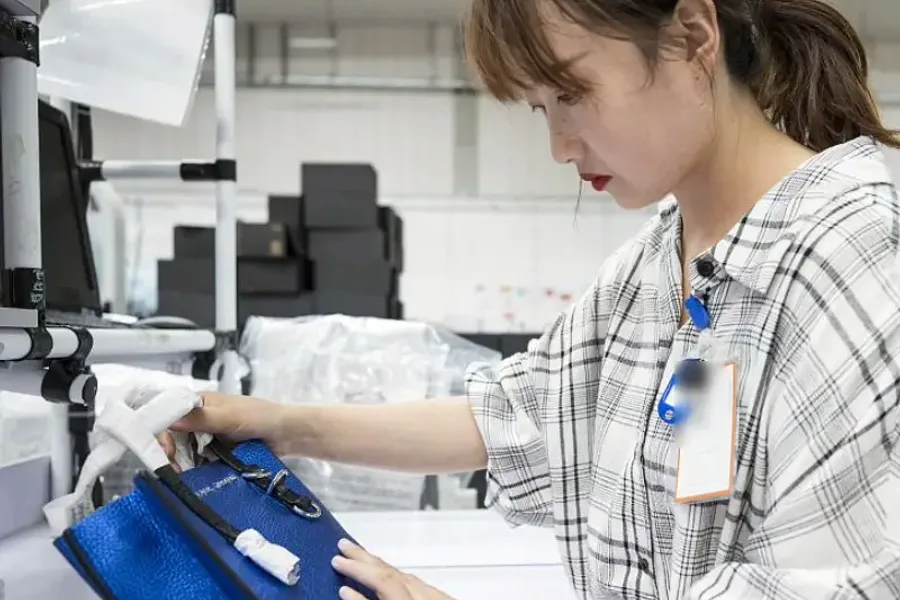
An inspector examining the stitching and hardware of a finished bag at a backlit quality-control bench
03In-line inspection

The line is checked while it is still moving

  • Inspection runs inside the line, not saved for the end
  • Seams, stitch density and hardware seating are checked mid-run
  • A drift is corrected on the next bundle, not at the dock

CheckpointInline checks logged per bundle, with photographs sent to the buyer

A finisher turning a finished black bag to check its hardware against a row of completed bags on a rack
04Hardware and finishing

The moving parts are function-tested

  • Buckles, hooks, sliders and zip pulls are load-seated
  • Wheels and telescopic handles are cycled on their frame
  • The mark is set last and checked against the approved sample

CheckpointMarking checked against the master — position, size and colour

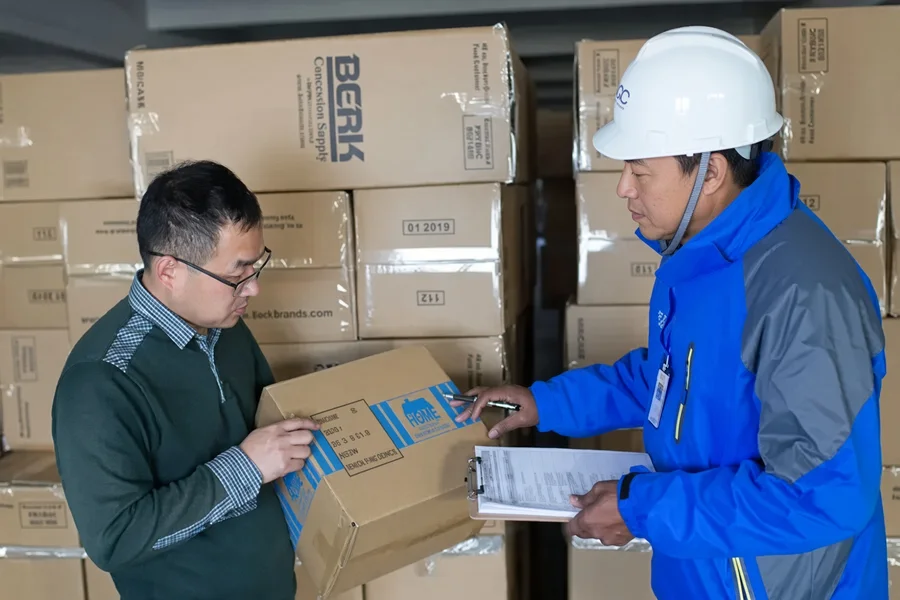
Two warehouse staff checking a carton against a printed checklist before loading, in front of stacked export cartons
05Packing and pre-shipment

Packed to the plan, not to the carton

  • The sleeve, the fold and the divider follow the signed plan
  • The draw runs to AQL 2.5 majors, 4.0 minors, 0.0 criticals, ISO 2859-1 II
  • Cartons are labelled to the packing list the buyer supplies

CheckpointPre-shipment draw to the contracted level, cartons labelled to the buyer’s list

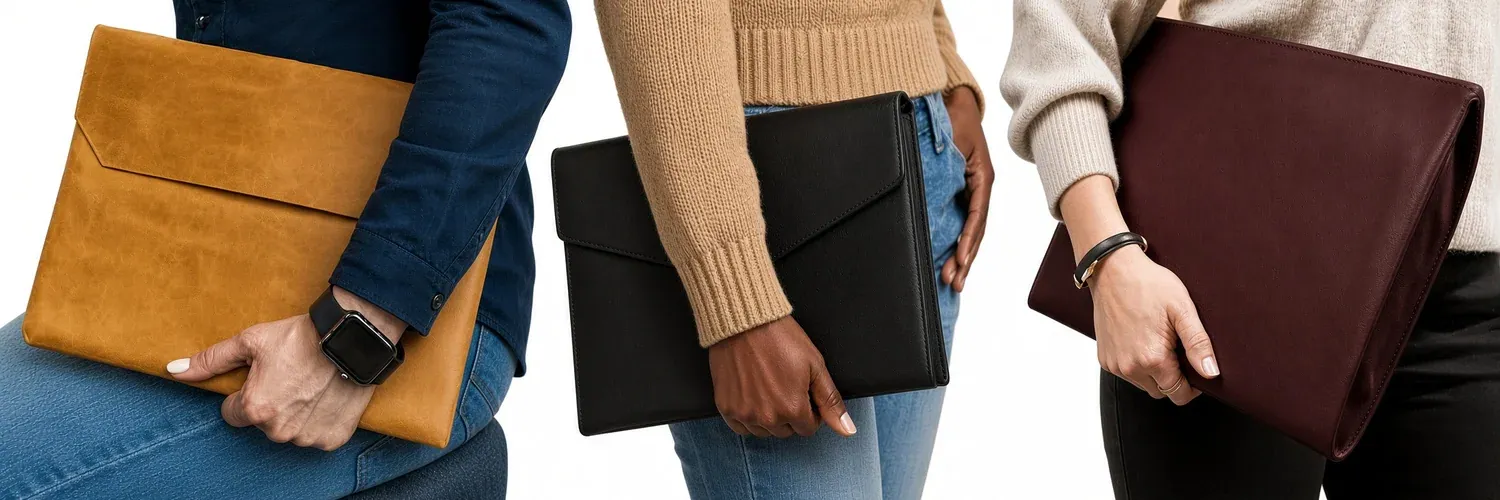
Three shoppers each carrying a leather document folio from the contract range

Brief to costed run

Send the Brief. Back Comes a Costed Run.

Name the bag, the cloth, the marking and the quantity. Back comes the build, the cost and a sample at a hundred pieces.

Who the run is for

A Programme Sets the Build, Not the Bag Type

What a contract bag programme has to get right depends on the buying behind it — a reorder that must match, a colour that must hold across a split order, a date that cannot move. The programme decides which of those the build is written around.

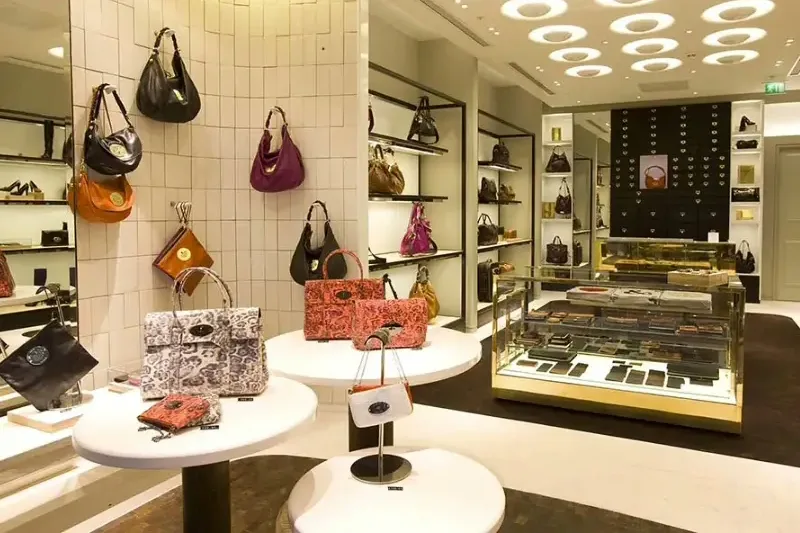
A bag boutique interior with handbags and small leather goods displayed on lit plinths and shelves

Retail and own-label lines

  • The line reorders, so the pattern is archived
  • The signed sample is kept as the master
  • A repeat is cut to the approved piece
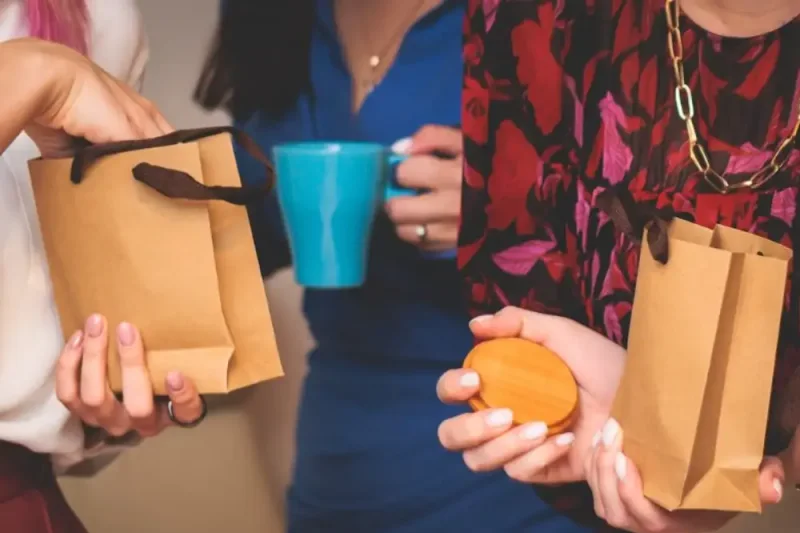
Several pairs of hands holding kraft gift bags and a blue travel cup at a corporate gifting hand-out

Corporate and staff programmes

  • One order can divide across departments or sites
  • The whole lot draws from a single cloth lot
  • One colour holds across the split order
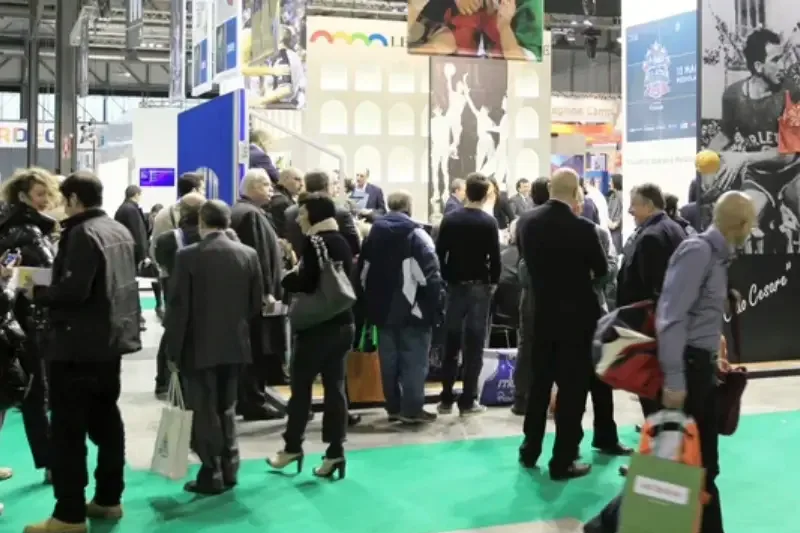
Visitors walking a trade-show floor carrying branded bags between exhibition stands

Trade shows and events

  • The event date cannot move once it is set
  • The sample window is front-loaded for the show
  • The run is planned back from the ship date
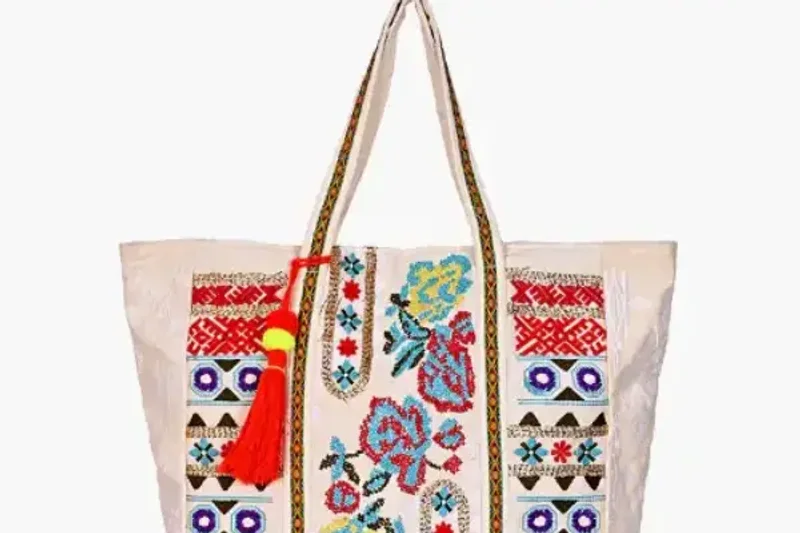
A cream canvas tote printed with an embroidered folk-floral pattern, held by its handles on a white background

Promotional-product distributors

  • A distributor carries the mark to the client
  • The print setup is priced separately, never bundled in
  • A repeat reuses the same artwork setup
Hands folding tissue and dropping gift bags and boxes into a presentation package on a table

Gift and packaging programmes

  • The bag and its packaging are specified together
  • The box, tissue and tag are part of the build
  • The bag is packed to the unboxing
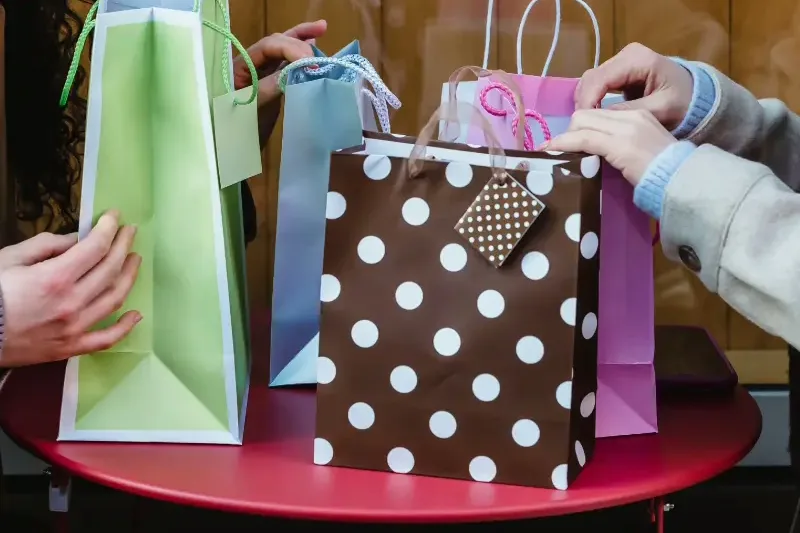
Shoppers on a street carrying a mix of printed and plain paper carrier bags

Food, cosmetics and mixed programmes

  • A programme outside the main channels still lands here
  • The build is set by the contents, not the bag
  • A lined or barrier layer sits where contents touch

Why this floor

The Terms Behind the Contract

A contract bag order turns on the terms behind it — how few pieces a first order can be, who owns the pattern, and who carries a lot that fails. Those terms sit below, set against the suppliers a buyer usually weighs this kind of order against.

The honest comparison

How this floor stacks up against the other options on a shortlist. The competitor columns describe the category, not a named supplier.

  • Minimum order

    LeelineBags100 pieces per construction

    Trading company
    Brokered to a floor it does not own
    Low-cost bulk
    Priced for 3,000+ before the setup pays
    Sample-led
    One sample, then a bulk figure
  • What binds the run

    LeelineBagsA sealed master countersigned before bulk cutting

    Trading company
    The purchase order alone
    Low-cost bulk
    Price and volume
    Sample-led
    The sample that passed
  • The pattern

    LeelineBagsStays the brand’s, filed at the plant

    Trading company
    Moves to whichever floor bids lowest
    Low-cost bulk
    Held by the plant
    Sample-led
    Not kept between runs
  • Cloth lot

    LeelineBagsOne lot per construction, held by lot number

    Trading company
    Sourced order by order
    Low-cost bulk
    Drawn as the store runs low
    Sample-led
    Bought for the sample
  • A reorder

    LeelineBagsCut to the archived master the buyer signed

    Trading company
    Re-quoted from the start
    Low-cost bulk
    Recut to the last delivery
    Sample-led
    Re-sampled
  • When a lot fails

    LeelineBagsQuarantined and sorted against the master

    Trading company
    Negotiated after the fact
    Low-cost bulk
    Thinned into the shipment
    Sample-led
    Carried by the brand
  • Inspection

    LeelineBagsWritten into the contract before the run

    Trading company
    Arranged by the buyer
    Low-cost bulk
    Rarely published
    Sample-led
    Visual only

Buyer accounts

The Reorder Came Back, Cut to the Contract

Two accounts from contract runs — a label opening a first range and a brand resecifying a carry-all — and what the paperwork, not the pitch, had to hold.

John AndersonBrand Manager, OutdoorPro

One construction opened the run at a hundred pieces a shape — small enough that most floors wave it off as not worth tooling, and a size that let a first range test the shelf.

Holding the line until the sheet was countersigned felt slow at the time. It is the one pause a first-range buyer should want.

Two seasons on, the reorder came back cut to the archived pattern, not to a photograph of the first lot.

Sarah WilliamsMarketing Director, EcoGear

Three offices, one house colour, and a launch date that could not slide — an order split after the dyeing rather than before it.

The rollout had to read as one fabric across all three offices. That it did is the whole test of a split order.

Final inspection ran to the level the contract named for majors, turning acceptance into a number agreed before the run rather than an argument at the bench.

Contract questions

Frequently Asked Questions About Custom Contract Bag Manufacturer

The questions that come up on most contract enquiries. Where a figure already appears in a section above, the answer points at it, never repeats it a second time down the page.

What stops the bulk drifting from the sample I signed off?

The gate band above: a pre-production piece built in exact bulk materials, and no panel cut until both sides countersign it. A first-range buyer’s real fear is a lot that reads right in the sample room and wrong in the carton — the countersignature is what stands between those two.

Why is the minimum set per construction rather than per order?

Because a construction — one cloth, one pattern, one marking setup — is what a minimum attaches to, not the order. The comparison table carries the figure; the reason it sits on the construction is that two shapes are two patterns, so a quote that folds them together is quoting a saving the floor cannot hold.

If I move to another supplier, do I keep the pattern and any tooling?

The comparison table above holds the term: ownership doesn’t move with the order — the pattern is the buyer’s, and the floor cannot cut it for anyone else. That is the line between a reorder that copies the buyer’s own piece and one that is a near-match the plant is free to resell. Anything raised for the run is held the same way.

A launch splits the order across offices or sites — how does one shade hold across all of it?

The whole order is drawn from one cloth lot, which the gate band keeps single. A split that reaches across two dye lots is how a rollout ends up reading as two ranges under shop lighting rather than one — the single-lot rule is what keeps a divided order looking like a single launch.

What does the contract need to say about inspecting finished bags?

Name the plan before the run, not at the bench. Both the comparison table and the pre-shipment step carry this floor’s plan — the draw size, the defect classes and the accept-or-reject line — so a buyer can paste those terms into a purchase order. Written down, the final inspection is a figure both sides agreed, not a dispute settled by whoever holds the bag.

What happens to a lot that fails inspection?

The table above the FAQ names the standing answer — a rejected lot is held, not shipped beside the good units. Beyond the term, what reaches the brand is the evidence: photographs of the failure and the corrective action before anything is packed, so the call to release or to hold is made on a record rather than a promise. A lot is never quietly thinned and sent.

Is the run cut on this floor, or sub-contracted to another?

The run is cut on the floor that quotes it. The trading-company column above sets the contrast — a desk brokering the order to a plant it does not own, where the buyer never sees the line and the spec drifts because nobody who quoted it is standing at the marker.

Start a contract run

Send the Brief.
Bind the Run to a Signature.

A tech pack, a reference bag or a sketch is enough. Back comes the costed build, the acceptance plan the contract will name, and a sample at a hundred pieces.

Get a Quote