Titles, descriptions and categories are all searched.
↑↓ NavigateEnter OpenEsc Close
Surface Treatment Test First, Then Bulk — 50 Rub Cycles on the Face Itself.
Samples pass and the second wear is where the mark gives out: one face takes a method and the next rejects it, whatever the paper proof promised. Colour, pattern and finish are specified to the material and proven on the face it ships on, with the sample back in seven days.
The face decides which family is open, and the wrong pick is what costs a run. The families below are set out by how the mark lands, what the surface takes, and the run that suits.
01
Spraying Colour
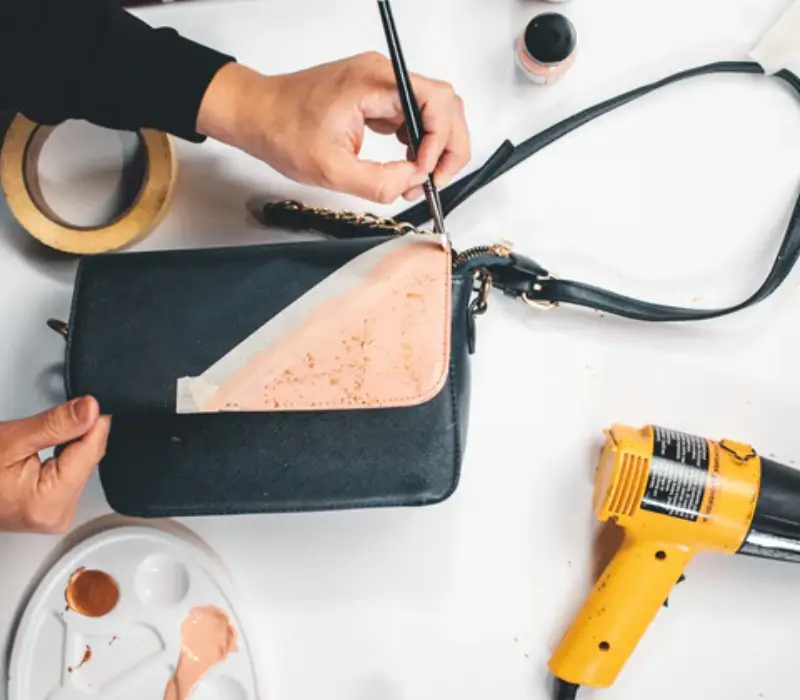
How it landsA spray gun lays colour evenly across split leather or canvas, edge and face in one pass, and the coating builds in thin layers instead of soaking through.
What it takesSplit and corrected-grain leather, coated canvas and synthetic panels — a face that takes a topcoat, where the colour sits on the surface.
Specify it whenA colour or a gloss for a full face or a shade range, where mixed ink cannot reach.
Coatingwater-based PUDepthbuilt in thin passes
02
Printing
How it landsInk is laid onto the surface — pushed through a mesh, cured under UV light, or turned to gas into the fibre — so the mark sits in the material or just on top of it.
What it takesCotton and canvas, polypropylene, RPET and polyester, leather and PU, and coated fabric — the print family is where a substrate is matched to a method.
Specify it whenA logo, a pattern or a full-colour design, and any run where the artwork outgrows a flat colour.
Methodsscreen · transfer · UVMatchgraded against the fabric
03
Hot Stamping
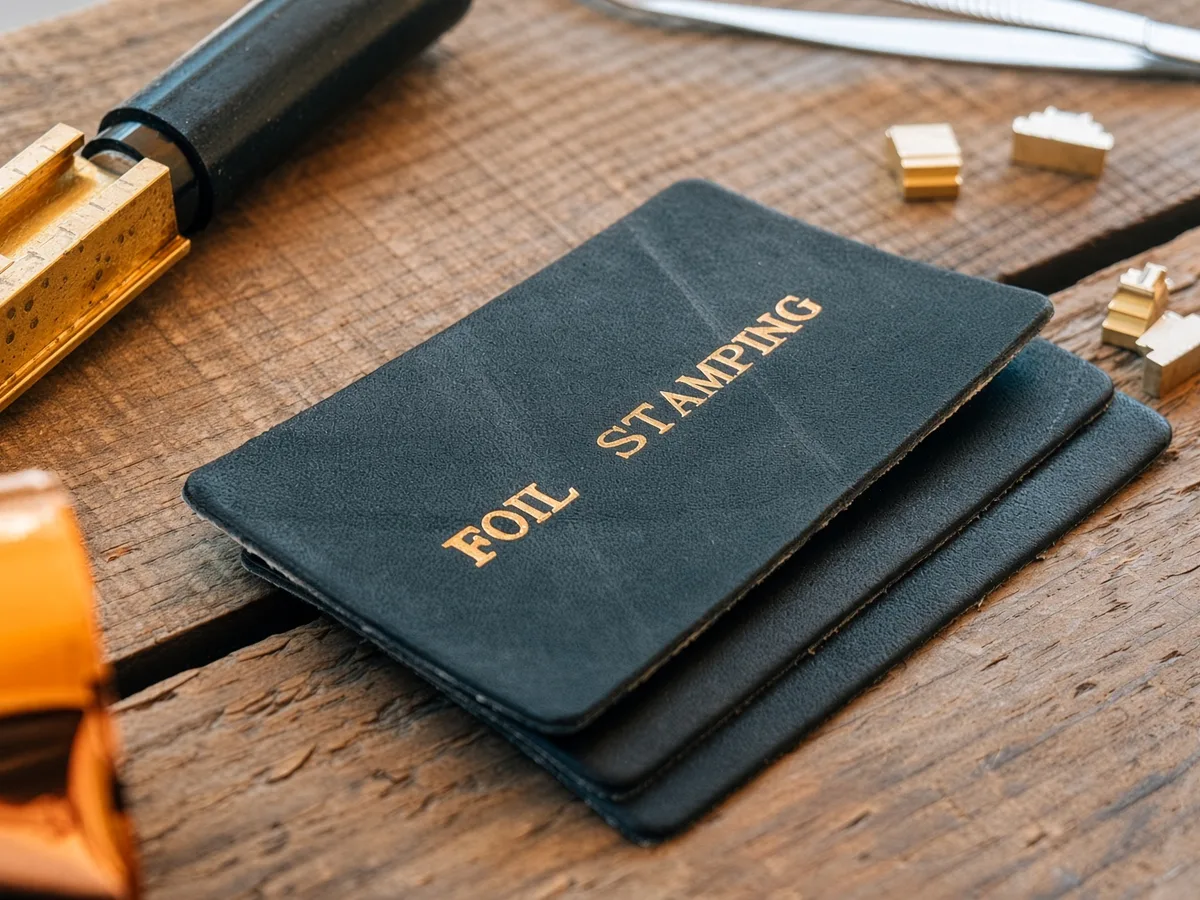
How it landsHeat and pressure bond a metal foil — or press a die blind — into a leather or synthetic face, setting the mark into the surface instead of leaving it sitting on top.
What it takesSmooth and coated leather, PU and rigid panels, the faces a die can press a crisp edge into without the grain swallowing the line.
Specify it whenA logo or a short mark that has to read as metal or relief, and a run where the foil is costed piece by piece instead of by screen.
Finishfoil, or blind embossArtsimple, no gradients
Method against material
Graded to the Face It Has to Survive.
The plant's own grades, mapped substrate by substrate — read down a column for what a material will accept, or across a row for where a method is the wrong pick.
Surface treatment methods graded by the substrate they are applied to, weakest verdict first.
Method
Cotton canvas
Organic cotton
Polypropylene
RPET & polyester
Leather & PU
Coated fabric
Screen print
Excellent
Excellent
Good
Fair
Poor
Fair
UV print
Poor
Poor
Poor
Poor
Excellent
Excellent
Sublimation
Fails
Fails
Poor
Excellent
Poor
Poor
What the mark survives
Tested on the Face, Not on a Chart.
A finish is only as good as the coat under it. Decoration is run against the plant's rub, scratch and adhesion bars before a bulk order is released, because the failure buyers hit is a mark that passed on the sample and lifted on the second wear.
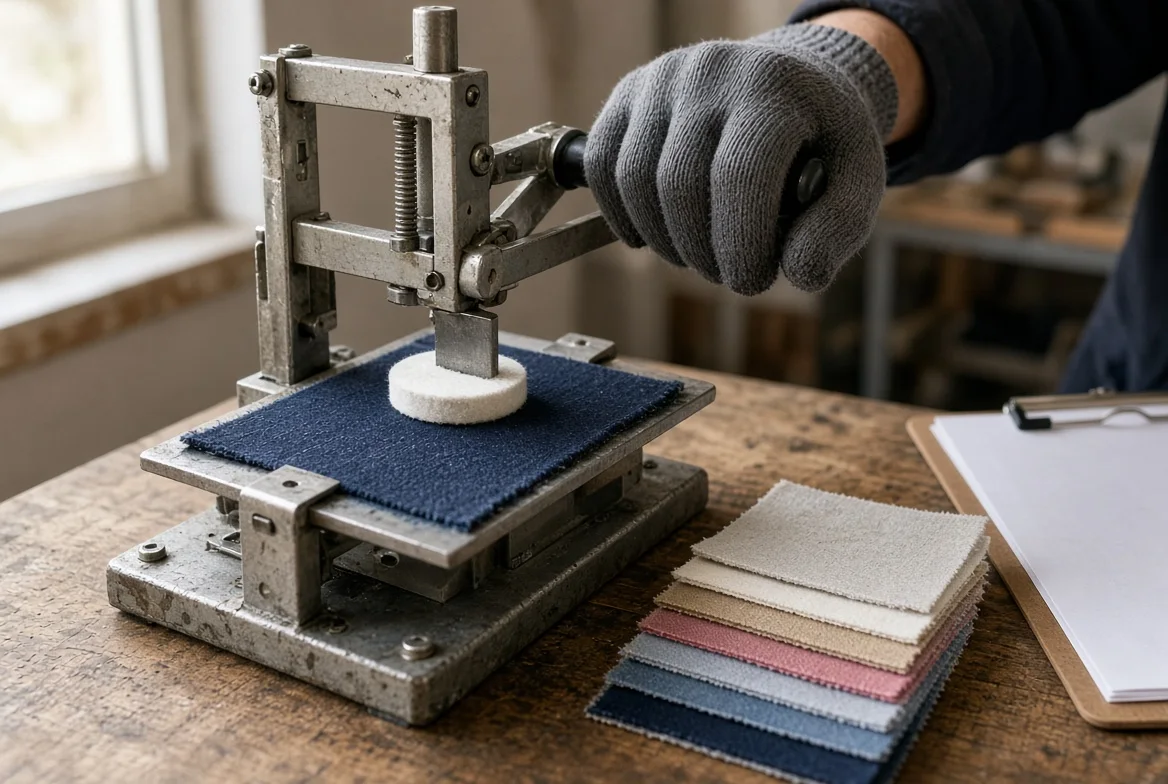
ISO 11640Wet-rub methodA coloured or coated surface is run on a crockmeter against its own fastness standard, and a face below the wet-rub floor is changed or re-coated, not shipped.
D7255Scratch resistanceCoated faces are scratch-tested to the ASTM method, so a finish that scuffs to the first fingernail gets caught on the swatch before it reaches the shelf.
IUF 470Finish adhesionWhere a topcoat is sprayed or laminated, adhesion gets its own test: a thick coat that stands up to rubbing but peels at the edge is a different defect, and it is the one a transit claim turns on.
Opening a decorated run
The Face Changes, the Terms Do Not.
Spray, print and foil are quoted from one brief, and the terms below settle before the artwork is released to the line, not after the first panel is spoiled.
Order floor100, one style
Whichever family, the same floor applies.
A second style opens its own run and its own set-up.
First sampleseven days from the brief
The mark is proofed on the substrate itself, not on paper.
No bulk release until the named face is approved.
Bulk window15–30 days from release
The clock starts at approval, not at quote.
More faces on a bag widen the window.
ArtworkPantone, not CMYK
3 mm bleed and a 0.5 mm trap on supplied files.
±5 mm is the placement tolerance held at the bench.
A proof that misses its reference is re-struck before bulk opens, so the sample stage corrects shade and gloss instead of the shipment.
Face to quote
Send the Face. Back Comes the Family.
Name the substrate and the artwork; the reply states the family that face takes.
Frequently Asked Questions About Surface Treatment
The questions that come up before a decorated run opens, answered where their figures already sit above.
Can several finishes share one bag, or does a single method cover the piece?
Several, and a mixed-material bag usually needs them. The body, the trim and any hardware-adjacent panel are separate faces, so a sprayed body, a foil-stamped leather trim and a printed lining are specified as separate lines on one specification instead of one method forced across the piece. The method is settled per face at the sample stage.
Will a reorder come back in the same shade as the first run?
If the colour was matched to a solid reference and the stock was held under one lot, yes. The failure is a second run struck from a new batch of coating or ink without the first sample in hand, which reads as a drift down the seam or across a panel. The approved swatch is kept against the style, so a reorder is judged against the face that was signed off, never against a name on a purchase order.
Can a mark run across a seam, a gusset or a pocket without drifting?
It can, provided the panel is decorated in the flat and the placement allows for the join. A mark pressed across a curve, a zip or a gathered edge pulls out of register once the panel is stitched, so the artwork is set against the panel pattern and the tolerance is held at the bench, never guessed after assembly. Where a mark cannot cross the construction cleanly, it is moved or split instead of forced.
Does a foil or emboss wear at the corners before the rest of the bag does?
On a hard-wearing corner or a rolled edge, yes, and that is a placement decision, not a foil fault. A raised or metallic mark sits proud of the surface where a bag is handled, so it is specified on a protected face, moved inboard, or set as a blind emboss that takes abrasion with no foil layer to lose.
Is the foil pressed before the bag is stitched or after it is assembled?
Before, on the flat panel, for anything beyond a simple mark on a rigid face. A die needs an even bed and a flat surface, and an assembled bag gives it neither, so a foil or an emboss is run while the panel is still open. A mark that can only land after stitching is handled as a print or an applied badge instead, and that call is made with the pattern, not at the machine.
Do I pay for a screen or a die again on a reorder?
No, provided the artwork repeats unchanged. A one-off screen or a stamping die is a set-up carried on the first order; once the artwork is banked against the style, the tool is not recharged for a straight repeat. A change to the mark is a change to the tool, and it is quoted as a new set-up instead of absorbed.
What happens when the artwork is a gradient or a hairline?
The method narrows before the artwork is redrawn. A die swallows a hairline and a foil cannot run a gradient, so a mark built from thin strokes or smooth transitions is a print, not a stamp. Where the design has to stay as drawn, the method is chosen around it, and where the method matters more, the artwork is simplified to suit it. That call is made on the proof, before tooling is cut.
Specify the finish
Name the Face. The Method Follows.
A brief that names the material, the artwork and the quantity gets a costed answer back — with the family, the test bar and the sample settled before the run opens.