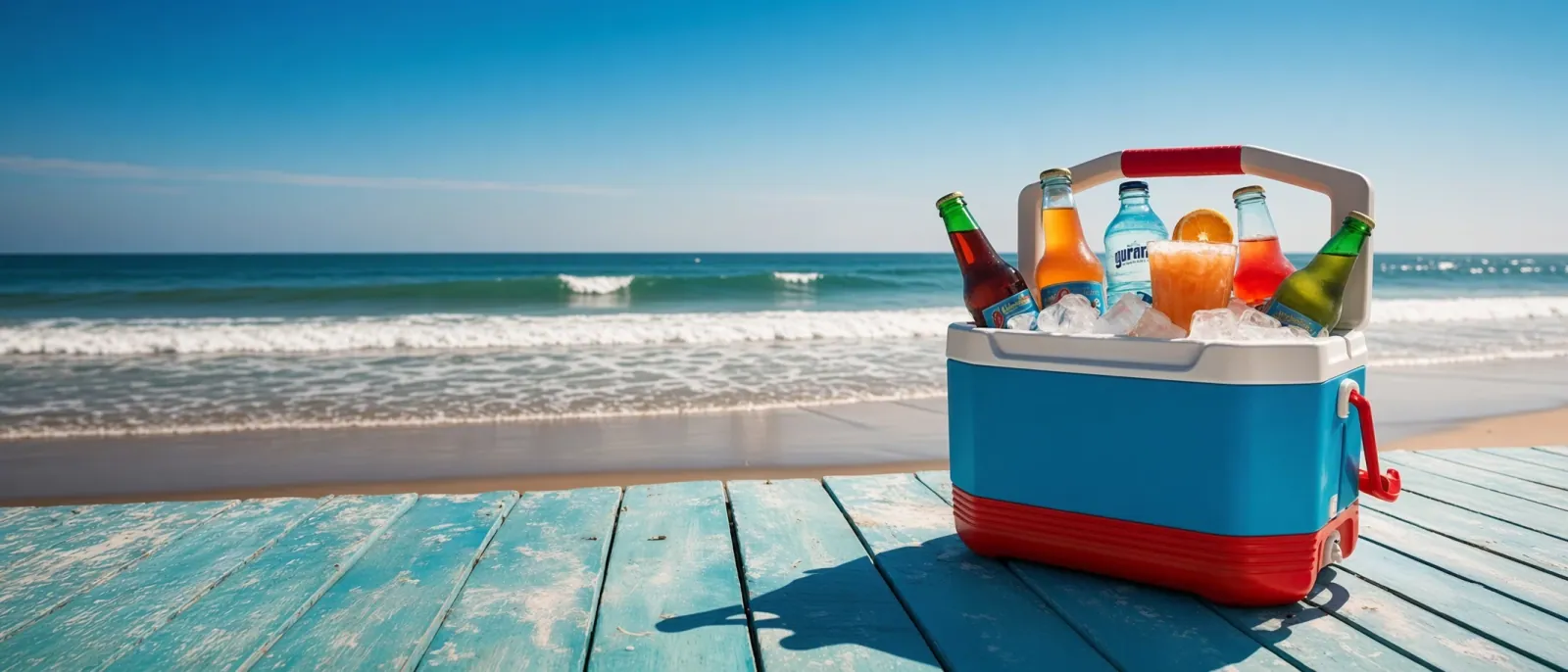
A blue hard-sided cooler packed with bottled drinks on ice, standing on a boardwalk at the beach
Since 2015 · Welded In-House

Custom Cooler Bag Manufacturer Ice Quits Early, the Seam Weeps — 48 Hours, Welded Shut

Hours on a spec sheet are easy to print and hard to hold: the figure travels, the test behind it rarely does. The core is matched to the hours the brief names and the liner is closed by a weld, not a stitch — both settled on one sample in seven days, and the run repeats what the sample signed.

  • 12–24hours, day-use core
  • 15–25mm NBR/PVC core
  • 2PSI leak gate

Cooler bag types

The Shape Carries the Cold

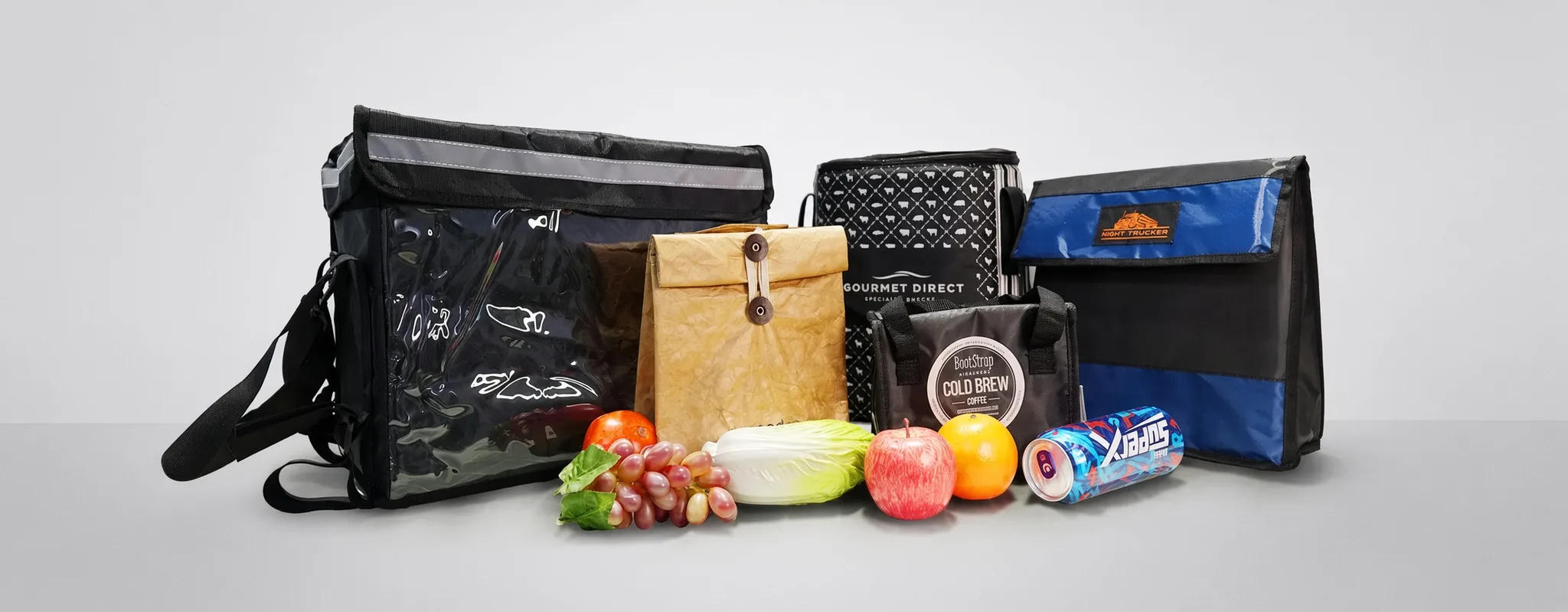
A soft body that packs flat, a rigid tub that stacks, a pack on two straps, a wheeled box for a long haul, a divided case for bottles — the shape a cooler bag takes is the first thing a buyer names. What is not here is still workable: the pattern is drafted from the sketch or the reference bag the same way.

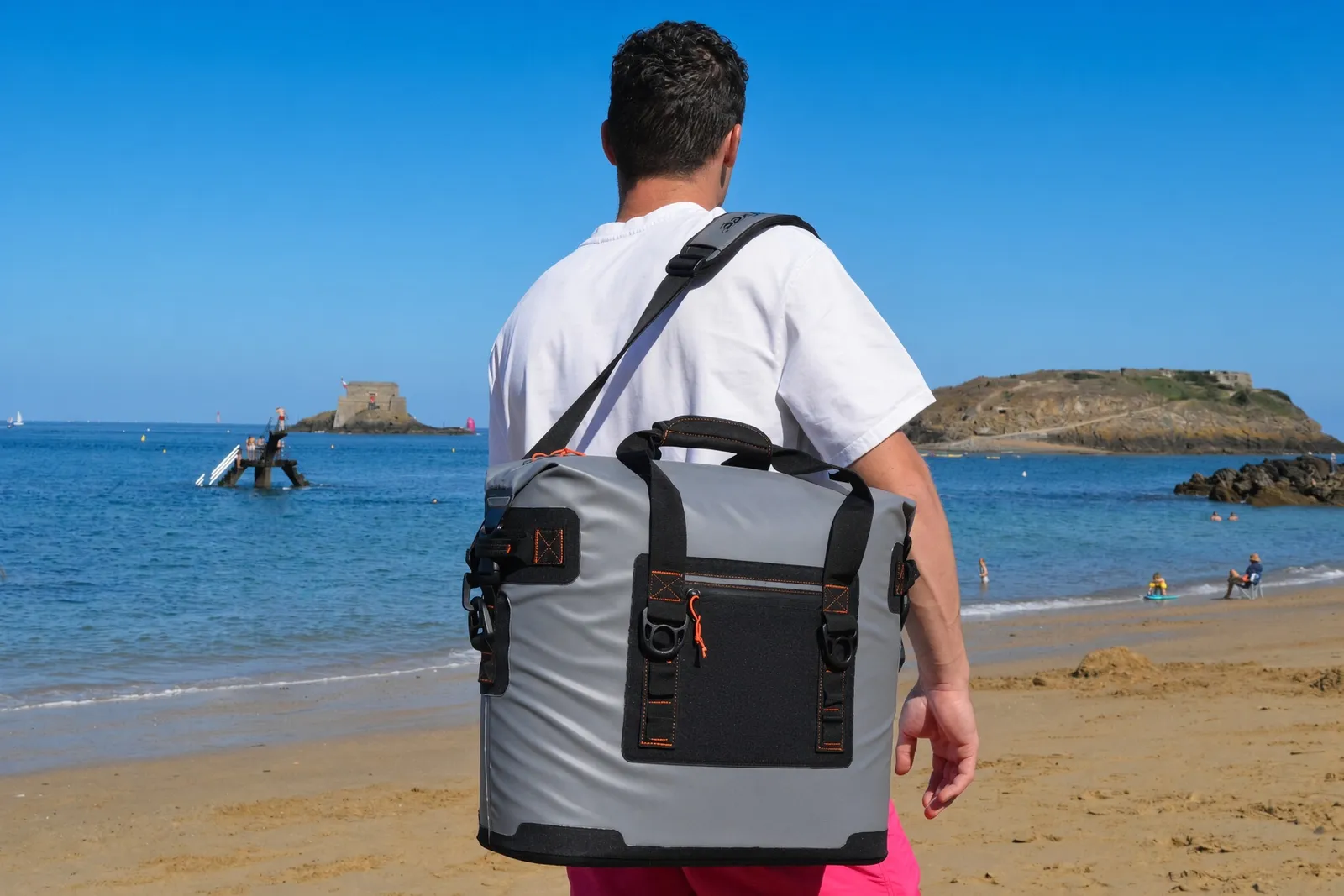
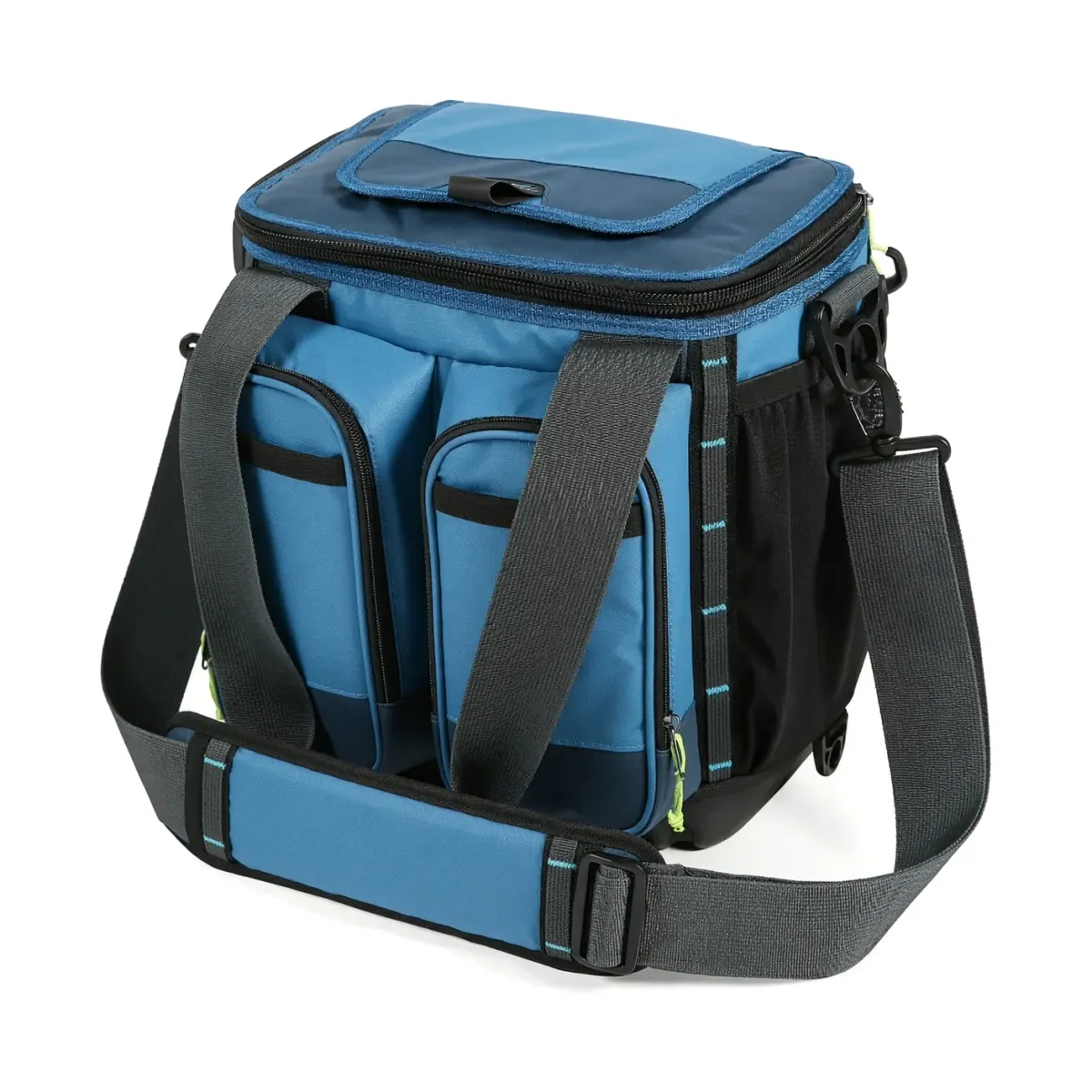
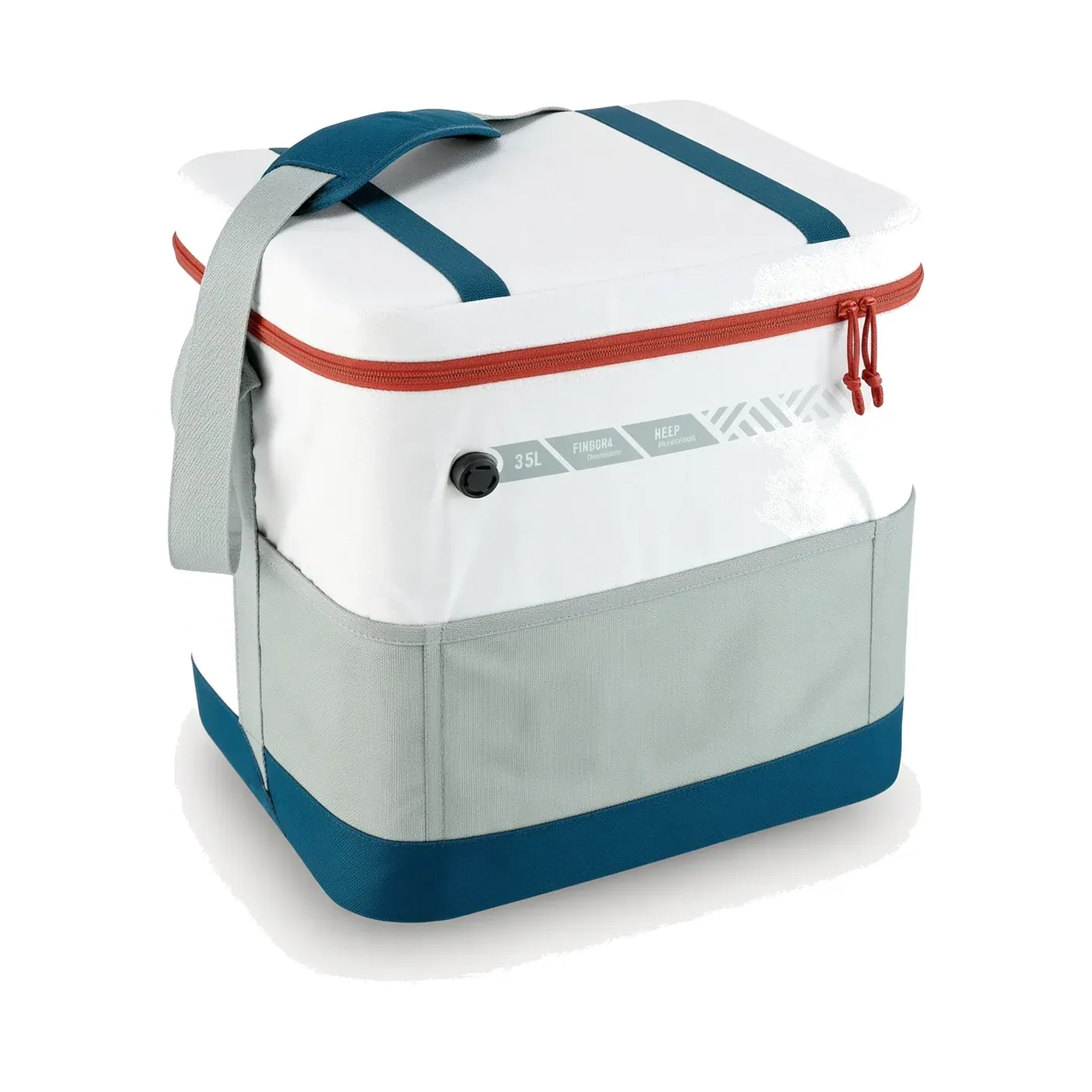
  • A blue soft-sided cooler with a shoulder strap and twin front pockets

    Soft-Sided Coolers

    • Packs flat when the run is over
    • Collapses down to the load
    • The lightest carry of the range
    • Packs flat when the run is over
    • Collapses down to the load
    • The lightest carry of the range
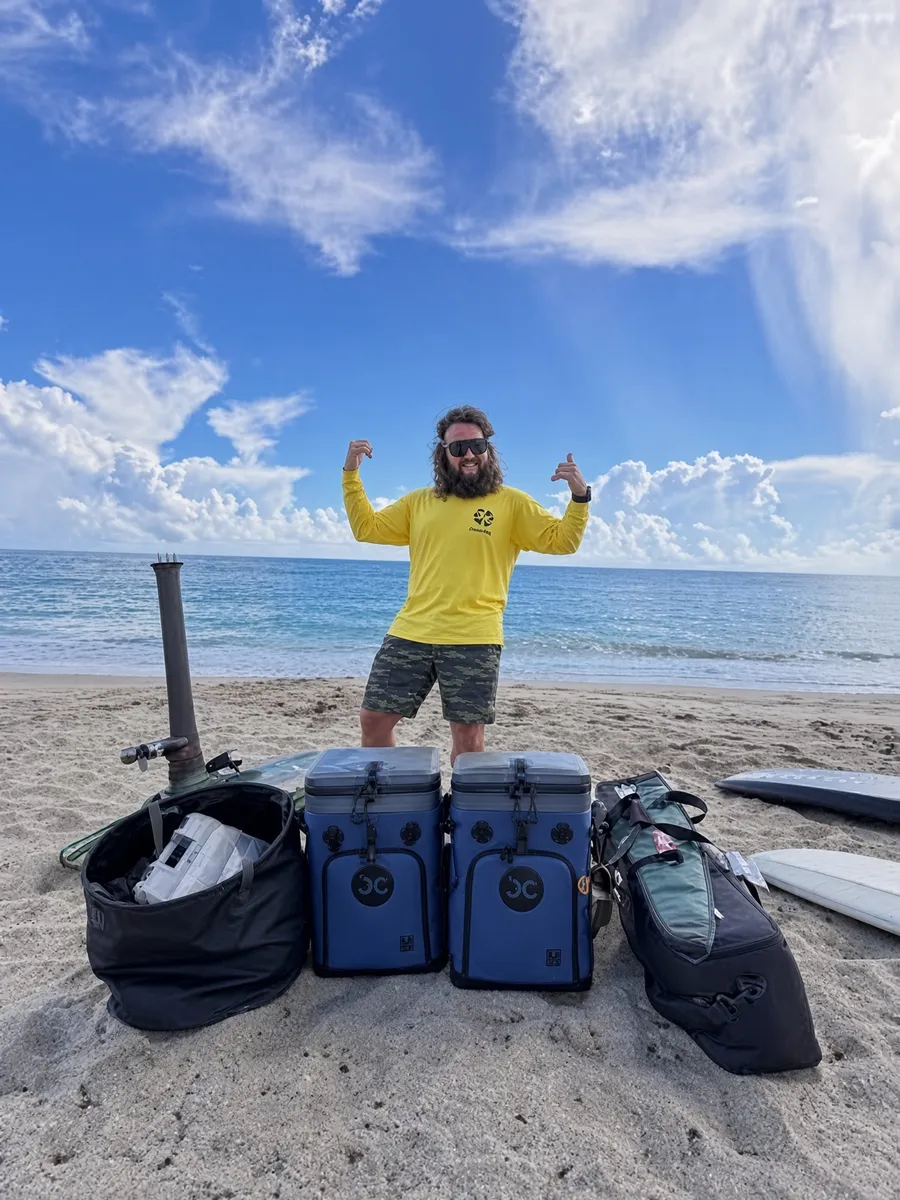
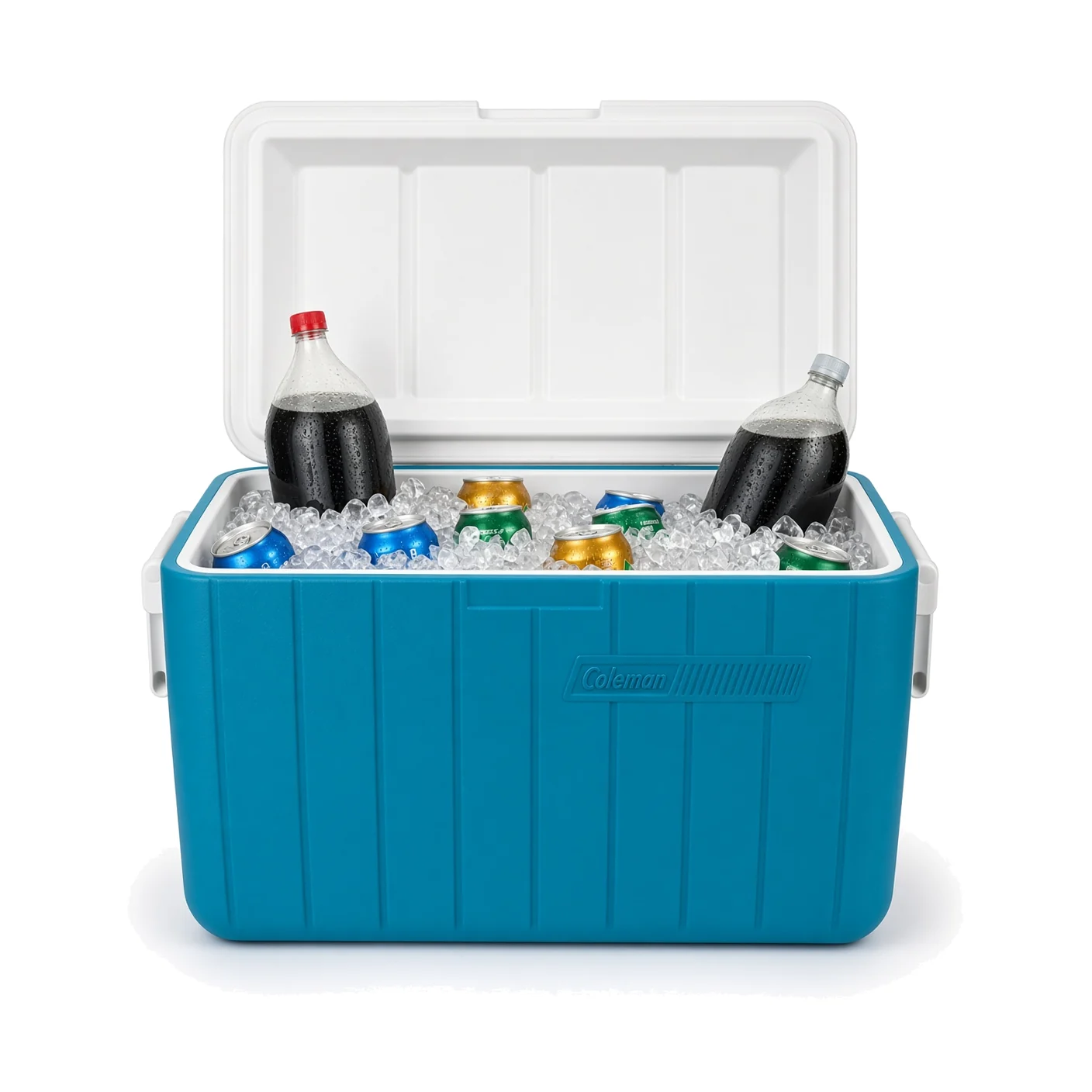
  • A rigid blue hard-sided cooler with its lid open over bottles and cans on ice

    Hard-Sided Coolers

    • A rigid tub that stacks
    • Walls stay put under a stack
    • A moulded-in handle and lid
    • A rigid tub that stacks
    • Walls stay put under a stack
    • A moulded-in handle and lid
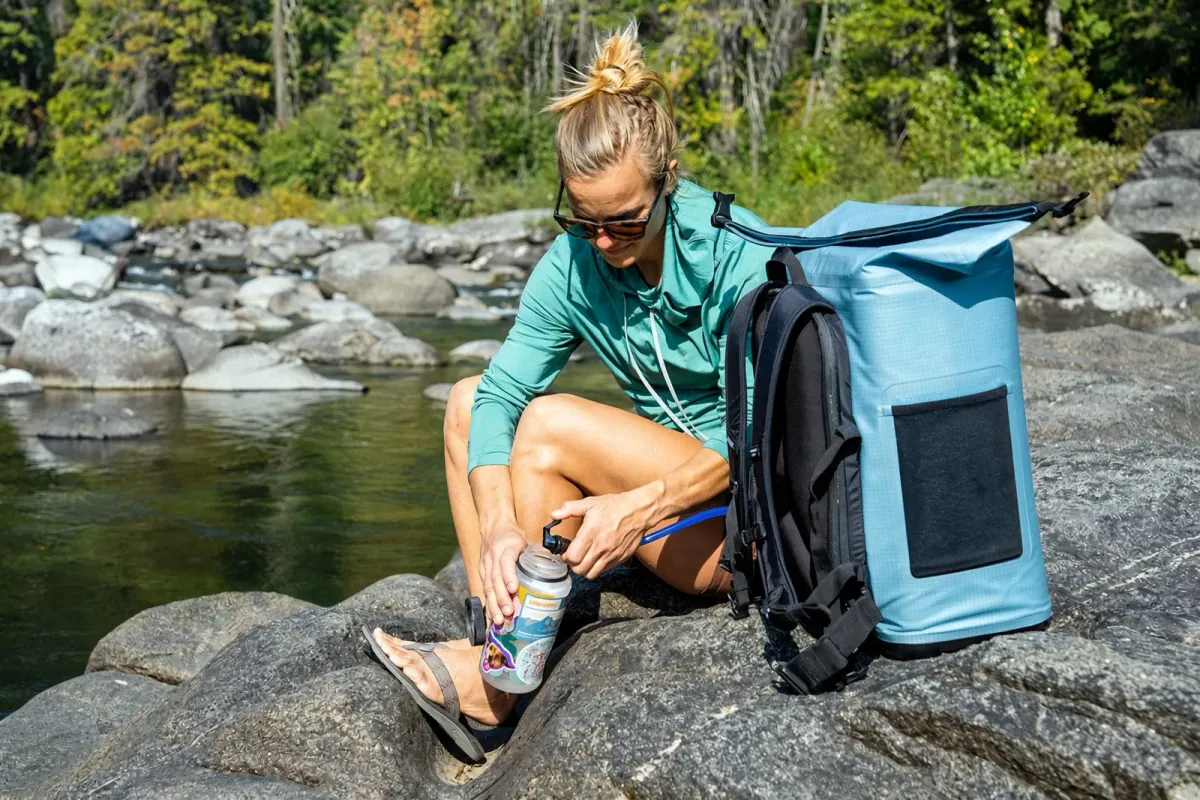
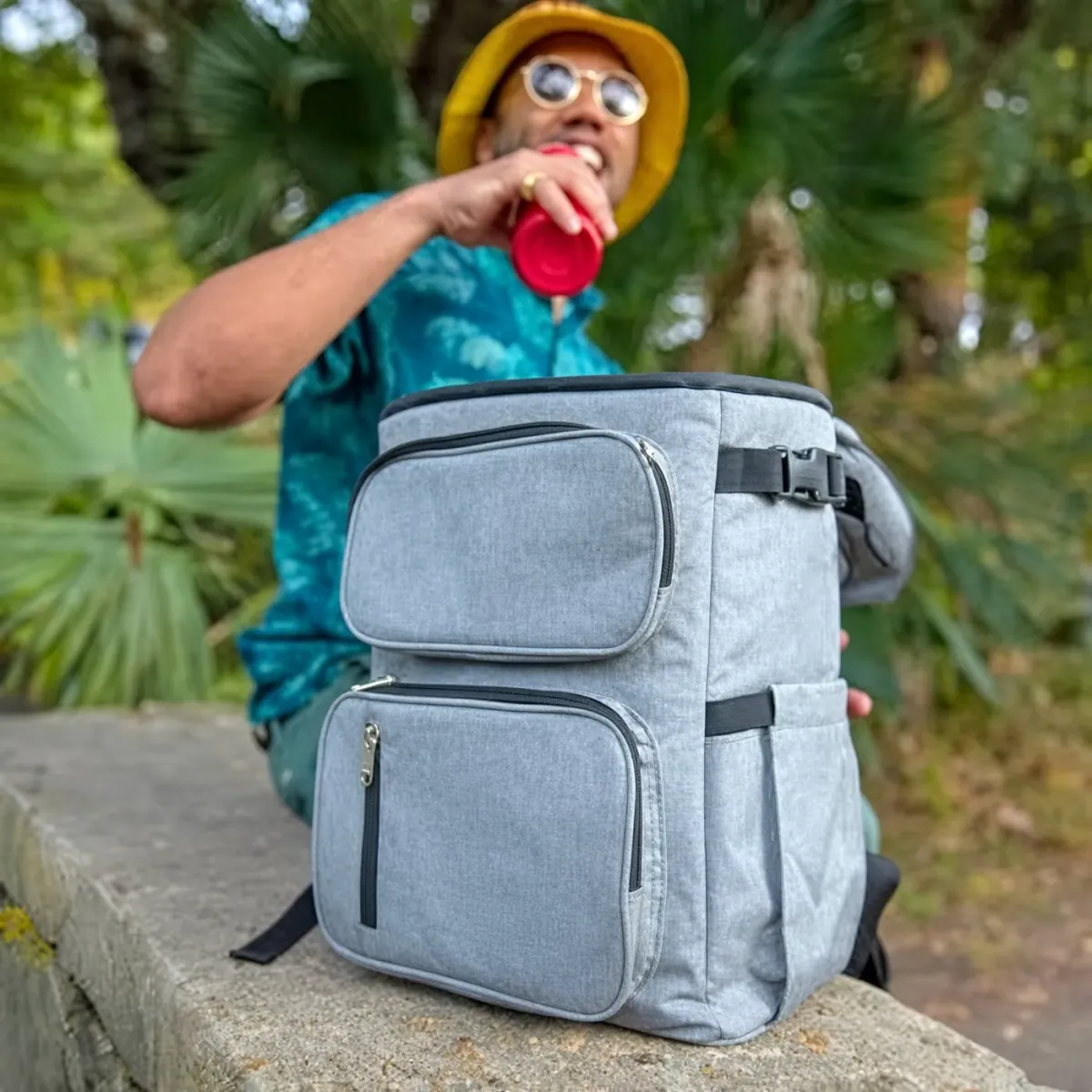
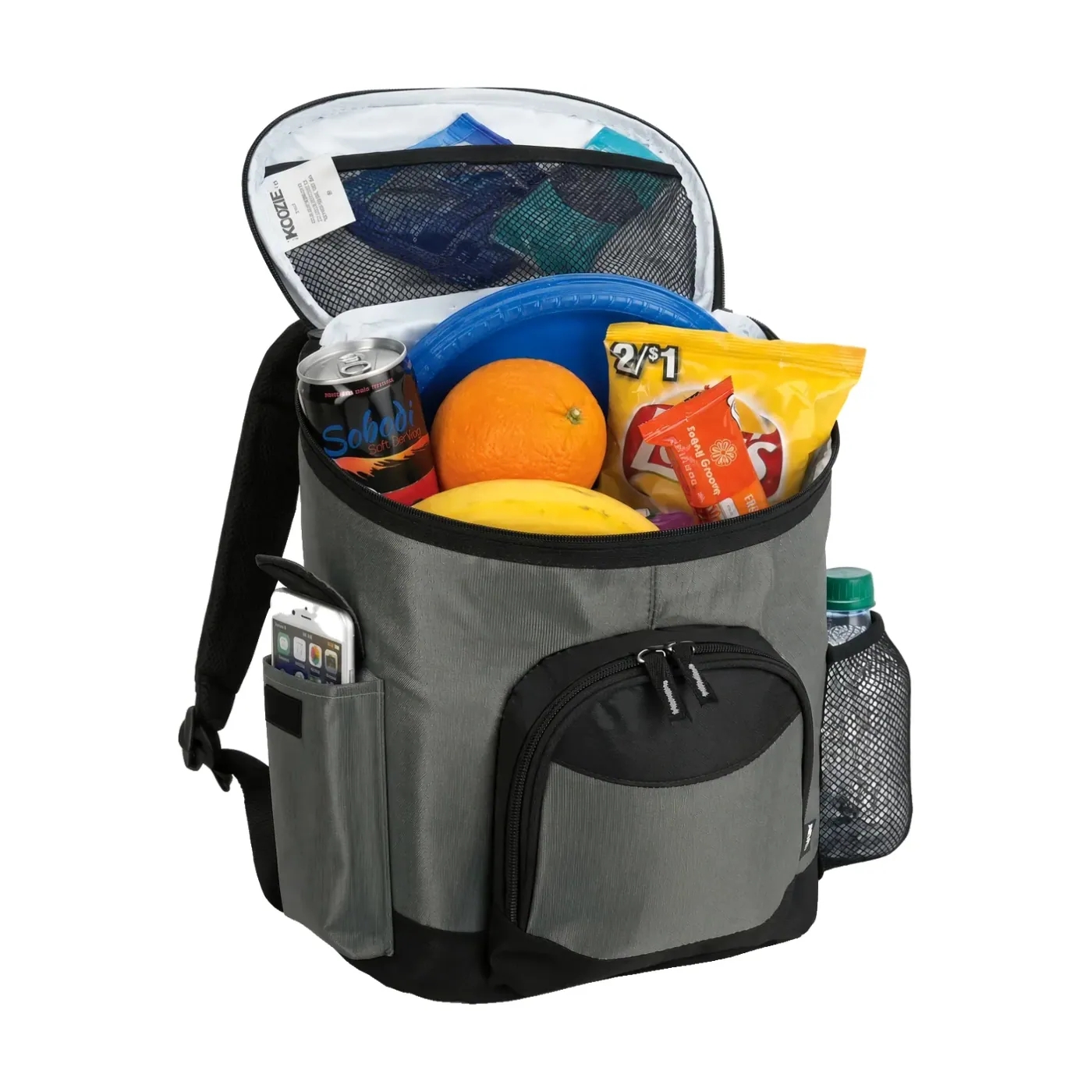
  • An insulated cooler backpack with two shoulder straps and a front pocket holding a meal box

    Backpack Coolers

    • Hands stay free on the walk in
    • Two straps spread a loaded weight
    • Pockets set on the front face
    • Hands stay free on the walk in
    • Two straps spread a loaded weight
    • Pockets set on the front face
  • A grey rectangular camping cooler with a wide flat lid and side handles

    Camping Coolers

    • Rectangular, made to a boot’s print
    • A wide lid laid right back
    • Stands a day in the open
    • Rectangular, made to a boot’s print
    • A wide lid laid right back
    • Stands a day in the open
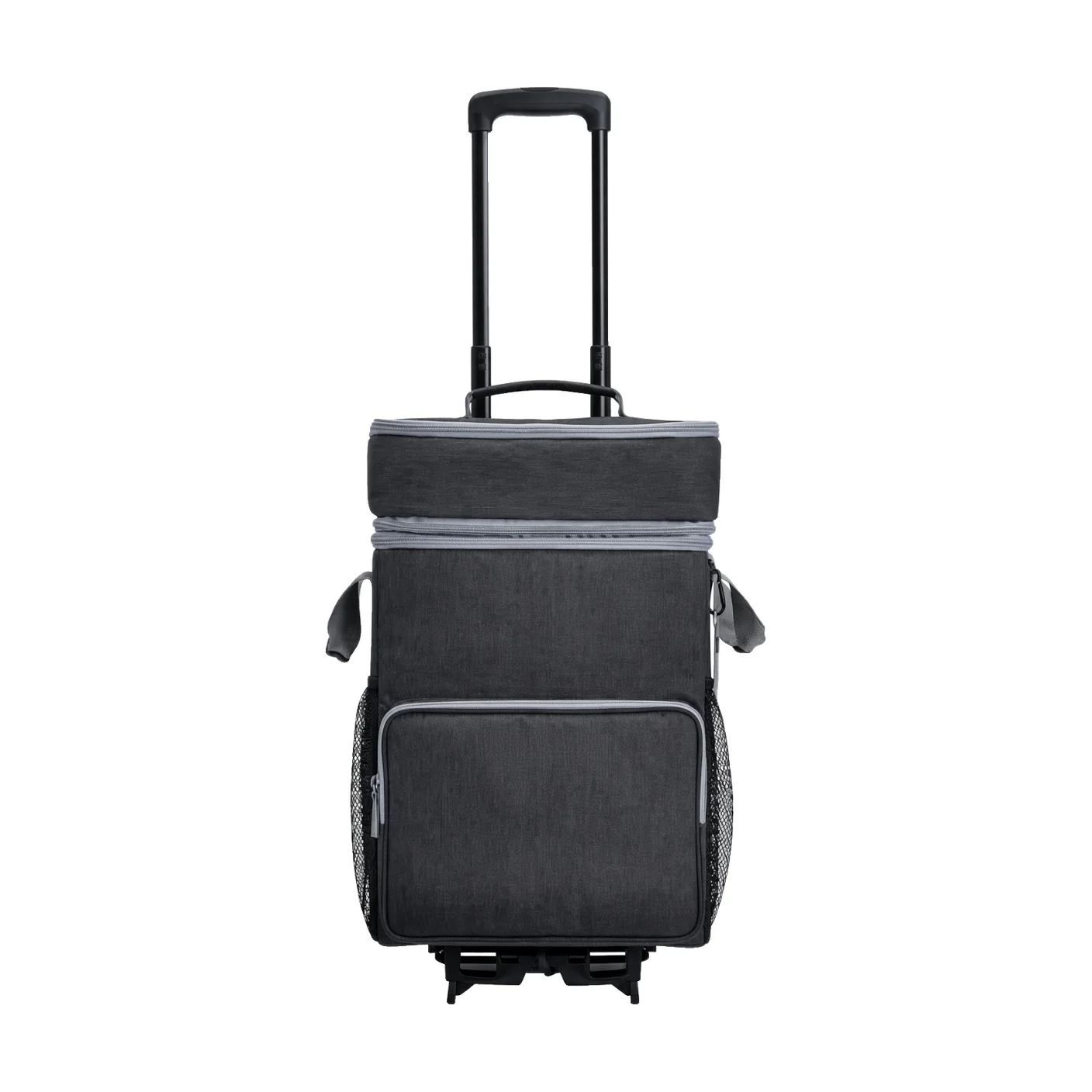
  • A wheeled cooler bag standing on a telescopic handle with two roller wheels

    Wheeled Cooler Bags

    • The haul leaves the shoulder free
    • The frame takes the weight
    • Built for a long day out
    • The haul leaves the shoulder free
    • The frame takes the weight
    • Built for a long day out
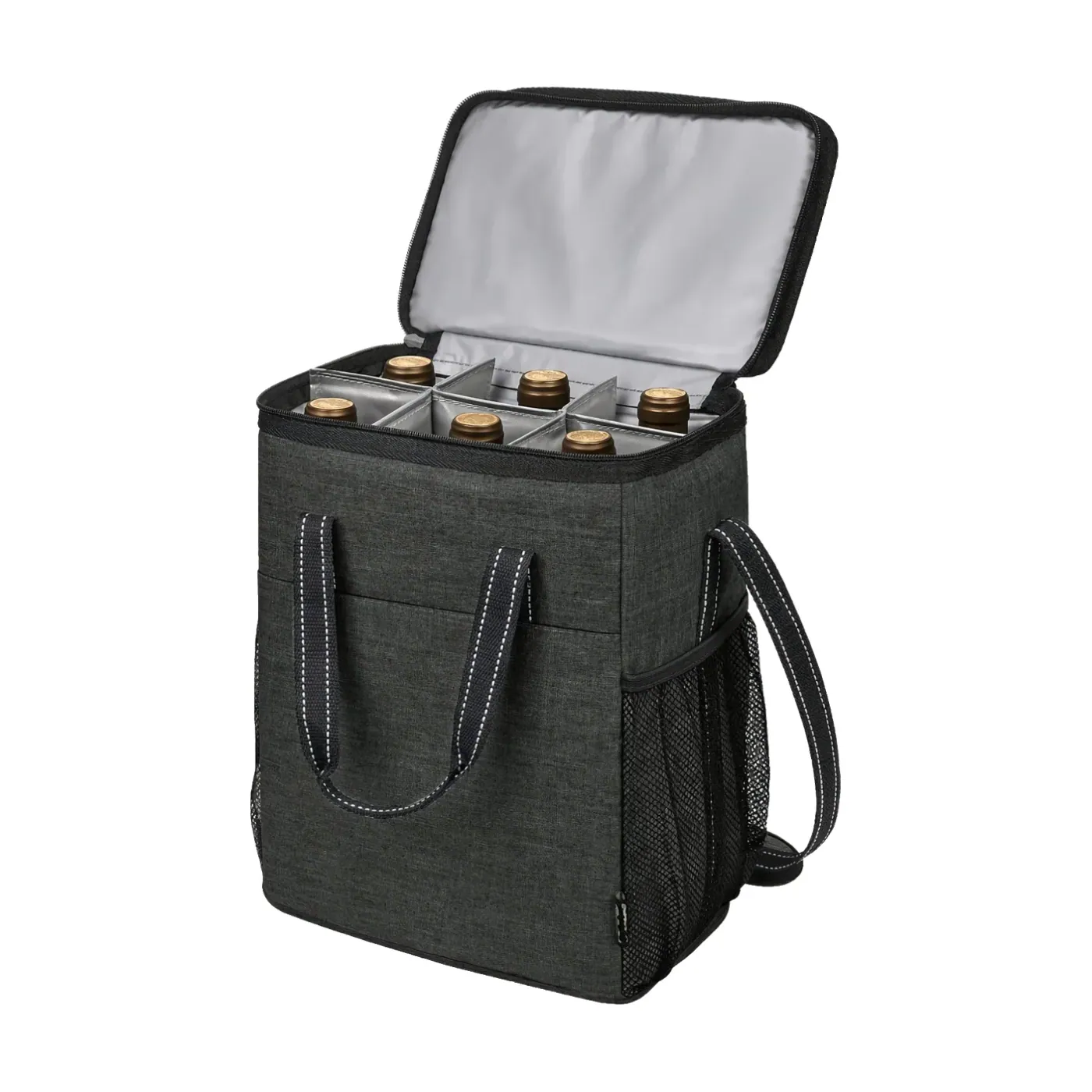
  • An open wine cooler bag with a divided interior holding bottles upright and a mesh side pocket

    Wine Cooler Bags

    • Bottles stand, so nothing rolls
    • Glass spaced, not stacked
    • Four to six bottles standing
    • Bottles stand, so nothing rolls
    • Glass spaced, not stacked
    • Four to six bottles standing
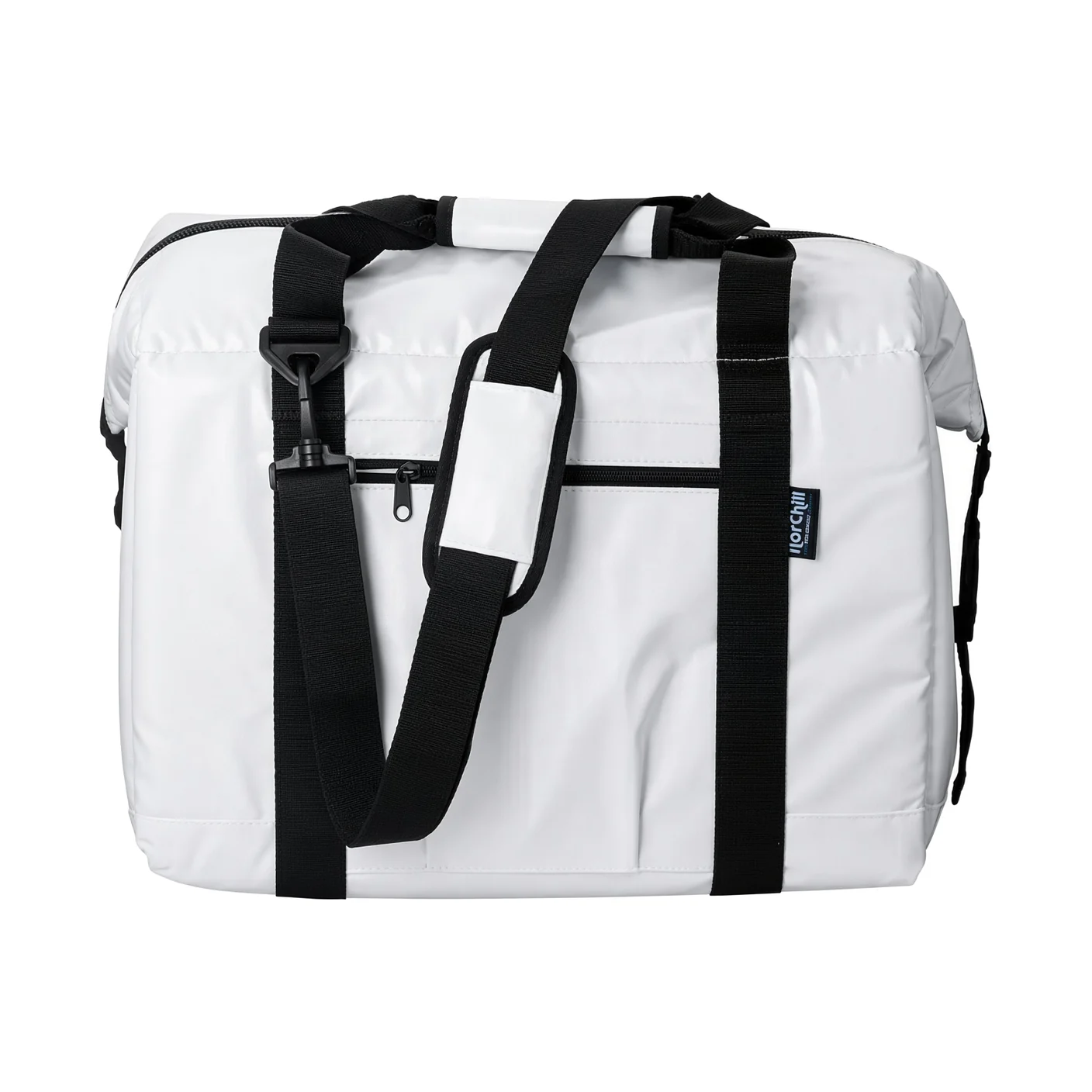
  • A sealed white soft cooler with a wide black shoulder strap

    Boat Cooler Bags

    • A welded liner, sealed on a wet deck
    • Stays shut on a moving seat
    • Wipes down of spray and grit
    • A welded liner, sealed on a wet deck
    • Stays shut on a moving seat
    • Wipes down of spray and grit
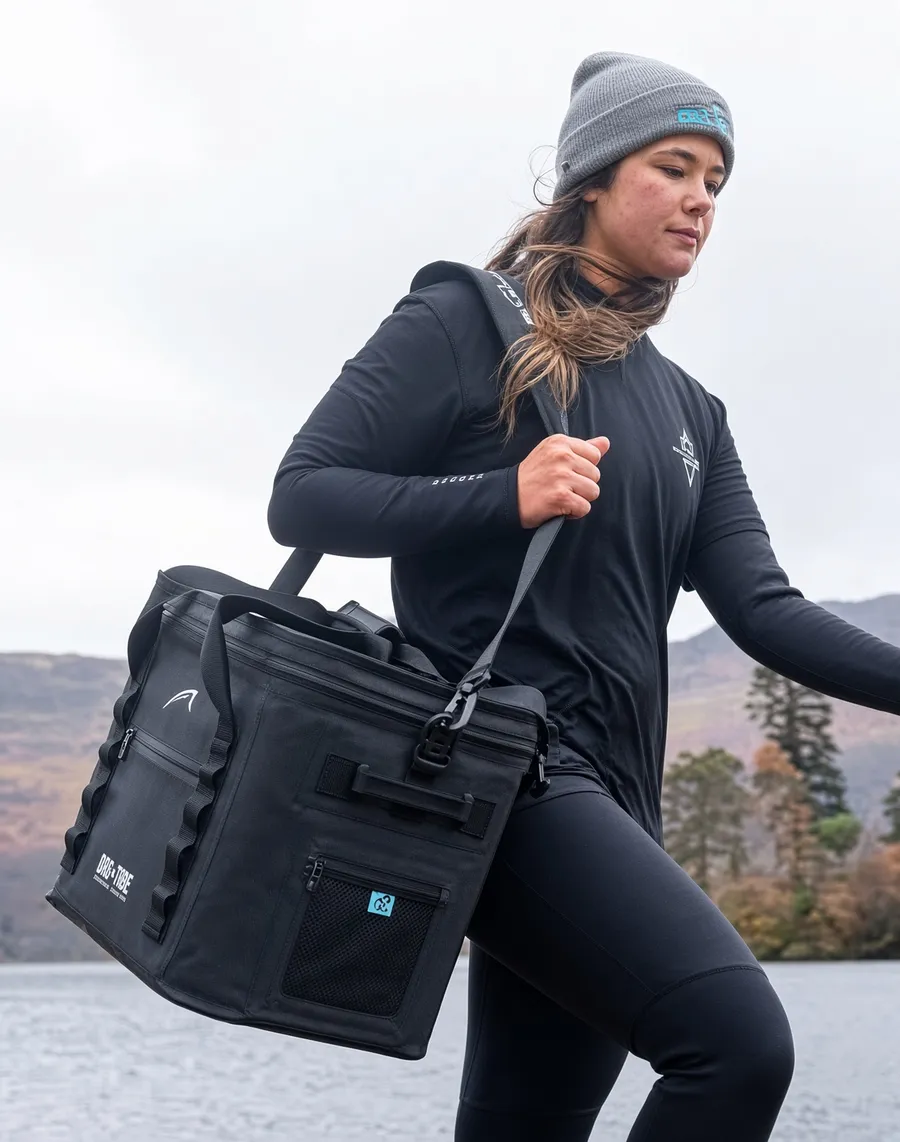
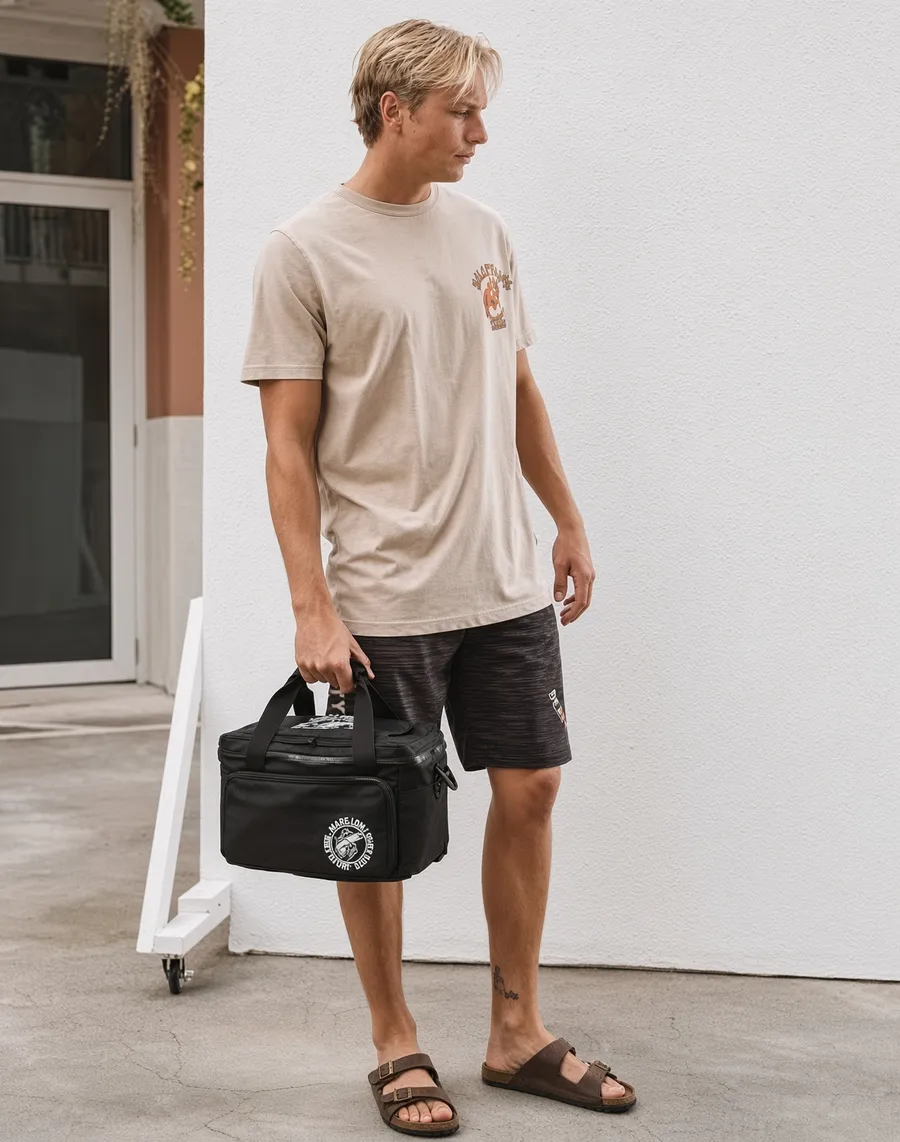
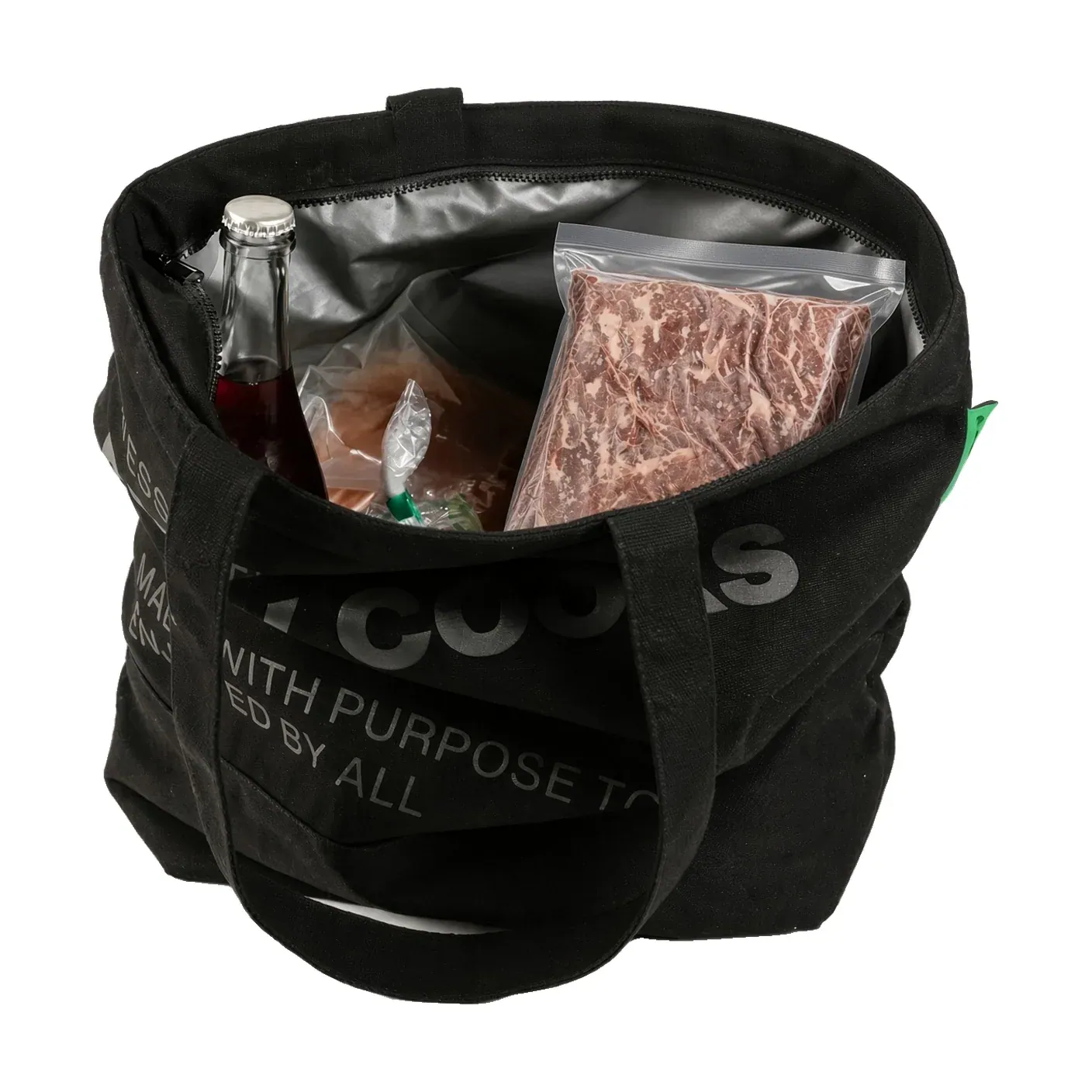
  • An open tote-style cooler holding stacked meal boxes and bottles, with two carry handles

    Tote Cooler Bags

    • Two handles in one hand
    • The lunch-and-groceries size
    • Lays open to fill
    • Two handles in one hand
    • The lunch-and-groceries size
    • Lays open to fill
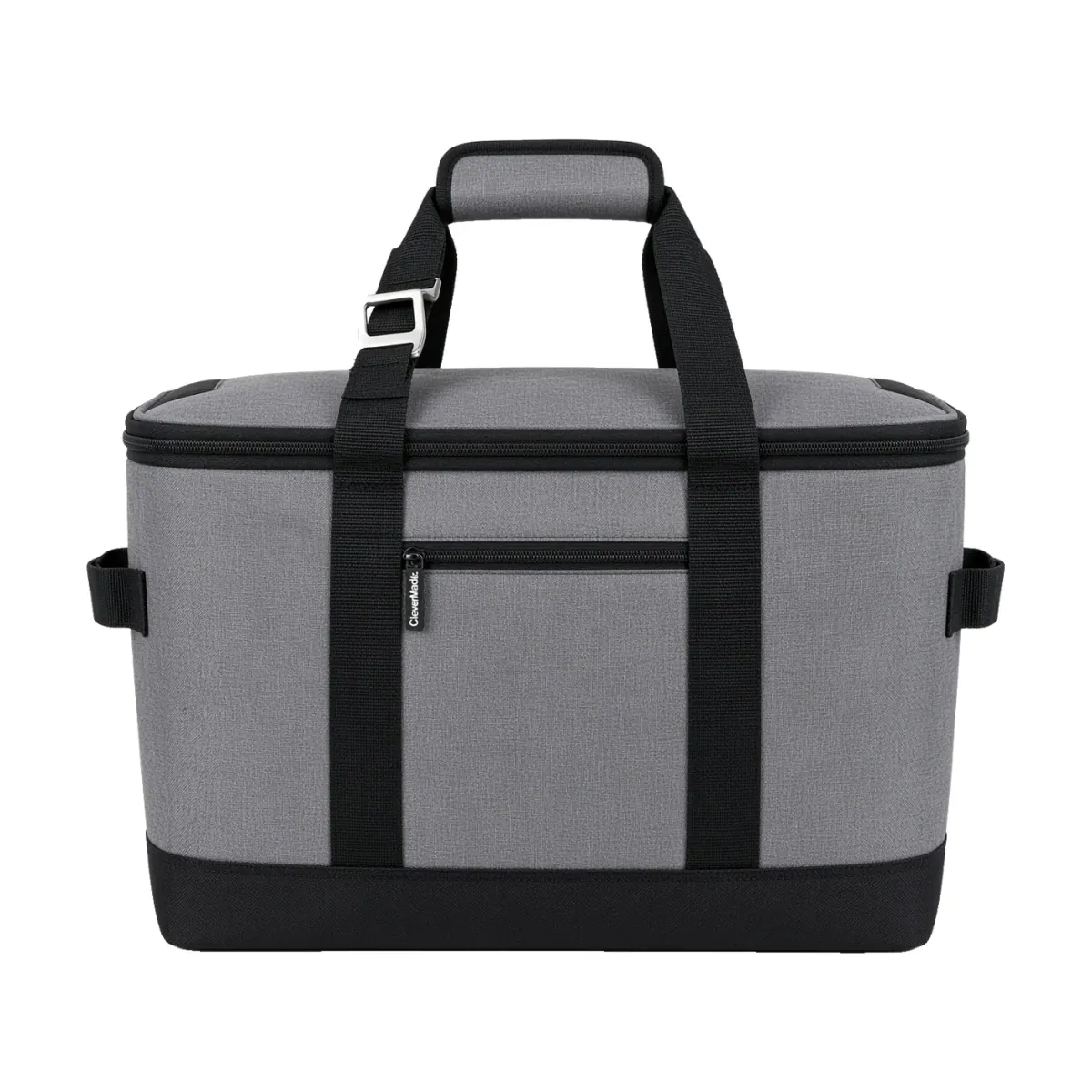
  • A grey collapsible cooler with a zip lid, two carry handles and side mesh pockets

    Collapsible Cooler Bags

    • Folds flat when it is empty
    • A rigid base holds it open
    • Tucks into a cupboard or boot
    • Folds flat when it is empty
    • A rigid base holds it open
    • Tucks into a cupboard or boot

The core

The Foam Sets How Long Cold Lasts

The fabric decides how the bag looks; the foam decides how long a cooler bag holds the cold. Two cores cover the range — a day-use sheet and a thick closed-cell build for a multi-day claim — and both buy a window a brief can be written against.

Day-use≈ 0.040 W/(m·K)

12–24 hcold held

PE or EPE closed-cell sheet, 5–15 mm

Choose it when
A commute, a school lunch, a delivery run inside a day, a picnic that comes home the same evening.
Where it stops paying
The window ends early on a hot day in a car boot, and a thin sheet cannot be thickened far without the bag losing its shape.
Extended≈ 0.032 W/(m·K)

48–72 hcold held

NBR/PVC closed-cell core, 15–25 mm, over a radiant barrier

Choose it when
A two- or three-day trip, a fishing or boat day, a beverages case, anything quoted on a multi-day figure.
Where it stops paying
Costs more per piece and carries real weight, so it is the wrong core on a bag that only ever sees a lunchtime.
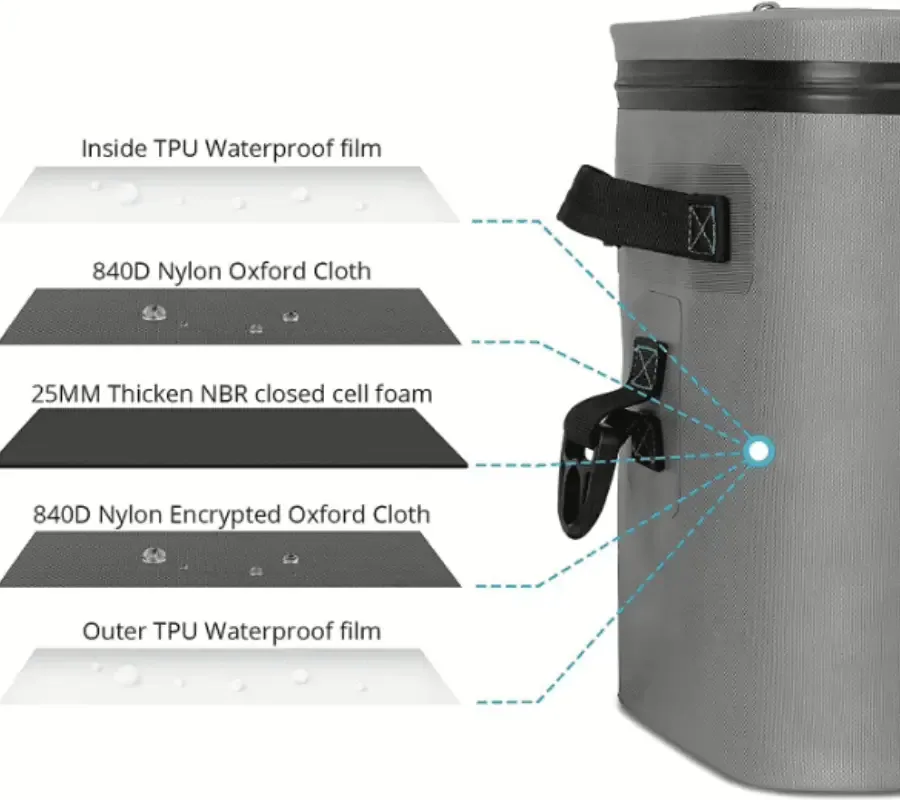
A cutaway diagram labelling the five layers of a cooler bag wall, from the outer waterproof film through nylon, thick closed-cell foam and a reflective barrier to the inner film

How the window is measured

  1. 01

    Packed to a ratio

    Ice to payload at two to one by weight, chilled load — so two builds can be compared on one number.

  2. 02

    Probed at the centre

    A thermocouple sits in the middle of the payload, the slowest point to warm, logged every five minutes.

  3. 03

    Held in a chamber

    A constant 32 °C, or a day/night cycle of 28 °C then 38 °C, so a claim is tied to a condition, not a mood.

  4. 04

    Stopped at the crossing

    The run ends when the payload crosses 7.2 °C — the curve, not a marketing headline, is what ships.

The welded shell

A Leak-Proof Cooler Begins at the Seam

How long the cold lasts is the foam's job; whether the melt stays inside is the seam's. An airtight soft cooler is a liner welded to itself, a closure seated in welded ends, and a pressure test no unit leaves the floor without passing.

A welded liner, not a stitched one

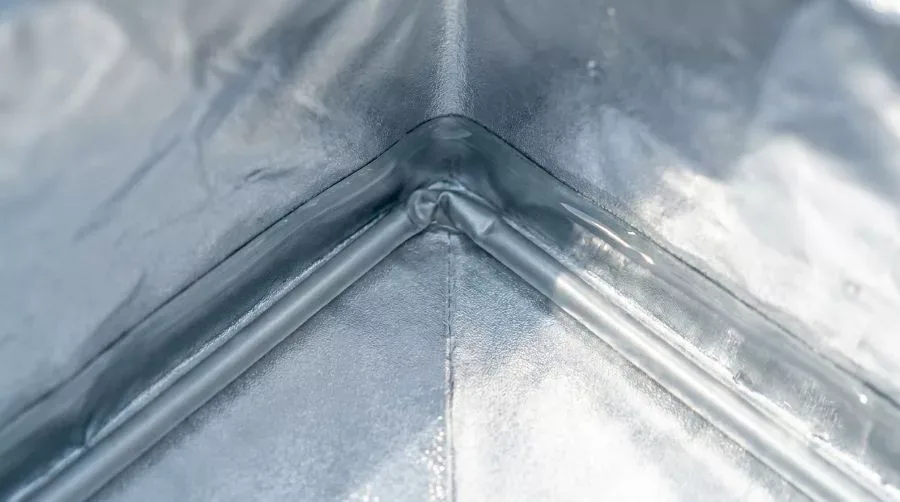
The inner film is fused to itself, so no needle line runs through the liner for liquid to follow. A stitched seam wicks within a season; a weld removes the path outright.

An airtight zip, seated in welded ends

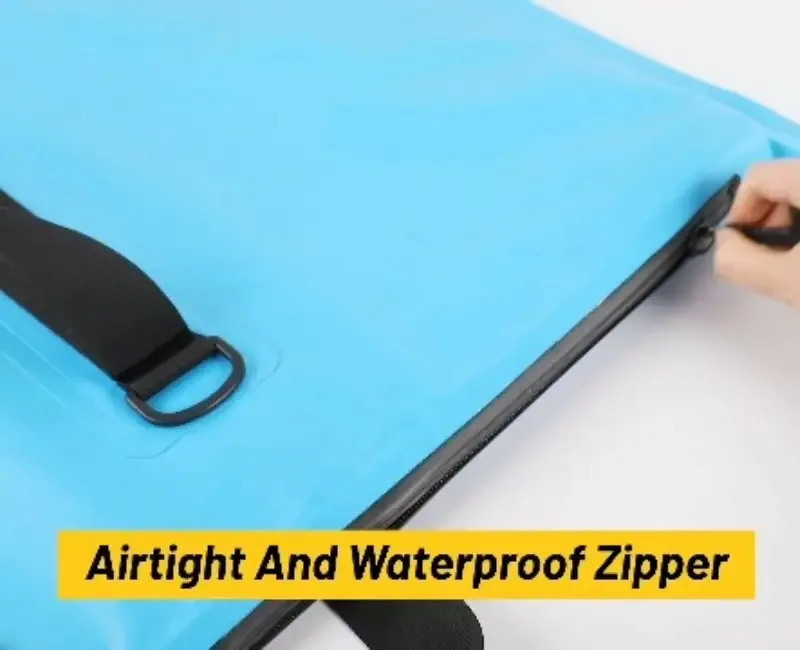
The closure is a back-to-back airtight zip, and it fails hardest at its two ends, where the track meets the film. Both carry a welded patch that keeps the track from peeling away under load.

A gusset that folds as one piece

The base and sides are formed so the cross-seams land on doubled film. A gusset join is the second place a soft cooler leaks, and the doubling there stops a full bag weeping at the corner.

A close view of a heat-welded corner inside a foil cooler liner, the fused seam holding a pool of water
A close view of a black airtight and waterproof zipper running along a blue welded panel

The leak gate

≈2.0PSI
Test pressure
5–10s
Settle time
≤0.05PSI
Reject drop
100%
Units gated

Where a cooler leaks first

  • Zipper endsWhere the track meets the film — the seal a full bag pulls at first.
  • Gusset cross-seamsThe base-and-side join — a corner under a standing load.
  • Lamination pinholesA gap in the film itself — found by air, not by eye.

Shell and lining

The Films a Cooler Is Built From

The build is a handful of films stacked and sealed: a coated shell that sheds water, a core that slows the heat, and a lining the melt sits against. All three are chosen for a job, and the jobs come apart when a cooler bag brief squeezes the cost.

  • A hand cupping clear transparent TPU pellets

    The outer film

    • TPU or PVC coating on a woven face
    • TPU flexes cold without cracking
    • The coat, not the weave, shuts water out
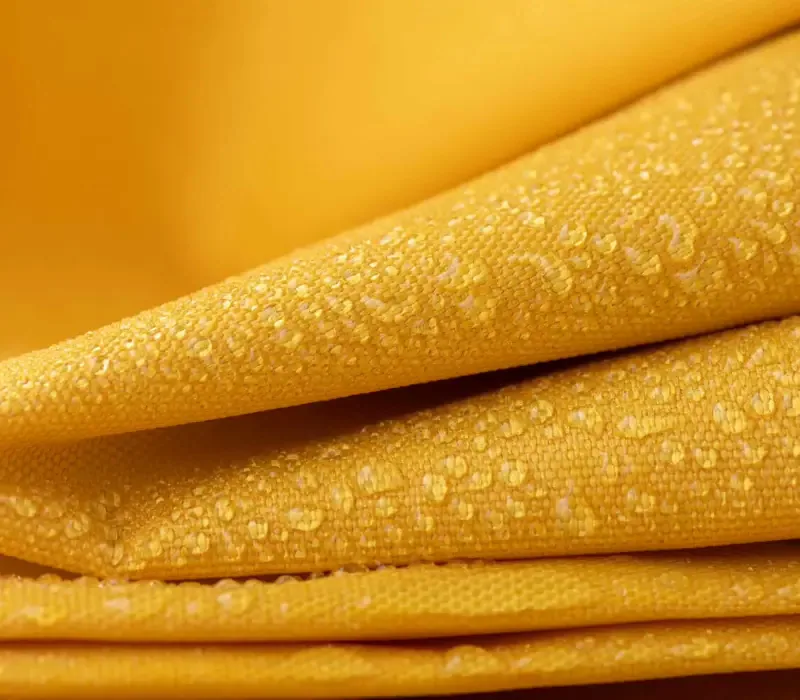
  • Water beading on a yellow water-repellent nylon fabric

    The water-repellent face

    • Coated nylon or Oxford shed rain and spray
    • A tight weave wipes clean of grit
    • The outer face stays dry to carry
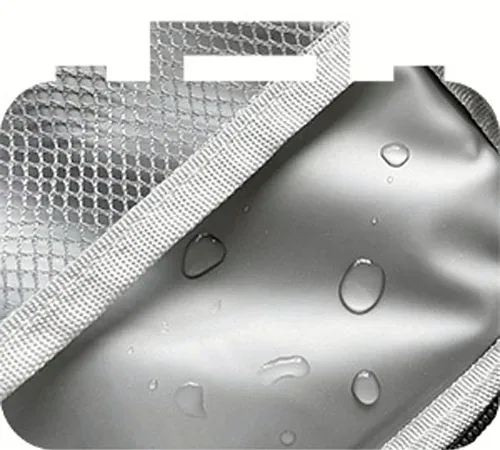
  • A reflective silver cooler-bag lining with a woven backing, drops of water beading on the film

    The lining

    • Foil reflects, PEVA wipes, TPU welds
    • A bright foil lining shows what is inside
    • The film is what the melt actually sits against
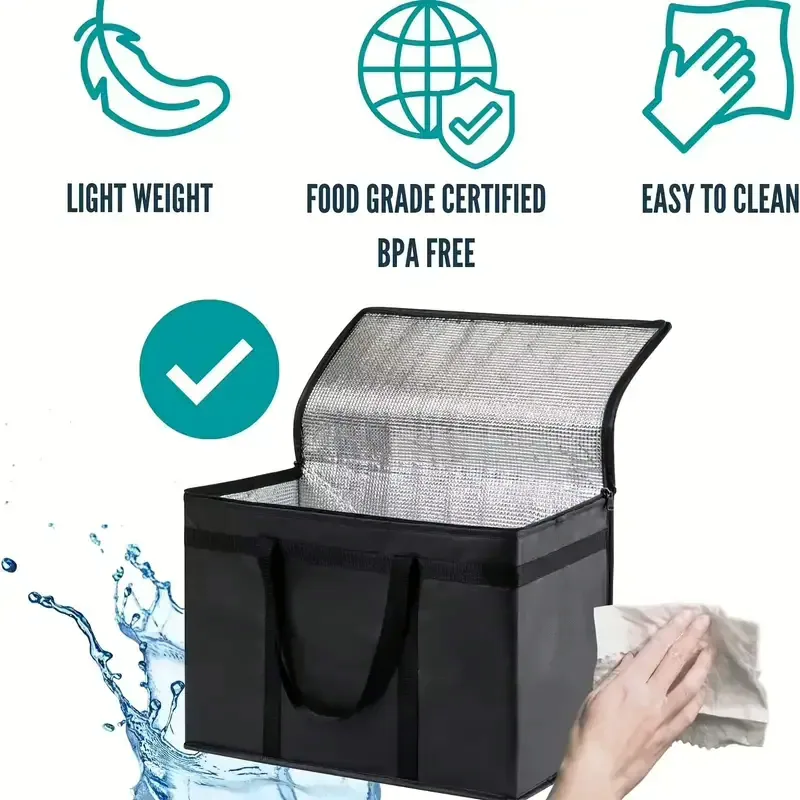
  • An infographic showing a cooler bag as light-weight, food-grade certified and easy to clean

    Food-grade contact

    • Bought against food-contact limits, not a colour
    • A retailer asks for the report for the film lot
    • A two-market brief is built to the stricter limit

Cooler brief to quote

Send the Hours and the Core. Back Comes a Welded Build.

Name the format, the hours and the quantity. Back comes the core to match them, the welded shell, and a sample at a hundred pieces.

Strengths and limits

Where This Floor Fits — and Where It Doesn't

The rows below pair what this floor does best with what it turns away on a cooler bag brief. Read the right-hand column first — a soft un-insulated bag, a stitched body or a run under a hundred does not fit this line.

What this cooler line does best, and where it does not fit, set row by row across the insulation, the leak gate, decoration and the order floor.
SpecWhere this floor is strongestWhere it does not fit
InsulationA graded core — PE, EPE or NBR/PVC — picked against the hours the bag has to hold, not one sheet of foam for the whole range.A plain un-insulated soft bag isn’t built here: the nine formats on this page are all closed-cell insulated and welded.
Leak integrityAn HF-welded liner with an airtight closure, and a pressure-decay gate cleared before a run leaves the floor.A stitched construction isn’t taken — a sewn seam cannot hold a pressure test, so a stitched soft bag has no gate to show.
DecorationA print that survives a cold, wet face, or a welded and embossed badge fixed to the film — whichever the condensation leaves intact.Hairline type and fine line detail are not run as the main mark on a cold face; the print blurs there, so the mark moves to a badge or a stitch.
Order floorA hundred pieces per construction, and a single approved sample in seven days before the run is committed.A run under a hundred pieces isn’t scheduled, and a complex or unusual structure carries new tooling and a longer lead.
This floor fits

A brand that needs welded, insulated construction, a core chosen to an hour figure, a leak gate on the run, and a hundred-piece test before a season.

It does not fit

A brief that wants a plain un-insulated soft bag, a stitched body, fine-line print on a cold face, or a few dozen units to try first.

R&D and capacity

The Team and the Machines Behind the Range

A range is only as good as what stands behind it. This is the team that designs the formats, the equipment that cuts and forms them, the welding that closes a liner, and the throughput the lines turn out.

Two designers at a bench reviewing a colour swatch book against a cooler bag pattern

Strong R&D Capability

  • 20 utility model and 6 design patents, held in-house.
  • The team turns a brief into a working pattern — a new format, closure or core, not a stock bag under a new label.
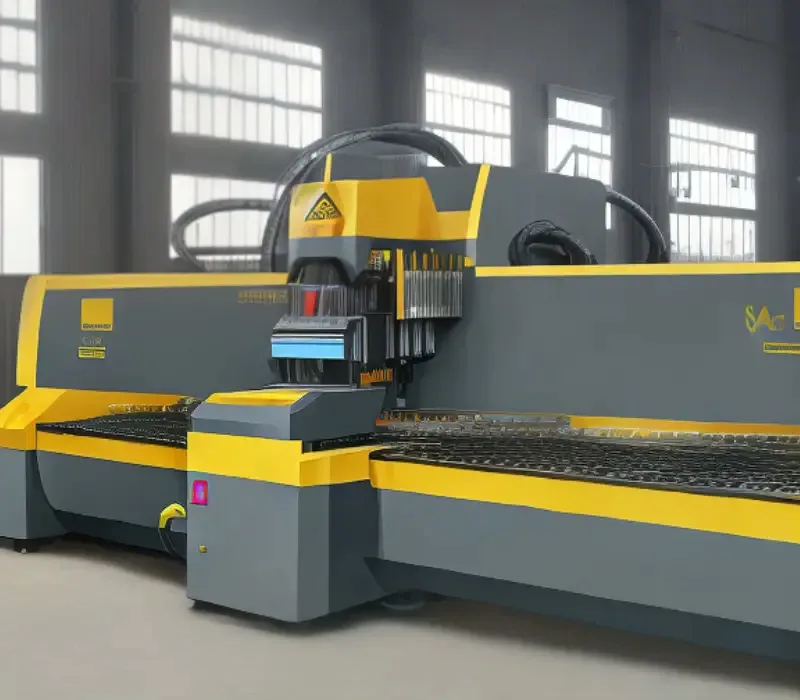
A yellow and grey laser cutting machine on the production floor

Advanced Equipment

  • 10 hydraulic presses and 10 laser cutters on the line.
  • Panels are cut and formed to the pattern, so a run repeats the sample rather than approximating it.
A welding robot closing a seam with a spray of sparks in a workshop

Advanced Technology

  • High-frequency welding runs in-house, on a die built to the pattern.
  • One pass closes the liner, the gusset corner and the zip seat as a single fused finish.
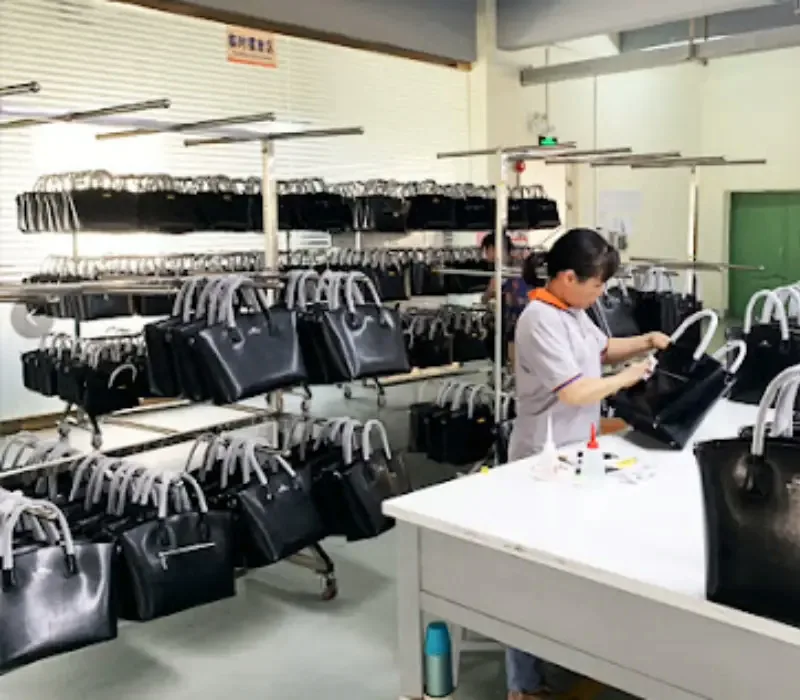
A finishing line of welded bags on rails above an operator at a lit workbench

Production Capacity

  • About 3,000 cooler bags a day off the welded lines.
  • Annual capacity over 1 million cooler bags, plus 1.5 million other welded bags.

Buyer accounts

Once the Runs Shipped, the Buyers Reported Back

From the original cooler runs — a gifting brand and an outdoor label — and what the bag had to hold once it was out of the factory.

Emily JohnsonProduct Manager, EcoBrand Solutions

A branded cooler carries a client's name, so the brief opened on the hours it had to hold. The first cut ran a thin sheet core that quit by mid-afternoon.

The core fixed it: a closed-cell build on the day-use tier, walked to its 24-hour edge and signed off against the protocol, with ice to a ratio and a probe at the payload centre.

The seam came next: a foil lining welded to itself leaves no needle line, and the ends that wept now clear the 2.0 PSI gate on 100% of units. A hundred pieces, three seasons shipped.

Michael AndersonSourcing Director, Outdoor Adventures Inc.

An outdoor label sells a cooler on one number: how long it actually holds. The range spans both tiers — a PE/EPE body for the commuter line, a 15 mm NBR/PVC build for trips.

The extended build is tested hardest, the welded shell held to the leak gate — a soft cooler weeping at a gusset corner is a return, and a return on a trip bag is the worst kind.

Material followed the hours: a coated weave that sheds spray, a lining picked for the film the melt meets. The bulk run repeated the sample to the seam, so a reorder lands identical.

Cooler bag questions

Frequently Asked Questions About Custom Cooler Bag Manufacturer

The questions that come up on most cooler-bag enquiries. Where a figure already appears in a section above, the answer points at it, never repeats it a second time down the page.

Which core should an order be built on — the day-use sheet or the thick one?

The trip the bag is actually for decides it, not the headline hours. A bag that goes to work and comes home at teatime is wasting money on a thick core, and a bag that holds a fishing day or a two-night trip cannot be built on a thin sheet at all. The core band above grades the two — what a core is good for and where it stops paying — and the choice is settled at the sample, against the hours the brief names.

How do I tell a leak-proof cooler from one that is only water-resistant?

By what the supplier does after the liner is welded, not by the word on the page. Water-resistant means the shell shrugs off rain; leak-proof means the liner holds liquid inside, which only a welded liner with a sealed closure does, and only an air test proves. Ask a supplier what a bag is checked against before it ships. A stitched bag has no such check to show; the weld section above states the gate this floor releases a run on.

Can a custom cooler bag be food-safe, and what will a buyer be asked for?

Yes — and what a buyer ends up holding is proof for one lot, not a standing certificate. The food-grade card above sets out the limits the film is bought against and the report a retailer asks to see; what the answer turns on is that the report follows the film that actually went into the run, so a substitution partway through the order re-opens the question.

Does the format change the hours, or only the carry?

Only the carry. How long the cold holds is set by the core inside the wall, not by the shell’s shape — a soft body, a rigid tub and a wheeled build take the same welded liner on this range. The format is picked for how the load travels, the core for the hours the brief names — and the two are settled apart at the sample. A larger or heavier format does not buy a longer hold; only the core does.

Does a print survive a cold, wet cooler bag — the condensation and the frost?

Frost and condensation make the outer face a harder surface to decorate than a dry tote, because it runs cold and wet for hours at a time. A print sits on a coated shell and is the method most likely to lift at a fold or across a seam, while a welded or embossed badge is fixed to the film and shrugs off the condensation. Which method suits the build is settled at the sample and checked after a wipe, not only read off the artwork.

How is a finished cooler packed so the lining does not bond shut in transit?

A welded or laminated liner is a film, and two film faces laid together under a warm container floor can stick at the panel — the one packing failure peculiar to this product. Bags are kept off one another’s faces, either interleaved or held open, and the carton is packed to the plan the sample was signed against, so a face that leaves the floor clean arrives able to open.

A supplier quotes a retention figure — what should I ask for?

The conditions it was measured under, and the log behind it. The core band above names the protocol this floor logs to, so a claim can be checked against a method, not taken on trust — ask any supplier for the same. Two factories can print the same number off two different tests; the figure alone screens nothing.

Start a cooler run

Name the Hours,
Hold the Sample.

The sketch, the hours the bag has to hold, the quantity it ships in. Back comes a manufacturable spec, the core chosen to those hours and a welded shell — and a sample in your hand before a unit is committed.

Get a Quote