
Two people in light jackets each holding a duffle bag, photographed against a blue studio backdrop
100 Pieces · Any Colourway · One Pattern

Custom Duffle Bags Manufacturer 20–80 L, Sized to the Load and Costed to the Carton

The band is settled before the pattern is cut, and it decides the opening and the carry mode built under it. Packed soft, a bag leaves room it does not have to; framed and rolling, it keeps every litre it was rated for. A third-party inspection house can run the same plan on the factory floor where the brief calls for it.

  • 4litre bands
  • 45.4litres carry-on ceiling
  • 5ways the bag opens

Capacity

Size the Bag to the Load It Has to Take

Four bands, and the reason a duffle bag is returned more often for being the wrong size than for wearing out. Pick the band first — the opening, the carry mode and the compartments all follow from it.

20–30 LCompact
30–45 LGym
40–55 LWeekender
50–80 LTravel / rolling

20–30 L

Compact

Packed out
48 × 25 × 25 cm
Opening
Top zip
Carried by
Shoulder strap
Outgrown when
Outgrown the moment kit and a change of clothes go in together.

30–45 L

Gym

Packed out
55 × 28 × 28 cm
Opening
Top zip or end zip
Carried by
Handles and shoulder strap
Outgrown when
Stops carrying for a trip the moment a second pair of shoes goes in.

40–55 L

Weekender

Packed out
60 × 30 × 30 cm
Opening
D-zip or U-zip
Carried by
Shoulder strap or crossbody
Outgrown when
Over the carry-on ceiling at the top of the band — it flies checked.

50–80 L

Travel / rolling

Packed out
70 × 36 × 34 cm
Opening
U-zip clamshell
Carried by
Telescopic handle and wheels
Outgrown when
Too much bag to lift when full — this is the band that gets dragged.
The overlap is real
  • What the litres tell you

    The drawing is to relative scale: an 80-litre duffle holds four times what a 20-litre one does, yet sits under 1.6 times its footprint, because a bag grows in three directions at once. The dashed envelope is the common 22 × 14 × 9 in carry-on allowance, airline-dependent and worth checking before a weekender is sized.

  • Where they stop

    The 40–55 and 50–80 bands overlap because a 52-litre bag can be either a soft weekender or a framed rolling duffle, and that construction changes the packed dimensions more than the litres do — which is why the band alone does not settle a quote.

Duffle types

Name the Shape Duffle Bag Type

The duffle bag types this floor runs most often. One that is not here is still workable — the pattern is drafted to the sketch or the reference bag the same way.

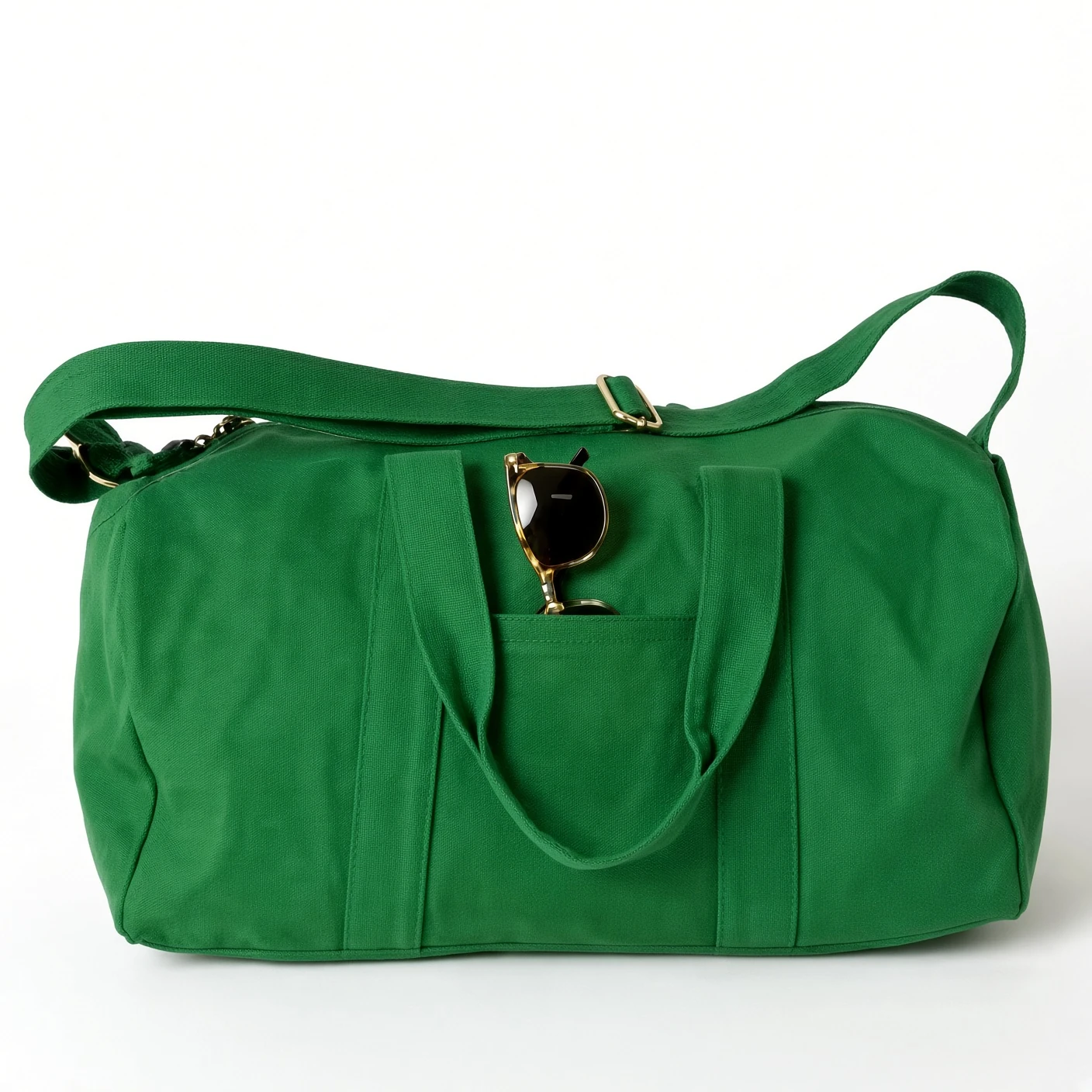
  • A green canvas duffle bag with navy rope handles and an open front slip pocket, shown on a white ground

    Eco-Friendly Duffle Bags

    • A plain canvas body in a single colour, with rope handles and no webbing or trim anywhere on it
    • The front slip pocket is unzipped and open to the top, sized for what has to come out without opening the bag
    • Rope handles loop through eyelets rather than being stitched to a panel face, so the anchor is a grommet, not a seam
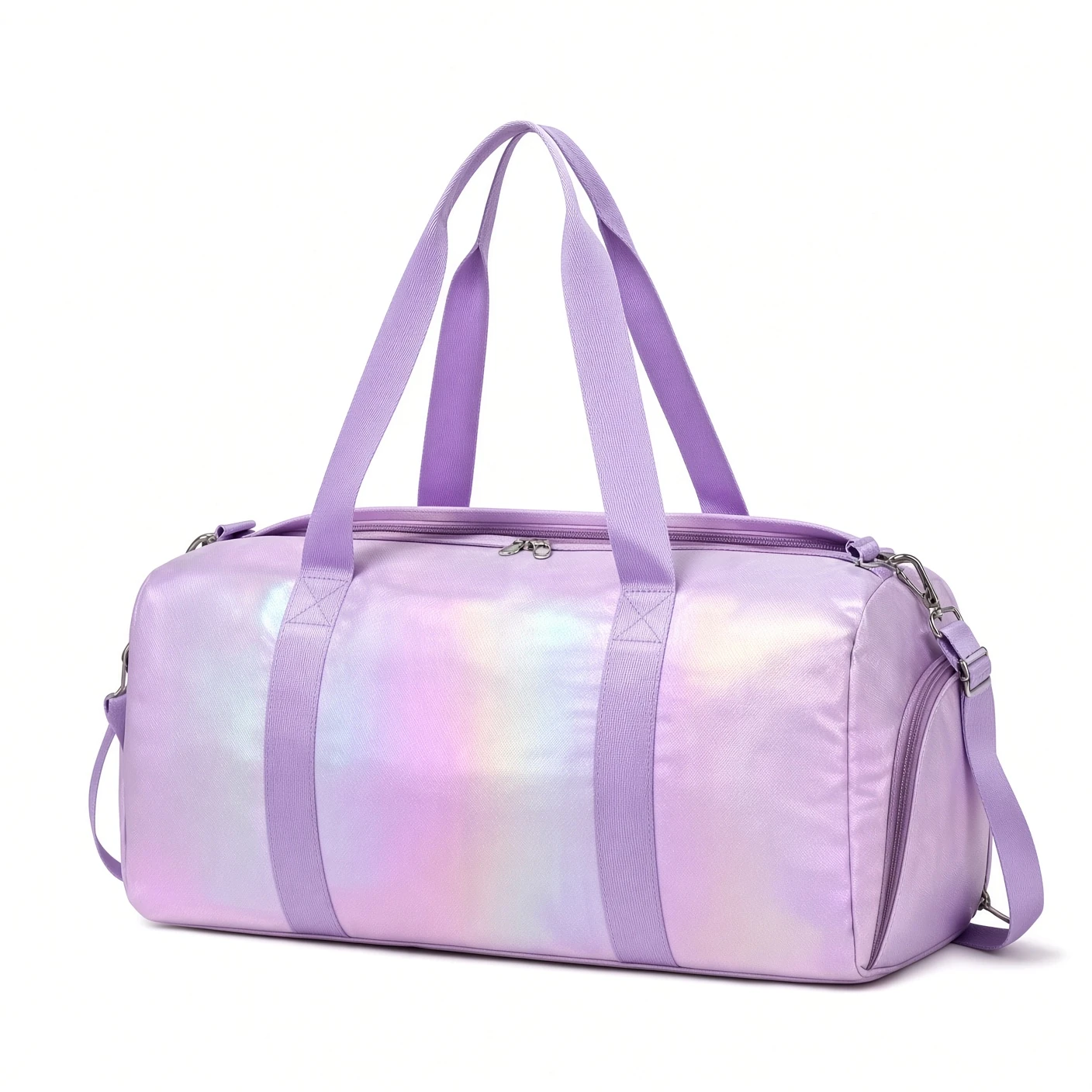
  • A lavender gym bag with two webbing-handle runs across the body, a detachable shoulder strap and a zipped side pocket

    Gym Bags

    • Two webbing runs travel the full height of the body and carry the handle, so the handles are not stitched to a single panel face
    • The X stitch at the base of the webbing is the anchor, and it is the point a loaded gym bag fails at first
    • The pocket is a zipped panel on the end, which is where shoes travel without a fixed compartment being built for them
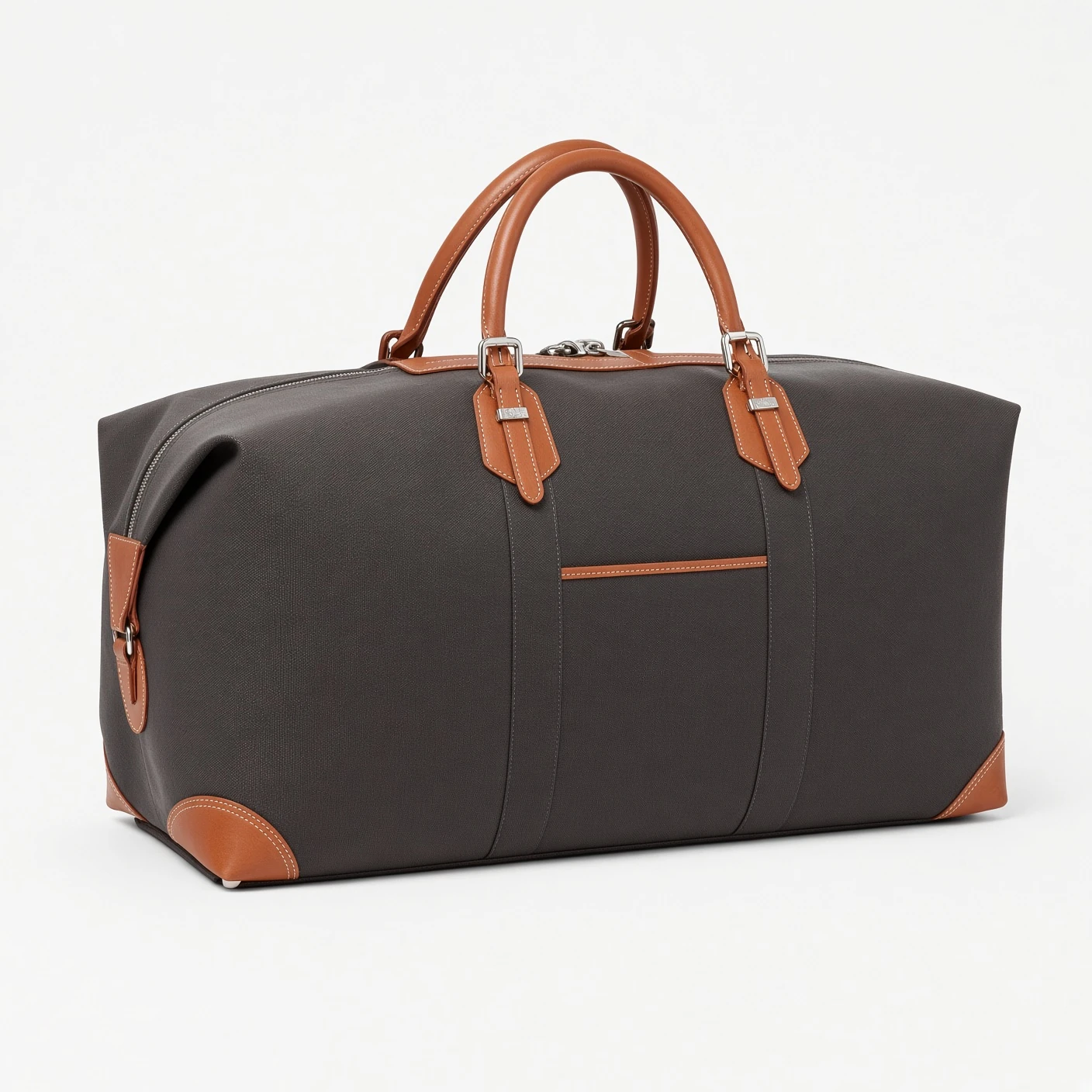
  • A dark leather-trimmed luxury duffle bag with tan handles, metal buckle hardware and tan leather corner patches

    Luxury Duffle Bags

    • Tan leather is applied as separate pieces — handle roots, a front trim line, base corners — over a plain dark body
    • The corners are patched rather than bound, which is the piece that takes the scuffing first
    • Buckle hardware sits on the handle roots and matches the zip, because a mismatched set is what a buyer sees before anything else
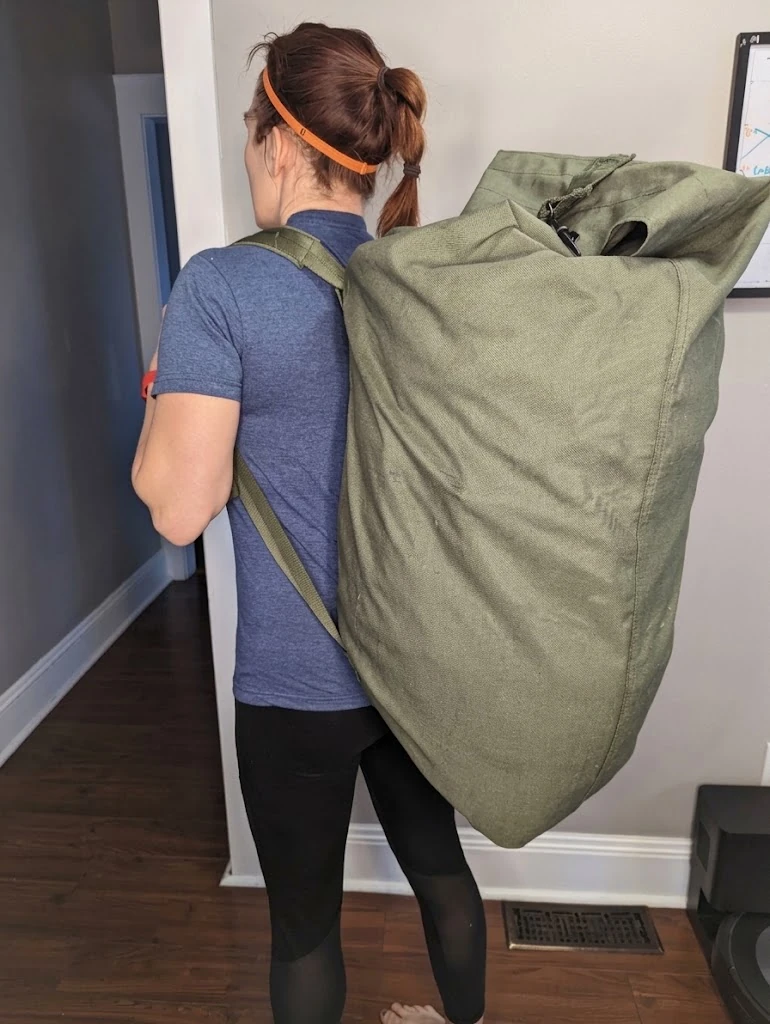
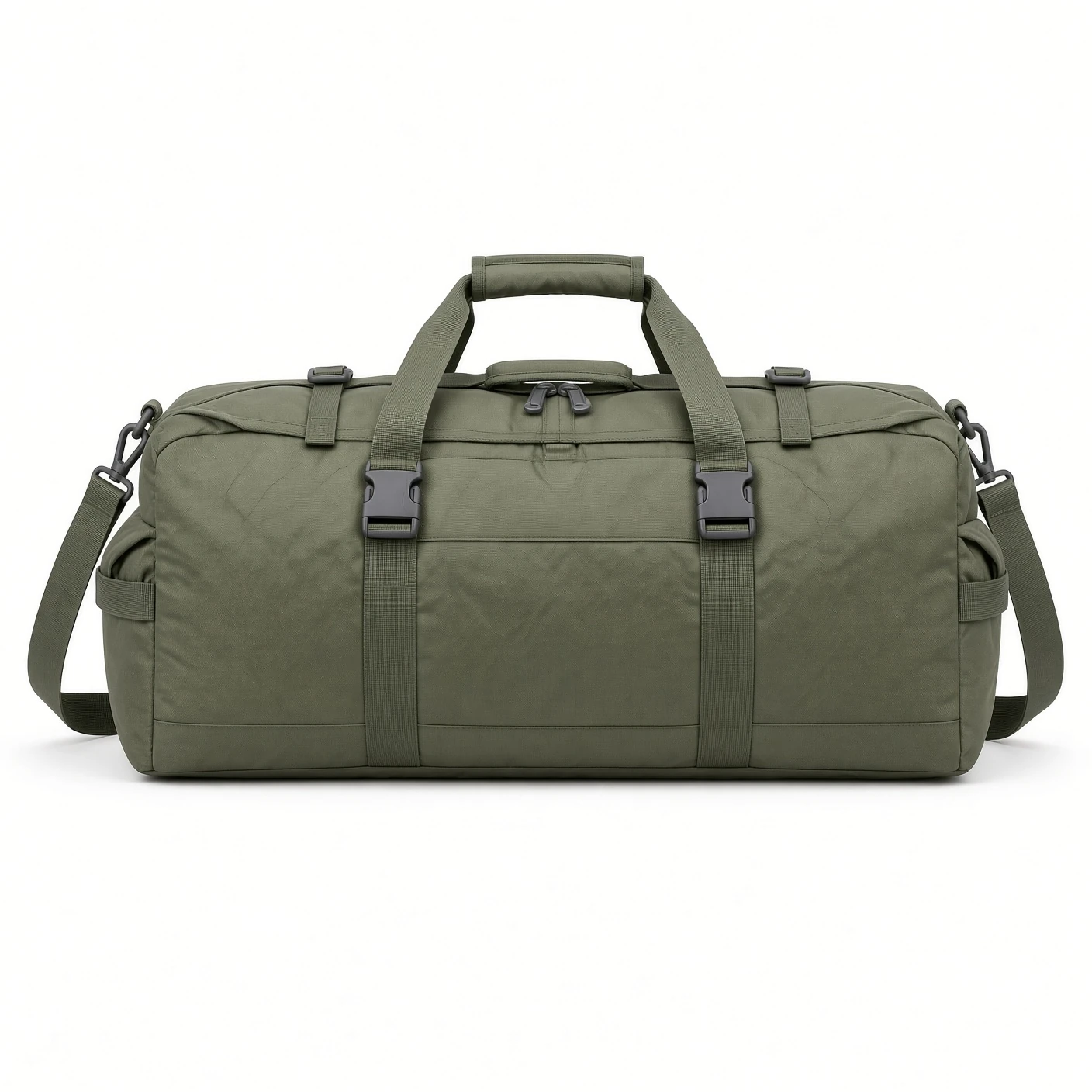
  • An olive military duffle bag with two front buckle straps, a padded handle wrap and a detachable shoulder strap

    Military Duffle Bags

    • Two front straps run down the body and close on side-release buckles, so the load can be compressed from the outside
    • The handle is a padded wrap over the webbing, which is a separate piece a worn handle can be replaced with
    • A second grab handle sits on the end, because a loaded kit bag is dragged into position as often as it is lifted
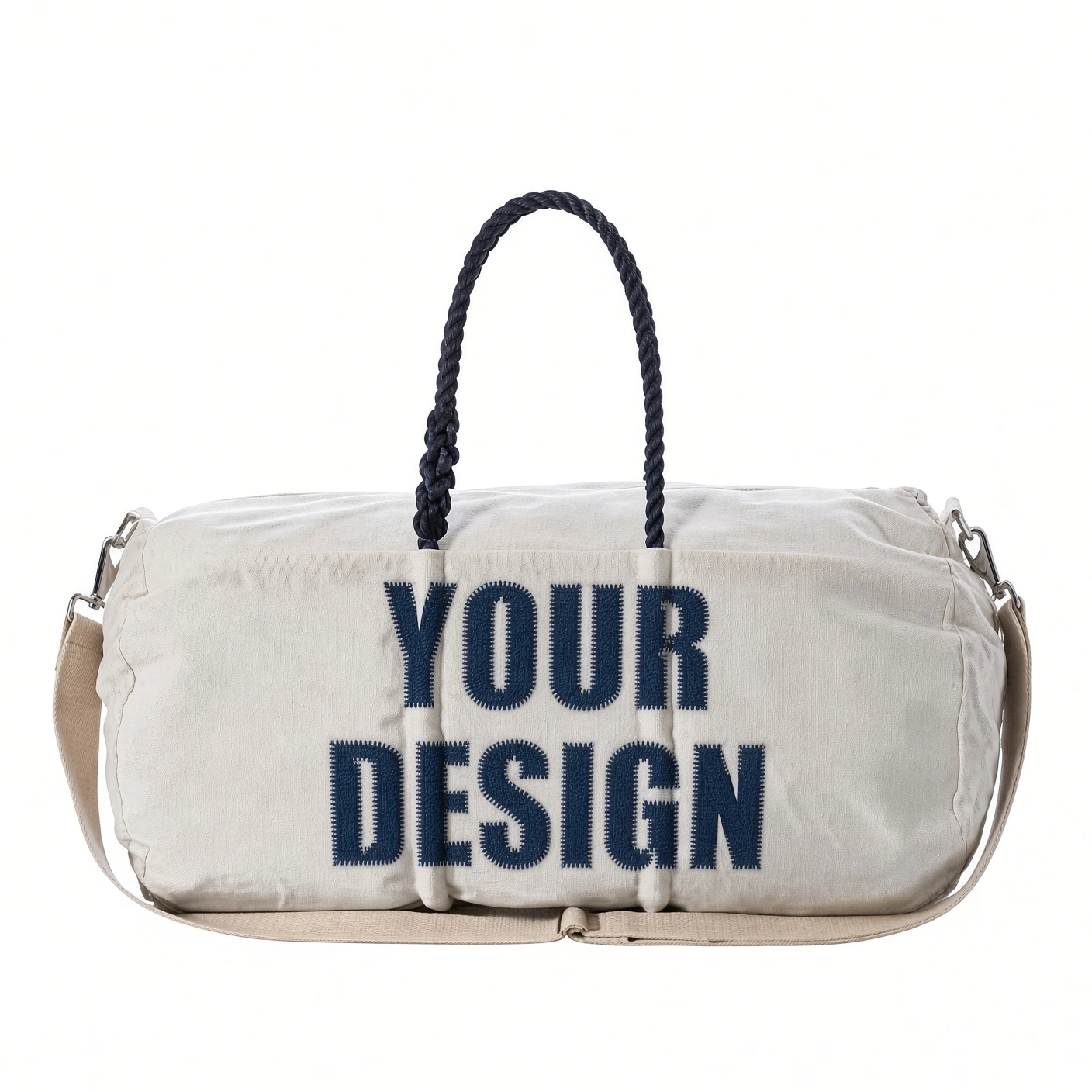
  • An off-white canvas duffle bag with navy rope handles and a stitched block monogram across the front

    Personalized Duffle Bags

    • The marking is stitched into the cloth rather than printed on it — a satin-stitch face with a dense outline around it
    • A stitched panel pulls the fabric in where it sits, so the pattern allows for that movement before the mark is placed
    • Rope handles and a webbing shoulder strap meet on the same end panel, which means two attachments sharing one anchor
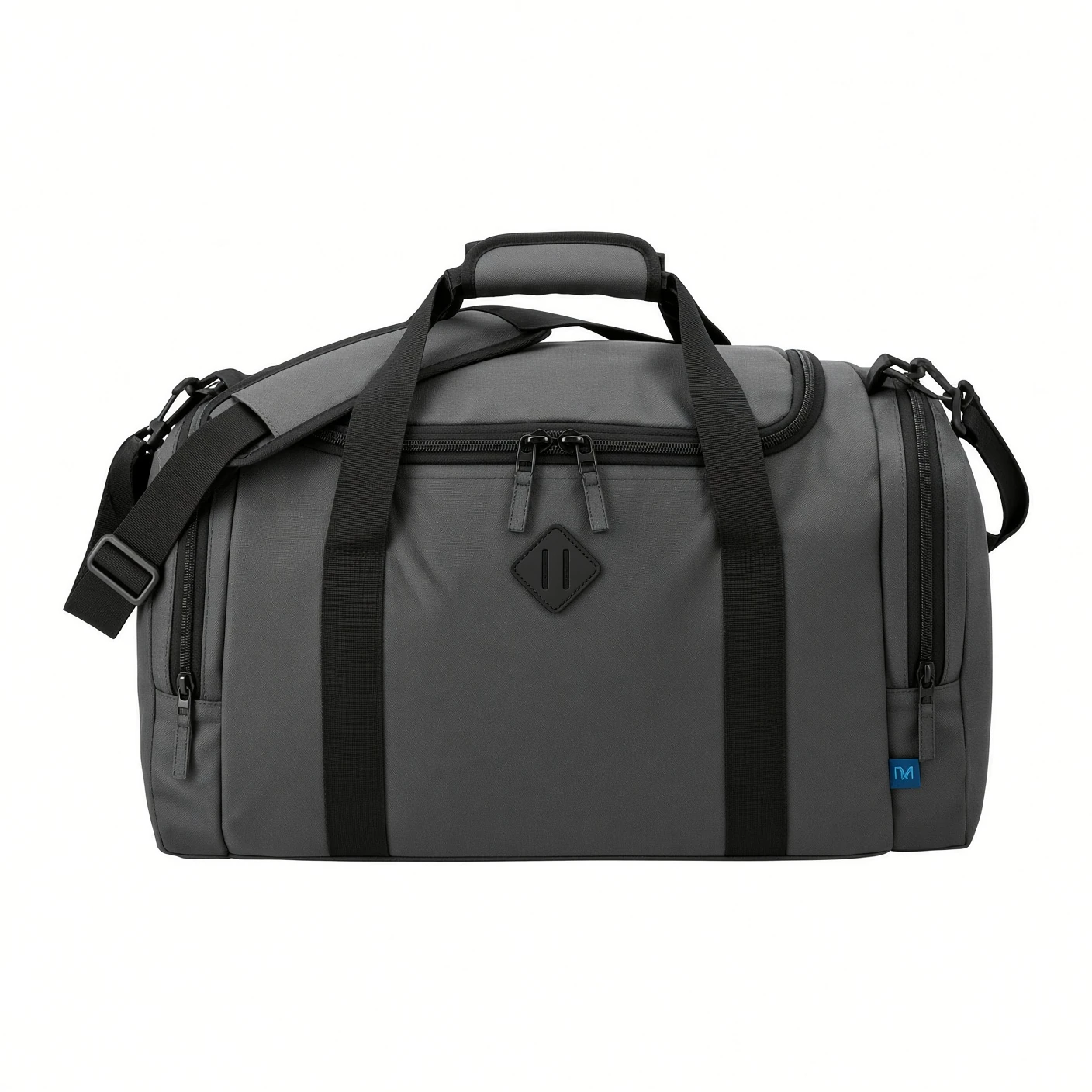
  • A graphite duffle bag with a padded handle wrap, twin zip pulls, end zips and a small woven brand tab

    Promotional Duffle Bags

    • A single-colour body with no print panel, because a promotional bag carries its mark on a tag rather than the cloth
    • The main zip runs on twin pulls and the end panels carry their own zips, so the build is decided by access, not decoration
    • A small woven label is the cheapest element to change between campaigns, which is what makes it the default marking point
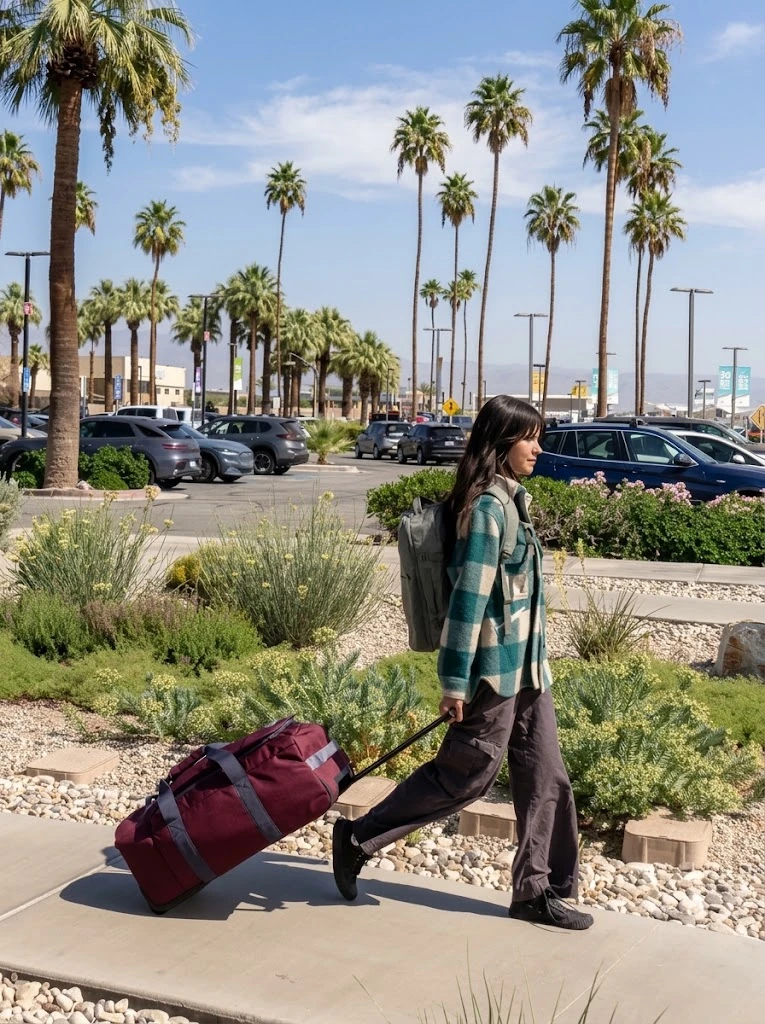
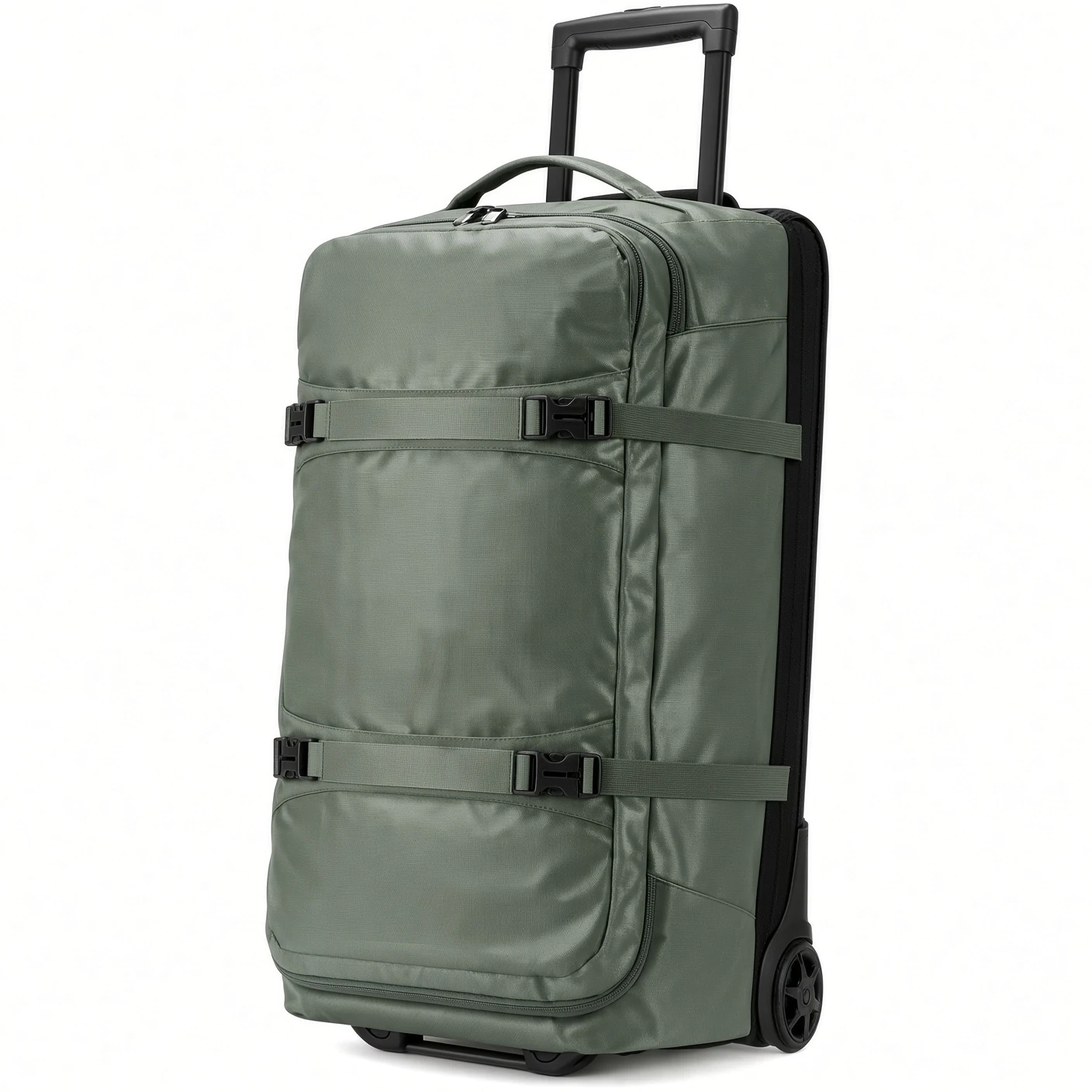
  • An olive wheeled duffle standing upright on two wheels with its telescopic handle extended and two compression straps across the front

    Roller Duffle Bags

    • It stands on a wheeled base under a telescopic handle, so the pattern is built around a frame rather than a shell
    • Two horizontal compression straps close on side-release buckles, which is what holds the load down as the bag empties
    • The zip runs the length of the top and down one side, which is what lets a tall bag be packed flat rather than stuffed
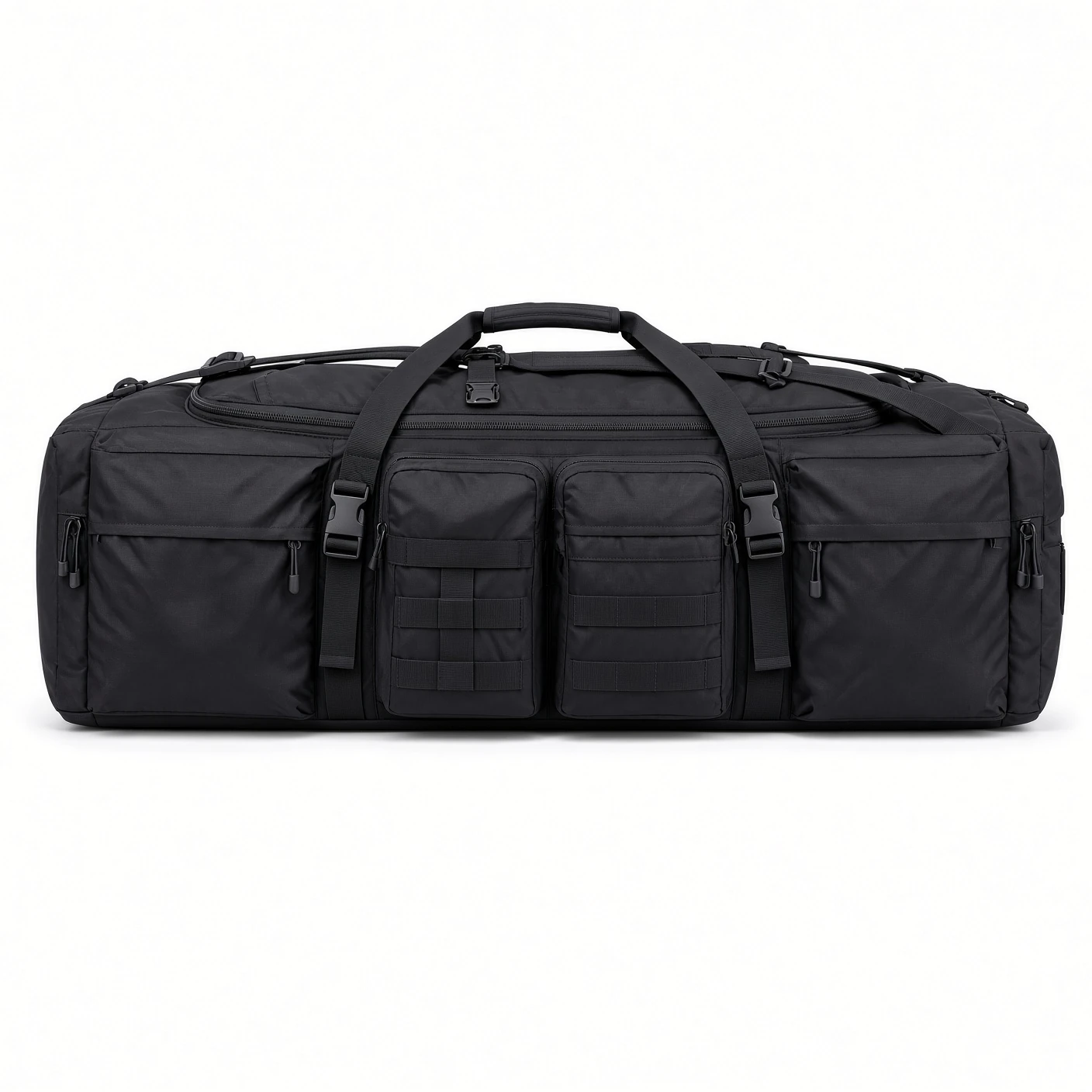
  • A black tactical duffle bag with modular webbing panels on two front pockets and side-release buckles

    Tactical Duffle Bags

    • Two front utility pockets carry a grid of modular webbing, so the bag is a mounting surface as much as a container
    • The webbing rows are stitched to a fixed pitch, so the panel dimensions come from the attachment standard rather than the pattern
    • A padded wrap and a detachable shoulder strap run together, because the bag is worn loaded as often as it is carried by hand
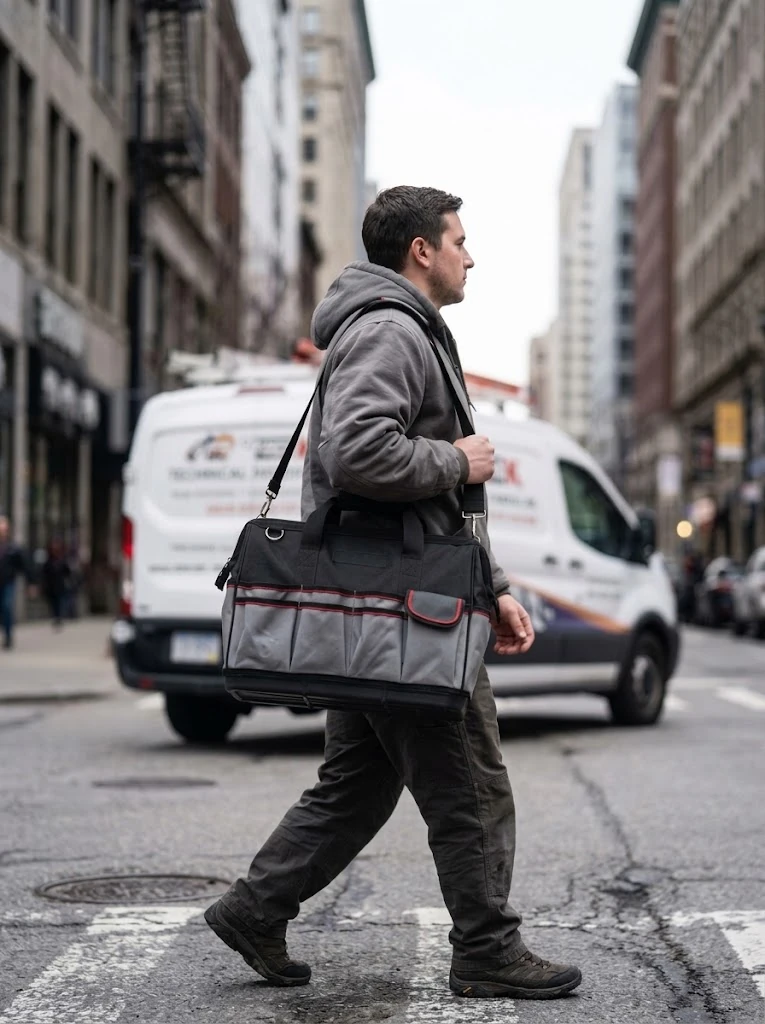
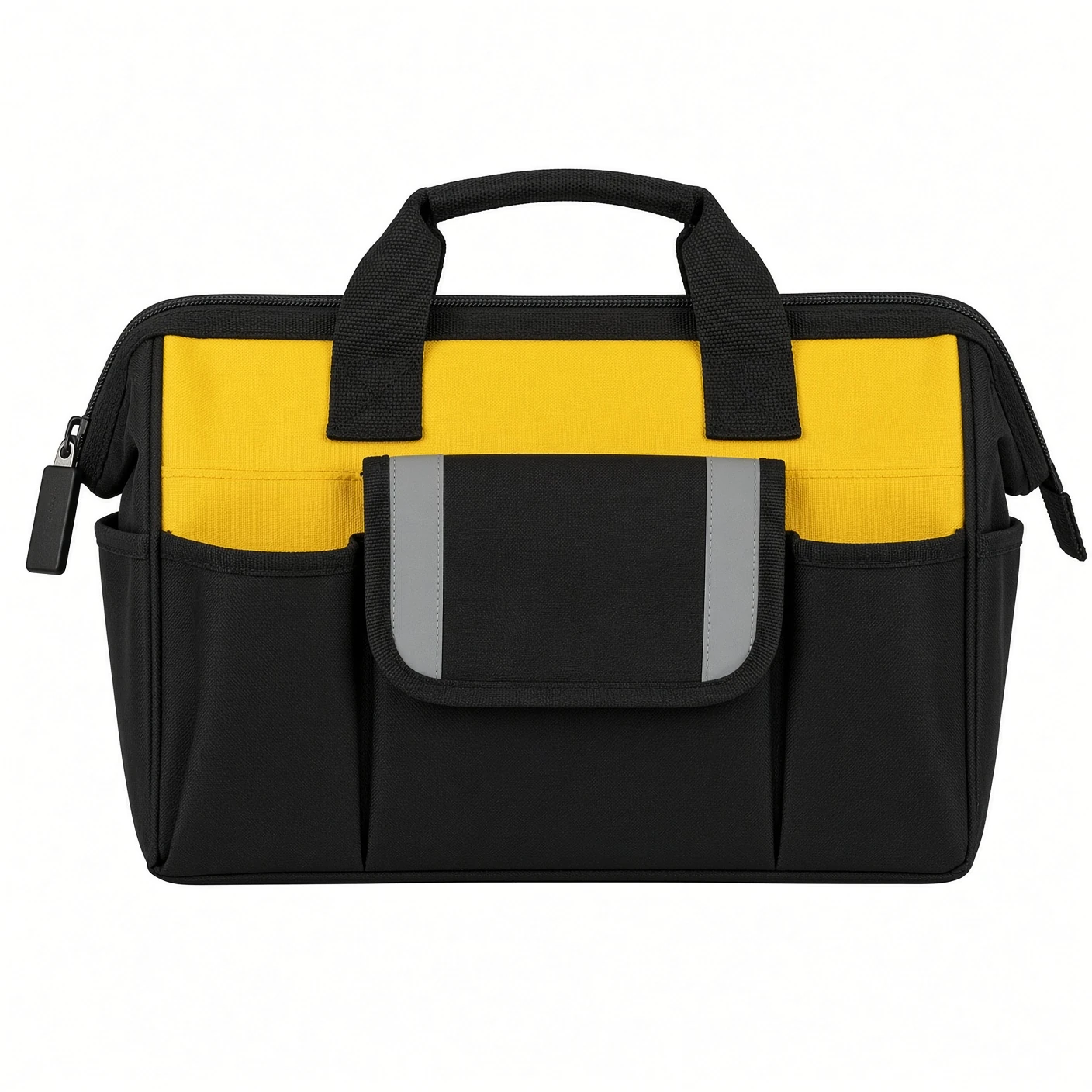
  • A black and yellow framed tool bag with an open front flap, slip pockets around the sides and a zip across the top

    Tool Bags

    • A framed box rather than a soft duffle — the top zip runs on a stiffened edge, so the mouth stays open when it is loaded
    • Open slip pockets wrap the outside with no closures, sized to be reached into while the bag stands on the floor
    • The front flap carries a stitched panel in a contrasting colour, which is a wear patch and a marking point at once

Opening architecture

How the Bag Opens Decides How It Packs

The closure decides how a duffle bag packs, how it behaves in rain, and how a compartment is reached. It also carries the load: the main zip takes the strain whenever the bag is overpacked, so the gauge the teeth are cut to and the slider they run through are worth specifying rather than accepting.

U-zip clamshell

A continuous zip running the length of the duffle and around both ends.

Access
Opens flat, 180°, so the whole duffle is reachable at once. Needs a surface to open on — it will not open on a lap.
Weather
The weakest of the five against rain, because the run crosses the top and both ends of the duffle.
Suits
Travel and rolling duffles, where the bag is packed on a bed or a bench.

D-zip

The same three sides, but the zip stops short of the full opening and leaves one end as a fixed panel.

Access
Opens one wide flap — about three quarters. Packable on a lap at a pinch, unlike a clamshell.
Weather
Better than a clamshell: the unopened end keeps a continuous panel over the lowest corner, which is where water pools.
Suits
Weekenders and larger duffles that trade full access for a bit of shelter.

Top zip

A single straight run across the top of the duffle.

Access
Fastest to reach into and the least to fold back — but the duffle refuses to lie flat, so you pack into a tube.
Weather
Sheds rain well, because the opening sits on the highest edge and drains away from it.
Suits
Gym duffles, where kit goes in and out several times a day rather than being packed once.

End zip

A short zip on an end panel, with the main body closed by its own closure.

Access
Reaches one compartment without opening the main duffle — the way a shoe or wet compartment should be entered.
Weather
Does not affect the main closure at all; it is a second door, not a different one.
Suits
Any duffle with a shoe or wet compartment. It is what keeps the wet side separate in use, not just in construction.

Rolltop

No zip: the top rolls down and closes on a buckle or a hook-and-loop strip.

Access
Slowest of the five to get into, and it must be rolled before it is carried.
Weather
The most weather-resistant, because there is no toothed opening to leak.
Suits
Watersports and outdoor packs, and any duffle brief where the bag is compressed below its rated volume.

Carry modes

Where the Strap Sits When the Bag Is Loaded

A drop length is the one handle specification a buyer can check by putting the duffle bag on. These are the ranges a carry mode is built to, and what changes when a duffle is carried rather than lifted.

Hand-carry handles8–15 cm
Short enough to carry level and not drag. The range exists because a deeper duffle needs a longer handle to clear a coat.
Shoulder strap70–130 cm
Adjustable across the whole range, which is what lets one strap serve shoulder and crossbody without being swapped.
Crossbody110–140 cm
The top of the strap range, worn across the body. It is a different carry from a shoulder strap, not a longer version of it.
Backpack conversionstowed
Two straps behind a zippered back panel, lined so the webbing cannot print through the outside face of the duffle. The lining behind it is what keeps the straps from showing.
Trolley sleeve35–40 cm wide
A band on the back panel that slides over a carry-on handle, sized to clear a standard trolley rather than a measured one.

What you can specify

The Whole Bag Is Built to the Spec

These are the levers left open once the litres and the shape are settled. Each card takes one of them from the bag’s design through to what the buyer signs off at the factory door.

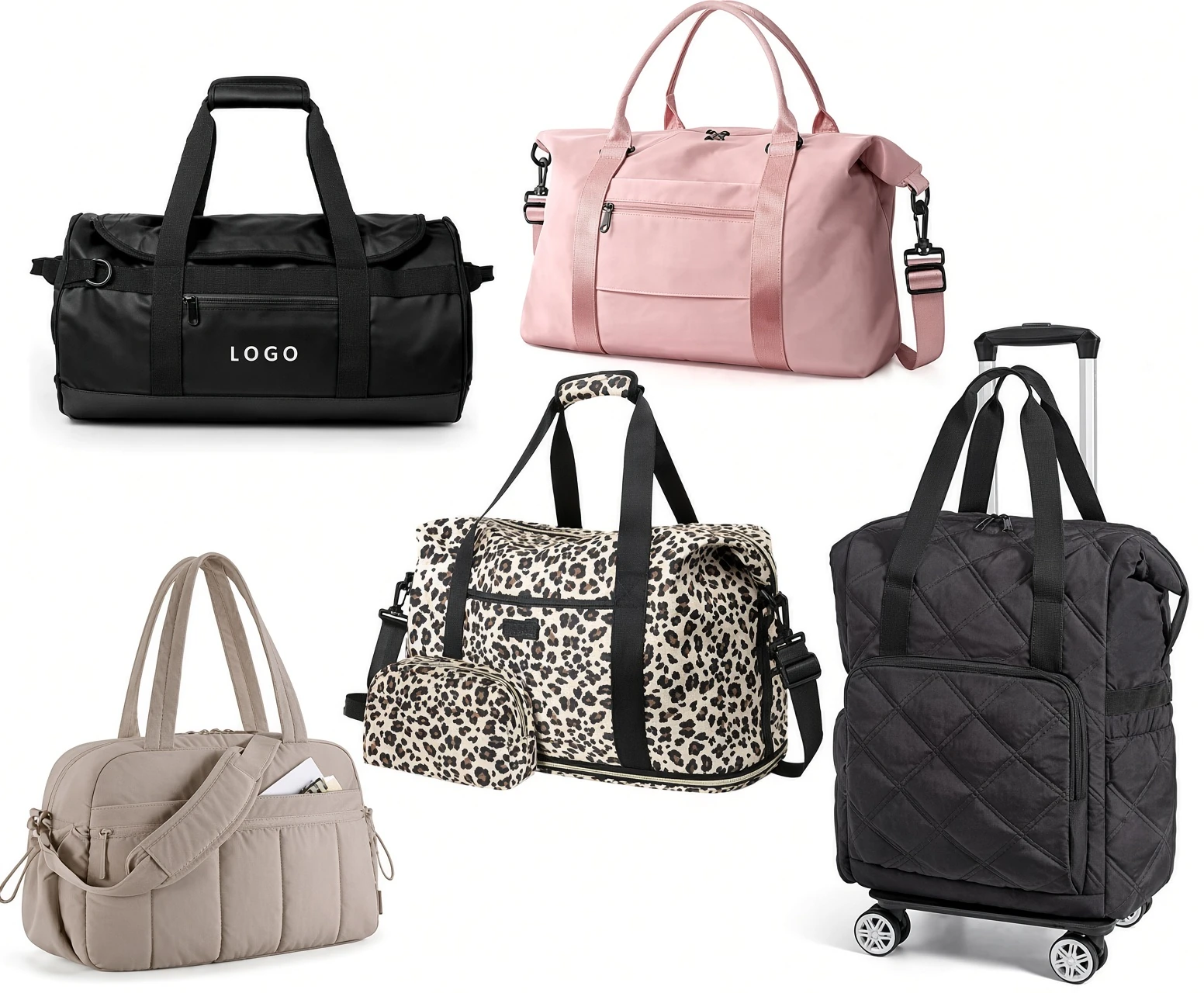
Five duffle bags in different styles — a black weekender, a pink travel duffle, a leopard-print duffle with a matching pouch, a taupe barrel bag and a black wheeled duffle

Types

Variety of Duffle Bag Types to Choose

A range only reads as a range if the bags differ. What the shelf above decides is the outline; what is settled here is whether the run behind that outline performs or not — a supposed assortment arriving as one shape in six colourways sells as one product, not six.

  • The shapes are built on one floor, so the construction stays consistent while the outline changes.
  • Body shape is a choice too — cylindrical, square or bucket, cut to the same pattern.
  • Waterproof, insulated and reflective builds, for the brief that needs the bag to perform rather than only to carry.
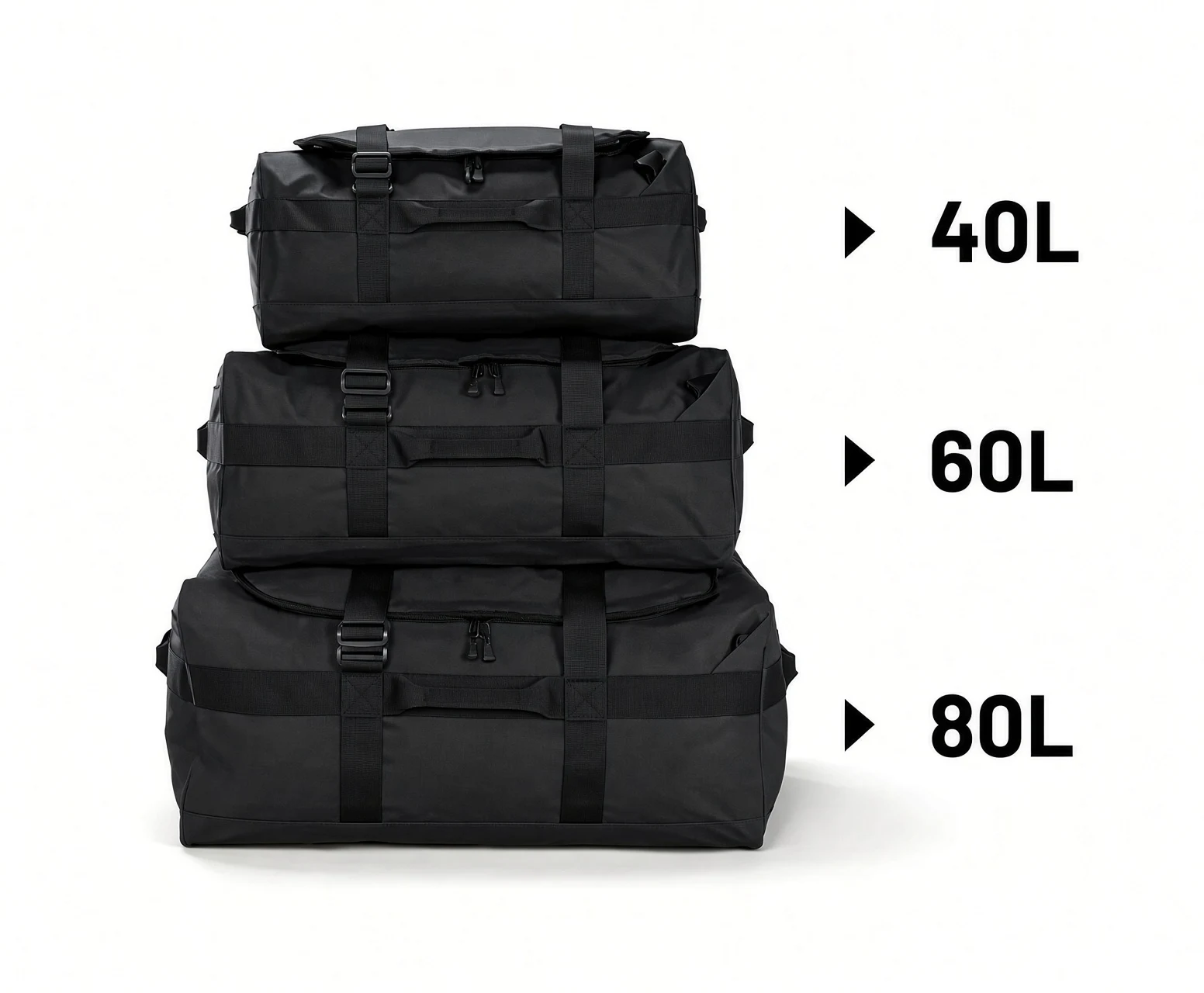
Three black duffle bags stacked in ascending sizes, labelled 40L, 60L and 80L

Sizes

Large, Medium and Small Duffle Bag Sizes Are All Customizable

A litre rating sizes a bag; a shelf sizes a range, and a buyer stocks one. The trade works in inches, which is why the same body is quoted both ways — and the one line worth setting from demand rather than from a chart is how the sizes step up across it.

  • 18-inch carry-ons and 22, 30, 40 and 50-inch bags, with larger sizes built on request.
  • Sizing is recommended against the customer base and the bag’s intended use.
  • A single size can hold its proportion across several constructions in one range.
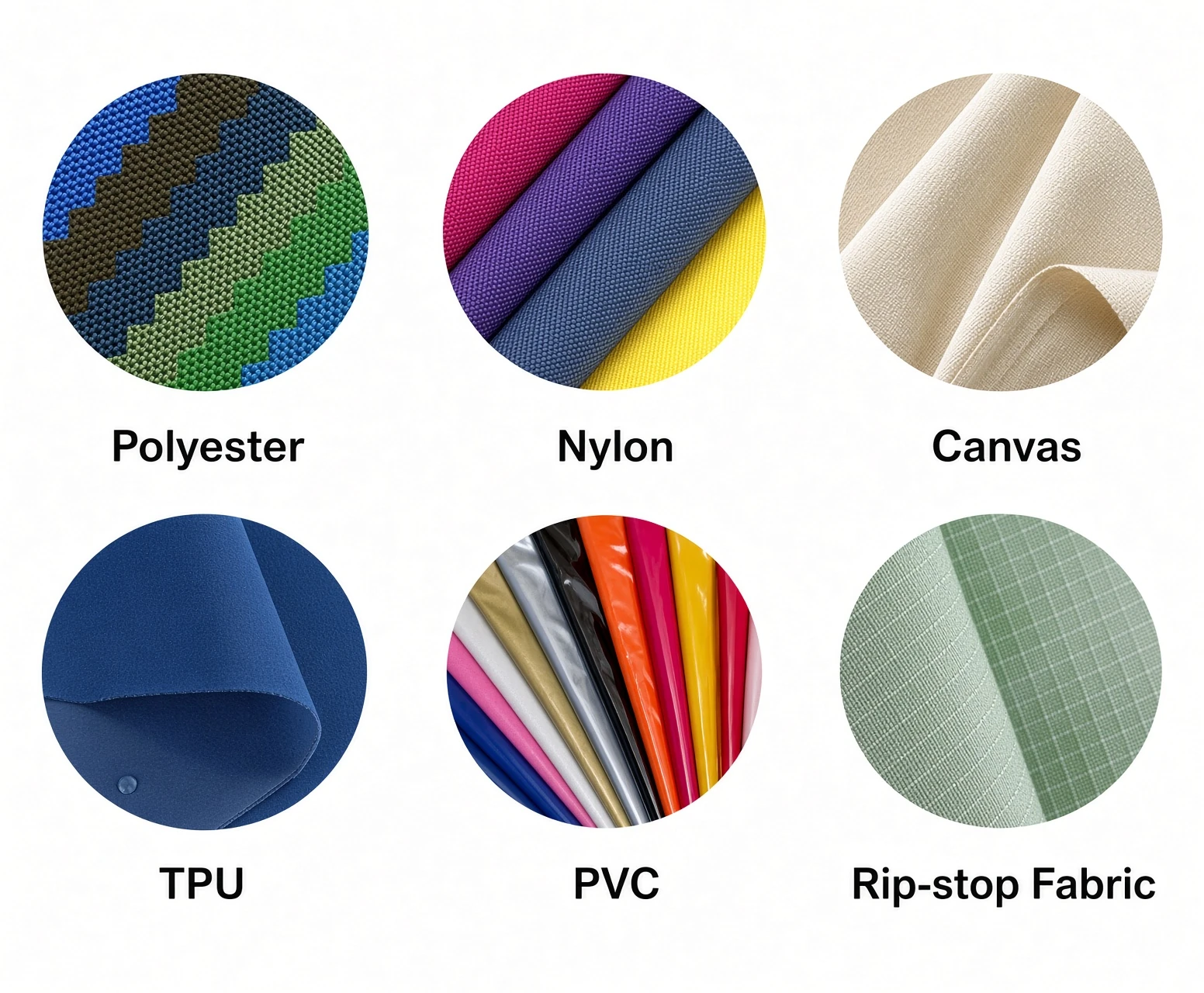
Six fabric swatches labelled polyester, nylon, canvas, TPU, PVC and ripstop fabric

Materials

Rich Raw Material Choosing Types

The shell decides how the bag performs and how long it lasts. A shell chosen on unit cost alone is the one that fails on the second trip, which is why the fabric follows the bag’s job.

  • Cost-effective: polyester, nylon and canvas, the workhorse shells for a high-volume run.
  • Waterproof: TPU, PVC, neoprene and waxed canvas, for the bag that has to shed water.
  • Abrasion-resistant: ripstop nylon, Cordura and X-PAC, where the bag meets the ground and the rack.
  • Recycled and organic: recycled polyester and organic cotton, for the brief that names a fibre source.
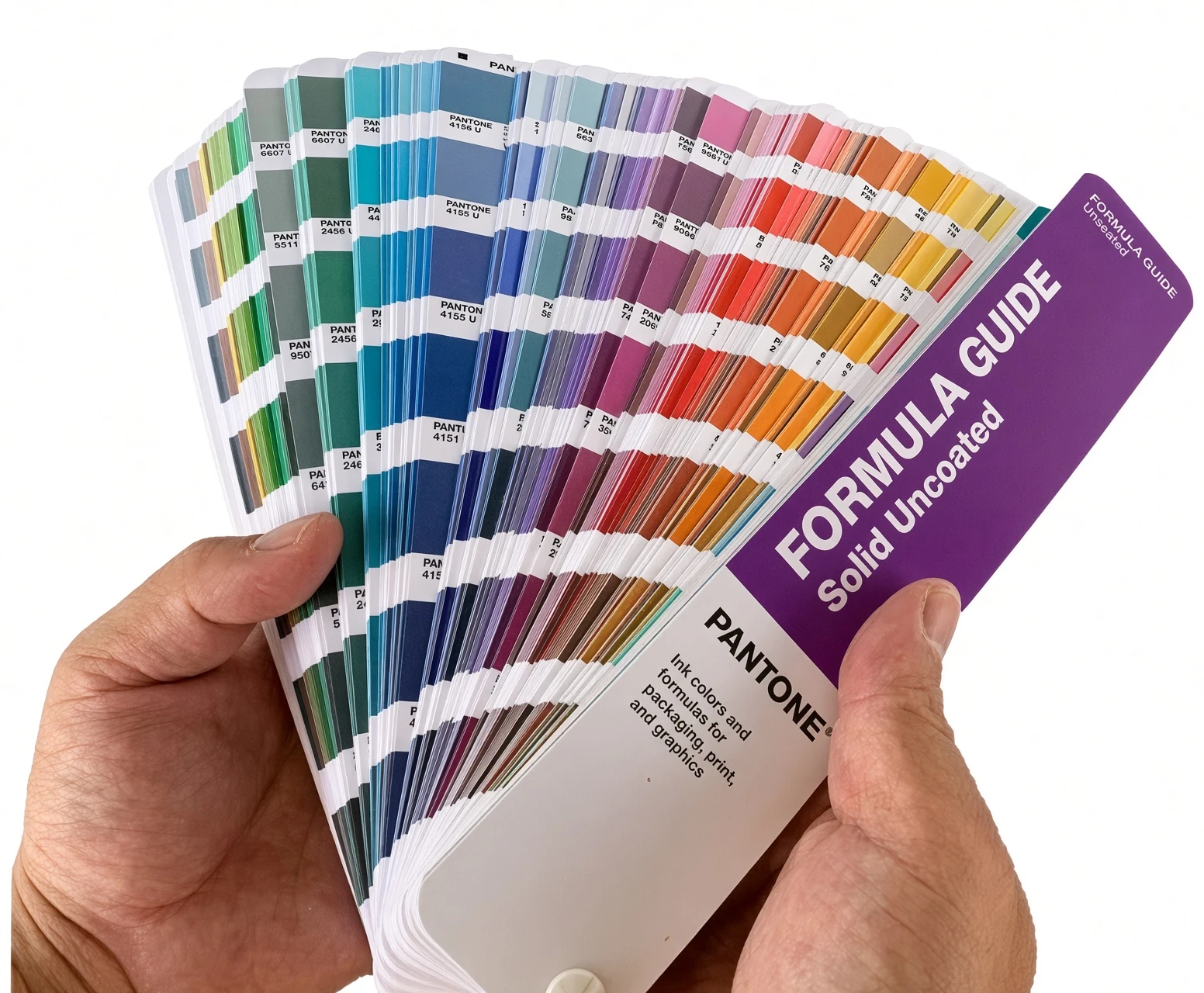
A Pantone formula guide fanned open in a pair of hands

Colours

Standard Pantone Color Customization Is Supported

Colour drift between one run and the next is the complaint that survives longest, because the second order is what has to match the first. Colour is fixed before production and held to after it.

  • Any colour a brief names, taken from a standard chart or a number the buyer specifies.
  • Colour is agreed against a physical reference rather than a description or a screen.
  • A repeat order is matched to the run it follows, not re-struck from the same formula.
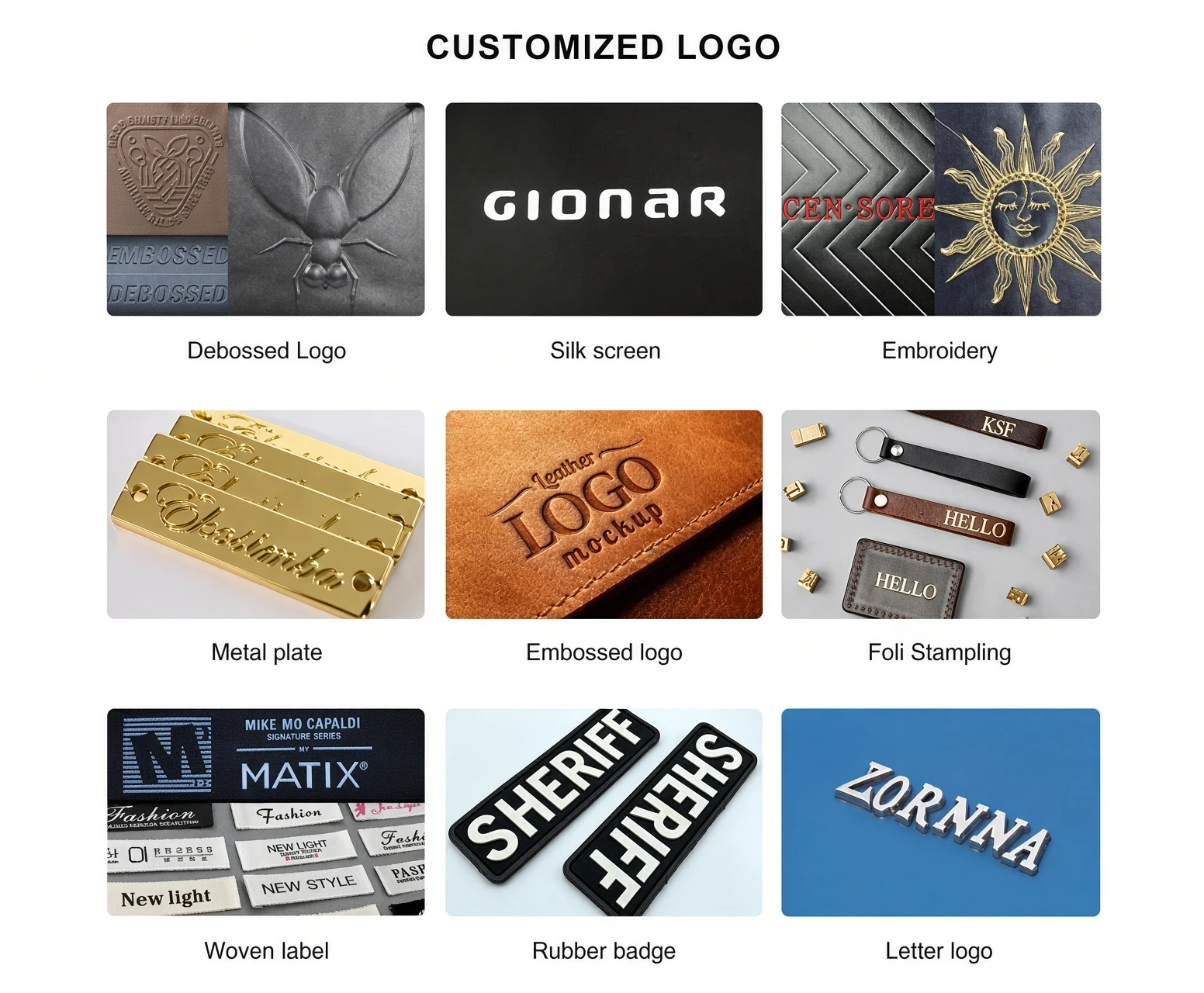
Nine logo and pattern samples labelled debossed logo, silk screen, embroidery, metal plate, embossed logo, foil stamping, woven label, rubber badge and letter logo

Logo & pattern

Mature Duffle Bag Logo and Pattern Customization Technology

A mark that looks right on a sample and greys out, cracks or lifts six months in turns a branded bag into an unbranded one. The method is chosen for the surface it sits on.

  • Screen printing and heat transfer for flat panels; woven labels and digital print for detail.
  • Embossed leather and embroidery, where the mark has to sit in the surface rather than on it.
  • Rubber logos and metal nameplates, for the two treatments that outlast the cloth they sit on.
  • The brand can appear on the outside, the inner label or the care label.
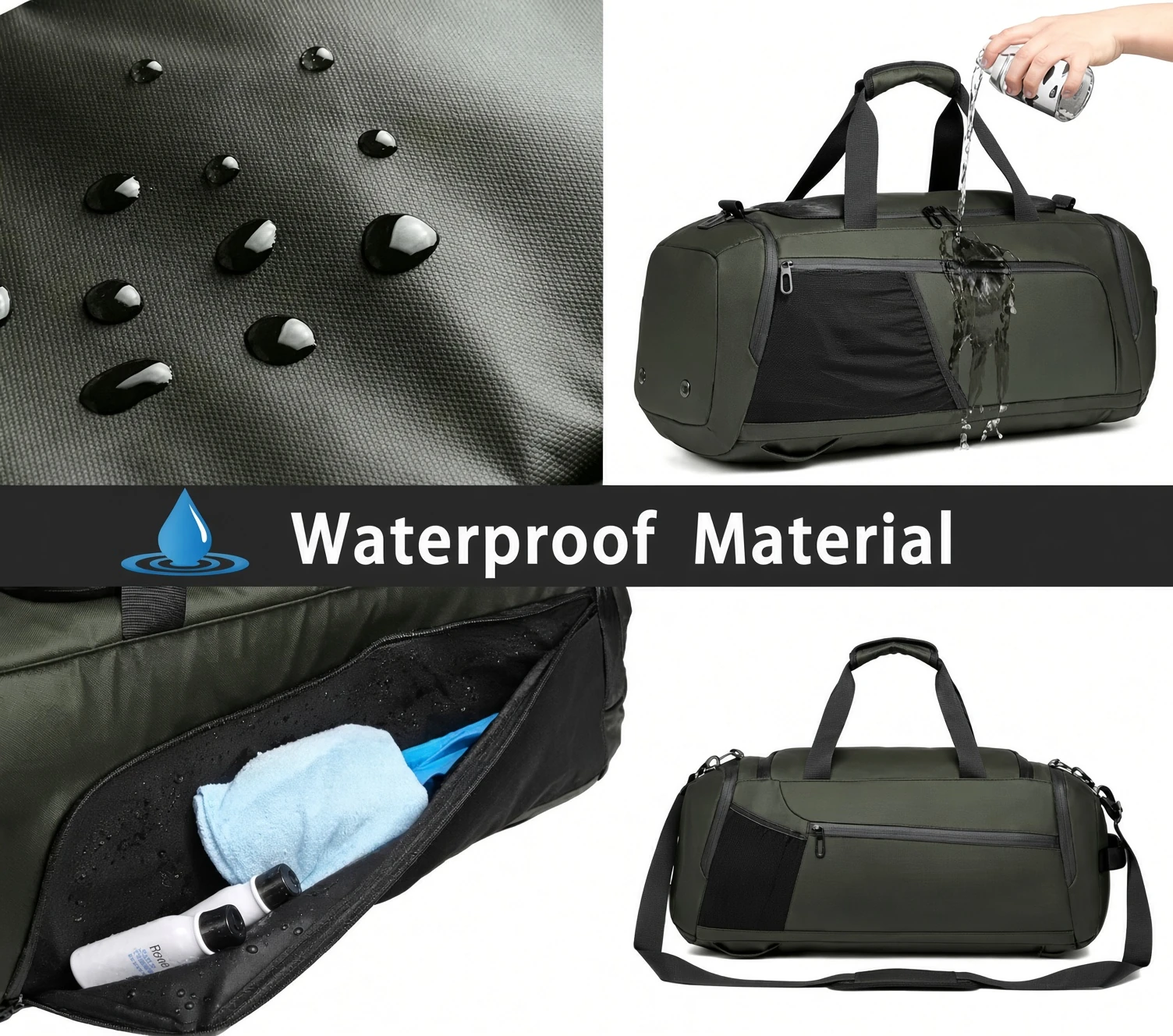
A duffle shown four ways: water beading on the shell, water poured over the bag, an open lined compartment holding a towel, and the bag with its shoulder strap

Add-ons

Additional Features and Custom Packaging

A bag can meet its brief and still fall short in the customer’s hands. Small additions settled at specification are a line in the tech pack; added later they are a change order.

  • Waterproof lining, a sealed layer that keeps the load dry through a wet kit bag or a spill.
  • Insulated compartments, holding food or drink at temperature for the journey.
  • Reflective strips for outdoor and night use, placed on the panel a passing car actually sees.
  • Packaging marked to supplied artwork — polybags, cartons and hangtags carrying the brand.

Spec to quote

Send the Spec. It Comes Back Costed by the Carton.

Send the litres and the run length. Back comes the duffle costed at the hundred-piece floor, with the packed dimensions, the carton cube and the units per container already worked out — so the price you approve is the price that lands.

Packing and freight

What a Run Becomes on a Pallet

A duffle bag that packs down is cheaper to ship than one that holds its shape, at the same weight — and that is decided long before the carton. Here is the whole chain, a duffle’s litre rating resolved into a freight bill, worked with a live example so the arithmetic can be re-run against a different carton.

Worked example · swap in a different carton

Rated litres

The bag's rated capacity, and the volume it actually occupies when filled out to the seam.

45 Lpacks out at 55 × 28 × 28 cm = 0.043 m³ ≈ 43 L

Packed dimensions

Whether the bag ships compressed or holds its form — a framed duffle keeps its shape.

55 × 28 × 28 cmsoft shell compresses; framed shells do not

Carton cube

The internal dimensions of the master carton, and how many bags it takes.

20 per carton58 × 30 × 30 cm = 0.052 m³ = 52,200 cm³

Units per container

The container divided by the carton — a floor, since the last gap is never filled.

12,640–29,100 bags20′ 632 cartons · 40′ 1,283 cartons · 40′ HC 1,455 cartons

Chargeable weight

Freight bills on whichever is greater, actual or volumetric — usually volumetric.

167 kg per m³a full carton bills at ~8.7 kg

Why the chain matters more than the numberA quote that names a duffle’s unit price but not its carton is only half a price. The carton decides the container, the container decides the freight, and the freight decides what the duffle costs landed — so the packing plan is quoted alongside the units, not after them.

Project designs

Completed Client Project Designs

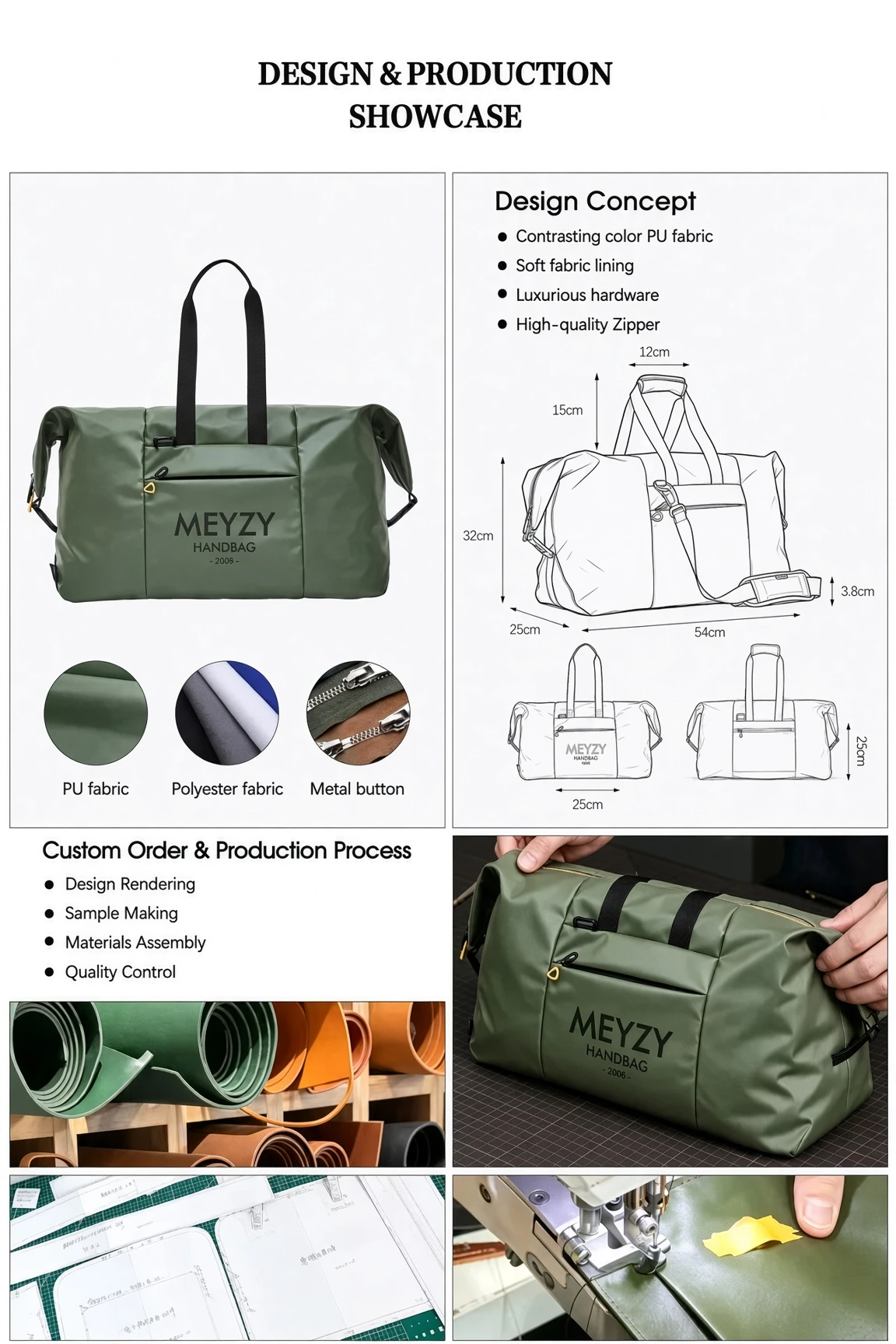
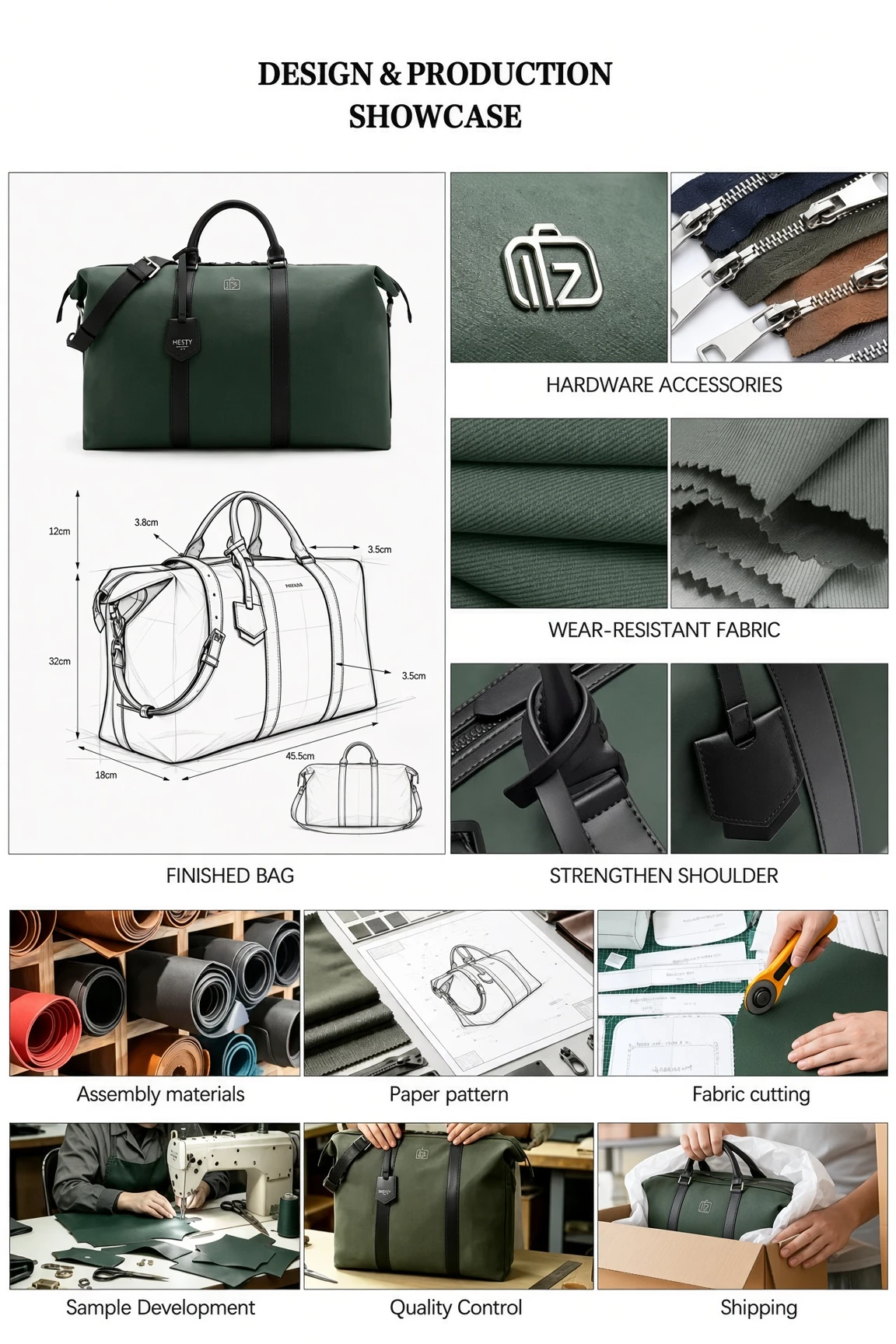
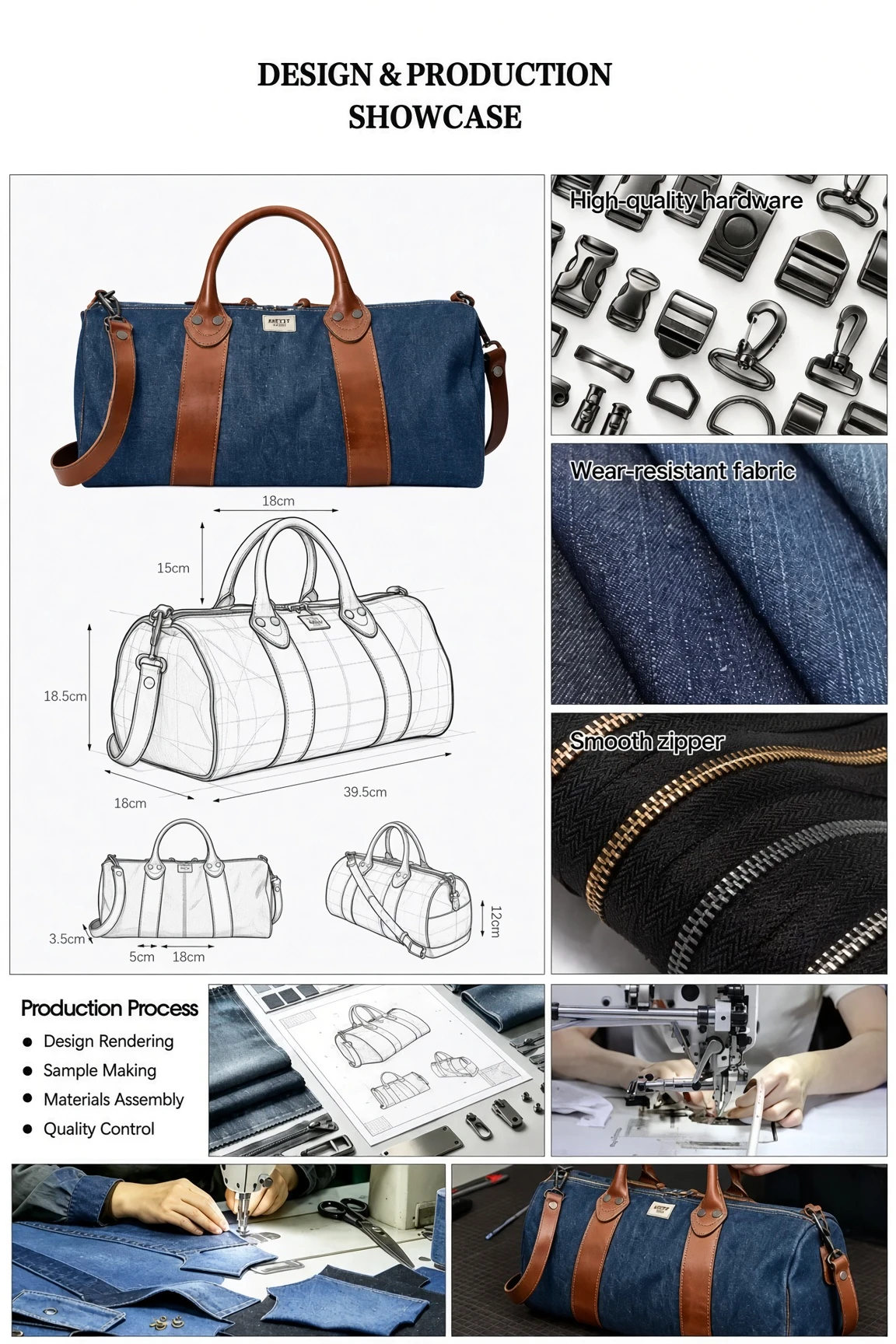
Three recent duffle bag builds, shown as the design boards they were signed off from — the finished duffle beside its dimensioned pattern, the materials it was specified in, and the stages it ran through.

A design and production board for a green duffle: the finished bag, a dimensioned line drawing, PU and polyester fabric swatches, a metal zip and button, and a four-step process list
A design and production board for a dark green holdall: the finished bag, a dimensioned line drawing, hardware and shoulder-strap detail, wear-resistant fabric, and cutting, control and shipping stages
A design and production board for a denim barrel duffle with leather trim: the finished bag, a dimensioned line drawing, metal hardware, wear-resistant denim and zip detail, and the production stages

Buyer accounts

What the Buyers Said Once the Run Landed

Two buyers on what a duffle run had to survive — a studio merchandise line and an outdoor brand’s promo stock — and what came back after the bags were in daily use.

Emily RobertsOwner of Pulse Fitness Studio

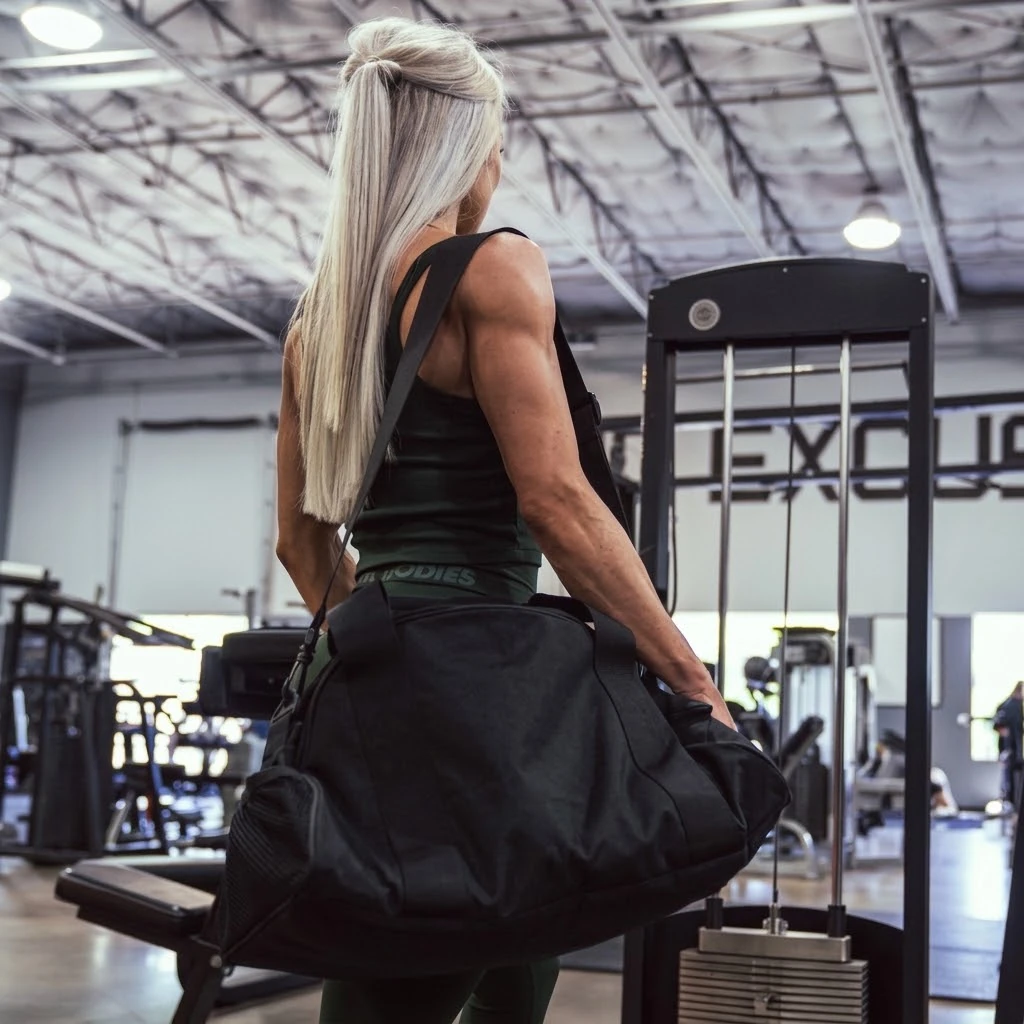
A 34-litre gym duffle was the brief for Pulse Fitness Studio’s merchandise line. The bag had to open on a top zip, carry on a shoulder strap, and take a pair of trainers in a compartment of its own — three specifications that had to hold on one pattern.

The first order ran at the 100-piece minimum across two colourways, which let the studio test demand before committing to a full range. Both colourways cut from the same pattern, so opening a second colour cost a hardware run and nothing else.

The shoe compartment is vented rather than sealed, so trainers go in straight after a class and the main load stays dry behind them. Handle anchors are box-X reinforced — the seam a loaded gym bag fails at first.

A season of daily use later, reorders still match the first run: the same nylon, the same Pantone, the same slider. Merchandise sales moved enough that the studio is sizing its next range in three colours.

Michael AdamsMarketing Director at TrailBlaze Adventures

Promo stock for an outdoor outfitter: 55-litre weekenders with a U-zip clamshell, built for customers who fly to a trailhead. The clamshell opens the whole bag flat, which is what makes packing to a kit list possible on a hotel bed.

Recycled polyester was the shell of record, and the run carried a screen-printed logo. Handle anchors box-X reinforced, main zip specified rather than accepted — the two points the outfitter was not willing to leave to a default.

A hundred pieces opened the line. Six months on, customers are using the bags on trips rather than at a launch event, and the logo has held up where a cheaper print greys out.

The second order repeated exactly: same shell, same print, same carton plan. That the reorder matched the first run is the part that mattered — the first order already sells the second.

Duffle questions

Frequently Asked Questions About Custom Duffle Bags Manufacturer

The questions that come up on most duffle enquiries. Where a figure already appears in a section above, the answer points at it rather than repeating it a second time down the page.

Why does a duffle range start at 100 pieces per construction, not per order?

Because a hundred is the floor for what is cut and sewn on one pattern, and a duffle’s pattern is set by its opening. Three sizes and two openings is not one run of six hundred — it is six pattern-and-marker setups, and the hundred-piece floor is charged against a setup rather than against the purchase order. That is why a first order is usually two sizes and one opening rather than a whole range: the smallest viable line is one construction in two colourways, not one of everything.

Can a duffle be quoted before the opening and the litres are fixed?

Not usefully, because those two are what the price is made of. The litres set the shell area and the marker; the opening decides how many zip runs, pulls and end panels the bag needs, and it is the single biggest swing on the hardware line. Quote a duffle before both and the number is revised twice — once when the litres firm up and again when the closure does. Name the opening and the litres and the quote stops moving, which is why the three sections above ask for exactly those two before anything else.

What fabrics does this floor run for a duffle, and what happens to customer-supplied cloth?

Waxed canvas and 14-to-18-ounce cotton duck are run in-house and matched to the pattern by weight, which is the part a mill spec sheet will not tell you. A customer-supplied fabric is workable but starts with an incoming check: how the cloth takes a needle, whether it is stable enough to cut off a marker without wandering, and whether a seam will hold at the load the bag is meant to take. That check happens before the marker is laid. Find it out after the run is cut and the whole order is fabric that cannot be reordered.

Will a 45-litre duffle fit the carry-on cage?

A common carry-on envelope is 22 by 14 by 9 inches, which works out at about 45.4 litres — so a 45-litre duffle is sitting right on the line, not comfortably under it. What settles it in practice is whether the bag can be compressed. A soft duffle that is packed under its rating will squeeze past the cage; a framed rolling duffle of the same rating will not, because the skeleton holds the shape even when it is half empty. That is why the two tiers either side of 45 litres are the ones worth choosing between.

Which opening should I choose, and why do duffle zips fail first?

The opening decides how you pack, not just how you get in. A clamshell lays flat and needs a surface to open on; a three-quarter zip opens one flap and sheds rain better; a top zip is fastest to reach into and refuses to lie flat, which is why it is the gym default; an end zip reaches a shoe or a wet compartment without opening the main body; a rolltop compresses below its rated volume, paid for in the seconds it takes to roll shut. A main zip fails first because it is the seam taking load under an overpacked bag — the gauge and the slider are the two things worth specifying rather than accepting.

How do a shoe pocket and a wet pocket stay separate from the main load?

By being separate compartments rather than liners inside the same space. A shoe compartment needs a vented panel rather than an airtight one, or it bakes what is in it; a wet pocket needs a waterproof lining and a seam that will not wick into the main body. Put both in and the main compartment holds clothing and street kit with nothing damp against it, which is the difference between a gym duffle that survives a season and one that does not.

How many duffles fit in a container, and how is the freight charged?

The count follows from the carton, not from the bag. Once the master carton is fixed the units per carton are known, the carton cube follows, and the container is filled by dividing one by the other rather than by counting bags. Freight is charged on whichever is greater, the actual weight or the volume weight, and for a light bulky product that is almost always the volume figure — so a duffle that packs down is cheaper to ship than one that does not, at the same weight. The packing section walks the whole chain with real numbers that a different carton can be dropped into.

Can a duffle carry hidden backpack straps without looking like a backpack?

Yes, and the trick is entirely in the back panel. The straps stow behind a zippered panel that is lined so the webbing cannot print through to the outside face, which is what gives the bag away on a cheaper build — you see the straps through the cloth before you see them at all. Keeping the duffle handles functional alongside means one bag carries two ways without anything hanging on the outside when it is not in use. The lining behind that panel is the whole trick, and it is the detail a cheaper build leaves out.

Start a duffle run

Name the Litres.
The Bag Is Built Around Them.

Send the litres the duffle has to move and how it gets carried. Back comes the shell, the opening, the marking method, the carton plan and a physical sample at a hundred pieces.

Get a Quote