A group of leather goods — a tall tote, a messenger bag, wallets and belts — arranged on a pale blue studio sweep
Tannery-Audited Hides · MOQ 100

Custom Leather Goods Manufacturer Graded A–D Before the Cut — the Same Lot Comes Back

A hide bought on price carries scars that cannot face a panel and a yield that sinks the quote — the cost of a leather order is set at the receiving table, not the sewing line. Graded and mapped there, a lot prices on the surface it actually yields and the quote holds; a seven-day sample puts the grade, the gauge and the mark in a buyer’s hand before a run is committed.

  • 65–75%usable hide, graded lots
  • 0.8–1.4mm, small leather goods
  • 7-daysample window

Leather goods range

The Goods a Hide Ends Up In

Custom leather bags, belts, clutch, accessories, travel goods, home décor, wallets, upholstery and exotic leather goods — the range the original line runs. A hide is allocated across the categories in one order, so the grade that cannot face a bag panel still goes into a wallet.

  • A tan pebbled-leather bag with dark-brown handles, a crossbody strap and gold hardware

    Custom Leather Bags

    • Totes, shoulders, crossbodies, briefs and backpacks
    • Cut from full-grain or top-grain panels
    • Gussets and handles take the load-bearing spec
    • Totes, shoulders, crossbodies, briefs and backpacks
    • Cut from full-grain or top-grain panels
    • Gussets and handles take the load-bearing spec
  • A brown leather belt with a silver-tone buckle laid in a loop

    Belts

    • A single strap cut along the length of the hide
    • Buckle, tip and hole spec chosen to the line
    • Edge-burnished to stop the strap curling
    • A single strap cut along the length of the hide
    • Buckle, tip and hole spec chosen to the line
    • Edge-burnished to stop the strap curling
  • A tan leather zip-top clutch pouch with a tassel pull and a small stitched patch

    Clutch

    • Fold-over, zip-top and wristlet forms
    • A lined body holds the shape a soft hide will not
    • The form a small run tests a new hide in
    • Fold-over, zip-top and wristlet forms
    • A lined body holds the shape a soft hide will not
    • The form a small run tests a new hide in
  • An open leather accessory case holding grooming tools beside a leather tray

    Accessories

    • Keyrings, pouches, cord organisers, tech cases
    • Cut from the offcuts the main panels leave
    • The volume line in a leather-gift programme
    • Keyrings, pouches, cord organisers, tech cases
    • Cut from the offcuts the main panels leave
    • The volume line in a leather-gift programme
  • A tan leather holdall with a telescopic handle and a wheeled base

    Travel Goods

    • Holdalls, weekenders and wheeled cabin cases
    • Reinforced bases and wheel housings
    • The heaviest panel spec of the range
    • Holdalls, weekenders and wheeled cabin cases
    • Reinforced bases and wheel housings
    • The heaviest panel spec of the range
  • A rigid leather storage box with a fitted lid, open in two halves

    Home Décor

    • Desk pads, trays, boxes and organisers
    • Built over a rigid board, not leather alone
    • A calm surface a debossed mark sits on
    • Desk pads, trays, boxes and organisers
    • Built over a rigid board, not leather alone
    • A calm surface a debossed mark sits on
  • A stack of stitched zip-around leather wallets fanned in black, brown and tan

    Wallets

    • Bifold, slim, travel and zip-around builds
    • 0.8–1.2 mm stock so a fold stays flat
    • Skived edges and hand-burnished or painted
    • Bifold, slim, travel and zip-around builds
    • 0.8–1.2 mm stock so a fold stays flat
    • Skived edges and hand-burnished or painted
  • Two fans of folded leather panels in blue, grey, white and brown tones

    Upholstery

    • Cut-and-sew panels to a furniture spec
    • Consistency across a run is the whole job
    • Measured in square feet, like the hide it comes from
    • Cut-and-sew panels to a furniture spec
    • Consistency across a run is the whole job
    • Measured in square feet, like the hide it comes from
  • A dark green crocodile-embossed leather handbag with matching straps

    Exotic Leather Goods

    • Embossed and specialty-finished stock
    • Croc, lizard and grain-print surfaces
    • Run to a supplied reference, not a catalogue
    • Embossed and specialty-finished stock
    • Croc, lizard and grain-print surfaces
    • Run to a supplied reference, not a catalogue

Receiving floor

The Hide Is Graded Before the Cut

A hide arrives as a variable material, not a fixed one. Four gates at receiving turn it into something a leather goods quote can be built on — and the gate a run skips is the one that shows up as a short order or a panel with a scar across the face.

  1. A · B · C · D

    Grade the hide at receiving

    • Grade A faces the panels a buyer sees.
    • B and C go to gussets and linings.
    • D becomes small-accessory offcuts.
  2. Hide map

    Mark what cannot go on a face

    • Scars and thin areas are chalked on when the lot opens.
    • The map routes a marked zone to an interior panel.
    • Dies are laid only once the map is drawn.
An operator examining and folding a stack of graded hides on the receiving table
  1. 65–75%

    Hold the lot in conditioned store

    • Graded hides wait at a steady humidity until they are cut.
    • A hide yields 65–75% of its bought area on a commercial lot.
    • That yield, not the piece count, is what builds the quote.
  2. 5-point gauge

    Measure, then release to cutting

    • Thickness is read at five points across the hide.
    • Small leather goods are held to a 0.8–1.4 mm band.
    • An out-of-band panel is re-graded, never cut to hope.

Materials & components

The Menu Around the Hide

The hide is the front of a leather goods order; the rest is chosen around it. The leather type and its price trade, the lining, the zip and the hardware the goods are assembled from, and the method that fixes the mark — settled against the branding goal and the budget.

  • A leather factory floor with trolleys of stacked hides in brown, green and black under die-cutting machines

    Fabric & leather

    The Hide Sets the Durability, the Budget Sets the Type

    A leather programme is built on a growing menu of stocks that trade durability for price down the range, and the choice is made against the branding goal and the budget, not the swatch alone.

    • Full-grain — the whole top surface kept, so it ages into a patina and carries the strongest fibers.
    • Top-grain — the surface sanded level for one colour across a run, at the cost of the patina.
    • Genuine leather — a solid everyday body, the working choice when a range runs to a price point.
    • Vegan and recycled — a plant-based or post-consumer face for a line carrying a sustainability claim.
    • Lining fabrics, edge finishes and stitching chosen to match, so a unit reads consistent inside and out.
  • A grid of leather swatches showing debossed, hot-stamped, embroidered, silk-screen, metal and silicone logo finishes

    Custom logo

    One Logo File Is Not One Process

    The same mark lands differently by surface, so the method is matched to the face it sits on and to the position the brand is selling at.

    • Emboss & deboss — pressed in relief, no ink, for a tannery that lifts cleanly under heat.
    • Foil stamping — a metallic or colour transfer in one strike on a flat, corrected panel.
    • UV printing — multi-colour and fine detail, cured on a firm sealed surface.
    • Laser engraving — a burned, permanent mark for larger work on a mid-tone hide.
    • Metal plate — a cast plate set on the goods where the surface takes no direct mark.
    • Leather, silicone and hardware labels — a second branding route for interiors and soft spots.
  • A fan of leather zipper tapes with gold, silver and gunmetal teeth labelled by tooth profile

    Zippers

    The Zip Is Chosen Sizes Before It Is Chosen Brand

    A closure is spec’d by the build it needs — the teeth, the material and the pull — and the supplier tier is a budget call on top of that.

    • Metal, nylon, resin, coil, Vislon and invisible constructions, for a different panel and load.
    • Heavy-duty and two-way zips for cases, travel goods and anything opened from both ends.
    • Sliders and pulls as a separate option — custom shape, finish and engraving on the pull itself.
    • European branded slides or domestic Chinese brands, picked against the unit cost the line can carry.
  • A catalogue of bag hardware — tri-glide buckles in several finishes plus grids of dog buckles, bag locks, D-rings and pin buckles

    Hardware

    The Hardware Is Where the Load Concentrates

    Buckles, rings and snaps are qualified by the load they take and the finish they carry — the piece a bag is pulled by is the piece that cannot be bought on look alone.

    • Buckles, snaps, rivets, D-rings, clips and hooks, eyelets, buttons, chains and decorative studs.
    • Polished metal and leather-wrapped buckles for luxury work, or lightweight plastic for daily wear.
    • Plating and finish chosen for the market the line sells into — and for salt-spray and tarnish.
    • Sourced across vetted Chinese suppliers, so a single run is not held by a single component vendor.

01 / 04

Swipe to turn the page

The plant route

Sketched, Cut, Stitched and Checked

The route leather goods take through the plant — the drawing, the graded lot, the cutting, and the inspected carton that ships.

  1. A designer drawing a bag on white paper with a red pen, a sketch of the finished shape above
    01

    Design & Collaboration

    • A tech pack or a reference piece, the brand direction and the target cost
    • Pattern and concept developed before a hide is chosen
    • Structure and price settled on paper, not at the cutting table
  2. Two hands cutting a leather panel along a paper pattern with a blade on a workbench
    02

    Cutting & Hide Mapping

    • The lot graded and mapped before a die drops
    • A scar routed off a face panel ahead of the cut
    • Panels cut to the pattern and held to the drawn shape
  3. A workbench seen from above with leather panels, a hammer-set zip pull and finished pieces in trays
    03

    Prototyping & Sampling

    • One development piece, in seven days
    • Cut from the same lot the run will draw on
    • Grade, thickness and mark approved on the sample
  4. A machinist guiding a brown leather panel through a heavy industrial sewing machine
    04

    Stitching & Assembly

    • Machinists on the frame and the seam
    • Load-bearing seams reinforced where the goods are handled
    • Hardware set to the drawing, not chosen at the table
  5. Gloved hands burnishing the cut edge of a red leather panel with a small tool
    05

    Finishing & Polishing

    • Edges burnished or painted, never left raw
    • Surface treated for wear and for hand
    • Finish checked against the sample it was signed on
  6. A gloved hand inspecting the cut edge of a tan leather panel against light
    06

    Quality Inspection

    • Pieces inspected against the approved spec
    • Stitch, edge and hardware checked on the finished good
    • Nothing ships that fails the sample it was signed against
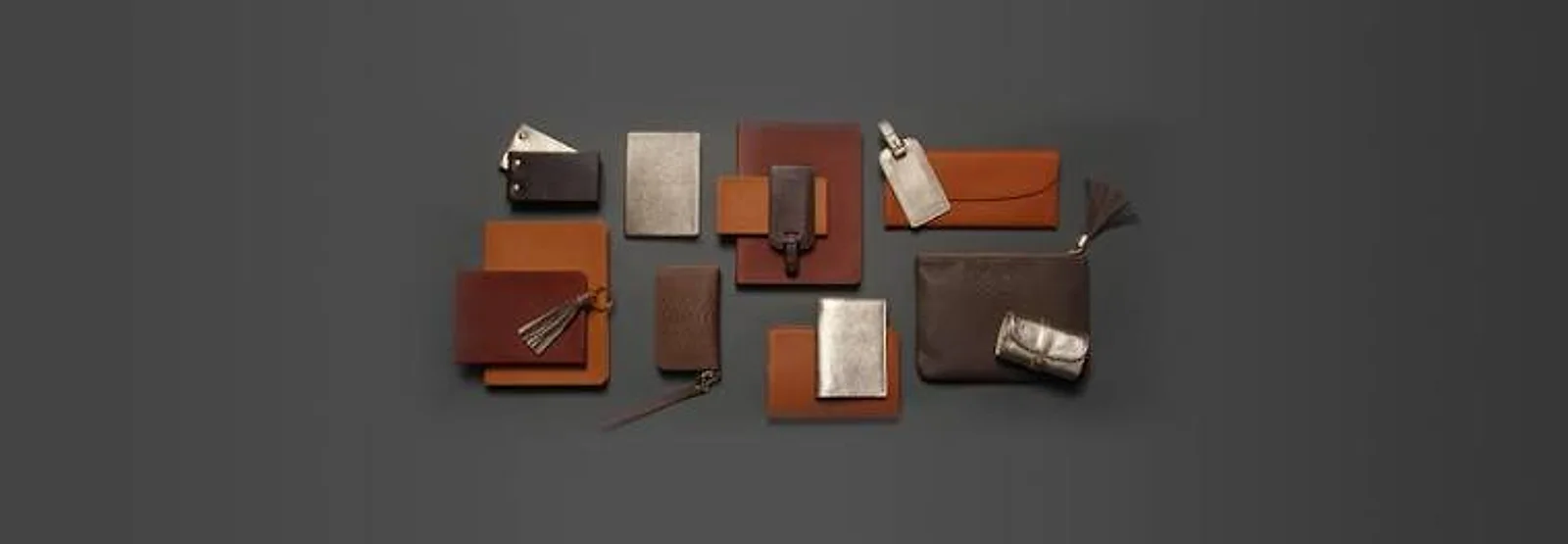
A flat-lay of tan leather wallets, card holders and small goods on a dark surface

Leather brief to quote

Name the Hide and the Goods. Back Comes the Cost.

Name the goods, the hide grade, the tannage and the mark. Back comes the build, the cost and a physical sample of the run.

Certifications

The Leather’s Own Papers

A bag page certifies the workshop. A leather page has to certify the material — where the hide came from and how it was processed. These are the tannery-level standards behind the stock, named once, so a buyer can verify an origin against a paper trail.

LWGLWG certification mark

Tannery environmental audit

A tannery-level audit of environmental practice and traceability — the hides come from audited tanneries, so origin is verified against the tannery’s own record, not on a supplier’s word.

Hide origin traceable to the audited tannery, held on file.

ZDHCZDHC certification mark

Restricted substances control

The processing route is held against the Zero Discharge list, so restricted chemicals stay out of the leather and its finishes, and the material is safe for the goods it becomes.

Restricted-substance list applied along the processing route.

ICECICEC certification mark

Italy-backed sector certification

An Italy-backed certification of tannery best practice — a buyer’s assurance that the base material was processed to a recognised sector standard before it reached the floor.

Base material processed to a recognised sector standard before it reaches the floor.

CSCBCSCB certification mark

Brazilian hide sustainability

Covers the economic, environmental and social practice behind a hide’s sourcing, for lines that have to document where the leather came from as well as what it is.

Sourcing documents the origin of the hide as well as the material.

Where the goods land

Leather Goods in Different Scenarios

The end-uses a leather line supplies, and what a given end-use asks of the hide before it is cut.

  • A pink quilted leather crossbody bag with a heart-shaped clasp, worn with a chain strap

    Fashion Accessories

    • Handbags, wallets and small carry pieces
    • Cut from one graded lot, so a matched range ships as a single colour
    • Full-grain on the exposed faces, corrected stock where the panel only holds shape
  • A model in a brown leather skirt and knee-high leather boots holding a black leather bag

    Footwear

    • Boots, dress shoes and casual uppers
    • Built on a last that keeps its line
    • Breathability comes from the hide, and the break-in is set by the tannage
  • Three models wearing leather jackets — a black trucker jacket, a two-tone moto jacket and a black biker jacket

    Clothing

    • Jackets and skirts cut from panels that take an edge and keep it
    • The grain is the finish, so the garment sells on texture and drape
    • Grade and cut direction are decided together
  • A tan leather sofa with matching cushions in front of a wooden bookshelf

    Furniture

    • Upholstery panels and cushion faces, cut to a seating spec
    • Consistency across hides is the whole job
    • A sofa is where a shade difference between panels reads across the room
  • A grid of sports leathers — a gold hide, red boxing gloves, a motorcycling glove, black grip panels and several sports gloves

    Sports Equipment

    • Balls, gloves and grips that hold under repeated load
    • The hide is chosen for the surface that takes the grip
    • A glove that stiffens, or a ball that loses its shape, is a material fault first
  • A brown leather phone case with a magnetic wallet card holder on a tan leather surface

    Cases & Holders

    • Phone cases, laptop sleeves, card holders and desk organisers
    • Backed or bonded to hold a compound curve
    • The mark sits on a face handled daily, so the finish has to wear evenly

Buyer accounts

What the Buyers Said About the Hide

From two leather programmes — an accessories label building a repeatable range and a brand sourcing promo pieces against a launch date.

Emily CarterFounder of Artisan Essentials

An accessories label lives on the hide repeating. The first wallet range was quoted on a piece count — wrong for leather, where a bifold eats more square feet than the count implies and the scarred zones it crosses go unpriced.

Grading at receiving fixed it: hides graded A–D and mapped before the dies drop, a scar routed off a face panel before it reaches one. The run settles near 70% usable hide, and that yield builds the quote.

A reorder names the grade and the tannage lot before a sample is cut — the sample off that same lot — so wallets and card holders shipping months apart match on colour and hand.

David ReynoldsBrand Manager at Urban Style Co

A branded leather gift is judged by the mark, and the surface picks the method, not the brief — a deep pull-up breaks a foil line, a corrected split holds no relief.

The promo line — keyrings, pouches, card holders — was cut from the offcuts the main panels leave, which is where a leather programme's price point comes from. The 0.8–1.4 mm stock held the fold; edges shipped painted, not raw.

A single development sample tested the grade, the lot, the thickness and the mark before any bulk commitment. The reorder came back on the same lot, so the second run carried the first run's finish.

Leather goods questions

Frequently Asked Questions About Custom Leather Goods Manufacturer

The questions that come up on most leather-goods enquiries. Where a figure already appears in a section above, the answer points at it, never repeats it a second time down the page.

Why is a leather order priced on the hide, not the piece count?

On the hide — which is the thing most first-time leather buyers get caught by. A quote is built from the square feet a pattern consumes across a whole shoe of hide, plus the marked zones the hide map routes away from a face panel, not from a piece count the way a cut-and-sew cloth order is. Two designs the same size can consume different hide if one nests better, and a reorder on a higher grade re-prices for the material, not for the labour. The receiving section states how the usable surface of a hide is worked out before a quote is built.

Why does a leather reorder come back a shade off?

Because the tannage lot moved, not the colour name. Dye penetration and finish vary between lots even on the same reference, so an order locks the lot before a sample is cut and the sample is cut from that lot, which makes the approved colour the shipping colour. Full-grain hides also carry natural variation between skins, so a matched run on a natural surface is held by grade, not by an exact match; a corrected top-grain is the finish that can be held tighter. An order that changes hide supplier between the sample and the bulk is the one that comes back a different shade.

Full-grain or top-grain — which should the order be on?

It turns on whether the surface is the product. Full-grain keeps the original grain and ages into a patina, but it is the least uniform and scarcer hide, so a run needs a high grade, a hide map and a real yield allowance or the cost runs away. Top-grain is sanded for a consistent colour, which is what a matched multi-piece range needs, at the cost of the patina. Split has no grain of its own and goes to gussets, linings and hidden panels; bonded is reconstituted and splits at a fold; vegan stock is specified for an animal-free claim, not bought as a leather substitute. Most programmes use more than one: full-grain on the visible hero panels, and a corrected or split stock where the panel is hidden.

Will a logo mark hold on any leather surface?

No — the leather face chooses the method, a constraint that catches brands that specify the mark before the hide. A grain that lifts under heat takes an emboss or a deboss; a deep soft pull-up surface breaks a foil line; a thin corrected split will not hold a relief at all and is better served by a metal plate or a woven label. The materials section sets out which surface a method needs and where it fails, and the method is signed off before a sample is cut so the sample carries the mark the run will.

Why does leather go stiff in transit?

Because leather that dries out stiffens, and a crease set in a long sea freight is hard to lift. The hide is conditioned at receiving and packed to keep it that way — a graded lot waits in a controlled room at a steady humidity until it is cut, never sitting in a dry warehouse, and finished goods are packed flat or supported to the shape they were built to, so a carton does not press a set into the leather. The receiving section owns the conditioning step; the packing follows the build the sample was signed against.

Can one sample prove the hide before a bulk run?

Yes — a single development piece is the way in, with bulk production the tier above it. The development sample tests the grade, the tannage lot, the thickness band and the marking on one physical piece, and it is cut from the same graded lot the run would use, so approving the sample is approving the hide. A private label leather goods build can also start from a finished piece with your mark on it, which is the fastest route when the pattern itself is not the differentiator. The process section traces that development piece through the plant, the drawing through to the final inspection.

Start a leather run

Your Goods,
Graded and Marked.

Send the goods and the hide you have in mind. The first run comes back on the grade, the lot and the mark you signed off — nothing approximate about it.

Get a Quote