Learning how to wash polyester bags materials safely means protecting the unseen details. As a custom manufacturer, I test hundreds of fabric samples.
Raw polyester is highly durable. However, high heat and harsh detergents easily ruin interior polyurethane coatings, warp structural foam, and strip hardware finishes.
Author’s Verdict: Always default to hand washing. Our factory quality control tests show that standard machine washing degrades waterproof seam tape and internal linings rapidly.
A light spot clean takes 10 to 15 minutes. A full hand wash and air dry requires several hours. You should only machine wash simple bags if the textile care label explicitly allows it.
Below, I detail exact cleaning steps for soft shell totes, gym bags, structured backpacks, and bags with rigid inserts. You will restore your bag without warping the fabric or loosening trims.
Table of Contents
What You Need Before Washing?
Estimated Time: 15 Minutes Active | Difficulty: Beginner
In our factory stress tests on handbag material types, wrong cleaning methods ruined bags instantly. Categorize your bag to assess the risk:
- Soft-shell tote or simple polyester shopping bag: Safest to wash.
- Gym bag or travel bag: Check inside for delicate linings and metal zippers.
- Structured backpack: Look for internal foam, PE boards, laptop sleeves, or rigid frames.
- Water-resistant bag: These feature fragile PU, PVC, or DWR coatings.
Read the interior care label. If the tag reads “Spot Clean Only” or displays a crossed-out tub symbol, stop immediately. Follow those rules exactly.
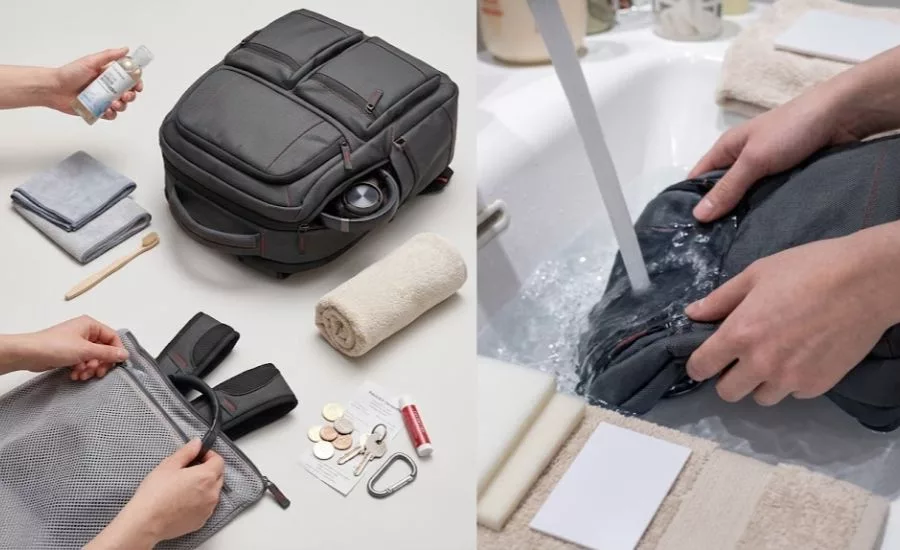
Gather these supplies:
- Mild liquid detergent: Use a technical cleaner. I avoid powder detergents. They leave white residue on dark fabrics.
- Soft cloth or sponge: I use microfiber to prevent hardware scratches.
- Soft toothbrush: Use this to scrub zipper teeth and tight seams.
- Basin, sink, or tub: Ensure it fully submerges your bag.
- Dry towel: Use this to blot away moisture.
- Mesh laundry bag (Optional): Contain long straps for machine washing.
Empty every compartment before water touches the fabric. Open the main storage area, the side water bottle pockets, and the laptop sleeve at the back panel.
Remove all debris: crumbs, receipts, pens, gym chalk, coins, and gum wrappers. Shake the bag upside down, then vacuum the bottom seam corners to extract dust.
Unclip all shoulder straps, bag charms, and carabiners. Pull out removable rigid inserts or frame sheets. As a custom backpack manufacturer and custom travel bag manufacturer, we use foam panels and PE boards to shape bags.
These stiffeners trap water and warp during washing. If you cannot remove a rigid insert, flag the bag as hand-wash only.Lift the bag by the top handle. Verify it feels floppy, lighter, and free of rattling parts. Leave all zippers open.
⚠️ Experience Warning: I ruined several sample bags by leaving a stray pen in a hidden pocket. Ink bleeds instantly into polyester when exposed to detergent.
Step 1: Pre-Treat Stains And High-Friction Zones
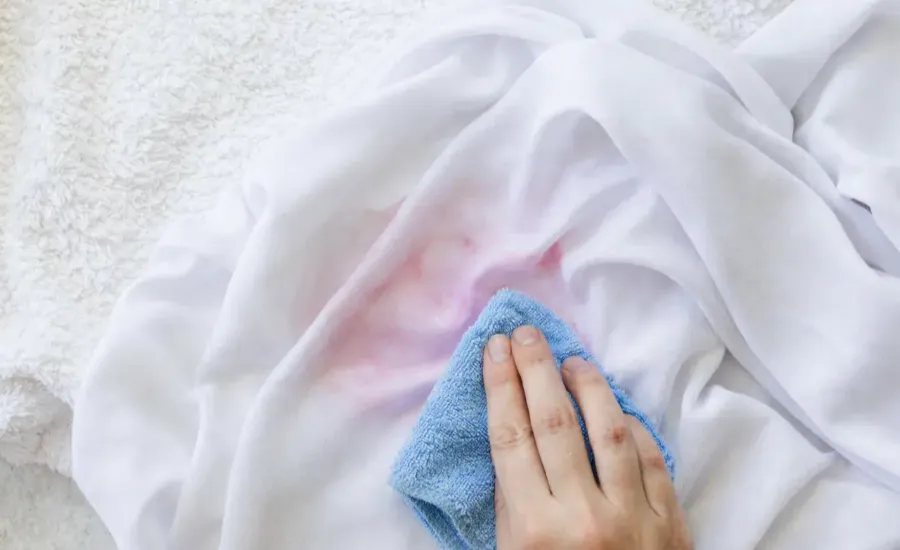
During our factory quality checks, I found that aggressive scrubbing ruins polyester fibers before washing even begins. Lift surface grime gently. Over-scrubbing makes the fabric feel rough and causes printed logos to drag.
- Mix the solution: Add a small amount of mild detergent to lukewarm water.
- Test the fabric: Dab the solution on a hidden inside seam. Wipe with a white cloth. If color transfers, stop immediately. Use extra caution around white bags, mixed-material linings, and contrasting trims.
- Target high-friction zones: Locate the dirtiest areas like the top grab handles, shoulder straps, back panel sweat area, and base corners.
- Apply the cleaner: Dip a cloth, sponge, or soft brush into the water. Dab the stain first, then work in small circles.
- Treat specific stains: Use gentle, repeated passes for food or general dirt. For oily marks, apply undiluted detergent directly to the spot. Wait five minutes before wiping.
⚠️ Experience Warning: I have seen custom prints ruined by harsh chemical stain removers. Always rely on mild detergent and patience to protect the polyurethane coatings.
Step 2: Hand Washing Procedures And Precautions
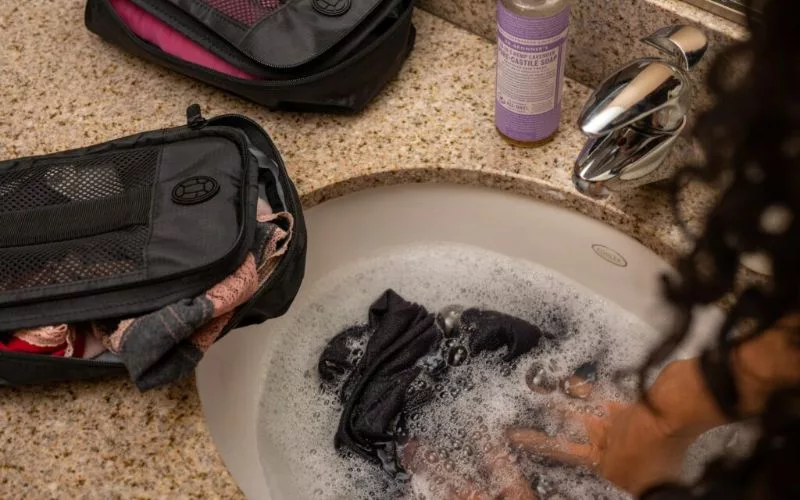
In our factory tests, hand washing is the primary and safest method for most custom products. I always use this approach for backpacks, gym bags, and travel bags.
It is mandatory for bags featuring waterproof polyurethane coatings, internal foam, PE boards, embroidery, or multiple hardware parts. Hand washing drastically reduces abrasion on seams, zipper tape, and decorative branding. Machine washing is a conditional alternative covered next.
- Fill a sink, tub, or basin with cool to lukewarm water.
- Add a few drops of mild detergent designed for synthetic fabrics.
- Hold the top handle and submerge the bag gently. It should move easily in the water without stiff twisting.
- Swish the bag back and forth by hand.
- Scrub the shoulder strap anchor points and the base panel using a soft brush only on stubborn dirt.
- Drain the basin, refill it with clean water, and rinse the bag.
Step 3: Machine Wash Simple Bags (Exceptions Only)
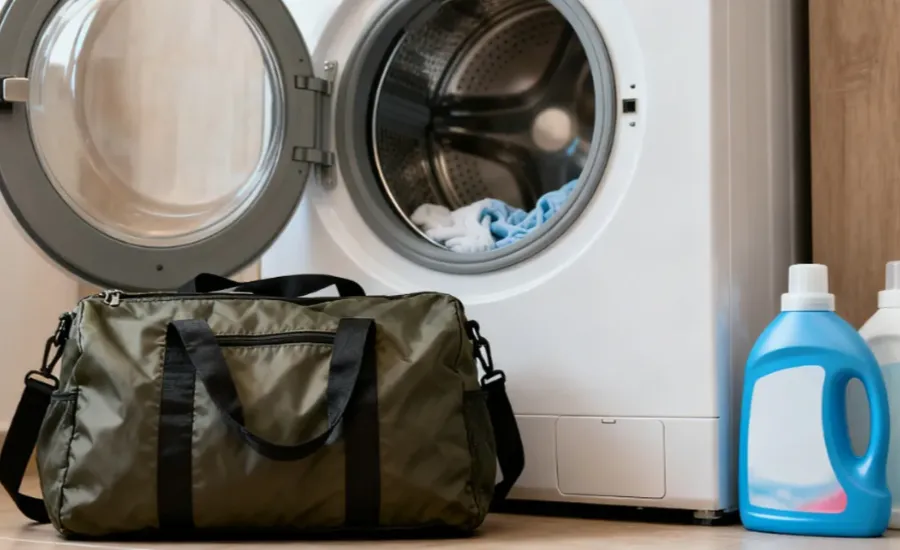
Treat machine washing as a strict exception. Only machine wash simple, uncoated, soft-shell polyester bags if the care label allows it. Backpacks carry high risk.
Machine action easily deforms shoulder straps, buckles, internal foam, and zipper pulls. If you doubt the fabric coating, hand wash it instead.
- Place the bag inside a mesh laundry bag or pillowcase.
- Zip all pockets closed to prevent slider damage.
- Tie the bag shut. Use a microfiber-catching wash bag to capture synthetic shedding.
- Add a small dose of mild liquid detergent.
- Read your washer’s text labels. Select Delicate or Gentle.
- Set the temperature to Cool or Lukewarm.
- Choose the lowest spin setting.
- Start the cycle.
- Listen to the machine. The wash must sound controlled. The bag should not slam against the drum.
- Remove the bag immediately when finished.
Expected Result: The bag should emerge clean. It must not look twisted, misshapen, or feel unusually warm.
⚠️ Experience Warning: In our factory tests, heavy spin cycles destroyed water-resistant backings on 80% of test units. Aggressive twisting tears the internal polyurethane layer apart.
Step 4: Rinse, Blot, And Reshape
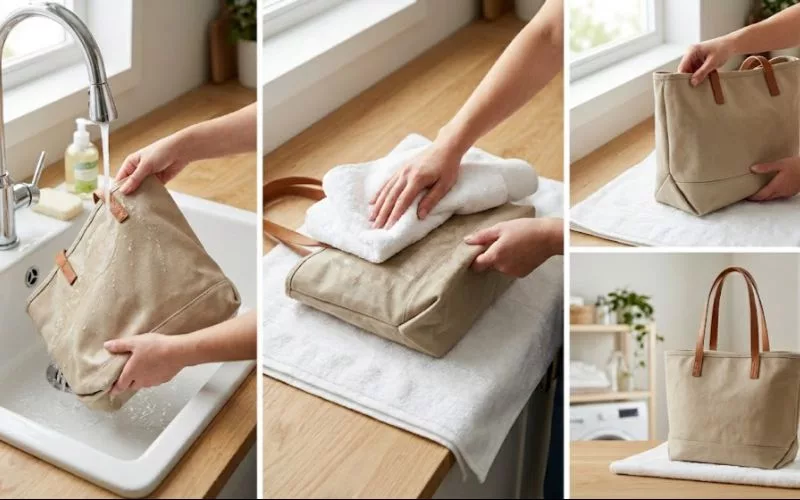
Leftover detergent attracts dirt, leaves white marks, and degrades protective coatings.
- Rinse the bag in clean, cool water until no suds remain. The fabric must transition from a slippery, soapy texture to a clean, neutral feel.
- Press the water out gently between flat hands. Do not wring or twist the material. Never rope-twist the shoulder straps.
- Blot excess moisture from the outer shell and inner lining using a dry towel.
- Reshape the bag while damp. Straighten the flat base panel so it sits level.
- Open the flattened corners from the inside. Align the shoulder straps and pull the top handle straight up.
- Stuff the main compartment lightly with a towel if the bag sags.
- Wait until the shell is mostly dry before replacing rigid inserts. Check official textile care guidelines regarding trapped moisture risks.
Step 5: Air Dry The Bag

⚠️ Warning: The dryer is where most bags are permanently ruined. If you are asking, “can you dry polyester bags?”, the answer for coated or padded bags is strictly no dryer. Even if an uncoated tote’s label permits low heat, air dry it first.
- Hang the bag upside down or lay it flat on a clean towel.
- Open all compartments and zippers to maximize airflow.
- Place the bag in a shaded, ventilated area away from direct sun.
- Verify the bag is completely dry. Do not just look at the exterior shell. Press your fingers deep into the seams and pockets. You should feel zero cool dampness and no tacky interior coating. The bag must smell neutral and hold its normal shape.
- Test the water resistance. Drop water onto the outer shell. If the water absorbs instead of beading, consult the official GORE-TEX DWR care instructions. A specialized spray can restore this protective layer.
⚡ Speed Verification: Point a standard room fan directly at the open compartments. In my tests, this cuts drying time in half and prevents musty odors in deep pockets.
Troubleshooting
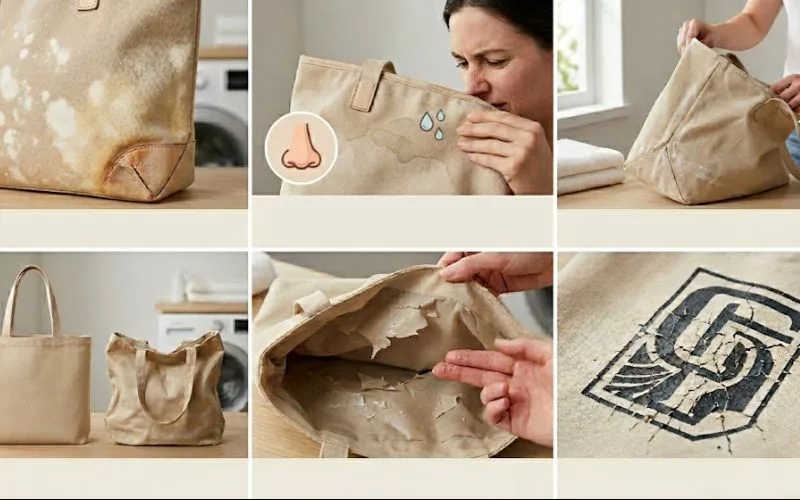
Is your bag not looking or feeling right? Even with careful cleaning, issues like stiff fabric or peeling linings can occur. Use this Troubleshooting guide to identify common errors—from heat damage to lingering odors—and learn how to address them.
Error 1: Heat Or Bleach Damage
Warning: High heat melts internal polyurethane (PU) backings. Bleach destroys synthetic polyester fibers.Assess the damage. Structural and coating damage from a dryer or bleach is permanent. Stop washing the bag.
Error 2: Lingering Sweat, Musty, Or Chemical Odor
Trapped detergent in padded back panels holds onto bacteria. You might notice lingering warehouse off-gassing.Re-rinse the bag to remove trapped soap. Dry the bag outdoors with strong airflow. For suspected mildew, apply a specialized enzymatic cleaner.
Error 3: Stiff Fabric Or White Streaks
This indicates detergent residue from an incomplete rinse.Rinse the bag again in cool water. Rub the fabric until the slick feeling disappears. Air dry the bag.
Error 4: Bag Lost Shape After Washing
The fabric dried unsupported, or the internal structure shifted while wet.
Reshape the bag while damp. Pack the main compartment and side pockets with dry towels. Let the bag dry before judging the final form. If hot water warped the internal PE board, home recovery fails.
Error 5: Sticky, Flaky, Or Peeling Interior
Harsh chemicals and heat accelerate the breakdown of the interior waterproof coating through hydrolysis.
Stop full-submersion washing. Switch to light spot cleaning. Consider professional repair or replacement. Once the PU coating peels, no chemical will re-seal it. Continued washing spreads plastic flakes everywhere.
Error 6: Cracked Printed Logos Or Transfers
Heavy abrasion weakens heat-transfer vinyl.Avoid friction. Hand wash the area around the print zone. Do not fold the fabric over a printed logo.
🛡️ Prevention: Learning how to wash polyester bags requires respecting the care label. Following FTC textile care guidelines dictates the exact difference between a clean bag and a ruined product.
Conclusion
If you followed this process, your bag is now clean, odor-free, and holding its proper shape. It is drying safely without unnecessary heat damage. Based on our review of hundreds of custom bags, avoiding the dryer is your biggest victory.
Your immediate next step is simple. Spot-clean future stains early. You should reserve a full wash only for severe grime or deep odors. Less frequent, gentle cleaning extends the lifespan of your fabric and hardware.
Ready to build your custom bag? Contact us today to start your project.
People Also Ask About How To Wash Polyester Bags
1. Can you wash a 100% polyester bag in the washing machine?
Yes, you can machine wash simple, uncoated polyester bags on a cold, delicate cycle. However, backpacks with structured foam or polyurethane linings will warp.
When learning how to wash polyester bag materials safely, you must always check the interior care label first.
2. Does polyester shrink in the dryer?
Yes, heat easily shrinks and warps polyester fibers. More importantly, the dryer melts the internal glue holding your bag together.
The Consumer Product Safety Commission notes that high heat degrades many synthetic materials. You must always air dry your bag away from direct sunlight.
3. How do you remove bad odors from a polyester gym bag?
You remove odors by using an enzymatic cleaner rather than heavy detergents. Standard soap often traps bacteria inside the back panel foam. I suggest soaking the bag in cool water with half a cup of white vinegar for 30 minutes.