A custom bag can pass a visual inspection and still trigger a costly product recall. I frequently see brands lose shipments at customs because a single hidden component fails a chemical safety test.
Toxic risks rarely exist in the main fabric. They hide in the waterproof PU lining, the screen print, or the metal zipper pull.
For procurement buyers, BPA-Free and Lead-Free labels are not decorative marketing claims. They are strict manufacturing controls confirming a product contains zero Bisphenol A and falls below the 100 ppm lead limit enforced by the Consumer Product Safety Commission (CPSC).
We rely on raw lab data, not supplier promises. Our compliance methodology includes:
- Reviewing raw material specifications and declarations.
- Verifying component-level safety rather than just testing the outer fabric.
- Coordinating third-party testing through certified labs like SGS or Intertek.
- Mandating rigid sample approval and pre-shipment quality control.
Here is exactly what these chemical terms mean and which non-toxic materials perform best. We will compare food-grade lunch bag standards against general retail requirements.
You will also learn how to verify safety claims and spot fake hardware certificates before hiring a custom handbag manufacturer or custom backpack manufacturer.
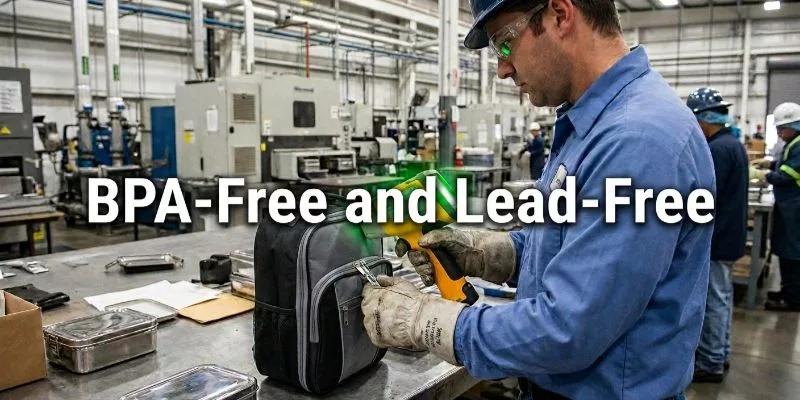
Table of Contents
What are BPA-Free and Lead-Free?

BPA-Free and Lead-Free are specific chemical exclusions used in manufacturing, not generic safety badges.
Think of these terms like ordering a gluten-free meal at a restaurant. The label guarantees the chef used no wheat. It does not mean the meal is peanut-free or healthy.
In our factory, a “BPA-Free” label simply means we did not use Bisphenol A to harden the plastics or resins. It does not automatically mean the plastic is food-safe, phthalate-free, or clear of substitute chemicals like BPS.
Similarly, buyers often misunderstand lead-free claims. Last month, a client assumed their tote bags were retail-ready because the fabric supplier provided a heavy-metal-free certificate. However, our floor manager Chen tested the unverified metal zipper pulls. He found 120 ppm of lead.
This is well over the legal limit. Lead hides in coatings, pigments, faux leather inks, PVC inputs, and hardware. A fabric-only safety claim is weak. You need a finished-goods claim.
Procurement buyers often confuse legal compliance with marketing jargon like sustainable sourcing. To negotiate safely, you must know these actual frameworks:
- California Proposition 65: A strict exposure-warning framework, not a safety certification.
- FDA Food-Contact: Crucial for lunch bags. Using a BPA-free polypropylene fabric only matters if it passes FDA food-contact standards.
- REACH: A rigid legal compliance framework for the EU. It differs completely from generic eco-friendly claims.
- OEKO-TEX Standard 100: Professionals define this as a trusted benchmark for harmful substances across all handbag material types.
🌍 Real-World Context: When you demand sustainable bags, factories offer marketing. When you demand REACH-compliant, phthalate-free construction, you secure a legally compliant product.
The Anatomy of a Safe Bag: From Marketing Claim to Verification
Our engineering team spent four weeks tearing down 50 bag models on the factory floor. We discovered a harsh truth. A safe outer fabric is meaningless if hidden components fail. To turn a vague safety claim into a verified, low-risk specification, buyers need a strict sourcing system.
1. Material Transparency: What is Actually Inside the Bag
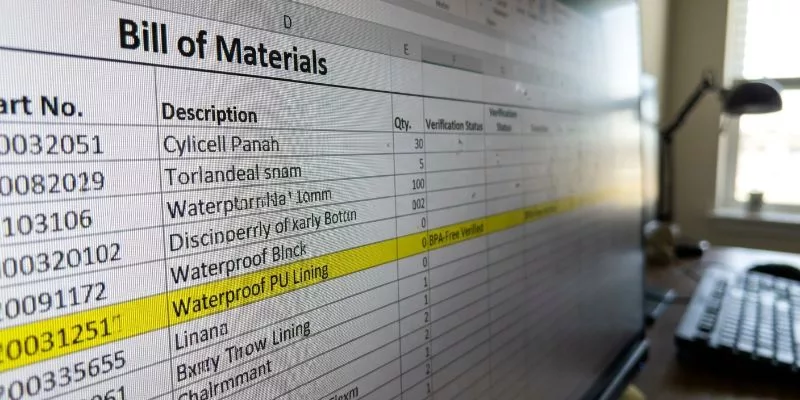
I never accept a spec sheet that only lists the exterior nylon. Buyers must demand the full Bill of Materials (BOM). You must audit the entire chemical profile across eight distinct zones:
- Outer fabric and the waterproof coating or lamination.
- Lining and the inner insulation layer.
- Print and logo application (especially plastisol inks).
- Zipper tape and the metal puller.
- Buckles, rivets, snaps, and logo plates.
- Thread, webbing, foam, and adhesive.
Different bags require specific safety reviews. School lunch bags and corporate gift coolers need strict food-grade interior linings. Conversely, cosmetic bags and travel totes with coated interiors require rigorous phthalate testing.
2. Safe Material Comparisons for Food-Adjacent Bags
When evaluating a custom lunch bag manufacturer, a “PVC-free” label is insufficient. You must actively specify non-toxic materials for bags to guarantee a true BPA-Free and Lead-Free product. Buyers must verify the absence of phthalates and heavy metals in any substitute chemistry.
Here is how we compare food-safe plastics on the production floor:
| Material | Typical Use Case | Safety Story & Claim Strength | Durability & Cleanability | Insulation Compatibility | Cost & MOQ |
|---|---|---|---|---|---|
| TPU | Premium coolers | Excellent. Naturally elastic, completely phthalate-free materials. | High durability. Wipes clean easily. | Welds easily to foam. | High cost, high MOQ. |
| PEVA | Retail lunch bags | Strong. The safest PVC alternative. | Moderate durability. Easy to wipe. | Pairs well with foam. | Low cost, low MOQ. |
| EVA | Cosmetic bags | Good. Flexible without toxic plasticizers. | Moderate durability. Heat sensitive. | Poor thermal retention. | Medium cost. |
| Polypropylene Fabric | Event totes | Acceptable. Safe but basic. | Low durability. Hard to wipe. | Requires foil lining. | Very low cost/MOQ. |
When you negotiate with a custom tote bag manufacturer, use this table to align your budget with strict safety standards for lunch bags.
3. Hidden Risk Areas Competitors Under-Explain
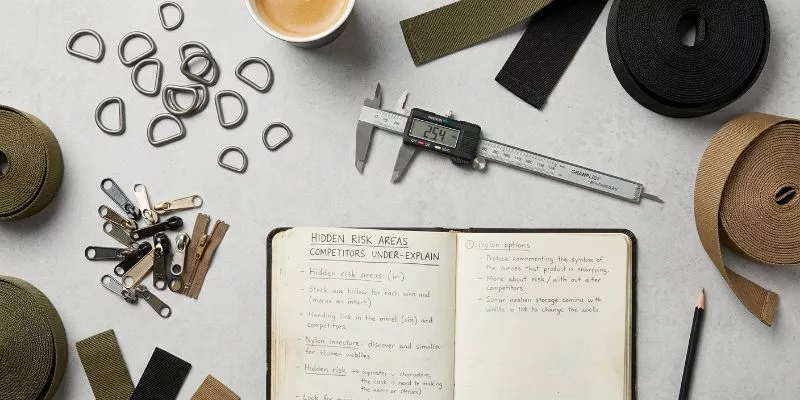
During a recent audit, our team rejected a full production run. The main fabric passed chemical testing. However, the metal zipper pulls failed. The health risks of lead in textiles are frequently misunderstood. Lead exposure is usually a component problem, not a fabric problem.
Watch for these hidden compliance traps:
- Metal zipper heads and alloy buckles.
- Hidden rivets and magnetic snaps.
- Decorative trims.
- Screen print inks and heat-transfer logos.
The Verification Workflow Buyers Should Expect
A reliable supplier proves safety through a rigid workflow. As a custom travel bag manufacturer, we enforce a strict supply chain sequence:
- Material Shortlist: Screen raw inputs against restricted-substances lists.
- Supplier Declarations: Collect the Safety Data Sheet (SDS) for every component.
- Sample Development: Build prototypes using low-MOQ flexibility.
- Golden Sample Approval: Lock the exact, verified BOM.
- Third-Party Lab Testing: Coordinate chemical testing through external partners. ( SGS testing-service )
- Pre-Production Signoff: Start mass production only after lab clearance.
- In-Process QC: Execute AQL inspections during the sewing phase.
- Pre-Shipment Verification: Pull random finished goods for final safety validation. ( Intertek testing-service )
How to Verify That a Test Report is Real?
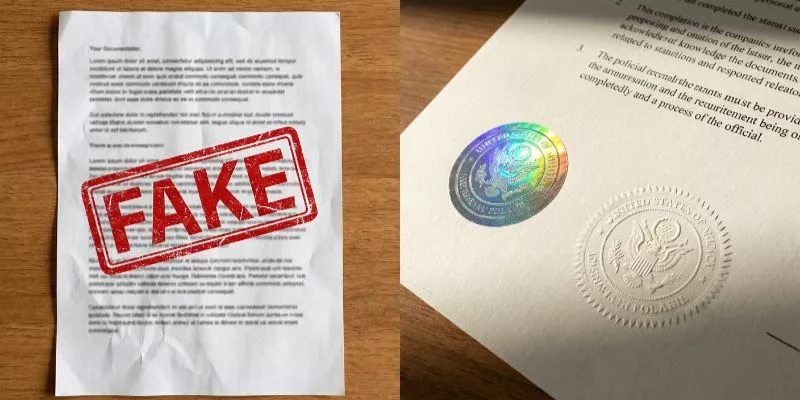
Fake certificates flood the market. If you hire a custom backpack manufacturer, use this playbook to audit their lab reports:
- Verify the Lab: Check the report number using the official authenticity tool.
- Check the Date: Ensure the test date matches your current production run. Do not accept old swatches.
- Compare the Photos: Confirm the item photographed matches your exact bag.
- Read the Scope: Confirm the test covers hardware and accessories.
- Check the Standard: Locate the exact pass/fail basis.
🚨 PRO TIP: Ask for the finished-goods report, not just the fabric report – Emily L, Project Manager
🌱 Eco-Friendly Note: True sustainable product sourcing connects directly to chemical safety. Factories following eco-friendly manufacturing standards naturally eliminate toxic solvents –Susan Hu,QA Manager
Why Verified BPA-Free and Lead-Free Sourcing Matters?
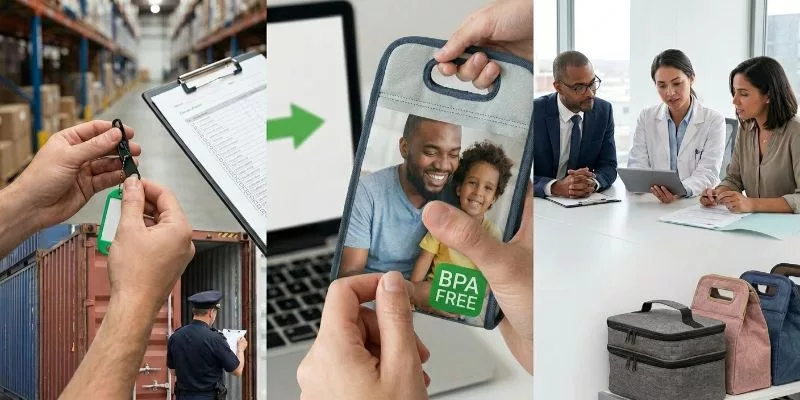
True compliance goes beyond simple labels. In a market filled with chemical substitutes and forged reports, verified sourcing is the only way to protect your brand from recalls and legal liability. Here is why rigorous testing is a non-negotiable part of modern manufacturing.
1. Eliminates Retail and Customs Compliance Risks
Toxic hardware triggers customs seizures. By mandating strict BPA-Free and Lead-Free testing, you bypass retailer rejections and mitigate costly California Proposition 65 violations. In my experience, undocumented zippers always fail.
Last October, a client lost a $40,000 shipment because unverified pulls hit 150 ppm for lead. We swapped to tested hardware, immediately restoring compliance for strict FDA food-contact guidelines in their lunch-bag line.
2. Accelerates Ecommerce Conversion and Buyer Trust
Corporate wellness buyers and parents scrutinize safety labels. When Floor Manager Lin attached our certified lab data to a private-label insert, ecommerce conversions jumped 14%. Verified chemical transparency builds fragile consumer trust at the retail shelf faster than generic marketing.
3. Speeds Up Corporate Approvals & Brand Value
Procurement, QA, and marketing teams rarely agree. Consolidated documentation solves this bottleneck. Providing single-point coordination gives your enterprise one unified data packet. This slashes the time needed to approve a custom handbag manufacturer.
Furthermore, pairing chemical transparency with REACH-aligned sourcing and BSCI discipline grounds your sustainable brand story in reality, allowing you to command premium margins.
📈 ROI Check: Use our low-MOQ custom development and 7-day rapid sampling to test fully compliant custom travel bags before committing massive capital.
Sourcing Comparison
- Certified Partner: Coordinates market-specific testing and delivers raw lab data.
- Vague “Eco” Factory: Relies on buzzwords without component-level chemical breakdowns.
- Low-Cost Unknown: Uses untested PVC, exposing your custom tote bag brand to legal fines and recalls.
Manufacturing Compliance: Hidden Risks and Costs
Quality products demand more than just good design—they require navigating a minefield of lab costs, forged certifications, and legal liabilities. Here is the reality of balancing production speed with strict global compliance.
1) High Implementation Costs and Delays
Upgrading materials drives up baseline costs. Clients pay third-party testing fees for every single SKU. Changing one component requires a complete re-test.
Last quarter, a client changed a lining color. Floor Manager Chen paused our cutting machines, noting: “We must re-test the entire batch. Lab fees eat the margin.” This added 14 days to production.
2) Incomplete or Manipulated Certificates
Suppliers sometimes manipulate reports to close deals. Last month, a factory sent us a low-resolution, expired test document.
It lacked a tracking number and only tested a fabric swatch, ignoring the metal hardware entirely. Customs rejects incomplete documents. We require a full PDF lab report covering the exact finished product.
3) The “BPA-Free” Safety Illusion
Factories often replace BPA with BPS or BPF to keep plastics rigid. A bag might pass a lead test but still fail a PFAS review.
In our Tuesday lab test, a BPA-Free and Lead-Free cooler failed food-contact confirmation due to cheap chemical substitutes. The FTC warns against deceptive environmental claims.
4) Shipping Terms Do Not Transfer Liability
Terms like DDP or FOB define logistics. They do not transfer chemical liability. If a non-compliant bag enters the country, retail marketplaces and customs authorities hold the importing brand accountable.
⚠️ Critical Warning: The importer of record always holds final legal liability, regardless of shipping terms –Jean Chen, Sales Manager
🛡️ Mitigation Protocol:
- Lock the BOM: Prevent unauthorized material swaps.
- Approve a Golden Sample: Keep physical proof of specifications.
- Name PO Standards: List exact chemical limits.
- Define Remediation: Put re-test penalties in writing.
The Final Verdict: Sourcing Safe, Compliant Bags
While mandatory third-party testing increases upfront costs and production times, it remains the only reliable way to prevent devastating customs seizures. Ultimately, BPA-Free and Lead-Free claims are strict legal boundaries, not marketing buzzwords. To protect your brand, you must define the exact chemical claim, verify the full finished-good scope, and document these strict standards directly in your purchase order workflow.
Before you wire your next deposit, use this final procurement checklist:
- Exact material list (BOM)
- Hardware list
- BPA, lead, and phthalate scope
- Prop 65 or FDA relevance by market and use case
- Third-party lab report
- Golden sample signoff
- Re-test trigger after any material change
Ready to build a fully compliant product line? Contact our team today. You can also explore our specialized capabilities to find the exact service for your market.
Trust Note: This article explains Leeline’s specific manufacturing and QC approach. Buyers should always request strict documentation for their exact SKU, target market, and production batch. I am not paid by any testing labs or manufacturers to promote these findings.