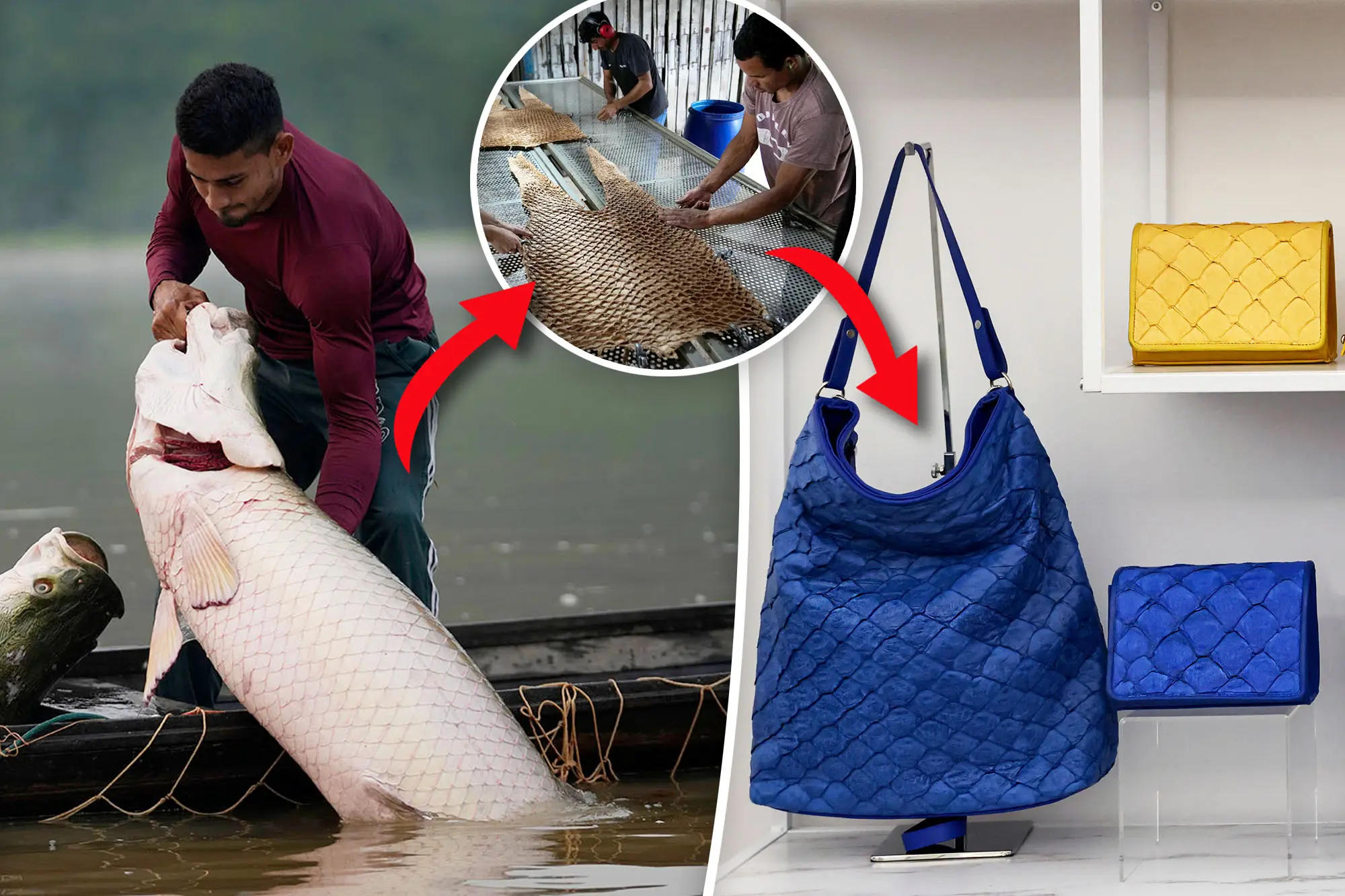
Fish leather is nine times stronger than traditional cow leather. It can withstand an impressive 90 newtons, while cow leather only manages 8 to 25 newtons. This remarkable material has a rich heritage. Indigenous peoples living by the coast and rivers used fish skin leather as their main material. This was before manufactured fabrics were available.
Fish leather lets custom handbag manufacturers create high-quality, durable, and eco-friendly products. Its strength and flexibility make it ideal for crafting bespoke handbags that stand out in the luxury market.
Luxury brands such as Prada, Christian Dior, and Louis Vuitton have turned to fish leather for their designs. This material is special and also good for the environment. This traditional material offers a sustainable solution that meets today’s fashion demands.
But how exactly is fish leather made, and where does it come from? Keep reading to uncover the fascinating process behind this sustainable material.
Table of Contents
Understanding Fish Leather Properties
Fish leather’s unique properties come from its distinctive physical structure. The material features collagen fibers arranged in a crosswise pattern. This is different from traditional leather, which has fibers aligned in parallel. The skin has 65.12% moisture, 27.79% protein, 7.11% fat, and 0.92% ash.
▷ Physical Structure of Fish Skin
Fish leather’s remarkable properties stem from its fibrous, nodular structure. Scanning electron microscopy reveals that collagen, the key structural protein, accounts for 30% of total fish by-products. The histological analysis shows that the collagen fibers are intact. These fibers play a key role in producing high-quality leather.
▷ Strength and Durability Tests
Lab tests show fish leather’s exceptional strength characteristics. Here are the key measurements:
- Fish leather can hold a tensile strength of up to 90 newtons. This is especially true for salmon and perch.
- Sole fish leather’s tear resistance measures 62 N/mm.
- Treatment methods affect the elongation at break, which varies between 51.5% and 80.78%.
▷ Water Resistance Capabilities
Fish skin leather has natural water resistance properties that vary based on processing methods. Untreated fish leather shows a water contact angle close to 80 degrees. Specialized coatings enhance water resistance and still allow for breathability. They achieve contact angles as high as 130 degrees. The material remains a bit porous and absorbs moisture with long exposure.
Processed fish leather’s thickness ranges from 1.79 mm to 2.82 mm. Fish leather has great qualities that make it suitable for many products. You can use it for fashion accessories and practical items alike.
Expert Advice:
” Fish leather has water resistant qualities because it is itself so rich in oil. The fish odor is removed in the early stages of tanning, which is the process of converting a skin into a leather and after it is finished, has a characteristic common odor like other leathers.”
———— zhijiang zhu, CEO at HARDAWAY BAGS MANUFACTURING CO.,LTD
How is Fish Leather Made?
Fish skin leather making is an ancient craft that goes back hundreds of years. Indigenous communities worldwide created advanced techniques to turn fish skins into lasting materials. The process starts with careful cleaning and preparation.

Cleaning and Descaling Methods
The first step needs thorough cleaning of fish skins in cold water to remove dirt. All grease and grime that cause odors must be removed. Descaling works best when you scrape from tail to head, which is like “rubbing a cat backwards” – this keeps the skin intact.

Natural Tanning Techniques
Traditional tanning methods use three main types of materials:
- Natural fats (fish oil, bone marrow, eggs)
- Vegetable materials (tree bark, leaves, gallnuts)
- Mineral substances
Tanners dissolve vegetable tannins in water and soak the leather to preserve it. Some indigenous groups used special methods such as cold-smoking over fire. This made the leather water-resistant and stopped bacteria from growing.
Quality Control Standards
Fish leather production needs strict quality standards. Each piece goes through detailed checks for flaws, including coloring, texture, and strength. The whole process takes more than 20 different steps. Teams watch the tanning phase closely to make sure every batch meets the same high standards.
The leather gets darker as time passes, just like regular leather, and changes based on how people use it. For traditional fish skin leather, success comes from timing and closely monitoring every stage.
Modern Manufacturing Innovations
Fish skin leather manufacturing has started a new era. This change comes from tech advancements. They boost efficiency and support sustainable practices. Modern facilities now replace traditional methods, processing thousands of fish skins every month.
Industrial Scale Production
Large tanneries now make about one ton of fish skin leather each month. That’s around 10,000 skins. We carefully select premium fish skins. We focus on their grain uniformity and scale patterns. Production takes three to four weeks. These facilities use geothermal energy and recycle water. They can reuse water 8 to 9 times.
Modern facilities can process salmon, sturgeon, and trout simultaneously. The manufacturing includes digital, water-based ink printing technology. This technology creates custom patterns and finishes while meeting environmental standards.
Chemical-Free Processing
Tanning methods have changed radically with new eco-responsible approaches. The process uses:
- Organic tannins from mimosa, chestnut, and quebracho.
- Patent-pending treatment formulas that change collagen fibers.
- Water-based ink technologies for green printing.
These changes meet European REACH standards. They also make sure no harmful substances are present. Research projects now focus on developing clean technologies. Water-based printing methods have shown excellent results. The entire process needs less energy and resources than regular leather production. Quality standards remain high while maintaining environmental responsibility.
Expert Advice:
” Fish skin leather is a product made from tanned fish skin, focusing on antiseptic treatment of stuffed fish. It is an eco-friendly leather product that uses the skin of fish, which was originally not used as a resource, and sticks to the traditional manufacturing method of natural origin using vegetable tannins.”
———— Yvonne Chen Handbags, Jiangmen SENPOLO Leather fashion handbags manufacturer
Where is Fish Leather Used?
Fish skin leather is now a top choice in sustainable fashion. In 2023, the footwear segment took the biggest market share. Luxury brands such as Prada, Christian Dior, and Louis Vuitton now use fish leather in their collections.
① High-End Designer Products
The fashion industry represents 30% of the market share. Designer brands choose fish skin leather because of its distinctive texture and green appeal. These brands create exclusive collections that highlight the material’s unique features.

② Custom Handbag Manufacturing
Custom handbag manufacturers now create everything from shoulder bags to laptop carriers. These products blend fish leather with Italian leather manufacturers‘ s vegetable-tanned leather beautifully. The material is versatile. It allows for bags that measure up to 47 cm x 28 cm. These bags are great for 13-inch laptops and daily essentials.
③ Footwear Industry Usage
Fish leather’s unmatched durability has made the footwear sector the market leader. Manufacturers use this material for many styles, like sandals and fancy designer shoes. The material works well for various designs. Its unique look also promotes greener footwear choices.
④ Accessories Market Growth
Consumer demand for unique, eco-friendly options is boosting the accessories segment’s growth. Wallets, belts, and watch straps have seen increased popularity. Fish leather makers have teamed up with e-commerce platforms. This helps them reach more customers who want sustainable fashion.
Conclusion
Fish leather proves its worth through traditional craftsmanship and new ideas. This eco-friendly material is nine times stronger than regular leather. It also maintains the unique look that luxury brands admire.
The material’s exceptional durability comes from its distinctive crosswise pattern of collagen fibers. This makes it perfect for fashion items of all types. Modern technology has made traditional manufacturing faster and eco-friendly.
Leading fashion houses now see fish leather’s true value. They use it extensively in footwear, handbags, and accessories. The material works well in products ranging from everyday items to luxury goods. You can get custom fish leather handbags, duffle bags, travel bags, and more. Just email us at [email protected] or check out leelinebags.com.
Related Reading:

What is Microfiber Leather? An Expert Guide to This Modern Material

What Is Distressed Leather, How Is It Made and Where?

What is Cowhide Leather? Expert Guide to Quality, Grades, and Uses
FAQs
Q1. What types of fish are commonly used to make fish leather?
Fish leather comes from many marine and freshwater species. Examples include salmon, sturgeon, trout, cod, and tilapia. Fish skin has unique textures and patterns. This makes fish leather a versatile choice for fashion and accessories.
Q2. How does fish leather compare to the durability of traditional cow leather durability?
Fish leather is surprisingly strong. It can have a tensile strength of up to nine times that of cow leather. Its special crosswise collagen fiber structure gives it great strength and wear resistance. This makes it ideal for many different uses.
Q3. What are the key steps in the fish leather manufacturing process?
Clean and descale the fish skin first. Then, tan it using natural or eco-friendly methods. Modern manufacturing may incorporate organic tannins and water-based technologies. The whole process usually takes three to four weeks. It has more than 20 steps to guarantee quality and consistency.
Q4. Is fish leather waterproof?
Yes, fish leather has natural water-resistant properties due to its high oil content. The degree of water resistance can vary depending on the processing methods used. Some treatments can boost this property even more. They can reach water contact angles of up to 130 degrees and still keep breathability.
Q5. How is fish leather being used in the fashion industry?
Fish leather is becoming popular in sustainable fashion. It is especially favored for footwear and accessories. Top designer brands are adding it to their collections. This includes handbags, shoes, and wallets. Its distinct texture and eco-friendly nature attract consumers looking for sustainable leather options.