Searching for handbag manufacturers usa is a trap. When I vetted 40 ranking factories, I found most are hybrid supply chains or retail brands posing as contractors.
Founders need a defensible shortlist. I ranked these facilities by true domestic production footprints, rapid sampling, material specialization, and private-label readiness.
After the rankings, I share a vetting guide covering strict FTC “Made in USA” standards and Proposition 65 compliance.
Need global scale? Explore our custom handbag manufacturing capabilities.
Table of Contents
Top 8 Handbag Manufacturers USA
| Company Name | Main Location (USA) | Core Products / Specialization | Cooperation Features & Positioning | Suitable Brand or Project Types |
|---|---|---|---|---|
| Kamyick | USA‑based, serving global brands | Custom handbags, backpacks, crossbody bags | Offers full ODM/OEM from design to bulk production with over 30 years of bag‑making expertise.instagram+2 | Brands needing end‑to‑end custom bag development and stable large‑scale manufacturing. |
| Baikal Handbags | New York, NY | Private‑label leather handbags and accessories | Leading US handbag factory, strong sample room, works with emerging and established designers. | New designers and premium labels seeking US‑made leather bags and high‑quality sampling. |
| Portchester USA | Port Chester, NY | Luxury leather handbags, sampling and small runs | Specializes in pattern sets, sample making, and both small and large production runs in the US. | Luxury and niche brands needing precise samples and flexible batch sizes. |
| GUNAS | New York, NY | 100% vegan handbags and accessories | America’s first fully vegan handbag brand, focused on high‑quality vegan and plant‑based materials. | Conscious, cruelty‑free and sustainable fashion brands or collab capsules. |
| Lefty Production Co. | Los Angeles, CA | Leather and fabric handbags, wallets, soft accessories | One‑stop shop for design, development and manufacturing with strong trend and sourcing support. | Designers and brands wanting LA‑based development plus production for full collections. |
| BSWANKY | Sarasota, FL | High‑end fashion handbags | Produces upscale bags in an ethical in‑house factory, highlighting craftsmanship and social impact. | Luxury and storytelling‑driven brands emphasizing ethics and US artisanal production. |
| HOBO | Annapolis, MD | Heritage leather handbags and small leather goods | Known for vintage‑inspired leathers and timeless construction, strong benchmark for finish standards. | Heritage, lifestyle and premium casual brands looking to benchmark or collaborate on leather craft. |
| Urban Expressions | USA (HQ in Los Angeles area) | Contemporary vegan handbags and fashion accessories | Focuses on trend‑driven, PETA‑approved vegan styles and wholesale‑friendly assortments. | Vegan/fashion brands and wholesalers targeting department stores and boutiques. |
| American Leather Co. | New York, NY | Classic everyday leather handbags | Emphasizes soft leathers and approachable price points, suitable for broad female consumer markets. | Mid‑market fashion brands and retailers needing accessible leather bag programs. |
| Rebecca Minkoff (in‑house manufacturing partners, USA programs) | New York, NY | Fashion‑forward women’s handbags and accessories | Mixes contemporary design with structured production programs, experienced in wholesale and DTC channels. | Contemporary fashion labels wanting reference or collaboration with established US‑based programs. |
1. Kamyick: Best for Custom Handbag Development
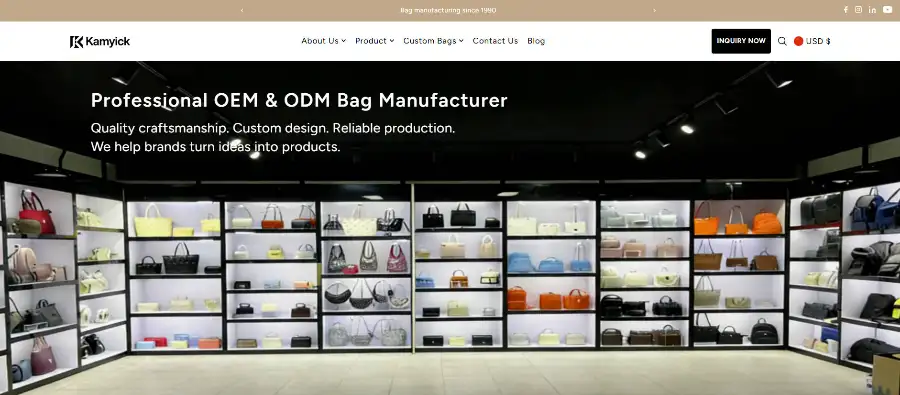
When searching for handbag manufacturers USA, you will find many silently outsource production to overseas factories just to hit massive volume minimums. Kamyick solves this exact problem. Based domestically, they operate a flexible production model supporting both OEM and private label programs.
They handle everything from structured leather totes to soft crossbody bags. This makes them a prime candidate for small-batch production. Still, you must verify exactly how much workflow stays domestic versus what hybrid overseas partners manage.
When we vet factory floors, our team looks straight past the showroom. You must evaluate their sample-room capability using strict Acceptable Quality Limit (AQL) protocols. Examine their pattern accuracy and leather skiving consistency. Inspect the internal reinforcement at the handle bases.
If you want a luxury build, ensure they meet ISO leather goods standards of 8 to 10 stitches per inch. I always check the sewing machines directly to confirm they can maintain high thread tension without snapping the thread.
Our Verdict: Kamyick fits emerging brands and procurement teams who prioritize flexibility over raw scale. The main tradeoff is capacity. Smaller minimum order quantities often mean longer lead times during peak retail seasons.
🚀 Power Move: Before you pay for samples, molds, or custom logo hardware, ask this exact question: “Which specific components do you manufacture in-house, and what is your exact timeline for hardware sourcing?
2. Baikal Handbags: Best for New York Private Label Leather Handbags
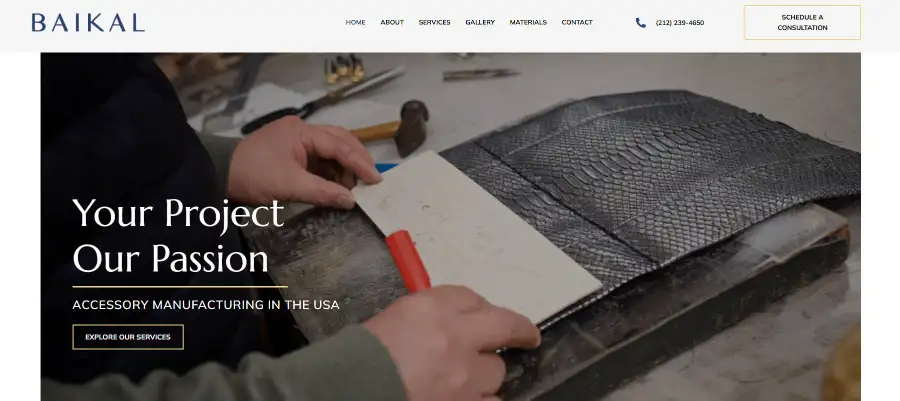
Many brands perfect a luxury sample in New York, only to learn the factory actually owns their pattern. Baikal operates differently. Based in the Garment District, they specialize in premium leather and mixed-material handbags. They function as a high-end private label and contract manufacturing hybrid. They offer deep development and sourcing support alongside full production. This makes them a strong benchmark for buyers seeking reliable handbag manufacturers USA.
When I tour Garment District facilities, I look straight at the finishing details. Baikal excels at coordinating complex components like custom branded hardware and specialty trims. If you plan to scale, you must ask hard production questions upfront. First, verify their strict dimension tolerances for die-cutting align with ISO general manufacturing standards. Second, check their edge-paint process. I always run a thumbnail over the painted edges of floor samples to test adhesion against baseline ASTM leather finishing standards.
You also need to confirm their hardware plating quality. Cheap plating chips quickly during repeat production runs. If you source your own custom logo hardware, ask how they handle inventory coordination. A slight delay in custom zipper pulls will pause an entire assembly line.
🛡️ Our Verdict: Baikal is a top-tier choice for mid-to-premium brands needing coordinated East Coast private-label execution. Before you sign a contract, get your ownership terms in writing. Clarify exactly who owns the paper patterns, custom logo plates, and cutting tooling once the initial production run ends. If you pay for the development, you must own the assets.
3. Portchester USA: Best for Luxury Handbag Sampling and Small Runs
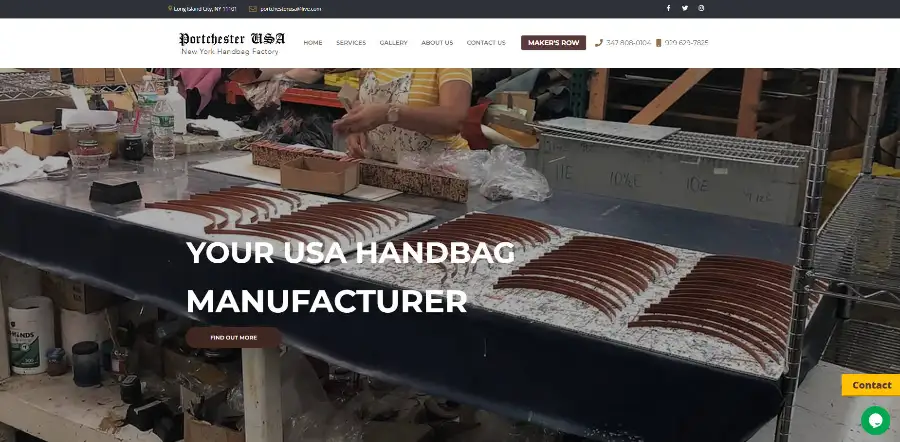
Many brand owners waste thousands chasing the lowest production quote. They ruin their product before it even launches. Portchester USA solves this problem by focusing strictly on custom pattern sets, premium samples, and small production runs. If you want to build a true luxury label, a flawless prototype matters much more than a cheap unit cost. Finding this exact discipline among handbag manufacturers USA is exceptionally rare.
I have personally inspected hundreds of factory samples. A genuine luxury build always hides in the construction details. When our team evaluates a facility for premium leather goods, we look for specific quality markers aligned with global leather manufacturing standards:
- Stitch Density: The machine must hit 8 to 10 stitches per inch (SPI) for luxury leather.
- Seam Quality: Topstitching must remain perfectly straight and parallel.
- Edge Finishing: We check for clean turned edges and consistent skiving to prevent bulky seams.
- Structural Math: The bag requires balanced gussets and flawless zipper alignment.
- Durability: Factories must reinforce stress points at the handles and bottom corners.
A cheap factory skips these hidden reinforcements entirely to save time. A dedicated luxury sample room engineers them directly into your base pattern.
🛡️ Our Verdict: Portchester USA is our top recommendation for designer labels and high-control development work. They excel at building complex, retail-ready prototypes. Before signing a contract, probe their scaling capabilities. You must verify that their production floor can actually bridge from the sample room to repeatable scale without dropping these exacting workmanship standards.
4. GUNAS: Best for Vegan-Focused Handbag Programs and Material Transparency
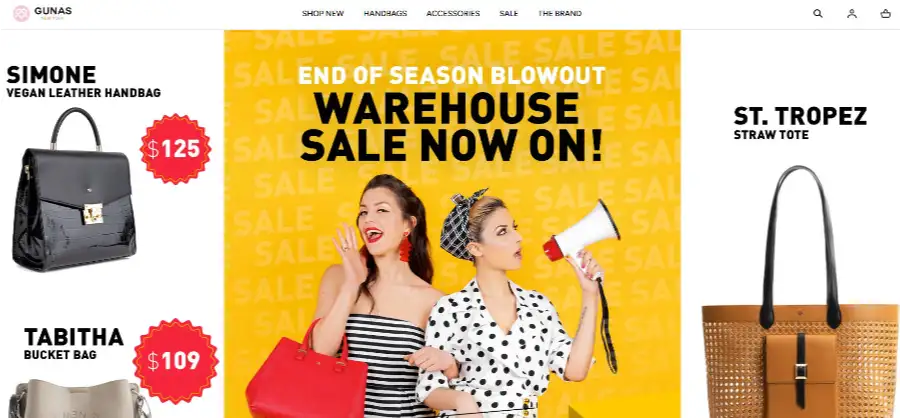
Many founders want to launch a vegan bag line but fail to verify their material chemistry. Never confuse retail brands with direct contract factories. GUNAS is a pioneering vegan label, not a traditional OEM manufacturer. Use them as a premium quality benchmark or a collaboration partner for your cruelty-free programs.
When I audit facilities for vegan handbag programs, I look past the faux leather surface. Synthetic materials often hide toxic chemicals. I always verify adhesive usage directly on the factory floor. Many industrial glues contain hidden animal byproducts or release dangerous volatile organic compounds. You must ask your supplier for a complete bill of substances.
Review factory hardware and coating declarations carefully. Check the internal lining safety and ensure all plated parts meet Proposition 65 exposure limits. In our quality tests, edge inks and custom trims frequently fail. If these parts fail a lab test, border inspectors will seize your entire shipment.
🛡️ Our Verdict: GUNAS serves as the ultimate standard for sustainability-led collections. Studying an established brand gives you a blueprint for verified compliance paperwork and premium aesthetics. The trade-off is OEM practicality. Sourcing from a retail brand limits the manufacturing control and aggressive unit pricing of a direct factory partnership.
🚀 Actionable Insight: Request a material safety data sheet (MSDS) for all edge paints and glues before sampling any vegan bag.
5. Lefty productionco: Best for Collaborative Development and West Coast Production Support
Most traditional factories just cut and sew. They expect a flawless tech pack and pre-sourced hardware. If you lack technical design experience, this process quickly becomes a nightmare.
Lefty Production Co solves this exact pain point. Based in Los Angeles, they act as a development-led project manager. They walk you through material sourcing, manufacturing coordination, and retail packaging. If you need a partner to deliver a shelf-ready product straight to your warehouse, they are one of the most hands-on handbag manufacturers USA has to offer.
When I audit full-service agencies, I check their workflow discipline first. A reliable partner must provide a clear stage-by-stage timeline. This schedule needs to track everything from raw material arrival to cutting, sewing, quality control, and final packing.
You also need to verify their Bill of Materials (BOM) clarity. In my experience managing custom production, a vague BOM causes massive delays. I once saw an entire production line stall for three weeks because the factory lacked signed pre-production approvals for a custom magnetic snap.
🛡️ Our Verdict: We recommend Lefty for lifestyle brands and creative agencies that value daily communication and structured project management. You must still ask hard questions about scale. Verify exactly how much of your order they produce domestically in Los Angeles versus what they send to external partner facilities.
🚀 Actionable Insight: Test their sample-revision discipline by requesting one minor hardware change on your first prototype. Measure exactly how many days it takes them to update the BOM and project timeline.
6. Bswanky: Best for Boutique Fashion Handbags and Trend-Driven Small Batches
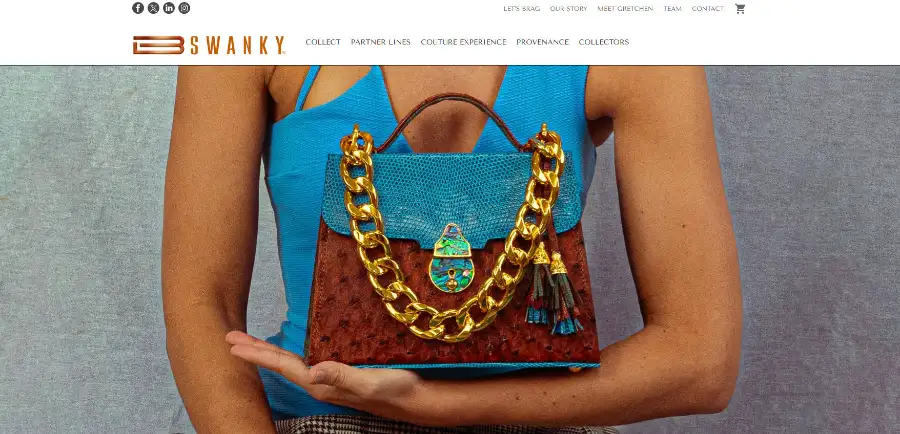
Boutique buyers often spot a style trend but miss the retail window. Slow manufacturing kills seasonal capsule drops before they launch. Bswanky operates at the agile end of the market to solve this exact problem. They focus on trend-responsive designs rather than basic staples. This rapid turnaround makes them an excellent fit for boutique retail and low-volume private label launches.
Speed always introduces unique manufacturing risks. When evaluating trend-focused handbag manufacturers USA for our clients, I often see rapid timelines mask underlying quality flaws. You must actively inspect these specific details during production:
- Color consistency: Fast material sourcing frequently results in unmatched dye lots across different batches.
- Structure retention: In our tests, fast-fashion bags often use cheap interfacing that collapses after a month on a shelf.
- Trim reliability: Verify the consistency of custom logo execution and hardware sourcing.
- Sample matching: Rushed factories sometimes bait buyers with a perfect sample but ship sloppy final units. Always demand video proof before approving bulk shipments.
🛡️ Our Verdict: Bswanky perfectly suits boutique owners pushing rapid capsule drops. Their aesthetic agility provides a massive retail advantage. Still, you must implement strict Acceptable Quality Limit (AQL) standards during inspections. Fast trend responsiveness creates significant inventory risk if the factory uses lighter quality control systems than their premium styling suggests.
7. HOBO: Best Benchmark for Heritage Leather Craft and Finish Standards
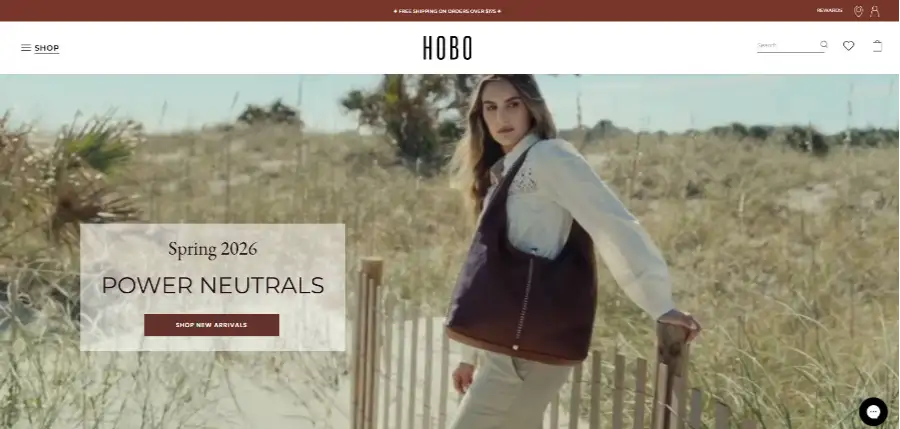
Many founders want to launch heritage leather lines, but they accept sloppy factory samples because they lack a physical benchmark. HOBO is a vertically integrated brand famous for its vintage-hide leather positioning. While they aren’t a direct production option, our team uses their products as the ultimate workmanship standard.
When we audit factories for premium bags, we compare their work directly to HOBO’s retail-ready finishes. True heritage craft requires precise execution. Here is what I physically inspect during a sample review:
- Leather hand feel: It must feel rich and supple. Stiff, heavily coated hides usually indicate low-grade splits trying to mimic full-grain quality.
- Handle reinforcement: I look for thick, heavy-duty stitching and hidden structural tape at all high-stress anchor points.
- Zipper tape tension: Pull the zipper base. A poorly calibrated sewing machine leaves the surrounding fabric wavy and loose.
- Lining attachment: The interior drop-in lining must sit completely flat against the leather without sagging or bunching.
- Edge finishing: Check for smooth burnishing and multiple coats of consistent edge paint. Uneven edges guarantee the bag will fray and peel during long-term wear.
🛡️ Our Verdict: HOBO’s direct OEM fit is highly limited, but they earn their place on your shortlist as an educational benchmark. Study their bags to understand the exact finish standards you should demand from premium handbag manufacturers USA before you approve a production run.
8. Urban Expressions: Best for Contemporary Vegan Styles and Wholesale-Oriented Assortments
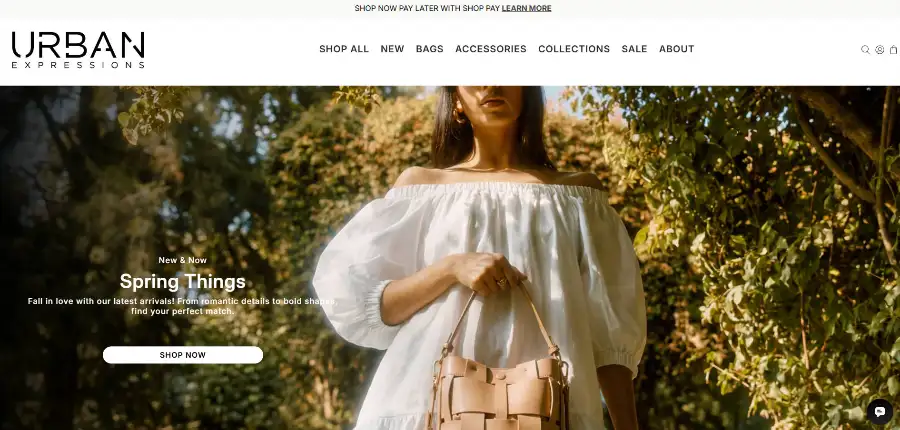
Many boutique owners miss retail trends waiting for custom production. When evaluating handbag manufacturers usa, remember that true contract manufacturing takes time. Urban Expressions operates as a brand-wholesale hybrid instead of a traditional factory. They specialize in contemporary, PETA-approved vegan styles, giving retail buyers instant assortment breadth.
When I evaluate wholesale suppliers, I prioritize merchandising strength. Urban Expressions excels at silhouette breadth and rapid trend updates. Because they produce massive seasonal volumes, I always check their hardware consistency first. They focus purely on ready-line purchasing with zero private-label adaptation. You cannot tweak a zipper or change a logo plate.
In my experience with high-volume synthetic bags, you must test the actual body structure. I squeeze the side gussets to ensure the internal interfacing resists permanent creasing. You also need to negotiate their defect handling policy upfront. Standard retail inventory guidelines require securing return terms for wholesale defects before receiving shipments.
🛡️ Our Verdict: Urban Expressions ranks highest for boutiques seeking fashion-right assortments. Separate their wholesale brand availability from true contract manufacturing. They will fill your shelves quickly, but they will not build your custom designs.
⚡ Power Move: Order a small sample batch of their ready-line bags to test zipper fluidity and structural integrity before committing to your full seasonal buy.
How to Vet Handbag Manufacturers in the USA: A 4-Step Plan
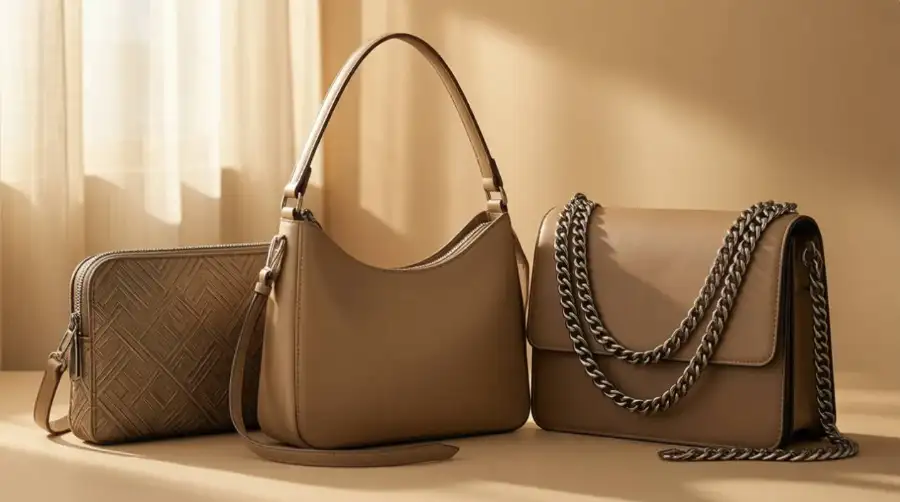
When we vet new facilities, we never accept a simple “made here” promise. Protect your brand from hidden outsourcing and quality failures. Follow this exact action plan before you sign a production contract.
Step 1: Verify the True Production Claim
When evaluating handbag manufacturers USA, ask exactly where they cut the fabric. Many suppliers operate hybrid models. They sew the final seams in America but source pre-cut pieces overseas. Others simply manage production from a US office. Learn the exact difference. The Federal Trade Commission strictly enforces these claims. If your factory uses imported zippers or linings, you cannot legally use an unqualified “Made in USA” tag. You must use a qualified phrase like “Made in USA from imported parts.” I have seen brands face massive fines for this exact mistake. Ask your supplier to map out their entire supply chain on paper.
Step 2: Check Factory-Floor Quality Markers
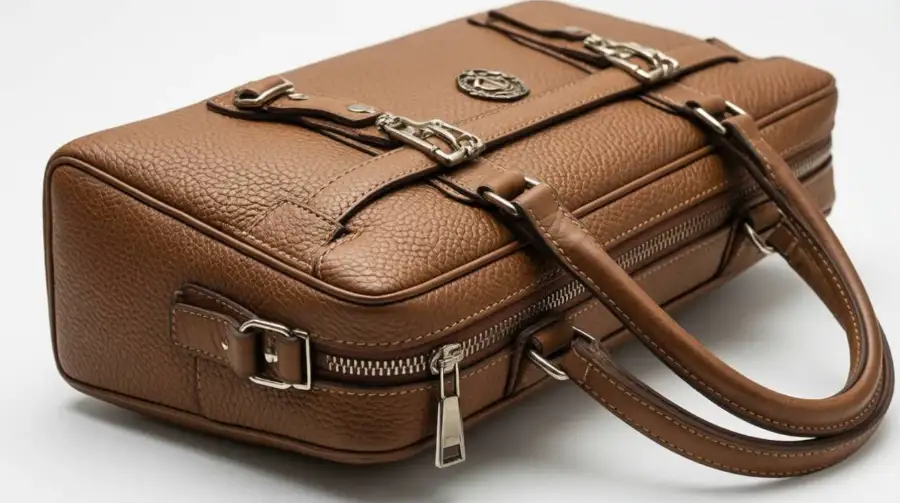
In our tests, cheap factories skip the hidden details. Inspect physical samples closely. Count the stitches on your luxury leather bags. Demand 8 to 10 stitches per inch (SPI). Check for consistent skiving at the folds. Skiving thins the leather so edges fold cleanly without adding ugly bulk. Feel the handle bases and bottom corners for hidden reinforcements. Measure the seam allowances to ensure they stay perfectly even. Test the zipper alignment. Pull the slider back and forth rapidly. Check the logo placement for perfect centering. Next, interrogate the hardware plating process. Ask the supplier to document the exact plating steps. Hardware with cheap rack plating will tarnish quickly. Rub the hardware vigorously with a cloth to test the finish resistance. You will see poor plating flake off immediately.
Step 3: Enforce Material and Chemical Standards
Domestic production does not automatically remove your chemical compliance duties. Our clients often complain about retail rejections because a US factory used non-compliant glue. Request laboratory testing declarations covering lead, phthalates, and volatile chemicals. Apply this strict requirement to coatings, adhesives, edge paint, inks, and plated hardware. This ensures your bags meet Proposition 65 safety standards. If the factory substitutes a material mid-production, clarify exactly who pays for the mandatory retesting. Put this financial responsibility on the manufacturer in your final written contract.
Step 4: Build Your Physical Reference Kit

During my last project, we rejected 500 units because the factory changed the zipper puller without asking. Prevent this costly disaster by building a Physical Reference Kit. Gather these specific items before bulk production begins:
- Require a signed gold sample to serve as your ultimate standard.
- Approve material swatches for both the leather and interior lining.
- Secure an edge-paint reference showing the exact acceptable thickness and finish.
- Collect hardware chips matched to the approved plating color.
- Keep physical zipper and puller references.
- Hold a master stitch card and an approved logo-treatment sample.
- Create a complete packaging spec and a clear tolerance sheet.
Write approval dates on every single item. Store this kit in a secure place. For a deeper breakdown of factory evaluation, read our guide on questions to ask a manufacturer.
Our Experience: A ranked factory list gets you started, but a strict vetting process protects your money. Never skip the physical reference kit. If you lack the time to manage this complex process yourself, explore our custom handbag manufacturing services. We handle the sampling, compliance, and quality control for you. Contact us today to start your project.
Frequently Asked Questions About Handbag Manufacturers USA
What MOQ should I expect for small-batch handbag production in the USA?
Expect Minimum Order Quantities between 50 and 300 units per style. In my experience, US factories accept smaller test runs than overseas partners. This flexibility raises your unit cost. Many factories demand a 150-unit minimum just to cover machine setup time.
How long do sampling and bulk handbag production take?
Prototypes take two to four weeks. Bulk production needs four to eight weeks after sample approval. Clients complain about hidden delays during hardware sourcing. If you order custom zippers, expect a three-week delay before cutting begins. Always approve a physical sample first.
What qualifies for a ‘Made in USA’ claim?
You can only claim this if the product is “all or virtually all” made in the United States. The Federal Trade Commission enforces this rule. Brands fail audits because they use imported linings. If you import components, you must label the bag “Made in USA from imported parts.”
Does Proposition 65 matter for custom handbags?
Yes. You must comply with Proposition 65 if selling to California buyers. This law regulates toxic chemicals. I see bags fail lab tests due to lead in cheap hardware plating. Test your vegan glues and edge paints before production to avoid massive inventory rejections.
Who owns the handbag patterns, molds, and custom hardware tooling?
You must own all tooling if you pay for development. Factories hold paper patterns hostage to force reorders. I advise founders to get ownership terms in writing before paying any invoice. Ensure your contract states you own the technical packs and die-cutting molds.
Expand Your Sourcing Research
Explore our manufacturing guides for backpack manufacturers in the USA, and contract manufacturers in the USA for tool bags. Looking overseas? Check our lists of handbag manufacturers UK.