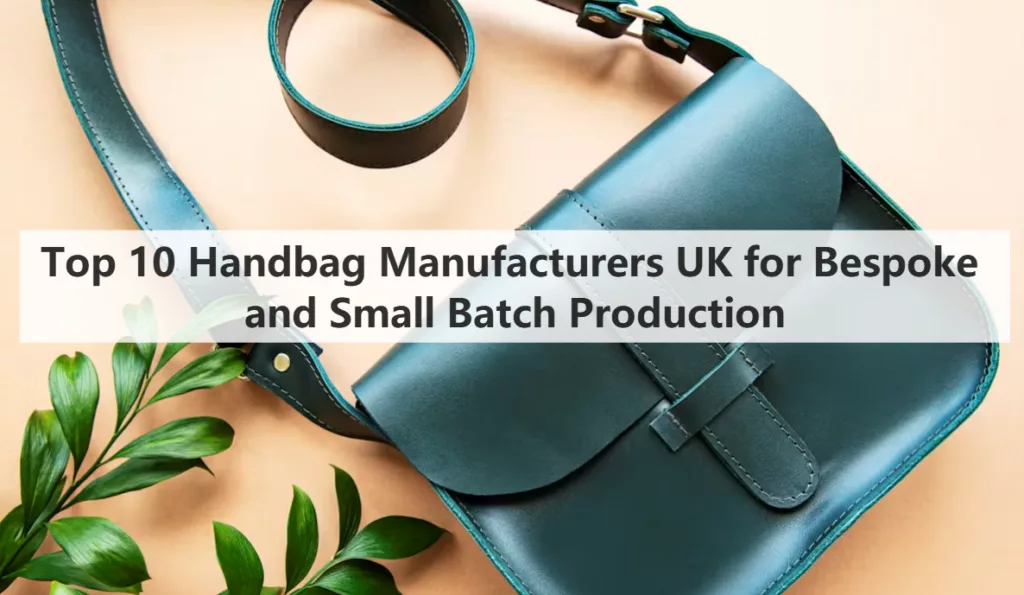
British leather goods command high retail prices, but securing a reliable factory for small runs often requires navigating strict requirements. I curated this directory of handbag manufacturers uk to help you find verified workshops with proven leather crafting track records. These suppliers align with the UK Fashion & Textile Association regarding quality and compliance. Shortlist three partners, send your tech pack, and compare costs. For faster sampling cycles or scalable volume, our custom handbag manufacturer is a robust alternative.
Table of Contents
Handbag Manufacturers UK Comparison
| Manufacturer | Location | Estimated MOQ | Core Specialization |
|---|---|---|---|
| 1. Materia Products Trading Ltd | UK | Per style/SKU | Structured RFQ Handling |
| 2. John Chapman Ltd | UK | Stock-based | Rugged Canvas Builds |
| 3. JR Tusting & Co Ltd | UK | Tiered | Luxury Finishing |
| 4. Loni Bags | UK | Per color/size | Iterative Prototyping |
| 5. The Leather Satchel Co | UK | Repeatable | Pattern Precision |
| 6. The Cambridge Satchel Company | UK | Custom spikes | High-Profile Shapes |
| 7. Owen Barry | UK | Material-driven | Texture Matching |
| 8. Ettinger | UK | Colorway-based | Corporate Gifting |
| 9. Launer London | UK | Prototype-heavy | Structured Top-Handles |
| 10. Billy Tannery | UK | Yield-dependent | Goatskin Patina |
Top 10 Handbag Manufacturers UK
1. Materia Products Trading Ltd
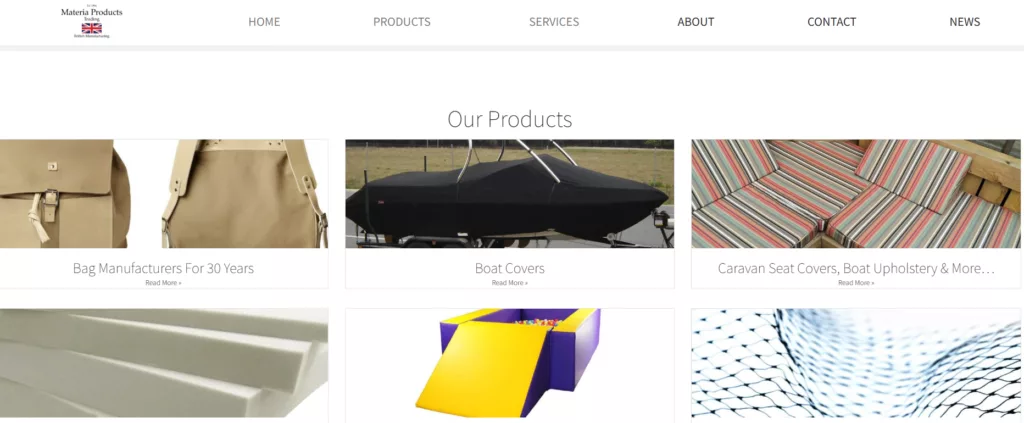
Materia Products serves startups and boutiques requiring a structured RFQ process. They operate best as an execution partner for designers who provide clear specifications rather than vague concepts.
What to confirm fast:
- MOQ logic: Clarify if minimums apply per style, color, or material SKU. This calculation dictates your upfront investment.
- Sourcing: Ask if they handle material sourcing in-house or if you must supply the leather and hardware.
- Lead times: Get written estimates for both sampling and production phases to manage your inventory planning.
Assess construction capabilities Validate their technical maturity by asking about specific build methods. Confirm if they use die cutting versus hand cutting, and whether they finish edges by painting or burnishing.
QC and documentation Request a sample quality control checklist to review their defect standards before booking. Commercially, you must verify their policy on intellectual property to ensure you retain rights to your designs.
2. John Chapman Ltd (Chapman Bags)
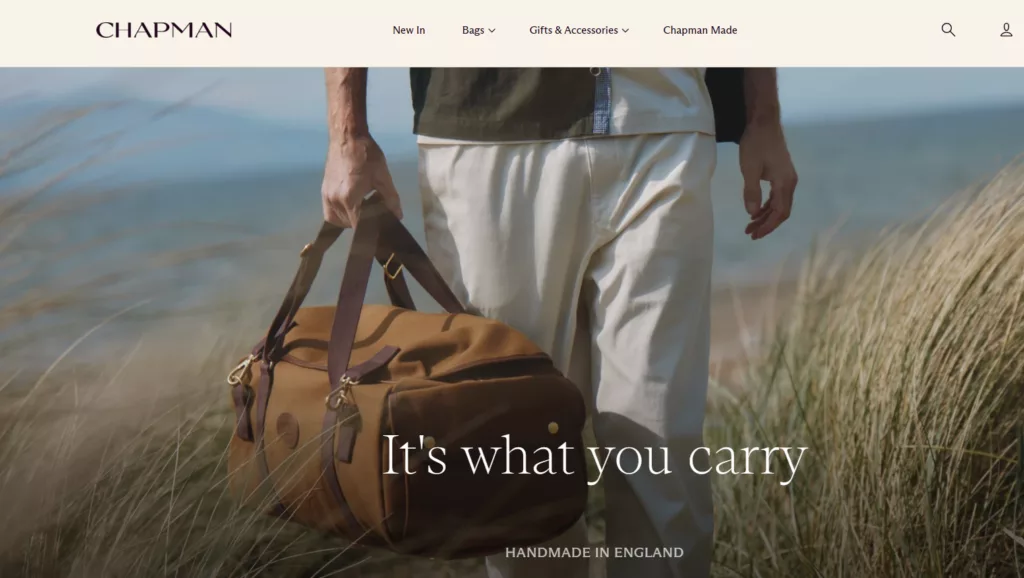
Chapman excels at classic British silhouettes—holdalls, satchels, and field bags—where rugged construction is the primary selling point. This is the right partner if your design spec prioritizes heavy canvas and rigid structure over soft fashion trends.
Materials & Finishing Be specific about fabric weights. Chapman specializes in bonded canvas and stiff bridle leather. If you need pliable garment leathers or waterproof linings, clarify sourcing options immediately. For branding, ask about their capability to hot-stamp or foil-deboss logos directly onto leather trims versus using standard woven labels.
Critical Factory Questions Validate build quality with technical queries:
- Thread Specs: Are you using bonded nylon (Tex 80 or higher) for load-bearing seams?
- Reinforcement: Where specifically do you place bartacks on high-stress handle attachments?
- Needle System: What needle gauge handles your heaviest canvas without causing perforation tears?
🚀 Actionable Insight: Split your MOQs. Negotiate lower minimums for designs using Chapman’s stock materials (standard canvas/brass) while accepting higher MOQs only for bespoke hardware or custom-dyed leathers. Always define your “Gold Seal” sample criteria before authorizing production.
3. JR Tusting & Co Ltd
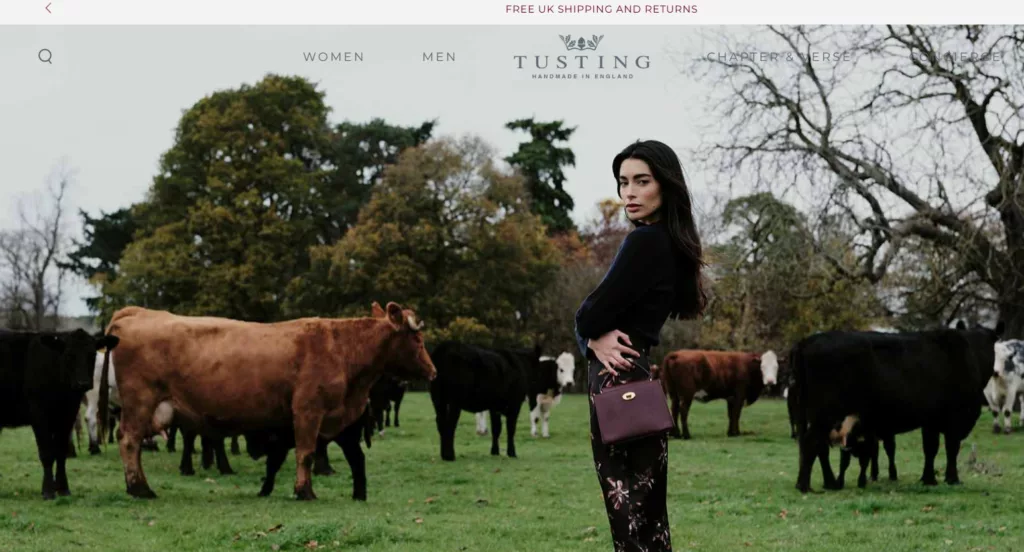
Use Tusting if your brand story relies on authentic UK manufacturing heritage. They specialize in premium leather goods where superior finishing quality justifies luxury retail prices.
First, confirm they currently accept private label / contract manufacturing for outside designers. Many heritage workshops prioritize their house brands or corporate gifting, so you must verify their Minimum Order Quantities (MOQs) and onboarding process immediately.
To validate their premium positioning, audit these technical standards:
- Edge Finishing: Ask if they apply multi-coat edge paint or use hand-burnishing techniques.
- Construction: Inspect strap reinforcement, binding quality, and lining attachment methods.
- Compliance: Request material declarations for leather origin and documentation for UK REACH chemical safety standards.
Protect your budget by requesting a staged sampling process. Move from rough mock-ups to final sales samples to control revision costs before committing to full production.
4. Loni Bags
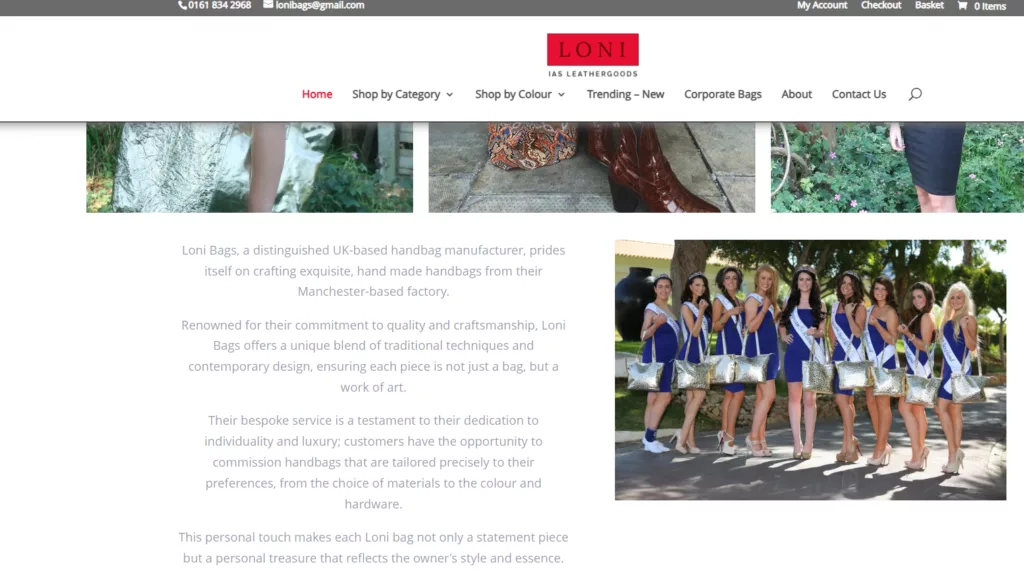
Loni Bags functions as a development lab for early-stage brands. Use this boutique option if you need close feedback loops and iterative sampling rather than mass production.
Procurement checks Clarify if the MOQ applies per style, color, or size. A generic “low MOQ” often hides strict per-SKU limits. Confirm lead times for sampling versus production and ask if they handle material sourcing or if you must supply the leather.
Construction scope Verify they can manufacture your specific architecture, from structured totes to slouchy crossbodies. Check their ability to execute branding details like foil stamps, custom zipper pullers, and hangtags.
Quality guardrails Define acceptable tolerances for dimensions and stitch consistency in your tech pack. Ask for their specific monthly capacity to ensure they can handle your growth.
5. The Leather Satchel Co
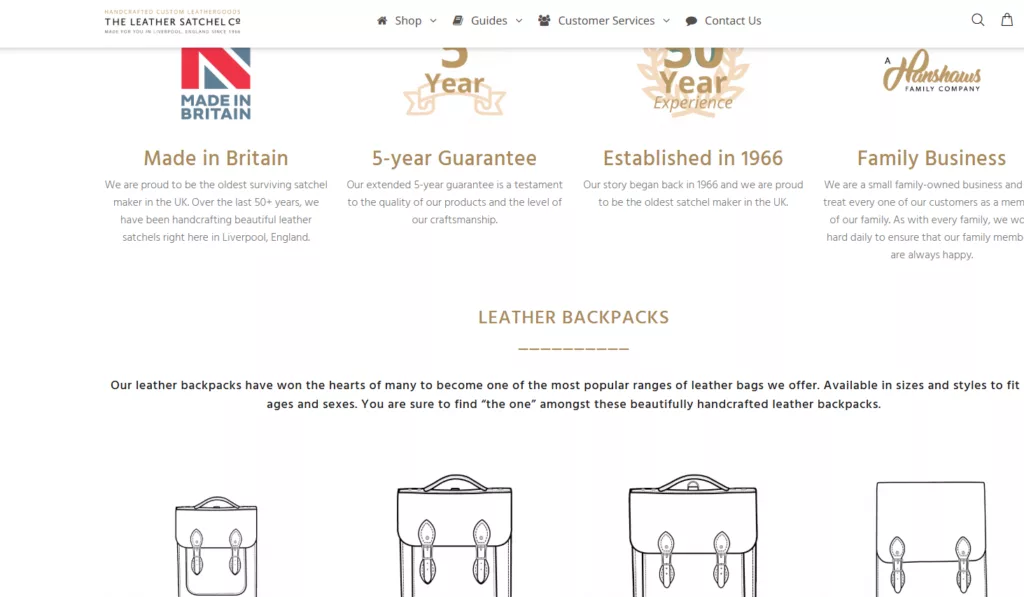
Structured leather goods require absolute repeatability. This manufacturer excels at classic, rigid constructions where pattern accuracy is non-negotiable. On a structured bag, a 2mm gusset misalignment warps the entire shape; this team prevents that through precise cutting and reinforcement.
Include these technical details in your RFQ:
- Material: Specify leather thickness (e.g., 2.0–2.5mm) and internal board reinforcement materials.
- Construction: Require 8–10 SPI (stitches per inch) and define your edge finish standard (painted vs. raw).
- Hardware: List specific buckle specs and plating methods to ensure corrosion resistance.
QC and Commercial Checks Ask how they inspect critical alignment points like flaps and gussets. A crooked flap destroys a satchel’s commercial value. You must also confirm they support private labeling (white label) and check if they ship bulk to your 3PL provider.
6. The Cambridge Satchel Company
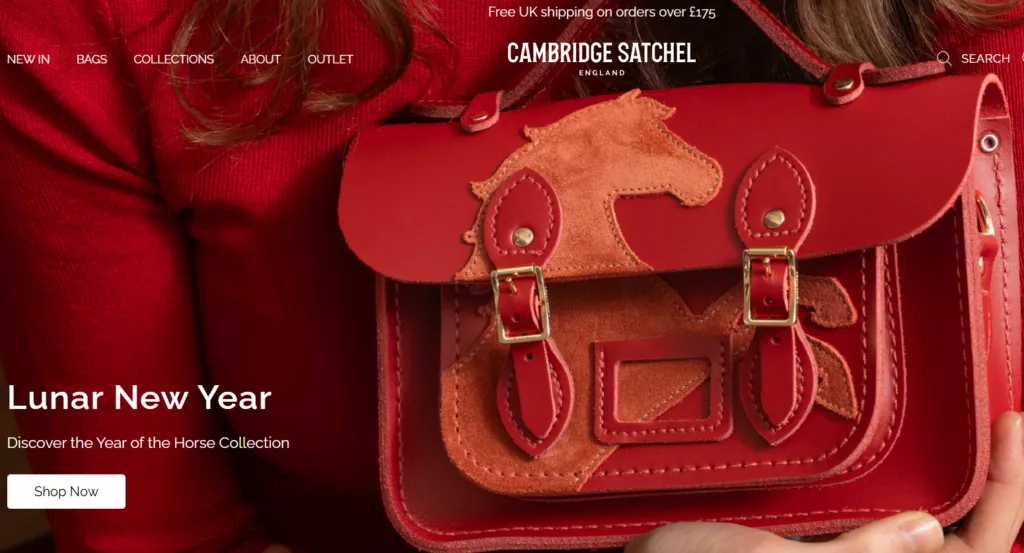
Best for buyers seeking iconic UK craftsmanship and rigid leather structures. This option suits brands open to high-profile collaborations rather than silent white-label production.
First verification step They operate primarily as a consumer brand. You must confirm if they accept private label (OEM) contracts or only co-branded partnerships like their work with Vivienne Westwood. Silent manufacturing is not guaranteed.
Define the technical scope If they accept your project, map the limits immediately:
- SKU Complexity: Confirm if they can produce complex internal organizers or only signature single-cavity structures.
- Material Access: Ask if you can utilize their existing supply chain or must source your own hides compliant with UKFT standards.
- MOQ Tiers: Minimums often spike for custom shapes compared to standard color swaps.
Lead time planning Capacity fluctuates based on their own retail seasons. Secure sampling slots 3-4 months in advance. Ensure you clarify IP rights for any custom shapes to prevent your designs from entering their main collection.
7. Owen Barry
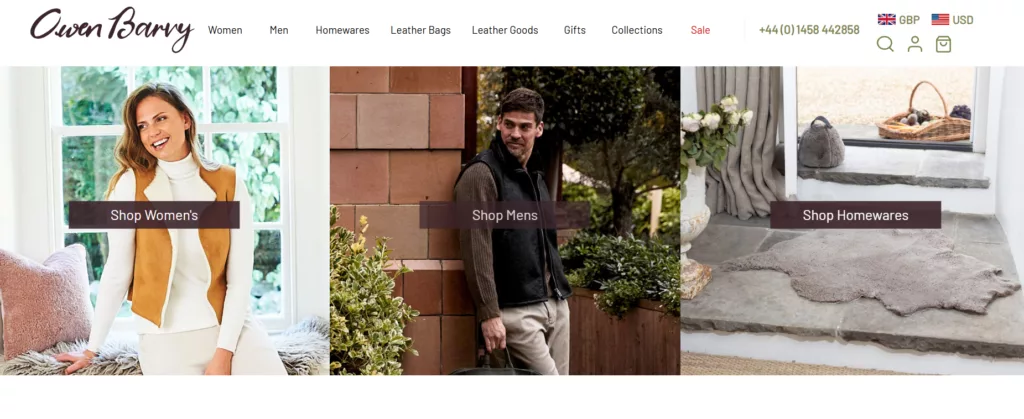
Sourcing shearling is risky; misjudged grading results in patchy, inconsistent bags. Owen Barry specializes in these difficult materials, making them the ideal partner for winter capsules and heritage lifestyle accessories where texture is the primary selling point.
Material-Specific QA Sheepskin demands manual sorting. Ask how they match panels for pile density and color uniformity. Verify their “shedding control” process to keep linings clean, and inspect edge binding to ensure raw cuts are sealed.
Structural Integrity Soft skins stretch more than flat leather. Confirm their stabilization methods, specifically regarding interfacing density. Without hidden reinforcement, load-bearing points will tear under daily use.
Sourcing & Logistics
- Yield: Irregular skins increase waste. Expect higher MOQs for shearling SKUs compared to standard leather.
- Compliance: Require documentation for animal origin and chemical finishes aligned with Leather Working Group standards.
- Storage: Pile fabrics crush. Mandate packaging that prevents compression marks during transit.
8. Ettinger Handbag Manufacturers UK
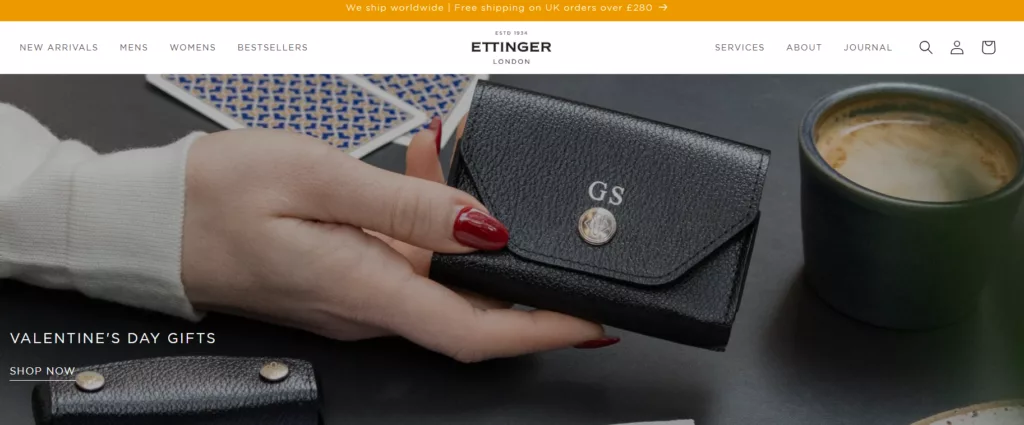
Ettinger holds a Royal Warrant and sets the global benchmark for small leather goods (SLGs). They are the ideal partner for high-end corporate gifting programs or wallet collections where finishing quality determines the price point.
Verify the relationship scope Ettinger specializes in branded corporate gifts. You must confirm immediately if they allow “white label” production (your logo only) or require a co-branded “Made by Ettinger” stamp.
Critical SLG specifications Small goods leave no room for error. Define these technical details early:
- Edge finishing: Request hand-applied edge paint (3+ layers) or folded construction to prevent cracking.
- Tolerances: Set strict millimeter tolerances for card slots. If they are too tight, the product returns rate will skyrocket.
- Branding: Verify hot-stamping capabilities for specific foil colors and deboss depth.
QC and commercial terms Inspect samples for glue squeeze-out inside pockets and hardware scratches. Ask for MOQs per colorway and whether adding monograms affects the standard lead time.
💰 Commercial Edge: Ask if they can hold stock of your custom leather materials after the first run. This allows you to trigger rapid reorders for Q4 without waiting for raw material sourcing.
9. Launer London
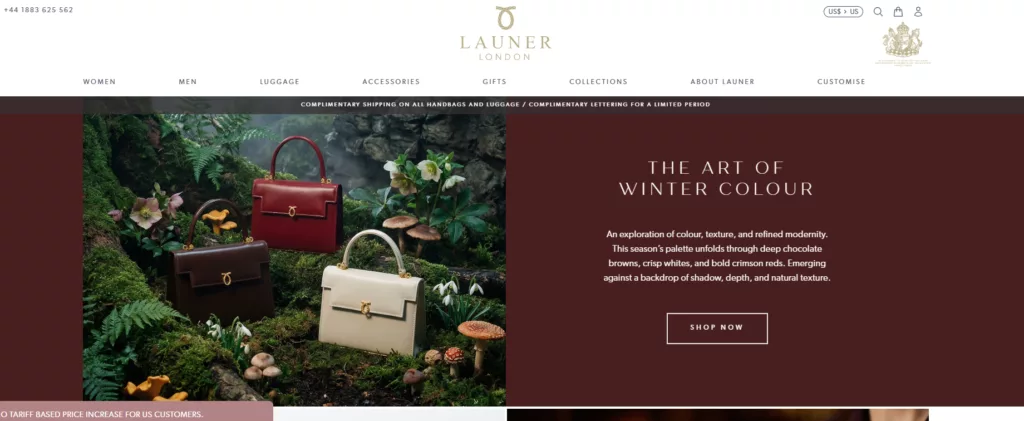
Use Launer for your flagship “hero” product where luxury provenance justifies four-figure retail pricing. They hold a Royal Warrant and set the global standard for structured top-handle bags.
Verify access first Launer is exclusive. Confirm immediately if they accept private label manufacturing or only bespoke collaborations. Ask explicitly if they support repeatable production runs rather than just one-off commissions.
Audit the finishing You pay for details here. Probe the ratio of hand-stitching to machine stitching. Inspect edge finishing and handle wrapping techniques. Ask about internal reinforcements to ensure the bag retains its structured form over decades.
Commercial expectations Expect 3–4 prototype rounds with longer iteration times than standard factories. Secure pattern ownership in writing before development begins. You must own the IP to prevent your bespoke design from becoming a generic factory standard.
🚀 Actionable Insight: Request component origin documentation. To justify high margins, you must prove your leather and hardware come from the same tanneries as heritage luxury brands.
10. Billy Tannery
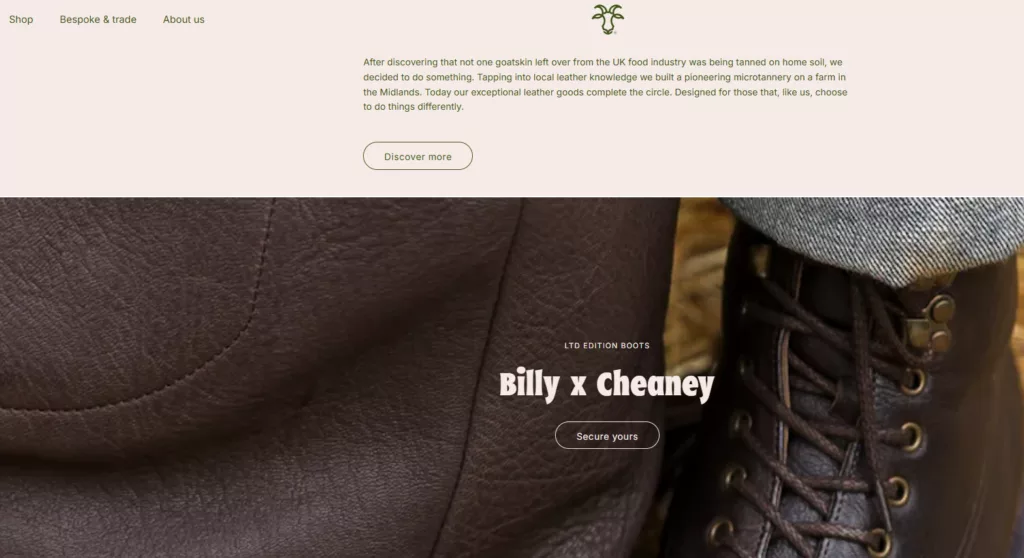
Billy Tannery turns waste goat hides into premium leather via their own micro-tannery. This is the top choice for brands requiring 100% farm-to-product traceability and unique material character.
Material-development checklist Goatskin behaves differently than cowhide. Specify thickness ranges (e.g., 1.0mm vs 1.4mm) to match your bag’s structure. Since skins are smaller, confirm the minimum usable area per skin to calculate accurate cutting yields. Verify color tolerance between batches, as small-batch tanning often varies.
Performance specifications Request vegetable-tanning documentation immediately. Ask specifically about abrasion resistance and water spotting. Veg-tan develops a heavy patina, so you must manage customer expectations regarding aging. If using their workshop for finished goods, clarify if they act as a silent OEM or require co-branding.
How to Turn a Brand Directory into a Procurement Tool
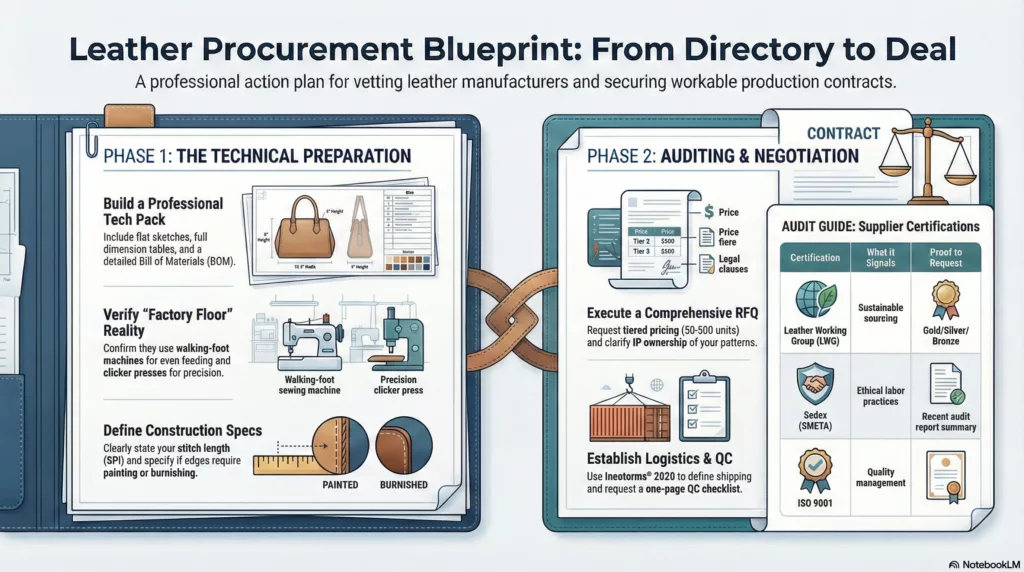
A list of names is not a supply chain. You must standardize your approach to turn a directory listing into a workable contract. Use this action plan to vet manufacturers and secure professional agreements.
A) Tech Pack (Technical Specifications) Checklist
Factories ignore vague emails. To get an accurate quote, send a professional Tech Pack. This document tells the factory exactly what to build and how to build it.
Include these specific elements:
- Design Intent: Provide flat sketches with front, back, and inside views. Add specific callouts for pockets, gussets, and zippers.
- Measurements: Create a full dimension table. Define your tolerances (e.g., ± 0.5cm), strap drop length, and pocket sizes.
- Bill of Materials (BOM): List every component. Specify leather type and thickness (e.g., 1.4mm), lining material, reinforcement boards, thread weight, and hardware finish.
- Construction Details: Define your stitch length (SPI). State clearly if edges require painting or burnishing. Mark specific reinforcement points for stress areas.
- Branding: Attach vector logo files. Specify placement, emboss depth, and foil color.
- Testing & Compliance: List restricted substance expectations. For the UK market, cite specific UK REACH requirements regarding chemical limits in leather.
B) Verify the “Factory Floor” Reality
Don’t rely on curated social media photos. Ask technical questions to verify their actual capabilities.
- Heavy-Duty Machinery: Confirm they use walking-foot machines. These are essential for feeding top and bottom leather layers evenly to prevent bunching.
- Cutting Precision: Ask if they use a clicker press for die cutting. This ensures consistent panel sizing compared to hand cutting.
- Finishing Stations: Check for dedicated edge-paint stations with proper drying racks. This proves they handle volume without smudging.
- Hand Techniques: For premium goods, ask about saddle stitching or hand-rolled handles.
- Bottlenecks: Ask where production usually slows down. Honest factories will identify steps like skiving or edge paint drying.
C) Request Certification Evidence
Trust but verify. Use this table to audit supplier claims regarding quality and ethics.
| Certification / Membership | What it signals | Proof to request |
|---|---|---|
| British Footwear Association | Credibility in UK trade | Current membership certificate |
| Leather Working Group (LWG) | Sustainable leather sourcing | Audit rating (Gold/Silver/Bronze) for the tannery |
| Sedex (SMETA) | Ethical labor practices | Recent audit report summary |
| ISO 9001 | Quality management systems | Valid certificate number |
D) RFQ Questions That Fix Competitor Gaps
Clarify costs, logistics, and ownership before you pay a deposit.
- Pricing Tiers: Request unit costs at 50, 200, and 500 units. Ask them to separate materials, labor, packaging, and tooling fees.
- Capacity: Ask for monthly capacity for your specific construction type. Confirm lead times during peak seasons.
- Quality Control: Request a one-page QC checklist. Ask to see their standard defect and repair policy.
- Logistics: Define shipping terms early. Reference Incoterms® 2020 rules to clarify who pays for shipping and insurance.
- Intellectual Property: Ask, “Do I own the patterns after payment?” Clarify rules regarding their use of your design in their portfolio.
E) When to Consider Overseas Capacity
UK production is excellent for high-margin, heritage-focused goods. However, if you require higher volume scaling or aggressive cost targets, domestic production may not fit your business model.
For scalable capacity or complex sourcing needs, consider established overseas partners:
Request a manufacturing quote for a professional feasibility review of your project.
Frequently Asked Questions for Handbag Manufacturers UK
Q1. What is a realistic MOQ for UK handbag manufacturers?
Most UK workshops set MOQs at 10–50 units per style or colorway, rather than per total order. While accessible for startups, keep in mind that lower volumes significantly increase your unit cost because fixed setup times (pattern grading and machine calibration) are amortized over fewer bags.
Q2. How long do sampling and production typically take?
Standard lead times are 4–6 weeks for samples and 8–12 weeks for production. This timeline varies based on material availability; sourcing specific leathers or waiting for custom hardware molds can add weeks. Always account for edge paint curing time in your schedule.
Q3. What is the difference between private label, OEM, and ODM?
Private Label involves placing your logo on a factory’s existing product. OEM (Original Equipment Manufacturer) builds your unique design from scratch, ensuring you own the intellectual property. ODM (Original Design Manufacturer) allows you to tweak a factory’s design, but the factory often retains the pattern rights.
Q4. What certifications should I request?
Don’t just look for logos on a website. Request valid certificates for memberships like the UK Fashion & Textile Association or quality standards like ISO 9001. For leather provenance, ask for Leather Working Group (LWG) audit ratings.
Q5. When should I consider China or Thailand instead of UK production?
You should consider offshore production when you need to scale volume (300+ units), reduce unit costs, or require complex hardware integration not available locally. For a comparison of landed costs, review our guide on China handbag manufacturers or contact us for a feasibility quote.