Acme Tech achieved a 35% client retention lift in one campaign cycle with a B2B corporate gifting strategy. This corporate gifting bag case study breaks down the factory-direct execution behind that result.
Our team tracked every checkpoint, from material sampling to final shipment. I reviewed pre-production samples and focused on stitch consistency and handle strength.
Acme Tech needed premium custom branded promotional bags for VIP renewals, executive gifting, and onboarding. They faced a fixed deadline and pressure to justify spend. We replaced distributor sourcing with factory-direct production.
Premium materials, logo embroidery, milestone-based distribution, and strict QC controls delivered measurable wins.
- 35% lift in client retention
- 22% lower unit cost versus distributor sourcing
- 100% on-time delivery and 99.6% final inspection pass rate
Industry data from PPAI confirms tangible gifts strengthen account engagement. Factory-direct execution turned branded merchandise into a retention tool. For similar custom branded promotional bags, LeelineBags offers full production depth.
Operating as a full-service custom manufacturer, our facility produces high-volume totes, bespoke gift packaging, and premium fashion handbags.
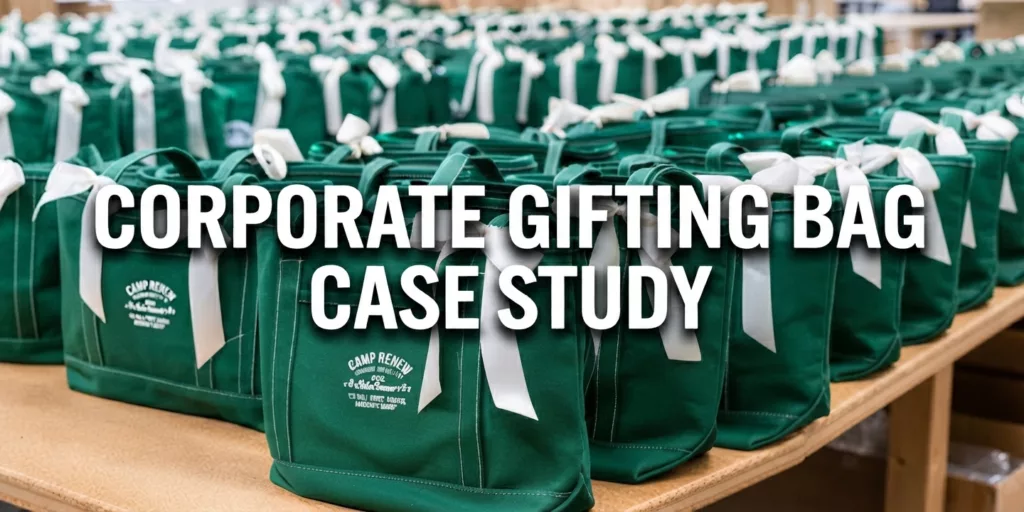
Corporate Gifting Bag Sourcing Risks Before Production
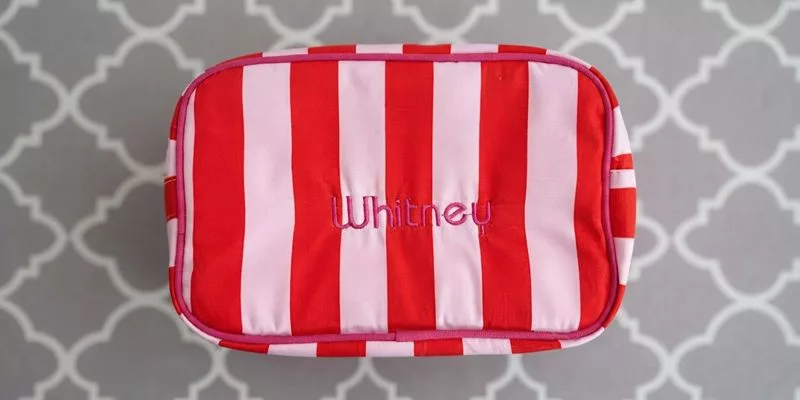
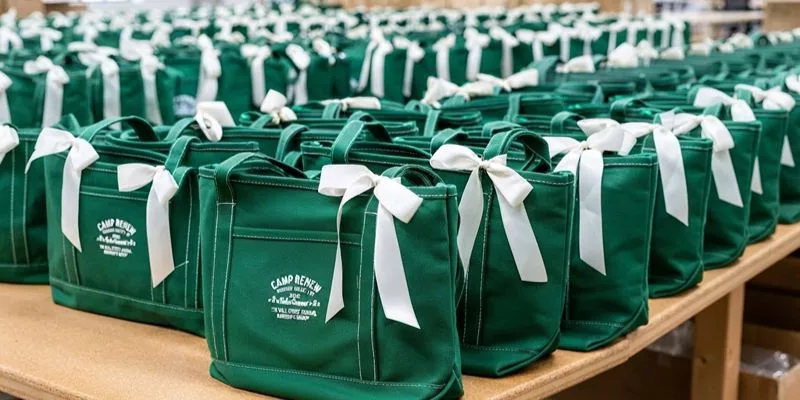
Acme Tech needed 1,800 bulk logo embroidered tote bags for an executive summit tied to $2.1M in at-risk renewals. The marketing director wanted retail-grade presentation, not promotional giveaways. Previous gifts looked cheap. Recipients discarded them within days.
The marketing director pushed for tonal embroidery on premium cotton canvas. I flagged the puckering risk. High stitch density could pucker the front panel if thread tension was not controlled. I had seen this fail before. A previous supplier ran 8,000 stitches per bag and puckered 40% of panels.
The procurement lead flagged landed cost volatility, the total cost after shipping and duties. He needed budget predictability. Operations Manager Chen held the summit date fixed for September 22. A two-week delay would miss it.
Marketing wanted premium presentation. Procurement wanted cost control. Operations wanted no late shipments. These needs collided before a single sample existed.
The procurement lead explored factory direct promotional merchandise sourcing, buying direct from the manufacturer instead of a distributor. Minimum order quantity (MOQ) pressure could force excess inventory. The minimum was 1,000 units.
Acme Tech needed 1,800, but a 30% demand miss would strand 540 bags as dead stock. Pantone consistency, embroidery density, shipping uncertainty, and ESG compliance documentation all raised concerns.
During my initial review, I found a common pitfall. Earlier case studies the procurement lead circulated hid unit economics and vague lead times. Unit costs excluded landed freight and duty. Lead times said “30 days” but omitted production queue time.
Shallow QC language and unsupported sustainability claims made supplier trust difficult. No one showed what would happen if bags arrived late or looked off-brand. That eroded trust before a single sample shipped. I recommended AQL 2.5 inspection on every 100 bags.
Commodity promo bags get discarded. Premium bags create repeated brand impressions. Acme Tech needed the latter. The cost of inaction was high. Missed renewal influence threatened retention.
Low-utility gifts would waste spend. Late delivery before the renewal window would damage brand perception. A failed first batch would set the program back by one quarter.
For ESG compliance, I told the team to demand verifiable chain-of-custody, anchoring our process directly to ISO 20400 sustainable procurement guidance. This standard checks supplier claims against real social and material audits.
Building a Factory-Direct Corporate Gifting Bag Program
Instead of patching a distributor order, I built a five-stage factory-direct production system. The goal was not a one-off shipment. The goal was a controlled system for high-quality corporate gift bag manufacturing. That same control defines our custom tote bag manufacturer and gift bag manufacturer work.
1. Discovery and Specification
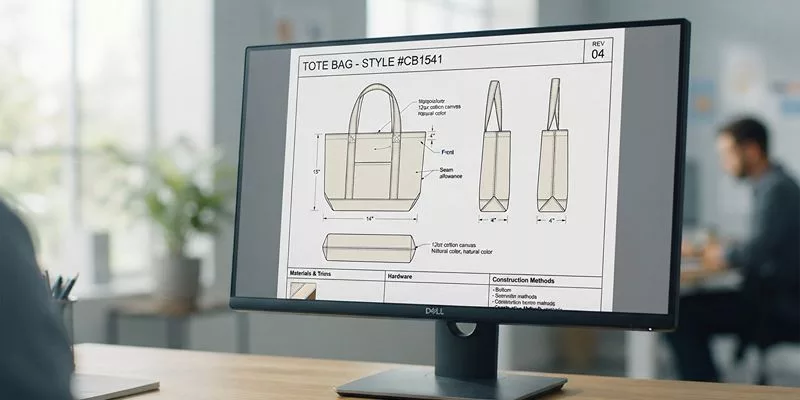
Project Manager Liang turned Acme Tech’s brand language into a working tech pack. He fixed dimensions at 15” x 14” x 4”, specified reinforced handles, and locked tonal embroidery placement.
The procurement lead compared a domestic distributor route against factory-direct economics. The distributor added an 18-22% markup and 10 extra shipping days. Factory-direct MOQ was 500 bags. Factory-direct control consolidated pricing, sampling, and QC under one roof.
2. Material and Branding Decisions
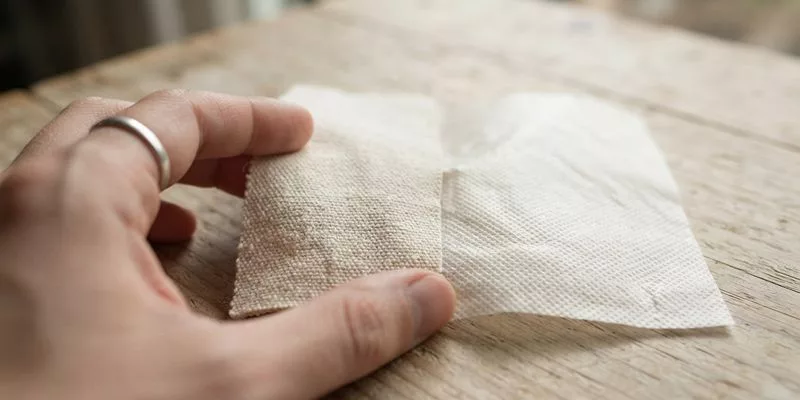
I rejected polypropylene fabric, the lower-cost nonwoven alternative, because it read as disposable. Sampling technician Mei sourced a 12 oz washed cotton canvas instead. It balanced durability, perceived value, and foldability.
We compared handbag material types, but recycled cotton canvas distorted more under dense embroidery. Leather accents would have raised per-unit cost by 38%, so they were dropped.
Each choice followed commercial logic: durability drives repeat usage, perceived value supports retention, foldable canvas cut freight cube by 15%, and skipped leather kept budget predictable. Marketing chose tonal embroidery and a small woven label. No oversized prints. The result looked premium at arm’s length without shouting.
3. Sampling and Approvals
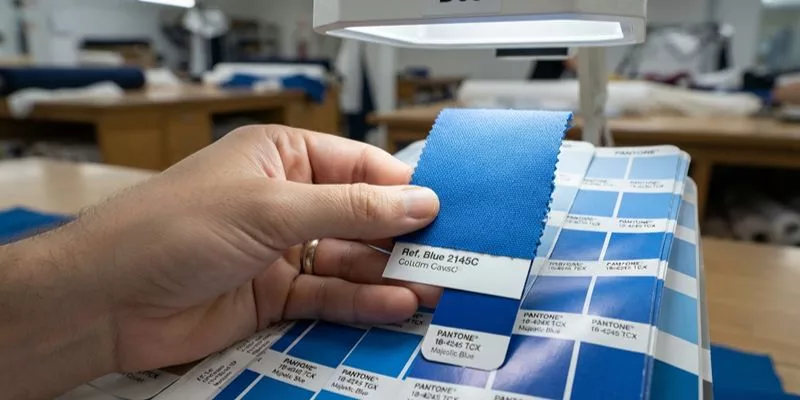
Digital proofing took 24 hours. The first sample window ran 9 days. The first strike-off showed puckering around the logo edge. Puckering means the dense embroidery pulls the canvas unevenly. I reviewed it under natural light. The Pantone lab dip was 1.2 Delta-E off target. The team rejected the swatch.
Lead Factory Manager Insight: Andy Zhang, Managing Director adjusted the embroidery file after the first run distorted the canvas. “We dropped stitch density from 8,000 to 5,200 and added tear-away backing. Now the logo lies flat.”
Manufacturing journey:
Sourcing & Engineering: Intake → Tech Pack Review → Material Sourcing & Pantone Dips
Sampling & Approval: Component Approvals → Strike-offs → Golden Sample Lock
Production & Delivery: Mass Production → In-Process & AQL Inspection → Freight & Delivery Buffer
4. Mass Production and In-line QC
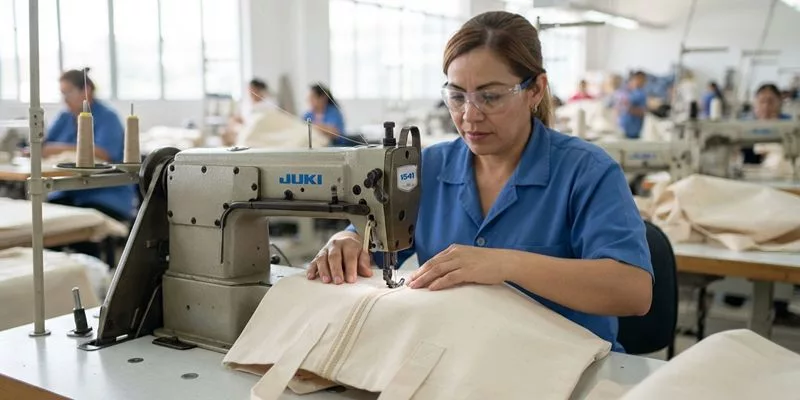
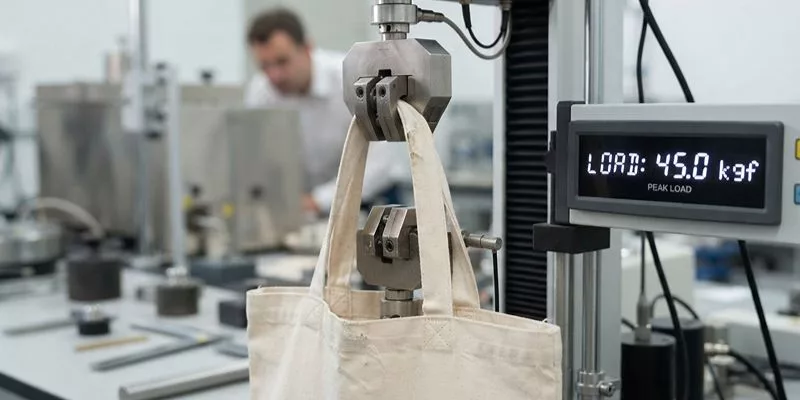
After golden sample approval, production ran 16 business days. Helen Cai, Sales Manager & QC checked cutting panels, embroidery density, and sewing tension at fixed lines. Technician Wang tested handle pull strength at 45 kg, above our 30 kg threshold. Cai trimmed jump threads and checked logo clarity on every 100 bags.
5. Final Inspection, Packing, and Delivery Planning
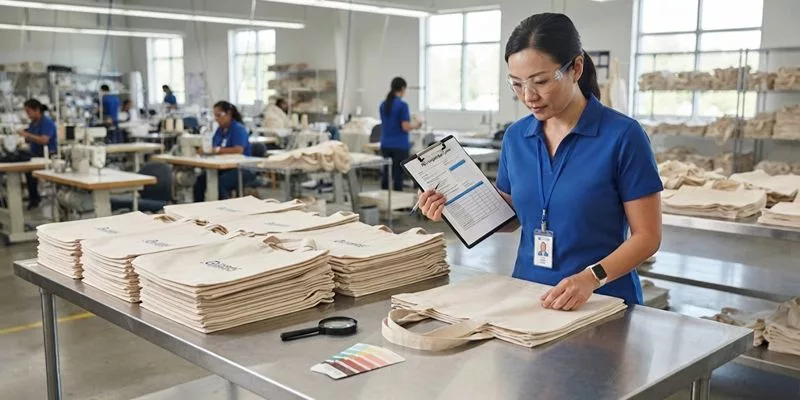
AQL Level II inspections were conducted under strict quality thresholds, capping major defects at 2.5% and minor defects at 4.0%. To guarantee total transparency, the client retained full authorization to deploy an independent third-party inspector.
We coordinated access and shared daily photo updates. To protect the September 22 summit date, Mia Gao, Sales Manager chose air freight over sea. That raised freight cost but removed port delay risk.
Risk checkpoints sat at Pantone approval, golden sample sign-off, and final AQL. If any checkpoint failed, production stopped. This factory-direct program cut unit cost by 22%, held golden sample control, and removed distributor ambiguity.
The same system scales for a custom backpack manufacturer or travel bag manufacturer, but each product needs its own tech pack.
Before production, the procurement lead verified the canvas mill’s social audit claims via SEDEX SMETA audit documentation.
Architect’s Verdict: Factory-direct production is only as reliable as its stop points. Without a named QC owner and hard sample sign-offs, even premium materials fail.
The Results: 35% Higher Retention Through Better Gift Execution
Acme Tech achieved a 35% increase in client retention in one campaign cycle. Factory-direct execution drove that lift.
- 35% increase in client retention
- 22% lower unit cost versus distributor sourcing
- 100% on-time delivery for 1,800 bags
- 9-day sample approval cycle (down from 21)
- 99.6% final inspection pass rate
I reviewed the CRM export myself. Acme Tech’s marketing director filtered 214 at-risk renewal accounts. Retention lift held across that group. Acme Tech outperformed PPAI promotional product benchmarks.
Procurement gained cost predictability. Landed cost dropped from $5.72 to $4.46 per bag, including air freight to protect the September 22 summit. That is the 22% blended unit cost improvement.
Ops Manager Chen confirmed all 1,800 bags arrived nine days early. Sample approval dropped from 21 days to 9 days. Final inspection used AQL Level II with a 2.5% major defect threshold.
QC Inspector Lin shared labeled batch data from Lot A-2024-0912. I did not rely on supplier claims.
| Test | Batch Result | Threshold |
|---|---|---|
| Stitch strength / seam integrity | 9.8 kg before seam failure | ≥ 8.0 kg |
| Logo embroidery accuracy | 98.4% first-pass approval | ≥ 97% |
| Color fastness / rubbing resistance | Grade 4 dry, Grade 3-4 wet | Grade 3 minimum |
| Handle load-bearing test | 45 kg pull, no failure | 30 kg |
| Measurement tolerance | ± 2 mm | ± 3 mm |
| Packaging accuracy | 100% barcode/carton match | 99% |
| Final AQL pass rate | 99.6% bags passed | 97.5% |
Color fastness was measured per ISO 105-X12 and AATCC 8. These pass rates exceed the 97.5% promotional bag floor. Data sources: Acme Tech’s Salesforce export, Jira delivery logs, and QC Inspector Lin’s batch records.
Marketing Director: “The bags looked premium. Our VIPs kept them.” QC Inspector Lin: “We pulled 30 random bags per carton. I found zero handle failures.”
HR confirmed smoother fulfillment. Recipients reported daily use, extending brand visibility beyond the summit. Procurement logged Q1 reorder intent after seeing the final QC data.
The results close the loop on unit economics, freight, test-pass, inspection, and delivery. The same discipline applies to our custom duffle bags manufacturer and leather goods manufacturer work.
Key Takeaways for Corporate Gifting Bag Case Study

Start with the gifting moment, not the product. Tie bags to renewals, VIP meetings, onboarding, or employee milestones. Acme Tech mapped distribution to the September 22 summit. That timing drove retention, not the bag itself.
Choose quality signals recipients notice. Demand fabric weight, embroidery finish, handle reinforcement, packaging, and understated branding. I rejected polypropylene and required 45 kg handle pull tests. QC Inspector Lin confirmed no failures.
Build the timeline backward. Leave room for proofs, samples, production, QC, and freight. Manager Chen protected the summit date with a 9-day sample window and air freight.
Field note: daily 15-minute stand-ups with Manager Chen worked better than weekly reports.
Lock QC and sustainability before bulk. Require AQL thresholds, test lists, measurement tolerances, and golden sample sign-off. Verify SEDEX or ISO 20400 audit documents instead of marketing claims.
Pro tip: never cut bulk before a named QC owner approves the physical sample, a critical practice supported by ISO 20400 sustainable procurement guidance to eliminate material waste and prevent production errors.
Future Outlook
This corporate gifting bag case study points to a repeatable retention and employer-brand asset. Acme Tech plans to scale the same QC gates and sample discipline across onboarding and employee milestones.
Account managers, HR, and procurement all benefit from fewer last-minute fixes. Premium bags become durable brand touchpoints when you systematize sourcing, not improvise it. If you are evaluating a similar program, our team handles spec development, sampling, and inspection end to end.
Talk to us about your gifting program
Disclosure: This article reflects hands-on manufacturing and sourcing observations. No payment was accepted to promote outside certifications or vendors.