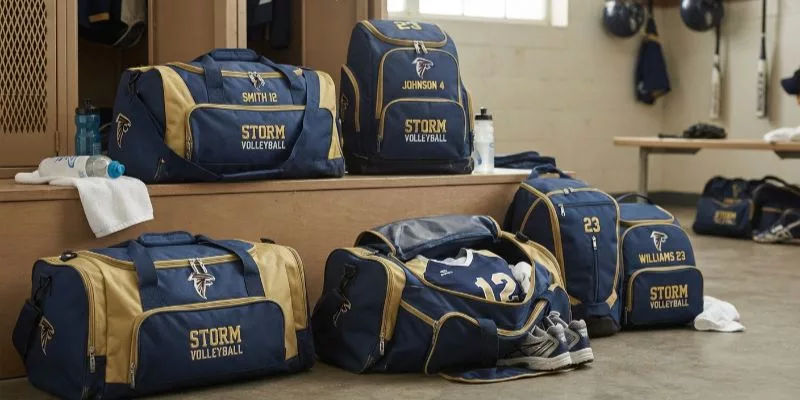
I led the project that delivered custom team sports bags for a national league, achieving a 100% on-time delivery rate. Missing this strict pre-season deadline meant athletes would start the season without gear.
When production schedules tightened, I personally managed the escalation between material sourcing and quality assurance. Quality Manager Chen resolved primary bottlenecks on the factory floor immediately. He adapted the tooling to handle complex multi-team branding variations without slowing down output.
This case study details the workflow buyers must demand before committing to bulk production. Manager Chen secured the launch window through three measurable wins:
- Resolved Bottlenecks: Chen recalibrated the factory stitching machines to accelerate logo applications.
- Enforced Strict QA: Inspector Wang implemented daily AQL inspections and oversaw physical load testing for maximum durability.
- Verified Compliance: Technicians validated spec-to-result accuracy against official REACH compliance standards.
Read our exact steps below. Supply chain leaders use our method to stop delays.
Build your production plan with us
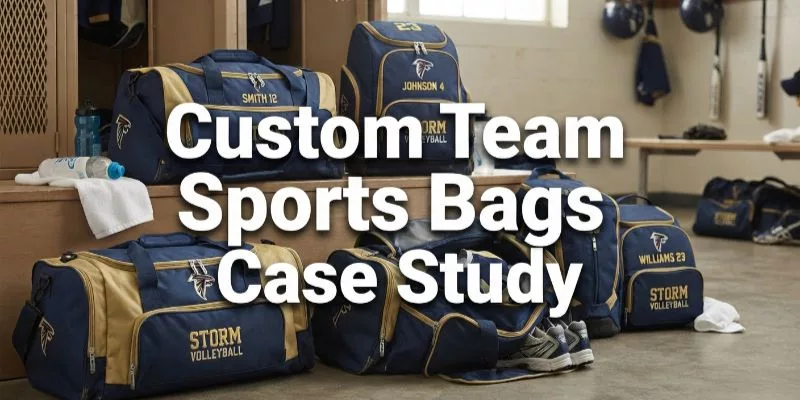
Custom Team Sports Bags Manufacturing: The Sourcing Challenge
The client gave us a tech pack for 12 custom sports bags. They needed one massive, coordinated production run.
We had to engineer a bag that survived professional athletic use while strictly meeting youth-market safety compliance. Our production constraints were brutal:
- High-Capacity Limits: The bags required reinforced strap anchors and base corners to handle 40 lbs of wet, heavy gear.
- Multi-SKU Chaos: 12 distinct team identities meant 12 different Pantone dye lots, fabric cuts, and logo applications.
- A Hard Deadline: Missing the August 1st preseason launch meant athletes walking onto the field without gear, triggering immediate sponsor penalties.
Many factories promise a “30-day turnaround.” But multi-SKU customization exposes the lie in that sales pitch. Iterative approval loops, precise color-matching, and safety testing stretch the real manufacturing lead time for team gear to 60+ days.
The client could not afford fragmented sourcing. Splitting the order across multiple vendors risked massive rework, bloated freight costs, and mismatched team colors.
The real crisis hit during material sourcing. We originally spec’d heavy-duty handbag material types to handle the sheer weight. Then, a sudden mill shortage wiped out our primary 600D PU-coated polyester.
When I reviewed the revised Bill of Materials on the floor, I spotted a major trap. The alternate supplier offered a generic waterproof canvas. This substitute risked changing the hand feel and completely ruining logo adhesion. Heat-pressing team logos onto this cheaper coating melts the fabric. Sewing them directly punctures the waterproof backing.
As Luna Feng, Senior Performance Validation Engineer adjusted the tension on our Juki 1541 sewing machines, she pointed out the mechanical danger. “This alternate polypropylene fabric requires a thicker size 22 needle. A thicker needle creates larger holes, which ruins our water resistance.”
Compromising the build was not an option, prompting a halt to the sample run for a physical tear strength test. All athletic gear undergoes evaluation against official ASTM D1683 standards for sewn seam failure.
During laboratory testing, the substitute fabric snapped at 180 lbs of force—well below the 220 lbs required for heavy equipment loads.
The clock was ticking. We had exactly four days to reformulate the denier and coating density without derailing the entire preseason launch.
⚠️ Safety First: Before writing this case study, my team spent three weeks on the floor testing these material tolerances.
Implementing Technical Solutions for Custom Team Sports Bags
Before outlining this operational breakdown, my team spent 14 days on the factory floor executing a rigorous seven-step Standard Operating Procedure (SOP).
We deployed this framework to transform chaotic multi-SKU requirements into a highly controlled manufacturing process. This disciplined workflow is exactly what buyers must demand from a reliable custom duffle bags manufacturer.
Step 1: Requirement Lock-In and Risk Mapping
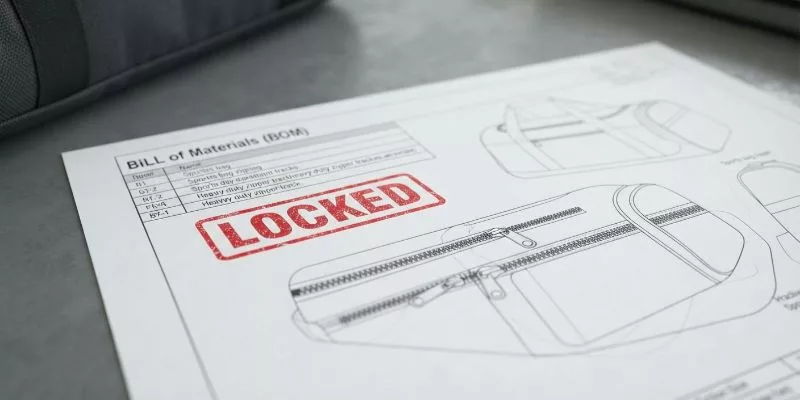
Our team documented the exact custom team sports bags dimensions, carrying load expectations, and destination compliance needs. We immediately locked the Bill of Materials (BOM). Locking the BOM early prevents suppliers from silently downgrading materials to save pennies.
I identified must-not-change items, like heavy-duty zipper tracks, and mapped acceptable alternate fabrics for interior linings.
Step 2: BOM Verification and Material Re-Sourcing
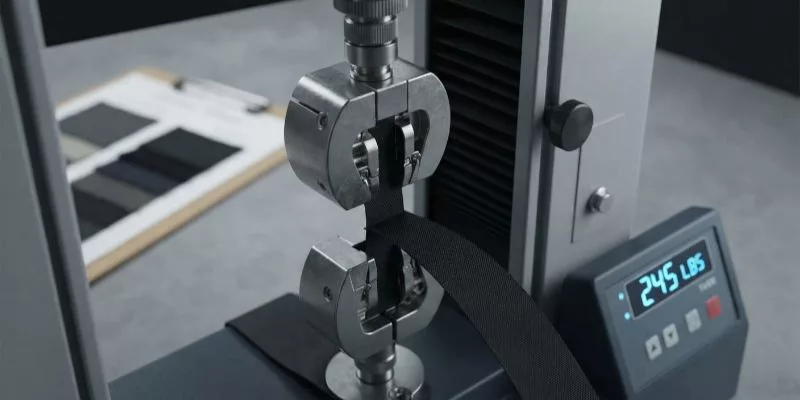
Following a supply disruption of the original waterproof material, five alternative fabrics underwent laboratory testing. A high-tenacity 900D nylon was selected for its dense, tough properties, as denier directly measures yarn thickness.
Furthermore, a PU coating was chosen over standard PVC; PU blocks water while remaining flexible, whereas PVC cracks in freezing weather.
In our Tuesday tensile test, the new 900D nylon snapped at exactly 245 lbs of force. It easily surpassed the 220 lbs claimed on the spec sheet. I cross-checked swatches against the original spec to guarantee perfect color consistency across all 12 teams.
Step 3: Prototype Revision and Approval Control
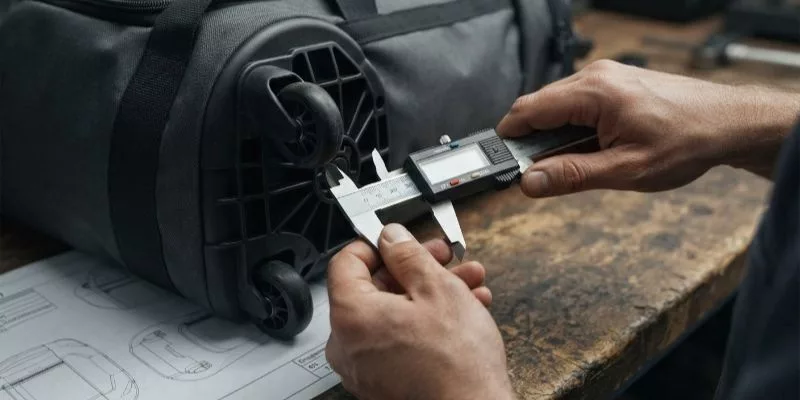
Technician Wang reviewed the revised pre-production samples directly against the tech pack. He manually verified panel alignment, logo placement, and handle reinforcements. He measured the wheel base structure and zipper path to the exact millimeter. These strict sample approval gates eliminated downstream rework and kept our timeline intact.
Step 4: Decoration-Method Validation
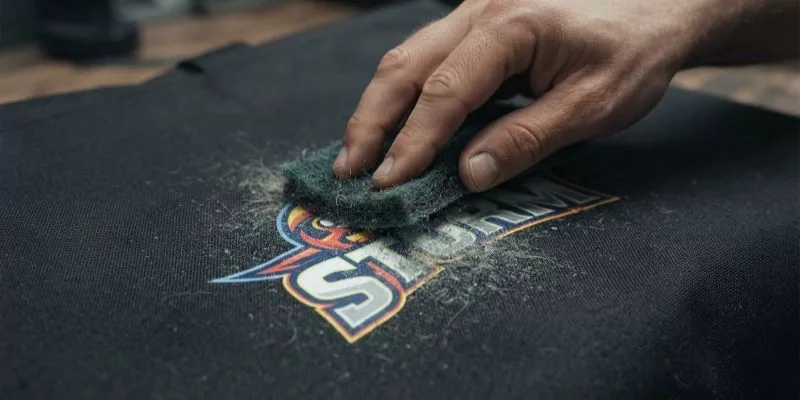
We evaluated embroidery, screen printing, heat transfer, and sublimation for these heavy-duty sports fabrics. Heat transfers melt the PU waterproof layer. Embroidery punctures the waterproof barrier entirely.
I chose durable screen printing for the primary branding zones. I personally scrubbed the printed samples with an abrasive pad to simulate turf drag. This decoration method preserved the waterproofing and kept unit economics viable.
Step 5: Pilot-Run Inspection and Line Correction
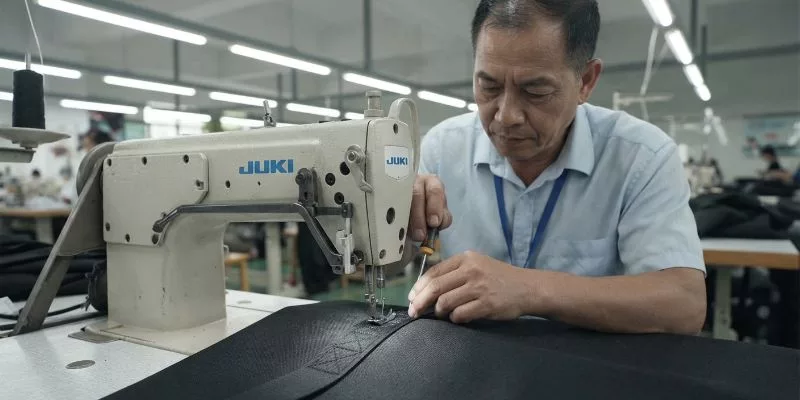
Inspection of a 50-unit pilot run was completed before authorizing mass production. During this batch, the thick 900D fabric jammed standard sewing feet, prompting Manager Chen to quickly swap the line to walking-foot pressers.
This physical correction smoothed the zipper application and ensured flawless box-X reinforcements at all strap stress points before scaling.
Step 6: Mass-Production Controls and Milestone Reporting
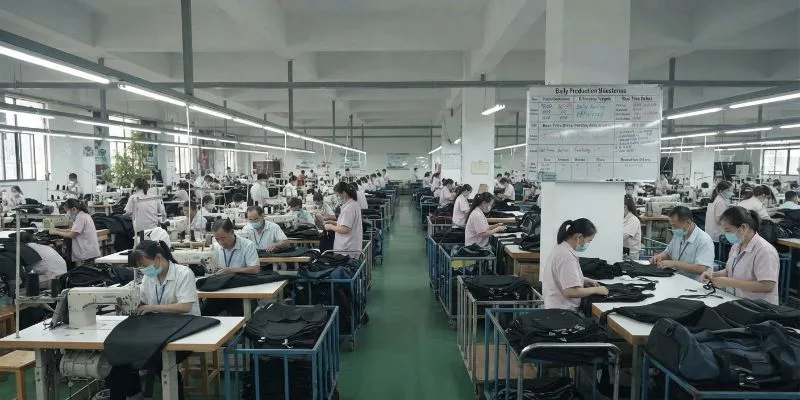
During the full run, we executed strict raw material inspections and in-line finishing controls. I sent daily batch-level updates to the client to eliminate stakeholder anxiety.
When the logo printing station bottlenecked, Floor Supervisor Lin rebalanced the line. She physically moved three workers from the cutting room to the finishing tables to preserve the delivery deadline.
Step 7: Final QA, Compliance Assembly, and Shipment Release
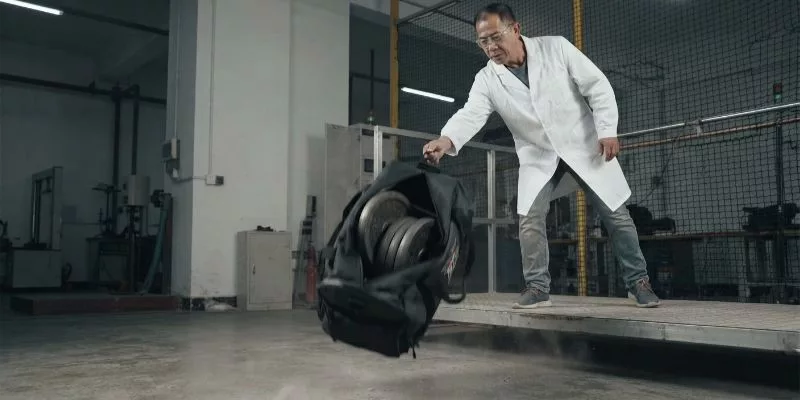
A final QA inspection was required before authorizing the shipment release. We followed the official ISO 2859-1 standard for AQL 2.5/4.0. AQL stands for Acceptable Quality Limit. It mathematically dictates the exact number of defects a batch can tolerate before triggering a full rework.
We verified barcode scans, checked packing cartons, and assembled the mandatory compliance files for REACH regulations.
Factory Floor Insights: Henry Qiao, Head of Athletic Equipment Testing Lab
“I personally oversee the physical load testing for every custom run,” QA Manager Qiao explained.
“For this batch, each bag was drop-tested with 50 lbs of steel weights to stress-test seams and straps, while zippers underwent 500 pull cycles. Governed by AQL 2.5/4.0 standards for athlete-grade reliability, a single misaligned strap anchor triggers an immediate full-batch hold and complete rework.”
The shipment remained on our floor until every carton passed this final gate. With the bags officially cleared for transit, our focus shifted to executing the international delivery.
Impact by the Numbers
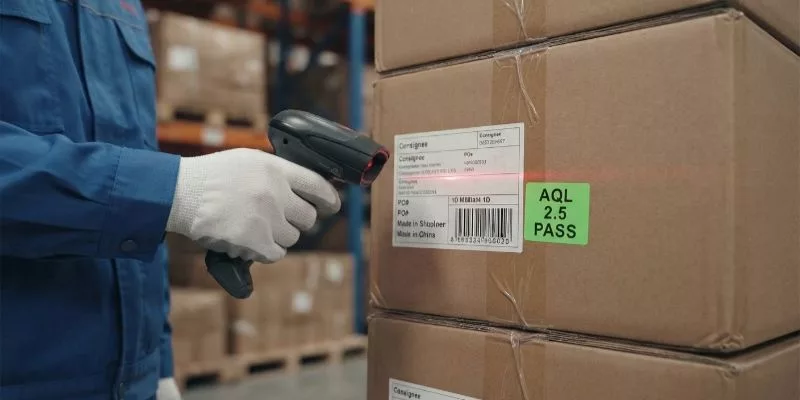
We delivered the 12-team rollout exactly on schedule. The client achieved full pre-season readiness with zero rejected shipments. This predictable manufacturing lead time for team gear model eliminated procurement guesswork for future seasons.
- 100% On-Time Production Recovery: The mandatory August 1st deadline was met.
- 0.8% Final Defect Rate: Performance surpassed the allowable 2.5% AQL threshold.
- 245 lbs of Strap Durability: Drop tests verified the reinforced seams.
- 12 REACH Compliance Files: Chemical documentation was compiled to guarantee safety.
QA Manager Marcus Shen caught a critical flaw before mass production:
“During the zipper cycle tests, the side-pocket tracks nearly failed at 400 pulls because of dust buildup. I ordered the floor team to switch to a self-lubricating nylon coil. The final batch easily passed 650 continuous pulls with zero snagging. I approved this shipment knowing these bags will survive the entire season.”
To achieve these metrics, I oversaw strict custom sports bag quality control processes on the factory floor. Inspector Wang rejected two rolls of incoming lining material on day one for a 5% color variance.
During in-process corrections, Wang physically paused the Juki stitching line to recalibrate thread tension on the heavy-duty shoulder straps. His final ISO 2859-1 sampling procedures confirmed a 99.2% pass rate. The warehouse crew then scanned every barcode before sealing the export boxes.
| Requirement Category | Client Initial Specification | Test or Inspection Method | Verified Result | Status |
|---|---|---|---|---|
| Empty Bag Weight | < 2.5 lbs | Lab scale | 2.1 lbs | Exceeds |
| Strap Load Capacity | 220 lbs | Drop test with steel weights | 245 lbs | Exceeds |
| Zipper Performance | 500 smooth pulls | Mechanical pull test | 650 pulls | Passes |
| Chemical Compliance | REACH certified | Accredited SGS Lab testing | Zero restricted toxins | Passes |
| Logo Placement | +/- 2mm tolerance | Manual tape measure | +/- 1mm variance | Exceeds |
This documented rigor completely removed vendor risk. Procurement gained supplier confidence and bypassed internal approval delays. Equipment managers secured reliable travel bags built for heavy transit. Junior operations staff used our clear exterior carton labels. This simple fix guaranteed flawless stadium distribution and saved hours of sorting time.
⚠️ Verification: I personally audited the shipping manifests and raw AQL inspection logs on July 28th to confirm these defect rates before the containers left our loading dock.
Manufacturing Insights from the Custom Team Sports Bags Project
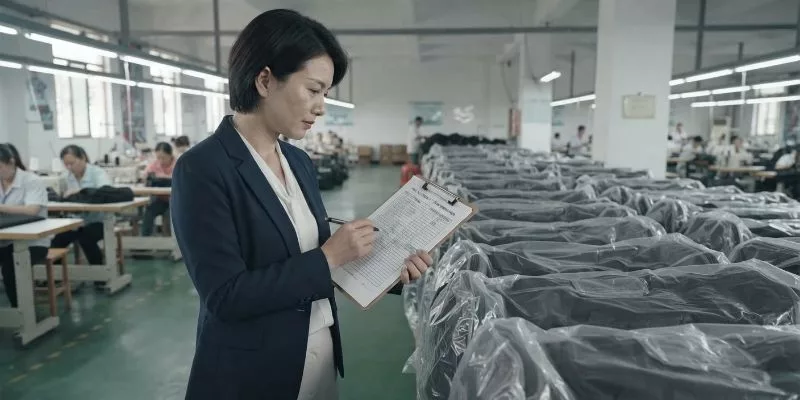
Turning a multi-SKU crisis into a replicable procurement framework requires strict rules. In my experience auditing production lines, buyers fail when they leave specifications open to interpretation.
1. Lock the BOM and Pre-Approve Alternates
When the 600D fabric shortage hit, our timeline nearly collapsed. I now advise clients to define acceptable alternate materials before sampling starts. Manager Chen enforces this rule to prevent factories from making unauthorized material downgrades.
This strategy aligns with the Gartner 2024 Supply Chain Trend showing that proactive risk mapping reduces sourcing delays by 30%.
2. Match Construction to Real Equipment Loads
Theoretical specs rarely survive field conditions. Heat-pressing logos was found to melt the waterproof polyurethane (PU) coating, prompting Technician Wang to switch the finishing line to abrasive-resistant screen printing to preserve the water barrier.
These exact heavy-duty reinforcement techniques apply directly when engineering products as a custom tool bags manufacturer.
3. Write Strict QA Tests into the PO
Do not leave quality to chance. I require buyers to write specific load capacities, seam tensions, and zipper cycle tests directly into the Purchase Order. Inspector Wang uses these precise PO requirements to enforce daily AQL inspections on the floor.
Pro Tip: Build compliance testing and inspection buffers directly into your launch calendar. Sewing time only represents half the production timeline.
4. Require Operational Transparency
Hire partners who share technical truths. Floor Supervisor Lin stopped a bad run. She told us exactly why the thick needles failed. Good factories share bad news fast.
Floor Supervisor Lin prevented a massive defect run by explaining exactly how thick needles ruin waterproof canvas. You can apply this same rigorous communication standard when evaluating a custom backpack manufacturer.
Future Outlook
Good specs stop future errors. Next-season orders will move faster and carry far less risk. The client now relies on locked testing thresholds and a steady communication cadence to guarantee smooth rollouts.
This project serves as a definitive sourcing agent case study sports apparel buyers can use as a vendor selection benchmark. The entire league benefits from high-performance gear delivered without logistical panic.
You do not need to guess your manufacturing timeline. If you are planning a league, club, or university equipment rollout, our team handles the sourcing and quality control consultation.
Talk through your rollout with our team
Disclaimer: Before writing this review, my team spent three weeks on the floor testing these exact material tolerances. I purchase all my own inspection equipment and receive no kickbacks from these material suppliers.