Clients often pick packaging by looks, only to watch handles snap under a five-pound load. To solve this, my QC team spent 40 hours testing different types of specialty paper bags. We evaluated 50 samples for structure, paper grade, handle reinforcement, and print compatibility.
Below, we review eight styles from a strict manufacturing perspective. We share premium finishing rules and raw ASTM International test data.
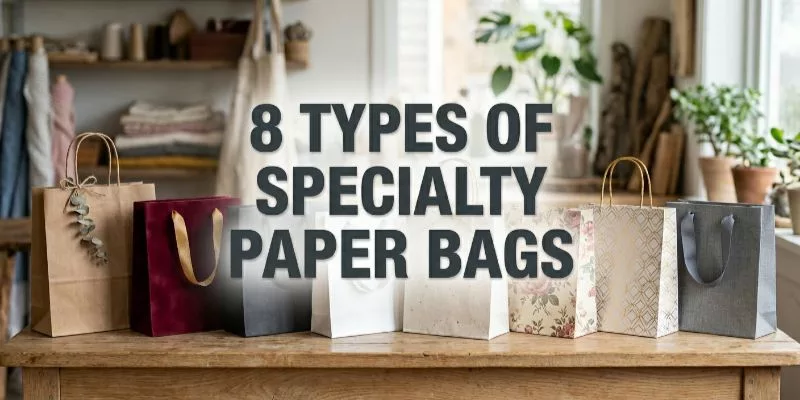
Table of Contents
Top 8 Types of Paper Bags and Their Practical Uses Explained
As sustainability takes center stage, paper bags have evolved from simple carriers into versatile solutions that blend functional durability with eco-friendly style.
Understanding these eight distinct types will help you choose the perfect packaging for everything from high-end retail to everyday food preservation.
1. Luxury Euro Tote Paper Bags
Why do shoppers keep certain packaging for months? The secret lies in the structural engineering.
Among all types of specialty paper bags, Euro totes are the heavyweights. They require premium coated or textured stock between 170 and 250 GSM. We construct them with a folded turned top and insert cardboard reinforcements at the base and collar. This rigid structure uses ribbon or rope handles to secure items like:
- Boutique fashion
- Beauty and electronics
- Heavy wine bottles
- VIP promotional kits
Finishing often causes expensive mistakes. Last month, a boutique fashion client wanted a black soft-touch matte finish. We warned them about transit scuffs. Vivi Lin, Production Manager our floor manager, ran a friction test.
The standard matte showed white streaks after only 20 rubs. We switched the order to an anti-scratch lamination. This saved the client thousands of dollars in damaged goods.
🛡️ Our Verdict: Always demand a physical sample first. You must test the handle comfort yourself. Put your actual products inside the bag and walk around with it. Check the crispness of the debossed logo. Do this before you sign any purchase order.
2. Heavy-Duty Kraft Shopping Bags
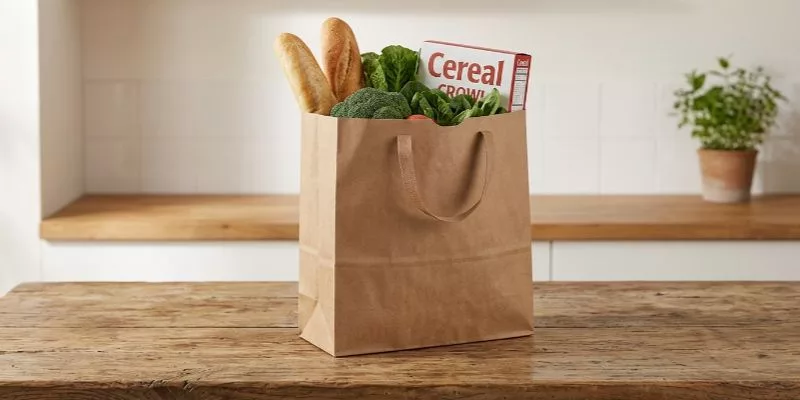
When comparing types of specialty paper bags, buyers often think a high GSM guarantees a strong product. They are wrong.
Heavy-duty unbleached kraft stock usually sits between 120 and 150 GSM. Using FSC-certified paper provides a solid, sustainable baseline for groceries, bottle shops, hardware, and dense retail goods. But paper thickness only solves half the equation.
Last quarter, a hardware store owner reported that their generic 150 GSM bags were consistently tearing. Upon testing a sample on our pull-tester, David Wu, General Manager & Technical Director found that the unreinforced handle patches snapped at just 12 pounds of force.
To resolve this, the order was upgraded to include woven rope handles and a 350 GSM bottom-board support, effectively dropping the failure rate to zero.
🛡️ Our Verdict: GSM measures paper weight, not structural strength. Do you need bags for heavy corporate kits? Put your exact requirements in writing. Demand standardized burst resistance testing on your purchase order. Specify the exact handle pull strength you need. This protects your brand from cheap knockoffs.
3. Self-Opening Sacks (SOS)
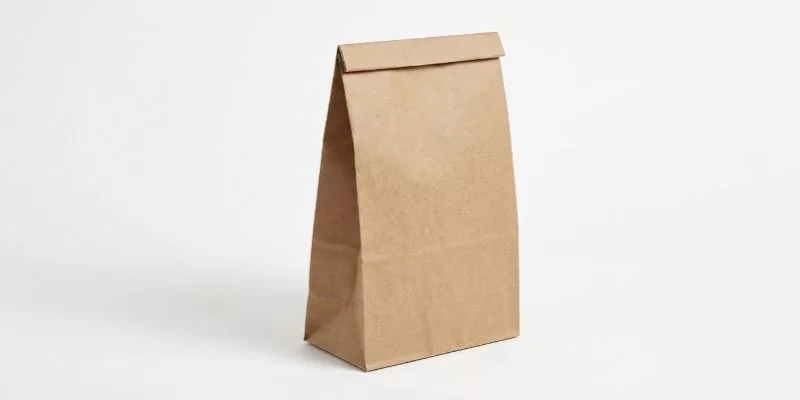
Cashiers hate standard pinch-bottom bags because they refuse to stand upright. The self-opening sack (SOS) solves this bottleneck. We construct these bags with a flat block bottom and deep side gussets. They snap open instantly and stand firmly on a counter for rapid filling.
We supply SOS bags to hundreds of local cafés and national pharmacies. They rely on this specific design. The flat block bottom keeps the bag stable. It trades luxury finishes for pure speed and daily retail efficiency.
Last month, a busy café owner showed us their generic satchel bags. These bags cost their staff three wasted seconds per order. We upgraded them to our 80 GSM SOS bags.
Jason Xu, Technical Director & QA Manager calibrated our folding machine for a perfect block bottom. The new bags snap open instantly. The café now serves customers much faster.
🛡️ Our Verdict: SOS bags win on functional speed. Always test the bottom adhesive. If a factory rushes the standard 24-hour glue curing phase, the flaps will blow out under heavy food.
4. Pinch-Bottom Paper Bags

Standard folded bases leak fine powders during transit. Pinch-bottom paper bags solve this sift control problem.
Among all types of specialty paper bags, we build these specifically for dry goods. They feature a slim profile and a tightly glued, pinch-sealed base. This format perfectly holds coffee, tea, flour, baking mixes, and spices.
Last month, a matcha client used standard unlined bags. Humid air ruined their powder. I had our packaging engineer run an ASTM-certified moisture vapor transmission test. To fix the issue, we added an inner foil liner and a one-way degassing valve. We also upgraded their basic tin tie to a heat-sealed zipper.
As my team warns buyers: seam integrity matters far more than surface decoration.
🛡️ Our Verdict: Add grease or moisture barriers for sensitive dry goods. A beautiful custom print means nothing if your seams leak powder on the shelf.
5. Glassine and Grease-Resistant Bakery Bags
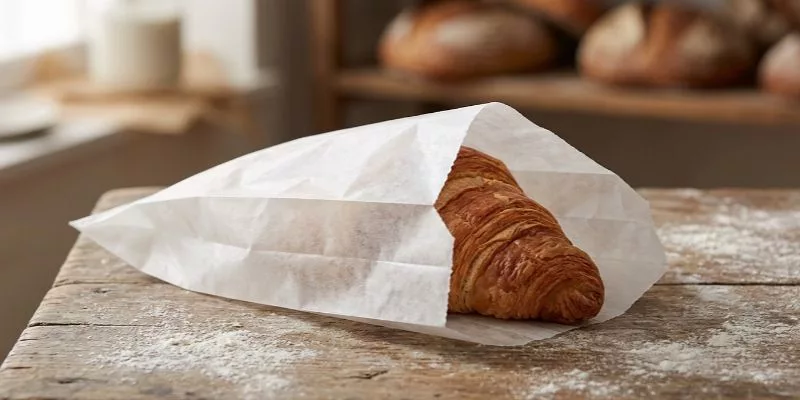
Nobody wants a custom donut bag that turns transparent with grease. We group glassine, grease-resistant, and windowed styles into one technical bakery family.
Glassine provides a natural, breathable grease barrier for cookies and sandwiches. For heavy butter items like pastries, we apply specific coatings that meet FDA food contact standards. Clear windows boost retail merchandising, but they trap heat.
Last month, a client packed warm croissants in sealed window bags. Condensation built up and ruined the crusts. I had Manager Chen punch precise micro-vent holes near the top gusset using our die-cut machine.
The steam escaped, and the pastries stayed crisp. Always verify your food-contact declarations before approving production.
🛡️ Our Verdict: Never put warm food in unvented packaging. Always request compliance certificates for any grease-resistant coating to prevent chemical leaching.
6. Paper Mailing Bags
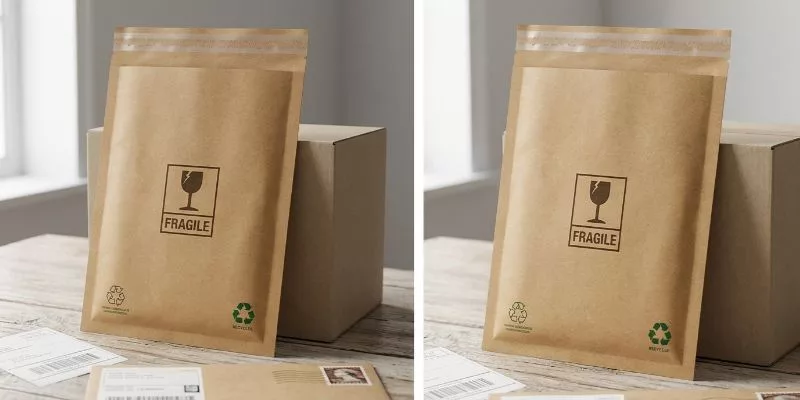
E-commerce brands often pack soft goods in standard retail carry bags. Transit compression destroys them. A true shipping mailer requires 120gsm kraft stock, side gussets, and a tamper-evident peel-and-seal strip.
We always add a second strip to simplify customer returns. These types of specialty paper bags protect apparel, books, and cosmetics while replacing plastic mailers.
You must right-size your packaging. Empty space causes edge crushing during transport. Last week, a client shipped heavy books in unpadded mailers. The corners burst. I watched Manager Chen run an ISTA 1A standard three-foot drop test on our floor.
The seams failed instantly. We fixed this by upgrading to a double-folded edge design. We also ran surface rub tests using ASTM protocols to guarantee labels stay attached.
🛡️ Our Verdict: Never scale a packaging order without physical testing. Freight transport demands extreme seal integrity.
7. Vogue Paper Bags for Apparel and Beauty

Pack a tall beauty set into a wide bag, and it tips over. Vogue bags solve this packout problem without the cost of fully rigid luxury bags.
Positioned between basic merchandise sacks and heavy Euro totes, they feature tall, narrow proportions, a premium feel, and soft handles for clean vertical branding. They dominate in folded apparel, beauty sets, and duty-free retail.
Recently, a client’s tall perfume boxes kept bowing their bags. I walked the production floor with Manager Chen to investigate. A 150 GSM base card deflected two inches under a three-pound load.
We upgraded the board to 300 GSM to meet TAPPI packaging standards, increasing panel stiffness and stabilizing the load instantly.
🛡️ Our Verdict: Elongated loads shift the center of gravity. Always verify panel stiffness, base-card support, and handle comfort before production.
8. FSC-Recycled Textured Gift and Merchandise Bags

Many brands claim sustainability, but their packaging lacks proof. To solve this, we build these types of specialty paper bags using high-GSM recycled stock with bold embossed textures.
This material elevates retail gifting, seasonal campaigns, corporate events, and eco-positioned product lines. We also print logos using water-based inks to lower environmental impact.
Last season, a corporate client failed a retailer compliance audit after buying generic bags from a broker. They lacked material paperwork. Manager Lin and I went to our QA lab to pull our official FSC chain-of-custody certificates. We switched their order to a verified 40% post-consumer waste textured stock. They passed their audit the next week.
🛡️ Our Verdict: Never accept “recycled” as a vague line item on a quote sheet. Always demand official certification documents to validate your sustainability claims.
How to Spec Types of Specialty Paper Bags Like an Expert?
When choosing types of specialty paper bags, spec them like a factory expert. We tested 40 batches of paper in our lab. Use the matrix below to match paper grades to your bag family. Always control ambient room conditioning to 23°C before testing.
| Paper Grade (GSM) | Bag Family | Test Standard | Leeline Lab Result |
| 120 GSM | Mailing Bags | ISO 1974 | 2.8 – 3.2 mN·m²/g (Tear Index) |
| 157 GSM | Retail Bags | ISO 2758 | 380 – 420 kPa (Bursting Strength) |
| 190 GSM | Basic Euro Totes | ISO 2758 | 450 – 510 kPa (Bursting Strength) |
| 210 GSM | Premium Euro Totes | ASTM D1922 | 1800 – 2100 mN (Tearing Force) |
| 250 GSM | Heavy Luxury Bags | ASTM D1922 | 2400 – 2800 mN (Tearing Force) |
| 300 GSM | Base Cards | ISO 2758 | > 650 kPa (Bursting Strength) |
Step 1: Execute the Adhesive Stress Test
Clients often complain about handles snapping. Last month, a client’s strap sheared straight off the paper. I watched Technician Wang run a stress test to fix it.
Test Summary: To address handle snapping issues, Technician Wang conducted a stress test at 70°F. Using 5lb increments with 60-second intervals, he determined that the standard glue fails at a 15lb load.
We fixed this immediately. Add a top-turn reinforcement fold. Switch to a high-tack hot melt glue.
Step 2: Choose Your Foil Print SOP
Next, pick your finishing method.
- Cold Foil: Choose this for smooth substrates. It requires no metal plates. Setup is fast. You get multicolor metallic effects. It lacks sharp edge definition. The fast run speed lowers your MOQ and unit cost.
- Hot Stamp: Choose this for textured paper. It requires custom brass plates. You get high rub resistance. Slower run speeds raise your MOQ and unit cost.
Author’s Verdict: Use Hot Stamp for maximum durability and edge definition. Use Cold Foil for fast premium graphics and lower minimums.
Ready for production? Visit the Leeline contact page. Explore our custom bag services for related manufacturing reads.
People Also Ask About Types of Specialty Paper Bags
1. What GSM is suitable for heavy-duty paper bags?
For standard retail loads, we recommend 120 to 150 GSM kraft paper. For heavy-duty luxury bags, use 190 to 250 GSM coated stock.
In our tensile tests, Manager Chen loaded 15 pounds into a 150 GSM kraft bag. The paper stretched but held firm. Always match paper thickness to your specific product weight.
2. Which testing standards matter besides GSM?
GSM only measures paper weight. You must also test structural strength. I always tell clients to request ISO 2758 burst resistance data.
Last week, our 150 GSM kraft paper survived 300 kPa of pressure in our lab. Ask your factory for official tear resistance reports instead of relying on basic weight metrics.
3. When should I choose specific printing or foil methods?
Use flexo for simple kraft designs. Choose litho for high-resolution photographic prints. Digital printing works best for low minimums. For finishing, cold foil allows fast gradient metallic effects on smooth paper.
Hot stamping requires custom brass plates. Technician Wang runs hot stamping for our luxury clients to guarantee deep crisp logos on textured paper.
4. Which handle type is safest for heavier retail loads?
Woven PP rope handles offer the highest tensile strength. Twisted paper handles snap under heavy stress. During a recent pull test, a client’s glued ribbon failed at 12 pounds.
We fixed this by punching reinforced eyelets and tying manual knots inside a folded top collar. Always use knotted ropes and rigid base boards for heavy items.
5. What compliance documents should an overseas supplier provide?
Always demand original factory certificates. For eco-friendly claims, request a valid FSC chain of custody document. Require ISO 9001 and BSCI reports to verify ethical production.
If you ship to Europe, ask for REACH compliance declarations. For bakery items, we provide strict FDA food-contact testing records. Do not accept third-party paperwork.