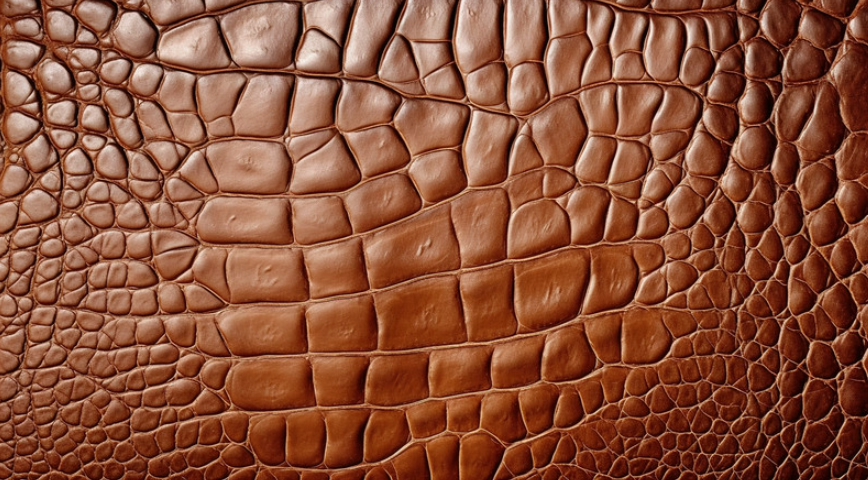
What is Crocodile Leather?
Crocodile leather is known for its luxury and strength. It is highly valued in upscale markets. Its unique raised scales and unmatched strength show top-quality craftsmanship. Custom bag manufacturers enjoy this material. Its unique scale patterns and lasting charm make their products stand out. Rare and resilient, it caters to clients who demand exclusivity.
This article examines crocodile leather. It discusses what makes it special, how it is made, and where it is sourced globally. This leather begins on tropical farms in Australia. Then, it travels to tanneries in Italy. It showcases a mix of ethical practices and skilled artistry. To align with sustainability and luxury, brands must grasp the origins and processing.
Curious how crocodile leather can transform your designs? Keep reading; luxury is in the details.
Table of Contents
What is Crocodile Leather?
Crocodile leather, sourced from species like Crocodylus niloticus (Nile crocodile) and Crocodylus porosus (saltwater crocodile), is a premium material defined by unmatched durability, flexibility, and striking scale patterns. Its natural water-repellent properties and unique texture make it a cornerstone of luxury leather goods, from handbags to high-end accessories. This market was worth $1.5 billion in 2020. It is expected to grow at a 4.5% CAGR until 2028. This growth shows a rising demand for exclusive, durable materials.
For businesses, crocodile leather’s exceptional qualities translate directly to competitive advantages:
- Durability: Resists wear and tear, ensuring products maintain pristine condition over years.
- Flexibility: Easily molded into intricate designs without sacrificing structural integrity.
- Water resistance: Reduces client maintenance costs and enhances product longevity.
- Unique aesthetics: Each hide’s distinct scale pattern guarantees exclusivity, appealing to luxury buyers.
Knowing where it comes from—ethical farms in Australia, Africa, and Southeast Asia—is key. Knowing the tanning processes, like vegetable or chrome, boosts its value.
Expert Tips:
About crocodile leather, prioritize skins with consistent scale patterns and minimal imperfections, as these indicate a high-grade hide. Additionally, the tanning method (e.g., chrome or vegetable tanning) significantly influences durability and flexibility, making it crucial to match the leather’s properties to its intended use.
———— Kate Yang, Guangzhou Fiedle Leather Bag Co.,ltd – Foreign Trade
Properties of Crocodile Leather
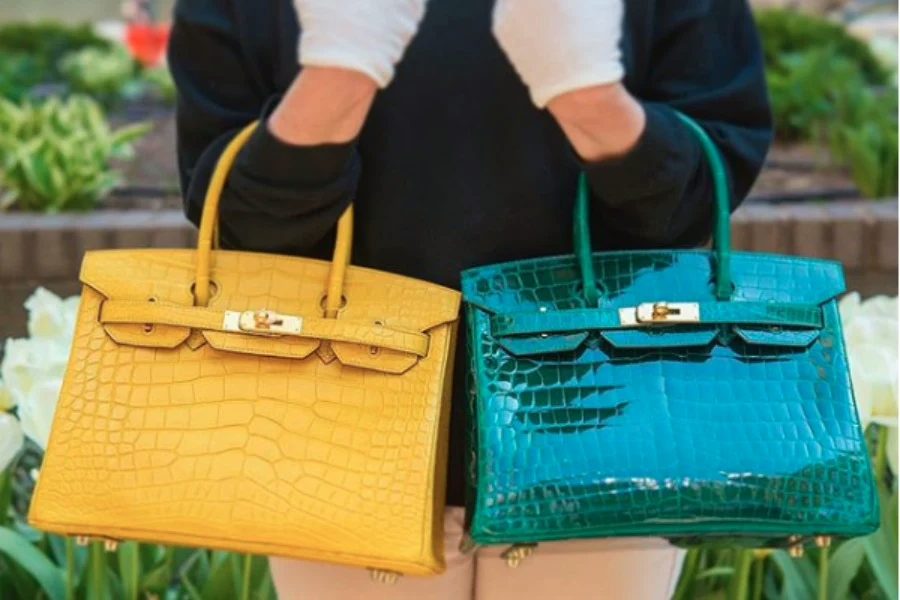
Crocodile leather is more than a luxury material. It’s a high-performance asset made by nature. Sourced primarily from Crocodylus niloticus (Nile crocodile) and Crocodylus porosus (saltwater crocodile), its properties directly translate to tangible benefits for your luxury products:
- 1. Unmatched Durability:
Three times stronger than cowhide, this material resists abrasion and stress. It won’t tear, making it perfect for items that see a lot of use, like handbags and shoes. Hermès Birkin bags, crafted from crocodile leather, keep their structure and value for decades. Scratch-resistant scales cut wear, reducing client complaints and returns.
- 2. Flexibility Meets Precision:
Supple yet rigid: Its unique collagen structure allows intricate shaping (e.g., curved watch straps or sculpted heels) without cracking. Low-stretch ensures products maintain their shape over years, unlike stretch-prone leathers.
- 3. Built-in Protection:
Natural water resistance from tightly interlocked scales shields against spills and humidity, critical for luxury travel accessories. Heat resistance (up to 80°C/176°F) prevents warping in warm climates.
- 4. Aging with Elegance:
Develops a rich patina over time, enhancing visual appeal rather than degrading—seen in vintage Rolex crocodile straps that gain value with age.
- 5. Design Versatility:
Belly scales (small, uniform) create sleek finishes for wallets, while back scales (larger, pronounced) add bold texture to statement bags.Superior colorfastness ensures dyes remain vibrant for 10+ years with proper care.
For businesses, these properties mean lower lifetime costs (fewer replacements), higher price justification (e.g., $10,000+ crocodile leather briefcases), and client loyalty through heirloom-quality goods.
How Crocodile Leather is Made?
The creation of crocodile leather is a precision-driven art that transforms raw hides into luxury-grade material.
① Ethical Sourcing: Skins come from CITES-certified farms (Nile, saltwater crocodiles, American alligators), ensuring compliance with global wildlife trade regulations.
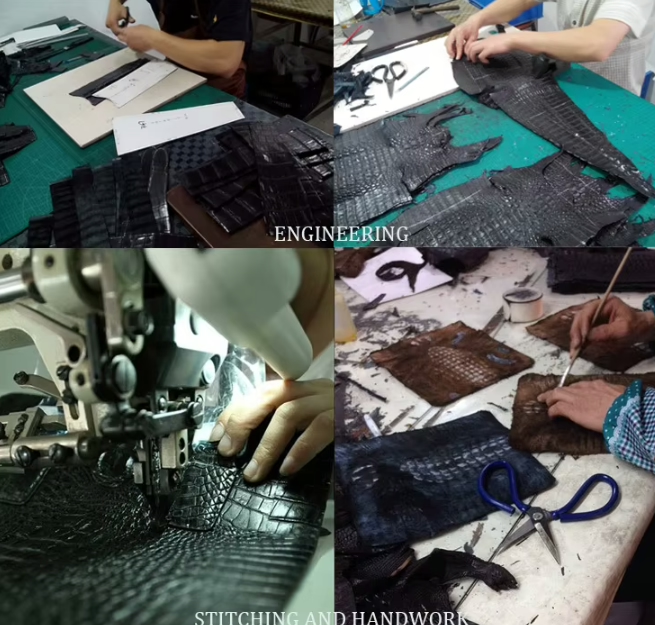
② Preservation & Preparation: Fresh hides are salted within 6 hours of harvesting to prevent decay. At tanneries (primarily in France, Italy, Singapore), hides undergo 48-hour soaking to remove salt and debris—critical for dye consistency.
③ Chemical Refinement:
- Chromium tanning (industry gold standard) stabilizes collagen fibers, making hides 3x more durable than vegetable-tanned alternatives.
- Double tanning (chrome + vegetable) enhances softness for high-flex products like gloves or curved bag panels.
④ Precision Processing:
Laser-guided shaving ensures uniform thickness (0.8–1.2mm), vital for structural integrity in items like watch straps. Acid-free bleaching removes natural blemishes without weakening fiber networks.
⑤ Color Mastery:
Drum dyeing (6–8 hours) ensures pigments penetrate every scale crevice—key for products like embossed wallets. Metal-complex dyes prevent fading for 10+ years, maintaining vibrancy in high-sunlight environments.
⑥ Finishing Excellence:
Toggle drying in humidity-controlled chambers prevents cracking.Micro-pigment sprays create finishes like Hermès’ signature glacé (high-gloss) or matte, adding $2,000+ value per skin.
Where is Crocodile Leather Produced?
1. Africa: Precision Farming for Premium Skins
Key regions: Zimbabwe, Botswana, Kenya (Nile crocodile farms).
Why it matters:
- Wild egg ranching (harvested Feb–Mar) ensures genetic diversity, producing robust hides with uniform belly scales—ideal for sleek watch straps or wallets.
- Zimbabwe’s CITES-certified farms yield 35–40cm belly skins after 18-month growth cycles, perfect for small leather goods with 95% defect-free rates.
2. Southeast Asia: Cost-Efficient Scale
Top exporters: Thailand bag manufacturer (No.1 global exporter), Vietnam, Cambodia.
Thailand’s farms produce 200,000+ skins annually, specializing in saltwater crocodiles for large-scale luxury handbag production.
Competitive pricing: Vietnamese tanneries offer hides at 300–800/skin, 20% cheaper than Australian equivalents, without compromising CITES compliance.
3. Australia: The Gold Standard
Dominates 60% of premium saltwater crocodile skins (Northern Territory, Queensland).
- 21 specialized farms rear crocodiles to 1.5m length for 40cm+ belly skins—the benchmark for Hermès-grade materials.
- Traceability: Each skin includes a CITES microchip, enabling you to market “fully traceable” products—a key selling point for EU/U.S. luxury buyers.
4. Emerging Markets: Papua New Guinea & Beyond
Papua New Guinea’s wild-sourced skins cater to buyers seeking rare, organic textures for limited-edition collections.
Types of Crocodile Leather
▶ Saltwater Crocodile (Crocodylus porosus)
Origin: Australia, Southeast Asia.
Your Advantage:
- Uniform belly scales (40–50cm width) create seamless patterns for statement handbags (e.g., Hermès Birkin).
- ISO pores along scale edges add texture while maintaining flexibility—ideal for curved designs like watch straps.
- High durability reduces waste: 1 hide yields 8–10 premium bags.
▶ Nile Crocodile (Crocodylus niloticus)
Origin: Africa (Zimbabwe, Kenya).
Your Advantage:
- Large, square belly scales (28–35cm) offer bold aesthetics for jackets and tote bags.
- Softer collagen fibers simplify embossing and laser-cutting—cut production time by 15%.
- Cost-effective: African farmed hides cost 800–1,500/skin vs. Australian $2k+.
▶ American Alligator (Alligator mississippiensis)
Origin: Southeastern U.S.
Your Advantage:
- Smoother texture (no calcium deposits) ensures flawless dye uptake for vibrant wallets or boots.
- Higher profit margins: Alligator leather retails at 3k–12k/skin (30% pricier than crocodile).
- CITES Appendix II compliance streamlines U.S./EU exports.
▶ Caiman (Caiman crocodilus)
Origin: South America.
Your Advantage:
Rigid, calcium-rich scales add rugged texture for belts/shoes at 50% lower cost than crocodile. Smaller hides (25–30cm) suit accessories—ideal for mid-tier luxury lines targeting Gen Z.
Grading System: Minimize Waste, Maximize Value
- Grade 1: Zero defects (center-belly). Use for $10k+ bags—no material waste.
- Grade 2: Edge flaws. Perfect for small leather goods (cardholders, keychains).
- Grade 3/4: Repurpose center-defective hides for lined interiors or sample prototyping.
Crocodile leather makes up less than 1% of global leather production. This rarity allows you to charge higher prices and reach niche markets.
Applications of Crocodile Leather
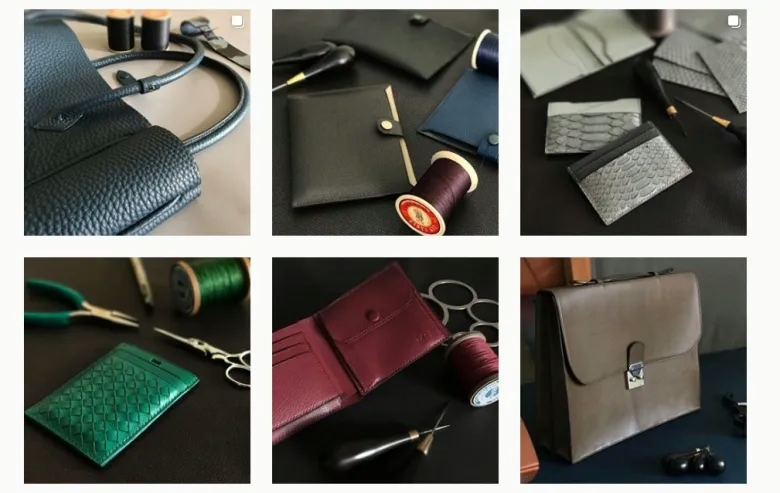
1. High-Margin Product Lines
⑴ Handbags (40% market share): A single Grade-A saltwater crocodile hide yields 2–3 Hermès-style Birkin bags, retailing at $50k+ each.
⑵ Small leather goods (25%): Use belly scraps for cardholders (800–1,500 each) with 90% material use, minimizing waste.
⑶ Footwear (20%): Crocodile leather boots (5k–15k/pair) have 50% higher margins than calfskin. This is due to their scratch-resistant scales.
2. Diversified Luxury Offerings
- Automotive interiors: Partner with Bentley/Rolls-Royce-style brands—one crocodile-upholstered steering wheel adds $20k+ to vehicle MSRP.
- Furniture: Italian designers pay $1,500/sq.ft for Nile crocodile upholstery, targeting ultra-high-net-worth clients.
Expert Tips:
For buyers, understanding the species origin is key—Nile crocodile leather is renowned for its durability and suitability for heavy-duty items, while Freshwater crocodile leather offers flexibility ideal for clothing or softer goods. Always verify the craftsmanship and finishing quality to ensure long-lasting luxury.
———— Rebecca Besasie, Senior Product Developer I Leather & Fabric Developer
Conclusion
Crocodile leather is incredibly durable and crafted with care. It comes from CITES-certified farms, making it an ethical choice. This combination makes it the top luxury material. Crocodile leather has unique benefits, such as heat-resistant scales and a rich aging patina. These features help your brand stand out in the luxury market. Working with certified suppliers keeps us compliant. It also helps us meet trends like traceability. In fact, 72% of millennial luxury buyers want this.
Ready to transform exclusivity into profitability? Email [email protected] or go to leelinebags.com. Discover custom leather bags made just for you. Stand out in the luxury leather market.
Further Reading:

●  What is Fish Leather: How it’s Made and Where?

●  What is Cowhide Leather? Expert Guide to Quality, Grades, and Uses
FAQs
1. What makes crocodile leather superior to other exotic leathers?
Crocodile leather is three times more durable than cowhide. It also has natural water resistance and unique scale patterns that can’t be copied. Its flexibility lets you create detailed designs, like curved watch straps. The aging patina adds value over time. This is important for luxury brands, such as Hermès, which charge over $50k for Birkin bags.
2. How does the tanning process impact crocodile leather quality?
Premium tanneries use chromium tanning first, then they retan with vegetables. This process creates hides that are tough against tears and soft to the touch. Defect-free Grade 1 skins undergo laser-guided shaving to ensure uniform thickness (0.8–1.2mm), critical for luxury handbag production.
3. Where should I source crocodile leather for compliance and quality?
Rank CITES-certified farms in Australia (saltwater crocodiles), Zimbabwe (Nile crocodiles), or Thailand. Australian hides have traceable microchips. African farms use wild DNA scales. Both meet EU and U.S. regulations. This justifies a 20–30% price premium.
4. What factors determine crocodile leather costs?
Prices (1k–10k/hide) depend on:
- Species: Saltwater crocodile (most expensive) vs. cost-effective caiman.
- Grade: Grade 1 (zero defects) vs. Grade 3 (repurposed for linings).
- Origin: Australian hides cost 25% more than Thai equivalents.
- Finish: Glazed/metallic treatments add $2k+/hide.
5. How do I maintain crocodile leather products for clients?
Recommend pH-neutral cleaners and silicone-free conditioners to preserve natural oils. Avoid prolonged sun exposure—despite heat resistance (up to 80°C/176°F), UV rays can fade dyes. Provide clients with branded care kits to enhance loyalty.