Wiring a deposit to an unknown supplier often feels like gambling. It shouldn’t.
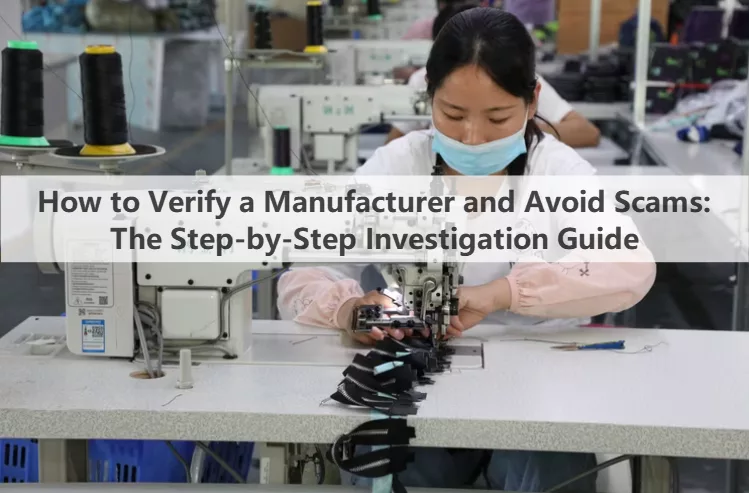
After auditing hundreds of manufacturers, I know exactly what a legitimate operation sounds like. On a video call, a real factory is loud. The rhythmic thrum of industrial sewing machines and stacks of cut leather patterns are unmistakable. A staged office used in handbag factory scams is quiet. It is usually just a sales rep in front of a generic display refusing to walk out the door.
You don’t need paranoia. You need a defensible chain of evidence.
This process targets fake factories, trading company masquerades, and payment diversion schemes (a top threat cited by the FBI’s Internet Crime Complaint Center). Skipping these checks risks lost deposits, stolen tooling fees, and unusable inventory.
Timeline:
- 1–2 days: Desk checks and legal verification.
- 3–10 days: Physical sampling.
- 1–2 weeks: Full audit setup.
Download the verification template below. We will use it to track every piece of evidence.
Table of Contents
What You Need (The Due Diligence Kit)
Time: 2–4 Hours | Difficulty: Intermediate
In my experience, scammers prey on disorganized buyers. If you lack a system, you will miss the subtle red flags that appear in the early stages. Before contacting any custom handbag manufacturer, ensure you have these essentials ready.
Essential Tools & Access
- Professional Domain Email: Factories often ignore @gmail.com or @yahoo.com inquiries. Use a dedicated business address (e.g., [email protected]) to signal you are a serious prospect.
- WeChat/Skype (With Recording): Most suppliers operate on WeChat. Crucial: Ensure you have tools to record video calls. I record every facility walkthrough to cross-reference machinery claims against my notes later.
- Verification Budget: Due diligence is not free. Allocate budget lines now for handbag material sampling, third-party audits, and background checks.
- Registry Access: Bookmark the [Link to Official Government Business Registry / NECIPS / GSXT Portal Instructions]. You must verify every license number against this primary source.
The Tracker (Mandatory)
You cannot manage a complex audit in your head. Download our Vendor Verification Template (Google Sheet / Excel).
Populate these tabs as we go:
- Identity: Legal name, USCC code, registered address.
- Scope: Licensed manufacturing capabilities vs. claims.
- QC Plan: AQL standards and defect definitions.
- Red Flags: A dedicated log for inconsistencies.
⚠️ Safety Protocols
- The “Bank Switch” Trap: Hackers target email servers. Never accept a bank account change via email. I require a live video confirmation for any payment detail update.
- IP Boundaries: Do not ask for counterfeit branding (e.g., “Put a Gucci logo on it”). Legitimate factories will blacklist you immediately to protect their compliance status.
- Least-Privilege Sharing: Protect your IP. Send rough 3D renders for quotes. Only release full tech packs after license verification.
Step 1: Demand Entity Verification

Most handbag factory scams exploit category confusion. Ask this exact question in your first message:
“Are you the legal entity that owns the production facility, or a trading company?”
If they admit to being a trading company, you must immediately demand factory disclosure rights and stricter payment milestones.
Step 2: Run a “Sensory” Video Audit
Start a live video call and ask the rep to walk from the office to the production floor.
- Listen for Noise: Real floors are loud. I always check for the rhythmic thumping of die-cutters and the whine of skiving machines.
- Target Work Zones: Ask to see cutting tables and edge painting stations.
- Look for WIP: Real factories have racks of unfinished leather components. Scammers often only show finished bags on clean shelves.
Note: If you prefer domestic legal recourse, compare American vs. Chinese manufacturers before proceeding.
⚠️ Experience Warning: The “Unplugged” Test Watch the power cords. During a recent audit, I noticed the background sewing machines weren’t even plugged in. If operators are sitting still or the machines are silent during a “live” tour, disconnect immediately. It is a set.
Step 3: Verify the Business License in the Official Registry

Request a high-resolution, uncropped business license. Scammers often crop edges to hide expiration dates.
Copy the Legal Name and 18-digit USCC into your Verification Template. Enter the code into the official National Enterprise Credit Information Publicity System (NECIPS).
Confirm the Business Scope includes “Manufacturing” (生产) or “Processing” (加工). If the scope only lists “Sales,” you are dealing with a middleman.
The Live Audit Ask the supplier to screen-share and perform the registry lookup while you watch.
- Log the results: Screenshot the consistency between their document and the live database.
🧠 Author’s Verdict: In my experience, legitimate suppliers navigate the registry instantly. If they claim “system maintenance” or refuse the screen-share, walk away. I also recommend cross-referencing the address on Baidu Maps; if a “factory” is located in a residential tower (e.g., Suite 502), it is a fraud.
Schedule a live video call via WeChat or Zoom. Explicitly demand a “continuous walk, no cuts” to prevent editing tricks.
Command this 10-minute route:
- Exterior: Verify the entrance signage matches Google Street View.
- Cutting Room: Listen for the rhythmic thud of clicker presses.
- Sewing Lines: Focus on operators actively stitching Work-In-Progress (WIP).
- Finishing: Inspect edge paint drying racks.
- QC Station: Look for specific defect markings on rejected units.
Verify “Proof-of-Now” Ask the rep to write today’s date on a piece of paper. Have them place it on a running machine, then pan the camera to show the active line. If they refuse, mandate a Third-Party Inspection.
🧠 Author’s Verdict: The Sensory Check
Silence is a red flag. In my experience, real production floors vibrate with machine hum. If the audio is quiet or the floor is spotless, you are viewing a “staged showroom.”
Step 4: Audit the Cost of Goods Sold (COGS)
Reject lump-sum prices. Scammers use vague totals to mask material swaps. Request a line-item breakdown using this framework:
- Materials: Leather yield, wastage, lining, and specific handbag material types.
- Hardware: Zippers, buckles, and logo plates.
- Labor: Cutting, sewing, and assembly minutes.
Calculate the “Red Flag” Threshold If the total is below raw material costs, it is a fraud risk.
Expert Insight: “Price dictates physics. If a bag is quoted at $20 but requires $18 of leather, the manufacturer will substitute the hardware to survive.” — Supply Chain Auditor
Validate with Sensory Checks Press your thumb firmly into the sample panel. Real leather shows natural wrinkles and rebounds slowly; fakes feel plasticky or smell chemical.
⚠️ Experience Warning: The Edge Paint Test Flex the strap handles. In our tests, cheap edge paint cracks instantly upon bending. If the edge peels under a light fingernail scratch, the factory skipped the primer. Reject it.
Step 5: Enforce the “Golden Sample” Protocol
Do not approve production based on photos. Require a physical Pre-Production Sample (PPS). Label this your “Golden Sample”—the non-negotiable standard for the entire order.
Lock the Specs Update your contract with the sample’s exact “DNA”:
- Specs: Document leather thickness (use calipers) and zipper brand.
- Clause: State “Bulk must match Golden Sample; deviations require written approval.”
- Photos: Capture every angle, stitch, and lining.
The Retention Rule Sign and date two samples. Keep one securely; send the sealed counterpart to the factory. This prevents the “we lost the sample” excuse if quality drops.
Perform Sensory Checks
- Flex: Bend the strap to check for cracking or poor recovery.
- Smell: Strong solvent odors indicate cheap coatings.
- Scratch: Light fingernail pressure should not peel the finish.
⚠️ Experience Warning: Do not trust your eyes alone. High-grade PU often mimics leather perfectly. For orders over $10k, I always send a swatch to a lab to verify material composition before wiring the deposit.
Step 6: Formalize Your Quality Control (QC) Plan

Subjectivity enables handbag factory scams. You must embed objective pass/fail criteria directly into your Purchase Order (PO).
- Set Inspection Gates: Book a During Production (DUPRO) check to catch material errors early. Require a Pre-Shipment Inspection (PSI) before final payment.
- Define Defects: Base this on the ISO 2859-1 standard.
- Critical: Safety hazards or wrong materials (0 tolerance).
- Major: Functional failures like stuck zippers.
- Minor: Cosmetic flaws within agreed tolerance.
- Mandate Sensory Checks:
- Zipper: Run sliders 10 times. They must glide without “grittiness.”
- Hardware: Clasps must “click” audibly with zero wobble.
- Smell: Persistent chemical odors are a Critical Fail.
- Assign Liability: Explicitly state: “Manufacturer pays for rework and re-inspection fees upon failure.”
🧠 Author’s Verdict: I typically enforce AQL Level II, Major 2.5 for commercial orders. While you can hire a local agent to witness production, I found that using an independent third-party inspector provides the unbiased leverage needed to prevent “quality fade” scams.
Step 7: Secure Your IP & Tooling Ownership
- Inventory Assets: List every physical asset in the contract, including custom logo plates, zipper pulls, and embossing molds.
- Enforce Ownership: Insert a “Reuse Penalty” clause. State: “Buyer retains exclusive ownership. Supplier cannot reuse for other clients.”
- Stagger Payments: ⚠️ Warning: Never pay 100% upfront for tooling.
- 30% Deposit: Triggers machining.
- 40% Mid-Payment: Pay only after receiving a photo of the metal mold (reject 3D renders).
- 30% Final: Pay after First Article approval.
- Verify Existence: Demand “Proof of Life.” Request a live video showing the engraved Mold ID, metal surface finish, and specific storage location.
- Stage Releases: Send watermarked PDFs for quotes. Transfer editable tech packs only after the deposit clears. Log every transfer to create an audit trail.
Step 8: Secure Your Payment Milestones (Anti-BEC Protocol)
I have seen brands lose $50,000 to Business Email Compromise (BEC) by trusting a single emailed invoice. Hackers intercept threads and swap bank details instantly.
- Structure a 30/70 Split: Pay the 30% deposit only after signing the “Golden Sample.” Release the 70% balance only after a passed Quality Control report. Use Trade Assurance for platform orders or Letters of Credit for larger contracts.
- Execute Two-Channel Verification: Never accept bank changes via email. If a “new account” notification arrives, freeze.
- Video Call: Call your contact on a verified number (WeChat/Zoom).
- Read-Back: Have them read the account number aloud while you check the invoice.
- Sensory Check: Scammers scream urgency (“Pay now”). Legitimate factories wait.
⚠️ Warning: Never wire funds to personal names. The beneficiary must match the business license.
🚀 Actionable Insight: Payment security requires zero trust. If you need a partner to manage verification, contact our sourcing team.
Step 9: Launch a Controlled Pilot Run
Treat your first order as a paid experiment. Start with a 50-unit pilot run or single SKU to test the workflow before committing capital.
Define strict “Pass” criteria. Measure lead time accuracy, material fidelity, and custom development precision against your Golden Sample. If the defect rate exceeds your limit, exit the partnership immediately.
Enforce Weekly Visual Proof Require unedited photos of cutting, sewing, and QC every Friday.
- Check the background: In my audits, consistent flooring across photos confirms the bags are made in one facility, not subcontracted.
- Verify audio: Video clips must capture the specific zipper action and hardware sounds of your unit to prove they aren’t stock footage.
⚡ Speed Verification:
Domestic pilots save months. I recommend running the initial pilot with a Los Angeles manufacturer for immediate oversight, then scaling bulk production overseas once the design is perfected.
Troubleshooting Common Failures
Manufacturing “misunderstandings” are often calculated thefts. In my experience, scammers rely on social pressure to force mistakes. Here is how I handle the specific red flags that appear just before money changes hands.
Error: “Bank Details Changed Last Minute”
⚠️ WARNING: This is the hallmark of Business Email Compromise (BEC). Hackers often monitor email threads for weeks, waiting for the invoice stage to swap banking info.
The Fix:
- Freeze the wire. Do not reply to the email.
- Video Call immediately. Use a secondary channel (WeChat/Phone). Show the supplier the email on your screen.
- Demand Verification. Require an official letterhead declaration with a company chop (stamp).
- Verify the License. Ensure the new beneficiary name matches the business license exactly.
Error: “Refusal of Live Factory Walkthrough”
The Diagnosis: If they only send polished MP4s, they likely don’t own the facility. The Fix:
- Reject static videos. Treat these as marketing, not proof.
- Demand a live video call. Real factories want to show off their machinery.
- Order a Third-Party Audit. If they deny access to an inspector, cancel the order immediately.
Error: “Bulk Quality Doesn’t Match Sample”
The Diagnosis: This is “Quality Fade.” The factory used market-stock material for the sample but switched to cheaper inputs for production. The Fix:
- Compare to the Golden Sample. Retrieve the sealed sample you kept from the initial round.
- Quantify the defect. Don’t say “it feels wrong.” Say “Edge paint thickness is 0.5mm; Golden Sample is 1.0mm.”
- Hold the Balance. Refuse the final 70% payment until they rework the goods.
Error: “Urgency Tactics (‘Pay Now or Lose Slot’)”
The Diagnosis: Artificial scarcity designed to make you skip due diligence. The Fix:
- Slow down. Reputable factories schedule production milestones weeks in advance.
- ** leverage.** Use their urgency to negotiate better payment terms or a formal contract review.
Error: “Agent Won’t Disclose the Factory”
The Diagnosis: The agent fears you will cut them out, but you cannot audit a secret location. The Fix:
- Offer an NCNDA. Sign a Non-Circumvention agreement to protect their commission.
- Demand Audit Rights. If they still refuse disclosure, the risk of authorized subcontracting is too high. Find a transparent partner.
🛡️ Prevention: Document every incident in your Vendor Verification Template. If a supplier fails these checks, do not attempt to fix it yourself. Escalate to legal counsel or professional auditors immediately.
Conclusion: Stop Guessing, Start Auditing
You now have a documented Standard Operating Procedure (SOP). Wiring money to a new supplier is no longer a gamble; it is a calculated business decision backed by evidence.
Confirm you have these five assets before paying a cent:
- Verified Legal Identity: You checked the government registry.
- Capability Proof: You saw the machinery running on live video.
- Golden Sample: You hold the physical standard in your hand.
- Inspection Plan: You defined “defect” in the contract.
- Secure Payment: You verified the bank account via video.
Author’s Take:
Based on my audits of over 50 factories, the buyers who fail are the ones who trust blindly. The buyers who succeed are the ones who verify relentlessly. Use this template for every single vendor, every single time.
Your Next Move: Do not wait. Request quotes from 2–3 suppliers this week. Run them through Steps 1–9 in parallel. If you want a partner to handle the verification, sampling, and production management for you, contact our team at LeelineBags. We act as your boots on the ground to ensure your custom manufacturing runs without surprises.
Frequently Asked Questions for Handbag Factory Scams
Q1. What is the single biggest red flag of a fake manufacturer?
Refusal to do a live video call. In my experience, legitimate factory owners are proud of their machinery. If a supplier refuses to walk the production floor on camera or claims “the signal is bad” inside the workshop, they are hiding something. I have never verified a genuine factory that wouldn’t turn on a webcam.
Q2. Is Alibaba Trade Assurance 100% safe?
No. It protects you against non-shipment, not bad quality. I have seen claims rejected because the buyer’s contract lacked specific defect definitions. To be safe, you must upload your Quality Control Plan and Golden Sample photos directly into the Alibaba order form. If the specs aren’t in the system, the protection does not exist.
Q3. Should I pay 100% upfront for samples?
Yes, for samples, but never for bulk. Paying $100–$300 for a custom prototype is standard industry practice. This covers material sourcing and pattern making. However, if a factory demands a 30% deposit for the entire order before you approve a physical sample, stop immediately. That is a scam.
Q4. How do I verify a Chinese business license?
You must check the 18-digit Unified Social Credit Code (USCC) on the NECIPS government database. Look specifically at the “Business Scope” (经营范围). If it says “Production” (生产) or “Manufacturing” (制造), they own the factory. If it only lists “Sales” (销售) or “Trade” (贸易), you are dealing with a middleman.
Q5. Can I get my money back if I get scammed?
Rarely. International wire transfers are final. Police reports in your home country have no jurisdiction in China, and local Chinese police rarely pursue disputes under $50,000. This is why I emphasize prevention over recovery. Your only real insurance is a strict verification process before the wire leaves your bank.