
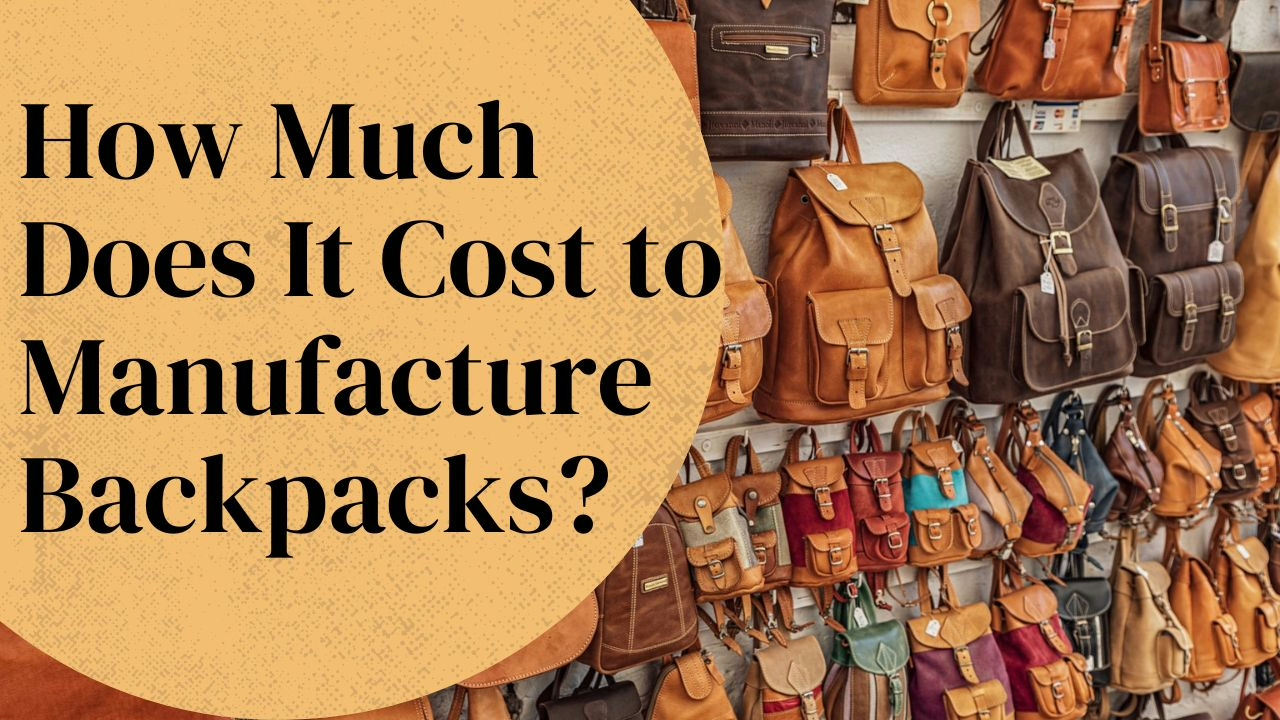
How much does it cost to manufacture a backpack? Making a backpack costs money and business owners need to know these costs. The backpack industry is big and there are many suppliers offering different types of bags from basic to high end customised. Knowing the cost factors will help you make better budget decisions and increase your profit.
For businesses looking for customised backpacks knowing the manufacturing costs is key. It helps you to be competitive. Whether you are sourcing a custom backpack supplier or looking for a cheaper option knowing the price structure will help you to negotiate better and optimise production.
In this article we will explain the cost factors, how to choose a supplier and give you tips on how to get the best value. Keep reading to make better purchasing decisions and grow your business with custom backpacks.
Cost Factors of Backpack Production
1. Raw Material Prices
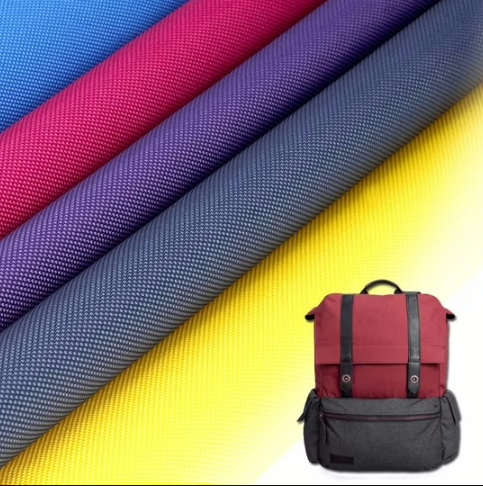
How much does it cost to manufacture a backpack? The cost of a backpack depends on the materials used. Different materials have different prices based on their quality, durability and features.
Fabric Costs
- Nylon: High end nylon fabric $4 to $270 per sq ft depending on strength, color and pattern, such as diamond pattern jacquard oxford fabric with PU coating.
- Polyester: Basic polyester fabric for a standard backpack $1 to $5 per unit.
- Leather: High end leather for high end backpacks $50 or more per unit.
- Canvas fabric and PU Leather: These materials are between polyester and nylon, price varies based on durability and appearance.
Additional Costs
Zippers: Zipper prices vary based on quality $3 to $8 per zipper.
Thread, Padding and Straps: These are the essential components that cost between $4 to $15, price increases for special compartments or extra padding.
Market and Supplier Factors
- Market Fluctuations: Material prices can change due to backpack market demand, scarcity or economic conditions.
- Supplier and Volume: Supplier and order size can affect pricing. Larger orders get better rates and lower material cost.
By knowing these factors you can estimate the cost of making a backpack and make better decisions to control production costs.
2. Production Process
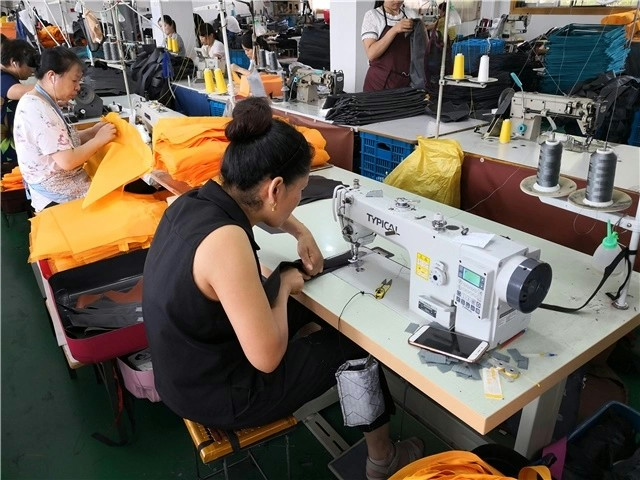
The production of a backpack involves several stages that affect the overall cost. From design to final assembly each stage adds value to the product but also increases the expense.
Design Complexity and Production Time: Design complexity of the backpack affects the cost. Designs with extra compartments, laptop sleeves or ergonomic straps require more labor and materials. Detailed designs take longer to produce and increases both production time and cost.
Tech Pack: The first step in production is to create a Tech Pack which includes detailed design and technical specifications. Skilled designers charge between $50 to $200 per hour depending on the complexity. Prototypes may also be needed to finalize the design and that adds extra cost.
Cutting and Sewing: Once the design is finalized the fabric is cut using methods like CNC cutting, die cutting or laser cutting. The number of components cut affects labor cost especially for complex designs. After cutting the pieces are sewn together, simple backpacks can have up to 30 sewing operations. Reinforced stitching is common in high stress areas like strap attachments especially in high end backpacks.
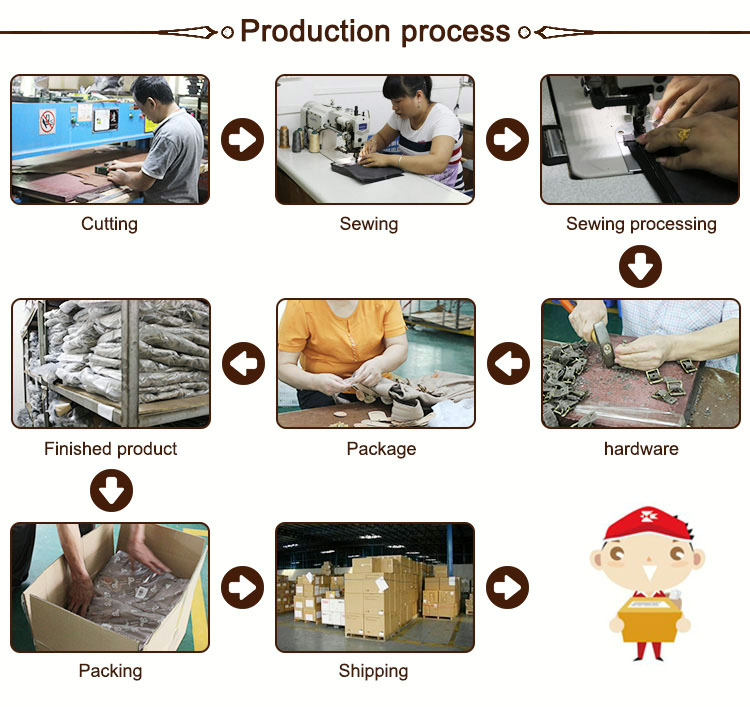
Accessories and Features: Additional features like straps, padding, compartments and pockets increase the cost of production. Straps and padding cost between $4 to $15 and adding multiple compartments or custom pocket design increases both material and labor cost.
Bulk Order and Automation: Ordering in bulk can lower the cost per unit. Manufacturers often give discounts for large orders which can reduce the cost per unit significantly. Also automation in production can reduce labor cost in the long run but requires high upfront investment in machinery.
In summary the total cost of making a backpack depends on design complexity, material, labor and order size. Knowing these factors will help you make informed decisions that fit your budget and production goals.
3. Labor Cost
Labor cost is a big factor in the total cost of making a backpack. Where your production facility is located affects these costs.
Geographic Location and Labor Rate
Labor cost can vary greatly depending on where your factory is located. For example:
- In the US the labor cost is between $10 to $30 per hour.
- In countries like backpack factory China or Vietnam the labor cost is much lower $2 to $5 per hour.
This big difference in labor cost can make a big impact on the cost of making a backpack.
Skilled vs Unskilled Labor
Backpack production requires both skilled and unskilled workers:
- Skilled labor: These workers do premium stitching or detailed design. Their skills are more expensive.
- Unskilled labor: These workers do basic tasks like material handling or simple parts assembly. They are paid less but can affect the overall quality and speed of production.
Labor Cost Impact
Labor cost is a big factor in the final price of a backpack. If production is done in areas with higher labor cost (like US) the price per unit will increase. Outsourcing to areas with lower labor cost like Southeast Asia can help reduce the labor cost and make your product more competitive.
By controlling labor cost and roles you can optimize the production and cost, which will answer the question: how much does it cost to manufacture a backpack?
Related Reading:
Laptop Bag Vs. Sleeve Vs. Backpack: Which One Suits Your Business Needs Best?
15 Different Backpack Types Every Brand Should Know About
What is the Average Price for a Backpack: Key Considerations for Your Brand
Where Are North Face Backpacks Manufactured?
4. Quality Control and Certification
Quality control and certification is important in backpack manufacturing. It ensures your product meets industry standards and customer expectation, durability and safety.
- Third Party Inspection
Third party inspection is often required to verify the quality of your backpacks. These inspection checks compliance to industry standards and the production environment. The cost can range from a few hundred to several thousand depending on the scope and frequency of inspection.
- Pre-Production Checks
Before mass production, thorough checks are required, design revision, sample evaluation and machine calibration. These steps involve skilled labor and equipment calibration and can cost several thousand per production run. Pre-production checks will prevent costly mistake during production and smooth the process.
- In-Process Quality Control
During production in-process quality control is important. This includes visual inspection, function test and audit to ensure the backpacks meet quality standard. These process add 10-20% to the total cost of production due to labor and expertise required for regular checking.
- ISO Certification
To add credibility, getting ISO certification like ISO 9001 (Quality Management) and ISO 14001 (Environmental Management) is often required. The initial certification cost between $5,000 to $20,000 and annual audit cost $1,000 to $5,000. These certification will show that your backpacks comply to international standard.
- Regional Standard Compliance
For international market, compliance to regional regulation is important. For example REACH compliance for EU can cost between $1,000 to $10,000, CPSC (Consumer Product Safety Commission) certification for US can cost between $500 to $5,000 per product line. EN and ASTM standard also require testing and certification and add similar cost to meet regional requirement.
- Ongoing Audit and Compliance
To maintain certification, regular audit is required to ensure the production process is in compliance to the standard. Annual audit cost between $1,000 to $5,000 depending on the complexity of the certification.
By going through these quality control and certification process you add value to your brand and increase the overall cost of production.
5. Logistics and Transportation
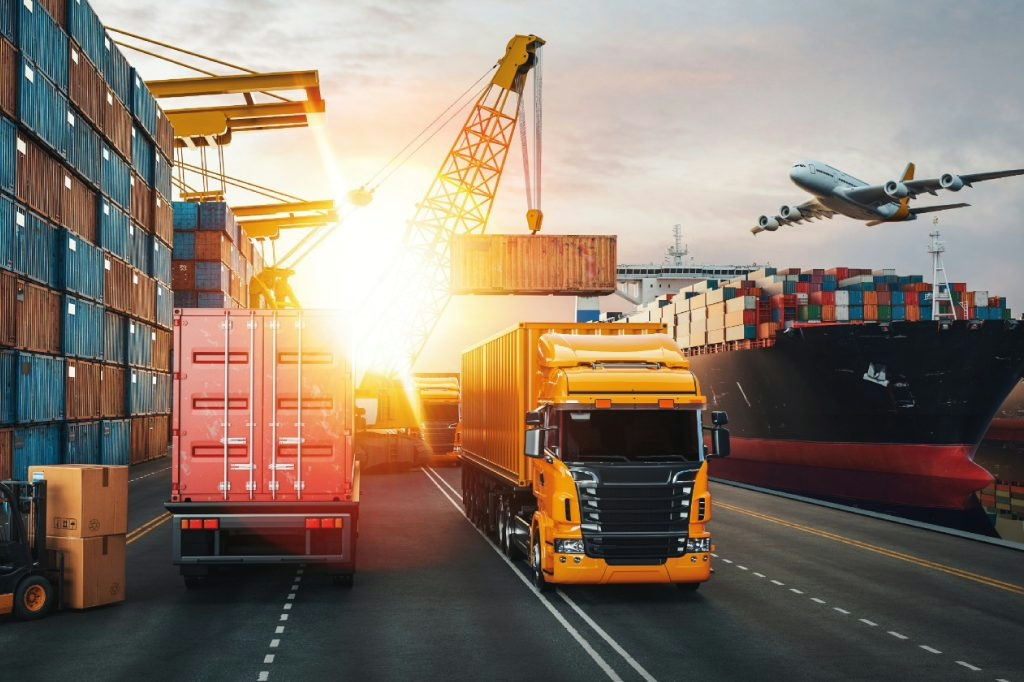
When calculating how much does it cost to manufacture a backpack, logistics and transportation can add up to 50% of the total cost of the product. Freight cost can be influenced by transportation mode, distance, weight, volume and extra service like insurance and handling fee.
Freight Cost Factors
- Mode of transportation: Air, land and sea transportation have different cost structure. Air transportation is faster but more expensive than sea or land transport.
- Distance: The farther the distance between the origin and destination, the higher the freight cost due to fuel consumption and time. International shipping is often more expensive than regional or national shipping.
- Weight and volume: Freight cost is based on the weight and volume of the shipment. Heavier shipment or bigger volume will cost more.
- Extra charges: Fuel surcharge, handling fee and insurance can add to the logistics cost.
Warehouse Cost
Warehouse rental fee can vary greatly depending on the location and space size. Small warehouse can cost $5,000 to $25,000 per year and big warehouse can cost $50,000 to $500,000 per year. Operating expense like utility and insurance can add extra $2-$5 per square foot to the base rental rate.
For some business, using a third-party logistics provider (3PL) might be more cost effective depending on the scale of operation.
Minimize Risk in Transit
Effective logistics management is key to prevent damage or loss during transit as these can add to the overall cost. Insurance and tracking service can help to minimize these risk but add to the total logistics cost.
6. Tariffs and Regulation
When calculating how much does it cost to manufacture a backpack you need to account for tariffs and regulation especially if you import material or finished product. Here are the details:
Tariff Rate for Different Backpack Material
- Polyester bag: Import duty can be up to 20% depending on the material classification.
- Cotton bag: Duty is lower, ranging from 5-7%.
- Nylon bag: Tariff is between 10-12% which is between polyester and cotton.
- Leather bag: Tariff is 10-15%.
Specific Tariff Classification for Backpacks
- Backpacks made of man-made textile like polyester fall under HTSUS subheading 4202.92.3120 with duty rate of 17.6% ad valorem.
- Other classification like 4202.92.4500 may apply based on material which can change the tariff rate.
Effects of Trade War and Agreement
- US has imposed tariff on some Chinese goods since 2018 which added to the import cost.
- Agreement like Generalized System of Preferences (GSP) allows duty-free entry for goods from specific developing country. China does not qualify for this program.
Regulation for Material Specific Tariff: Some material like leather may have stricter production requirement and additional environmental or ethical rule.
Why Tariffs Matter: Tariffs and regulation affect your manufacturing cost by increasing the price of raw material or finished goods. Knowing this helps you to manage your procurement strategy and control your production cost.
Expert Tips:
How much does it cost to manufacture a backpack, you should think about increasing your order quantities to benefit from economies of scale. By producing larger batches, you can significantly reduce the cost per unit, allowing you to maintain competitive pricing without compromising on quality. This strategy not only lowers material costs through bulk purchasing but also enhances production efficiency, ultimately improving your profit margins.
— Ellen Wang, Backpack Manufacturer|Free design|OEM | One-Stop Service
Other Cost
How much does it cost to manufacture a backpack? When calculating how much does it cost to manufacture a backpack, overhead cost is a big factor in determining the final price. These cost are necessary to keep the production facility running and to ensure the quality of the backpacks.
Overhead Cost in Backpack Manufacturing
Facility Rent: The cost of the physical space to manufacture is big. Rent price vary widely depending on the location. Urban area or established manufacturing zone tend to have higher rent which increase the overall production cost.
Utilities: Utilities like electricity, water and heating is necessary to run energy consuming machinery like sewing machine and material cutter. This utility cost must be included in the overall production cost.
Maintenance: Regular maintenance keep the machinery in good condition and prevent production delay. Routine repair and addressing wear and tear will prevent interruption and ensure consistent production.
Depreciation of Machinery: Specialized machinery used in backpack manufacturing has high upfront cost. Over time the machine will depreciate. As the machine age it will become less efficient and require more frequent repair which will increase the cost and production time.
Now you know how much does it cost to manufacture a backpack, you can better assess the total cost of producing a backpack and manage your production budget better.
Conclusion
To know how much does it cost to manufacture a backpack, business must consider the three factor: material, design and labor cost. A clear cost analysis will help you set the right price and avoid cost overrun.
Plan ahead before you produce and learn more about backpack trends, then you can make decision that match your business goal. If you need custom backpack for your brand, email us at info@leelinebags.com or visit leelinebags.com.
Frequently Asked Questions About How Much Does It Cost To Manufacture A Backpack
1. How Much Does It Cost To Manufacture A Backpack?
The cost to manufacture a backpack can range from $5 to $150 or more, depending on factors such as material quality, design complexity, and production volume. If you’re considering starting your own line, it’s essential to analyze these variables to get an accurate estimate.
2. What materials should I consider for manufacturing backpacks?
Common materials include polyester, nylon, and leather. Each material has different cost implications; for example, high-quality leather will significantly increase the manufacturing cost compared to standard polyester.
3. How can I reduce manufacturing costs for my backpacks?
You can reduce costs by sourcing materials in bulk, optimizing design for efficiency, and considering overseas manufacturing options where labor costs are lower. Additionally, automating certain processes can help minimize labor expenses.
4. What factors influence the cost of backpack production?
Key factors include material choice, design complexity, labor costs based on location, and order quantity. The more intricate the design and the higher the quality of materials, the greater the overall cost.
5. Is it possible to balance quality with budget constraints?
Absolutely! You can achieve a balance by selecting durable yet affordable materials and simplifying designs without sacrificing functionality. Always keep in mind how much does it cost to manufacture a backpack while ensuring it meets your quality standards.