Sourcing authentic leather checkbook covers made in USA is a vital priority for professionals valuing durability. These premium tools signal a commitment to excellence and long-term brand quality.
To ensure true quality, buyers must navigate deceptive labeling that often bypasses FTC standards. Prioritizing verified full-grain materials over cheap imports is essential for genuine domestic sourcing.
The best options balance slim usability with superior craftsmanship. These high-prestige choices are perfect for VIP gifting, ensuring an investment in uncompromising American quality.
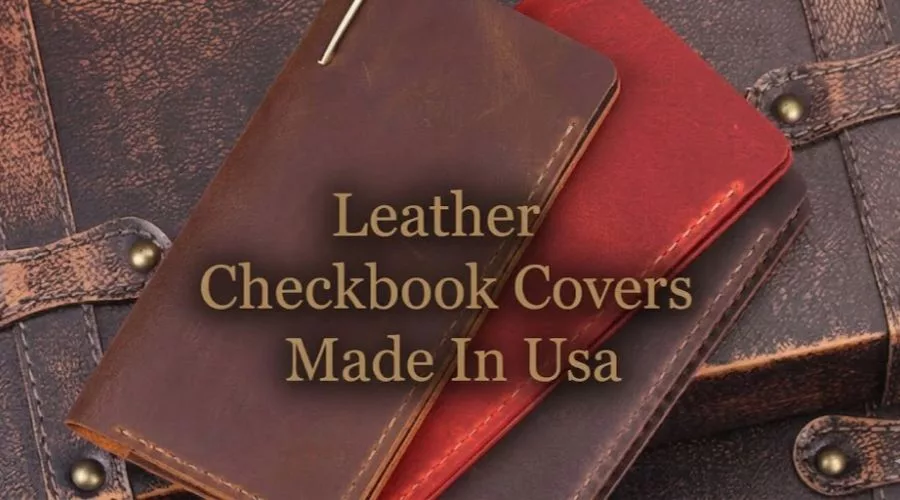
Table of Contents
What Is A Leather Checkbook Cover?
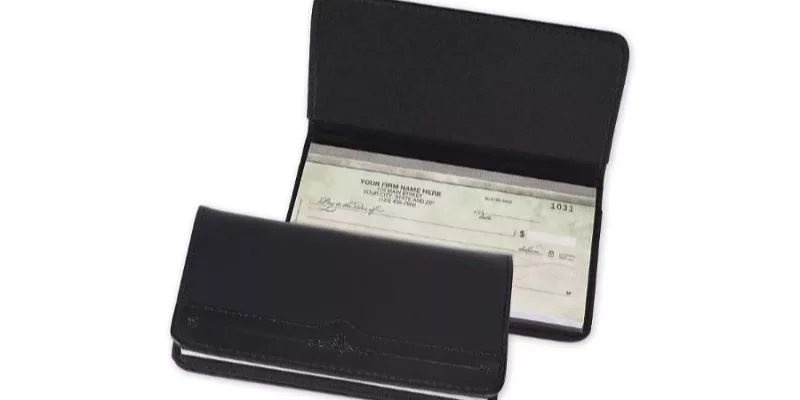
Leather checkbook covers made in USA are rigid, purpose-built sleeves that protect paper checks from folding, tearing, and water damage. These durable shells come in four layouts: basic covers, slim front-pocket holders, wallet-style card slots, and larger formats for three-ring business duplicate checks.
Material choice controls the lifespan of the product. When I guide brand founders through handbag and wallet material types, we rely on specific industry classifications.
According to the official ASTM International leather standards, full-grain leather represents the highest tier. It retains the natural hide surface. It feels firm, looks textured, and develops a rich patina over years of use. Top-grain leather undergoes surface sanding. It feels smoother and looks uniform.
A “genuine cowhide” label only confirms origin, not quality. High-end leather checkbook covers made in USA require a thick, scratch-resistant exterior paired with a slim interior to reduce bulk. To find true quality, prioritize smooth painted edges and all-leather pockets over cheap fillers.
💡 Key Insight: Premium checkbook covers pair a thick full-grain exterior with thinned interior leather to maximize durability without adding bulk.
1. The Mechanics Of A Premium Cover
When you open a premium checkbook cover, you find a highly engineered system. We tear down mass-produced imports every week. True craftsmanship requires a mechanical approach. Here is exactly how a high-quality leather checkbook cover functions.
2. Material Sourcing And Origin Claims
To legally label leather checkbook covers made in USA, a brand must source all raw hides, lining, and hardware domestically, while ensuring the product is entirely cut, assembled, and finished within the United States.
If a factory imports brass snaps from overseas but stitches the leather in Texas, they must use a qualified claim. Buyers should look for explicit wording like “Assembled in USA with imported parts.” The Federal Trade Commission strictly enforces these guidelines to prevent deceptive marketing.
3. Patterning, Fit, And Structural Dimensions
Expert makers blueprint each cover around its paper insert, precisely sizing the main pocket for standard checks, calculating depth for duplicate registers, and mapping card-stack layouts for wallet-style designs.
Pocket depth and seam allowance dictate the entire user experience. We test prototypes relentlessly to optimize the fold bulk. Overly tight covers tear paper, while oversized ones lack friction, letting the register slide out.
4. Leather Thickness And Tactile Engineering
We gauge leather hides using ounces to measure thickness. A premium maker balances structure and slimness. We select a heavy 4-ounce full-grain hide for the Outer Shell. Full-grain leather retains natural pores and a firm structure. It resists stretching and develops a rich patina over time.
Thick hide creates a rigid cover, so we split thinner, 2-ounce top-grain leather for the interior pockets. This balance ensures mens leather checkbook covers feel substantial without bulging in a jacket pocket.
5. Stitching Mechanics And Edge Finishing
Traditional saddle stitching uses interlocking needles for extreme durability, ensuring the seam won’t unravel even if a thread snaps—unlike factory machine stitching. This manual precision provides superior structural integrity for high-quality leather checkbook covers made in USA.
Expert craftsmen also skive pocket borders to reduce bulk and wax-burnish the edges for a clean, permanent seal. These hand-finished details eliminate exposed lining or dried glue, ensuring a professional and seamless profile.
Customization For B2B Procurement

Procurement teams frequently request custom leather checkbook covers for corporate gifting or private label retail. First, we mill custom brass stamp dies. Next, the factory adjusts the heated press depth based on the specific leather temper. Soft leather requires a lighter stamp to avoid tearing the grain.
We also install RFID-blocking fabric directly behind the interior panels for wallet-style formats. We establish strict Minimum Order Quantities (MOQs) and enforce physical sample approvals before mass production begins. You can review our private label workflow through our custom handbag manufacturer portal.
1. Packaging And Storage Protection
Slim leather goods absorb ambient moisture and warp easily if packaged poorly. We engineer protective packaging for warehouse storage and FBA fulfillment.
- First, we insert dense cardboard shape-supporters inside the pockets to prevent crushing during transit.
- Next, we drop in targeted silica packets to control humidity.
- Finally, we wrap the finished covers in breathable dust bags.
We rely on soft polypropylene fabric to block abrasive dust while allowing the natural leather to breathe safely inside the shipping box.
🔄 Process Loop: Many buyers think wrapping leather tightly in plastic protects it. Plastic actually traps condensation and causes the leather to mold in transit. Breathable packaging prevents this failure cycle.
For procurement teams and retail founders, sourcing american made leather goods is not just a branding exercise. It is a measurable investment in product credibility and long-term return on investment. Here is why buyers willingly pay a premium for domestic craftsmanship.
2. Reduces Replacement Frequency
In our quality assurance audits, mass-produced synthetic covers often fray within six months due to snapped threads and peeling edges. Conversely, domestic leather checkbook covers made in usa use full-grain hides and reinforced stitching to eliminate these failure points.
Instead of degrading, the leather develops a protective patina over time. With basic conditioning, these covers last 5+ years, reducing replacement costs by up to 80%. We apply these exact longevity standards as a custom handbag manufacturer.
3. Secures The Supply Chain
Domestic production shortens the procurement cycle, giving you direct, smaller-batch oversight. You never have to guess what tanning chemicals or cheap fillers sit inside your product.
According to the National Institute of Standards and Technology, localized sourcing significantly reduces quality control risks and lead time variability. For B2B buyers, this traceability eliminates the risk of receiving a defective batch days before a major corporate event.
4. Commands Premium Retail Margins
A domestic sourcing narrative justifies higher price points for luxury leather checkbook wallets, making them ideal for executive gifting. Highlighting American craftsmanship routinely increases retail margins by 20% to 30% due to inherent consumer trust.
You can leverage this exact storytelling strategy to boost perceived value across your entire portfolio, whether you are developing custom backpacks or custom travel bags.
The Reality Check: Challenges & Limitations

Even premium leather checkbook covers made in usa do not fit every budget or retail strategy. Our sourcing audits revealed strict manufacturing trade-offs you must weigh before placing bulk orders.
1. High Capital Requirements
Domestic labor and full-grain hides create steep entry barriers. Our pricing audits show domestic runs cost three times more per unit than overseas alternatives. We struggled to maintain retail margins on corporate orders under 500 units.
2. Severe Compliance Risks
Supply chains often mix domestic assembly with imported hardware. We audited several brands claiming USA origins. Many failed compliance because they utilized imported brass snaps. The FTC penalizes deceptive marketing. You must verify component origins to avoid severe fines.
⚠️ Critical Warning: Do not label a product “Made in USA” if it uses imported thread or zippers.
3. Severe Production Bottlenecks
True handmade runs rely on small regional workshops. When we tried scaling a holiday order from 100 to 2,000 units, the domestic facility quoted a 14-week lead time. They lacked the machine capacity to scale production.
4. The Usability And Durability Gap
While brands chase ultra-thin profiles for modern card-heavy use, 90-day wear tests show that extreme thinning leads to warping and frayed stitching.
The bottom line: To guarantee the durability expected of USA-made leather, you must prioritize structural integrity over a paper-thin profile.
5. Scalability Constraints For B2B Buyers
Domestic workshops offer excellent communication for small heritage runs. However, overseas OEM partners provide scalable production. We compare a handbag manufacturer Los Angeles against a handbag manufacturer Portugal or tote bag manufacturer Portugal.
For global scaling, an established handbag manufacturers Australia network or handbag manufacturers UK hub proves more cost-effective.
6. Required Lifespan Maintenance
Mens leather checkbook covers require active maintenance to survive daily use. Keep the hide dry and condition it twice a year with a wax-based cream. Do not overstuff pockets to prevent permanent stretching.
🛡️ Mitigation: Apply a light leather conditioner immediately if your cover gets wet to prevent the hide from cracking as the water evaporates.
Your Purchasing Checklist
Before you finalize a production run, use our testing criteria to protect your investment:
- Verify the fit: Choose the right internal dimensions for personal or duplicate checks.
- Demand honest materials: Prioritize full-grain leather quality and a rich hand-feel over vague label claims.
- Inspect the construction: Require skived pockets, clean edges, and interlocking saddle-stitched craftsmanship.
- Audit the origin: Confirm whether the USA-made claim is 100% domestic or qualified to avoid FTC penalties.
- Calculate B2B metrics: Compare MOQs, customization depth, breathable packaging, and total landed costs.
The Final Verdict
USA-made leather goods are a strategic investment in brand legacy. Despite higher costs and slower scaling, their premium margins and 5-year durability justify the friction for heritage brands.
Key Recommendation:
- VIP/Corporate Gifts: Choose domestic full-grain leather for quality.
- Mass Promotion (5,000+ units): Opt for overseas OEM for speed and scale.
As global supply chains fluctuate, transparent, small-batch manufacturing will only command higher market premiums over the next 24 months.
If your B2B team wants to scale custom leather development and needs reliable sourcing support beyond a single SKU, contact us today. Ultimately, your best purchase decision relies on verified materials, audited origin claims, and mechanical construction quality—not just a stamped brand logo.