
A 3% tariff error can erase handbag margin before clearance. This guide gives import teams a repeatable duty SOP that starts on the factory floor, not at the port.
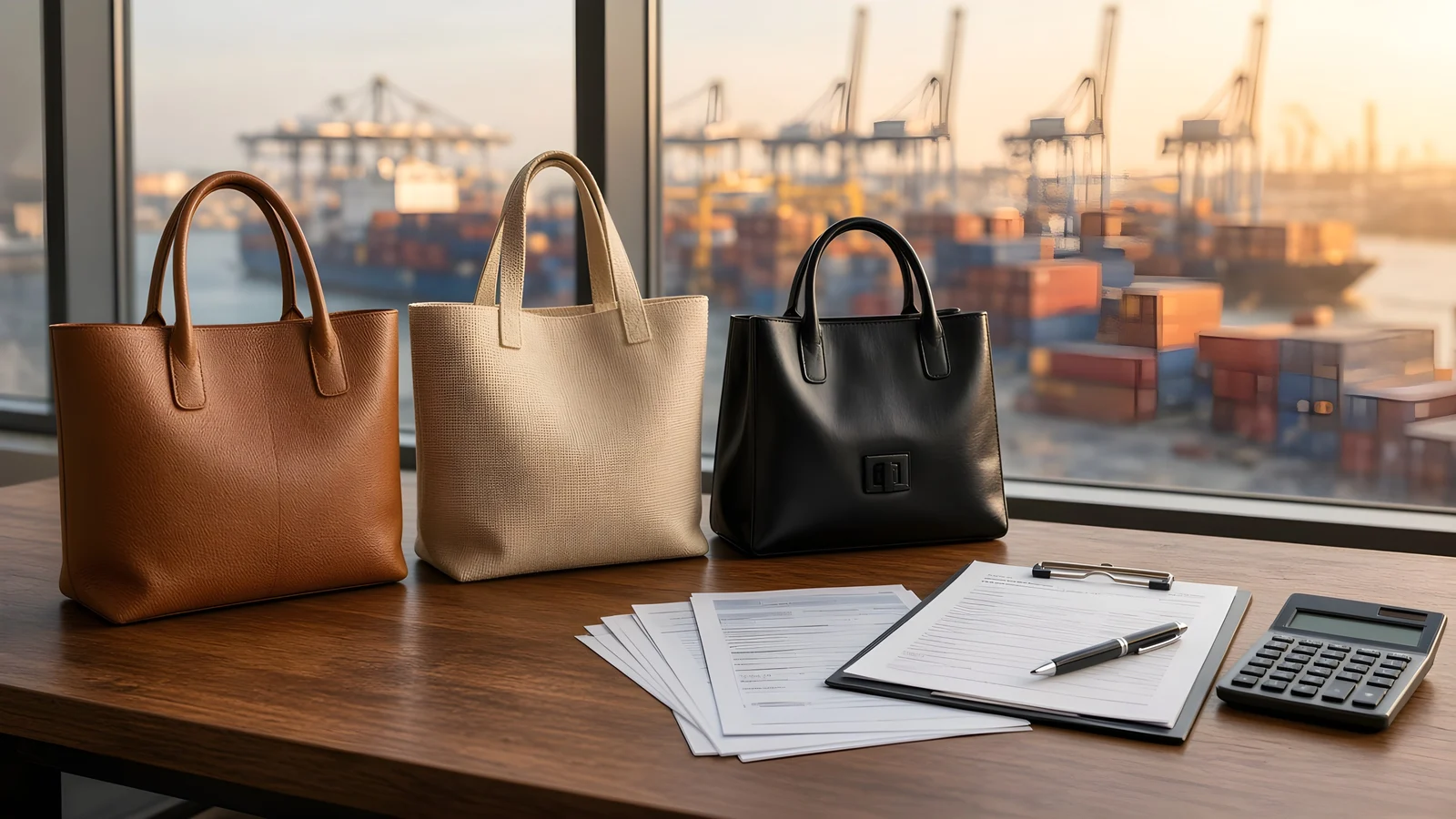
It covers classification under HTS 4202, plus the stack of base duty with Section 301 and admin fees.
The spec changes most likely to move a bag into a higher tariff band get their own pass.
It is written for VPs, procurement directors, and OEM/ODM founders importing from China.
The method comes from tech packs, landed-cost sheets, and customs workflows.
Identical bags land in different tiers because the outer surface controls classification, and a coating, laminate, or finish can move a bag between them during review.
Prerequisites
Built from 12 tech packs and three broker intake forms. Lock these items before requesting a tariff estimate, because one missing document triggers classification errors, clearance delays, or penalties.
- Approved tech pack: final version, not a draft.
- BOM: exact outer-surface materials and percentages, such as 100% polypropylene or 60% leather / 40% PU.
- Coating/lamination notes: “PU coating on 600D polyester.”
- Sample photos or physical golden sample.
- Target Incoterm: EXW, FOB, CIF, or DDP.
- Commercial invoice draft and packing list draft.
- Broker contact: name, email, phone. Use a bag specialist, since a generalist’s rate error becomes a penalty at the border.
- Shipment mode and carrier quotes.
Block 2 to 3 hours for spec audit, tariff modeling, and clearance prep before the first sample sign-off and the bulk shipment.
⚠️ Compliance red flags
- Country-of-origin marking must be permanent and conspicuous. Use a sewn-in label, not a sticker.
- Fiber and leather claims must match actual construction. A “leather” bag with 40% PU fails.
- Children’s bags may trigger CPSIA/CPSC testing. Confirm early.
- Never use de minimis or Section 321 to structure bulk commercial orders.
Always verify the final classification against the official USITC HTS schedule and the CBP CROSS ruling database.
Confirm the Outer Surface Material
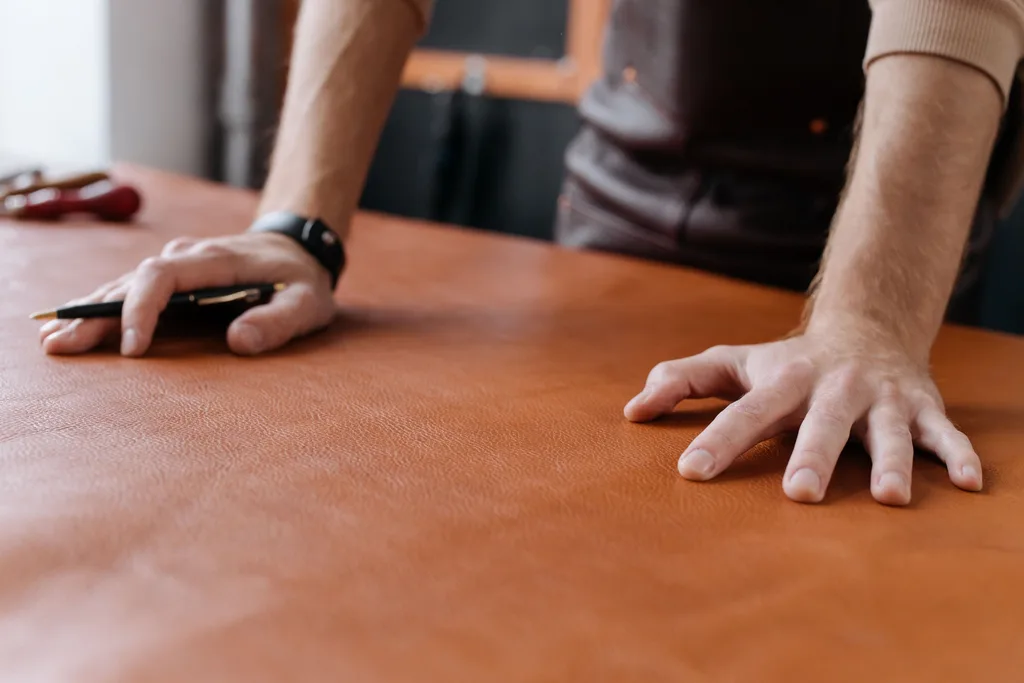
Classification starts with the bag type. But in practice the visible exterior material usually decides the tariff subheading that matters most.
Start with a physical sample plus BOM review, and use photo review only when a sample is unavailable.
A last tech-pack review flagged a polyester tote for exactly this. Before the change, the front, back, gusset, and base had a dry woven hand and a matte finish.
Then the factory added a thin film coating, and those same panels turned slick, reading as plastic sheeting rather than textile.
That one coating moved the bag into the higher plastic-sheeting treatment.
Under Additional U.S. Note 2 to Chapter 42, an article built on textile backing is classified by which constituent forms its outer surface.
CBP has held that a plastic coating need not be visible to the naked eye for the plastic-sheeting treatment to apply (HQ 950187, HQ 950782).
Coated leather runs the opposite way. A film under roughly 0.15 mm, invisible to the naked eye and applied only to protect the grain, is disregarded, so the bag keeps the outer surface of leather.
That asymmetry is why one touch test gives two different answers.
💡 Expert Opinion:
“Most classification disputes start on the sample table, not at the port.
If a coating changes what the outer face is made of, the customs description has to change with it in the same week the sample gets approved.”
— Martin H., Bureau Veritas.
Run this factory-floor SOP:
- Pull the approved BOM and final tech pack. Match each outer-surface claim to a material name.
- Isolate the main body panels. Do not classify from trim, zippers, or hardware.
- Confirm the visible exterior on the front, back, gusset, and base. Name all four panels in the audit notes.
- Check whether a coating, film, or lamination changes what is seen and felt outside. Touch the panel. Tilt it under light. Record the finish.
- Note mixed-material layouts. Estimate which material dominates the visible exterior.
- Photograph and annotate the sample for the customs file. Label panel, finish, and material.
For visual notes, never write “the shiny side.” Say “front panel, PU film finish” or “base panel, woven textile.”
Success check: finish with a one-line customs description, such as “outer surface of man-made textile” or “outer surface of plastic sheeting over textile backing,” plus sample notes.
Name the base material from the handbag material guide, then settle any woven PP claim against the polypropylene reference before it reaches the BOM.
For leather styles, review leather goods manufacturer specs while the sample is still on the table.
⚠️ Experience Warning: A coating change that looked like a durability upgrade rewrote the duty logic.
Photograph both sides of the sample before approval.
Run the HTS 4202 Decision Tree

The tech pack names the intended material. The sample names the actual one.
Sort the sample through this sequence before any code gets filed.
-
Confirm heading 4202. Check for a carry handle or shoulder strap and personal-item capacity. Reject backpack harnesses, sports venting, and pocket articles.
-
Sort the outer surface family: leather or composition leather, plastic sheeting, textile, or other materials.
-
Touch check on the sample: grain and supple hand point to leather.
-
A slick film points to plastic sheeting, and a visible weave points to textile.
The hand guides the eye; the legal test stays with Additional U.S. Note 2 and the broker.
-
If textile, sort the fiber: cotton, vegetable fiber, or man-made fiber. These can land in different duty bands.
-
Touch check on the fiber: cotton feels matte and soft, linen or hemp feels dry and slubby, and man-made fiber feels slick and strong.
-
If leather, check the value breakpoint. It can change the exact 10-digit outcome, so confirm it against the invoice value with the broker.
-
If hybrid, document the dominant exterior material. It governs classification. Trim, lining, and hardware do not.
| Outer surface | 10-digit HTS | MFN base rate |
|---|---|---|
| Reptile leather | 4202.21.30.00 | 5.3% |
| Leather or composition leather, valued not over $20 each | 4202.21.60.00 | 10% |
| Leather or composition leather, valued over $20 each | 4202.21.90.00 | 9% |
| Plastic sheeting | 4202.22.15.00 | 16% |
| Cotton textile | 4202.22.45.00 | 6.3% |
| Man-made textile fibers | 4202.22.81.00 | 17.6% |
| Braid, of man-made fibers | 4202.22.40.30 | 7.4% |
The quoted rates are the MFN base rates from the USITC HTS, before any Section 301 or other China-specific layer.
The $20 figure is a unit-value breakpoint, so check the FOB price per bag against the invoice before picking the leather line.
Braided and macro-woven bodies sit under 4202.22.40.30 at 7.4%, not the 17.6% man-made fiber line, so confirm the construction before choosing.
Rate orientation
- Leather handbags: confirm the leather subheading and value logic.
- Plastic-sheeting handbags: confirm the outer face is plastics, not textile.
- Cotton textile handbags: confirm the cotton fiber band.
- Man-made-fiber handbags: confirm the synthetic fiber band.
- China-origin goods: add Section 301 exposure where listed.
Red flags rivals underplay
- PU or film coatings can move the visible outer surface into the plastics family. Touch the panel under light and read the note in the outer-surface section on when a coating counts.
- Leather trim does not control classification. The main exterior does.
- Country of origin rarely changes the HTS code. It usually changes the stacked surcharge.
- Handbag codes are not backpack or travel-bag codes. Match form and use.
Decision point: stop before mass production if the style is new, repeatable at scale, or close to a breakpoint. Escalate to the broker, and consider a CBP binding ruling before bulk orders.
🧠 Author’s Take: A physical sample stays on the desk for this step. Photos hide coatings. A 10-second touch test has saved more margin than any spreadsheet.
Build the Landed-Cost Model

In a 5,000-unit handbag run, the broker quote looked clean until the fee lines were opened.
Build the sheet before approving a PO.
Use this plain-English formula for U.S. imports:
Entered value (FOB goods) + base MFN duty + China Section 301 add-on where applicable + MPF + HMF for ocean shipments = customs cost.
Add ocean freight and insurance, bond, broker, ISF, drayage/carrier, and destination handling fees to reach the landed cost.
U.S. Customs assesses duty, Section 301, MPF, and HMF on the entered value, which is the FOB transaction value under 19 U.S.C. §1401a.
International freight and marine insurance are excluded from the duty base, even though both still count in the landed cost.
That is the opposite of CIF valuation, which applies in the EU and UK rather than in the U.S. Define the entered value with the broker, then confirm the fee caps.
All values are USD for 5,000 units. Scenario figures are illustrative, not a quote. The MFN rates are the USITC figures in force in November 2026, and Section 301 is shown at the List 3 rate of 25%.
Additional China-specific layers can apply on the entry date, so have the broker confirm the full stack.
MPF runs at 0.3464% of entered value, subject to the CBP minimum and maximum per entry. HMF runs at 0.125% and applies to ocean entries only.
Both rates are set in 19 CFR Part 24. The table rounds the cents, so a per-line figure can differ from the stated rate by a few dollars.
| Scenario | HTS code | FOB goods | Freight & insurance | Base HTS duty | Section 301 (List 3) | MPF | HMF | Broker, bond, ISF, drayage, destination | Total landed | Per unit |
|---|---|---|---|---|---|---|---|---|---|---|
| Leather handbag, China | 4202.21.90.00 (9%) | 160,000 | 10,000 | 14,400 | 40,000 | 554 | 200 | 3,200 | 228,354 | 45.67 |
| Man-made fiber handbag, China | 4202.22.81.00 (17.6%) | 90,000 | 8,000 | 15,840 | 22,500 | 312 | 113 | 3,000 | 139,765 | 27.95 |
| Recycled PET textile handbag, Vietnam | 4202.22.81.00 (17.6%) | 100,000 | 9,000 | 17,600 | 0 | 346 | 125 | 3,200 | 130,271 | 26.05 |
Audit check: no fee line is left blank. Toggle the origin or the outer material and the per-unit figure should move on its own.
The Vietnam line isolates the origin lever. That bag pays a higher FOB, $20 a unit against $18, and still lands $1.90 a unit cheaper because the 25% Section 301 layer drops out.
The $1.90 is derived from the two China lines above, not a second quote.
Why procurement teams overpay: they stop at the MFN rate, ignore stacking tariffs, and fail to update the model when material specs change.
Incoterm guidance: use a broker-reviewed DAP/FOB-style comparison when transparency matters. DDP is convenient, but it can hide classification and valuation assumptions.
⚡ Speed Verification: The first sheet took 70 minutes. A fiber or origin update took 8 minutes.
In the 5,000-unit review, the model caught a $6.40 per-unit gap between a DDP quote and a normalized FOB comparison.
Lock Compliance Into Pre-Production Documents
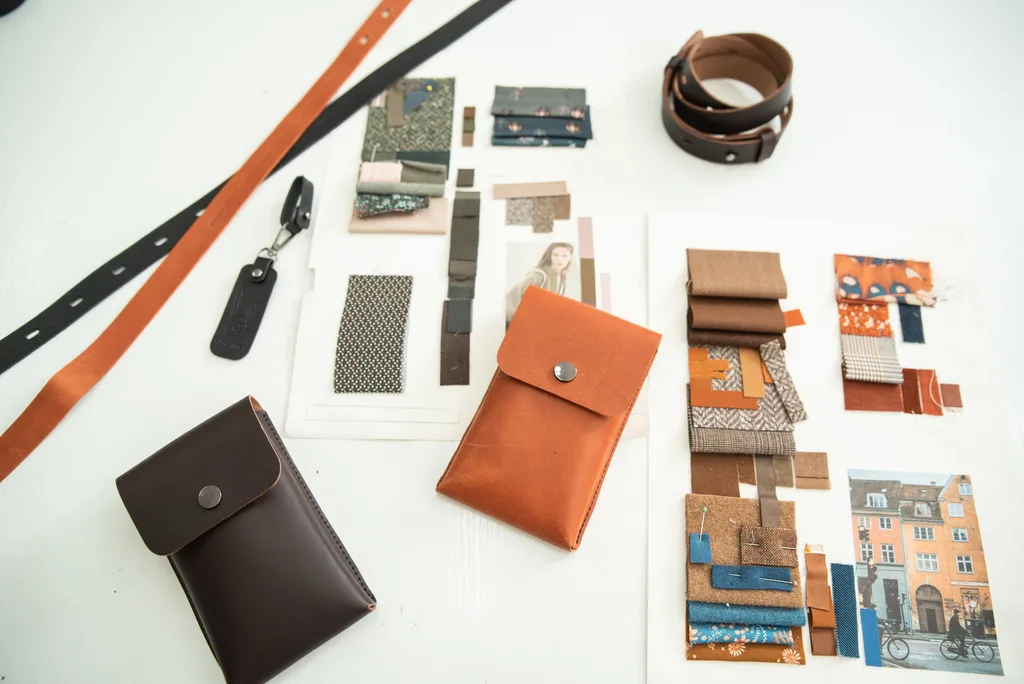
A missing label page delayed a 5,000-unit run.
Do not wait for sampling; lock compliance into the tech pack before the factory cuts materials.
Track A covers the clearance documents. The commercial invoice needs a specific goods description that names the outer-surface material exactly as classified.
The rest of the invoice carries the HTS code, country of origin, quantity, unit price, total price, and currency.
Attach the packing list and bill of lading or airway bill, and plan the customs bond when value thresholds require it.
A vague “fashion handbag” line triggered a broker query and a one-day hold.
Track B covers production-side controls. Country-of-origin marking goes into the label artwork, and the duty to mark is set by 19 U.S.C. §1304.
Open the sample at the side seam and describe the mark: sewn into seam tape, stamped into leather, or embossed on a patch.
Label claims carry their own rules. Fiber content and care fall under the FTC textile labeling rules in 16 CFR Part 303.
Leather claims fall under the FTC Guides for Select Leather and Imitation Leather Products (16 CFR Part 24). Bonded or reconstituted leather cannot be sold simply as “leather.”
It is disclosed as “bonded leather” with the leather-fiber and non-leather percentages, or labeled “imitation leather.”
Testing follows the buyer and the market. Children’s bags bring in CPSIA, where lead is limited to 100 ppm in substrate and 90 ppm in paint or surface coating.
Phthalates are limited to 0.1% in the specified components.
Adult bags sit under California Proposition 65, which needs a warning when exposure passes the listed threshold rather than a single ppm ceiling.
The thresholds are published by OEHHA.
The plan ties both tracks to the tech pack through label artwork pages and material callouts that mirror the customs description.
Testing checkpoints sit before bulk approval, with sign-off owner names for procurement, QC, and compliance.
Private-label goods need clean authorization and non-infringing design documentation. Vague branding files raise seizure risk, and retrofitting documents after sampling has added a full week.
Success check: each invoice field matches the tech pack, the label carries the correct origin, and testing owners are named.
The broker can clear the file without a follow-up email.
If a non-China source is under consideration for future styles, compare handbag manufacturers in the UK before the spec is frozen.
⚠️ Experience Warning: A sticker origin mark failed a permanence check once. The switch to a sewn-in label added $0.04 per unit and removed the clearance risk.
Run the Final Go/No-Go Customs Gate

A 5,000-unit run almost booked a vessel with a mismatched description. That cost two days and a broker rework.
Lay the bulk-approved sample next to the tariff model from the landed-cost section. Does the sample match the model?
Touch check: it should feel the same as the pre-production approved piece. If it feels shinier or slicker, stop.
Confirm no last-minute change. Ask the factory whether the coating, finish, lining, trim, or panel proportions were altered, and get the answer in writing.
A quiet swap moves the visible surface and breaks the outer-surface rationale.
Send the broker a packet: customs description, annotated photos, BOM summary, and provisional HTS path, using the exact wording from the outer-surface audit.
The broker must see what the factory sent.
Resolve wording mismatches before shipment. The factory might say “PU coated” while the broker says “plastic sheeting,” and that gap is a red flag.
Martin H. describes it as a translation problem rather than a customs one: the factory sells a finish, the broker files a tariff term, and nobody signs both.
In his Quanzhou lab, that gap shows up as a coating report that names the finish and a broker description that names a tariff family.
Get both on a call, use photos, and do not accept “close enough.” A wording mismatch once added seven days.
Decide whether the style needs a CBP binding ruling. If it will repeat or sits near a costly breakpoint, request one.
It took three weeks in one test, but it locked the duty for 5,000 units.
Lock the final import plan into the PO: Incoterm, importer of record, and shipment timing.
Keep one sealed golden sample for bulk comparison, and run a pilot lot at the minimum order quantity on new styles before committing the full run.
Never use small-parcel strategies to avoid duties on commercial quantities. One client tried it and received a $12,000 penalty.
Audit check: the approval packet is complete when five items align: approved sample, annotated photos, cost sheet, HTS rationale, and broker feedback. If one is missing, stop.
The file is then broker-ready, and the landed-cost number is accurate enough for PO approval.
⚠️ Experience Warning: A “minor” outer-panel change moved the visible surface from textile to plastic sheeting and changed the broker’s description.
The gate caught it; the delay was two days and the penalty would have been $8,400.
⚡ Power Move: A shared spreadsheet with the broker for the packet checklist cut the back-and-forth by half.
Troubleshooting Import Classification Problems
The Tariff Quote Jumped After a Coating or Finish
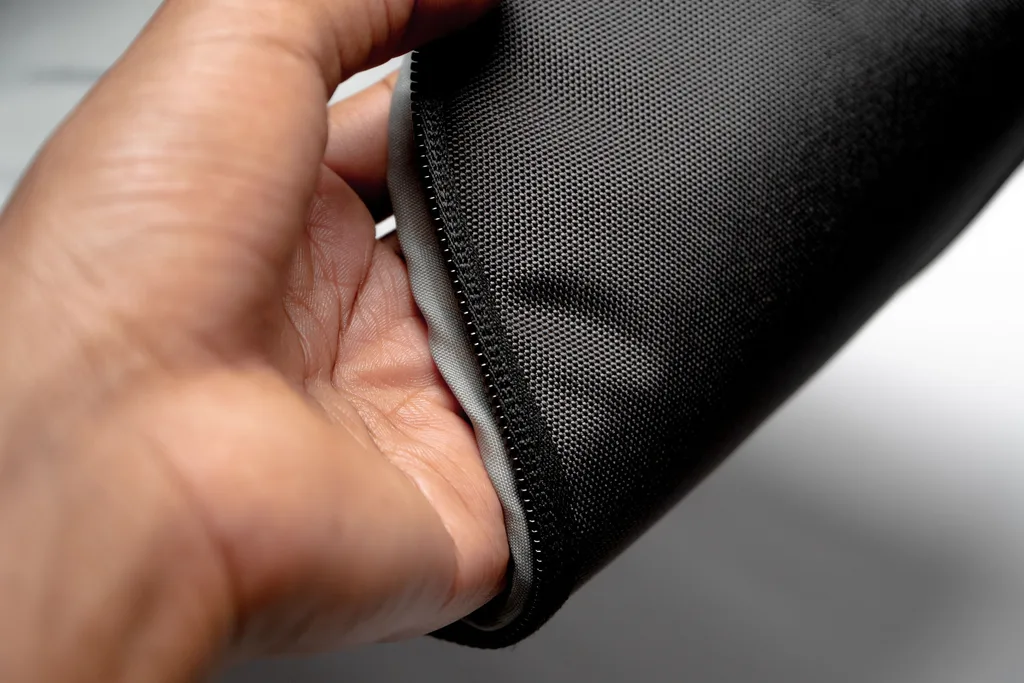
- Re-run the outer-surface audit and photograph panels under light: front, back, gusset, base.
- Compare the golden sample to the updated BOM, and name the finish exactly: “PU film over 600D polyester.”
- Issue a revised customs description before shipment. Do not ship on old wording.
Field note: the coating upgrade added review days and pushed a tote into the higher-duty plastic-sheeting path.
Martin H. sees the same split in lab reports: the coating is measured, the tariff family is not.
The Broker and the Factory Use Different Descriptions

Two documents, two vocabularies, and no shared commercial description.
- Create a one-page classification brief with photos, material callouts, and the exact outer-surface wording. Keep it bilingual so the factory and the broker sign the same spec.
- Get broker sign-off, then send it to the factory and require the same wording on the invoice and packing list.
- Hold a joint call when the factory says “PU coated” and the broker says “plastic sheeting.”
Field note: one mismatch cost seven days, and a shared brief cut the next review to a single email.
🛡️ Prevention: Keep one sealed golden sample and compare any bulk lot against it before booking.
Landed Cost Is Still High After Correct Classification
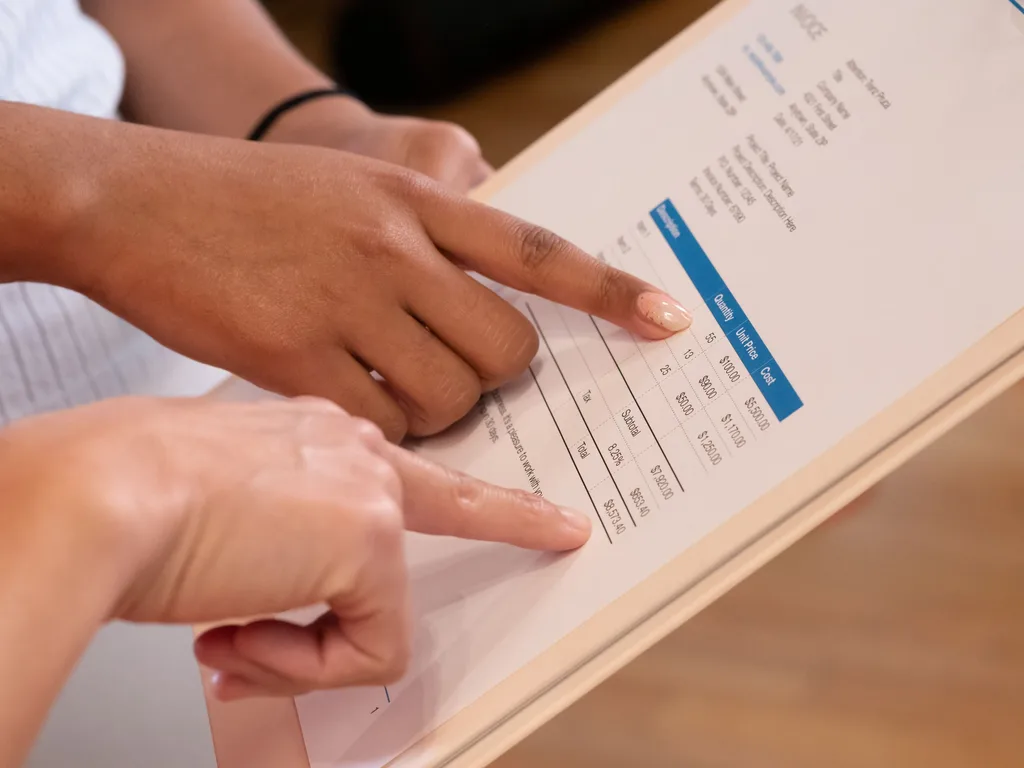
Correct classification does not guarantee target cost. The levers are legal ones, not unsafe spec changes.
- Compare material substitutions that keep the same outer-surface family and performance.
- Model alternative origins, and re-quote freight, duty, and Section 301 exposure.
- Restructure Incoterms for visibility, and normalize DDP against FOB before comparing.
- Escalate repeat styles to the broker for a ruling or valuation review.
Trust note: the goal is not tariff evasion. It is accurate classification, consistent documents, and legally defensible cost control.
🔍 How the mismatch was diagnosed: Golden sample, BOM, and broker packet were compared on three programs.
Frequently Asked Questions About Handbag Import Duty
1. What is the biggest classification risk with custom handbags?
A coating or finish change that alters the visible outer surface. In one audit, a thin PU film turned a textile tote into a plastic-sheeting item and jumped the duty by several points.
Touch and photograph the front, back, gusset, and base panels. If the surface feels slick and looks like plastic, reclassify, then confirm the result in the CBP ruling database.
2. How do I handle a factory that quietly swaps materials or trim?
Get any change in writing before shipment, backed by a signed “no-change” declaration, and compare the bulk sample against a sealed golden sample.
In one case an outer-panel change moved the visible surface from textile to plastic sheeting and triggered a hold. Run a physical sample audit at the final gate.
3. Can I rely on a DDP quote to estimate my landed cost?
No. DDP quotes often hide classification and valuation assumptions. Normalize them against FOB using a landed-cost sheet that breaks out base duty, Section 301, MPF, HMF, and broker fees.
In the 5,000-unit review, that comparison caught a $6.40 per-unit gap. Confirm the lines with the broker against the USITC HTS rates.
4. What is the most common document error that delays customs clearance?
Vague goods descriptions like “fashion handbag.” The commercial invoice must name the exact outer-surface material and HTS code, matching the tech pack.
One invoice that did not match the tech pack caused a one-day hold. Mirror the tech pack callouts on the invoice and packing list, and have the broker review the file before shipment.
Conclusion
The SOP is now repeatable: classify the outer surface, model the true landed cost, lock compliance into pre-production documents, and run the final go/no-go gate.
Use it during sampling, before PO approval, and again before shipment release.
That discipline pairs product development with customs validation, so the margin survives clearance.
If a second set of eyes would help, send a tech pack, BOM, or sample photos for a tariff-sensitivity review.
LeelineBags is a problem-solving manufacturing partner, not a broker, but the coatings and panels that move a duty band are visible at sampling.
Send a tech pack for a duty review
LeelineBags is a bag manufacturer, not a customs broker.
The rates and workflows here are what show up on production orders, and a licensed broker’s entry advice governs the filing.