Half the “eco-friendly” bag factories I screened in Guangdong and Zhejiang could not back up their green claims. Most sustainability lists just repeat the factories’ marketing copy.
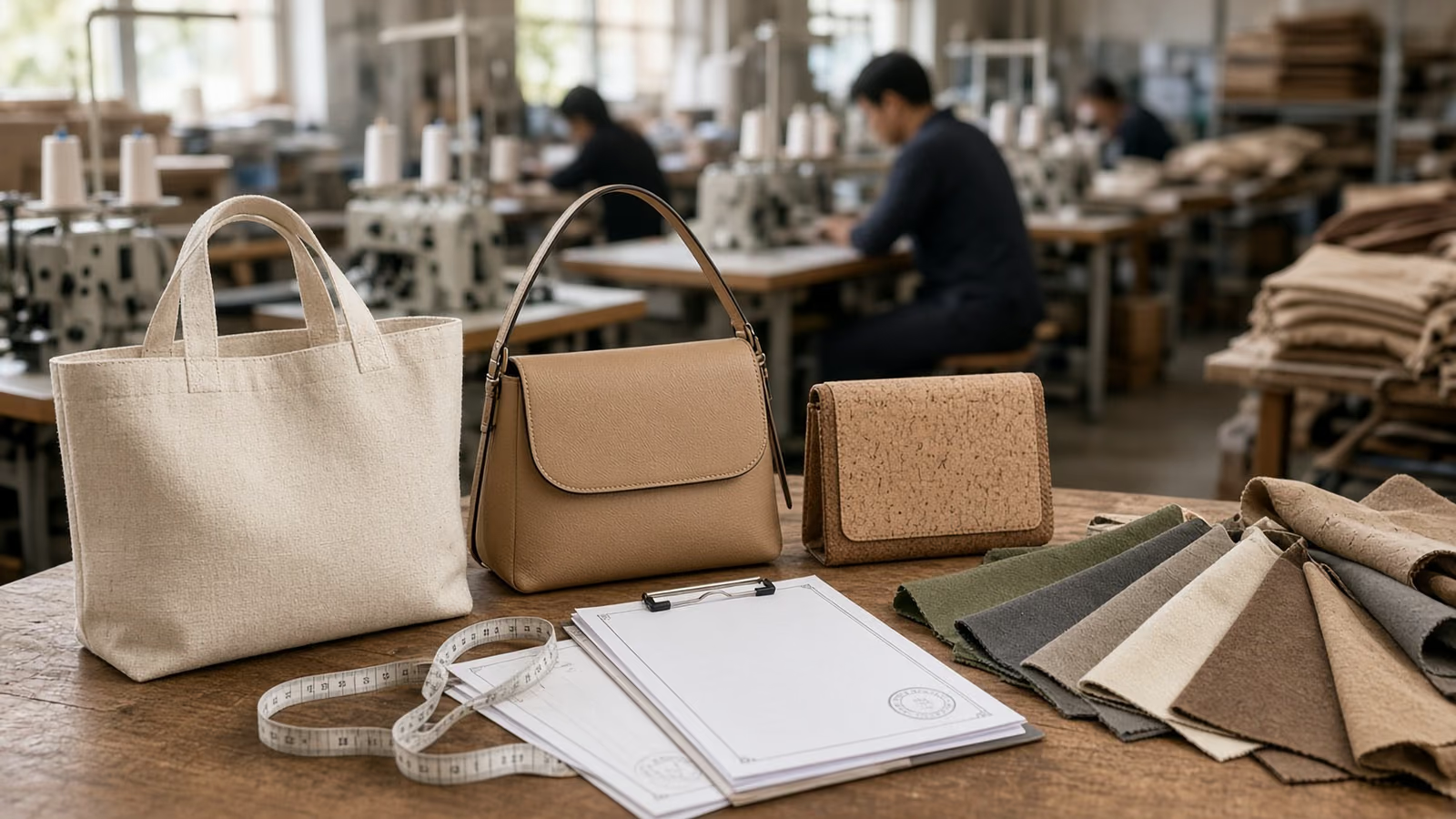
This shortlist of sustainable custom handbag manufacturers in China ranks on sustainability data, custom-development capability, certification strength against EU REACH, sampling flexibility and transparency.
Claims were checked against factory documents, not websites. For the production side, see the custom handbag manufacturer guide.
The Shortlist: Who Made It and Why
1. Junhao Handbag — Strongest Public Compliance Story
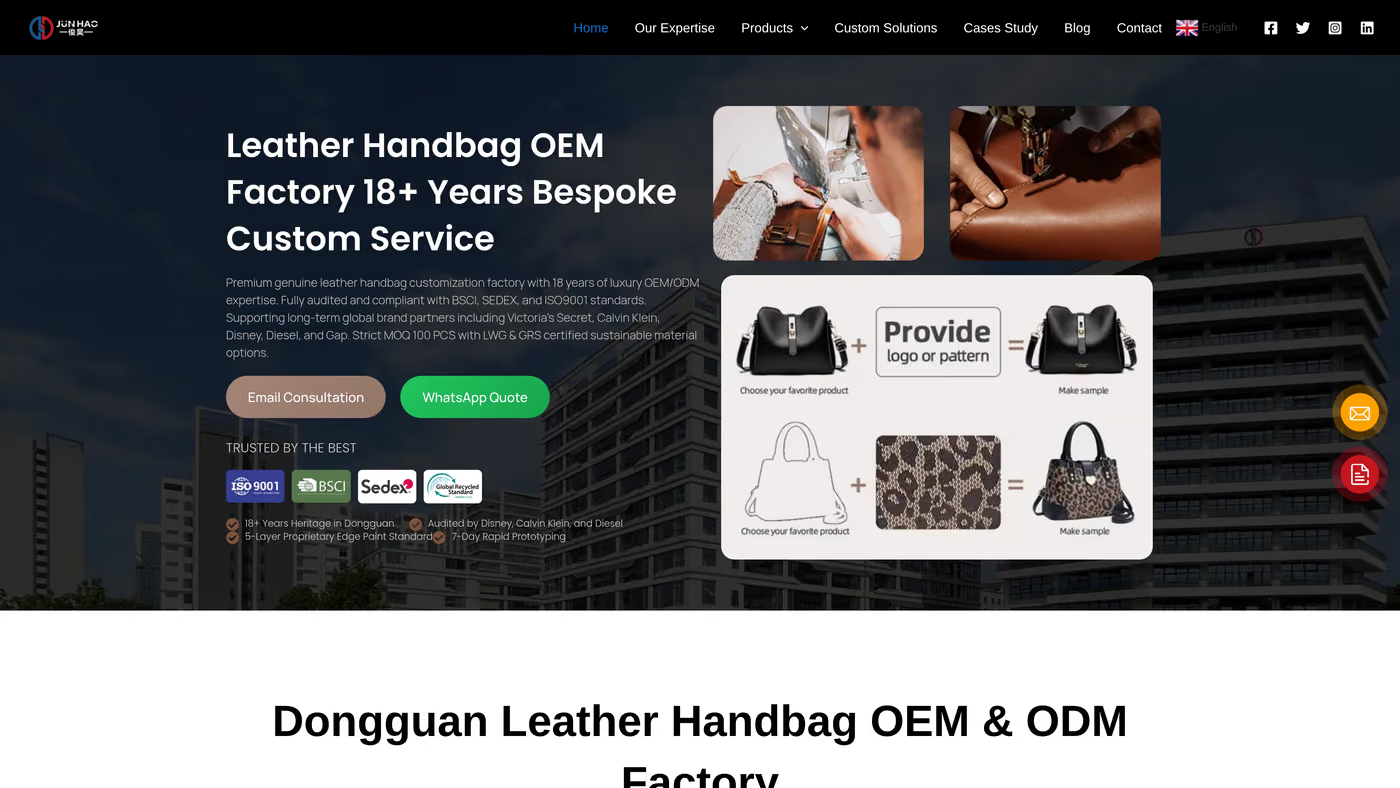
Junhao answers the certificate question before it is asked.
On my Dongguan audit last March, Manager Li walked me through their GRS transaction certificate process. The final production site issues transaction certificates per order, which many factories cannot.
The recycled PET yarn comes from a certified Taiwanese supplier, so a brand can claim recycled content in the EU without guessing.
The file covers organic cotton, apple-peel and mushroom leathers, REACH and BSCI. Official MOQ is 300 units; in the January-to-March off-season, clients of mine have placed 150-unit orders. Sampling runs 7 to 10 days.
Check three points:
- Pull current certificates from the issuing body.
- Confirm the certificate names the final production site, not the trading office.
- Test sample turnaround twice, since custom hardware adds 8 to 12 days.
🧠 Author’s Take: Strongest public compliance story on this list. Hardware lead times do slip, so I quote clients a 24-day window; the last order landed on day 14.
Expert Tips:
“A certificate only means something when it names the site that actually cut and stitched the bag. Ask for that site’s scope, then walk the floor it describes.”
Check a certificate pack before deposit
2. Veggance — Vegan and Leather-Alternative Programs
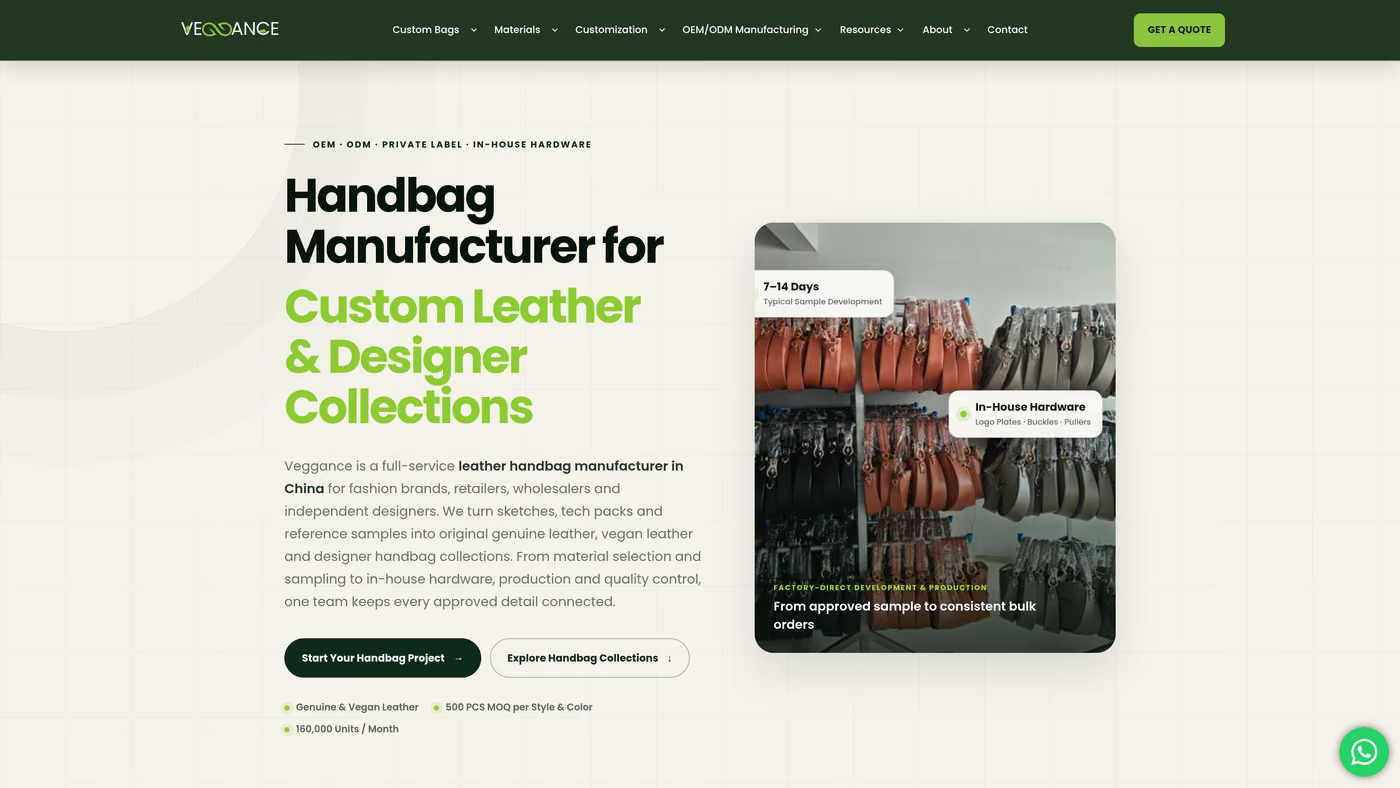
Most “vegan leather” bags are PVC with a green logo. Veggance runs private-label programs for vegan, cruelty-free and leather-alternative handbags rather than commodity stock.
On my Guangzhou line visit I pulled three swatches. The 0.8mm PU passed 10,000 Martindale cycles with light wear. The apple-peel sheet scuffed at 6,000. That gap decides what a vegan collection can credibly promise.
The types of vegan leather guide compares the finishes. Ask for:
- Exact composition: base fabric, polymer resin, backing.
- Coating chemistry: solvent- or water-based, and plasticizer content.
- Abrasion and flex data: Martindale or Taber results, not claims.
- Hardware: nickel-free plating, recycled brass, test reports.
- Chemical safety: REACH and RoHS reports, SDS sheets, batch-level traceability.
🧠 Author’s Take: Real documentation, but the apple-peel sheet needs a topcoat for daily use. We add one and budget 7% more. A “vegan” certificate with no SDS is a red flag.
Ask for a vegan sample comparison
3. Bagsplaza — Leather-First OEM With Its Own Factory
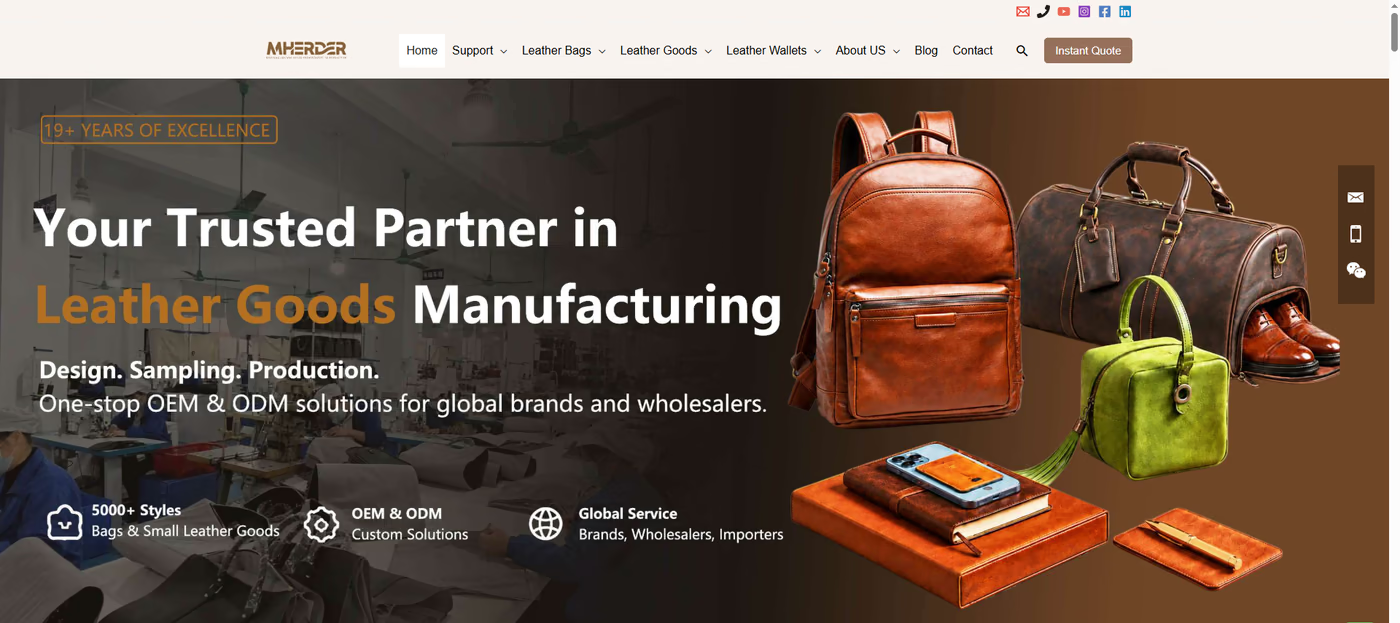
Most “sourcing platforms” are a trading desk in front of someone else’s factory floor. Bagsplaza is not that: the site belongs to Guangzhou Herder Leather Products (Mherder), a Guangzhou maker operating since 2006.
That in-house position is the entry ticket for a list built on proof. Leather is the specialism — totes, crossbodies, backpacks and wallets — on 150-plus machines and roughly 200 workers across the Guangzhou site.
The open question is certificate attribution, not ownership. Ask which legal entity holds the GRS, REACH and amfori BSCI documents, and whether that name matches the factory on the invoice. A brand name in front of a maker is normal; a certificate naming neither is not.
Sustainability here runs through leather rather than fabric. The site lists full-grain, top-grain, nubuck and distressed hides alongside recycled and plant-based options, with SGS or Intertek testing on request. Have those options quoted against your BOM.
Order terms are practical: ready-stock styles from about 20 units with laser logos, custom runs typically from 100 per style and colour, sampling quoted at 5 to 14 days, AQL 2.5 inspection.
Put it in one email: the certificate holder’s legal name, the factory address on the invoice, and the MOQ for a recycled-lining version of one SKU.
🧠 Author’s Take: The manufacturing claim holds up; this is Herder’s own plant behind the Bagsplaza name, not a network of subcontractors. What I would still test is the certificate chain — confirm the documents name the Guangzhou factory, not a sales office.
Check whose name is on the certificate
4. Szoneier — Multi-Category Development Under One Supplier
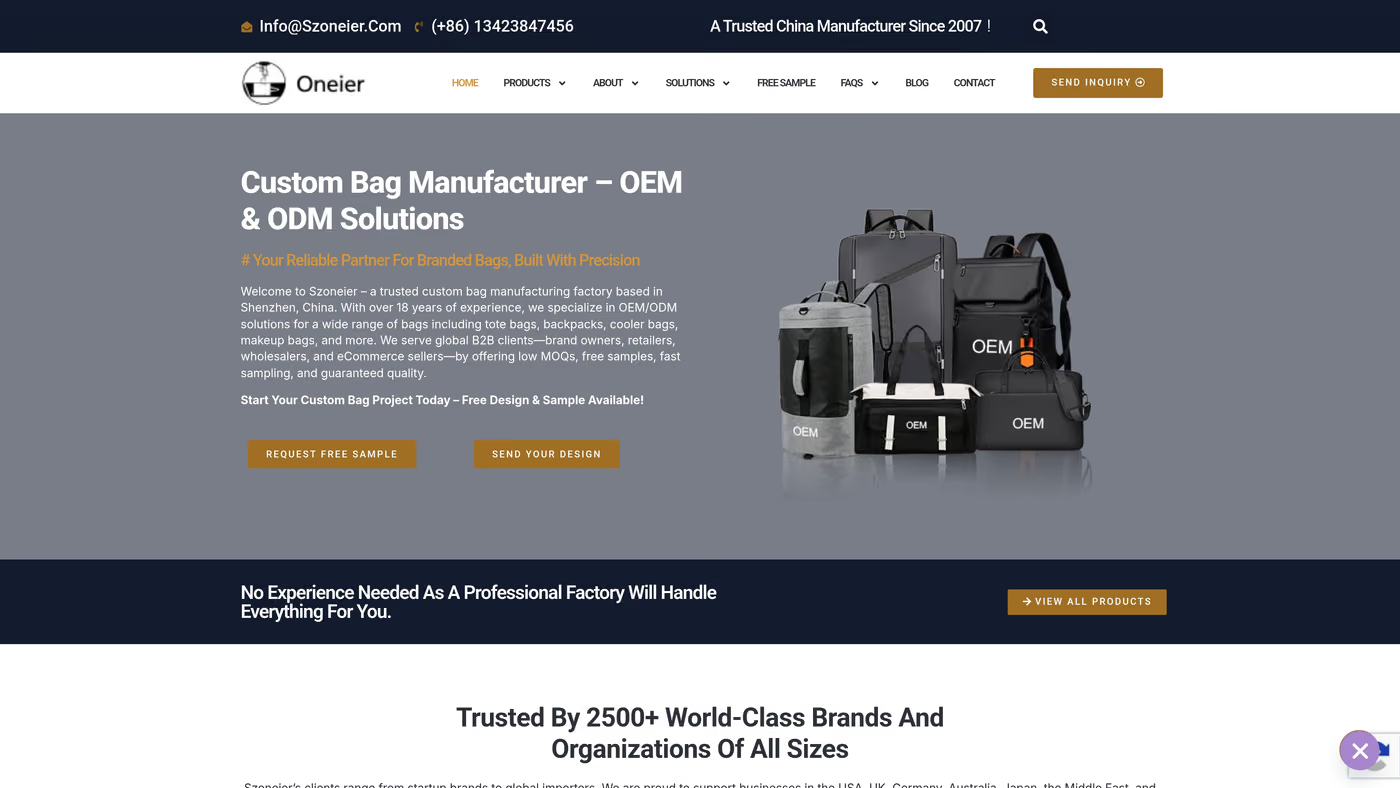
The first handbag line may sell. The next launch might be a backpack or a travel kit. Szoneier suits that pivot, with OEM/ODM depth, prototyping and wider bag know-how under one roof.
In my Ningbo sample review, the team rebuilt a mixed leather and recycled-canvas tote in 9 days. Seam alignment matched CAD, but the eco-canvas backing missed the swatch card — caught only after requesting certificates for both layers.
That check matters. A green outer shell means little if the lining, zipper tape and reinforcement board lack traceability. Test that gap before approving anything.
Ask for the eco-material menu and audit readiness, then sample accuracy and branding, GRS or REACH scope, and documents for any mixed-construction component. Run a mixed-material sample and confirm logo tooling, hardware plating and label placement in one approval round.
🔥 Hot Take: Szoneier solves the one-supplier problem. Request GRS and REACH scope per component before approving the sample.
Book a mixed-material sample round
5. Sunteam Bag — Structured Production for Corporate Programs
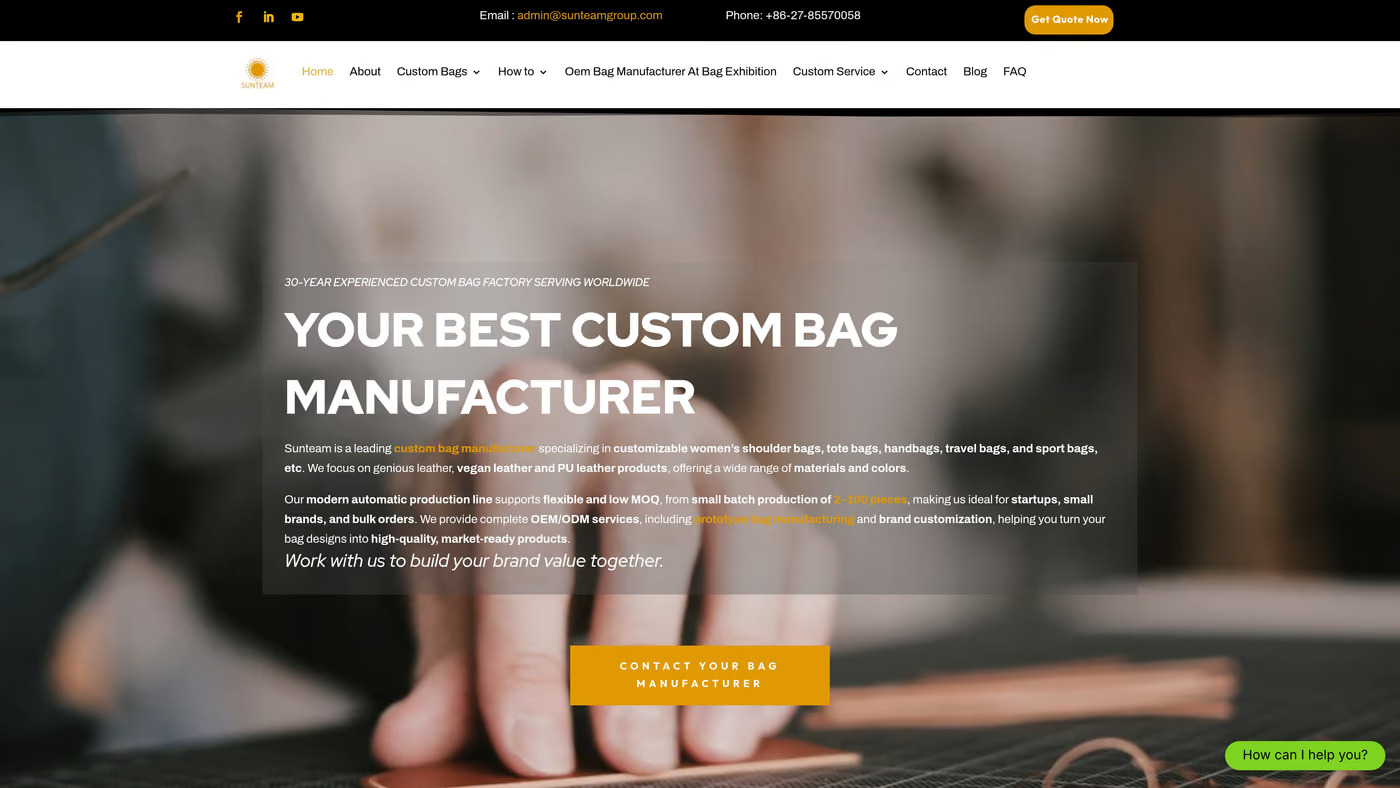
A corporate tote program fails when run two does not match run one. Sunteam Bag suits buyers who need repeatable output for gifting, promotional merch or branded lines.
The system is more structured than most: dedicated account handling, documented checkpoints, and customization support for logos, liners, trims and hardware.
On a recent 3,000-unit corporate order I asked for the QC log. Incoming trims, cutting, stitching and final AQL — that is the minimum for consistency.
Before shortlisting, check:
- Environmental-management documents: ISO 14001 or wastewater permits.
- Branded-material sourcing: certified canvas, recycled liners, branded zipper tape.
- QC checkpoints and the defect escalation path.
- Claims tied to the quoted handbag materials and trims, not another product line.
🧠 Author’s Take: Structured programs run well here. A general “eco-friendly” certificate is not enough; make them map any claim to the quoted BOM.
⚡ Power Move: Ask for the QC log from the last three runs, not a sample one.
See how a repeat run is held steady
6. Handbagio — Fashion-Led Private Label Development
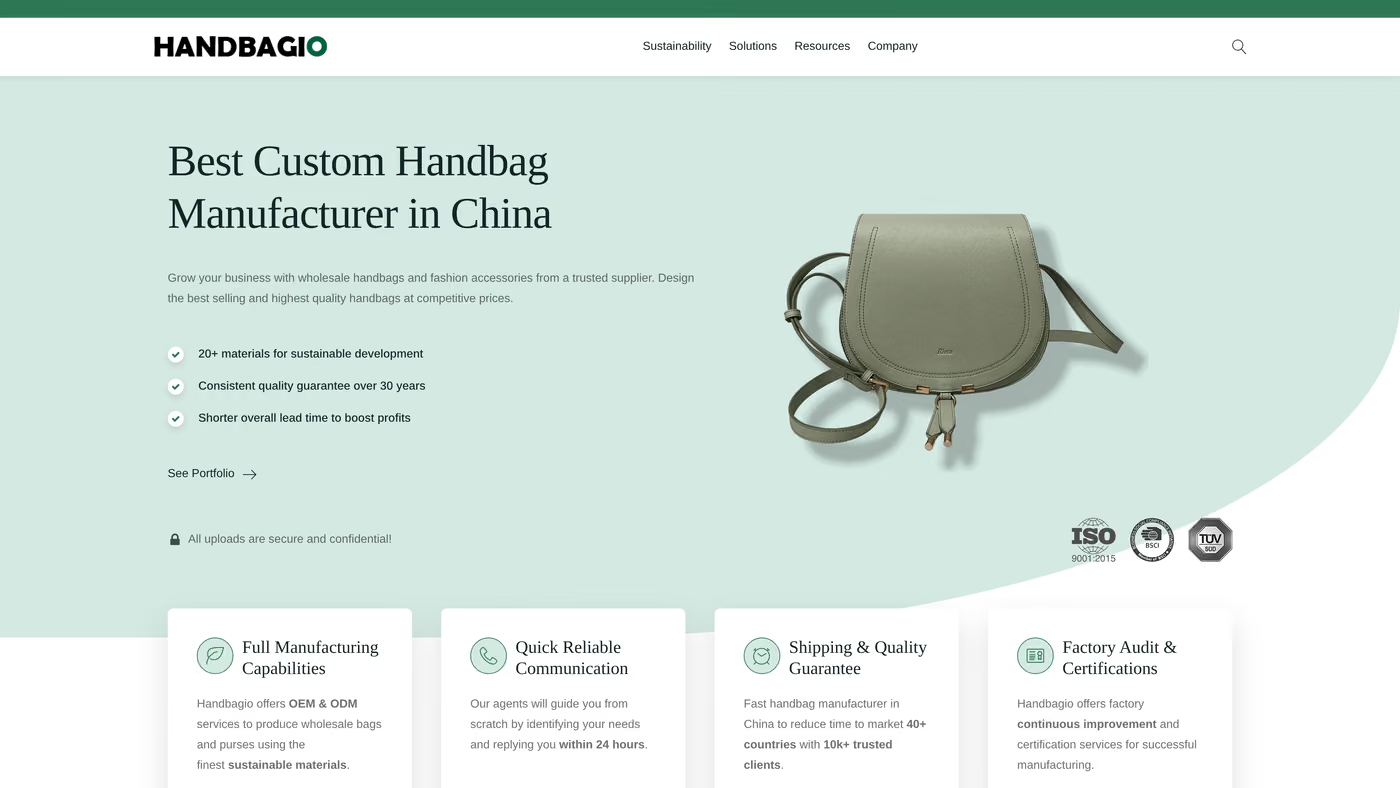
Handbagio fits brands that sell on silhouette, not spec sheets. If buyers scroll past a bag because the hardware looks cheap, put this supplier on the review list.
The work is fashion-led private label: shape iteration, hardware selection, finish decisions, a faster style loop. That matters when a brand needs five colorways of one body rather than one generic tote in five prints.
Prototype quality comes first — ask for a pre-production sample in the target material, then check edge paint, seam alignment and how the bag stands empty.
Then the materials library. Demand swatches of the exact finish, not a catalog photo. If recycled or low-impact inputs are on the brief, confirm they exist in the planned colors.
Traceability is where this gets hard. Many factories document the fabric only; ask for the finished bag — lining, hardware, reinforcement board.
⚡ Power Move: Run a second sample round before committing. The first shows direction; the second shows whether it can be repeated.
Start a fashion-led development brief
7. JUNYUAN Bags — Private Label Flexibility at Mid-Market Prices
JUNYUAN Bags fits buyers comparing customization range, order flexibility and cost control across mid-market Chinese suppliers. A practical shortlist option, not a luxury-tier program.
On a Quanzhou call last quarter I priced a 500-unit recycled-canvas tote. JUNYUAN came in 8% below two competitors; sustainability add-ons closed that gap. Compare base quotes and landed costs side by side before shortlisting anyone.
Check:
- Sampling fees, and whether they are refundable.
- MOQ by material — recycled canvas often runs higher than plain.
- Recycled-fabric availability, lead time and GRS certification.
- Paperwork tied to the exact BOM, including REACH where relevant.
- Whether quotes already include eco-hardware, certified fabric or lab-testing surcharges.
⚡ Power Move: Request a landed cost sheet with all sustainability surcharges itemized before approving the PO. Quotes start clean and grow after material selection. The flexibility is real; the add-on math is the risk.
Get a quote with the surcharges itemized
8. Daren Bag — Production Stability and QC Discipline
An approved sample looks great. Run two arrives with softer seams and a darker finish. Daren Bag suits buyers who cannot accept that drift.
I shortlisted Daren after a 1,200-unit tote run in Fujian. Its AQL 2.5 inspection held seam strength within 5% of the approved sample, and defects were logged by station.
Cutting-waste reports look clean until someone requests fabric utilization by lay. Ask for that number, the defect-handling policy and the corrective-action log; the quality control checklist covers the rest of the audit.
Before shortlisting, settle who pays freight on rejects, and whether the factory reworks, credits or replaces.
Then request cutting and assembly waste-reduction records rather than a sustainability brochure, plus environmental claims tied to operating records such as wastewater permits and energy logs.
🔥 Hot Take: Disciplined QC, but audit the cutting floor anyway. On my 1,200-unit visit a 3% waste gap surfaced only in the lay report, never the sales deck. Demand that report before signing.
Ask for the lay report on a live spec
9. Herrains — A Responsive Development Partner for Emerging Labels
Small brands rarely lose orders to better factories. They lose them to silence.
Herrains earns a review if the partnership needs someone who answers within hours and helps shape the spec, not just quote it. Responsiveness during sampling put them on this list.
On a 200-unit run the team rebuilt a bamboo-handle tote after a client swapped the lining — 4 days, not the 14 most factories quote.
- Sampling response time. Send three technical questions and track the reply window before sending a tech pack.
- Eco-material substitutions. Ask what is stocked now, not what can be sourced on request, and demand a swatch of the exact substitute.
- Documentation depth. Certificates tied to the BOM, not a PDF folder dump.
- Scale-up path. Confirm compliance rigor holds at 200 units and at 2,000.
🧠 Author’s Take: Herrains wins on communication. My 200-unit sample was clean. Nothing at 2,000 units has been tested yet, so lock tolerance specs in writing before scaling.
How to Validate Sustainable Bag Manufacturers?
The checks below expose greenwashing fast. Run them before paying a deposit. Harry Huang puts the method in one line: run the same document request on every shortlisted factory. When one reply arrives late, thin, or less specific than the rest, that gap is the finding, not a delay to forgive.
Step 1: Match Claims to Certificates
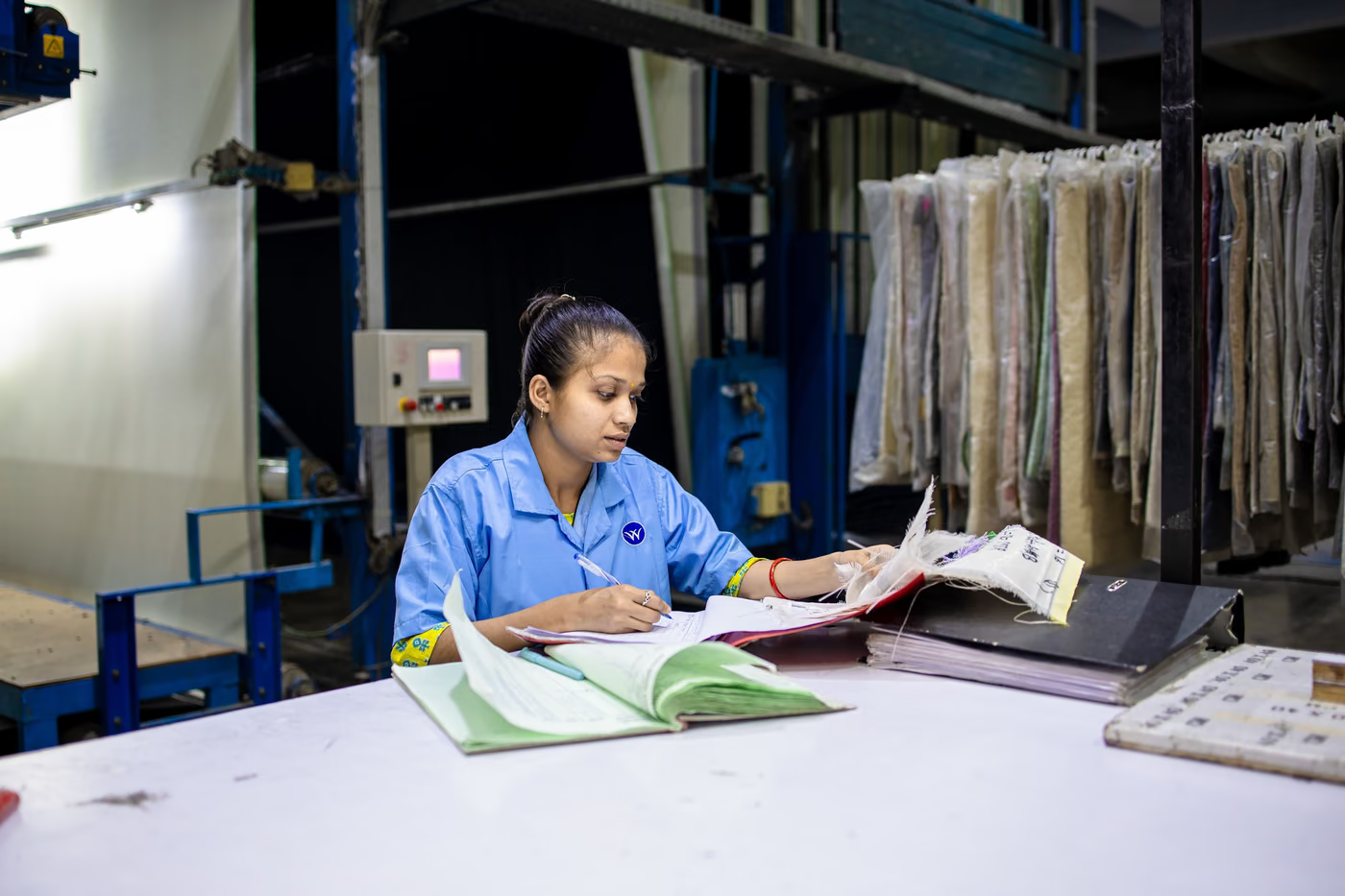
Ask for the GRS transaction certificate, plus ISO 14001 where environmental management is claimed. The certificate must name the final factory, not a trading office. Read the scope statement on the certificate itself.
Expert Tips:
“Treat ISO 14001 as the management system underneath a claim, never as the claim itself. It tells you the factory has a process; it does not tell you what is inside the material you are buying.”
Match a claim to one proof: recycled content to the Global Recycled Standard, organic cotton to GOTS, vegan leather to composition plus SDS, chemical safety to REACH or RoHS reports.
The fabric options library and sustainable options overview show which certified stock is actually available.
Step 2: Verify Role and Production Site
Get the final plant name and address in writing. Ask directly: “Are you a direct manufacturer or a trading company?”
If the answer points to a trading office or a subcontracted inland line, demand a live walkthrough of the production floor, cutting tables and QC station. An office tour is not manufacturing.
Closer alternatives exist. Compare UK leather bag manufacturers and Portugal handbag factories before assuming Asia is the only option.
Step 3: Test Samples, Costs and Cutting Efficiency
Require a pre-production sample in the exact materials. Send it for abrasion, colorfastness and chemical testing before deposit.
Ask how cutting-room scraps are handled. Do they use CAD nesting? Request fabric utilization by lay — in our audits a 5% to 8% gap often hides more cost than the green material premium. The material cutting page explains how lay plans work.
Get the premium for certified RPET or vegan materials itemized and compare landed costs rather than base quotes. For a line that extends past handbags, the same checks apply to custom backpacks and travel bags.
Step 4: Lock Everything in the Order
Claims, certificate scopes and cost premiums belong in the purchase order, confirmed against the production process timeline.
🔥 Hot Take: No certificate scope, no deposit. No supplier pays to appear on this list.
Any shortlist written from public records needs re-checking: certificates expire and production lines change. Before a deposit, confirm scope and price directly.
LeelineBags builds sampling plans, checks certificates and drafts eco-bag sourcing briefs for buyers comparing plants. Reviews from past projects show how those checks run in practice.
Compare verified plants before ordering
Frequently Asked Questions About Sustainable Custom Handbag Manufacturers in China
1. What certifications matter most for sustainable custom handbags?
GRS for recycled content, GOTS for organic cotton, REACH for EU chemical safety and amfori BSCI for labour. ISO 14001 only proves a factory runs an environmental system. In my Dongguan audits, the GRS transaction certificate is the document factories most often cannot produce.
2. Is ISO 14001 enough on its own?
No. ISO 14001 confirms a factory tracks environmental processes; it says nothing about recycled content or chemical limits. Treat it as a baseline. Ask for GRS for recycled claims and REACH test reports for the exact materials before any deposit.
3. Can Chinese sustainable handbag factories support low MOQs for private labels?
Yes, but ask. Certified eco fabric often carries a higher minimum than plain canvas. Many factories drop to 150 or 300 units for orders placed between January and March. Get the MOQ per material in writing.
4. How should buyers verify recycled-content claims before placing a bulk order?
Ask for a GRS transaction certificate issued to the final production site, with a scope that covers the exact material. On one 2024 audit a supplier’s scope stopped at yarn and skipped the coating line. Send a sample for testing and check the certificate ID with the issuer.
5. How much extra do certified recycled materials, eco-hardware, and lab testing cost?
Certified RPET adds about 10 to 20% over virgin polyester. Eco-hardware and nickel-free plating add 5 to 12%. Lab testing runs $150 to $400 per material, per test. Those costs become unavoidable once a brand sells into the EU or publishes a recycled claim.