Industrial sewing techniques are the foundation of everything, including custom bag manufacturing.
Lock stitch stands out as a basic yet crucial method. It uses two threads that interlock to form very strong seams. You need to master this skill for professional bag making. Custom bag manufacturers use many specialized approaches. Overlock stitches prove especially important because they let seams stretch with fabric.
Custom travel bag manufacturers pick their materials carefully based on how they’ll be used. They select strong fabrics like canvas fabric and denim fabric. The right thread choice plays a crucial role too. Nylon works best for moisture resistance in outdoor gear, while polyester offers UV protection and keeps its color longer.
On top of that, it takes smart techniques to reduce bulk in seams and make your bag-making more efficient. You’ll find in this piece how professionals use complex industrial sewing techniques. These methods make a wide range of custom bags. Let’s take a look!
Table of Contents
Core Industrial Sewing Techniques for Bag Making
Becoming skilled at different stitch types is key to making durable, professional-looking custom bags. Each technique plays a unique role in bag construction, from adding strength to creating decorative finishes.

1. Lock stitch and its structural benefits
Lock stitch is the foundation of industrial bag manufacturing. This technique uses two threads that interlock within fabric layers to create strong seams. The stitch looks similar on both sides of the fabric, which makes it perfect for visible seams in professional bags. Lock stitching also adds extra durability to high-stress areas, so your custom bags can handle daily use.
2. Chain stitch for flexible seams
Chain stitch works best in areas that need flexibility. A single thread loops through itself to create a chain-like pattern that stretches and moves. The elasticity of chain stitching makes it great for curved bag sections or parts that need to flex. Many custom travel bag makers use chain stitching. It adds a beautiful, textured line that looks great.
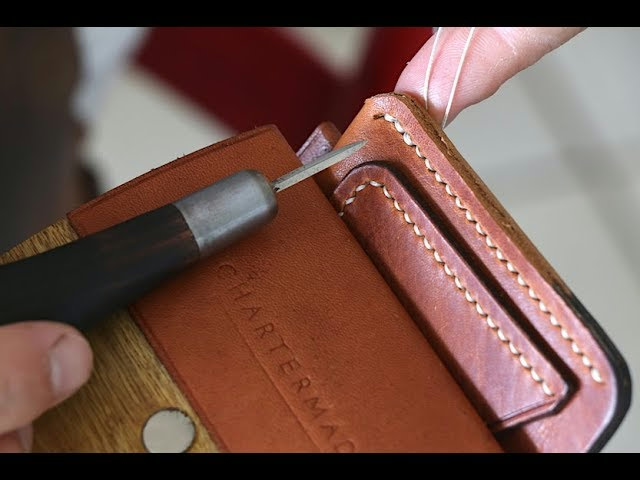
3. Overlock and cover stitch for edge finishing
Clean edges that don’t fray are vital in professional bag making. Overlock stitches use many threads to wrap around raw fabric edges. This method creates a seam and finishes the edge at once, giving you both function and neat appearance. Cover stitch uses two or three needles with a looper thread to make flat, durable seams that work great for bag straps and reinforced edges.
4. Specialty stitches: bar tack, zigzag, blindstitch
Bar tack stitches add strength to high-stress areas like pocket corners and strap attachments. These dense zigzag stitches (0.3-0.5mm in length and 2-3mm in width) create strong connections that prevent tears. Zigzag stitches offer great flexibility for stretchy parts or decorative elements. Blindstitch is almost invisible and works well for hemming. You can use it to create hidden seams that give linings and internal components a polished look.
Exper Tips:
” Integrate programmable pattern tackers into your workflow for repetitive reinforcement tasks; these automated machines can precisely execute complex bar tacks or box stitches, dramatically increasing consistency and throughput in industrial sewing techniques for high-volume custom bag production.”
———— Molly (Molly) Su, BAGS FACTORY !!. Sports Bags, Pet carriers,Travel Luggage Expert, Casino Promotions
Choosing the Right Materials and Tools
Your success with industrial sewing techniques starts with picking the right materials and tools. The perfect mix of components will give your custom bags the strength, function, and professional look you want.

Matching thread and fabric types
The way your bag holds up depends on picking the right thread. Heavy fabrics like canvas or vinyl need Tex 70 thread to make seams that last. Lighter fabrics work better with Tex 45 or Glide thread – you get the strength without making things too bulky. Most professional bag makers use polyester threads because they don’t fray or break, even with heavy fabrics.
When you’re making bags to carry heavy loads:
- Tex 70 gives you the most durability
- You might want to pair threads (Tex 45 in bobbin with Tex 70 on top) if your machine doesn’t handle heavier threads well
- Pick thread that’s one shade darker than your fabric to blend better
Needle selection for technical sewing
The needle you pick will affect how well you sew through different materials. Denim needles have thick shafts and sharp points that work great for pushing through canvas, faux leather, and light leather. Microtex needles do a beautiful job with topstitching and finishing edges on faux leather and cork fabric.
Technical textiles need special needles. Leather needles come with cutting points made just for going through hide without tears. Nonstick needles help prevent skipped stitches on synthetic or coated materials. Since bags usually have many layers, you’ll need needles sized 90/14 or bigger for most projects.
Using stabilizers and interfacing effectively
Interfacing and stabilizers are the foundations of your bag that give it shape and a professional finish. Woven interfacings like SF101 keep fabric from getting distorted while letting it move naturally. You’ll get the best results if you use the “block fusing” technique – put interfacing on fabric before cutting your pattern pieces.
Stabilizers decide how structured your finished bag will be. Fusible foam helps bags stand up on their own, which makes it perfect for structured designs. Fusible fleece gives you moderate support for softer, more relaxed bags without making them too stiff. Special stabilizers like firm fusible (Peltex) strengthen hardware attachment points and bag bases.
The materials you pick will affect how your bag works, looks, and lasts; these are key things to think about when you’re using complex industrial sewing techniques.
Advanced Tips for Professional Results
☑ Understitching for clean edges
A professional-looking edge that stays crisp comes from understitching. This technique keeps linings from rolling outward. You need to sew a straight line just beyond the seam line through the lining or facing and the seam allowance underneath. Start by grading your seam allowance to cut down bulk, then sew through the lining and seam allowance together. The final step is to fold the pieces back along the seam line and press for a sharp edge.

We used this technique mostly around necklines in garment construction, but it works great in bag making – especially when you have pocket openings, linings, and facing edges that shouldn’t roll to the outside. Complex pocket structures in bags need this technique on the front pocket layer before you line up and stitch the pocket bag.
☑ Managing bulk with layering techniques
Smooth, professional finishes on your bags won’t happen with too much bulk in seam allowances. You can trim seam allowances and interfacings close to the edge after stitching to reduce bulk. But check your pattern instructions first – some constructions need untrimmed allowances for later steps.
Curved seams need small V-shaped notches along the curve within the seam allowance. Just don’t cut into the stitching. Corners need 45-degree angle clips before turning. A point turner helps push corners out for crisp definition. Your bag’s final shape comes from steam pressing – unlike quilting where fabric distortion is avoided. Steam helps achieve proper bag shape and structure.
☑ Using industrial sewing machines efficiently
Industrial machines give you more power for bag making. The Consew 206RB-5 and Techsew 2750 Pro handle many layers of heavy fabrics well. Look for machines with these features:

- Servo motor for variable speed control
- Walking foot with pressure change to prevent traction marks on vinyl
- Laser light and drop-down seam guide for precise stitching
- Automatic bobbin winders for consistent thread tension
Lighter bag projects work fine with domestic machines. A Microtex needle helps – these super-sharp needles go through many fabric layers easily. Plastic canvas reinforcements under snaps prevent fabric tears over time.
Exper Tips:
” To further optimize seam durability in industrial sewing techniques, consider incorporating ultrasonic welding for synthetic fabrics—this method eliminates needle perforations, creating waterproof and exceptionally strong seams ideal for technical or outdoor custom bags. “
———— Tang Zeny, Bag OEM & ODM service, BV factory. Specialising in backpacks, business bags, travel bags, school bags, casual bags
Conclusion
Becoming skilled at industrial sewing techniques can turn regular bag projects into professional-quality items that last for years. In this piece, you learned how different stitch types fit specific needs. Lock stitches add strength, and chain stitches bring flexibility when it’s necessary. It also shows you the key relationship between fabric, thread, and needle choices. Custom bag makers consider this connection very important.
The trip from simple sewing to industrial-level bag making takes practice and patience. But with these professional techniques, you can create custom bags that match commercial products in looks and durability. These skills are the foundations needed to succeed, whether you make bags for yourself or start a small business.
You can order custom bags, travel bags, or custom backpacks. Just email [email protected] or visit leelinebags.com. We are best bag manufacturer China, are also a cooler bag manufacturer, we are here to help you!
Related Reading:
Manufacturing Certifications Of Bags You Need To Know In 2025
Zero Waste 3D Printing: Your Complete Guide to Sustainable MakingFAQs
Q1. What are the essential industrial sewing techniques for bag making?
The key techniques include lock stitching for strong seams, chain stitching for flexibility, overlock and cover stitching for edge finishing, and specialty stitches like bar tack and zigzag for reinforcement and decoration.
Q2. How do I choose the right materials for custom bag manufacturing?
Select threads and fabrics that match in strength and durability. For heavy fabrics, use Tex 70 thread. Select the right needles. Use denim needles for thick fabrics. For topstitching, choose Microtex needles. Use stabilizers and interfacing to provide structure and a professional finish.
Q3. What steps are involved in constructing a custom bag?
The process includes precise cutting and pattern alignment, sewing seams and boxing corners for 3D structure, securely attaching straps and handles, and properly installing zippers and closures. Each step builds upon the last to create a functional and durable bag.
Q4. How can I achieve professional-looking results in bag making?
Try understitching to keep edges neat. Layer and trim to handle bulk. Lastly, make the most of industrial sewing machines. Focus on details. Reinforce high-stress areas and use the right presser feet for each task.
Q5. What type of sewing machine is best for custom bag manufacturing?
For making bags professionally, it’s best to use industrial machines. The Consew 206RB-5 and Juki DNU-1541 are great options. Look for features such as a walking foot, a servo motor for speed control, and the ability to handle many layers of heavy fabric. For beginners or small-scale production, a heavy-duty domestic machine can be a good starting point.