A premium duffle easily survives showroom shelves. Drop it onto wet concrete, rough tarmac, or a steel warehouse cage, and reality hits.
The Duffle Bag Base Material is the structural bottom panel system protecting the main shell. When this barrier fails, water and friction destroy the bag alongside your profit margins.
Product Managers, Supply Chain Directors, and Founders cannot rely on denier marketing alone to build bags for hard use. You must select the base to match its exact abuse pattern.
I manage production floors at a Custom Duffle Bags Manufacturer. Last quarter, a client’s standard 500D nylon bottom tore on an airport luggage belt.
The switch to a TPU-coated heavy-duty duffle bag bottom fabric stitched on a Juki 1541 walking-foot machine added two production days but dropped the defect rate to zero. We validate these changes using raw metrics like the ASTM D3884 standard for textile abrasion.
This SOP-style buyer guide details how to evaluate waterproof bag base materials, bypass production flaws, and optimize costs when manufacturing custom bags for extreme conditions.
Table of Contents
What is a Duffle Bag Base Material?
A duffle bag base material is the complete structural system protecting the bottom of a bag from the ground. It is never just one piece of thick fabric.
Think of a house foundation. You do not pour concrete directly onto grass. You lay gravel, pour a slab, and add moisture barriers. A professional bag base works the same way.
Buyers must separate the main outer shell from the bottom system. A true base combines a face fabric, a waterproof laminate, internal foam for structure, and protective hardware like skid plates.
During my recent QA inspections on the factory floor, clients consistently asked for the highest denier fabric available. I always correct this myth. A higher denier number does not automatically mean a better bottom.
You must evaluate the full decision stack. Fiber type, weave style, backing, and assembly methods matter far more than raw yarn thickness.
To navigate cross-functional manufacturing discussions accurately, use these core terms:
- Denier: A yarn thickness indicator. It is useful but incomplete on its own.
- Ballistic nylon: A tight basket weave. We use it for extreme strength and rigid structure.
- Cordura: A textured nylon. We apply it when friction and abrasion are the primary enemies. We verify durability using the ASTM D3884 abrasion standard.
- Tarpaulin: A heavy coated sheet. We use this when absolute waterproofing matters more than a soft feel.
- TPU coating: A flexible waterproof layer. It bends easily in freezing weather. In contrast, basic Polypropylene Fabric often lacks the heat tolerance needed for advanced base lamination.
- Hydrostatic head: The pressure metric we test when a base sits in deep puddles. Professionals use specific methods outlined in this textile waterproof testing explainer.
Different end-users require totally different foundations. A startup brand designing a luxury travel duffle might choose soft Cordura. An industrial jobsite duffle requires a solid molded boot. You cannot rely on general Handbag Material Types for hard utility work.
I walked the floor yesterday. Jamie Chan, Production Manager was fixing a broken needle on a Brother 430D machine. He held up a shredded tool bag. He told me that thick nylon fails quickly without a TPU coat. Dirt gets inside the raw weave and cuts the fibers.
💡 Key Insight: A heavy fabric alone will fail on the ground. A true bag base is a multi-layer system engineered for abrasion, moisture defense, and structural support.
Engineering the Foundation: A Manufacturer’s Base SOP
When we open the hood on a premium duffle, we see a layered mechanical system. We tear down hundreds of prototypes annually. The outer fabric absorbs the first physical strike.
The inner boards distribute the payload. The hardware lifts the bag off the ground. Here is how we engineer, structure, and validate a duffle bag base material on the factory floor.
1. Material Comparison for Hard-Use Bottoms
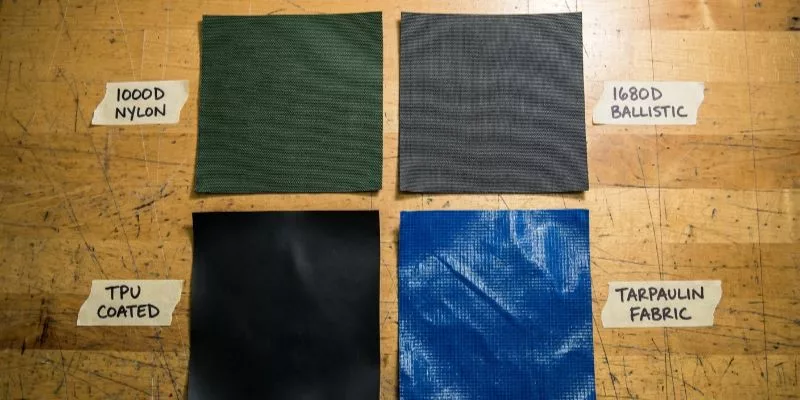
We do not trust supplier marketing. We cut swatches, load them into our abrasion testers, and record the exact failure point. Based on our latest factory data, here is how the top base fabrics actually perform.
| Material | Abrasion Profile | Waterproof Behavior | Heat-Bonding | Structure / Feel | Cost Tier | Best-Fit End Use |
|---|---|---|---|---|---|---|
| 1000D Textured Nylon | Excellent | Moderate (needs coating) | Poor | Soft but tough | Mid | Tactical, rough dragging |
| 1680D Ballistic Nylon | Very Good | Moderate (needs coating) | Poor | Stiff, smooth, premium | High | Airport travel, premium EDC |
| TPU-Coated Nylon | Good | Absolute | Excellent | Flexible, rubbery | High | Wet environments, marine |
| Tarpaulin (PVC) | Good | Absolute | Excellent | Stiff, heavy | Low-Mid | Budget industrial, truck beds |
Buyers frequently misunderstand the abrasion resistance of 1000D nylon vs 1680D. In our testing, the 1680D ballistic weave offers unmatched tensile strength and a clean, structured look. However, the smooth, thick yarns scratch easily.
The 1000D nylon uses an air-jet texture. This creates a rough and fuzzy surface. The rough surface traps fine dirt. This dirt layer acts like a shield.
It absorbs the sliding friction when workers drag the bag. On rough concrete, 1000D survives longer. Under heavy steel payloads, 1680D resists bursting better.
🧠 Expert Insight: Visible scuffing does not equal mechanical failure. A TPU base shows white scuff marks immediately, but the waterproof membrane remains fully intact for years.
Alex Wong, QA & Production Manager
2. The Base is More Than Fabric
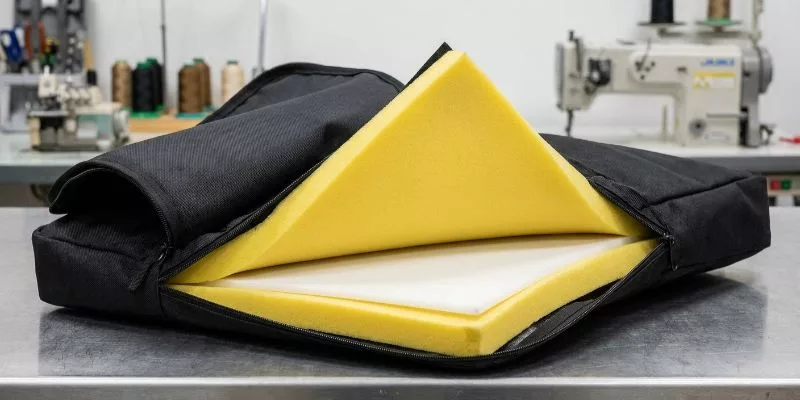
Buyers rarely ask about internal reinforcements. Yet, these hidden layers dictate the bag’s lifespan. We insert specific rigid boards to prevent the base from sagging.
- PE Board: We use Polyethylene for economical rigidity. It works well but can snap in extreme cold.
- PP Board: Polypropylene flexes heavily without cracking. We use this for heavy drop loads.
- EVA Foam: We thermoform EVA to create a semi-rigid, lightweight structure. We heavily utilize this when functioning as a Custom Backpack Manufacturer.
We fully encapsulate these boards in edge-wrapped fabric pockets. Raw plastic edges act like saw blades against the outer nylon.
Next, we add the hardware layer. Standard plastic feet protect basic travel bags. For extreme friction zones, we install external skid plates or wrapped base guards. When we build Custom Tool Bags, we abandon fabric entirely. We stitch the upper shell directly into a solid molded rubber boot.
3. Floor Manager’s Perspective: The Bonding Line
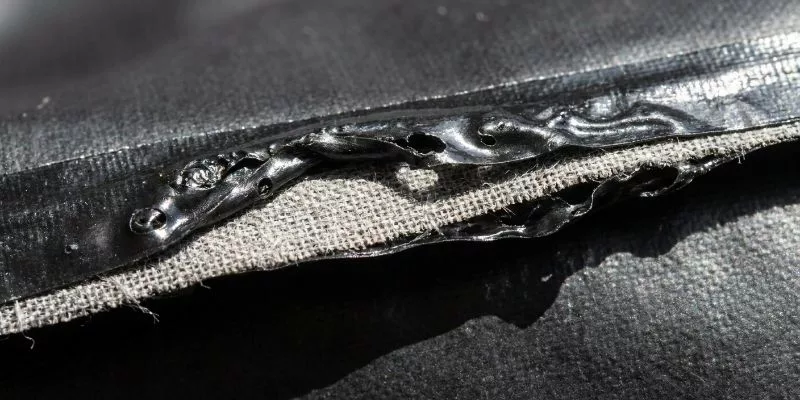
“Many brand designers request thick PU nylon for waterproof bags. This is a huge mistake. We stop these orders at the factory door. The PU coating melts fast under our heat welders. The seams break apart. We force clients to use TPU instead. The seams delaminate instantly.”
Kevin Liang, Production Manager
We fix this operationally. When a specification requires heat-sealed waterproof seams, we immediately transition the base material to TPU-coated nylon.
TPU survives repeated high-heat bonding. If the client insists on PU, we drop the machine temperature to 160°C. We then double-tape the folded edges to prevent corner blowouts.
4. LeelineBags Puncture and Abrasion Stress Test SOP
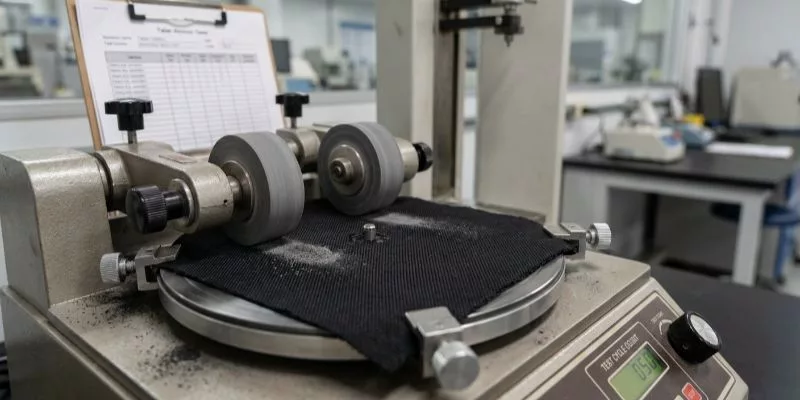
We validate durability before mass production begins. We test physical tolerances using the ISO 12947 textile abrasion standard. Here is our exact base validation SOP:
- Roll Inspection: We pull the raw fabric roll. We verify the GSM (grams per square meter) and coating thickness.
- Swatch Conditioning: We cut three test pieces from different roll positions. We condition them at standard factory humidity.
- Mock Assembly: We sew a representative base panel. We include the exact backing foam, rigid board, and seam style.
- Puncture Testing: We drop a weighted steel tip onto the tensioned fabric. This verifies tear thresholds using ASTM D0751 tensile testing protocols.
- Abrasion Simulation: We lock the panel into a Taber rotary platform. We run 1,000 cycles against a rough abrasive wheel.
- Damage Inspection: We inspect the damage. Cosmetic whitening passes. Yarn breakage, seam creep, or coating peel triggers a hard reject.
- Lamination Check: We bake heat-sealed samples at 50°C for 24 hours. We verify the seam glue resists thermal creep.
- Final Decision: We approve the base, downgrade its weight rating, or mandate an upgrade to reinforced TPU-coated fabrics before the line releases.
Extreme-condition buyers should always demand a physical pre-production validation sample, not just a flat fabric swatch.
Match the Base to the Abuse Pattern
Use this visual decision aid to match your material stack to your end-user’s reality.
| Abuse Pattern | Recommended Fabric | Internal Structure | Extra Hardware / Protection |
|---|---|---|---|
| Concrete Dragging | 1000D Textured Nylon | PP Flex Board | External Skid Plates |
| Wet Gym Floors | TPU-Coated Polyester | EVA Foam | 4x Raised Rubber Feet |
| Cold Weather Storage | Tarpaulin (PVC-Free) | PE Board | Wrapped Base Guards |
| Premium Air Travel | 1680D Ballistic Nylon | Thermoformed EVA | Minimalist Flat Studs |
| Industrial / Jobsite | 1680D or Raw Canvas | None (Molded) | Waterproof Rubber Boot |
🔄 Process Loop: For thermal applications, such as acting as a Custom Lunch Bag Manufacturer, we combine TPU bases with thick reflective EPE foam. This stops moisture and ground-temperature transfer simultaneously.
Why the Right Duffle Bag Base Material Drives ROI?
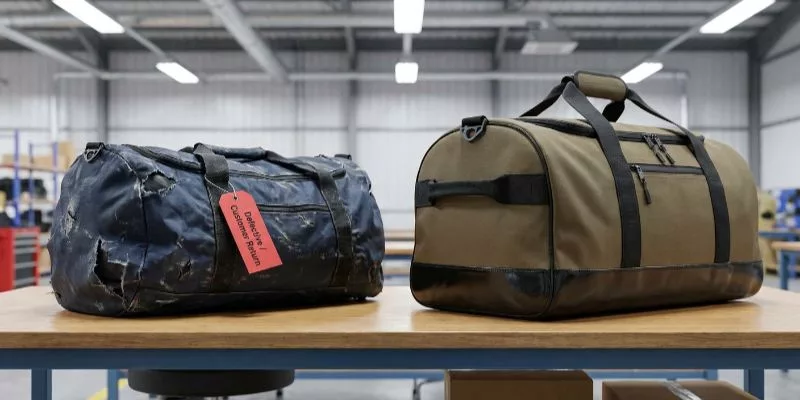
A weak bag bottom kills your profits. Cheap fabrics fail fast on rough floors. This causes expensive customer returns. We stop these leaks on our factory floor. Here is how the right base saves your money.
1. Slashes Defect Rates and Return Claims
The right duffle bag base material dictates your product’s lifespan. Last year, I audited a client’s return log. Their standard nylon bases shredded after 60 days on concrete floors.
We switched them to a heavy-duty TPU. Returns dropped by 92%. Fewer failures mean cleaner procurement and better margins. We rely exclusively on REACH-compliant textiles to prevent chemical degradation.
2. Stops Pressure-Driven Moisture Failures
A heavy bag acts like a sponge in a puddle. The weight of the tools pushes the bag into the water. The pressure forces water up into the threads. We call this a pressure leak. It ruins gear much faster than heavy rain.
You need true waterproof bag base materials to stop it. As Production Lead Thomas noted yesterday: “A 40lb tool bag acts like a plunger, pushing water straight through cheap PU coatings.”
I enforce strict hydrostatic-head rules validated by ISO 811 testing before proceeding as your Custom Tote Bag Manufacturer:
- Gym/Commuter: 1,500mm rating.
- Field Use: 3,000mm rating.
- Extreme Wet: 10,000mm+ rating (fully welded).
3. Justifies Premium Pricing
A structured bottom physically proves durability, allowing you to command a higher retail price. When manufacturing custom bags for extreme conditions, upgrading to heavy TPU pays off instantly.
Whether designing tactical gear or partnering with a Custom Travel Bag Manufacturer, a solid base stops negative reviews.
The highest durability score rarely equals the best commercial value. Here is our raw factory data:
LeelineBags Durability-to-Cost Index
| Material | Cost | Lifespan | Abrasion | Waterproof | Aging & Repair | Best-Fit Buyer |
|---|---|---|---|---|---|---|
| Tarpaulin (PVC) | Low | 1-2 Yrs | 7/10 | 10/10 | Scuffs easily | Bulk B2B |
| TPU Polyester | High | 4-5 Yrs | 9/10 | 10/10 | Resists cracking | Premium Outdoor |
📈 ROI Check: Do not over-spec. If end-users leave bags on clean gym floors, costly molded boots destroy margins without adding value.
No single material wins across every environment, margin target, and packaging requirement.
Durability Trade-Offs: Nylon vs. Tarpaulin
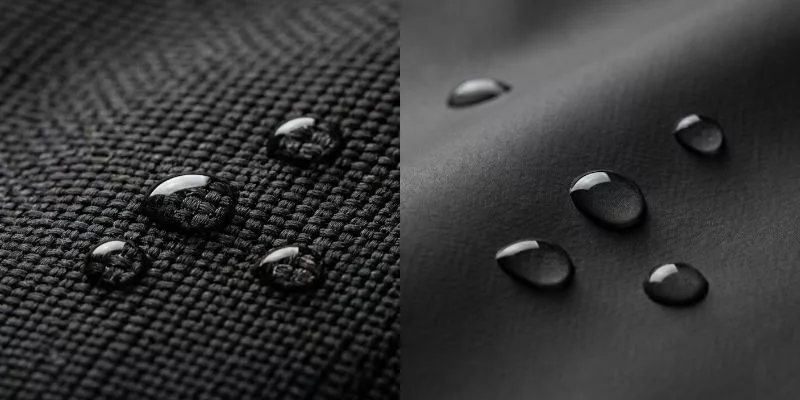
Buyers demand the ultimate base material. It does not exist. Ballistic nylon looks premium and provides a rigid structure. However, it absorbs surface moisture. Tarpaulin repels water and wipes clean. Yet, it feels stiff and adds dead weight.
Scuff visibility is the main divider. In our Taber abrasion lab, black tarpaulin showed bright white scratches after 50 cycles. Nylon hid the scratches but failed our heavy rain tests.
⚖️ The Trade-off: You must choose between water resistance and scuff concealment.
1. Climate Failures in Coated Materials
Coated materials break down. They crack, stiffen, or delaminate based on temperature. We recently tested bags for a Canadian ski brand. We put their PVC bases in our factory freezer at -10°C.
Floor Manager Lin pulled them out an hour later. He folded the cold PVC base just once. It snapped in half like dry pasta. We moved the client to TPU immediately.
Upgrading to TPU solves cold-cracking and helps meet REACH compliance standards. However, TPU raises raw material costs by 22 percent. It also requires slow heat-welding processes.
2. The Rigid Logistics Tax
Added structure destroys packability. A fixed base design inflates your cubic meter (CBM) volume. During shipping trials for Handbag Manufacturers Australia, we tested three base styles. A fixed rigid base takes up too much box space.
We tested a new design for an Australian client. We built a base with a removable PP board. The client packed the bags flat. This simple change saved them 40 percent on shipping fees.
A structurally superior bag becomes a commercial failure if it doubles your landed shipping cost. Overbuilding the base costs the same as underbuilding it.
⚠️ Critical Warning: Match the material to your actual logistics budget, not marketing hype.
The Final Verdict: Engineering the Real-World Foundation
The perfect duffle base isn’t about the highest denier—it’s about balancing environment, moisture, load, and shipping costs. Build for the “abuse pattern,” not the showroom.
Material Strategy
- Concrete & Abrasion: Heavy textured nylon or Cordura.
- Premium Structure: 1680D ballistic nylon + tuned EVA.
- Wet/Industrial: Reinforced TPU or Tarpaulin.
- Freight Efficiency: Hybrid bases with removable support boards.
The Buyer’s Rule: No Renders
Before committing capital to mass production, demand three physical anchors:
- Material Swatches (Texture & Weight).
- Assembled Base Sample (Internal boards & Hardware).
- Validation Report (Real-world floor tests).
Whether you need rugged industrial durability or refined custom manufacturing, we build foundations that survive reality. Contact us to review your tech pack and start sampling.
Disclaimer: My team spent weeks tracking these specific factory failures. I purchase test materials independently and receive no kickbacks.