
Heavy Duty Work Bag Manufacturer The Zip Fails First, So the Rating Starts There.
The part that gives out sets the spec — a zipper that bursts under load, a handle that tears at its root, a molded base that folds. A run is written against those points and tested to six methods, with the load, tear and zipper figures on the report before the PO. A working sample in seven days, a first run at 100 pieces, bulk on a six-to-eight-week window, and the second lot cut to the same shell and pattern.
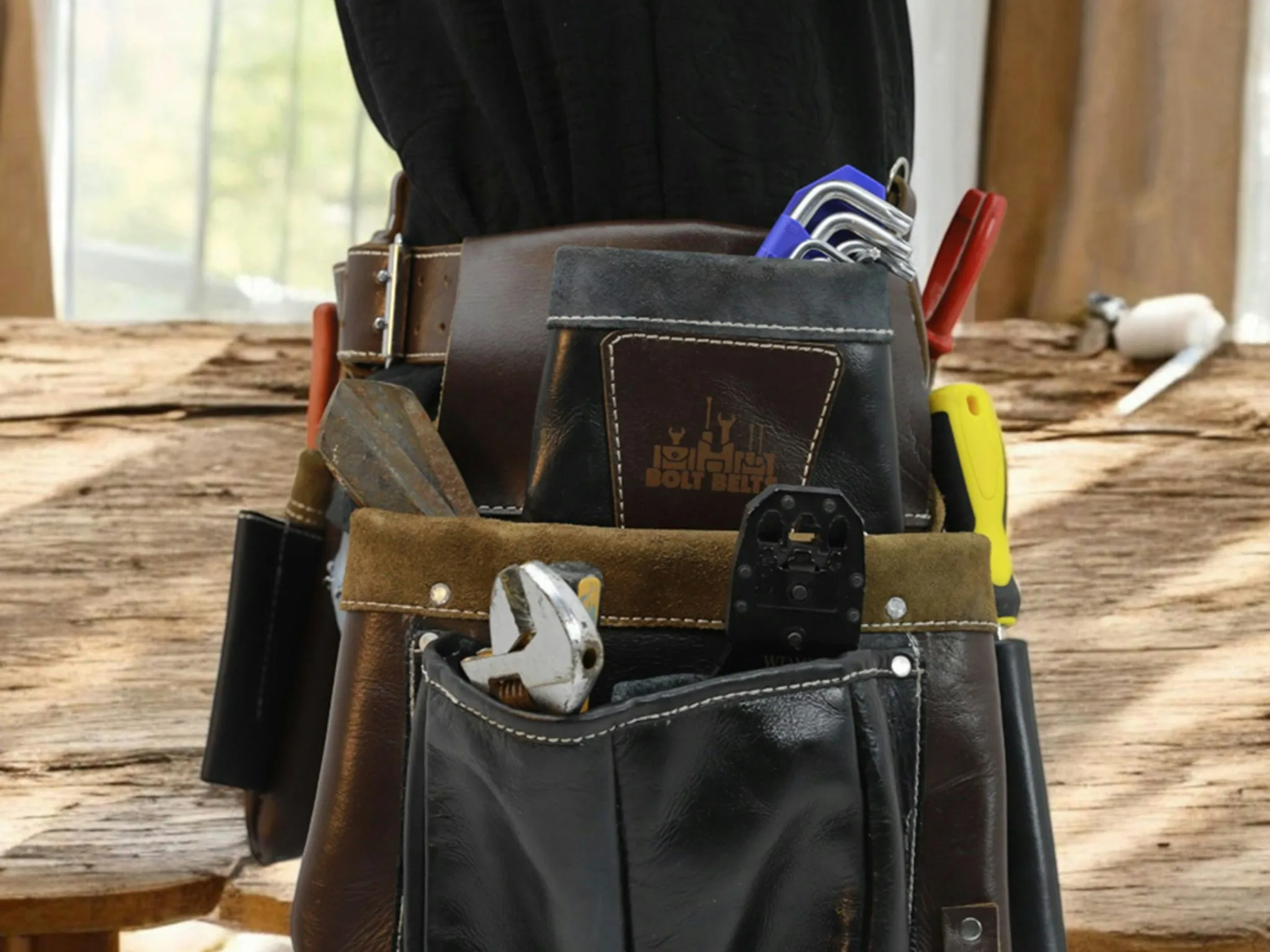
- 17.6%US MFN, textile tool bag
- +25%Section 301, China origin
- 6 testsASTM-method, per run
What goes first
The Weakest Part Sets the Spec
In the field, a work bag rarely fails where a brochure points. The zip bursts, the handle tears at its root, the base folds, and a seam splits when the bag is over-packed. A rating written around those points is a spec; a “heavy-duty” label that names none of them tells a buyer nothing.
- Fails first
The zip gives out first
A slider pulls off its stops, or a coil opens at the gusset, on a bag lifted fully loaded that read sound everywhere else a minute before.
The test
ASTM D2061 — zipper strength: slider pull-off and chain pull, measured as force. (newtons (N))
The build that holds it
A zipper sized to the load the run is quoted at, with the zip seat doubled so the slider never rides a single layer at the gusset corner.
- Fails first
The handle tears out at its root
The stitch line at the top seam pulls through on the first heavy lift — a strap root is where a loaded bag concentrates its entire weight.
The test
ASTM D5034 grab tensile plus ASTM D1683 sewn-seam strength, both as breaking force. (newtons (N))
The build that holds it
Bar-tacked and box-X reinforced roots, and webbing carried over the top edge into the shell so the load runs into fabric, not into one seam.
- Fails first
The base folds and the bag will not stand
A soft base caves under a stacked load, the bag lists to one side, tools crush together and nothing sits upright on a bench.
The test · house protocol
A loaded edge-drop and a static-load hold, logged in kilograms — a house protocol, since no ASTM method governs a bag base. (kilograms (kg))
The build that holds it
A molded or reinforced base board, riveted at the corners and sized to the tool footprint the buyer specifies, so the bag stands and stays square under load.
- Fails first
The seam splits where it is stuffed
A gusset or pocket seam gives way when the bag is over-packed — the fabric survives the load, the stitch does not.
The test
ASTM D5587 trapezoid tear plus ASTM D1683 seam efficiency, tear force and a percentage. (newtons (N) · %)
The build that holds it
A locked stitch and a seam allowance sized to the denier it carries, run at a stitch density that matches the shell rather than one setting for the whole bag.
Who is signing
The Buyer’s Warranty, Not the Bag, Sets the Ask
A tool brand, a distributor, a site fleet and a store private label each hold a different line to account. Each one needs the same bag proven a different way, and the plate records the line that buyer is really signing against.
- 01
Tool and equipment brand
Product development lead, brand owner, sourcing manager
- The constraint it signs against
- The bag carries the brand warranty, so a zip or stitch failure becomes a returns cost and a review, not a courier’s problem.
- What it needs on the page
- A tested rating it can publish, an ODM cut to its own tool layout, and a reorder that holds the first run’s shell, colour and pattern.
- 02
Distributor and importer
Category buyer, import manager, private-label developer
- The constraint it signs against
- The margin is set at landed cost, so a duty misclassification on a textile tool bag eats into a thin spread on every unit in a container.
- What it needs on the page
- A duty-correct classification named on the invoice, a container-fill quote, and one master spec that stops SKUs drifting between suppliers.
- 03
Contractor and site fleet
Operations manager, tool-room lead, safety officer
- The constraint it signs against
- The same bag is issued to hundreds of hands and must survive daily load, sharp tools and a clean-down — a single failed bag is a lost tool, not a worn one.
- What it needs on the page
- A fleet-standard build with a tested base and handle, replaceable parts, and a drop protocol documented where a site safety file asks for it.
- 04
Retail private label
Buyer, quality assurance, packaging and compliance
- The constraint it signs against
- A bag on a shelf is judged by the retailer’s QA before a customer sees it — a chemical or labelling miss holds the whole order at the DC.
- What it needs on the page
- A Prop 65 and REACH screening file per lot, retail-ready cartons, and a QA report that matches the shelf copy on the pack.
The proof sheet
A Rating a Procurement Team Can Audit
“Heavy-duty” is an adjective until a number sits behind it. Each claim a buyer would hold the brand to is tied to the method that measures it and the unit it is reported in, so the sample’s report can be checked against the spec — not taken on trust.
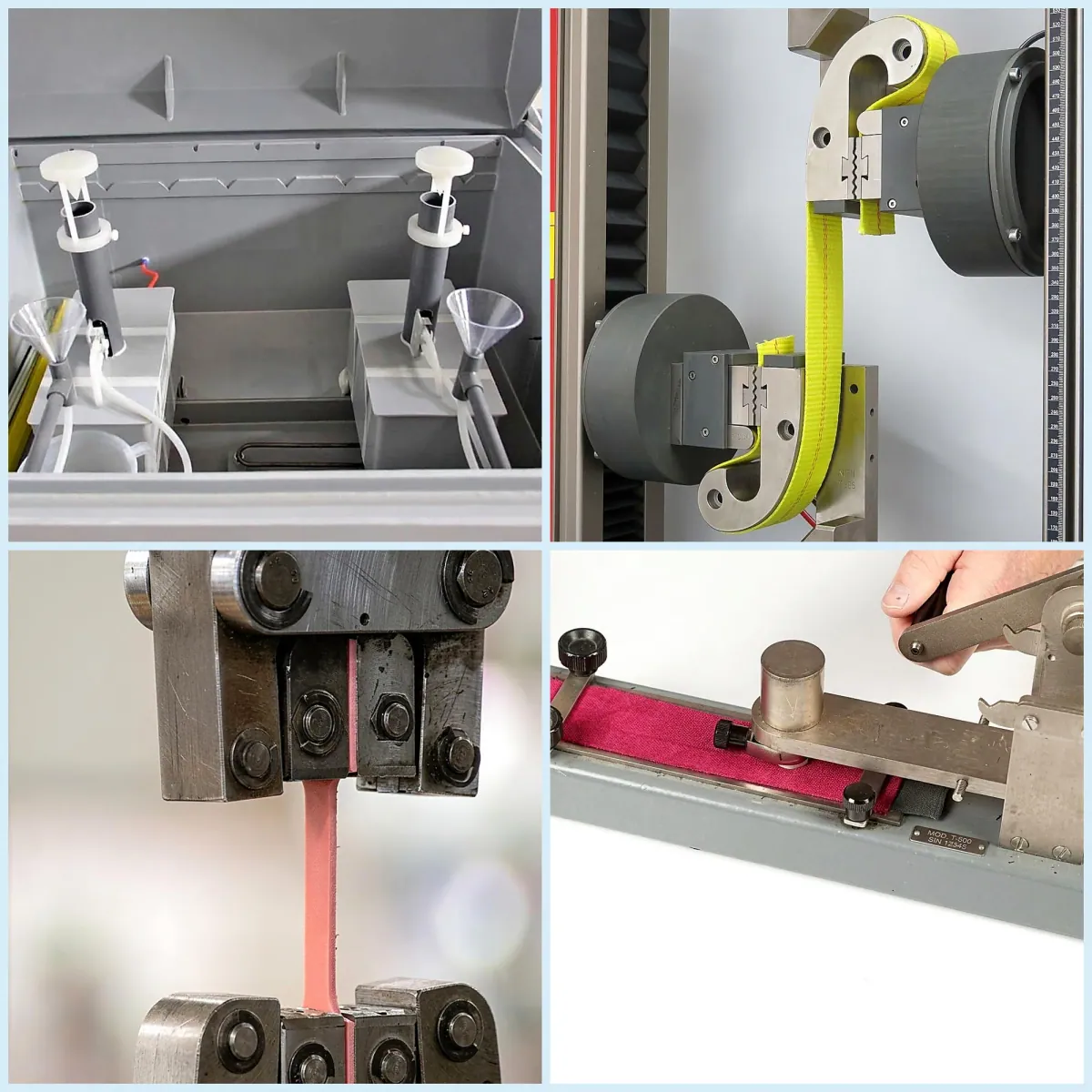
The run’s test sheet
Method · unit · what it answers| Property | Method | Unit | What it answers |
|---|---|---|---|
| Fabric breaking strength | ASTM D5034 · grab tensile newtons | How much pull the shell takes before it yields — the load a stuffed bag puts on the cloth. | |
| Resistance to tearing | ASTM D5587 · trapezoid tear newtons | How a nick or a snag propagates across the fabric — the tear a sharp tool edge starts. | |
| Seam strength | ASTM D1683 · seam efficiency newtons · % | Whether the seam holds the load its fabric can carry, reported as a share of the fabric strength. | |
| Zipper strength | ASTM D2061 · zipper newtons | Slider pull-off and chain pull — the failure the field reports first under a full load. | |
| Abrasion resistance | ASTM D4157 Wyzenbeek · or D4966 Martindale double rubs / cycles | How the face wears on a floor, a truck bed or a rack. The brief names which method it buys to — the two do not convert. | |
| Base and edge-drop | House drop-and-load protocol kg · height · cycles | Whether a loaded base folds on a drop and the bag still stands — logged in kilograms, with no governing ASTM method to hide behind. |
Fabric breaking strength
ASTM D5034 · grab tensile
newtons
How much pull the shell takes before it yields — the load a stuffed bag puts on the cloth.
Resistance to tearing
ASTM D5587 · trapezoid tear
newtons
How a nick or a snag propagates across the fabric — the tear a sharp tool edge starts.
Seam strength
ASTM D1683 · seam efficiency
newtons · %
Whether the seam holds the load its fabric can carry, reported as a share of the fabric strength.
Zipper strength
ASTM D2061 · zipper
newtons
Slider pull-off and chain pull — the failure the field reports first under a full load.
Abrasion resistance
ASTM D4157 Wyzenbeek · or D4966 Martindale
double rubs / cycles
How the face wears on a floor, a truck bed or a rack. The brief names which method it buys to — the two do not convert.
Base and edge-drop
House drop-and-load protocol
kg · height · cycles
Whether a loaded base folds on a drop and the bag still stands — logged in kilograms, with no governing ASTM method to hide behind.
Denier is a yarn weight, not a strength rating: a 1680D shell and a 600D shell can test close once weave and coating are accounted for, which is why the sheet reports the measured force rather than the number on the fabric label. The sample carries its own report; the bulk run is held to the same method so a reorder is comparable, not just similar.

Layout to quote
Send the Tool Layout. Keep the Rating.
Name the tool layout, the load and the market. Back come the tested figures, the duty line and a costed run.
Where it works
The Site Decides What Wears First
A rebar deck, a live panel, a wet winter and a multi-site tool room load and punish the same brief differently. The site sets which part gives first, and the programme is written to that part before a shell is chosen.
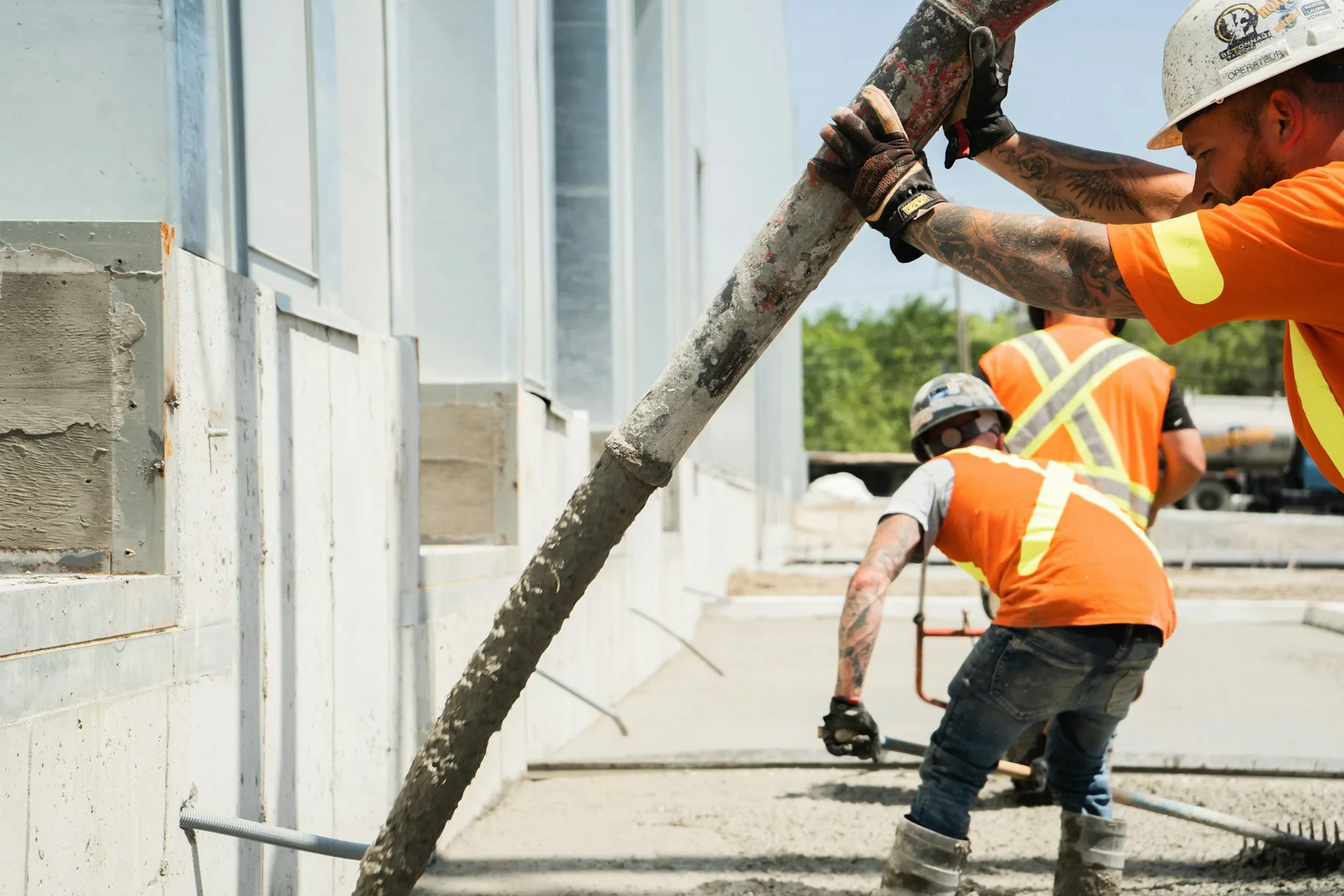
Concrete and rebar
Abrasive dust, wet slurry, sharp cut ends and a drop from a deck before the bag reaches a bench.
The wear
The face abrades at the base and corner, and a base that lands loaded folds on the first hard drop.
What the bag must do
Resist abrasion across the drop face and stand square under load after an edge impact.
The programme answer
A thicker face at the base, a molded or riveted base board, and the house edge-drop protocol logged in kilograms before the run.
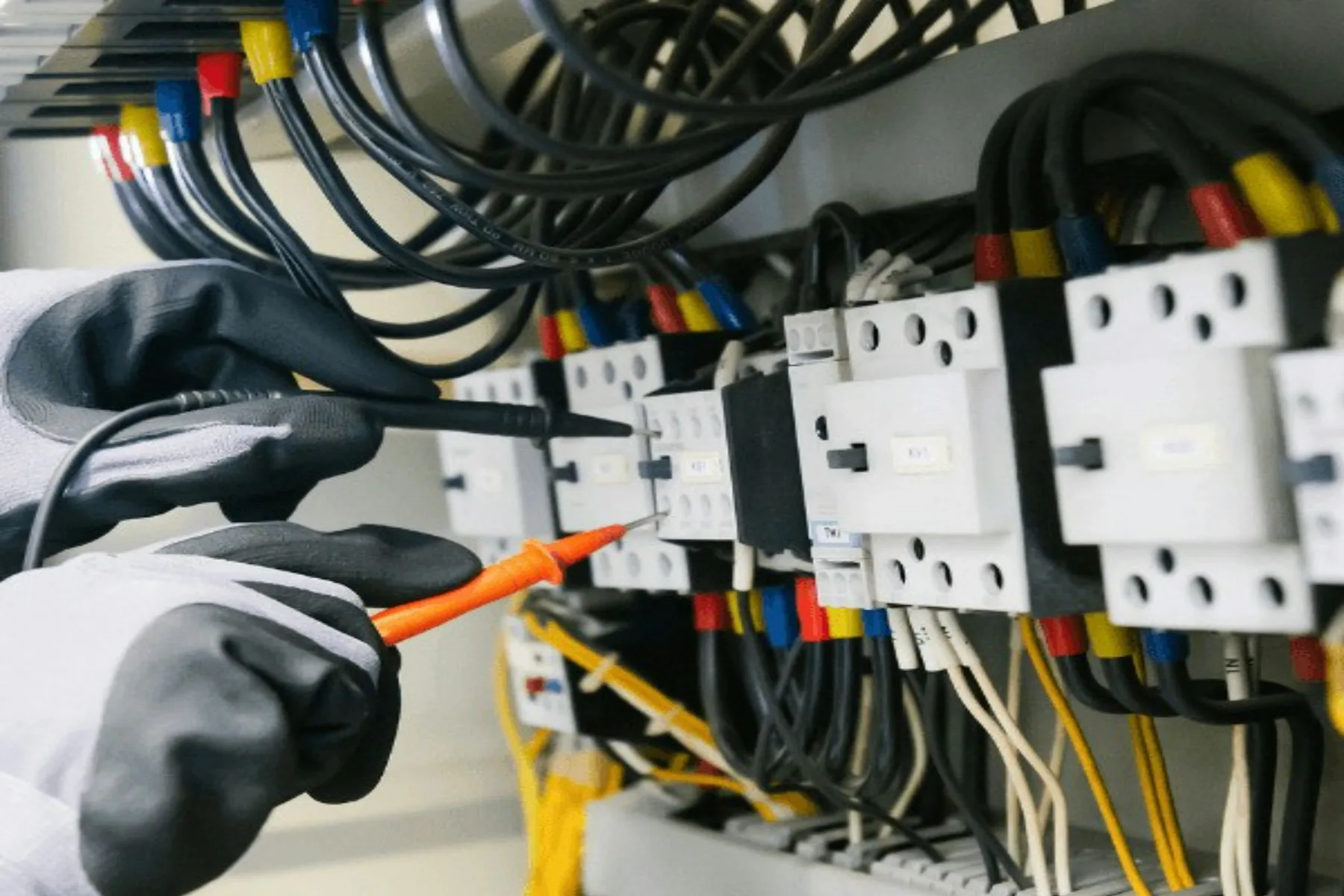
Live electrical work
The bag sits within reach of energised panels and travels between floors, held overhead and set on a rail.
The wear
Metal fittings contact live parts, and a bag dropped from height becomes a falling object, not a tool issue.
What the bag must do
Take a drop without bursting its zip open, and tie off so it cannot fall from a lift.
The programme answer
A tether point and non-conductive hardware, an intrinsically-FR shell offered where a site risk assessment asks, and a zip tested to a pull-off force so a dropped bag stays shut.

Weather and outdoor
Rain, standing UV and winter cold — the bag is wet for hours, then dried on a truck bed overnight.
The wear
Coating cracks at a fold in the cold and the water-repellent finish washes away under UV.
What the bag must do
Shed rain at the face, hold its coating through a fold in the cold, and open flat to dry.
The programme answer
A coated shell screened for the PFAS rule, a fold-tested coating on the sample, and an open-flat dry so a wet bag does not turn over between shifts.
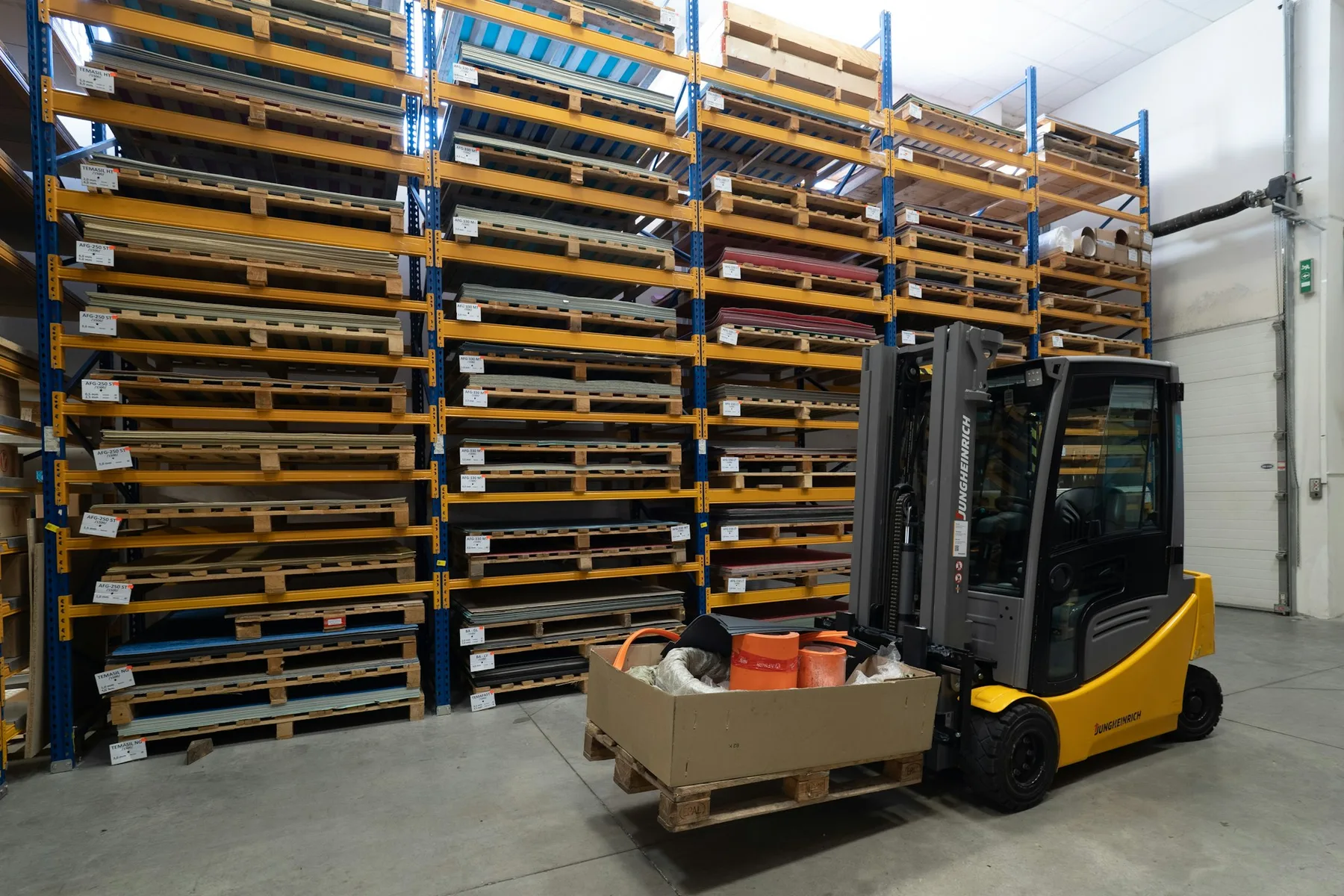
Multi-site fleet
A kit issued by number across warehouses, returned to a tool room, re-issued, and expected to match the last batch.
The wear
Bags drift between suppliers, a reorder comes back a shade off, and there is no record of which bag is which.
What the bag must do
Hold one master spec across sites, mark and trace by number, and stack square on a rack between jobs.
The programme answer
One shell, dye lot and pattern per tier, a fixed ID panel for numbering, and a reorder cut to the golden sample rather than "the same idea".
The QA file
What the Retailer’s Quality File Opens
A work bag clears a durability test and can still be held at the dock on a chemical or labelling point. Four rules decide whether a brand’s quality file passes — one of them a warning law that reads nothing like a limit, and one a finish spec now screened across the patchwork.
California · Prop 65
In forceA warning law, not a limit. A bag with a substance above an OEHHA safe-harbour needs a clear and reasonable warning — and ppm alone does not prove it does not.
What it asks of the file. A screening file per lot and, where the finish carries the substance, the warning copy set at sampling.
EU · REACH Annex XVII
In forceAzo dyes ≤ 30 mg/kg on the skin-contact textile and leather; phthalates ≤ 0.1%; lead ≤ 500 mg/kg. The dye and the coating are where a work-bag shell is checked.
What it asks of the file. A restricted-substance report on the shell, webbing and coating the run actually uses, and a SCIP note for any SVHC over 0.1%.
EU · GPSR 2023/988
In forceIn force since 13 December 2024 for non-food consumer goods, bags included. No CE mark, but the importer must be traceable.
What it asks of the file. An EU-established responsible person named on the product or pack, a batch identifier, warnings in the market language and a technical file.
PFAS · finishes
AheadNo US federal ban — a state patchwork now covers textiles. In the EU, a PFHxA restriction starts in October 2026; a blanket PFAS rule is not yet final.
What it asks of the file. A water-repellent finish specified as “no intentionally added PFAS”, confirmed on the finish lot rather than assumed for the shell.
Where a flame claim sits — and does not
NFPA 70E and ASTM F1506 govern arc-rated apparel a worker wears, not the bag that carries the tools. A tool bag is not PPE, carries no arc rating, and no standard mandates flame resistance for it. Where a site risk assessment still asks for it, an intrinsically flame-resistant shell is offered as a build option and tested as such — it is never sold as an arc-rated product.
The landed cost
The Stack, Not the Labelled Rate
A China-origin textile tool bag is not one duty line. The outer surface sets the MFN rate, and a Section 301 add-on and a trade remedy stack on top — so the landed cost is the stack, confirmed at entry, not the number on the fabric label or a competitor’s quote.
Base rate, by outer surface
US HTSUS · MFN| Outer surface | HTS line | MFN duty | Where it fits |
|---|---|---|---|
| Man-made textile | 4202.92.91.00 | 17.6% | The common 1680D nylon or polyester tool bag — printed, coated or plain. |
| Cotton / canvas | 4202.92.15.00 | 6.3% | A duck-canvas or cotton work bag; the lowest textile line here. |
| Plastic sheeting | 4202.92.10.00 | 3.4% | A tarpaulin or PVC-sheet shell — the lowest line, by outer surface. |
| Leather / composition | 4202.91.90.30 | 4.5% | A leather tool tote or pouch; the code depends on stated use. |
Man-made textile
17.6%
4202.92.91.00
The common 1680D nylon or polyester tool bag — printed, coated or plain.
Cotton / canvas
6.3%
4202.92.15.00
A duck-canvas or cotton work bag; the lowest textile line here.
Plastic sheeting
3.4%
4202.92.10.00
A tarpaulin or PVC-sheet shell — the lowest line, by outer surface.
Leather / composition
4.5%
4202.91.90.30
A leather tool tote or pouch; the code depends on stated use.
Route windows, indicative
US West Coast
- Ocean
- ≈ 14–18 d
- Air
- ≈ 3–6 d
US East Coast
- Ocean
- ≈ 25–32 d
- Air
- ≈ 6–9 d
EU and UK
- Ocean
- ≈ 30–40 d
- Air
- ≈ 6–9 d
Terms are FOB or DDP: FOB books freight from departure and lands cost on the buyer’s side, DDP delivers duty-paid to one number. A first run opens at 100 pieces; bulk runs on a six-to-eight-week production window, with the mode chosen against the shelf date at quote, not at packing.
Brief to reorder
The Run Is Won at the Report
A work-bag programme runs in a fixed order, and each stage hands the next a deliverable a buyer can hold. The run is won at the third — the report that turns a sample into a spec — and lost anywhere a stage is skipped to save a week.
- 01
The brief
The tool layout, the loaded weight, the market and the quantity are written down. A brief that skips the layout comes back wrong at the sample, not the quote.
Hold at this stage. A one-page brief: tools, load, market, who carries it.
- 02
The sample
A working unit is cut to the layout and the shell chosen, in the buyer’s hands in seven days — a bag to load, carry and clean, not a photo of one.
Hold at this stage. A physical sample, on the real shell and zip.
- 03
The report
DecisionThe sample is tested to the method sheet — tensile, tear, seam, zip, abrasion and the base drop — and the values travel with the piece.
Hold at this stage. The test values, in newtons and kilograms, not an adjective.
- 04
The bulk
The run goes to bulk on the sample and shell that passed, at one dye lot and one pattern lot, so the first city and the second match.
Hold at this stage. The dye lot and the pattern, named for the reorder.
- 05
The inspection
The run is checked at the AQL gate against the signed piece — measurement, stitch density, zip action and the chemical file before the cartons close.
Hold at this stage. An AQL report and the QA file, per lot.
- 06
The reorder
A second order is cut to the golden sample and the booked lot, so a re-stock reads as the same bag rather than a close copy.
Hold at this stage. The golden sample held, so a reorder is repeatable.
The decision point is the report. A programme that approves on how a bag looks finds out how it holds on the first loaded lift — the failure the fail-point band opens with. A supplier that will not put a number on the zip, the handle and the base before the bulk cut is the one to screen out.
Buyer accounts
The Sheet Held, the Reorder Followed
The accounts of a tool-equipment brand and a contractor fleet, both bought against a durability claim they can check — and what a first run had to prove before a second was placed.
A 1680D shell was the brief; the sheet came back with grab tensile and trapezoid tear measured on the cloth itself, not a denier label.
Sample in seven days arrived cut to the tool layout, so the zip seat could be pulled at the gusset corner before bulk was cut.
Second season reordered on the same shell and pattern, so the shelf read as one line rather than a near match.
Site fleet trialled the build on one shift before replacing its bags across the whole tool room.
Handle and zip came back named on the method sheet in newtons — a failure on site checkable against a figure, not a warranty claim.
Three months on, the re-stock matched the first lot at the dye, and replaceable parts kept worn bags in service rather than out.
Work bag questions
Frequently Asked Questions About Heavy Duty Work Bag Manufacturer
A zip that bursts under a full load, a reorder that comes back a shade off, a flame claim read as an arc rating — the questions a buyer asks after the first batch is on site, not before the first PO.
The zip bursts before anything else — is that a bad zipper or a bad spec?
Usually the spec: a zip chosen for the bag’s look, not the load it carries, with a slider that rides a single layer at the gusset corner where a fully loaded bag concentrates its weight. The fix is a pull-off and chain-pull figure set against the load the run is quoted at, and a zip seat doubled so the slider never crosses one layer — both proven on the sample before bulk, not after a field failure.
A heavier denier shell must be the stronger bag — so does the number on the fabric decide it?
No. Denier is a yarn weight, not a strength rating: once weave and coating are accounted for, a lighter shell can test close to a heavier one. That is why the sheet reports a measured force — grab tensile and tear — rather than the number on the fabric label, and why a quote that leads with “1680D” and no figure is telling a buyer nothing they can hold.
A molded base cracks and the bag will not stand — how is a base proven before bulk?
By a house protocol, because no ASTM method governs a bag base: a loaded edge-drop at a set height and a static-load hold, logged in kilograms and cycles. A base that passes then carries a molded or riveted board sized to the tool footprint the buyer specifies, so the bag stands square under load rather than listing to one corner on a bench.
A site asks for a flame-resistant bag — is that the same as an arc rating?
It is not. NFPA 70E and ASTM F1506 govern arc-rated apparel a worker wears; a tool bag is not PPE, carries no arc rating, and no standard mandates flame resistance for it. Where a site risk assessment still asks for it, an intrinsically flame-resistant shell is offered and tested as a build option — it is never presented as an arc-rated product, and a supplier who blurs the two is overselling the bag.
Two quotes for the same textile bag differ by ten points — where does the gap come from?
Most often the duty stack, not the bag. The outer surface sets the base line, and a China origin adds Chapter 99 measures that some quotes leave out — a trade-remedy stack that moves by cycle. The classification follows the material and the stated purpose, so it is settled with a broker at entry and named on the invoice and the bill of materials, not assumed from the shape of the bag.
The reorder does not match the first run — how does a work-bag reorder drift?
At the dye lot, the coating finish or the pattern. A shell moved to a new lot a season in reads as a different bag across a tool room; a coating that cures a shade off shows at a fold. The run reserves one dye lot, peel-tests the finish on the lot and holds the signed sample as the golden reference, so a re-stock is cut to the same shell and pattern rather than “the same idea”.
A retailer rejects the chemical or labelling file — what was most likely missing?
A warning where a warning was due, or a responsible person where one is required. Prop 65 is a warning law, not a parts-per-million limit, so a low reading does not remove the duty to warn; the EU GPSR needs an established responsible person and a batch identifier on the product. Both are assembled at sampling against the destination market, so the file is ready before the container is — not scrambled after the QA screen.