
Hotel Amenity Bag Supplier One Kit Spec Across Every Wing, A Brand on Par Stock.
A wash bag, a dental kit, slippers or a turndown gift is provisioned by the room-night, not bought once. The constraint is a kit that holds its spec across wings and a re-stock that matches the first lot, at a per-room-night cost on the table before the PO — with the market’s packaging rule read against the next deadline. Send the tier, the room count and the brand book; the sample returns in seven days, a first run opens at 100 pieces.

- Par stockthe cover a property plans to
- 3–6 / 8–14 wkstocked vs bespoke lead
- Duty-linedby material, before the PO
Who is buying
The Buyer’s Ledger, Not the Pouch, Shapes the Kit
A wash bag is provisioned against a different bottom line at each gate: a group holds a standard, a boutique sells a souvenir, a resort survives a wet floor. The kit is built around which line the buyer answers first.
- 01
Branded hotel group
Group purchasing, brand standards, housekeeping operations
- The constraint
- One kit spec has to read the same across wings, renovation phases and the franchised properties that carry the flag.
- The programme
- A base kit held to one spec, one dye lot reserved per run, and a reorder rhythm agreed with the housekeeping change-over.
- What the buyer measures
- A bag in the east wing that a guest cannot tell from the west.
- 02
Luxury and boutique property
General manager, rooms division, guest-experience lead
- The constraint
- The wash bag is taken home — it has to justify the rate and carry the brand in a guest’s bathroom a year later.
- The programme
- A premium shell, a debossed or foil mark, and a liner that survives being used as a travel bag, in small bespoke batches.
- What the buyer measures
- A souvenir that reads as the property, not a generic kit.
- 03
Resort and spa
Spa operations, activities, rooms division
- The constraint
- Wet, chlorinated, sun-exposed use — a pouch that holds a damp swimsuit or drained amenities cannot delaminate by the pool.
- The programme
- A water-resistant coated shell, a drain or vent where the brief needs it, and a wet-use liner test off the sample.
- What the buyer measures
- A kit that survives a season of poolside reuse.
- 04
Serviced apartments and extended stay
Property manager, procurement, housekeeping
- The constraint
- Longer stays and longer restock intervals mean a kit is reused and laundered, not replaced nightly.
- The programme
- A machine-washable cotton or durable kit built to a laundry cycle, a higher replenishment count, and a tested wash regime.
- What the buyer measures
- Fewer mid-stay replacements and complaints on a wash cycle.
- 05
Amenity distributor and hotel supplier
Category buyer, private-label developer, sales to properties
- The constraint
- One supplier across many properties, each on its own tier — the book needs a per-tier SKU, not a per-hotel bespoke cut.
- The programme
- A tiered range (economy, mid, upscale) on a master spec, consolidated into one PO book, so a new property is a line item.
- What the buyer measures
- A catalogue that covers the portfolio without a new tool per hotel.
- 06
Airlines, cruise and travel amenity
Cabin experience, guest services, travel procurement
- The constraint
- A kit handed at a seat or a cabin, screened for the security rule, costed per passenger and packed to a route schedule.
- The programme
- A clear or soft kit sized to the liquid rule, tamper evidence on a premium SKU, and air freight planned to the schedule.
- What the buyer measures
- A cabin or cruise kit that clears the checkpoint at a per-passenger cost.
How a kit runs
A Provisioning Programme, Not a One-Off PO
A hotel kit is bought again and again, on a stock cycle, against a guest standard. The programme is that whole run — brand standard, first lot, seven-hundredth reorder — and the stage that decides whether a second lot matches the first.
Stage 1
The standard is set
A tier, a brand book and a guest moment, written as a kit brief rather than a bag spec.
The answer. One base kit spec per tier, so a range reads as a family instead of a set of one-offs.
Stage 2
The par stock is planned
A property reorders on a cycle, not on demand — the stock model decides the quantity.
The answer. Quantities set to the par formula and the delivery interval, so a wing never runs dry.
Stage 3
The lot is locked
A second lot a shade off reads as two products across a corridor.
The answer. One dye lot reserved per run, a peel test on the laminate, the signed sample held as golden.
Stage 4
The launch ships
A renovation date or a season opening will not move for a late container.
The answer. Ocean or air chosen against the date at quote stage; the first property opens on schedule.
Stage 5
The re-stock holds
The seven-hundredth reorder is cut from a pattern nobody kept.
The answer. The same shell, film lot and pattern reused, so a reorder matches the launch exactly.
The par-stock model
Par = average nightly use × (delivery interval + safety days)
A stock model, not a quota: it sets what a property holds so a wing is never short between deliveries. The quantity a programme is quoted against comes from it, per tier.
A worked model
- 150 rooms at 70% occupancy
- ≈ 105 a night
- 14-day delivery interval
- + 14
- Safety days held
- + 4
- Par on the shelf
- ≈ 1,890 kits

Tier to quote
Send the Tier and the Room Count.
Name the tier, the par quantity and the date the first property opens. Back come the kit spec, the lot plan and a costed run.
Where the kit lands
The Room Sets the Demand, the Programme Answers It
A guest room, a steamy bathroom, a poolside and a cabin put a different physical and hygiene demand on the same brief. The scene decides what the kit has to survive before a shell is chosen.

Guest room
A nightly reset: a fresh kit laid on the vanity or folded into the turndown, replaced the next day.
The hazard
A kit that creases flat and reads cheap the moment it is laid out.
What the bag must do
Hold its shape empty, present clean on a shelf, and stand up to a fast housekeeping change-over.
The answer
A standing or folded construction on one base pattern, priced so a nightly reset stays inside the per-room line.

Bathroom
Steam, splashes and a nightly wipe with a sanitising product, kit open beside the basin.
The hazard
A stitched or unlined shell that wicks water and starts to smell between guests.
What the bag must do
Shed water, wipe clean, and dry open overnight without a seam holding moisture.
The answer
A coated or wipe-clean liner laid past the seam, and an open-flat dry so a wet shelf does not turn over.

Spa and poolside
Chlorinated water, damp towels and all-day sun — the kit holds a wet swimsuit or drained amenity bottles.
The hazard
Delamination and colour bleed from chlorine, damp and UV by the end of a season.
What the bag must do
Hold a wet load, resist chlorine and UV, and not mark the guest’s bag or clothing.
The answer
A water-resistant coated shell, a drain or vent where the brief needs it, and a wet-use and chlorine test on the sample.

Suite and upgrade
A higher rate and a gift, presented in a box or a branded pouch the guest is invited to keep.
The hazard
A souvenir that looks ordinary once it is home — the brand remembered for a cheap kit.
What the bag must do
Justify the rate, carry the mark cleanly, and survive reuse as a travel or vanity pouch.
The answer
A premium shell with a debossed or foiled mark, a durable closure, and small bespoke batches that hold the brand.
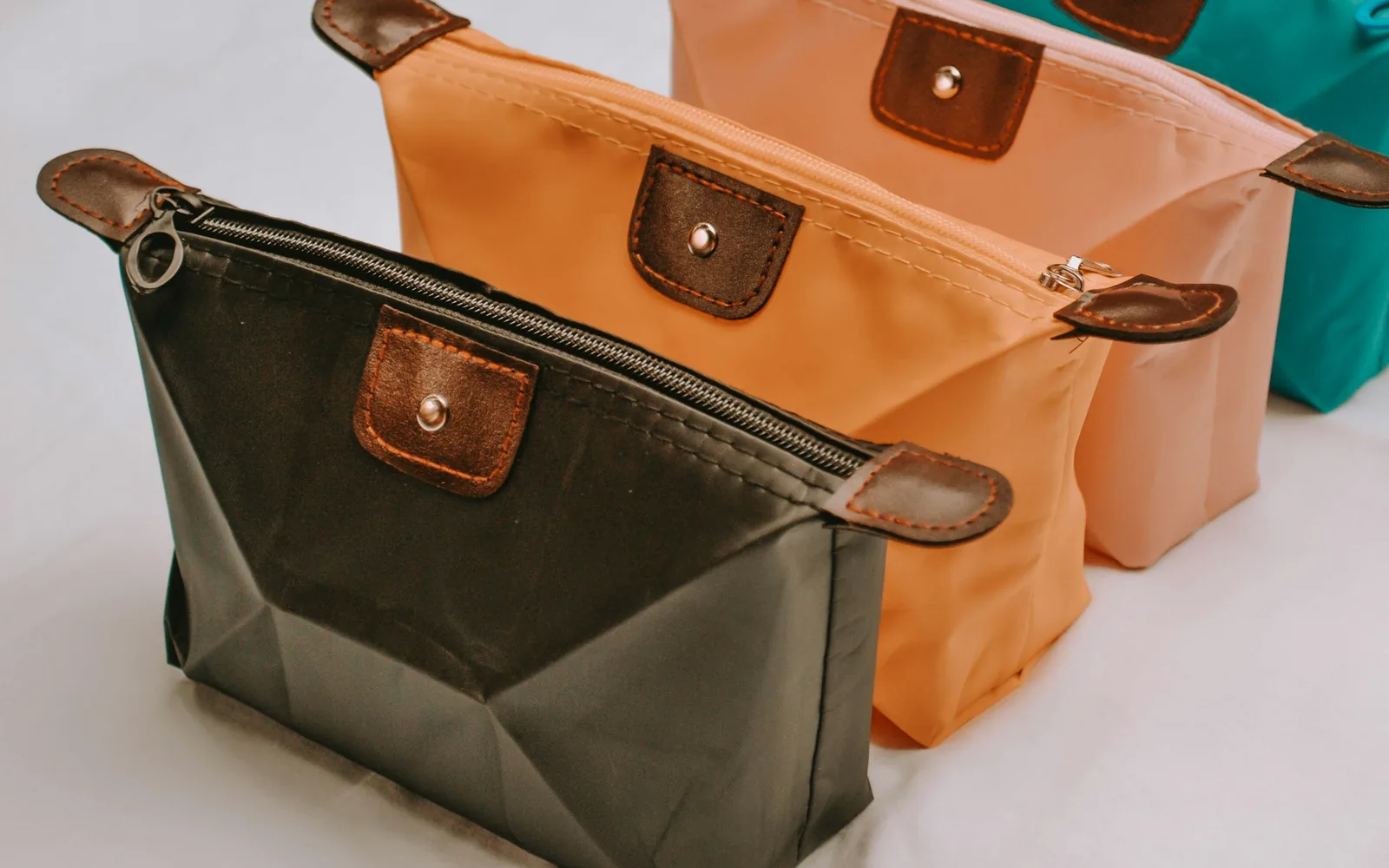
Extended stay
Weeks on, a kit reused and laundered rather than replaced each night, restocked on a longer interval.
The hazard
A single-night kit that frays or fades by the third wash.
What the bag must do
Take a machine-wash and a dryer cycle, and hold its colour and stitching across many stays.
The answer
A machine-washable cotton or durable-coated build tested on a wash cycle, with a higher replenishment count.
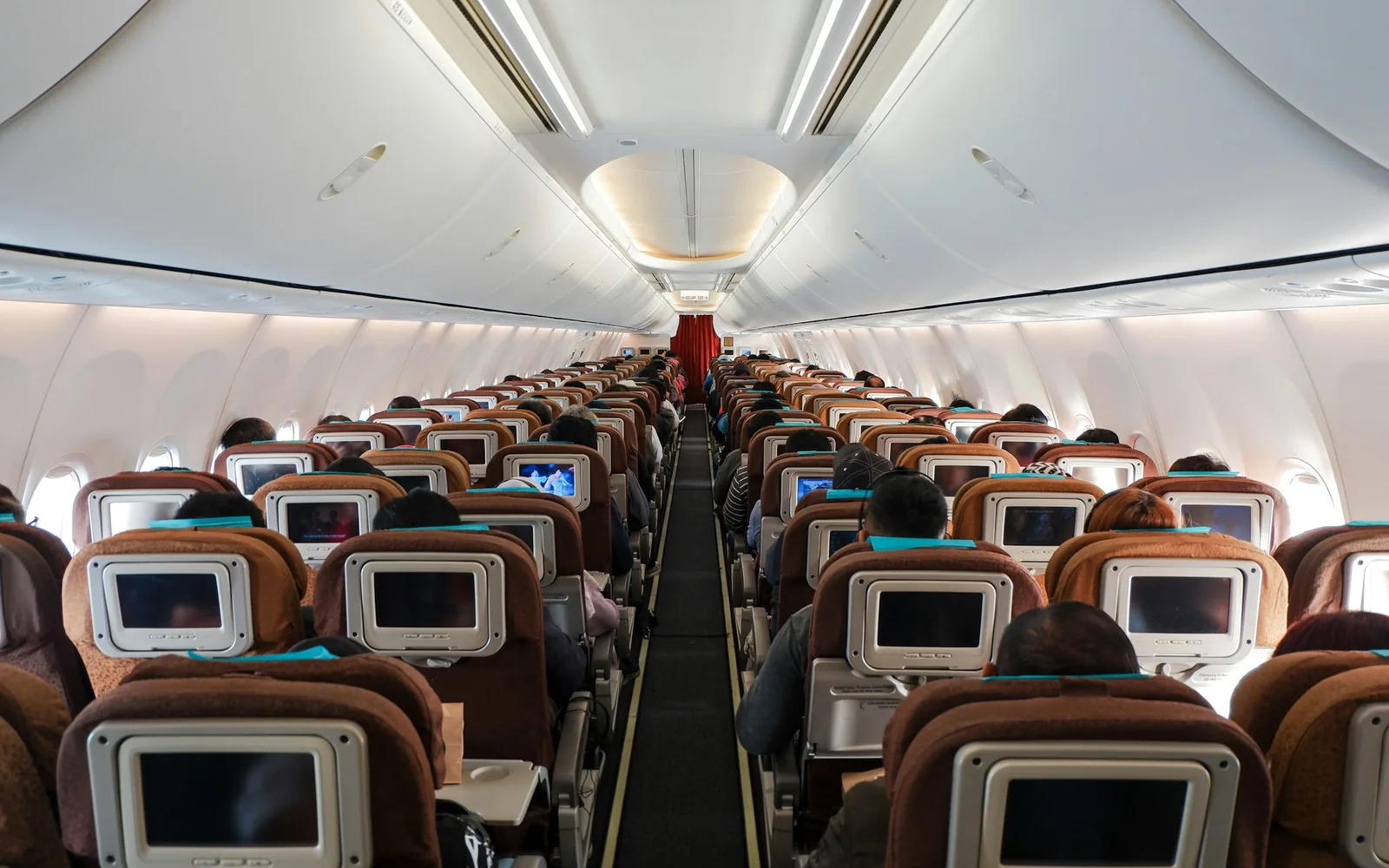
Cabin and cruise
A kit handed at a seat, screened at a checkpoint or packed into a cabin, costed per passenger.
The hazard
A pouch that misses the carry-on liquid rule and is refused at security.
What the bag must do
Meet the clear-bag and volume rule, tamper-seal a premium SKU, and pack flat to a schedule.
The answer
A clear or soft kit graded to the liquid rule, tamper evidence on the premium tier, and air freight to the route.
Photography from Unsplash under the Unsplash License (free for commercial use, no attribution required); shown here as hotel-room and bag scenes for illustration. Cropped to 16:10.
Compliance by calendar
What Changes, and When It Bites
A hotel kit is read against a rule that has already moved in California and New York, one that tightens across the EU this year, and a packaging ban with a 2030 date. A range briefed to today’s rule is quoted against the deadline.
In force · CA
In forceCalifornia
AB 1162 bans the mini bottle.
Single-use plastic toiletry bottles under 6 fl oz are out of lodging — 50+ rooms since 2023, all remaining properties since 2024. A wash bag or a cotton kit is part of the replacement set.
In force · NY
PhasedNew York
ECL § 27-3203 lifts the threshold.
Small plastic hospitality bottles under 12 oz are out — 50+ rooms since 1 Jan 2025, properties under 50 rooms from 1 Jan 2026. Enforcement runs on a DEC notice, then a US$250 and US$500 penalty.
Applicable 12 Aug 2026
AheadEU · PPWR
Regulation (EU) 2025/40 applies in full.
Packaging reduction, recyclability and labelling rules land across the EU. The mini-bottle ban is on a later date, but the labelling and material data are what a branded kit is documented against now.
Effective 1 Jan 2030
AheadEU · PPWR
The mini amenity packaging ban lands.
Article 25 and Annex V end single-use cosmetics, hygiene and toiletry packaging in accommodation. A range planned today should already assume dispenser, refillable or bulk formats by that date.
Ongoing
In forceAir & cruise
The cabin liquid rule holds.
TSA 3-1-1 keeps containers of 3.4 oz (100 ml) or less inside one clear quart bag per passenger — the rule a cabin or cruise kit is graded to when it travels with a guest.
Route and duty
The Material Sets the Duty, the Date Sets the Mode
Landed cost starts at the fibre: the outer material decides the US duty line before a rate is discussed. The opening date then picks the mode, so the first property is stocked when the calendar says, not when a container clears.
| Outer surface | US HTS line | MFN duty | Where it fits |
|---|---|---|---|
| Man-made textile | 4202.92.30.31 | 17.6% | The common hotel wash bag — nylon or polyester shell, printed or plain. |
| Cotton | 4202.12.40.00 | 6.3% | A cotton drawstring kit or laundry bag — the lowest textile line here. |
| Other textile | 4202.12.60.00 | 5.7% | A mixed or vegetable-fibre shell where cotton is not the listed fabric. |
| Plastic sheeting | 4202.92.45.00 | 20% | A clear PVC kit — the highest line, often chosen for a security rule. |
| Leather | 4202.11.00 | 8% | A luxury suite pouch in leather or composition leather. |
Man-made textile
17.6%
4202.92.30.31
The common hotel wash bag — nylon or polyester shell, printed or plain.
Cotton
6.3%
4202.12.40.00
A cotton drawstring kit or laundry bag — the lowest textile line here.
Other textile
5.7%
4202.12.60.00
A mixed or vegetable-fibre shell where cotton is not the listed fabric.
Plastic sheeting
20%
4202.92.45.00
A clear PVC kit — the highest line, often chosen for a security rule.
Leather
8%
4202.11.00
A luxury suite pouch in leather or composition leather.
Rates are the published US MFN line, set by the material of the outer surface a customs ruling turns on. An origin that carries a Section 301 trade remedy adds to the base, and a free-trade agreement reduces it — both confirmed against the current HTSUS and the actual origin at quote, never assumed from the line above.
Route windows, indicative
US West Coast
- Ocean
- ≈ 16–25 d
- Air
- ≈ 5–8 d
US East Coast
- Ocean
- ≈ 30–38 d
- Air
- ≈ 6–9 d
EU and UK
- Ocean
- ≈ 30–40 d
- Air
- ≈ 6–9 d
Gulf and Middle East
- Ocean
- ≈ 22–32 d
- Air
- ≈ 5–8 d
Terms are FOB or DDP: FOB books freight from departure and lands the cost on the buyer’s side; DDP delivers duty-paid to one number. A stocked item ships in 3–6 weeks, a fully bespoke kit in 8–14, with a 2–4 week buffer added before a season opening.
Evidence
The Category Behind the Kit Line
These are published category figures, not a property roster — each attributable to a named source and shown with it. They are here because a hotel kit is judged on the metrics below, and the programme is built to move them.
- US$41.1B
the hotel-toiletries category by 2030
Up from US$23.7B in 2025 — about 11.7% a year, carried by new properties, premium amenities and the shift to refill and dispenser formats.
Source: The Business Research Company, hotel toiletries 2025–2030
- US$1,800–$7,200
the OS&E budget behind a room
A 100-room property carries roughly $180K–$720K of operating supplies, and amenities inside it are replaced on a cycle — 12–18 months select and full-service, 6–12 for luxury.
Source: skyltc OS&E procurement guide, 2026
- 6–12 months
the luxury amenity replenishment cycle
Luxury properties restock amenities faster than select-service ones, so a tier decides the reorder rhythm a supplier has to hold — not a single order quantity.
Source: esconnect / skyltc amenity sourcing, 2026
- Per room-night
is the cost that actually gets managed
Total product, packaging and logistics cost ÷ actual occupied room-nights — the unit a budget is held to, not the price of a bottle or a bag. It is what a kit programme is quoted against.
Source: Hospitality replenishment cost model
- US$9.5B
the China amenity market by 2030
Growing at about 15.5% a year on a US$6.5B US baseline — the demand growth sits heavily in the region this floor sources from, which is why lead windows and lot control are planned, not improvised.
Source: Global Industry Analysts / Market Glass
Category estimates vary by market and scope, so they read as direction rather than a guarantee. What stays constant is the lever: the kit and its documentation are settled at sampling, so the metric it protects — a per-room cost, a reorder, a guest’s memory of the property — is decided before the container, not after it lands.
Buyer accounts
Kit Held the Standard, the Re-stock Followed
The accounts of a hotel group and a boutique property, both provisioning against a standard they have to hold — and what a first kit lot had to prove before the re-stock went in.
A base kit per tier, held to one master spec across wings and renovation phases, so a new property opened on a line in the PO book.
Seven days brought a sample on the shell and gusset, with the laminate peel-tested and the signed piece held as golden.
One dye lot reserved across the group meant the east wing read level with the west to a guest who moved rooms.
Boutique tier opened on a premium shell with a debossed mark, in a batch small enough that a single property carried it.
Par for the 150 rooms was set off the nightly-use model and a fourteen-day interval, not a round number.
Re-stock cut to the same signed sample held the mark and the gusset, so the second lot matched the first on the vanity.
Provisioning questions
Frequently Asked Questions About Hotel Amenity Bag Supplier
A reorder that does not match, a mini-bottle ban that lands mid-season, a wash bag that outsizes the soap — the questions a rooms division asks once the first lot is on the trolleys.
The second lot does not match the first — how does a reorder drift?
Usually at the dye lot, the laminate or the pattern. A shell moved to a new lot a season in reads as two products across a corridor; a PU that delaminates at the fold splits a kit a guest keeps. The run reserves one dye lot, peel-tests the laminate and holds the signed sample as the golden reference, so a re-stock is cut to the same shell and gusset rather than “the same idea”.
A mini-bottle ban lands mid-season — where does the wash bag sit in the switch?
On the compliant side of it. The California and New York rules bar the small plastic toiletry bottle, not the bag — the wash bag or cotton kit is part of the replacement set a property moves to. Because the dates differ by room count and jurisdiction, the band above sets what applies where; the kit brief is written to the strictest one the portfolio touches.
Par stock never quite holds between deliveries — what is the model?
Par = average nightly use × (delivery interval + safety days). Set the nightly use from the rooms and the occupancy, add the interval and a buffer, and the quantity a programme is quoted against falls out of it. Quoting off a round number instead is what leaves a wing short on a busy weekend.
A wash bag that outlasts a guest stay — does it survive nightly housekeeping?
It is built to, or it should not be stocked. A kit wiped and reset each night fails first at the seam or the closure; a coated or wipe-clean liner laid past the stitch, on an open-flat dry, is what survives the change-over. On an extended-stay property the test is a machine-wash cycle, not a nightly wipe, and the sample is run on that regime.
One kit, many properties — how is the line held across a group?
On a master spec and a tier split. One base kit per tier (economy, mid, upscale) means a new property is a line in a PO book, not a fresh tool; one dye lot and one pattern per tier mean the east wing matches the west. A group’s brand standard then travels with the spec, not with a photograph of a bag.
The kit is taken home — does branding cost more in small boutique batches?
A boutique run is small, not a one-off, and the mark is the cost driver, not the volume. A deboss or a foil sits on a premium shell quoted against that shell; the first run opens at a hundred pieces, so a suite or a single property can carry a bespoke mark before a group commits. The reorder is cut to the same mark and pattern.
Ocean freight will not make an opening date — when is air the answer?
When the calendar will not move. Ocean is the low-cost default for a stock that can plan ahead; air is booked for a first lot that has to be on the vanity for a season opening, chosen at quote against the date rather than scrambled at packing. A stocked item runs three to six weeks, a bespoke kit eight to fourteen — the buffer before an opening is planned, not improvised.