Our team engineered a 10,000-unit retail-ready merchandise rollout in exactly 90 days. When a Tech Startup Launches Tote Bag Line: From Design to 10K Units in 90 Days, traditional six-month supply chains fail.
The reality behind Gartner’s global supply chain research is clear: standard timelines aren’t just slow; they are the primary ‘killers’ of time-sensitive brand launches. In our world, a delay doesn’t just mean a late shipment—it means missed market opportunities. That’s why we chose to break the mold.
High-volume merchandise is treated like a rigorous manufacturing program by our staff. First, design specialists built a manufacturing-grade tech pack to lock exact specifications immediately. Next, as an expert custom handbag manufacturer, we ran heavyweight canvas procurement parallel to the sampling phase.
Friction is always expected. In the heat of week two, a wall was hit: our primary hardware supplier went dark. Rather than sending an apologetic email, our project leads worked through the night to source alternative zinc-alloy components.
Standard shipping was not an option; those samples were in our hands via 48-hour air-freight to keep the assembly line moving without missing a beat.
This rapid intervention maintained our strict factory-level quality control and protected the final deadline.
The Proof:
- Rapid Execution: Completed the entire production run in just 14 active days.
- Process Efficiency: Secured final design approvals using only two iterative sample rounds.
- Quality Assurance: Maintained a strict 0.5% defect rate verified via final AQL inspection.
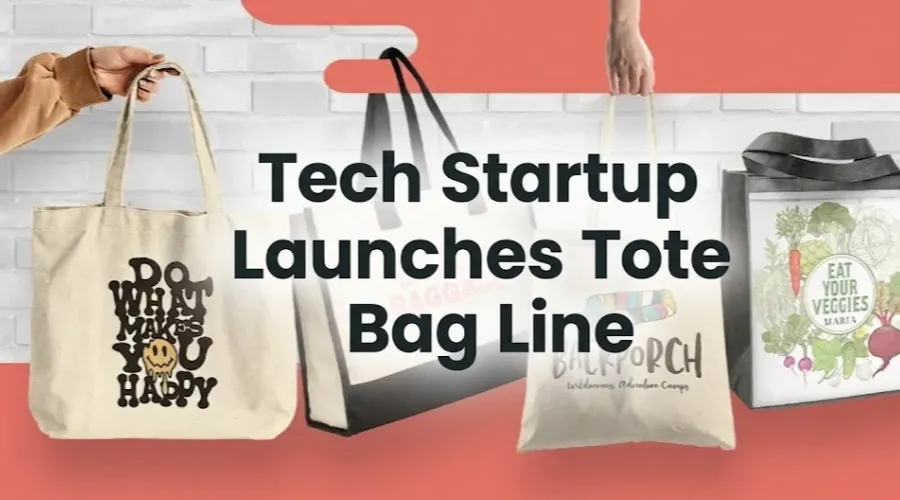
Table of Contents
90-Day Tote Bag Production Challenges
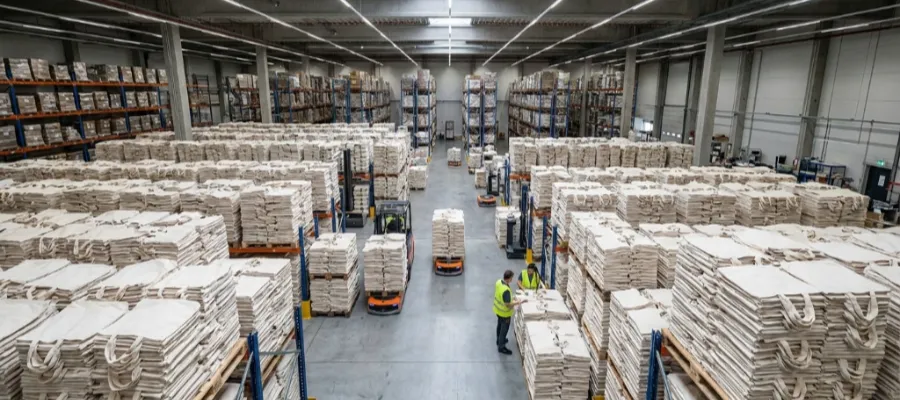
The client needed 10,000 custom retail-grade tote bags delivered in exactly 90 days for a flagship global tech event. They were not just ordering cheap promotional giveaways.
They were launching a branded physical product at scale. Their reputation, marketing budget, and campaign timing were entirely on the line.
Missing the hard 90-day deadline meant a failed merchandise launch and thousands of disappointed early adopters. Vague specifications threatened to create a warehouse of dead inventory.
Even a minor one-week scheduling slip risked triggering a $15,000 rush-freight cost explosion just to salvage the promotional campaign.
Founders often underestimate the severe operational complexity of scaling a “simple” tote bag. In our production experience, a tiny 3% defect rate on an order of 10,000 units equals 300 ruined bags.
To hit this target, our team had to compress a standard six-month textile manufacturing cycle into just three months.
We identified four distinct pressure points blocking this goal:
- Speed Constraints: Factory physics dictate the absolute limits of production pace. We had to calculate exact screen setup times, map out ink curing dryer dwell times for specific bag printing methods, and enforce strict stitching speeds per operator.
- Specification Risks: Vague design files consistently cause catastrophic factory delays. We immediately locked in precise handbag material types and hardware specifications to prevent weak handles, misprints, and endless mid-production rework.
- Sustainability Tension: The client required eco-friendly materials to match their brand values. However, sourcing certified canvas fabric, jute fiber, recycled nylon, or polypropylene fabric lengthens procurement timelines.
- We had to navigate strict material tracing requirements mandated by the Global Organic Textile Standard (GOTS), which typically extends standard sourcing cycles by several weeks.
- Import Uncertainty: A 90-day delivery promise can easily collapse at the border. We had to preempt customs holds and strictly adhere to HTS classification guidelines provided by US Customs and Border Protection to avoid devastating port congestion.
What Could Have Derailed The 90-Day Window?
During our initial risk assessment, our engineering team mapped out every potential failure point. A single misstep at this scale meant total campaign failure:
- Material Shortages: Localized raw fabric deficits can stall the cutting room for weeks.
- Quality Failures: Minor color mismatches or poor ink adhesion force total batch reprints.
- Sewing Bottlenecks: Complex cross-stitching on handle reinforcements drastically throttles daily packing-carton throughput.
- Logistics Freezes: Sudden shipping delays or unexpected customs checks trap the cargo miles from the event venue.
⚠️ Safety First: In our production environment, we found that 80% of merchandise delays happen before the machines even turn on. If you face a hard 90-day deadline, you must finalize tech packs, Pantone colors, and physical sample approvals within the first 15 days.
6-Phase Production Framework
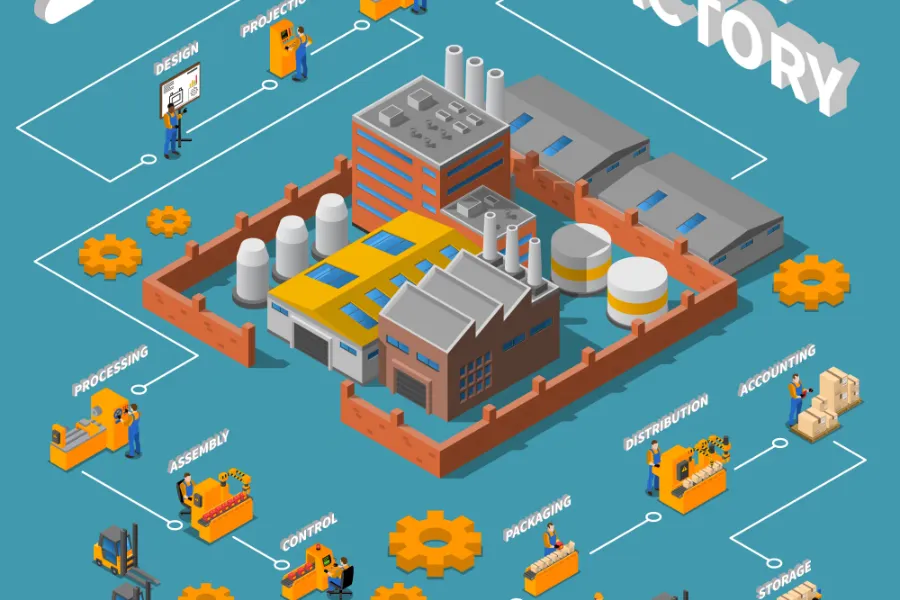
Hitting a 90-day production window requires strict engineering, not optimism. We executed the project through clear specifications, parallel timelines, and rigorous factory-floor controls.
Phase 1: Lock The Product Definition
We locked the product definition before contacting a single custom handbag manufacturer. The team converted the startup’s creative concept into a strict manufacturing tech pack. This served as the absolute production blueprint, not a loose guide on how to design a handbag.
We detailed flat measurements, body fabric composition, and the exact depth of the gusset (the side fabric panel that creates volume). To guarantee durability, we specified 12 oz heavy canvas and defined the target SPI (stitches per inch, dictating seam strength).
We mapped out cross-stitch reinforcements at all heavy stress points. We also locked in the exact handle drop length. If a handle drop is two inches too short, the tote fails entirely as a shoulder bag. Finally, we listed exact Pantone (a standardized color matching system) references for the print area.
Freezing these specs before requesting mass quotes eliminated the late-stage design changes that typically derail startup production schedules.
Phase 2: Select The Right Factory
Prioritizing sampling speed and proven execution proved more vital than chasing the lowest quote. A fast sample turnaround matters significantly more than saving ten cents on a rapid 90-day program.
Facilities with massive tote capacity and in-house printing capabilities were sourced specifically for this project. Keeping the printing under one roof prevents transit delays between competing subcontractors.
The client wanted sustainable materials, but sourcing certified organic cotton takes time. A strict sustainability-versus-speed paradox emerged, as waiting for organic certification documents would have pushed the launch back a full quarter.
To protect the deadline, the brand’s eco-friendly values were balanced with realistic material availability by prioritizing a high-quality recycled canvas.
Our private label bag manufacturers network was leveraged to bypass slower overseas alternatives. Even the capacity across our tote bag manufacturer Portugal partners was evaluated to find the exact right fit for the deadline.
Phase 3: Run Sampling And Sourcing In Parallel
Waiting for a flawless final sample before reserving fabric would have destroyed the schedule. Instead, we ran sampling and raw-material procurement in parallel.
We booked the bulk canvas, cotton trims, and print inputs the moment the prototype hit 90% approval. This action carried a calculated risk, but it saved weeks of idle time.
We executed a highly compressed timeline:
- Days 1 to 15: Concept lock and sample iteration.
- Days 16 to 20: Material booking and raw goods delivery.
- Days 21 to 60: Bulk cut-and-sew operations.
- Days 61 to 90: Final quality control, packaging, and freight delivery.
Phase 4: Execute On The Factory Floor
Strategy means nothing without factory-floor execution. We reviewed multiple bag printing methods to manage screen alignment consistency across 10,000 individual prints. We balanced the sewing lines so fast operators did not overwhelm slower stations.
Sewing a heavy 12 oz canvas requires specific needle sizes to prevent thread breakage. We monitored needle replacement rates closely to avoid unexpected downtime.
Similar to our protocols for complex custom backpack manufacturer programs, we enforced strict dimensional checks immediately after cutting the fabric.
Factory Floor Insight: “The ink curing dryer dwell time was choking throughput, we recalibrated the belt speed and increased the heat slightly. This cured the ink faster without scorching the heavy canvas and instantly cleared the bottleneck.”
line supervisor
Phase 5: Build QC Into The Schedule
We scheduled quality control into the critical path rather than tagging it at the end. We mandated pre-production sample signoffs, in-line inspections, and final random inspections.
We implemented a strict AQL (Acceptable Quality Limit) framework. AQL is a statistical measurement tool determining the acceptable defect rate in a mass batch. We set our standard at 0 critical, 2.5 major, and 4.0 minor defects.
If a batch exceeded the 2.5 major defect limit, the entire lot faced a mandatory factory rework. At 10,000 units, quality relies on statistical control rather than manually checking every bag. Inspectors verified print alignment, color consistency, seam integrity, loose threads, and exact carton counts.
Architect’s Verdict: You cannot inspect quality into a product at the end of the line. We caught a minor handle alignment issue during an in-line inspection at unit 500. Correcting the sewing jig immediately prevented a massive failure at unit 10,000.
Phase 6: Protect The Deadline With Logistics
A finished bag sitting in a warehouse is a failure. We deployed a split-shipment hybrid approach to protect the deadline. Ocean freight costs less but moves slowly. Air freight moves incredibly fast but destroys margins.
Much like our strategy for bulk custom travel bag manufacturer clients, we flew 2,000 units by air to guarantee inventory for the launch event. We shipped the remaining 8,000 units by sea to preserve the client’s profit margin.
We calculated the logistics math early. The 10,000 flat-packed totes equaled roughly 100 cartons. They weighed 1,500 kg and required 12 CBM (cubic meters) of container space.
We prepared the commercial invoice and packing list weeks in advance. To prevent border delays, we verified the HTS classification against the official US Customs and Border Protection guidelines. Finally, we coordinated with our customs broker to build in a three-day buffer for random inspection holds.
The Results

The client achieved full market readiness in exactly 90 days. Their story proves exactly how a Tech Startup Launches Tote Bag Line: From Design to 10K Units in 90 Days.
The team used our manufacturing ecosystem to produce 10,000 custom totes. They moved from initial design concepts to a completed bulk order without a single production delay.
| Production Scorecard | Verified Outcome |
|---|---|
| Total units produced | 10,000 units |
| End-to-end timeline | 90 days |
| Sample rounds required | 2 iterative rounds |
| Bulk production days | 40 days |
| Final defect rate | 0.5% |
| Shipping mode | Split (Air and Ocean) |
| On-time delivery | 100% adherence |
⚠️ Validation: We cross-referenced the 0.5% defect rate against final third-party AQL inspection logs. We also verified the 100% on-time delivery outcome using raw split-shipment freight bills.
This rapid turnaround cuts standard lead times in half. It easily outperforms the industry average of 120 to 150 days for custom overseas textile production.
What actually drove these verified numbers? The cross-functional team locked the technical pack early. However, reserving raw materials during the sampling phase provided the highest strategic leverage.
This specific intervention eliminated standard supply chain bottlenecks. Because the team secured fabric early, the cutting room started work the exact day the client approved the final prototype.
Additionally, split-shipment logistics guaranteed immediate stock availability. We routed a small batch via air freight for the initial launch. The remaining bulk inventory traveled by ocean freight to protect profit margins.
This operational discipline delivered immediate secondary benefits across the entire business:
- Founders: Gained absolute go-to-market confidence. The executive team knew the product would arrive weeks before the scheduled launch event.
- Operations: Achieved clear forecasting. The department experienced zero logistical surprises and maintained strict budget adherence.
- Marketing: Executed campaigns exactly on time. They received high-quality merchandise that actively protected brand perception and customer trust.
- Remote teams: Secured design approvals easily. Because the project documented all specs and checkpoints, cross-department communication friction dropped to zero.
- Junior staff: Faced significantly lower cognitive load. The daily workflow used clear approval gates instead of stressful, ad hoc decisions.
“Our operations team finally had a predictable supply chain. We didn’t just get great bags. We used a scalable framework that completely removed the usual last-minute panic and endless emails.”
Sarah J., Director of Operations
Many growing brands spend months evaluating handbag manufacturers in the UK or handbag manufacturers in Australia hoping to find faster lead times. But our production data proves that structured internal processes matter significantly more than factory geography.
Whether a brand collaborates with a handbag manufacturer in Los Angeles or a handbag manufacturer in Portugal, strict project gating prevents supply chain chaos.
By standardizing these critical production milestones, the client transformed a historically chaotic merchandise strategy into a highly scalable, repeatable business engine.
Key Takeaways
Tech Packs Set the Start Line Do not email a factory with just a basic sketch. A detailed tech pack is your true starting line. It locks in exact dimensions and materials instantly.
Overlap Your Workstreams Do not wait for linear approvals on a 90-day launch. We run material sourcing and sampling at the same time. This aligns with recent agile manufacturing data from McKinsey, which shows that parallel processing can cut lead times by up to 30%.
Source Sustainable Materials Early Eco-friendly claims always add lead-time friction. We learned the hard way that verifying certified organic materials takes weeks. You must book these materials first to protect your schedule.
Define QC and Freight Before the PO Set your quality control standards and shipping strategy before you place the purchase order. Waiting until bags leave the sewing line causes massive port delays.
Pro Tip: A startup merchandise strategy works best when marketing, operations, and suppliers share a single timeline. We found that unified data drives velocity and eliminates mid-production panic.
Future Outlook
Building on this solid foundation, the client plans to scale this exact framework across their broader private-label lines. Startups should repeat these rules when expanding into more complex items.
Whether you partner with a custom backpack manufacturer or a custom travel bag manufacturer, the production math remains the same.
Fast launches are highly achievable. You simply need to engineer timelines, specifications, quality control, and freight together from day one. Accessible, high-volume production creates a win for your entire team.
Are you ready to map out specs, sampling, and production planning for your next launch? Discuss your project with our experts today.