The choice between hard vs soft golf travel bag can be tricky. You might struggle with a rigid case “like a coffin” at the airport or try to fit a soft bag into your rental car. Hard-shell cases excel in protection with their industrial-strength latches and thick foam padding. Soft-sided bags are lighter and more flexible, and they often fit carry-on requirements. For travelers with unique needs, some custom travel bag manufacturers now offer hybrid designs that combine structural reinforcement with collapsible panels—bridging the gap between both styles.
Sun Mountain, Callaway, and Club Glove have made large improvements to soft bag technology. These improvements make soft bags almost as tough as hard-shell versions. Your decision should go beyond just protection. Airline insurance coverage, storage space at home, and travel expenses are vital factors to weigh.
This guide breaks down the main differences between both types of bags. We explore their protective features and practical aspects to help you pick the right travel companion for your clubs.
Table of Contents
Comparison Table
| Feature | Hard Golf Travel Bag | Soft Golf Travel Bag |
|---|---|---|
| Construction Material | Polycarbonate or hard-shell plastic | Polyester fabric or ballistic nylon (up to 1000D) |
| Impact Protection | Rigid exterior provides excellent protection | Basic protection that needs extra safeguards |
| Weather Protection | Almost completely waterproof | Resists water but doesn’t fully protect |
| Weight & Mobility | Weighs more with 4 wheels | Lighter design with 2 inline skate wheels |
| Storage When Not in Use | Takes up space and hard to maneuver | Folds down easily (some to 12 inches) |
| Additional Storage | Rigid structure limits space | Extra pockets fit shoes and clothing |
| Airline Insurance Coverage | Airlines typically cover damage | Most airlines need waivers or refuse coverage |
| Vehicle Compatibility | Standard car trunks struggle to fit | Easily fits most vehicles, even compact cars |
| Crushing Resistance | Handles stacking pressure well | Depends on internal padding for protection |
| Price Range | 200–400 (premium brands like SKB) | 150–300 (e.g., Club Glove Last Bag 249–329) |
Hard vs Soft Golf Travel Bag: Key Differences
Golf travel bags differ mainly in their material construction. Hard travel bags feature sturdy polycarbonate or hard-shell plastic that creates a fortress-like barrier against impacts. Soft travel bags use durable polyester fabric or ballistic nylon fabric. Premium models come with military-grade 1000D ballistic nylon—the same material that protected soldiers in bulletproof vests.
▷ Construction Materials and Durability
Hard-shell cases give you greatest protection with their rigid, durable plastic exteriors. These cases come with secure buckles that stay closed even after bumps against other luggage. Your clubs rest safely in large interior padding.
Tough fabrics and strategic padding make soft-sided bags reliable. Modern high-end soft bags now feature reinforced stress points with quad rivets and heavy-duty YKK zippers. Some hybrid designs protect club heads with a hard-shell top while keeping a flexible lower part.

▷ Weight and Portability Comparison
Weight makes a big difference between these options. Soft golf travel bags are nowhere near as heavy as hard-shell ones, which makes airport navigation much easier. Hard cases roll on four wheels, while soft bags usually have two inline skate wheels.
Both types have padded or reinforced handles, but soft cases feel more comfortable during long carries. Soft bags also fit better in rental cars than their bulkier hard counterparts.
▷ Storage Space and Capacity
Storage space varies by model rather than type. All the same, soft travel bags let you pack items more flexibly into every corner. Many soft bags include extra pockets for shoes and clothes.
Storage between trips heavily favors soft cases. Hard cases stay bulky and tough to store, but soft travel bags fold down small—some collapse to just 12 inches. This makes soft bags easy to slide under beds or tuck into closets between trips.
Standard golf bags fit well in both types, though soft cases give you more flexible space for extra gear.
Pro Tip:
“Choose hard vs soft golf travel bag, Observe baggage handlers at your local airport: if they routinely throw bags onto carts, opt for a hard golf travel bag with rounded edges to deflect tumbles. At smaller airports with gentler staff, a reinforced soft bag suffices and saves weight fees.”
———— Joyce Ho, Legend Times Co.,Ltd- Manufacturing Golf Headcover and Golf Bags
Protection Capabilities: What Actually Works Better
Tests show a big gap between hard vs soft golf travel bag. Airlines prefer hard-sided cases, and some won’t even cover insurance for clubs in soft bags. This tells us what testing proves: hard shells are the best way to protect your investment.
▶ Impact Resistance Testing Results
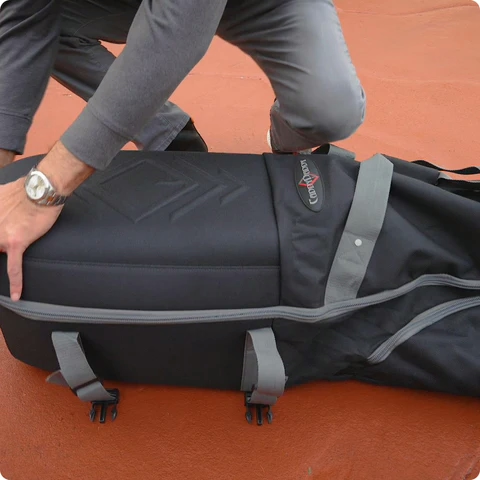
Hard-shell cases are better at protecting against direct impacts. The tough polycarbonate exterior handles force distribution better than fabric options. The high-impact polymer shells in hard cases can take the usual drops and bumps that happen during travel.
Soft cases have gotten much better over time. Premium soft bags now come with EVA molded tops that protect club heads. On top of that, using a telescopic “stiff arm” device helps the bag resist impact by taking the shock and stopping compression.
▶ Protection Against Crushing Force
About hard vs soft golf travel bag, Hard cases are clearly better when heavy luggage gets stacked on top. Their rigid structure supports weight well. In contrast, soft cases rely on internal padding and compression straps to prevent items from shifting.
Soft-sided travel cases work well against scratches and small impacts but don’t handle crushing forces well. Smart travelers deal with this by taking off their driver heads and packing them separately during trips.

▶ Weather and Moisture Protection
Hard cases keep water out thanks to their one-piece shell design. Good quality soft bags use water-resistant materials like 1800D all-weather fabric, but they rarely keep everything completely dry.
Hard cases are technically better at protection, but many pros and frequent travelers like soft cases when packed right. Modern soft cases work really well when you:
- Use stiff arms that go past the club length
- Wrap bubble wrap or towels around club heads
- Pack clothes strategically for extra cushioning
- Take off driver heads while traveling
Both hard vs soft golf travel bag types can keep your clubs safe if you pack them properly, but hard cases give peace of mind to occasional travelers or those with expensive equipment.
Practical Considerations Beyond Protection
Travel bags protect your equipment, but practical travel logistics play a bigger role in choosing the right option. Your choice depends on airline rules and vehicle compatibility more than protection benefits.
Airline Policies and Liability Coverage
Hard cases make sense because of airline liability policies. Airlines cap their liability at $4,700 for lost, delayed, or damaged bags on domestic flights. International travel limits drop to about 1,519 Special Drawing Rights per passenger.
Note that major airlines will only cover damaged clubs transported in hard-sided cases. To name just one example, see American Airlines – they might pay for equipment damage only if clubs were in a visibly damaged hard case. Yes, it is true that some airlines make you sign liability release forms for soft-sided bags.
You can buy extra baggage insurance at ticket counters if you have valuable equipment. This costs $5 for every $100 worth of clubs, up to $5,000 greatest valuation.
Related Reading:

▶ Delta Carry On Bag Size: Avoid Fees With This Simple Guide

▶ Top 12 Bag Manufacturers in China
Fitting in Rental Cars and Storage at Home
Hard cases give you better airline protection but soft cases work better for ground transportation. Standard car trunks rarely fit hard cases. You might need SUV rentals or give up entire back seats of midsize vehicles.
Soft travel bags fit nicely in compact cars. Even a Mini Cooper can hold two soft cases with folded seats. A traveler shared this experience: “I was surprised when my luggage and travel bag fit in the trunk of a Nissan Sentra”.
Soft options work better for home storage too. Hard cases stay bulky while soft bags fold down nicely between trips.
Weight Restrictions and Additional Fees
Airlines set a 50-pound weight limit on golf equipment before charging extra fees. These overweight charges run between $100-$200 depending on the carrier.
Soft bags weigh less than hard cases. This gives you vital extra pounds for clubs and accessories within standard limits. Many airlines skip oversized baggage fees for golf equipment, whatever case type you use. Just keep the combined dimensions under 115 inches.
International travelers should keep their equipment clean. Countries like New Zealand and Australia need golf equipment to be spotless before entry.
Essential Packing Techniques for Both Types
The right packing techniques will protect your hard vs soft golf travel bag better. Expert methods help your clubs arrive safely, whatever bag type you choose.
Using a Stiff Arm or Backbone Protector
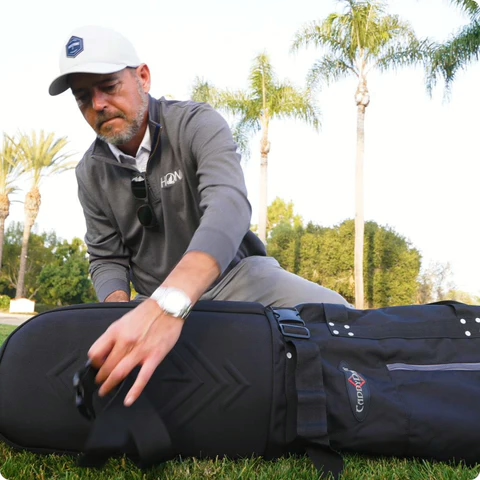
A stiff arm works like a telescopic pole that extends beyond your longest club and acts as your bag’s spine. Your travel bag won’t fold or crush during transit with this device. The Bag Boy Backbone comes with three telescoping sections that expand up to 54″ and collapse to 23.2″ for storage, plus an oversized polypropylene top cap that maximizes club protection. This protective device works best with soft-sided bags and becomes the first point of impact if someone drops the bag head-first. Most travelers see this accessory as essential—it stops breakage when your bag moves down the baggage carousel.
Removing Driver Heads for Added Safety
Removing detachable club heads reduces damage risk significantly. This approach prevents breaks at the most vulnerable point—the hosel—by eliminating pressure points. Take a quick photo of your settings with your phone before removing heads to remember your exact configuration. Keep the removed heads in their original headcovers or wrap them in cloth for better protection. Many frequent travelers pack these valuable parts in their carry-on luggage for extra security.
Strategic Clothing Placement for Extra Padding
Smart clothing placement gives crucial extra protection. A towel or wrap should cover the top section of your longer clubs that stick out beyond your golf bag. Put socks over iron and wedge tops to stop unwanted clanking. Soft items like towels or clothing should fill empty spaces to limit movement inside the travel bag. This method helps clubs without removable heads—filling all gaps prevents bending or breaking during the trip.
Pro Tip:
” For hard vs soft golf travel bag, If you’re a snowbird splitting seasons between dry and humid regions, prioritize a hard golf travel bag for monsoon-prone destinations—its sealed design prevents internal moisture buildup that can rust clubheads. Soft bags work better for short, predictable trips.”
———— Arvin Hwang, Soft cooler bag, travel bag, disc golf bag, bag manufacturers
Conclusion
The choice between hard vs soft golf travel bag depends on your needs and how often you travel. Hard-shell cases provide superior protection with their rigid build and crush-resistant features. These bags work best for golfers who don’t travel much or own premium equipment that needs extra protection.
Soft bags have improved substantially over time. They protect your clubs well when you pack them properly with stiff arms and strategic padding. Frequent travelers love their lightweight design and storage flexibility. These bags fit easily in vehicles too. On top of that, it helps to remove driver heads and use clothing as cushioning. This simple trick improves protection whatever bag type you choose.
Airlines strongly prefer hard cases and many won’t cover damage to soft bags. But soft bags shine in everyday use. They fit nicely in rental cars and store away easily between trips. Your best choice depends on how often you travel, your equipment’s value, and your storage space.
Both hard vs soft golf travel bag can protect your clubs safely when used the right way. Looking for custom travel solutions that match your needs? Feel free to reach out to us at [email protected] or check out leelinebags.com.
Further Reading:
▶ Luhxe Travel Bag Reviews: What They Don’t Tell You
▶ 12 Best-Selling Types of Travel Bags: Manufacturing Research
▶ Bogg Bag Size Comparison: Original vs Baby vs Bitty [2025 Guide]FAQs
Q1. Which type of golf travel bag offers better protection: hard or soft?
Hard-shell golf travel bags generally provide superior protection due to their rigid construction and crush-resistant properties. But, high-quality soft bags with proper packing techniques can offer adequate protection for most travel situations.
Q2. How can I protect my golf clubs in a soft travel bag?
To protect clubs in a soft bag, use a stiff arm or telescopic pole, remove driver heads, wrap club heads with bubble wrap or towels, and strategically place clothing for extra padding. These techniques significantly enhance protection during transit.
Q3. Are soft golf travel bags allowed by airlines?
About hard vs soft golf travel bag, Most airlines accept soft golf travel bags, but some may must liability release forms or limit insurance coverage for clubs transported in soft bags. It’s advisable to check specific airline policies before traveling with a soft bag.
Q4. What are the advantages of using a soft golf travel bag?
Soft golf travel bags are lighter, more portable, and easier to store when not in use. They also offer greater flexibility for fitting into rental cars and provide external pockets for more storage. Many professional and frequent golfers prefer soft bags for their practicality.
Q5. How do I choose between a hard vs soft golf travel bag?
For hard vs soft golf travel bag, Consider factors such as travel frequency, equipment value, airline policies, storage constraints, and personal preferences. Hard cases offer the greatest protection but are bulkier, while soft bags provide convenience and adequate protection when packed properly. Your choice should align with your specific travel needs and priorities.