Is nylon waterproof? If you’re looking to buy backpacks, jackets, or outdoor gear, this is an important question. Nylon is a popular synthetic fiber known for being strong and flexible. It’s lightweight, durable, and resistant to wear. But, can it hold up against rain and wet conditions?
In this article, we’ll look at nylon’s waterproof properties. We’ll see how nylon reacts to moisture and the treatments that can make it waterproof. As a supplier of custom backpacks, I must explain. It’s key to know nylon’s waterproof features when choosing materials for your gear.
We’ll compare nylon to other waterproof fabrics. We’ll discuss if it needs special coatings to resist water. Finally, we’ll share tips for maintaining its waterproof qualities. Keep reading to learn more about this versatile material!
Table of Contents
Is Nylon Waterproof?
Nylon is not waterproof. In its untreated form, nylon attracts water and absorbs moisture. This can cause it to expand and lose its shape, which affects its durability and performance.
▶ Water Absorption Rates in Different Nylon Types
- Nylon 6: 3.5%
- Nylon 66: 2.5%
- Nylon 610: 1.5%
They show how much water different nylons absorb. It can make them heavier and hurt their performance in the wet.
▶ Enhancing Nylon’s Water Resistance
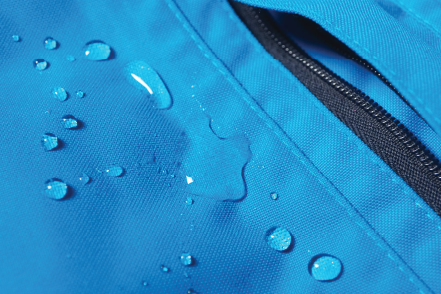
Is nylon waterproof or water-resistant? Nylon is not waterproof. But, a Durable Water Repellent (DWR) coating can make it more water-resistant. This coating makes water bead up and roll off the fabric instead of soaking in. But, DWR coatings wear off over time and need to be reapplied to keep working.
▶ Limitations of Nylon’s Water Resistance
Nylon can handle light rain, but it’s not suitable for heavy downpours. If exposed to water for too long, moisture can seep through, especially in hot, humid conditions. The material can lose its shape.
Want to know is nylon waterproof and how it can benefit your next custom bags project?
Nylon’s Water Resistance
1. Initial water repellency
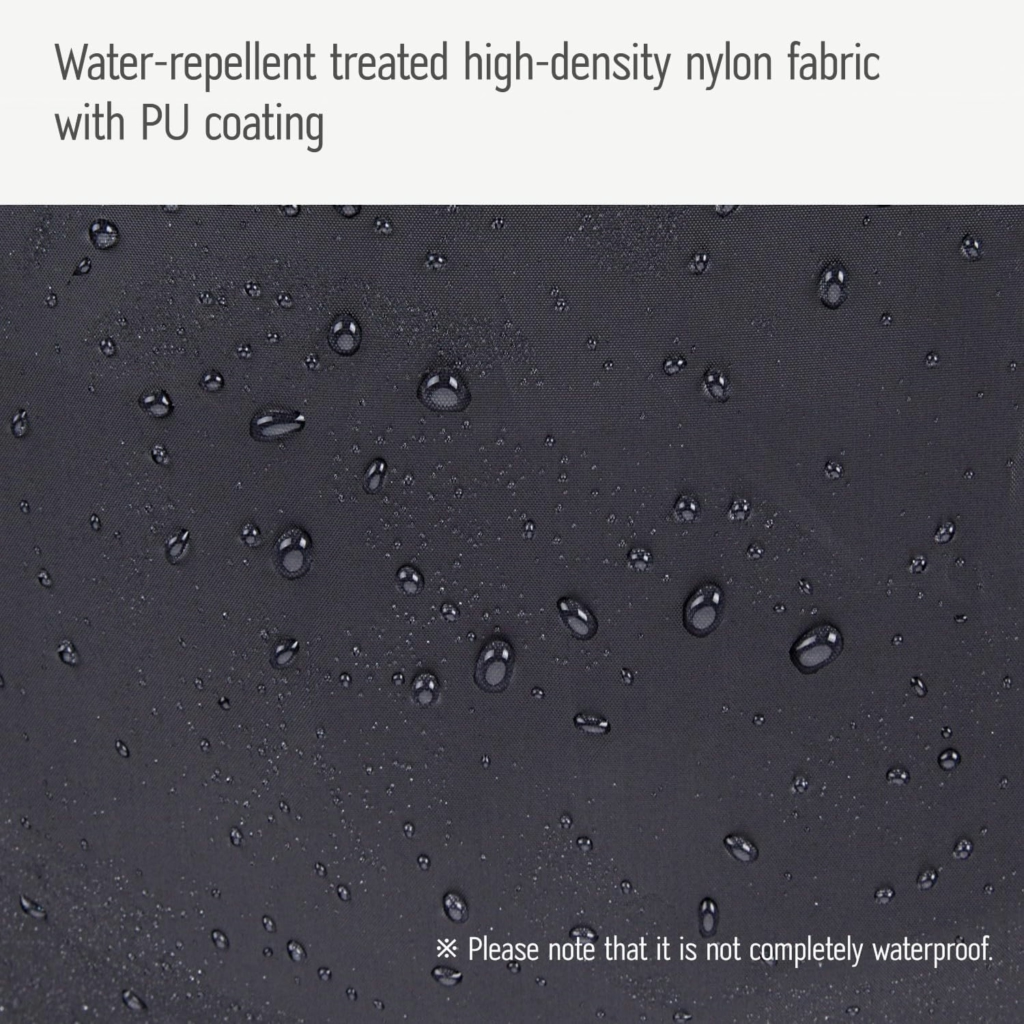
Is nylon waterproof? Nylon isn’t fully waterproof, but it has good initial water resistance. Its hydrophobic (water-repellent) properties help it repel water at first.
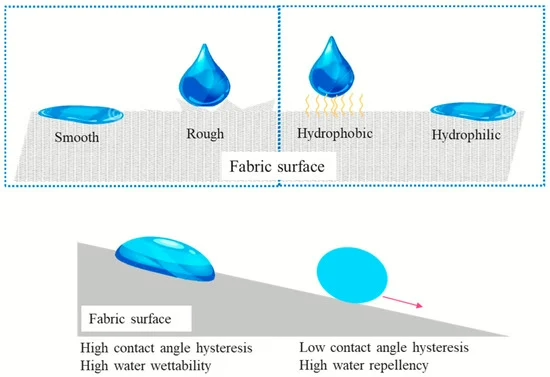
Hydrophobic Effect: Nylon contains tiny water-repellent “islands” that naturally push away water. Strong molecular bonds hold these islands together. They form a network that stops light rain and initial water from soaking into the fabric.
Water Beading and Rolling: When water hits nylon, it forms beads and rolls off. This happens due to the fabric’s water-repellent nature. It is often tested using spray tests to see how well water beads and rolls off.
Fabric Structure: The weave and density of nylon play an important role in its water resistance. Thicker, more tightly woven nylon resists water better than thinner or looser types.
A DWR coating can be applied to nylon to make it more water-resistant. These coatings add an extra barrier. But, they can wear off and may need reapplication.
Hydrostatic Pressure Resistance
Hydrostatic pressure resistance measures how well nylon resists water pressure. Higher resistance (measured in mm) means the fabric resists water pressure better. It won’t leak. For example:
- 7D Nylon: 1000-2000 mm
- 20D Nylon: 3000-4000 mm
- 210D Nylon: 15,000 mm
- 400D Nylon: 20,000 mm
These factors make nylon suitable for short-term water exposure. But, for full waterproofing, extra treatments or coatings may be required.
2. Factors affecting water resistance
Several factors affect how well nylon resists water. These include fabric treatment, environmental conditions, and the type of nylon used.
① Climate and Humidity
Hot and humid environments speed up water penetration through nylon. In these conditions, water molecules move faster. They can then easily enter the fabric’s structure, reducing its water resistance.
② Fabric Treatment
Water-repellent coatings (DWR) can improve nylon’s resistance to water. But, these coatings wear off over time and may need to be reapplied. Some treatments can reduce the fabric’s breathability. This could affect comfort and performance.
③ Thickness & Weave
The thickness and weave of nylon play a significant role in its water resistance. Denser, thicker fabrics, like ripstop nylon, have fewer gaps. So, water finds it harder to seep through. This results in better water resistance compared to thinner or loosely woven nylon.
④ Type of Nylon
Different types of nylon, such as Nylon 6 and Nylon 66, absorb moisture at different rates. Nylon 66 has higher crystallinity. It absorbs less moisture and resists water better than other, less crystalline types.
⑤ Exposure Time and Dimensional Changes
The longer nylon is exposed to water or high humidity, the more moisture it absorbs. Prolonged exposure can cause the fabric to expand. For example, at 100% relative humidity, Nylon 66 can increase in size by up to 2.6%. While this change is reversible, it can affect the material’s strength and durability.
⑥ Temperature Impact
Higher temperatures increase the rate at which nylon absorbs water. At 100°C, the absorption rate is faster than at lower temperatures. This affects the fabric’s water resistance.
These factors show that nylon’s waterproof qualities can vary. They depend on the conditions and treatments used.
3. What is the difference between water resistance and waterproofing?
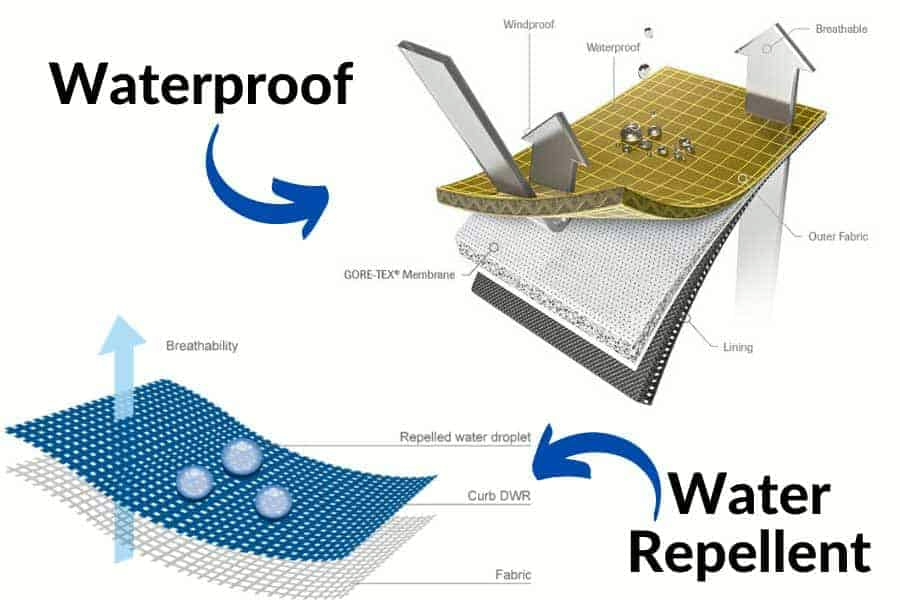
Water resistance and waterproofing are often confused. They offer different levels of protection. Here’s a simple explanation:
- Water-resistant: The material can handle light splashes or brief water contact. Nylon, for example, is water-resistant, but not fully waterproof. It can resist water for a short time. But, after prolonged exposure or under high pressure, water will seep through.
- Waterproof: Waterproof materials offer full protection against immersion and long-term water exposure. Waterproof nylon usually needs extra coatings like polyurethane (PU) or silicone to prevent water from passing through.
For more demanding waterproofing needs, like submersion, use materials like wax, polyester, or TPO. They may work better than nylon.
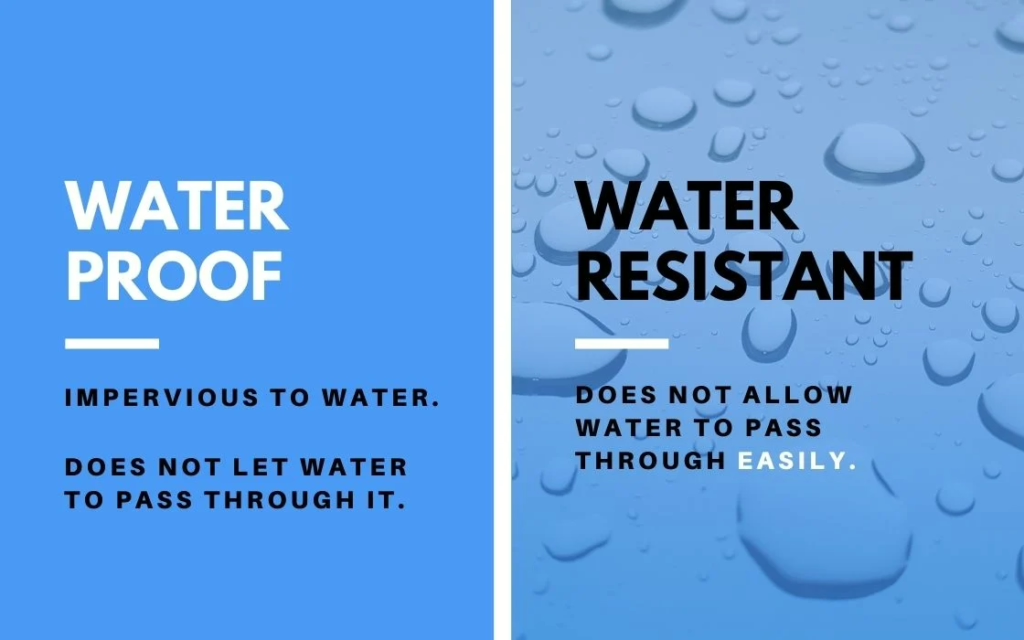
Summary: is nylon waterproof? Nylon is water-resistant, not waterproof. To achieve full waterproofing, additional coatings or treatments are necessary.
Expert Tips:
Is nylon waterproof? Use a wash-in or spray-on waterproofing treatment designed for synthetic fabrics to boost the water resistance of nylon gear. This can refresh older items and create a reliable moisture barrier for improved performance in wet conditions.
———— Leland Lyu, Bag Professional Manufacturer/Sales & Marketing
Which Types of Nylon Resist Water Well?
Is nylon waterproof? Nylon is a durable material, but not all types offer the same level of water resistance. Some nylons provide better protection against water.
Thicker, denser nylon fabrics are better at resisting water. Fabrics with higher denier ratings, like 210D, 400D, and 70D, create a stronger barrier than lower-denier fabrics such as 10D or 15D. A tighter weave and thicker fibers reduce gaps where water can pass through.
The table below summarizes the static water pressure stopping points for various types of nylon, indicating their hydrostatic head ratings, which reflect their water resistance capabilities.
| Material | Grams/1000m Thread | Avg. Fabric Density (g/m²) | Water Resistance (Hydrostatic Head) |
|---|---|---|---|
| 7D Nylon | 0.8 | 19 | 1000-2000 mm |
| 10D Nylon | 1.1 | 25 | 1000-2000 mm |
| 15D Nylon | 1.7 | 30 | 2000 mm |
| 20D Nylon | 2.2 | 34 | 3000-4000 mm |
| 30D Nylon | 3.3 | 47 | 4000-5000 mm |
| 40D Nylon | 4.4 | 54 | 5000 mm |
| 50D Nylon | 5.5 | 58 | 8000 mm |
| 70D Nylon | 7.7 | 60 | 10000 mm |
| 210D Nylon | 23.3 | 70 | 15000 mm |
| 400D Nylon | 44.4 | 100 | 20000 mm |
Denier Ratings
- 210D Nylon: Great water resistance, with a hydrostatic head rating of up to 15,000 mm.
- 400D Nylon: Offers excellent water resistance, reaching a hydrostatic head of up to 20,000 mm.
- 70D Nylon: Good water resistance, with a hydrostatic head of up to 10,000 mm.
Fabric Treatment
Nylon fabrics treated with Durable Water Repellent (DWR) coatings improve water resistance. These coatings make the fabric water-repellent. But, they can wear off over time and need reapplication.
Specific Types of Nylon: SLS Nylon 11 and Nylon 12. These nylons, used in 3D printing, resist water well, especially with thicker walls. Moisture only absorbs at the surface, making them suitable for moderate water resistance.
The design of the fabric also affects its resistance to water. Sloped surfaces and channels direct water away. Tight weaves and laminates further improve water repellence.
Is nylon waterproof? No nylon fabric is fully waterproof. But, thicker, higher-denier nylons, especially with DWR coatings, are very water-resistant. They are perfect for outdoor gear and similar uses.
How to Maintain Water-resistant Nylon?
To keep your water-resistant nylon in great condition, follow these steps:
- Use mild detergent and cold water. Strong chemicals, like bleach or fabric softeners, can damage the waterproof coating.
- Turn the fabric inside out to protect the waterproof layer and wash it on a gentle cycle.
- Air dry in a cool, well-ventilated area. Avoid direct sunlight or high temperatures to protect the fabric.
Tips for maintaining water resistance:
⑴ Avoid cleaners with chlorine or acid, as they can weaken the waterproof layer.
⑵ Store in a dry, cool place to prevent mildew and protect the fabric.
⑶ Reapply waterproofing agents after washing to keep the fabric water resistant.
⑷ Seal seams with waterproof tape or sealant to prevent water from getting in.
⑸ Don’t iron. If needed, use the lowest heat setting to avoid damaging the waterproof coating.
⑹ Clean gently with a soft brush or cloth. This will remove dirt and debris without damaging the protective layer.
Helpful Readings:
What is Canvas Fabric: Properties, Production Process, and Where?
Understanding Fabric for Bags Manufacturers: A Comprehensive Guide
Do Most Backpacks Have A Waterproof Layer? Uncovering the Truth
15 Different Backpack Types Every Brand Should Know AboutConclusion
Is nylon waterproof? Nylon is known for its waterproof properties and is thus commonly used in a variety of products. But, not all nylon is completely waterproof. When buying nylon products, check the waterproof rating. It matters for outdoor gear and backpacks.
For reliable waterproof nylon customized bags, like backpacks, handbags, choose ones with a custom design, or learn more bag manufacturer, such as bag manufacturers in Europe, you can contact us at [email protected] or visit leelinebags.com for more information.
FAQs
1. Is nylon waterproof naturally ?
No, nylon is not naturally waterproof. It is a synthetic fabric that is water-resistant but not completely waterproof. However, nylon can be treated with special coatings or laminated to make it more water-resistant or waterproof.
2. Can nylon be made waterproof?
Yes, nylon can be made waterproof. Manufacturers often apply waterproof coatings, such as polyurethane (PU) or polyvinyl chloride (PVC), to nylon fabric. Additionally, some nylon fabrics are laminated with a waterproof membrane like Gore-Tex for enhanced water protection.
3. Is nylon more water-resistant than polyester?
Nylon and polyester both have water-resistant properties, but nylon tends to be more water-resistant than polyester. Nylon is also more durable and flexible, making it a popular choice for outdoor gear and clothing.
4. How can I make nylon more waterproof?
You can make nylon more waterproof by using water-repellent sprays or applying a waterproofing treatment. You can also buy nylon fabrics that have been pre-treated with waterproof coatings for more effective water resistance.
5. Does nylon lose its waterproof properties over time?
Yes, the waterproofing treatment on nylon can wear off over time, especially with frequent use and exposure to harsh conditions. Reapplying water-repellent sprays or treatments can help maintain its waterproof capabilities.