
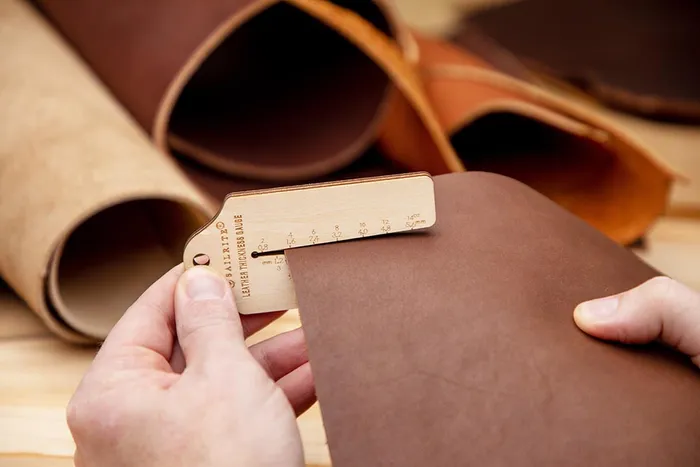
Leather weight thickness is a key factor you must understand to choose the right leather for your projects. Knowing these measurements is key when working with a custom handbag manufacturer or leather goods manufacturer. They help you choose leather that balances strength, flexibility, and durability. This knowledge ensures your products meet quality and functional standards.
In this guide, we’ll explain the difference between leather weight and thickness. Weight is measured in ounces, while thickness is measured in millimeters. You will see why thinner leather is best for garments. Medium weight works well for bags and wallets. Heavier leather is ideal for belts and holsters. We’ll also cover tools to measure leather and practical examples of thickness usage.
Stay with us to unlock the secrets behind leather weight thickness. Keep reading to become a leather expert and impress your clients with perfect leather selections.
What Is Leather Weight Thickness?
Leather Weight Thickness refers to how thick a piece of leather is, measured using different systems. Although it’s called “weight,” the most common U.S. system actually uses ounces to represent thickness, not the actual weight. For example, 1 ounce equals 1/64 of an inch in thickness. This means leather marked as 8 oz is 8/64 inches thick, or 1/8 inch. This makes it easy for you to quickly understand the leather’s size without complicated math.
Worldwide, the metric system measuring thickness in millimeters (mm) is common and straightforward. If you see leather marked 2.4 mm thick, it simply means 2.4 millimeters. This standard helps you easily compare leather thickness globally when making purchasing decisions.
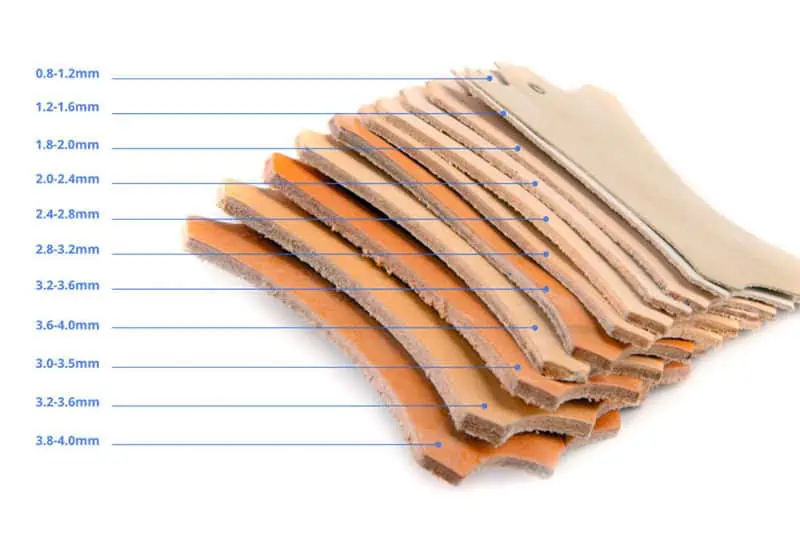
Some industries still refer to an old measurement called “irons,” where 1 iron equals 1/48 inch. Though less common, it shows how leather weight thickness measurements have evolved.
Leather weight thickness affects the leather’s feel and use. Thinner leather (1-3 oz or 0.8-1.2 mm) works well for garments and embossing. Medium thickness (4-7 oz or 1.6-2.8 mm) suits bags and wallets, while heavier leather (8-10 oz or 3.2-4.0 mm) is perfect for belts and holsters. Understanding these differences helps you choose the right leather for your products.
Expert Tips:
“ When sourcing leather, consider how variations in Leather Weight Thickness across a single hide can affect uniformity in your products; requesting hides with consistent thickness ranges can reduce waste and improve final product consistency in your manufacturing line. ”
— Simon Han, Owner at Dison Accessories &Guangzhou Yosemite Leather | Bags Manufacturing | Cross-Industry Sourcing|Sustainable Solutions
Leather Weight Thickness Chart (Ounce to Inch and Millimeter, with Common Uses)
Understanding the Leather Weight Thickness is essential for choosing the right leather for your projects. Leather thickness is measured in ounces (oz), where 1 ounce equals 1/64 inch (0.4 mm). This measurement indicates thickness, not weight, helping you select leather with the right strength and flexibility.
| Ounce Thickness | Inch Thickness | Millimeter Thickness | Common Projects |
|---|---|---|---|
| 2-3 oz | 1/32 to 3/64 in | 0.8 to 1.2 mm | Lining, embossing |
| 3-4 oz | 3/64 to 1/16 in | 1.2 to 1.6 mm | Lining, embossing, light bags, wallets |
| 4-5 oz | 1/16 to 5/64 in | 1.6 to 2.0 mm | Wallets, bags, caps |
| 5-6 oz | 5/64 to 3/32 in | 2.0 to 2.4 mm | Phone/tablet cases, book covers, light moccasins, chaps |
| 6-7 oz | 3/32 to 7/64 in | 2.4 to 2.8 mm | Heavy cases/covers, chaps, moccasins |
| 7-8 oz | 7/64 to 1/8 in | 2.8 to 3.2 mm | Moccasins, light sheaths/holsters, belts |
| 8-9 oz | 1/8 to 9/64 in | 3.2 to 3.6 mm | Standard belts, sheaths, straps, medium holsters |
| 9-10 oz | 9/64 to 5/32 in | 3.6 to 4.0 mm | Heavy holsters, belts, light armor |
| 10-11 oz | 5/32 to 11/64 in | 4.0 to 4.4 mm | Heavy straps, medium armor |
| 11-12 oz | 11/64 to 3/16 in | 4.4 to 4.8 mm | Harnesses, heavy shields |
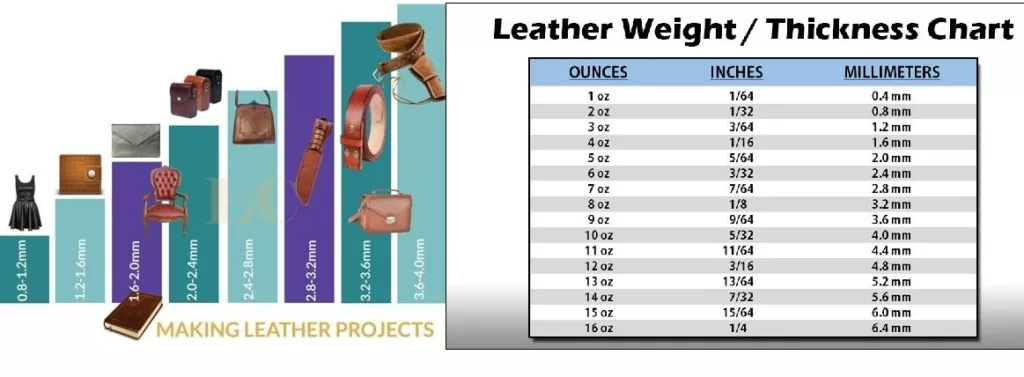
By knowing the Leather Weight Thickness, you can pick leather that matches your product’s needs. For example, if you want a durable work belt, leather between 6 and 7 oz will provide strength and longevity. For delicate items like watch straps, thinner leather around 1-3 oz offers better flexibility.
Choosing the right thickness ensures your products perform well and last longer, ultimately saving you time and cost on replacements or repairs. Use a thickness gauge to get precise measurements, especially when working with hides of varying thickness.
Leather Weight and Thickness Conversion
Understanding Leather Weight Thickness is essential for selecting the right material for your products. Leather thickness is measured mainly in ounces (oz), inches (in), or millimeters (mm). Knowing how to convert these units helps you precisely communicate and order the leather that fits your needs.
How to Convert Leather Weight to Thickness?
- 1 oz ≈ 1/64 inch ≈ 0.4 mm
- To convert ounces to millimeters, multiply by 0.4
- To convert ounces to inches, divide by 64
For example:
4 oz leather equals about 1/16 inch (1.6 mm), perfect for wallets and bags.
8 oz leather equals about 1/8 inch (3.2 mm), ideal for belts and sheaths.
Quick Reference Table
| Ounces (oz) | Thickness (mm) | Typical Use |
|---|---|---|
| 2-3 | 0.8 - 1.2 | Lining, embossing |
| 4 | 1.6 | Wallets, bags |
| 8 | 3.2 | Standard belts, holsters |
| 12-13 | 4.5 - 5.4 | Saddles, heavy belts |
| 16-17 | 6.5 - 7.4 | Industrial harnesses, tack |
This clear Leather Weight Thickness conversion guide empowers you to make smart purchasing decisions and ensures your leather goods meet quality expectations.
Impact of Leather Weight and Thickness on Products
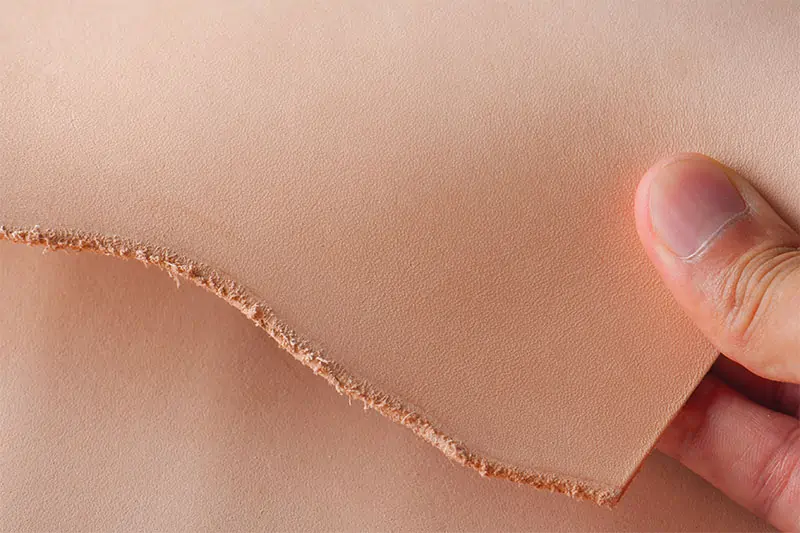
Leather weight thickness directly affects the durability, flexibility, and appearance of your products. Heavier, thicker leather (8 ounces and above) offers excellent durability, resisting tearing, abrasion, and punctures—ideal for items like belts and tool belts that face constant stress. On the other hand, lighter leather (1-4 ounces) remains flexible and easy to work with, perfect for small accessories such as wallets and card holders.
Durability and Usage by Product Type
- Wallets and Small Accessories: Use 1-4 ounce leather (around 1.0–1.6 mm thick) for a balance of flexibility and daily durability.
- Handbags and Totes: Opt for midweight leather (4-6 ounces) to maintain shape without sacrificing comfort.
- Belts and Heavy-Duty Gear: Choose heavyweight leather (8-9 ounces or more) to ensure strength and longevity under tension.
Production Efficiency and Cost Considerations
Thicker leather means fewer pieces per hide, increasing cost and waste. Matching leather weight thickness with your production tools is essential to avoid damage and delays. Medium weights (4-6 ounces) often hit the sweet spot for cost-efficiency, durability, and manufacturability.
By carefully selecting leather weight thickness, you ensure your products meet performance needs while optimizing costs and production quality.
Choosing the Right Leather Thickness for Your Project
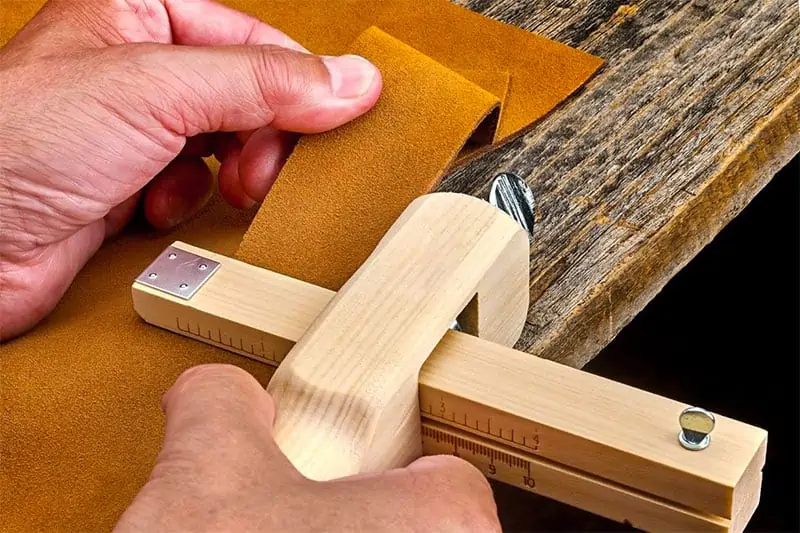
Selecting the right Leather Weight Thickness is key to ensuring your project has the perfect balance of durability, flexibility, and style. The thickness you choose directly impacts how your product performs and feels.
Understand Thickness by Project Type
- 1–3 oz (0.4–1.2 mm): Ideal for flexible, soft items like wallets and gloves. This thickness lets you create comfortable, detailed designs without bulk.
- 4–6 oz (1.6–2.4 mm): Perfect for handbags, belts, and shoes. It offers enough structure while maintaining softness for daily use.
- 7–10 oz (2.8–4.0 mm): Best for tough goods like saddles and durable straps. It brings strength and long-lasting wear.
- 10+ oz (4+ mm): Used for protective gear and industrial items that need high rigidity.
Practical Tips for You
- If your project needs flexibility—go thinner.
- For strength and load-bearing, pick thicker leather.
- Always measure thickness accurately using a leather gauge or calipers.
- Testing samples before the final choice helps avoid issues and ensures quality.
By choosing the appropriate Leather Weight Thickness for your application, you enhance your product’s durability and customer satisfaction.
Differences Between Measurement Scales
Understanding the different Leather Weight Thickness measurement scales helps you choose the right leather for your projects. Here are the main systems you’ll encounter:
- Millimeters (mm)
Millimeters provide a direct, precise measurement of leather thickness. For example, 1 mm thick leather equals about 2.5 oz. This scale is widely used worldwide because it’s consistent and easy to compare across different types of leather.
- Ounces (oz)
Ounces are popular in the U.S. and represent thickness with 1 oz equaling roughly 0.4 mm (or 1/64 inch). Although less precise than millimeters, ounces remain a trusted traditional system for American leatherworkers.
- Gauge (G)
Gauge measures thickness directly, often between 3-5 gauge for leather about 1-2 mm thick. It’s commonly used in manufacturing where precision matters but can vary between industries.
- Iron Scale
The Japanese iron scale uses “iron” units, with one iron about 0.3 mm thick. So, 10 iron approximates 3 mm. This system is less common globally but important if you work with Japanese leather.
By understanding how these scales relate, you can make informed decisions about leather selection, ensuring the right thickness and weight for your products.
Expert Opinion:
“ As an expert in material selection, ensure you integrate Leather Weight Thickness data with your production machinery capabilities, since heavier leathers over 8 oz may require specialized stitching equipment to maintain efficiency without compromising quality. ”
— Neeliath Prajith Nambiar, Manufacturer of Leather Bags
Conclusion
Understanding Leather Weight Thickness is essential for your business. It helps you choose the right leather for durability, cost, and product quality. Knowing the thickness chart makes decision-making easier and boosts your product’s market value.
If you need tailored leather solutions for your business, contact us at info@leelinebags.com or visit leelinebags.com. Our expertise will help you find the perfect Leather Weight Thickness for your projects.
Related reading:
-
What Is GSM in Fabric? A Comprehensive Guide to Understanding Fabric Weight
-
8 Trusted Leather Bag Manufacturers Argentine: From Factory to Store
Frequently Asked Questions About Leather Weight Thickness
1. How does Leather Weight Thickness affect the production timeline?
Leather Weight Thickness influences cutting and stitching time. Thicker leather can prolong manufacturing due to tougher material, while thinner leather allows quicker assembly. Understanding this helps you plan better and avoid delays.
2. Can Leather Weight Thickness impact product pricing?
Yes, heavier and thicker leather costs more both in material and labor. Knowing the Leather Weight Thickness helps you estimate costs accurately and price your products competitively without sacrificing quality.
3. What are the best practices for storing leather by weight and thickness?
Different Leather Weight Thicknesses require specific storage conditions to prevent warping or cracking. For instance, thicker leathers need stable humidity control. Awareness of this reduces waste and maintains leather quality over time.
4. How does Leather Weight Thickness influence product design options?
Leather Weight Thickness determines how flexible or rigid your designs can be. For intricate, foldable designs, lighter weights are ideal. Conversely, thicker leather supports structured, durable products. This knowledge aids in effective design planning.
5. Are there industry standards for Leather Weight Thickness in various product categories?
Yes, many industries have informal guidelines—for example, handbags often use 4-6 oz leather, belts 8-10 oz. Knowing these standards helps you select materials that meet customer expectations and industry norms.