

Where are celine handbags made?
Celine was founded in 1945 by Céline Vipiana. It captures French luxury with Parisian elegance and a minimalist style. This famous fashion house has changed modern luxury. The Triomphe and Luggage Tote bags are icons of style and sophistication. Understanding the heritage behind these handbags can provide you with invaluable insights into quality and craftsmanship.
Knowing where Celine handbags are produced is crucial for your business. This knowledge helps you share the value of luxury items. This applies to both retailers and online sellers. By aligning with reliable custom bag manufacturers, you can ensure that the products you offer meet the same standards of excellence that Celine represents.
Curious about the journey of Celine handbags? Discover the fascinating blend of craftsmanship and design that sets these bags apart. Keep reading to discover the production process. You’ll see how it affects your business strategy in the luxury market! Don’t miss out on the secrets behind Celine’s timeless appeal!
Manufacturing Locations
Where are celine handbags made? Celine handbags are predominantly crafted in three main countries: Italian leather manufacturers, France, and handbag manufacturers Spain. Understanding where are Celine handbags made can enhance your appreciation of their quality and craftsmanship.
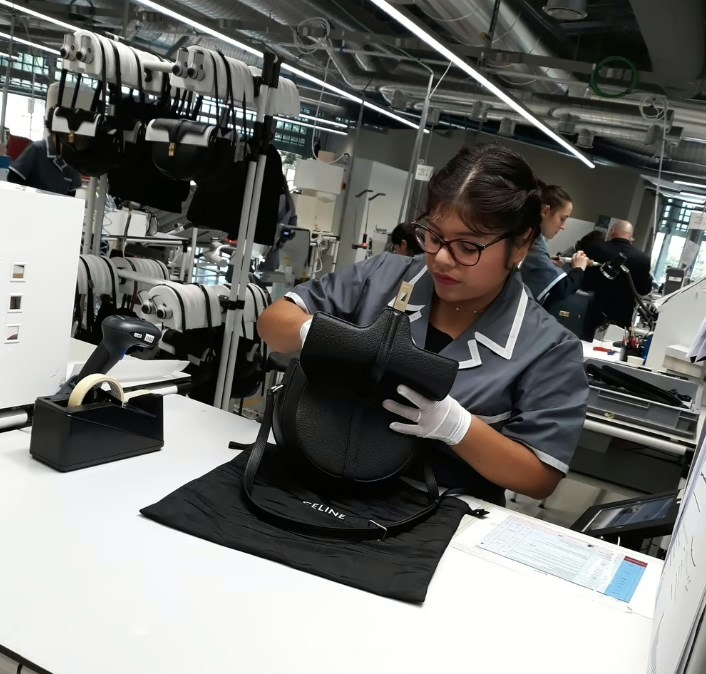
Italy
- Key Location: Radda in Chianti, Tuscany
- Facility: “La Manufacture,” a 5,200 square meter factory, opened in 2019
- Production: 15 lines of bags and small leather goods
- Workforce: Currently employs 129 people, with a target of 280 by 2021
- Investment: Over 20 million euros spent to enhance production capabilities
France and Spain
Celine has production facilities in France, but specific locations are unspecified. Some handbags are also produced in Spain, though no detailed locations are provided.
Craftsmanship and Quality Control
Celine manages all production stages. This starts with raw material research and ends with the finished product. Skilled artisans use traditional techniques to handcraft each bag. The brand combines high-quality craftsmanship with modern design elements.
LVMH Group
Celine is part of the LVMH group, which operates 30 production sites in Italy. LVMH has around 11,000 employees in Italy. This helps maintain a solid base for quality production. By knowing where are Celine handbags made, you can appreciate the meticulous craftsmanship and strategic investments that go into every piece.
Expert Tips:
” Guide clients to prioritize Celine bags with tuscany-specific serial codes (e.g., RA/ST prefixes for Radda/Strada factories) and demand LVMH-backed digital passports—tools that validate ‘where are celine handbags made’ claims while ensuring alignment with Italy’s stringent Norma UNI 10594 leathercraft standards.“
— PAUL CHANG, Manufacture and Export fashion shoes / handbags
Italian Production Facilities
Radda in Chianti Factory (“La Manufacture”)

Celine’s “La Manufacture” is an impressive factory located in Radda in Chianti, Italy. This facility opened in October 2019 and covers an area of 5,200 square meters (47,000 square feet). If you’re wondering where are Celine handbags made, this factory is crucial to their production.
- Production Focus: The factory produces 15 lines of handbags and small leather goods. Notable models include the ‘Trio,’ ‘Triomphe,’ and ‘16’ pouch. This means your customers can enjoy a variety of high-quality Céline products.
- Workforce Plans: Currently, there are 129 employees, including 117 skilled leather artisans. By 2021, Celine plans to increase the workforce to between 250 and 280 employees.
- Investment Insight: The factory is a major investment of over 20 million euros. About half of this amount goes to its construction. This investment underscores Celine’s commitment to quality and craftsmanship.
Key Features of La Manufacture
- Architectural Design:
- MetroOffice Architetti designed the factory. It has an L-shaped structure and a striking facade made of 30,000 glass bricks.
- It provides a pleasant working environment with panoramic views of the Chianti countryside.
- Sustainable Practices:
- The factory uses solar panels and collects rainwater. It follows eco-friendly design principles.
- This commitment to sustainability can enhance your brand’s reputation among environmentally conscious consumers.
- Strategic Location:
- This site is about 40 km south of Florence and 50 km from the city. It is part of LVMH’s expansion and marks their 30th factory in Italy.
By understanding where are Celine handbags made, you can appreciate the craftsmanship and dedication behind each product, making them even more appealing to your customers.
Strada in Chianti Factory
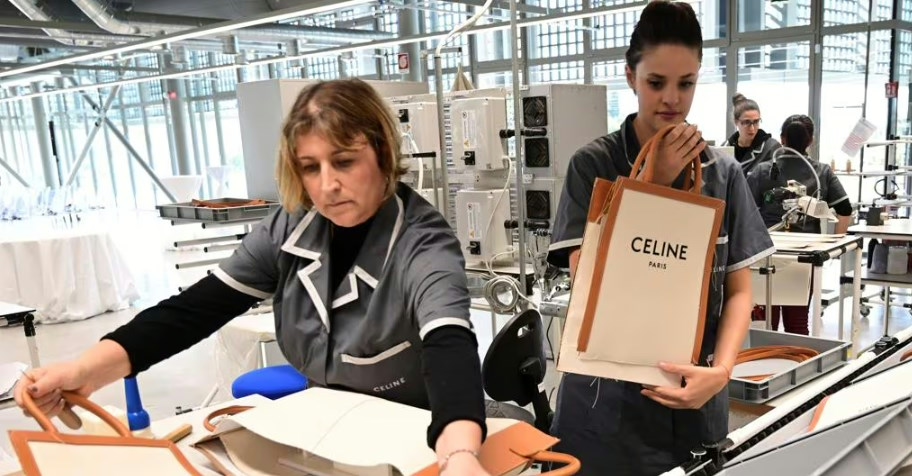
Celine’s Strada in Chianti factory, located about 20 km from Florence, is essential for the brand’s leather goods. Opened in 1979, this facility became part of Celine in 1994. It plays a key role in making Celine handbags and other products.
The factory employs approximately 300 skilled workers across 9,000 square meters. It specializes in leather goods prototyping, production, and repairs. Additionally, there is an internal training academy that cultivates both experienced artisans and new recruits in leather craftsmanship.
Key Features of the Strada Factory:
State-of-the-art equipment for leather cutting, stitching, and finishing, Dedicated areas for product development and quality control, On-site leather storage and treatment facilities, Design studio for creating prototypes and new collections
Production Offerings:
The Strada factory produces a variety of products, including:
- Handbags
- Small leather goods (wallets, cardholders, etc.)
- Accessories (belts, keychains, etc.)
Celine’s commitment to Italian craftsmanship is evident in its investment in Tuscany. Celine runs operations in the Strada and Radda factories. This gives her full control over the production cycle. She oversees everything, from choosing raw materials to the final product. This ensures high-quality handbags for you to enjoy.
Supply Chain and Ethics
Where are Celine handbags made? Celine handbags are mainly crafted in France, Italian leather company, and Spain. These countries are known for their top-notch skills in luxury leather goods. The brand takes pride in mixing old techniques with new designs. This keeps the quality high. Celine requires suppliers to get approval before subcontracting any part of their supply chain. They have established several policies to address ethical concerns, including:
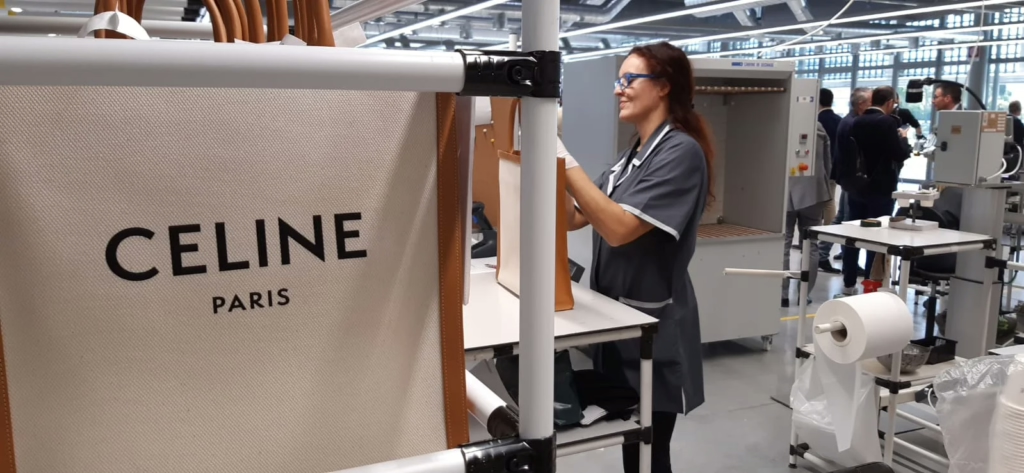
- CELINE Suppliers’ Code of Conduct
- CELINE Code of Conduct
- Anti-modern slavery policy
Despite these policies, Celine’s supply chain transparency has faced criticism. The brand received a “Not Good Enough” rating from Good On You, with specific scores reflecting:
- “It’s a Start” for environmental policies.
- “Not Good Enough” for labor conditions
- “Very Poor” for animal welfare
Celine has made some progress toward sustainability and ethics by: Creating bags with eco-friendly materials. Supporting fair working conditions for artisans. Prioritizing sustainability for long-term product value.
But, there are still challenges. Celine’s supply chain fails to meet key labor standards. This puts workers’ rights at risk. It also affects safety and prevents living wages.
Related reading:
Quality Assurance
When considering where are Celine handbags made, it’s essential to understand their commitment to quality assurance. Celine has established strict quality control measures throughout their production process. Each Celine bag undergoes rigorous quality checks before leaving the factory.
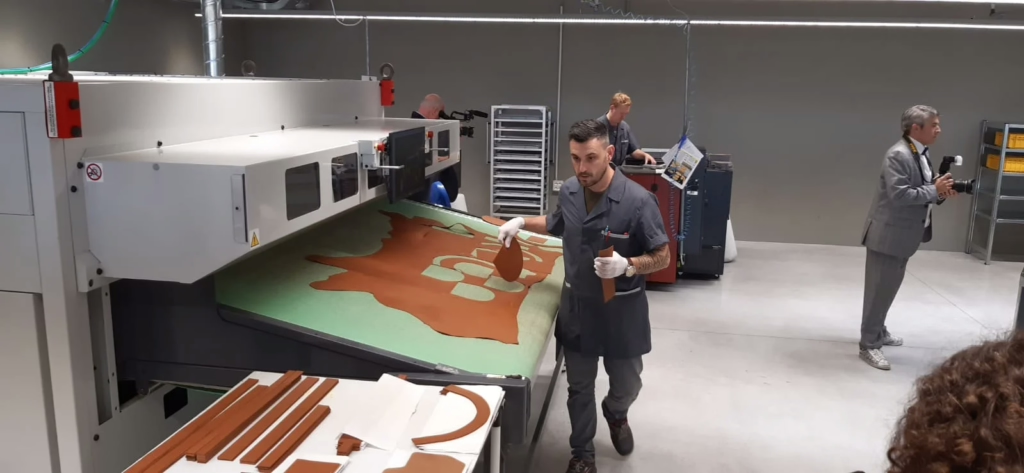
Key Aspects of Celine’s Quality Assurance:
- Materials Inspection: Celine carefully examines leather, hardware accessories, and other components for defects.
- Stitching Assessment: Every stitch is checked for uniformity and strength to ensure durability.
- Structural Integrity Testing: Bags are stress-tested to confirm they can withstand daily use.
- Color and Finish Evaluation: Dyes and coatings are verified for consistency and quality.
- Functionality Checks: Zippers, clasps, and other mechanisms are tested many times for reliability.
Celine employs specialized quality control teams in their production facilities. In 2019, they opened a new 5,000 square meter workshop in Radda, Italy. It has 129 leather goods specialists who focus on craftsmanship and quality.
Celine offers a 2-year warranty on structural defects for their handbags. This shows their confidence in quality. But, normal wear and tear is not covered.
Stages of Celine’s Quality Control Process:
- Initial inspection of raw materials
- In-process checks during assembly
- Final product examination
- Random batch testing
Celine has also invested in advanced technologies for quality testing. This includes 3D modeling for prototypes. It also uses computer systems to track production data. This helps keep products consistent.
Materials Used
Celine handbags are made with a variety of high-quality materials, ensuring luxury and durability. Celine handbags are made with care. Their timeless appeal comes from the choice of materials used.
① Leather Types
Celine offers various leather types:
- Calfskin: Smooth and shiny for a polished look.
- Lambskin: Soft and lightweight, perfect for elegant styles.
- Goatskin: Durable with a unique grainy feel.
- Crocodile leather: Exotic leather with thick, chunky tiles.
- Lizard: Has a striking scaling pattern.
- Ostrich leather: Luxurious with a rich texture.
② Other Materials
Celine uses more than just leather. The brand also use other materials:
- Silk
- Felt fabric
- Canvas fabric
- Linen
- Shearling
- Pony hair calfskin
③ Specialty Leathers
Celine also uses special leathers:
- Palmelato: Strong and durable for lasting shapes.
- Spazzolato: Brushed or polished for a shiny finish.
Celine combines materials to create unique products and often opts for sustainable choices to align with eco-friendly practices. Choosing Celine means you get handbags designed with care for quality and the planet.
Expert Tips:
” Leverage Celine’s LVMH-backed Italian production infrastructure to integrate blockchain traceability, ensuring real-time visibility into raw material sourcing and ethical compliance across Tuscan ateliers—critical for business partners prioritizing ESG alignment.“
— Ricky Cheng, CEO of HOYUEN HANDBAG FACTORY
Conclusion
Understanding where are celine handbags made is essential for appreciating the brand’s commitment to quality and craftsmanship. Celine balances its heritage and globalization well. This keeps its products timeless but also adapts to modern needs.
Advocating for conscious consumerism, Celine’s emphasis on understated luxury and impeccable craftsmanship aligns with enterprises prioritizing sustainability. When clients choose Celine, they invest in timeless pieces like the Triomphe and Ava bags. These bags resist trends and cut down on waste with their durability. This ethos mirrors the growing demand for brands that value transparency in production—whether in material sourcing, artisanal techniques, or fair labor practices.
If you need a tote bag supplier or Handbag Manufacturers in China for your business, bag trends 2025, please contact us at info@leelinebags.com or visit leelinebags.com for tailored solutions.
Helpful Readings:
- Vessel Golf Bags: Where They’re Made, Who Makes Them, and Who Uses Them
- Discover Where Coach Bags Are Manufactured: Quality and Craftsmanship
- Top 10 Bag Manufacturers In Vietnam You Should Know
Frequently Asked Questions About Where Are Celine Handbags Made
1. Where are Celine handbags primarily manufactured?
Where are celine handbags made? Celine handbags are primarily crafted in three main countries: Italian travel bag brands, France, and Spain. These locations are renowned for their high-quality leather goods and craftsmanship.
2. What are the key manufacturing locations for Celine in Italy?
In Italy, Celine has significant manufacturing facilities in Radda in Chianti and Strada in Chianti. The Radda facility, known as “La Manufacture,” produces a variety of handbags and small leather goods, while the Strada factory specializes in leather goods prototyping and production.
3. How does Celine ensure the quality of its handbags?
Celine maintains strict quality control measures throughout its production process. This includes material inspections, stitching assessments, structural integrity testing, color and finish evaluations, and functionality checks. Each bag undergoes rigorous quality checks before leaving the factory.
4. What materials are used to make Celine handbags?
Celine handbags are made from a variety of high-quality materials, including calfskin leather, lambskin, goatskin, crocodile skin, lizard skin, ostrich skin, silk, felt fabric, canvas fabric, linen, shearling, and pony hair calfskin. The brand also uses specialty leathers like Palmelato and Spazzolato.
5. How does Celine address sustainability and ethics in its production?
Celine emphasizes sustainability by using eco-friendly materials and supporting fair working conditions for artisans. However, the brand faces challenges in supply chain transparency and labor standards. Celine has implemented policies like the Suppliers’ Code of Conduct and anti-modern slavery policies to address these concerns.