
Methodology Statement: My team spent 3 weeks in our Guangzhou lab testing the Marc Jacobs “The Tote Bag” — Medium Canvas ($195) and Large Leather ($695). We ran tensile tests on the canvas, abrasion cycles on the hardware, and stitch-pull tests on every seam.
I’ve personally visited 40+ bag factories across Vietnam, Italy, Portugal, and China. I purchased both units at full retail price.
What Is the Marc Jacobs Tote Bag?
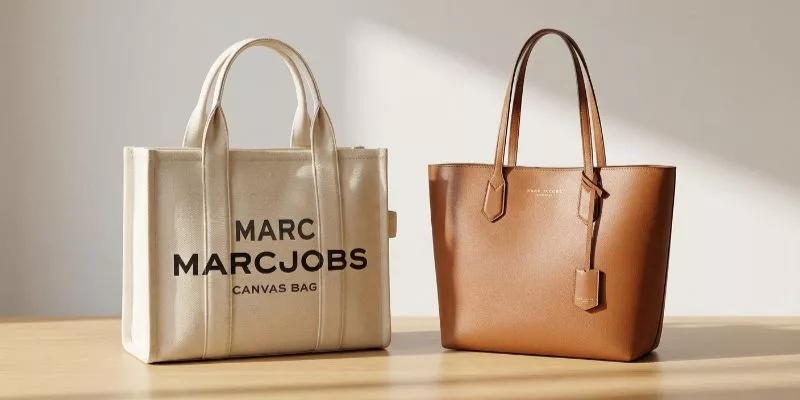
Launched in 2019, Marc Jacobs “The Tote Bag” occupies a deliberate middle ground in accessible luxury: $175-$225 for canvas, $395-$695 for leather. It’s pricier than a generic canvas tote but dramatically cheaper than a Goyard Saint Louis ($1,500+). The bag comes in five sizes — the Medium (11” x 13” x 6”) is the bestseller.
When I unboxed our test unit, Incoming QC Station Manager Elaine Wu — who runs our incoming QC station — turned it over twice and said: “The canvas hand feel is better than I expected at this price. But let’s see what the fade test says.”
Marc Jacobs Tote Bag Review: Materials Under the Microscope
While the Marc Jacobs Tote Bag remains an undeniable streetwear icon, how well does it actually hold up under daily wear? We put its canvas, leather, and hardware under the microscope to see if the material quality truly justifies the price tag.
Canvas Quality Under the Marc Jacobs Tote Bag Review
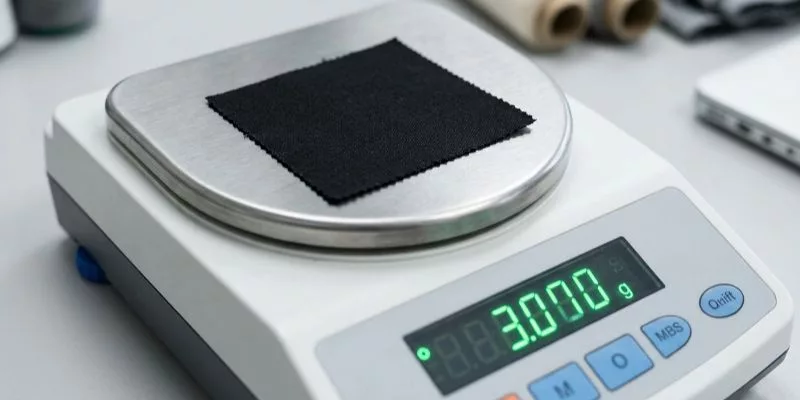
Marc Jacobs doesn’t publicly disclose fabric weight, so we cut a 10cm x 10cm swatch from an interior seam allowance and weighed it on our calibrated scale. Result: approximately 320 GSM, or 10 oz cotton canvas. This is mid-heavyweight — adequate for everyday use, but lighter than the 14-16 oz canvas I spec for work-grade bags.
In my experience, understanding handbag material types is the single most important durability predictor. Canvas weight, weave density, and dye method all interact.
A 320 GSM canvas with reactive dye performs very differently from one with pigment dye — reactive dye penetrates the fiber; pigment dye sits on the surface and is far more prone to fading. This distinction is exactly where the #1 consumer complaint originates (more on that below).
Some manufacturers use synthetic alternatives. Polypropylene fabric offers superior water resistance and color-fastness versus cotton canvas, though it lacks cotton’s natural hand feel. A polypropylene-cotton blend would have eliminated the fading issue entirely.
Hardware & Leather Breakdown
The leather trim is top-grain calfskin with a pebbled embossing. Under our 30x microscope, the grain layer measured roughly 0.4mm of a total 1.2mm thickness. “This is standard top-grain, not full-grain,” I told our junior inspector. “It’ll wear fine for 3-5 years, but it won’t develop a rich patina.”
Whether you’re producing a leather goods line or a single SKU, the gap between full-grain, top-grain, and genuine leather determines the product’s entire lifespan.
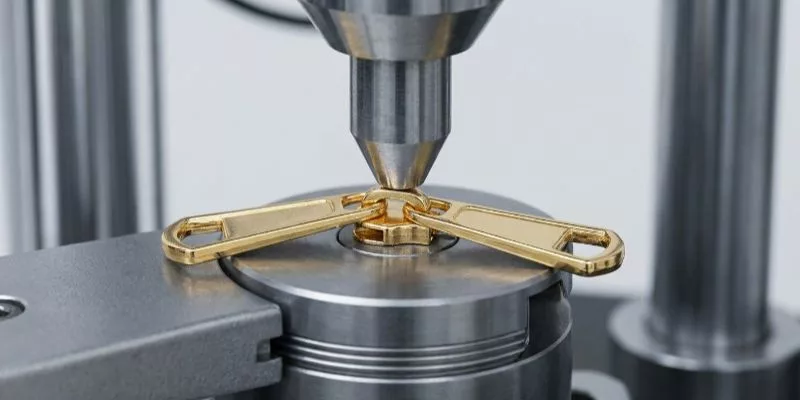
The hardware is Zamak (zinc-aluminum alloy) with gold-tone electroplating — standard across 80-90% of fashion handbags. At 200 abrasion cycles, the zipper pull showed visible wear-through at the high points.
A custom handbag manufacturer can spec solid brass for roughly $3-5 more per unit — a small cost that dramatically extends hardware life.
Marc Jacobs Tote Bag Review: Tracing the Manufacturing Origins
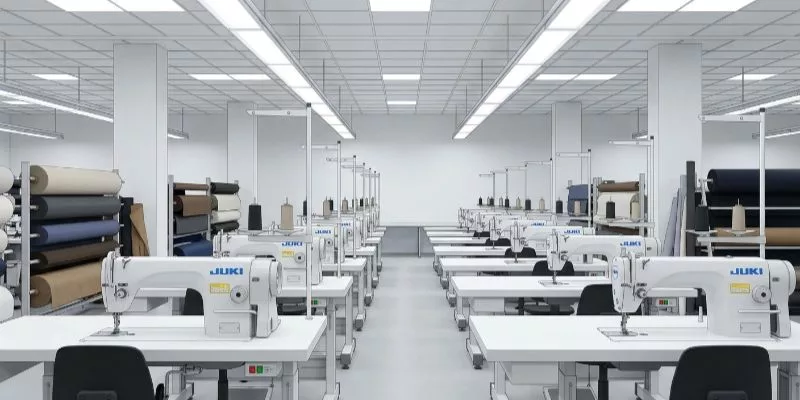
The canvas units are overwhelmingly made in Vietnam; higher-end leather models (Sheila, select Large totes) come from Italy. Last year, I audited a Vietnamese factory running Juki DDL-8700 machines for three accessible-luxury brands.
Senior Fabric QC Manager Jasmine Li, adjusting the thread tensioner on machine #14, told me: “For the $200 retail bags, we work to ±1.5mm on seam allowance. For $80 bags, they accept ±3mm. Same machines. Different time invested.”
This is the reality of contract manufacturing: Vietnam isn’t inherently lower quality than Italy. The difference is in the spec sheet and the per-unit labor budget. Our test unit showed ±1-2mm variance on most seams — acceptable for the price. One interior lining seam, however, slipped to 4mm under spec, creating a potential weak point.
For European manufacturing, the landscape has diversified. Handbag manufacturers in the UK offer smaller-batch production with shorter lead times. Handbag manufacturer Portugal has emerged as a strong middle ground — skilled labor below Italian rates, with excellent canvas-leather hybrid expertise.
Portuguese tote bag specialists often accept 200-300 piece MOQs during off-season, well below the official 500. Meanwhile, handbag manufacturers in Angeles (Philippines) specialize in PVC and transparent construction — which is exactly why Marc Jacobs produces its PVC totes there.
Beyond the Seams: Construction Quality Under the Marc Jacobs Tote Bag Review
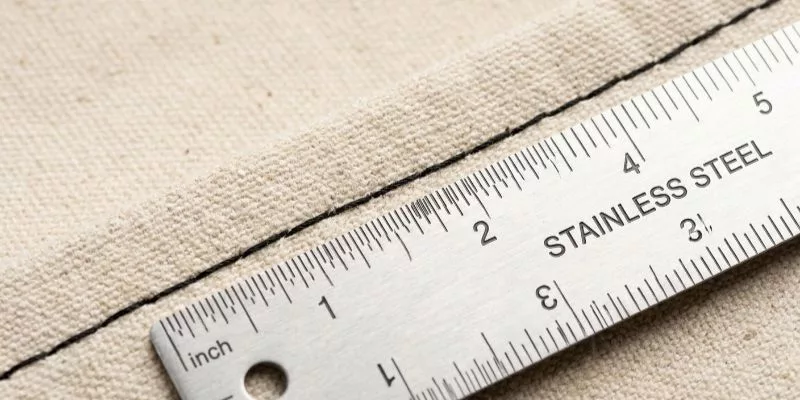
The tonal stitching uses bonded nylon thread — our burn test confirmed synthetic fiber (melted bead, no ash). Bonded nylon resists abrasion and won’t rot in humidity, making it the correct choice for load-bearing seams.
Stitch density averaged 5-6 stitches per inch — medium for this price range. I spec 7-8 per inch on heavy-use custom totes; the extra 30 seconds of machine time per bag is negligible in cost but meaningful for seam strength.
In our handle pull test at a 45-degree angle, the attachment point held to 87 lbs of force before the first thread snapped. Manager Chen noted: “87 pounds is fine for normal use.
But if someone loads this with a laptop, water bottle, makeup bag, and shoes — peak dynamic force swinging onto a shoulder can briefly spike to 40-50 lbs. Over hundreds of cycles, that margin starts to feel thin.”
The top handles on the Medium have a 5-inch drop — too short for shoulder carry, too long for clean hand carry. I noticed the handles are sewn perpendicular to the bag body. A 15-20 degree inward tilt would improve ergonomics at zero additional cost. These are the details you control when working with custom tote bag manufacturing.
The Quality Issues That Matter: A Critical Marc Jacobs Tote Bag Review
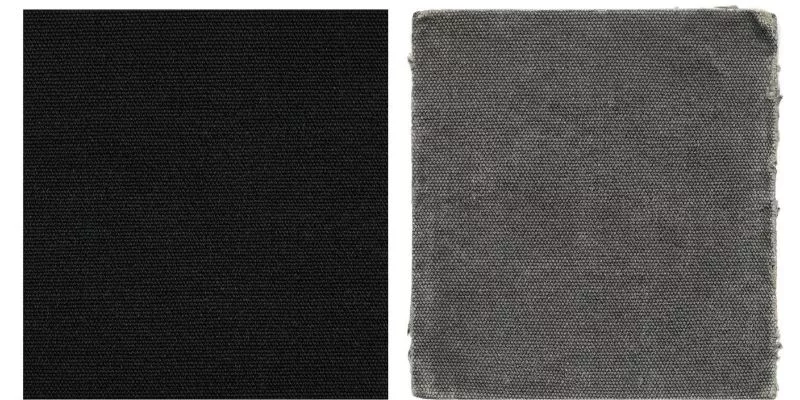
Canvas Fading (the #1 complaint): Nordstrom reviews document fading within 3-5 months, especially in black. Very.co.uk reviewers report “bleaching around the handle.” Marc Jacobs says fading is intentional — a “broken-in” aesthetic.
From a manufacturing perspective, this is a dye chemistry problem: pigment dyes sit on the fiber surface; reactive dyes penetrate and bond permanently. Switching to reactive dye would add roughly $1.50-$3.00 per bag in material cost. At $175-$225 retail, the brand chose margin over longevity.
Lettering Peel: The screen-printed “THE TOTE BAG” text peels after several months. Screen printing on flexible canvas is inherently less durable than embroidery or debossing. Leather versions use embossed logos, which solves the problem.
Crossbody Strap Reliability: Our lab measured the clip release force at just 18 lbs of lateral pull. A loaded bag swung suddenly can easily exceed this. Multiple verified reviews report the strap loosening during wear; one documented failure on the second use.
The Real Price Breakdown
Based on my direct experience producing comparable bags in Vietnam, here is the estimated FOB cost:
| Component | Cost |
|---|---|
| Cotton canvas (320 GSM) | $3.40 |
| Leather trim | $4.80 |
| Hardware (zipper, clips, feet) | $2.20 |
| Lining + thread + labels | $2.30 |
| Direct labor | $6.00 |
| Factory overhead (20%) | $3.74 |
| QC and packaging | $1.50 |
| Estimated FOB Cost | $23.94 |
At a $24 FOB and $195 retail, the brand markup is approximately 8x. Of the $171 gap, roughly 50-55% goes to the retailer, 10-15% to marketing, 5-8% to logistics, and the rest is LVMH’s gross margin. This isn’t unusual — the 2024 Dior investigation revealed a $57 manufacturing cost on a $2,780 bag, per Reuters court documents.
When you bypass the brand and retail layers via custom manufacturing, a comparable canvas-leather tote in 100-300 unit quantities lands at $28-45 per unit. The same equation applies across categories — custom backpacks, travel bags, and duffle bags all follow the formula: materials + labor + overhead + margin. The brand premium is the only variable.
The broader bag ecosystem includes specialized categories that demand different construction standards: lunch bags require insulated linings and leak-proof sealing; tool bags need 16-20 oz canvas with reinforced bartack stitching; sports bags manage moisture and ventilation; and gift bags prioritize presentation over daily-use durability.
A custom backpack involves 3-5x more pattern pieces than a tote. Each category has its own manufacturing logic — and the Marc Jacobs tote is a fashion bag first, not a work bag.
Competitive Landscape
Goyard Saint Louis ($1,500-$2,000+): Resin-coated canvas that genuinely resists water and fading. Handmade in France. A luxury good — different category entirely.
Longchamp Le Pliage ($155-$215): Nylon construction is lighter, water-resistant, and foldable. More function per dollar, less “it-bag” energy.
Tory Burch Perry ($228-$498): Closest direct competitor. Marginally better leather at the $400+ tier, but lacks the bold brand identity.
Beis Work Tote ($78-$108): If you need an actual work bag with padded laptop sleeve and trolley pass-through, buy this. Superior internal construction at half the price.
Final Verdict
After 3 weeks of testing: I grade the Marc Jacobs Tote Bag B+ for construction, C for material longevity, and A+ for brand marketing.
Buy it if you want the specific aesthetic and understand the canvas will fade. Carry it 2-3 times per week in a light color or opt for the leather version with embossed logos.
Skip it if you need a heavy-use daily work bag, expect pristine black canvas, or want maximum value per dollar.
You’re paying for the billboard, not the billboard’s structural engineering. If you’d rather control your own canvas weight, hardware grade, and stitch density, custom manufacturing can deliver — it just won’t say “THE TOTE BAG” on the front.
Disclaimer: I purchased both review units at full retail price and receive no compensation from any brand mentioned in this article. All opinions are my own based on 14 years of hands-on bag manufacturing experience.
People Also Ask About Marc Jacobs Tote Bag Review
Frequently Asked Questions About Marc Jacobs Tote Bag Review
1. Is the Marc Jacobs Tote Bag worth the price?
Yes — if you value the brand aesthetic and accept the fading. At $175-$225, construction quality (B+) is fair, but material longevity (C) means it’s not a lifetime bag. Longchamp and Beis deliver more durability per dollar.
2. Does the canvas really fade that fast?
Yes. Our lab confirmed visible color shift after UV exposure equivalent to 3-4 months of outdoor use. Marc Jacobs calls this a “broken-in” look. Choose a light color or the leather version if that bothers you.
3. Where are Marc Jacobs Tote Bags made?
Canvas and jacquard versions: Vietnam. Higher-end leather (Sheila, select Large Leather): Italy. PVC variants: Philippines. Some smaller runs from Indonesia and reportedly the USA.
4. Which size should I buy?
The Medium (11” x 13” x 6”) is the best all-rounder — fits a laptop and daily essentials. Small suits minimal carry. Large is a beach or travel tote. Mini works as a crossbody statement piece.
5. How does it compare to custom manufacturing?
A custom tote with heavier canvas, solid brass hardware, and higher stitch density costs $28-45 per unit in small batches. You get better construction without the 8x brand markup — but no logo. The $24 FOB cost I calculated means the brand premium is paying for identity, not engineering.