
Custom Diaper Bag Manufacturer The Ward’s Discharge Batch, the Founder’s First Hundred.
Ward, founder and subscription box buy the same shell on different cadences, and the certificate turns on one rule most briefs get wrong: a general diaper bag needs a GCC, but add a changing pad, a bassinet or an infant toy and it becomes a children’s product under CPC, ASTM F2388 and a permanent tracking label. Send the load-out, the pack moment and the market; the sample returns in seven days, a first run opens at 100 pieces.
- 42.6%US duty as a backpack
- 5.7%US duty as an “other” bag
- 1,000 ppmphthalate ceiling, current
Why it comes back
Where It Fails Is a Spec That Was Missed
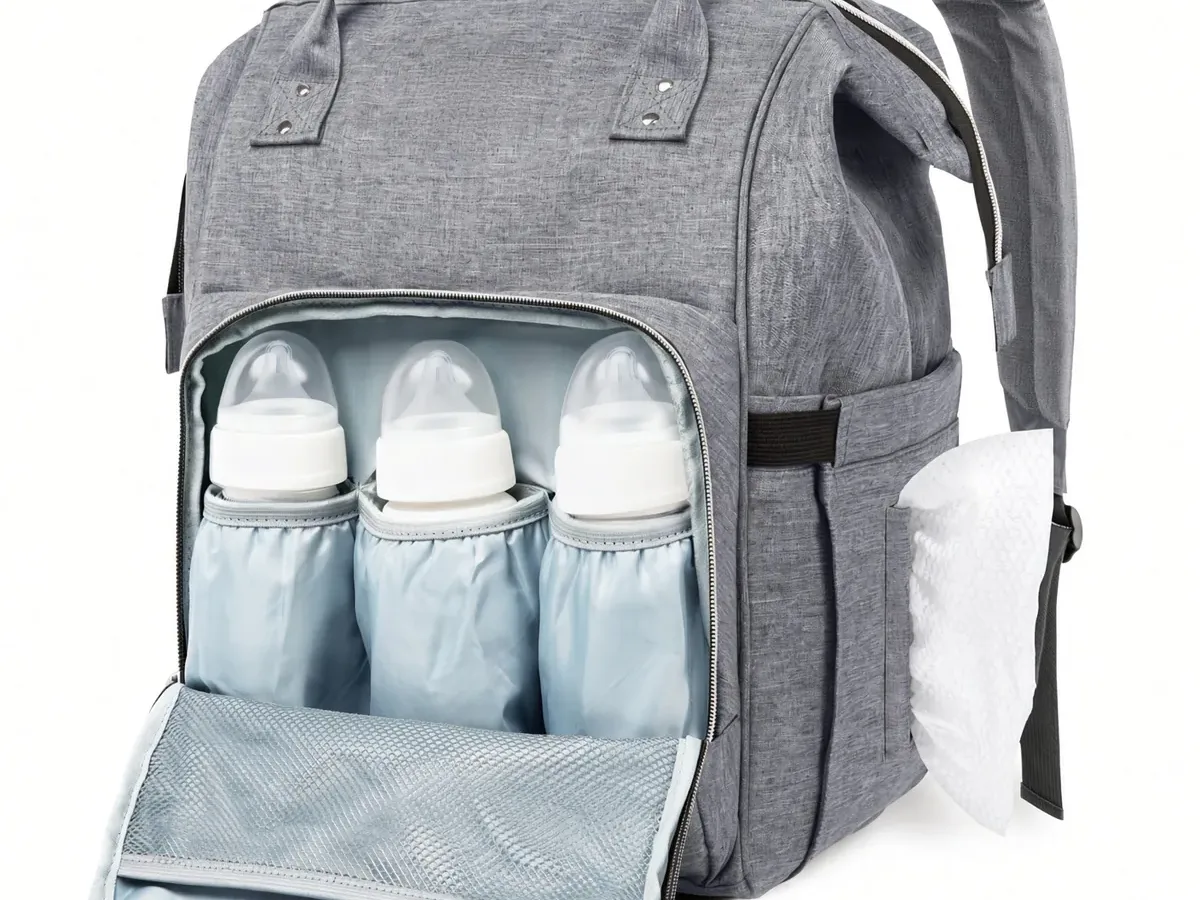
Judged by a parent on the fourth month, not the first unboxing — when the pad has been wiped a hundred times, the bottle pocket has held a warm feed on a cold walk, and the strap has hung loaded off a stroller bar. The wear lands on a handful of parts, and each part is a line the brief can specify before the sample is cut.
The part
The failure in service
What the programme specifies
- 01
Zipper
The failure in service
Bursts under a packed load, or the slider walks off the end where the chain is sewn to a single layer at the gusset corner — the slot a full bag concentrates its weight on.
What the programme specifies
A zip seat doubled at the gusset, a pull-off figure set against the loaded weight, and the whole chain proven on a filled sample before the bulk cut rather than after a field return.
- 02
Changing pad
The failure in service
Soaks through at the fold and the foam inside never fully dries, so the pad a parent lays a baby on turns damp and starts to smell across a week of use.
What the programme specifies
A wipe-clean laminated face on both sides with the seam laid past the stitch, sized to fold flat into its own sleeve, and the laminate peel-tested on the lot that runs.
- 03
Bottle pockets
The failure in service
Sold as insulated but holds milk warm for only two or three hours before it needs a cold pack — a pocket pitched on a datasheet number, not the outing it actually faces.
What the programme specifies
A foil-lined pocket quoted to the real hold rather than a spec-sheet time, an exterior slot a parent reaches without opening the bag, and the brief written to the longest leg of the trip.
- 04
Strap roots
The failure in service
The shoulder strap pulls out of its anchor at the top where the loaded bag swings from a stroller bar or a shoulder — the single point a full bag hangs from.
What the programme specifies
A bar-tacked or riveted root boxed to a set pull force, the anchor placed where the load is carried rather than where it looks neat, and the join loaded on the sample to the weight the run is quoted at.
- 05
Shell finish
The failure in service
Faux leather peels or cracks at a fold within a season, and the melange weave stains at the base where a bottle leaks — the bag looks worn long before it is.
What the programme specifies
A face chosen for the wipe-and-wear it meets, a laminated or coated liner laid past the base seam, and a finish peel-tested at the fold so a season of use reads as intended, not as failure.
Who is buying
Who Signs, and the Cadence They Buy On
A ward, a founder and a subscription buyer are not buying the same order. They buy the same bag through a different cycle — a discharge-day batch, a first hundred, a monthly box — and the cycle, more than the bag, decides what the brief has to hold.
- 01
Hospital, birth centre and kit assembler
Maternity services, patient experience, or the programme that fills the discharge kit
The pre-natal sample
A wet/dry bag and carrier laid out for expecting parents to see before the due date.
The ward pilot
One floor runs the kit for a delivery cycle, so the bag is tested inside the discharge routine.
The discharge batch
A repeat lot sized to the nursery census and timed to land on the ward, not in a warehouse.
- Where the order bottlenecks
- A batch has to land on discharge day against a moving headcount, and every piece in the kit must be safe-tested and carry no formula — the CDC mPINC and WHO rules steer a hospital off formula packs.
- What the programme holds
- A non-formula wet/dry bag and carrier built to the destination market’s child-safety file, quoted at the batch size the census actually supports.
- 02
Founder and own-label brand
Founder, product development, or a small design team launching a first range
The reference
One sample, a sketch, or a bag the founder has carried and wants to make their own.
The first hundred
A 100-piece run that proves the shell, the mark and the retail price before the full range commits.
The scale
Bulk on the same pattern once the first hundred sells, reordered to one dye lot.
- Where the order bottlenecks
- A first range cannot fund a five-hundred-piece minimum, and a trade-bought sample rarely reproduces the liner or the strap the founder actually wanted.
- What the programme holds
- A hundred-piece opening built from the sample, a seven-day working sample, bulk on a six-to-eight-week window, and a reorder cut to the golden reference.
- 03
Subscription box and boutique
Subscription category buyer or boutique owner filling a recurring slot
The insert
One bag per box or per season, sized to sit inside a fixed outer.
The fit test
The bag proven at the box’s footprint, so it packs without a redesign every cycle.
The repeat
A monthly or seasonal reorder at a small quantity, cut to the same spec each time.
- Where the order bottlenecks
- A bag bought once for a box has to fit the same footprint every cycle and reorder at a small, regular quantity — a one-off trade bag will not.
- What the programme holds
- One spec held from the first box to the fiftieth, a small recurring quantity rather than a single large cut, and the same shell on every reorder.
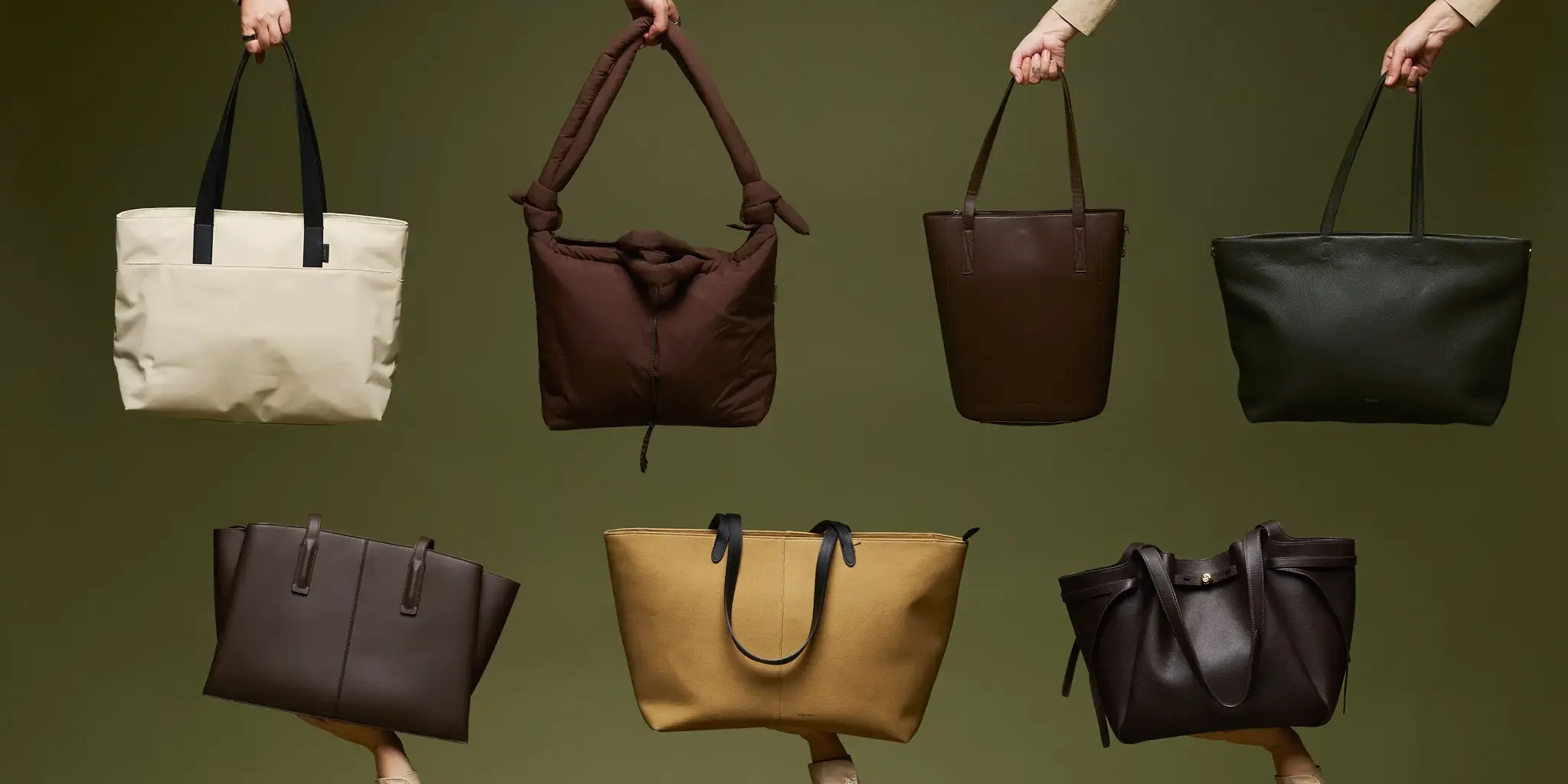
Buyer to brief
Name the Buyer, the Cadence and the Market.
A discharge batch, a first hundred and a monthly box are quoted differently. Send the cadence and the destination, and the reply opens with the compliance path.
The safety file
The Changing Pad Decides Which Certificate You Need
Most of a diaper bag’s life is a general product — until a changing pad, a bassinet insert or a detachable toy makes it a children’s product, and the file jumps from a supplier’s self-certificate to third-party lab testing, a children’s-product certificate and a permanent tracking label. The fork is settled at the brief, before a pattern is cut, and it decides which lab report the run ships with.
Ask first
Is the bag carried by an adult and sold with no infant-use feature?
The answer turns on design, marketing, packaging and how a shopper reads the bag — not only the label (16 CFR Part 1200). A bag sold as a nursery or baby item, or one bundled with anything a baby uses, reads as a children’s product whatever the tag says.
If yes — general use
A General Certificate (GCC)
- No third-party children’s lab required.
- A reasonable testing programme backs the general-product rules that apply.
- Phthalate and lead limits still apply to any plasticized part.
If no — a children’s product
A Children’s Certificate (CPC)
- Third-party testing at a CPSC-accepted lab.
- ASTM F2388 where a changing pad or changing station is built in.
- A permanent tracking label — maker, place and date of production, batch — on the bag and its packaging.
The fork is drawn to frame the brief. Which certificate applies is confirmed with a CPSC-accepted lab against the finished design — the page points the file, it does not issue it.
The ceilings the file must show
US and EU substance limits
United States · CPSIA
- Total phthalates (DEHP, DBP, BBP, DINP, DIDP, DnOP)≤ 1,000 ppm (0.1%)
- Lead in surface coating≤ 90 ppm
- Lead in accessible substrate≤ 100 ppm
- Small partsBarred for children under 3
- Tracking labelPermanent; maker, place & date, batch
European Union · REACH and GPSR
- Azo dyes, skin- or mouth-contact (REACH Entry 43)≤ 30 mg/kg
- Formaldehyde, consumer textile (Entry 72)75 mg/kg; baby guidance ≈ 20
- PFAS — PFHxA & related (Entry 79)25 ppb, from 10 Oct 2026
- General Product Safety (GPSR 2023/988)Applies 13 Dec 2024
- EU responsible person & batch IDRequired on file
Sources: CPSC / CPSIA (16 CFR Parts 1200, 1307, 1250) and the CPSIA tracking-label rule; ECHA REACH Annex XVII Entries 43, 72 and 79; Regulation (EU) 2023/988 (GPSR, applied 13 Dec 2024). Figures are current published rules; confirm the exact line with your lab at entry.
Where it works
The Scene Sets What the Bag Must Meet
A discharge-day kit, a changing table, an afternoon on a stroller and a wet bag on a hook test the same shell differently. Each scene loads the bag in its own way and asks for a different part of the brief — the pad and liner at the table, the strap root on the move, the dry bag on the hook.
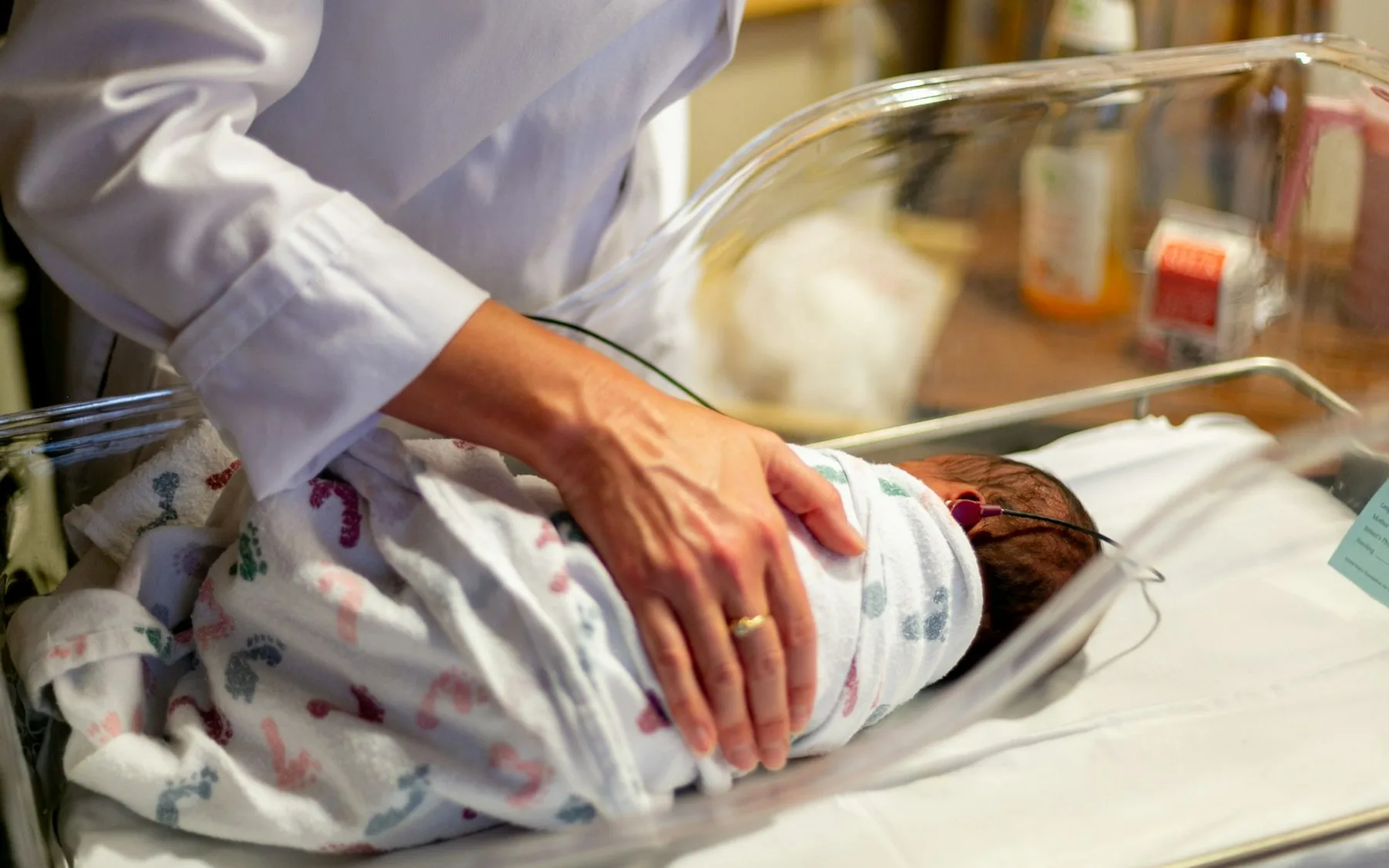
The ward on discharge day
A kit assembled by the maternity floor or a kit programme, laid in a parent’s arms as they leave — every item safe-screened, none of it formula.
What it meets
Carry a clean wet bag and carrier that clear the child-safety file and read as a gift, in a batch timed to a moving nursery census.
The programme answer
A non-formula wet/dry bag and carrier built to the destination market’s safety file, quoted at the batch size the ward actually delivers.

The nursery changing table
A pad wiped a hundred times, a bottle leaking at the base, a bag set down on a soft chair within reach of one hand.
What it meets
Wipe clean at the liner and the pad without soaking through, and lie flat so it dries rather than holding a damp smell.
The programme answer
A laminated pad seam laid past the stitch, a coated liner carried past the base, and the laminate peel-tested on the lot that runs.
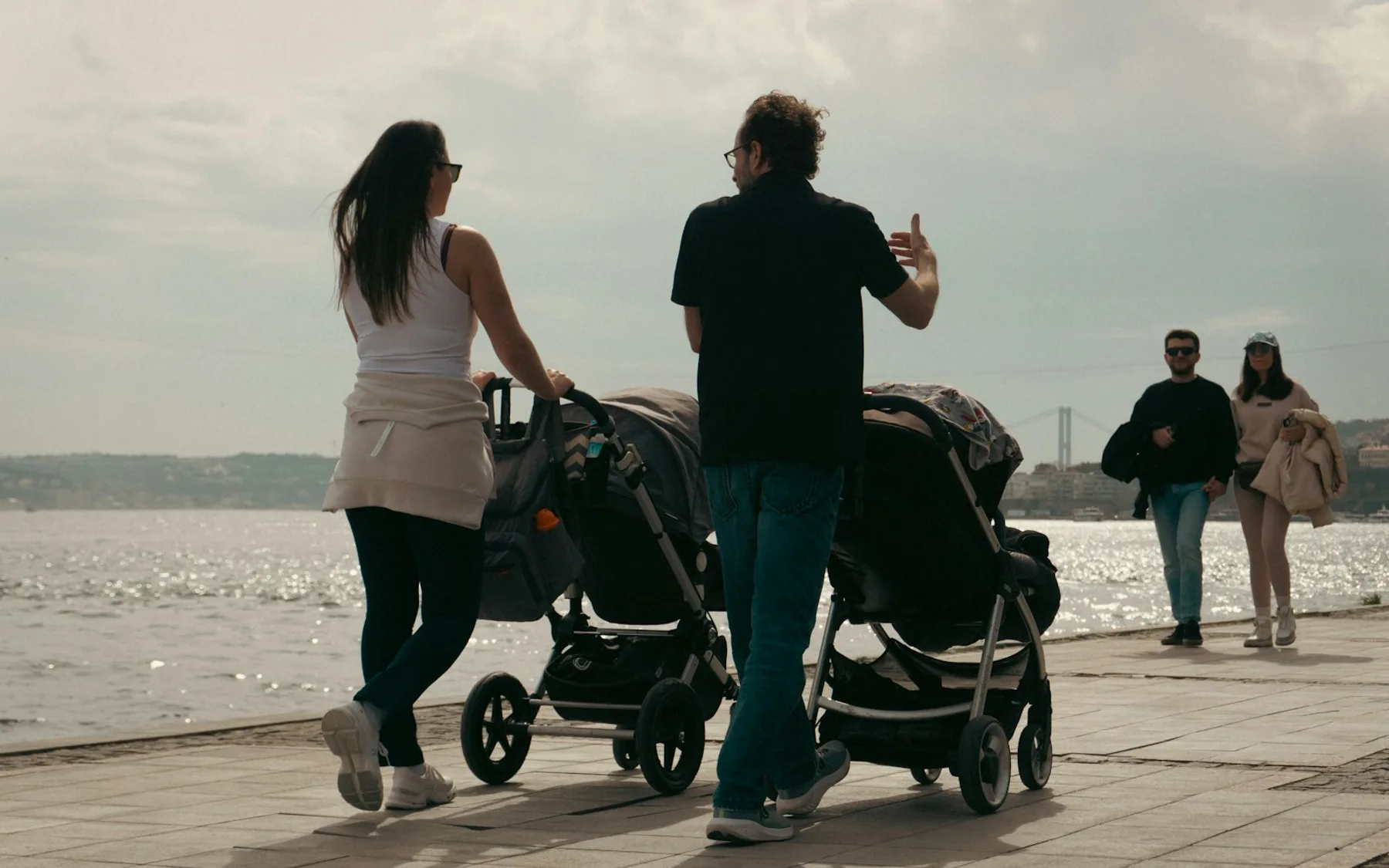
The outing on foot
A bag hung off a stroller bar for an afternoon, swung from a shoulder, set on a kerb — loaded, for hours, away from a table.
What it meets
Hang loaded from a stroller without the strap root tearing, and reach a bottle without opening the main compartment.
The programme answer
A bar-tacked strap root boxed to a set pull force and an exterior bottle slot a parent reaches one-handed.
The wet bag
A soiled or damp item dropped into a drawstring bag that then hangs a day before it is washed, wiped or carried home.
What it meets
Hold wet without wicking through, open and close on a drawstring that does not fray, and survive a wash cycle.
The programme answer
A PUL or coated dry bag on a reinforced drawstring channel, sized to the changing pad and quoted as its own line rather than a trim.
Scene photography from Unsplash, under the Unsplash License.
What the category shows
A Bag a Parent Buys by the Fourth Month
These are published category figures, not a client roster. They are here because a diaper bag programme is judged on how a parent uses the bag months in, and on the demand the market actually carries — the run is built to move those, not to win an unboxing.
- US$0.8–1.9B
the global diaper-bag market in 2025
Research houses put 2025 between roughly US$0.8 and US$1.9 billion depending on how wide the definition runs; growth is forecast at 3.5%–8.2% a year to the mid-2030s. The range, not a single point, is the honest read.
- ≈ 35%
of the market sits in North America
North America is the largest single region, with Europe adding a further fifth or so — the two together carry the bulk of branded and private-label demand a custom range sells into.
- > 45%
of bags sold are backpacks
The backpack is the leading format, the tote the fastest-growing — which is why the same shell has to work hung on a stroller and carried on a shoulder, not only set down.
- 68.3%
US mothers of under-sixes are in the workforce
More parents carrying a bag to work, to childcare and on the move — the demand behind a day bag that has to hold a feed warm and a pad clean away from a table.
- 2–3 h
is what a foil-lined bottle pocket actually holds
Field and product tests find insulated pockets slow a warm feed’s fall by only a couple of hours, so the pocket is quoted with a cold pack in mind — not sold on a datasheet hold-time.
- non-formula
is the open lane in hospital discharge kits
The CDC mPINC measure and the WHO Code steer hospitals away from formula-sponsored packs, so a ward’s kit turns on non-formula items — a wet bag and carrier are the safe, on-guidance fill.
Sources: Straits Research, The Insight Partners and Research & Markets (diaper-bag market, 2025–2034, differing scope); US Bureau of Labor Statistics (May 2025); CDC mPINC and the WHO International Code (hospital discharge packs). Figures are category benchmarks, not Leeline client results.
Landed cost and arrival
The Bill of Lading Reads as Textile, Not as Baby
Entry on the tariff follows material and declaration, not the aisle it sells in — declared a backpack it takes the backpack line; declared an “other” or a cotton bag it takes a lower one. The gap is double-digit ad valorem before the goods reach the shelf, so it is settled with a broker at entry.
- HTS 4202.92.31
As a backpack
- MFN base
- 17.6%
- Section 301, China
- +25%
- Effective
- ≈ 42.6%
Man-made-fibre backpack line: 17.6% MFN plus the Section 301 List 3 add-on. A diaper bag sold as a backpack takes this line.
- HTS 4202.92.20
As an “other” bag
- MFN base
- 5.7%
- Section 301, China
- +25%
- Effective
- ≈ 30.7%
“Other carrying containers”: 5.7% MFN plus the same add-on. A tote or shoulder diaper bag often lands here instead.
- HTS 4202.92.15
Cotton shell
- MFN base
- 6.3%
- Section 301, China
- +25%
- Effective
- ≈ 31.3%
Cotton textile outer: 6.3% MFN plus the add-on. The outer surface, not the look, sets the base line.
Sources: USITC HTS 2025 (subheadings 4202.92.31, 4202.92.20, 4202.92.15) and USTR Section 301 List 3 (Chapter 99, 9903.88.03). Excludes MPF and, on ocean freight, HMF. Section 301 scope and exclusions are subject to review — confirm the Chapter 99 treatment with a broker at entry.
Timing the landing
The date the bag must land by
- 01
Sample
Seven days, a working bag in hand before the range or the batch is committed.
- 02
Bulk by ocean
Six to eight weeks from order to port — the low-cost default for a stock that can plan ahead.
- 03
Express at cost
Where a dated launch or a short season window will not wait for the water.
- 04
Land by a date
The mode is chosen at quote against the date the buyer sells on, not improvised at packing.
Buyer accounts
The Batch Landed on the Ward, the First Hundred Sold Through
The accounts of a discharge-kit buyer and a founder launching a first range — two different cadences, and what each had to prove before the next order went in.
A wet bag and carrier cleared the child-safety file before the kit was assembled, so the ward could hand it to a parent on guidance that bars formula packs.
The first lot was timed to a moving nursery census and landed on the floor rather than a warehouse shelf.
A repeat batch was cut to the same signed sample, so the second discharge cycle carried the same bag as the first.
One carried sample became a hundred-piece opening, which is what made a first range possible without a five-hundred minimum.
Seven days brought a working bag with the pad and liner on it, and the retail price could be tested on the real thing.
The reorder, past the first hundred selling, was cut to the golden sample — same shell, same dye lot, no drift.
Sourcing questions
Frequently Asked Questions About Diaper Bag Manufacturer
Whether the pad makes it a children’s product, which tariff line it lands on, and how a batch holds its date — the questions a buyer asks once the first lot is in service.
Does a diaper bag need a CPC, or is a GCC enough?
It depends on whether the finished bag is a children’s product. A general adult-carried diaper bag with no infant-use feature is a general product, backed by a General Certificate of Conformity.
Add a changing pad, a bassinet insert or a detachable toy and the bag becomes a children’s product: third-party testing at a CPSC-accepted lab, a Children’s Product Certificate and a permanent tracking label.
The call is confirmed with a lab against the finished design, not guessed from the label.
A built-in changing pad — does that alone trigger children’s-product testing?
Usually yes. A changing pad is an infant-use feature, and a bag sold as a changing station or nursery item reads as a children’s product under 16 CFR Part 1200 however it is tagged.
Where the pad is built in rather than packed loose, ASTM F2388 for changing products comes into scope too. The brief is written to the pad-in or pad-out build on purpose, because that one decision moves the whole test file.
What is a tracking label, and where does it have to go?
For a children’s product, a permanent label on the bag and its packaging must identify the maker or private labeler, the place and date of production, and a batch or run number — so a recall can trace a single lot.
It has to survive the life of the product: sewn in or printed for textile, molded or engraved for hard parts. A peel-off sticker does not satisfy it. The lot number is set at cutting, so the label and the run are planned together.
The same bag can be a backpack or an “other” bag on the tariff — which is cheaper?
Declared as a man-made-fibre backpack (HTS 4202.92.31), the bag takes 17.6% MFN plus the Section 301 add-on — around 42.6% from China. Declared as an “other” carrying container (4202.92.20) it is 5.7% plus the add-on, around 30.7%;
a cotton shell takes a different line again. The classification follows the article and its stated use, settled with a broker at entry, so how the bag is built and declared is decided before the first container, not after.
A ward needs a thousand kits on a discharge date — can a hundred-piece floor supply that?
A hundred is the opening minimum per construction, not a ceiling.
A ward batch is quoted at the size its nursery census supports, on a repeat lot, with the first hundred proving the shell and the file before the larger discharge batch is cut.
The batch is timed to land on the floor against the date, so the sample stage runs ahead of the discharge calendar rather than against it.
A subscription fills a box every month — can a small reorder hold the same spec?
Yes, and it has to. A monthly or seasonal reorder is cut to the same signed sample, one dye lot reserved and the pattern held, so the fiftieth box matches the first.
Buying a trade bag each cycle is what makes a subscription drift; one master spec with a small recurring quantity is what holds it. The bag is sized to the box footprint at the first insert so it packs without a redesign.
A wet bag rides home with soiled or damp items — how is the liner proven?
On a PUL or coated face, a reinforced drawstring channel and a wash-cycle test off the sample.
The test is where a wet bag fails — the seam that holds the damp and the drawstring that frays under load — so both are run on the lot rather than assumed.
A liner that passes a wipe but lets go on a machine wash is caught before the run, not after a parent reports it.
Can a batch be proven before the full volume is committed?
A seven-day working sample is the proof: the actual bag, with the pad, the liner and the strap on it, loaded and carried before the bulk cut.
A first hundred then opens the range or the batch, and the package — the certificate, the label, the tariff line — is assembled alongside the sample so the file is ready before the container, not scrambled after the QA screen.