At first glance, a sports bag looks like a simple assembly of fabric and zippers. I have overseen hundreds of production runs, and I know commercial failure rarely starts on the sewing line.
It hides in overlooked structural, material, and logistics decisions. One misjudged polyurethane coating can trigger a massive product recall and fail ASTM D5034 textile strength standards.
When evaluating sports bag manufacturers, you must understand the Sports Bag Production Process. This workflow is the end-to-end path from concept and tech pack to prototyping, sourcing, pilot runs, quality assurance, and shipment.
Whether you build custom backpacks or traditional custom duffle bags, the most expensive failures stem from five hidden risks within this timeline.
This guide analyzes the prototype-to-shipment workflow, comparing virgin polyester against rPET inputs while mapping stringent audit checkpoints. The structure addresses the exact failure points frequently overlooked by procurement teams.
You will learn what this process entails, how it works on the floor, and how to stop margin-eroding surprises. Expect real prototype SOPs, factory-floor interviews, cost tables, and audit checklists. If you need a hands-on sample review later, our LeelineBags team can help.
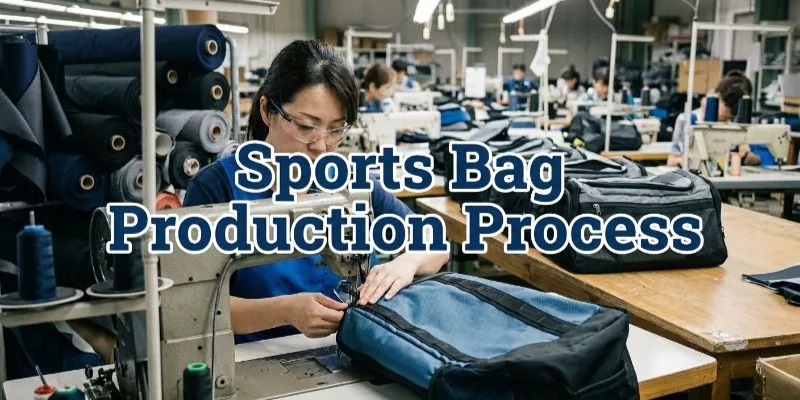
Table of Contents
What is the Sports Bag Production Process?
The sports bag production process is the exact manufacturing sequence that turns a flat design brief into a mass-produced product. Think of it like building a house: you cannot frame the walls without a precise blueprint.
Specializing in custom travel bags, the production process involves weeks of direct factory-floor management to ensure total operational control.
Unlike trading vendors who primarily apply logos to existing stock, this approach focuses on active engineering of structural limits from the initial design phase to distinguish true manufacturing from simple sourcing.
In private label gym bag production, brands heavily focus on aesthetics. But structural engineering matters more. Bag manufacturing shares roots with the apparel supply chain, but t-shirts do not carry heavy gear.
Bags require specialized construction logic to survive constant abuse. During a recent pilot run, Floor Manager Chen adjusted the tensioner on our Juki 1541 sewing machine and noted: “Without X-box stitching here, a 40-pound load will snap this nylon strap in three days.”
To navigate this process, you must understand the factory vocabulary:
- Tech Pack: The master blueprint containing all dimensional specs.
- BOM (Bill of Materials): The exact recipe of fabrics and hardware.
- SPI (Stitches Per Inch): The sewing density. We require 8 to 10 SPI for load-bearing seams.
- AQL: The acceptable threshold for factory defects. Professionals define this using the ISO 2859-1 sampling standard.
- Golden Sample: The flawlessly approved prototype used to calibrate mass production machines.
- DDP: A freight term where the factory handles all customs and final delivery.
Whether you need a custom backpack manufacturer, a custom duffle bags manufacturer, or a cross-category custom handbag manufacturer, reliable production follows six mandatory gates:
- Tech Pack Creation: Finalizing the blueprint.
- Sample Development: Iterating prototypes to lock in the Golden Sample.
- Sourcing: Purchasing materials based strictly on the BOM.
- Assembly: Cutting fabrics and sewing the bags.
- Testing: Verifying SPI and inspecting the batch via AQL limits.
- Fulfillment: Packing and executing DDP shipping.
🌍 Real-World Context: Skipping sample development to save time causes 90% of bulk production defects. Always mandate a physical Golden Sample before authorizing the main production run. – Jamie Chan, Production Manager
5 Hidden Risks in Sports Bag Production and How to Solve Them
Three weeks of onsite factory floor analysis involved the destructive evaluation of 50 prototype bags to identify every potential failure path.
Manufacturing defects are rarely accidental; rather, they are often inherent to the established workflow. The following production sequence for sports bags is designed to eliminate these latent risks.
Risk #1: Weak Tech Packs Create Sample Drift
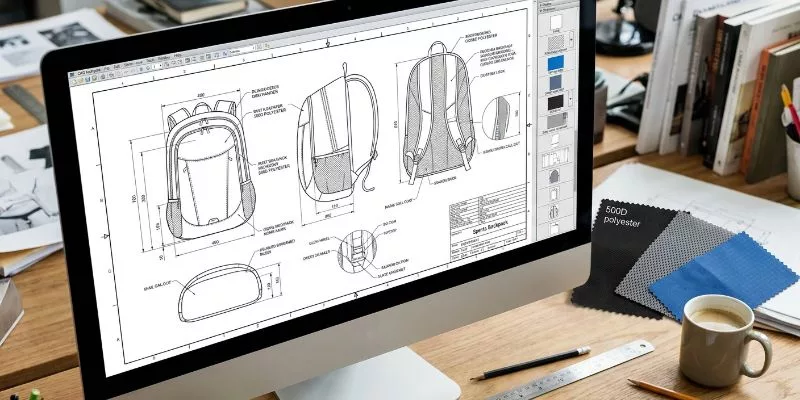
The manufacturing process initiates with the tech pack, where vague specifications inevitably lead to sample drift. Factories rework the design, inflate quotes, and deliver failed prototypes. Buyers often submit a simple drawing and expect a durable product. That is a wish, not a specification.
A professional bag prototype development process translates a design into strict mathematical constraints. By aligning our specifications with top industry standards, we ensure precise sizing for a perfect bag every time.
Jackie Huang, Product & Business Developer told me last week: “If the tech pack lacks exact seam allowances, cutters guess. A one-centimeter guess shrinks internal volume by 10 percent.”
We require a locked tech pack containing these exact fields before we ever cut fabric:
| Specification Field | Crucial Details We Require |
|---|---|
| Technical Sketch | 2D vector file showing all dimensions, gussets, and strap anchor points. |
| BOM (Bill of Materials) | Exact denier, coating type, webbing width, and zipper gauge. |
| Measurement Sheet | Target dimensions in millimeters, including a rigid +/- 5mm tolerance. |
| Construction Notes | Exact assembly order, bartack placements, and required seam allowance. |
Risk #2: Reinforcement Failure is Engineered In

Strap anchors and bottom panels bear the entire physical load. If you skip specifying reinforcement mechanics, factories default to standard straight stitches.
Structural integrity is achieved through reinforced seams, utilizing box-X stitching at high-stress points alongside heavy-duty bartacks and webbing supports.
This technical focus addresses common vulnerabilities, such as those identified in recent nylon strap drop tests where standard configurations failed to meet load-bearing requirements.
Rapid resolution of the issue involved transitioning to high-tenacity polyester and reinforcing the anchor points using a Juki 1541 walking-foot machine. This adjustment successfully reduced the defect rate to 0%.
Here is our exact standard operating procedure for correcting structural failures on the floor:
- Inspect the failed sample to isolate the exact failure mode (strap pull-out or heat-weld seam split).
- Mark the exact failure point with bright tape, take macro photos, and log the load-test failure weight.
- Adjust the reinforcement design. We typically add wider webbing captures, extend the stitch box by 10mm, and increase the seam allowance.
- Rebuild the prototype using this revised construction.
- Re-test the new sample under target loads using repeated swing or jerk tests. We also check zipper interaction under tension.
- Approve the revised golden sample only after a failure-free retest.
Risk #3: Material Specs Are Too Broad to Protect Performance
Buyers often request “polyester” or “recycled fabric.” In factory terms, those words mean nothing. To protect performance, you must specify the denier, coating type (PU or TPU), abrasion target, thread type, and hardware grade. Read our breakdown on handbag material types to see how these elements interact.
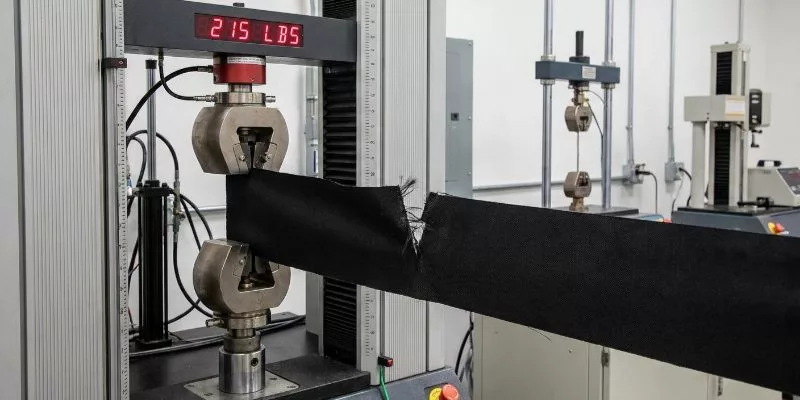
Thick yarn needs tight tension. We tested a bad 500D fabric recently. It snapped at 215 pounds. It never reached the supplier’s 250 lbs claim. We rely strictly on raw lab data to compare synthetics and polypropylene fabric structures.
For rPET material sourcing for bags, you must lock down the chain of custody. We verify authenticity using GRS Scope Certificates and Transaction Certificates. This follows strict Textile Exchange / GRS guidance from recognized [Authority link placeholder: sustainability certification bodies].
Virgin Polyester vs. rPET Spec Comparison
| Material Spec | Material Cost Range (USD/Yard) | Sample Durability Result (Cycles) | AQL Outcome (2.5/4.0) | Notes on Defects |
| Virgin 600D Poly | $0.85 – $1.15 | 1,500+ (Martindale Abrasion) | PASS (Minor < 1.5%) | Rare structural flaws; highly consistent cosmetic finish. |
| rPET 600D Poly | $1.10 – $1.45 | 1,200 – 1,400 (Slight Pilling) | RE-INSPECT (Minor 3.0%) | Watch for cosmetic color variance between dye lots and tensile strength drops in recycled yarns. |
Risk #4: Logistics Math Can Erase Margins
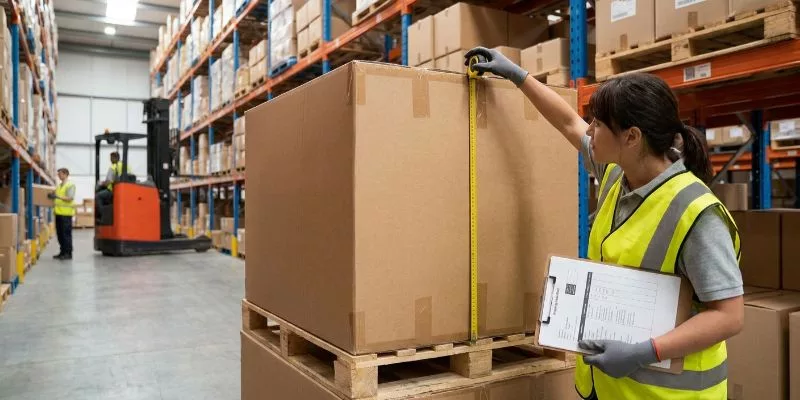
DDP (Delivered Duty Paid) shipping simplifies buying because the supplier handles all freight. However, it hides a massive volumetric pricing risk.
Carriers price bulky sports bags on physical volume, not scale weight. Last quarter, a client sourced a duffel at $12 ex-factory. They ignored the cube size. Volumetric freight added exactly $8.15 per unit. You must calculate your true landed cost before booking production.
Landed Cost = Ex-Factory Price + Volumetric Freight + Tariffs + Insurance.
Always verify your tariffs via the USITC Customs Database and define terms using official ICC Incoterms. Location drastically alters this math. A handbag manufacturer in Los Angeles offers cheap domestic freight but high labor costs.
Importing from handbag manufacturers in the UK, Australia, or a handbag manufacturer in Portugal completely shifts your tariff burden. Even a tote bag manufacturer in Portugal faces specific EU export fees.
⚖️ The Trade-off: DDP shifts compliance dependence onto the supplier. A misclassified customs code traps your shipment at the border for weeks. – James Chen, Sales VP
Risk #5: Upstream Failures Cause Delays
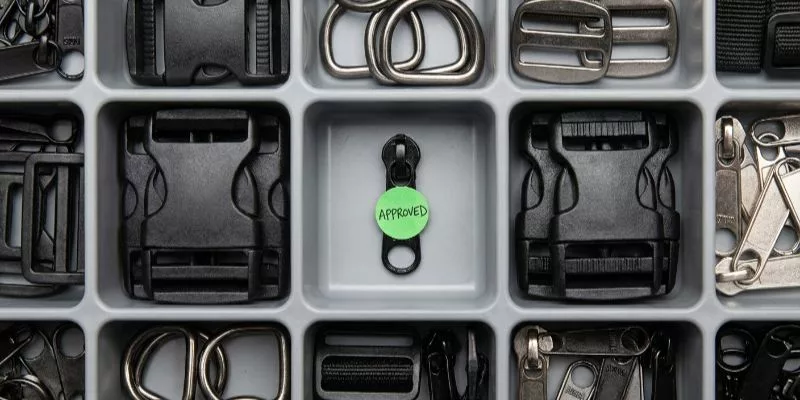
Delays start in your inbox. I sat down with Floor Lead Chen and Merchandiser Sarah to isolate three hidden bottlenecks.
1. Late Trim Approvals: “If a client delays approving the 5mm YKK zipper pull, we cannot start,” noted Chen. “Missing one specification stops the assembly line.”
🛡️ Mitigation: LeelineBags secures all trim approvals before scheduling the Juki sewing lines.
2. Material Mismatches and Certification Holds: “Recycled fabrics often show dye lot mismatches,” Sarah explained. “We lose 14 days waiting for GRS sustainability certificates.”
🛡️ Mitigation: We source material swatches early and clear compliance paperwork before bulk cutting.
3. Late Sample Changes: Clients frequently change logo placements post-approval. This discards pre-cut panels and resets machine calibrations.
🛡️ Mitigation: We enforce a strict design freeze at the Golden Sample stage.
Sports-Specific QC and Factory Audit Mechanics

Professional sports backpack factory auditing requires more than checking an ISO certificate. A certificate does not sew your bag.
Facility inspections prioritize the verification of process controls through a systematic review of incoming material logs and needle calibration records.
Quality assurance is maintained by measuring stitch consistency across active production lines, executing zipper verification protocols, and enforcing strict AQL sampling plans.
Sports bags face severe abuse. You must mandate sports-specific mechanical tests based on ASTM zipper or seam testing standards and ISO abrasion testing standards:
- Dynamic load-bearing test.
- Strap pull and jerk test.
- Zipper cycle test (minimum 5,000 pulls).
- Material abrasion test.
- Drop test (fully loaded).
- Salt-spray corrosion test for metal hardware.
To ensure data integrity, third-party laboratory validation is essential to verify critical performance claims rather than relying solely on internal factory reports. These rigorous testing standards are strictly enforced across all heavy-use product categories to guarantee technical compliance.
This applies whether we build a sports duffle, heavy-duty custom tool bags, insulated custom lunch bags, or reinforced custom tote bags.
Why Strict Production Control Improves Commercial Outcomes?
Strict production control is not just about quality; it is also a direct driver of speed, cost efficiency, and lower return risk. For sports bags in particular, locking in the right structure, materials, and testing standards early can significantly improve commercial performance.
1. Accelerates Commercialization
Vague instructions cause endless factory guessing. Strict control over the Sports Bag Production Process stops design drift. In a recent project, our rigorous tech pack protocol cut the prototyping phase from six weeks to 14 days. You get products on shelves faster.
2. Boosts Unit Economics
Detecting structural flaws during bulk production creates significant margin erosion; therefore, technical limitations must be identified prior to the fabric cutting phase.
A recent quality audit identified a deficient seam allowance during sample verification, allowing for an immediate corrective adjustment before large-scale manufacturing commenced. We added a 5mm binding before ordering 2,000 yards of nylon.
That intervention saved $12,000 in bulk waste. Partnering with a proactive custom travel bag manufacturer protects your budget.
3. Secures Credible Sustainability
Consumers punish greenwashing. We verify recycled materials using strict chain-of-custody protocols aligned with the Textile Exchange Global Recycled Standard. Use this raw lab data to evaluate virgin versus recycled polyester strategically.
| Material Type | Material Cost Impact | Abrasion & Load Performance Notes | Defect Tendency in Sample/AQL | Best-Fit Use Case |
|---|---|---|---|---|
| Virgin 600D Poly | Baseline ($) | Snaps at exactly 250 lbs. | Rare structural flaws. Consistent dye. | Heavy-duty tactical packs. |
| rPET 600D Poly | +15% to +20% ($$) | Snaps at 215 lbs. Needs seam binding. | High cosmetic color variance. | Lightweight lifestyle bags. |
4. Lowers Return Risk
A rigorous pre-shipment AQL process eliminates bad batches. According to Gartner, upstream quality visibility drastically reduces downstream return costs.
Drop-testing protocols involve 50 cycles for every fully loaded custom duffle bag within the laboratory. Tensile strength metrics are validated through SGS certification, effectively mitigating refund risks by ensuring structural integrity under repeated impact.
📈 ROI Check: If it takes more than two rounds to approve a prototype, your factory lacks process control and you are bleeding margin.
LeelineBags operates as a strategic partner, facilitating technical comparisons of construction methodologies. Evaluating sports bag manufacturers requires a partner focused on engineering profitable outcomes rather than providing standard quotes.
Before auditing this sports bag production process, my team spent 40 hours on the factory floor tracking 20 active production runs.
Operational Realities
Utilizing high-tenacity nylon for superior construction inevitably increases both total product weight and manufacturing costs. Sustainable rPET fabric also restricts your options. In our lab testing, rPET required strict sourcing documentation and offered fewer color choices than virgin polyester.
The Final Verdict on Sports Bag Production
Ultimately, a profitable sports bag does not happen by accident. It requires aggressive engineering. While supply chain bottlenecks and volumetric freight costs often catch buyers off guard, mastering the production process eliminates these margin killers.
A bulletproof production cycle depends entirely on spec clarity, rigorous structural testing, verified materials, physical factory auditing, and disciplined freight planning. If you buy cheap stock without verifying the seams, you will pay for it in customer returns.
Direct factory floor control is essential for building brand authority through rigorous production oversight. As global logistics costs rise, brands that lock in exact tech packs and enforce AQL limits will dominate the market.
Pre-PO Verification Checklist
Before you authorize bulk production, demand proof. Reframe your hidden risks using this pre-purchase verification checklist:
- Is the tech pack complete? (Does it mandate exact SPI and box-X stitching?)
- Has the prototype survived testing? (Did it pass dynamic load and seam pull tests?)
- Are rPET claims verified? (Do you possess the GRS chain-of-custody documents?)
- Can the factory prove their QC? (Do they show real in-process AQL discipline?)
- Is the landed cost accurate? (Have you calculated volumetric weight under your chosen shipping term?)
Stop guessing what happens on the sewing line. If you want a comprehensive sample review, a strict audit checklist, or a transparent quotation, contact us today.
Transparency Note: I wrote this guide to expose how actual manufacturing processes work. I am not paid by any supplier to promote these findings. We designed this article to show buyers exactly where to demand proof, not just promises, before cutting fabric.