
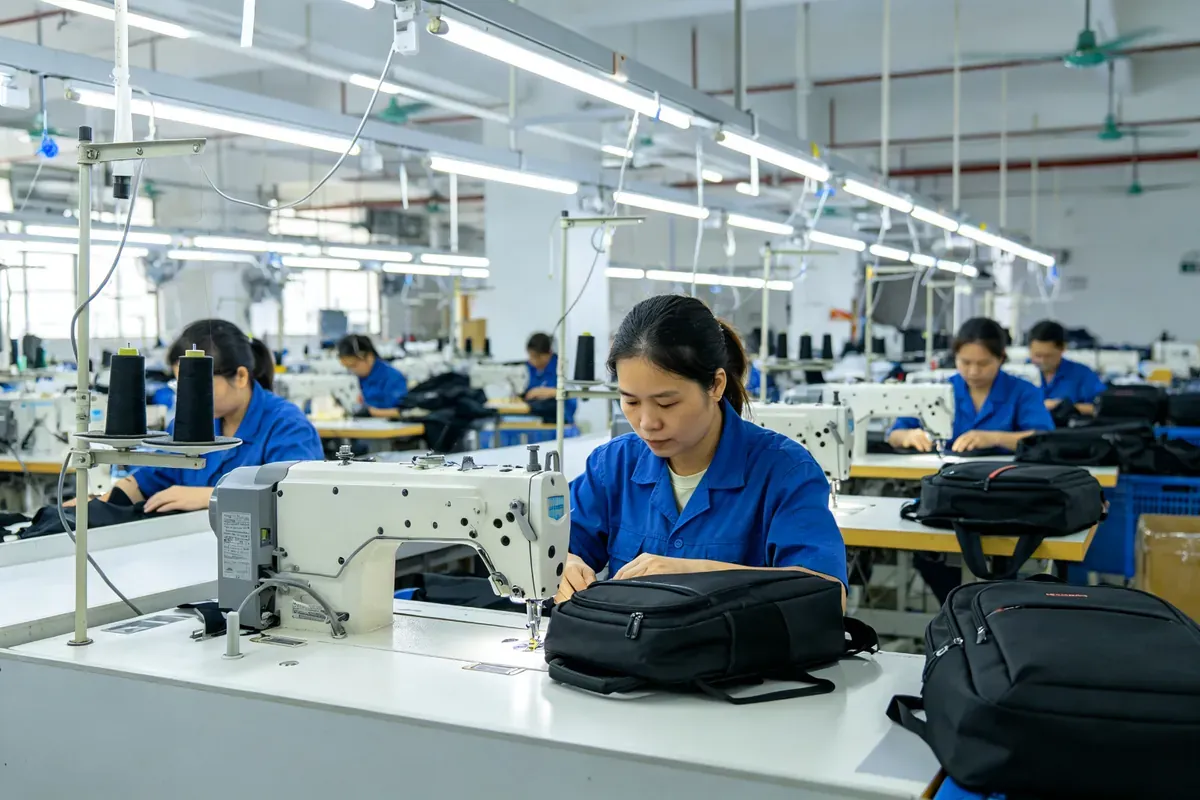
MOQ 100 sounds like a small-batch discount. It is a cost structure, and that distinction decides whether a hundred-piece run lands near the target unit price or well above it.
Where a quote is measured across the whole purchase, a hundred pieces work on a custom backpack program in one stock color.
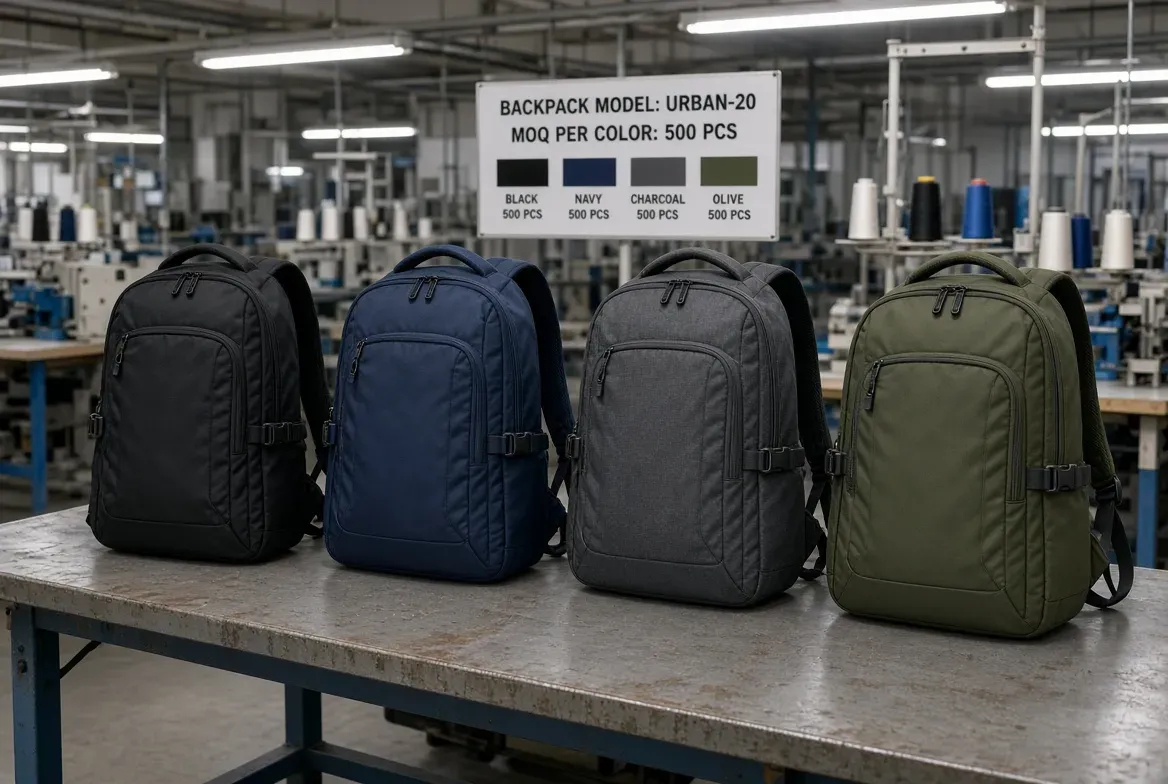
Request the same bag across four Pantone colors, and the same quote becomes 400 pieces, or a per-unit price that reads like a mistake.
💡 Disclosure: LeelineBags builds bags in Wuhan at MOQ 100. Cost data comes from internal BOM and production sheets, mostly as percentages, so a dollar figure illustrates a charge. Other factories’ numbers are as reported, unaudited, and no manufacturer pays me for these findings.
MOQ 100 Is Rarely One Number
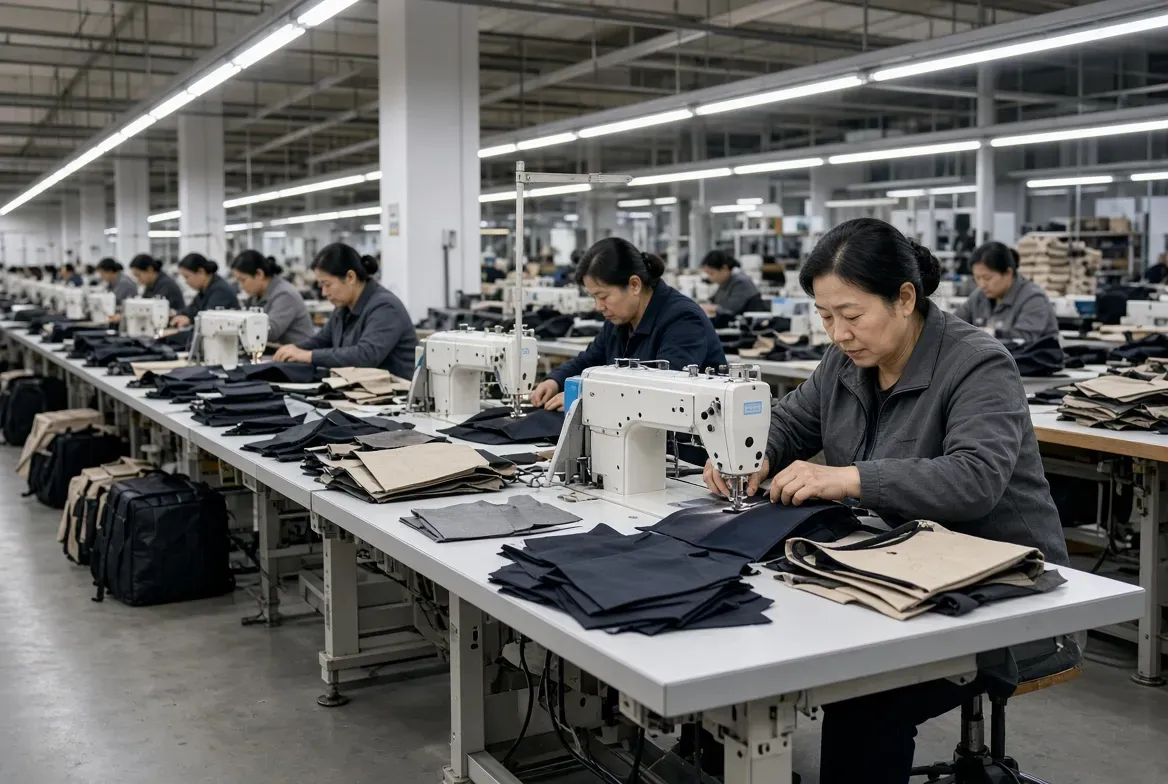
Minimum order quantity sounds like a fixed number. In bags it moves with whatever it is measuring, and the definition is worth pinning down first. It also moves by country: the same brief quoted at a German workshop and at a Chinese factory lands in different ranges, which we set out in German workshops against Chinese factories.
The smallest run at which a factory’s setup stops costing it money, not a small-order discount.
— Yan (Shirley) Liu, bag sourcing and MOQ expert
A quote can measure the floor against the whole purchase, one style, a single colorway, or one SKU and logo variant. Same words, four different order sizes.
| Quote reads | Usually means | What it does to a hundred-piece plan |
|---|---|---|
| MOQ 100 | total pieces across the purchase | workable in one style on shared materials |
| MOQ 100 per color | a hundred per colorway | four colors become 400 pieces |
| MOQ 100 per style | a hundred per construction | a second size or build doubles the run |
| Fabric or trim minimum | set by the mill or the die-caster | can exceed the bag quantity outright |
A quote that says MOQ 100 without naming which measure it uses is not yet a commitment. Read it as a per-color figure and the color sheet reveals that four colors quadruple the run, at a unit price the approved sample never carried.
The same split explains why a factory will make one sample but hesitate at a hundred pieces. A sample is manual work in a sample room, where a technician absorbs the changeover by hand.
A bulk run starts the line, and the production process is where that changeover is spent. The same bag now pays for a marker, a machine changeover, a first-piece approval and an inspection plan.
That inspection plan is not optional. It follows a written sampling standard rather than a promise, and the AQL inspection standards behind a quote matter as much as its unit price.
Why a Bag MOQ of 100 Costs More Per Piece Than 1,000
A hundred-piece order is a bus chartered for ten passengers. The seats are empty; the driver, the fuel and the route still cost the same. A bag line works identically.
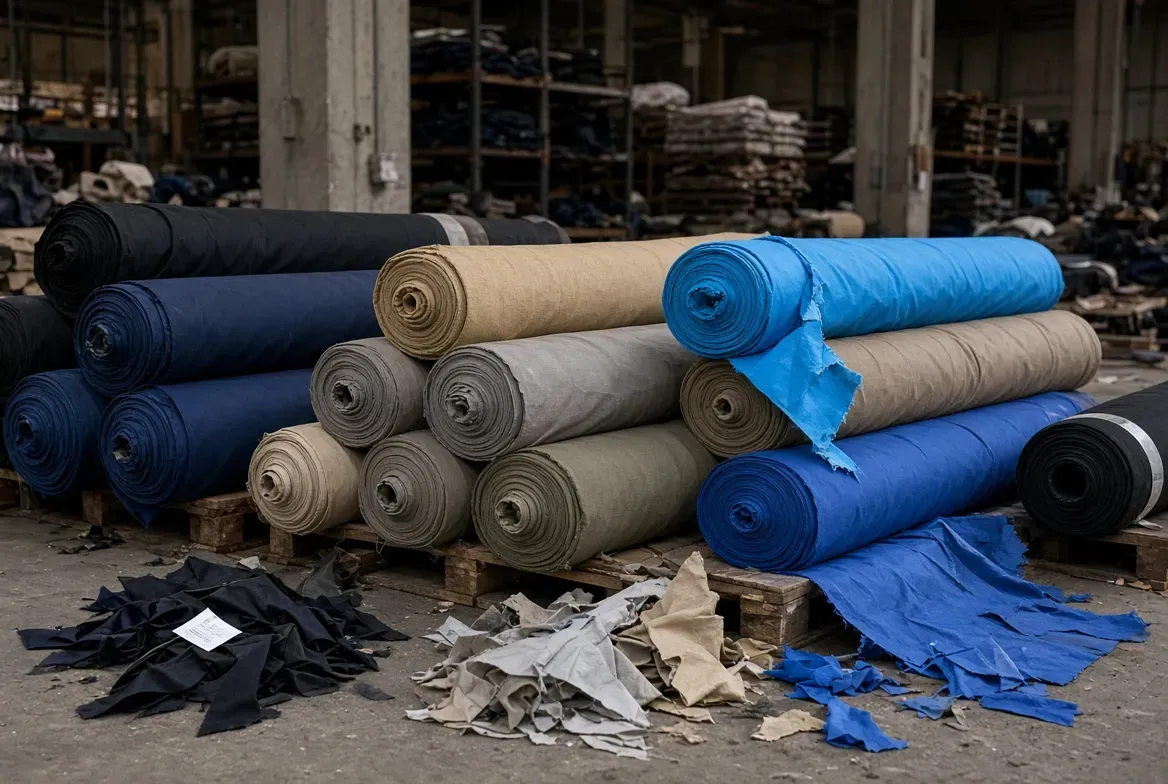
Take a backpack shell that uses roughly 1.1 linear meters of 1.5 m fabric. A hundred bags need 110 m, and a 15% marker loss pushes that to 127 m.
If the mill sells in 100 m rolls, the order buys 200 m and carries 73 m. A dyed fabric may carry a 300 m minimum, so the order buys 300 and holds 173 m of deadstock it may never use.
The premium rarely hides in the sewing. It hides in fixed work spread across a short run, and in minimums the bag quantity cannot reach.
| Cost line | At 100 pieces | At 1,000 pieces | Behavior |
|---|---|---|---|
| Cutting setup and marker | one marker, short lay | marker reused across more fabric | fixed |
| Machine changeover and thread | line stops to switch style | changeover amortized over more pieces | fixed |
| Logo setup | screen or plate made for the run | same setup, more impressions | fixed |
| First-piece and in-line checks | same inspection level either way | same inspection level either way | planned |
| Fabric and trim purchase | mill minimum can exceed use | use matches or beats the minimum | steps up |
| Operator learning curve | operators still finding the method | operators settled by piece 300 | slides down |
💡 Key Insight: A low-MOQ quote is not a rejection and not a discount. It recovers fixed work per piece. Match material, color count and SKU count to the factory’s real changeover before arguing about the unit price.
Reading the Premium Inside a Quote
When a quote comes back higher than expected, the difference is rarely in the sewing cost. It sits in surcharges buyers accept without reading. Ask for each one broken out and the premium becomes visible.
Setup charged as its own line
A screen, a die, a plate or a pattern grade is one-time work quoted as a lump sum. The charge is legitimate. The question worth asking is what happens to it on the reorder: credited, waived, or paid again.
Material minimums you pay for and never use
A die-cast zipper puller carries a die charge quoted at $800 against a 1,000-piece minimum, so a hundred-bag order funds 900 pullers it will not use. The bags were fine; the buyer funded a component inventory.
Screen-printed labels, custom woven tape and branded boxes carry the same shape of minimum.
A custom woven label also has to meet the textile labeling rules for fiber content and country of origin (16 CFR Part 303), so branding and compliance arrive in the same order.
Dye-lot and short-run fabric
Three colors drawn from two dye lots produced seven shells with a visible shade step in a hundred-bag test.
No seam was defective. The failure was lot matching on a short run, the same color-control risk that leather color fastness testing exists to catch.
Shade control of this kind belongs with wider leather quality control, and it is the reason stock colors keep a low-MOQ program realistic.
A cheaper quality plan
These are the checks the table counts as planned rather than fixed. A quote that lands 10% cheaper may simply have planned fewer of them.
⚠️ Critical Warning: A quote without a written defect standard and inspection level is not comparable with one that carries them. The cheaper number may be cheaper because it inspects less.
What an MOQ 100 Pilot Run Actually Buys
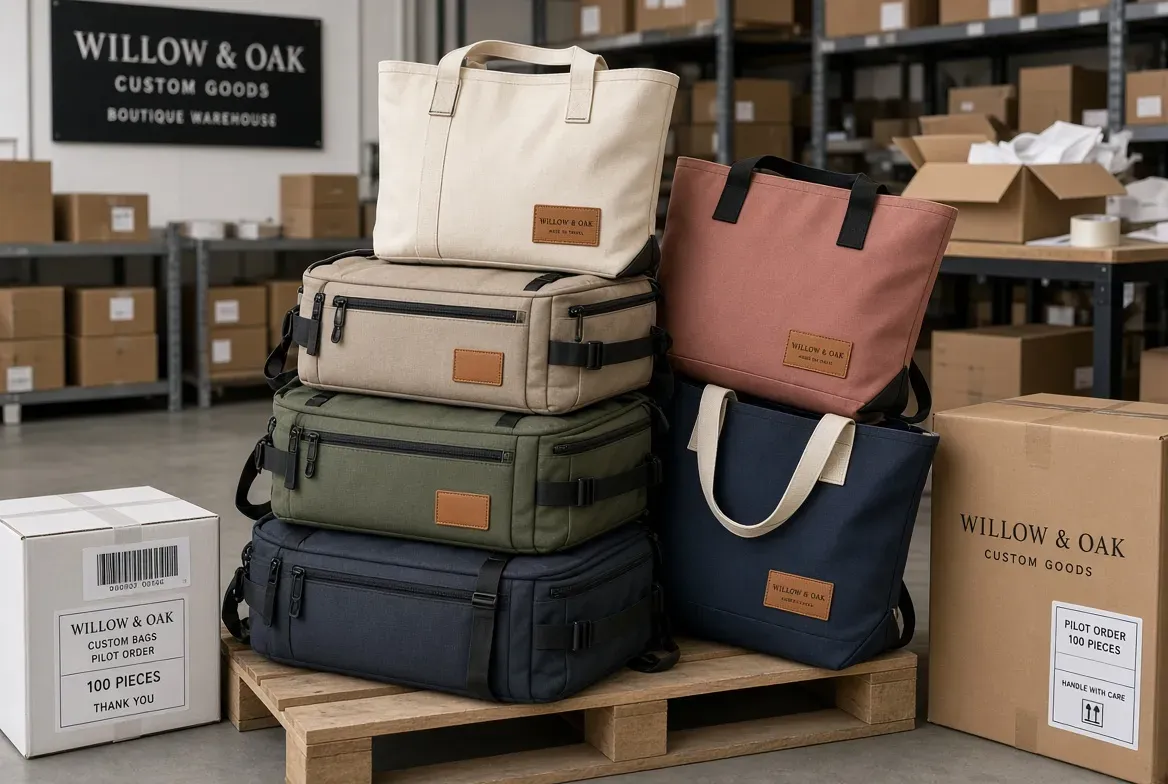
It buys a cheaper way to be wrong: a mistake at a hundred pieces costs a tenth of what the same mistake costs at a thousand, and the information arrives while there is still time to act on it.
Market proof before capital commitment
A boutique founder tested a signature tote at a hundred units in two stock colors, standard hardware and a heat-transfer logo.
Sixty-eight sold in six weeks on Shopify and the weaker colorway was dropped. Three hundred units of the winner were reordered.
A thousand-piece launch would have buried most of that cash in deadstock before the first sell-through report. The same logic runs through a custom tote program built for test-then-scale.
Design flaws caught on the floor
A strap anchoring issue showed up on the fortieth tote of a test run. The stitch box was reinforced and the change was approved at no tooling cost. At a thousand pieces the same flaw is hundreds of reworks, or a recall.
Cash kept for the launch
A hundred-piece run leaves the rest of the budget for photography, ads and the reorder itself. The pilot is not the product launch. It is the test that funds it.
When MOQ 100 Turns Against You
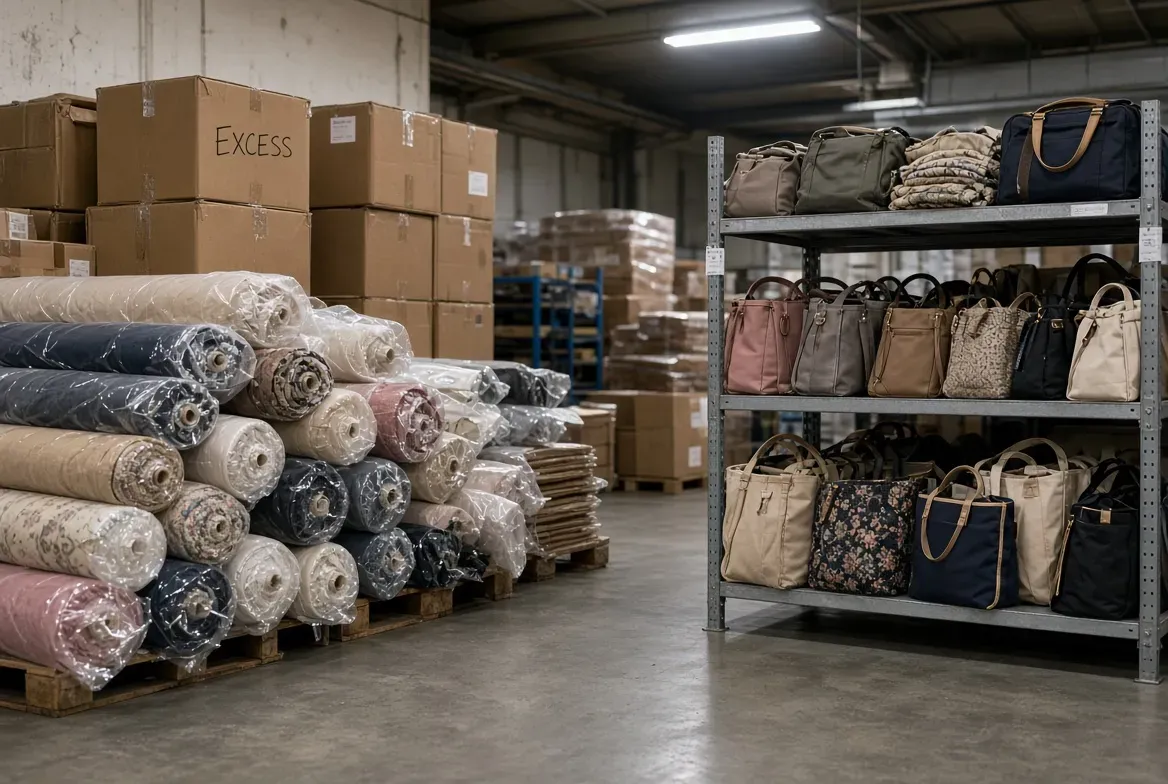
MOQ 100 is not automatically the right first order. Some project shapes push the surcharge past the value of the information a test run produces.
Multiple colorways on one hundred pieces
Four colors split a hundred units into four micro-batches of 25.
Shell fabric, lining, zip tape, webbing, labels and packing all multiply, and changeover time repeats per color.
On a custom handbag program, the factory price is not the problem; the plan was never a hundred-piece plan.
Custom molds and custom dye on a test order
A mold amortized across a hundred pieces carries ten times the per-unit load of the same mold spread across a thousand. Custom Pantone dyeing behaves the same way. Both are worth the money on a proven design and rarely worth it on a first run.
Luxury packaging at small quantities
Rigid boxes, dust bags, custom inserts and tissue all carry their own minimums. A launch that depends on unboxing theater usually needs the packaging minimum more than it needs the bag minimum.
No reorder path
If there is no plan to scale, the low-volume surcharge never gets recovered. The test run stops being a cheap way in and becomes a permanent cost.
⚖️ The Trade-off: Most simplifications, whether a stock color, a standard puller or a shared lining, trade a little distinctiveness for a unit price the order can survive. Make that trade deliberately, or the factory will make it for you.
How to Spec a Hundred-Piece Order That Prices Well
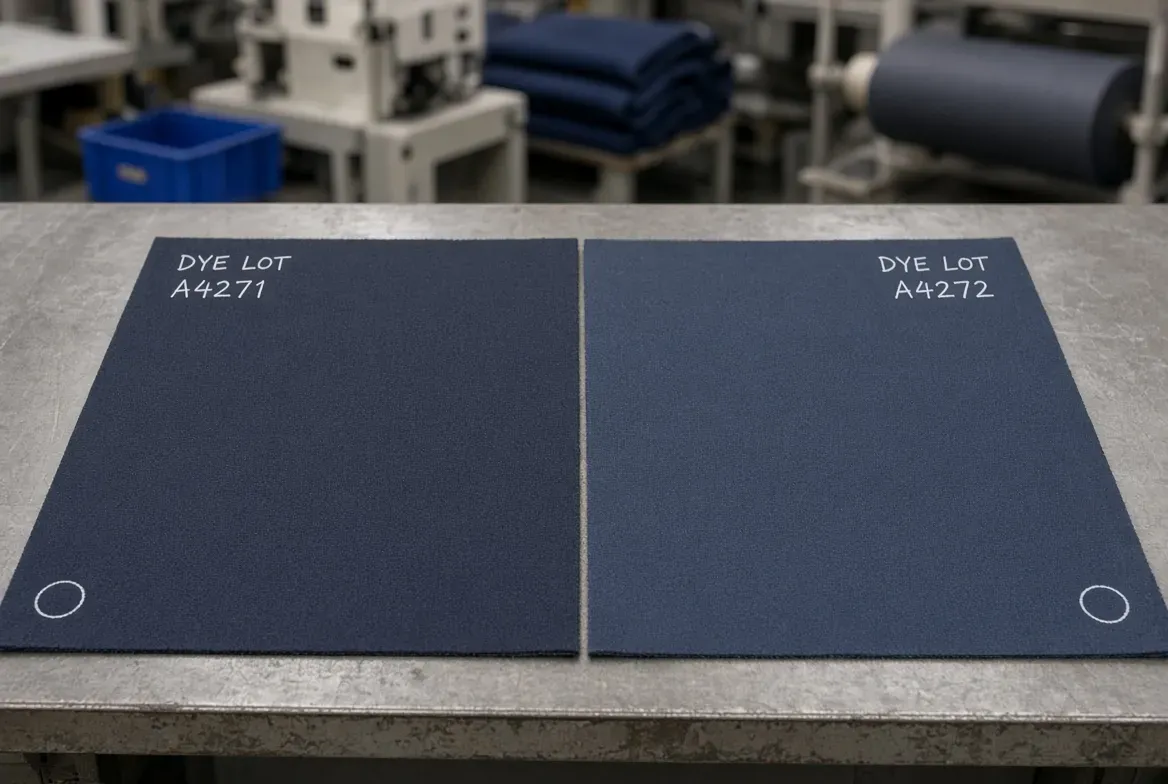
The spec is where a short run wins or loses its unit price. Most of the difference sits in these choices.
- Lock the hero style before adding colorways. A second color is a second plan.
- Ask which quantity the quote measures, and get the answer in writing.
- Start on stock fabric colors. Custom dye belongs on the reorder, not the test, and the fabric options the mill holds in stock are what make a short run possible.
- Standardize hardware and sliders. Stock pullers remove a die minimum outright, and the hardware accessories a plant already stocks need no new tooling.
- Skip custom molds on the first run. Nothing at this volume needs its own die.
- Approve a pre-production sample made from real bulk material, not sample-room stock.
Lining is the quietest of the six. A shared stock lining can remove an entire mill minimum from the order, which is why lining specification belongs in the first brief rather than the second sample round.
Verdict: When a Hundred Pieces Is the Right Order
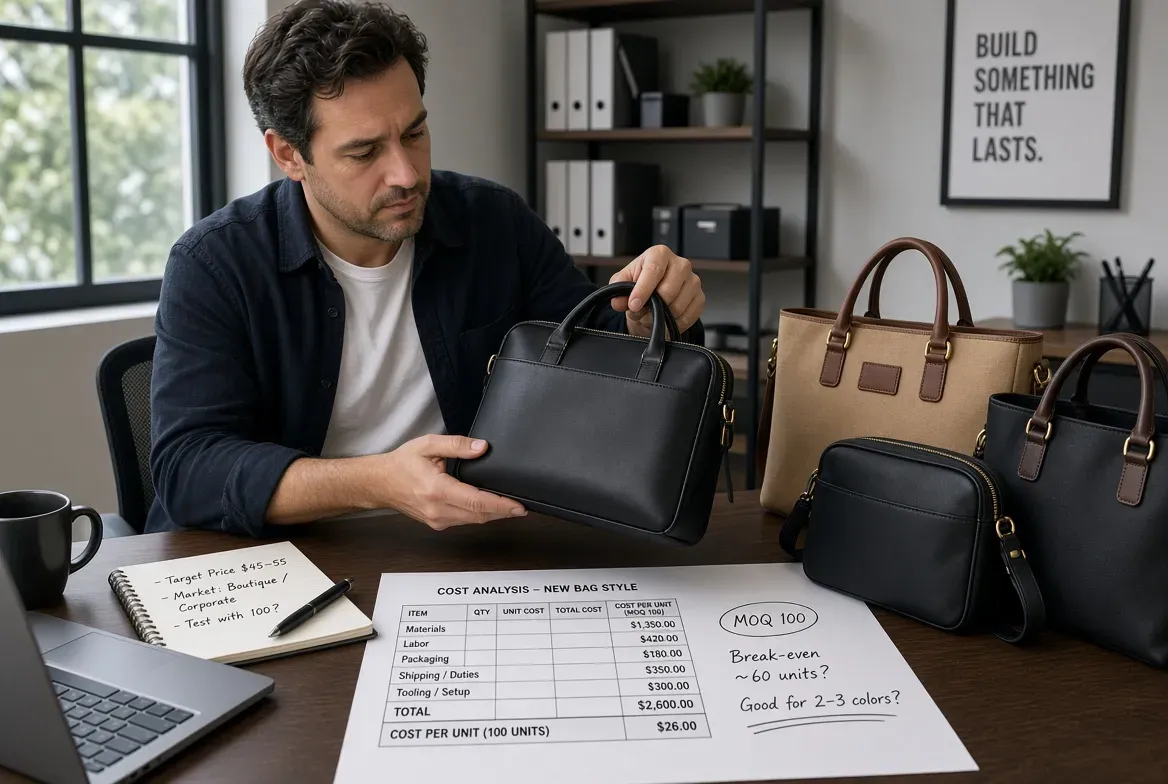
One hero SKU, one or two stock colors, stock hardware and a realistic reorder plan: with those in place, the spec above clears and a hundred pieces is the right first order.
A launch that depends on four colorways, custom tooling and luxury packaging is the wrong first order. That program needs 500 pieces or a simpler product.
The test is blunt. If the pilot sells and the spec has room to simplify, the surcharge was tuition.
If the pilot sells and the design cannot simplify any further, the line carries that cost permanently.
🧠 Author’s Verdict: A hundred pieces is the right first order when one hero style, stock materials and a real reorder path clear the spec above. Yan (Shirley) Liu, a bag sourcing and MOQ specialist, puts the same condition on the number itself: until a quote names what its MOQ measures, the figure is a placeholder, not a commitment.
Price it into the product, or rebuild the spec before the second order, following the design-for-manufacturing steps that keep cost out of the build.
A UK leather maker and a Portugal handbag factory often quote a different starting quantity for the same specification.
Comparing three quotes is only meaningful when one names its MOQ definition.
Send the style, the color count and the components that have minimums, and a feasibility check will tell you whether the design is a true hundred-piece build or a higher-MOQ program wearing a pilot label.
Frequently Asked Questions About MOQ 100 in Bags
1. Is MOQ 100 cheaper than ordering 500 pieces?
No. The total cash outlay is lower, but the cost per bag is higher. Changeovers spread across fewer units, and a low-volume surcharge often sits on top.
2. Can a hundred pieces be split across colors?
Only while materials are shared. Stock fabric and standard trims can be split across a short run. Once a color needs its own dye lot or its own lining, the quote usually means a hundred per color.
3. What raises the price of a hundred-piece order the most?
Leftover material. Mill minimums on fabric, die minimums on hardware and packaging minimums all outlast a short bag run, and the buyer funds the balance.
4. How do I know a project suits a hundred-piece run?
One hero SKU, one or two stock colors, stock hardware and a realistic reorder timeline. If all four clear, proceed. Any that fail means simplify before requesting the quote.
5. Will a factory prioritize a hundred-unit order?
Expect shared-line or sample-room capacity, scheduled behind volume accounts. Build extra weeks into the timeline and confirm the slot in writing before paying a deposit.
6. What defect standard should a pilot quote carry?
A written defect level and inspection level. Both figures belong in the quote, set by lot size and the ISO 2859-1 lookup, so a buyer can see how many units get opened before the deposit is paid.
The examples in this article use anonymized internal manufacturing data. Actual quotes vary with bag structure, materials, branding method, order split and shipping terms.