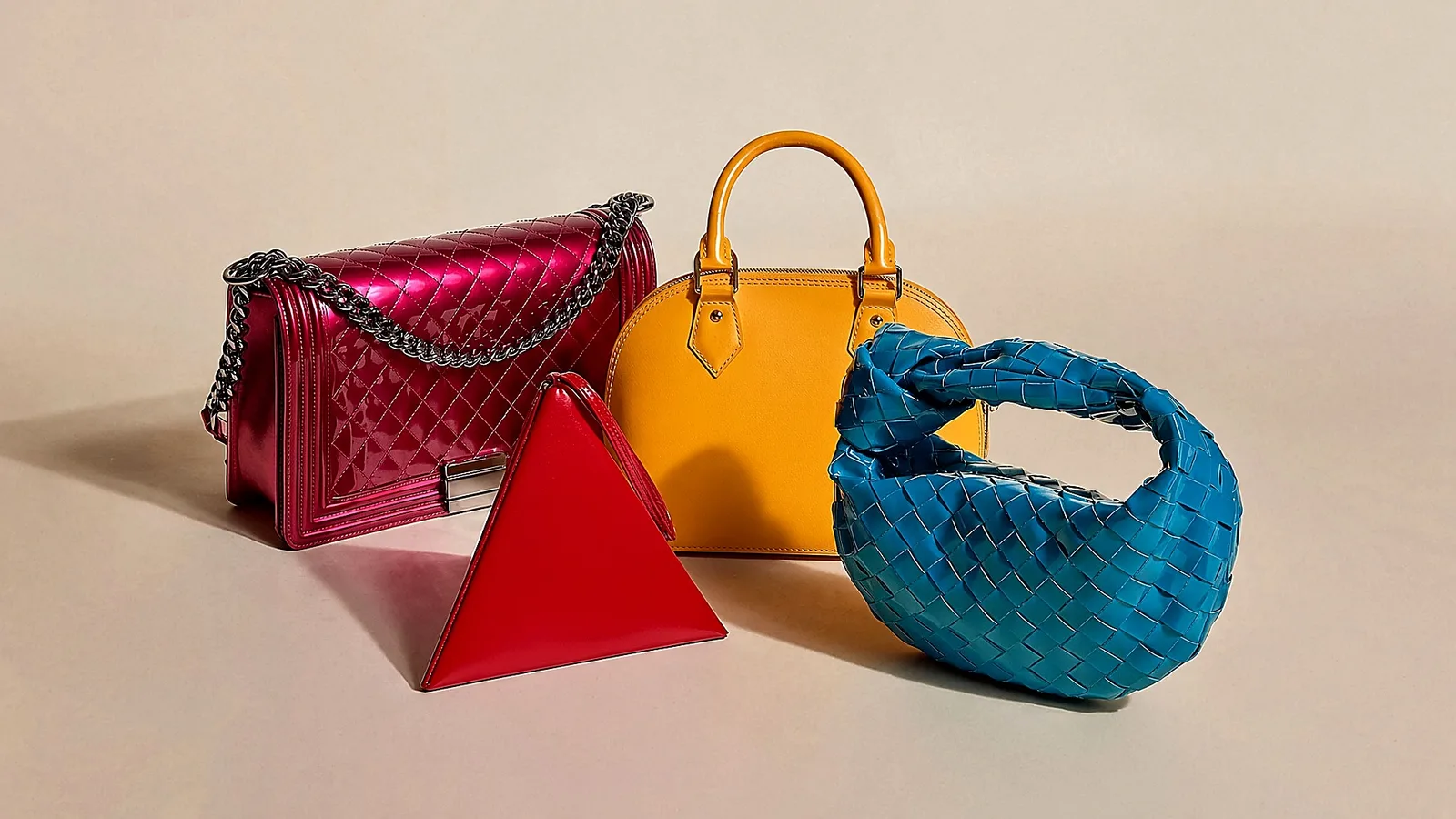
Founders choose handbag types on a mood board. Factories see them as cost, defect, and shipping profiles. That gap causes expensive surprises.
A small change in structure shifts material yield, packing density, and defect rates. The wrong type can raise returns before it raises revenue.
A tote, satchel, hobo, and structured top-handle all look premium online, yet behave very differently on a production line.
This is not a style parade. It is an operations decision.
Most new brands do not lose money because they picked an ugly bag. The loss comes from a bag that misses the price point, the packing method, or the return policy.
Silhouette, structure, material, hardware, MOQ, compliance, shipping, and target retail price belong in one decision, not separate spreadsheets.
The data behind this guide: LeelineBags production-line observations, 24 months of aggregated inquiry and production records, and an internal Q&A with Senior Leather Technologist Angela Zhao.
Line teardowns have exposed weak reinforcement at the handle root on samples that looked clean. Stress-test reports have ended a client’s shortlist. Those details matter before a first run.
If an early sanity check helps, the custom handbag manufacturer team reviews a shortlist against MOQ, QC, and shipping constraints. The basics come first.
What Are Handbag Types? The Basics
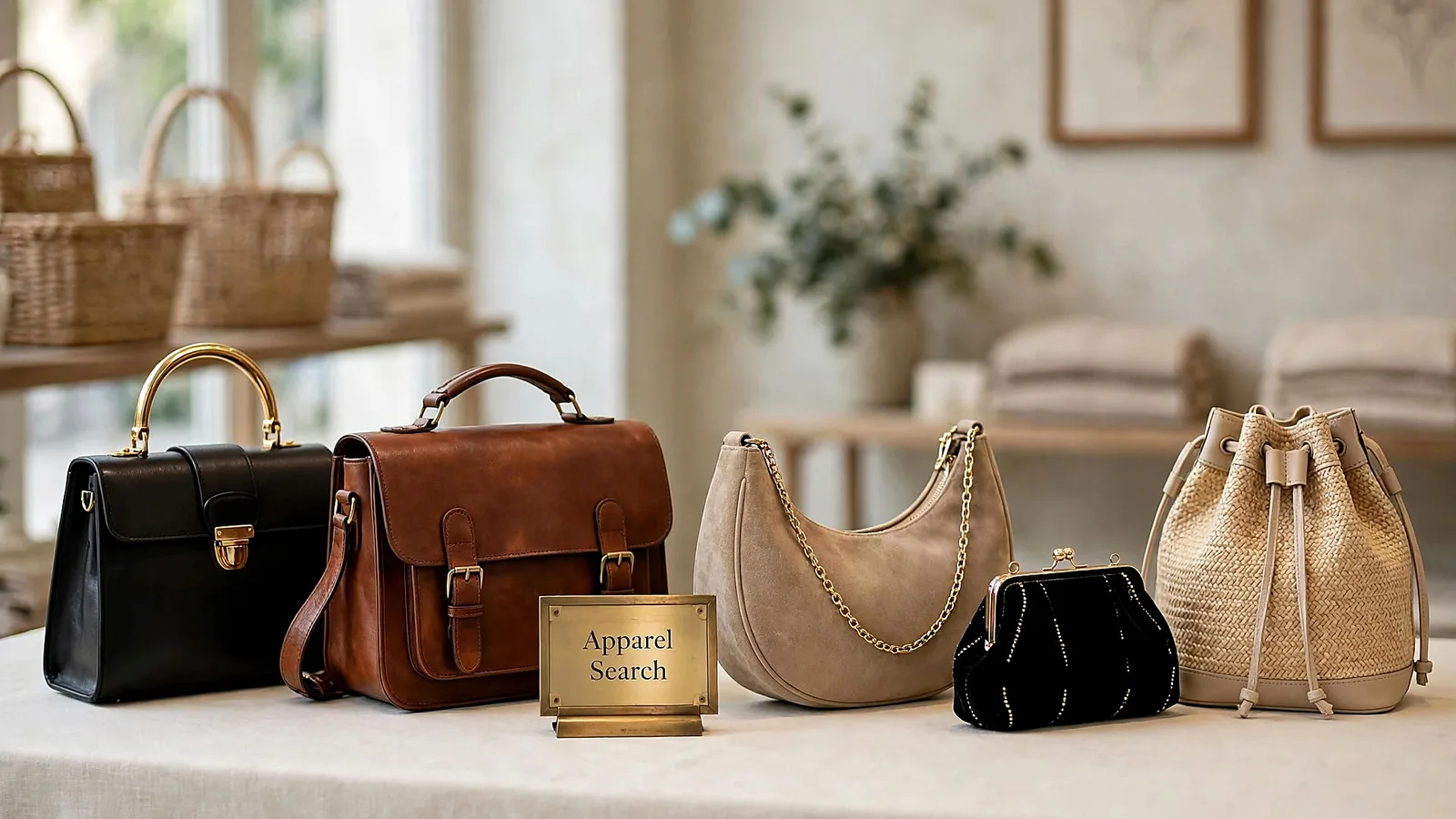
Types of handbags for brands are commercial style categories: tote, shoulder bag, crossbody, satchel, hobo, bucket, clutch, baguette, and top-handle. Production runs on these daily, so the definition follows factory reality.
Each style differs in construction logic, not just appearance. A tote moves volume. A satchel holds shape. A clutch exists for the occasion. The tote versus satchel gap alone explains most of the cost spread.
A soft tote is a flat pattern and a straight seam. A structured satchel needs board, boxed corners, and a handle that must sit level. Same shelf space, different assembly time and cost.
On the floor, classification runs by construction and carry method. Shoppers say “handbag” or “purse.” Those words describe taste. Structure describes cost, defect risk, and packing density.
Four basics every brand team needs:
- Body structure: soft, semi-structured, or rigid
- Carry system: top handle, shoulder, crossbody, wrist, or handheld
- Closure: open top, zipper, flap, magnet, drawstring, or frame: see handbag closures compared
- Base and gusset: drop-in base, wrapped gusset, side gussets, boxed corners, or curved gusset
The gusset is the side panel that adds depth.
Two sourcing terms matter in later sections:
- OEM: the brand already owns the specs or tech pack, so the factory builds to print
- ODM: the factory helps shape the concept into a manufacturable design, covered in the ODM customization guide
The main categories fall into four families. This taxonomy carries through the guide.
- Carryall / volume drivers: tote, shopper, roomy shoulder bag
- Everyday hands-free: crossbody, compact shoulder, bucket
- Structured premium: satchel, top-handle, rigid flap
- Fashion-led small formats: hobo, baguette, clutch, mini bag
Material choice can move a silhouette between families commercially. A tote in GOTS canvas prices and behaves nothing like one in full-grain leather.
That is why handbag material types get compared before a style brief is locked. The fabric options page covers the material matrix.
For leather builds, the leather goods manufacturer team joins early, because tanning and thickness decide whether a satchel holds structure.
Clients often ask for “a simple tote” expecting the lowest unit cost. A heavy canvas tote with a wrapped gusset and reinforced handle roots can cost more per unit than a small structured crossbody.
The same rules apply to a 200-unit DTC launch, an apparel brand adding a first bag, and a private-label program at scale.
💡 Key Insight: Body, carry, closure, and base control cost and structure. Get those four right and the spec sheet falls into line.
How the Four Style Families Work
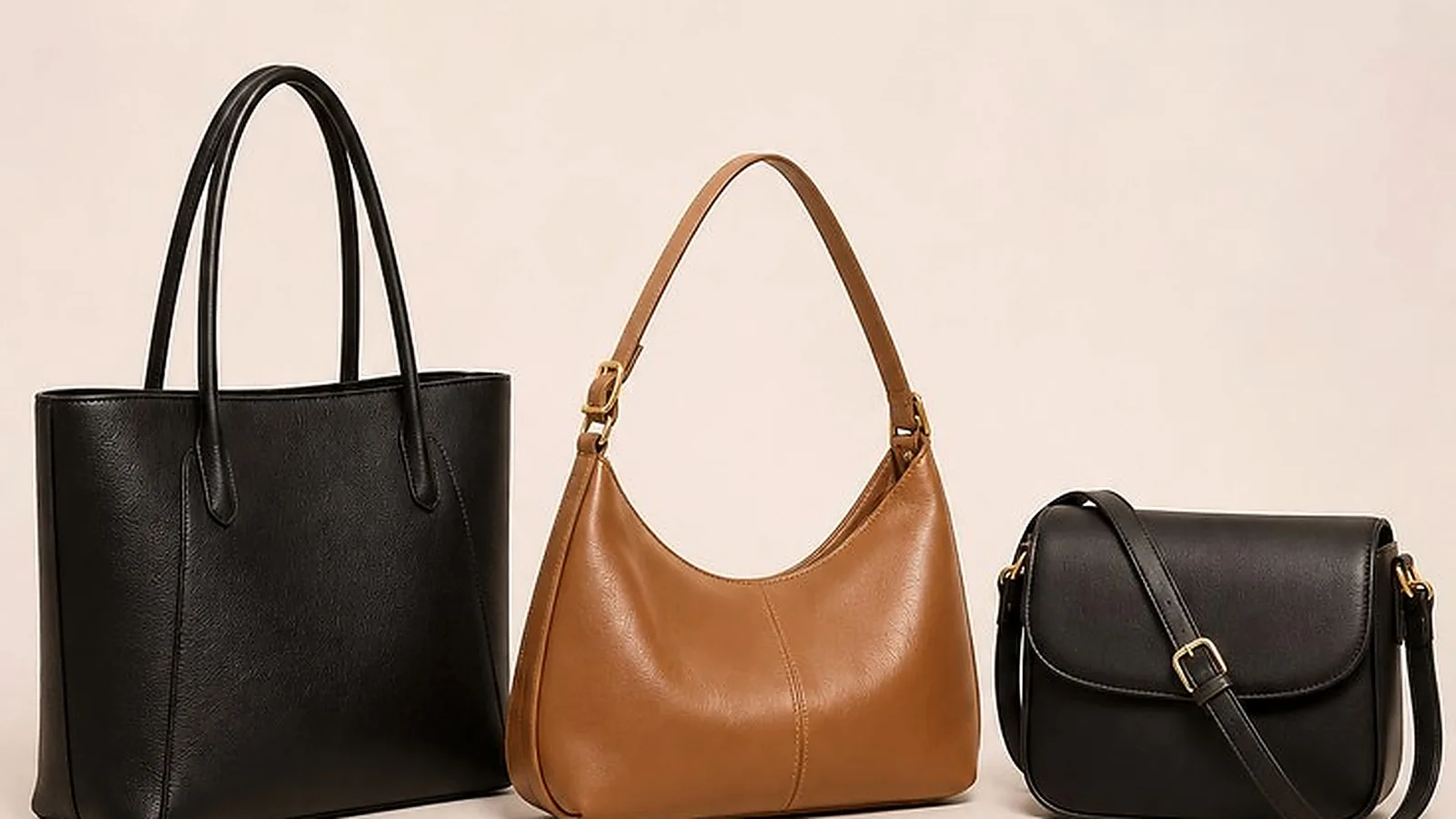
A handbag line works like a chassis system. A sedan, an SUV, and a sports car may share an engine, but their frames and assembly stations differ.
Leather, canvas, and hardware come from shared suppliers. The build path does not. All four families were traced through the Dongguan and Portugal partner lines across the same period, and this is what the floor showed.
The Carryall Family: Volume Drivers
Totes, shoppers, and roomy shoulder bags move volume. They are the easiest custom handbag styles for private label launches. Broad panels create clean logo areas, and pattern logic is simple.
That simplicity also gives stronger assortment flexibility, while flat packing protects freight margins. An emerging brand can test three colorways on a 100-unit run through the custom tote bag manufacturer program.
An apparel brand adding a handbag line can start with one carryall SKU and expand colorways later. A private-label retail team building a 4-SKU starter range can pair two carryalls with one crossbody and one mini on a single PO.
The tote bag manufacturer Portugal partnership handles EU-bound premium tote runs, while Dongguan covers high-volume canvas programs.
Two carryalls came off the floor last quarter:
- Structured tote: 7-panel body with boxed corners. Box-X handle attachment at 4,000 stitches per side, backed by a 1.2mm reinforcement strip. Three edge-painting passes per strap. 2.5mm poly board base. Folded gusset with 6mm piping. Optional metal feet.
- Soft carryall: 4-panel body. Single-row straight stitch at 1,800 stitches per side. One edge-paint pass. 1.2mm base stiffener. Flat seam gusset.
The structured tote held 90° upright in the drop test. The soft carryall collapsed to 60% height.
That collapse is a packing feature: 1.6x freight density. On a 20,000-unit wholesale program, the gap saves roughly $3,400 in ocean freight.
The Everyday Hands-Free Family
Crossbodies, buckets, and compact shoulders depend on six decisions: strap-drop range, D-ring anchoring, opening width, zipper path, body balance, and pocket placement.
The sample SOP loads every bag with a phone, wallet, keys, and a 500ml bottle. Two testers then wear it, one at 5’2” and one at 6’1”. If it tilts, the spec is wrong.
An e-commerce brand testing one hero silhouette can validate a crossbody on 150 units before committing to a full family.
Senior Leather Technologist Angela Zhao gave three answers:
- Load thresholds? “Luxury crossbodies fail at 25 kg. Casual daily bags fail at 15 kg. A 1.2mm nylon webbing core goes inside luxury straps and 0.8mm inside casual.”
- Hardware protocols? “5,000-cycle flex on swivel hooks. 48-hour salt spray on all metal. 30 kg static pull on chain anchors. Anchor plates below 1.5mm never pass.”
- First failure point? “Strap anchor. Then gusset seam. Then zipper distortion. Then the opening collapsed. In the return data, 68% of everyday-bag claims trace to the anchor.”
The hardware side has its own accessories guide covering plating, plating thickness, and anchor construction.
The Structured Premium Family
Satchels and top-handles carry the highest margin and the highest reject risk. This is where luxury leather bag manufacturing categories matter most:
- Full-grain cowhide: natural scars, strong patina, premium positioning
- Top-grain / corrected: uniform surface, predictable yield
- Vegetable-tanned: heritage story, longer development, visible aging
- Premium PU / microfiber: consistency, vegan claims, tighter budget
Construction decides whether the premium price survives scrutiny. Skiving consistency controls edge thickness; uneven skiving shows up as a wavy edge along the seam.
Edge finishing splits into turned edge (softer, slower) and edge paint (crisper, layered), as detailed on the surface treatment page.
A three-coat edge paint adds 12 minutes of hand labor per bag. Handle symmetry must hold within 2mm or the bag leans.
Metal feet and lock sets need ASTM B117 hardware corrosion testing and a fastening or zipper performance standard from the supplier.
Gusset build was compared against hobo drape on the same line. The structured tote uses a 3-layer boxed gusset at a hard 90°.
The slouchy hobo uses a curved single-panel drape with no piping and collapses to 40% depth. Stiffness signals intent, not quality.
The Fashion-Led and Sustainable Family
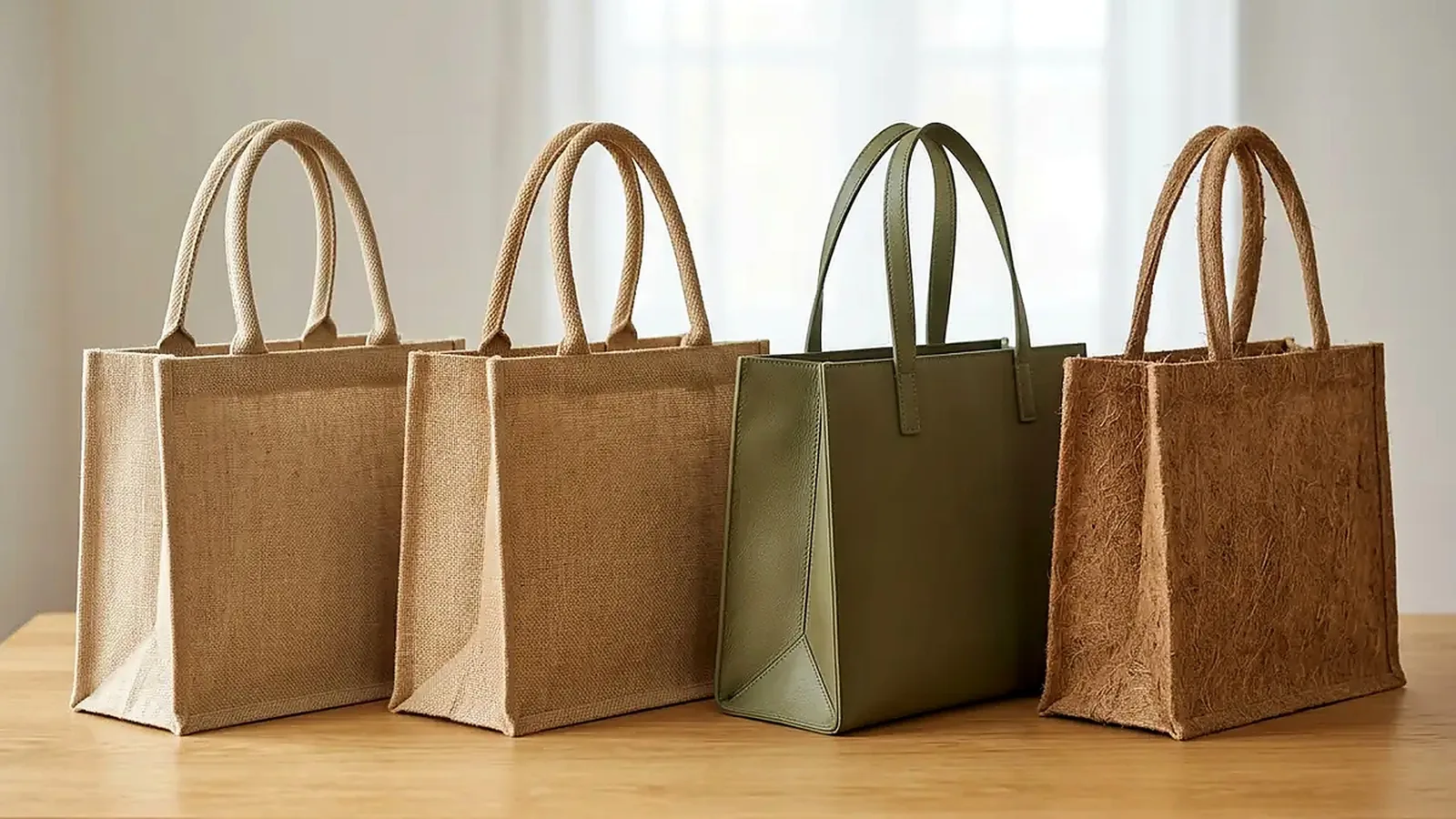
Hobos, baguettes, clutches, minis, and fabric-led capsules look simple. They are not.
A 2mm proportion error on a mini reads as a defect. Frame tolerances on a clutch sit at ±0.5mm. Chain weight can drag a baguette off-balance.
Small formats raise labor and reject risk per unit, and they raise it fast. Ornamentation adds hand labor and inspection points.
For sustainable fabric bag production lines, material choice drives compliance paperwork:
- GOTS-certified canvas: clean organic story, casual extensions
- Recycled polyester / RPET: structure and coating control
- Recycled or bio-based synthetics: claims need documentary proof
Brands extending into branded accessory capsules often ask about the custom lunch bag manufacturer line as a low-risk first test before committing to a full bag family.
The sustainable options page lists the certified materials that survive an audit.
Compliance checklist:
- GRS for recycled-content traceability
- GOTS for certified organic textile claims
- OEKO-TEX for harmful-substance verification
- REACH chemical declarations for EU-bound goods
Always verify certificates against the issuer’s live register. The GOTS standard page and OEKO-TEX Standard 100 publish theirs.
EU-bound goods also need REACH declarations.
Certificates are filed component by component with clients, because a claim that covers the fabric but not the coating or the hardware still fails at the border.
Style Family Comparison
| Family | Best use case | Typical structure level | MOQ friendliness | Return-risk triggers | Best-fit materials | Freight efficiency |
|---|---|---|---|---|---|---|
| Carryall | High-volume staples, gifting | Low to medium | High | Handle-root failure, base sag | Canvas, PU, split leather | High |
| Everyday hands-free | DTC hero SKU, daily wear | Medium | Medium | Strap anchor, zipper path | Full-grain, top-grain | Medium |
| Structured premium | Luxury retail, gifting | High | Low | Edge-paint cracking, feet corrosion | Full-grain, veg-tan | Low |
| Fashion-led / sustainable | Trend capsules, eco lines | Variable | High | Proportion errors, chain weight | GOTS canvas, RPET | High to medium |
Key Benefits: How Handbag Types Pay You Back
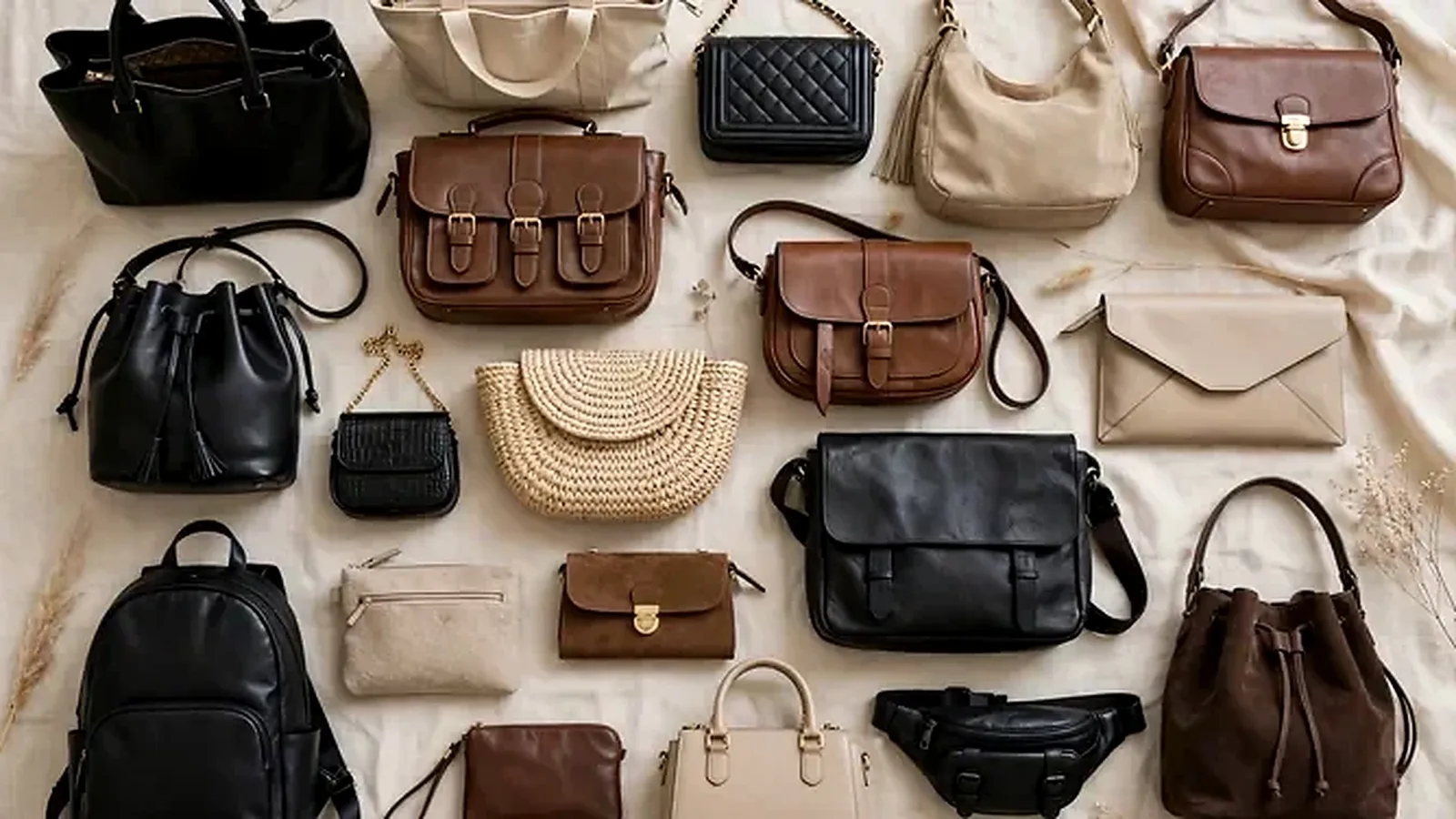
Match Every Silhouette to a Customer Mission
Each of the types of handbags for brands sells when it serves a job. Totes and shoppers win on carry capacity and logo visibility. Crossbodies win on daily convenience: hands free, no decisions.
Satchels and top-handles lift average selling price because buyers read rigid structure as premium. Hobos, baguettes, and minis carry fashion storytelling for style-led drops.
A wholesale handbag catalog for clothing brands should read like a role chart, not a product dump. Apparel brands extend from garments into a tight, role-based assortment instead of adding random SKUs.
Last spring, a 6-SKU apparel label asked for a quote on 12 styles. The list came down to four: one shopper, one crossbody, one structured top-handle, one mini.
The buyer approved all four in one round and saved five weeks of development.
Lower Return Risk Through Better Functional Alignment
Most returns do not start with a broken bag. They start with the wrong opening size, strap drop, weight balance, or a body that collapses when the buyer expects it to stand.
A hero photo cannot show how a gusset folds under 3 kg of load.
The sample screen runs four tests:
- Capacity test: phone, wallet, keys, 500ml bottle
- Body collapse test: height retention at 60% load
- Closure test: 200 open and close cycles
- Carry comfort test: two testers, 5’2” and 6’1”, 30-minute wear
A retail returns study shows expectation gaps, not factory defects, drive most accessory returns. Functional alignment costs one sample round. Free returns cost margin.
Build Healthier Margins With a Cleaner Line Plan
One hero bag cannot carry a launch. A style mix spreads tooling cost and gives buyers three price points, which is why a volume driver, a hands-free daily style, and one structured piece belong in the same plan.
The 24-month records show where demand commits:
| Requested material | Share of inquiries | Share of production | Inquiry-to-production ratio |
|---|---|---|---|
| PU leather | 58% | 47% | 0.81 |
| Genuine cowhide | 22% | 31% | 1.41 |
| GOTS-certified canvas | 12% | 16% | 1.33 |
(Source: LeelineBags 24-month records.)
PU dominates conversation, then drops at commitment. Cowhide and GOTS-certified canvas convert above their inquiry share.
Emerging brands scope PU first, then commit to leather or certified canvas once a silhouette proves itself.
Price the material that will actually ship, not the one asked about first.
📈 ROI Check: Compare landed cost per style to 90-day sell-through. Kill repeat misses.
The same logic extends into custom travel bag manufacturer programs.
Deciding between two or three structures for launch? Send the shortlist. It gets reviewed for silhouette, MOQ, and return risk against the price point.
Common Challenges With Handbag Types
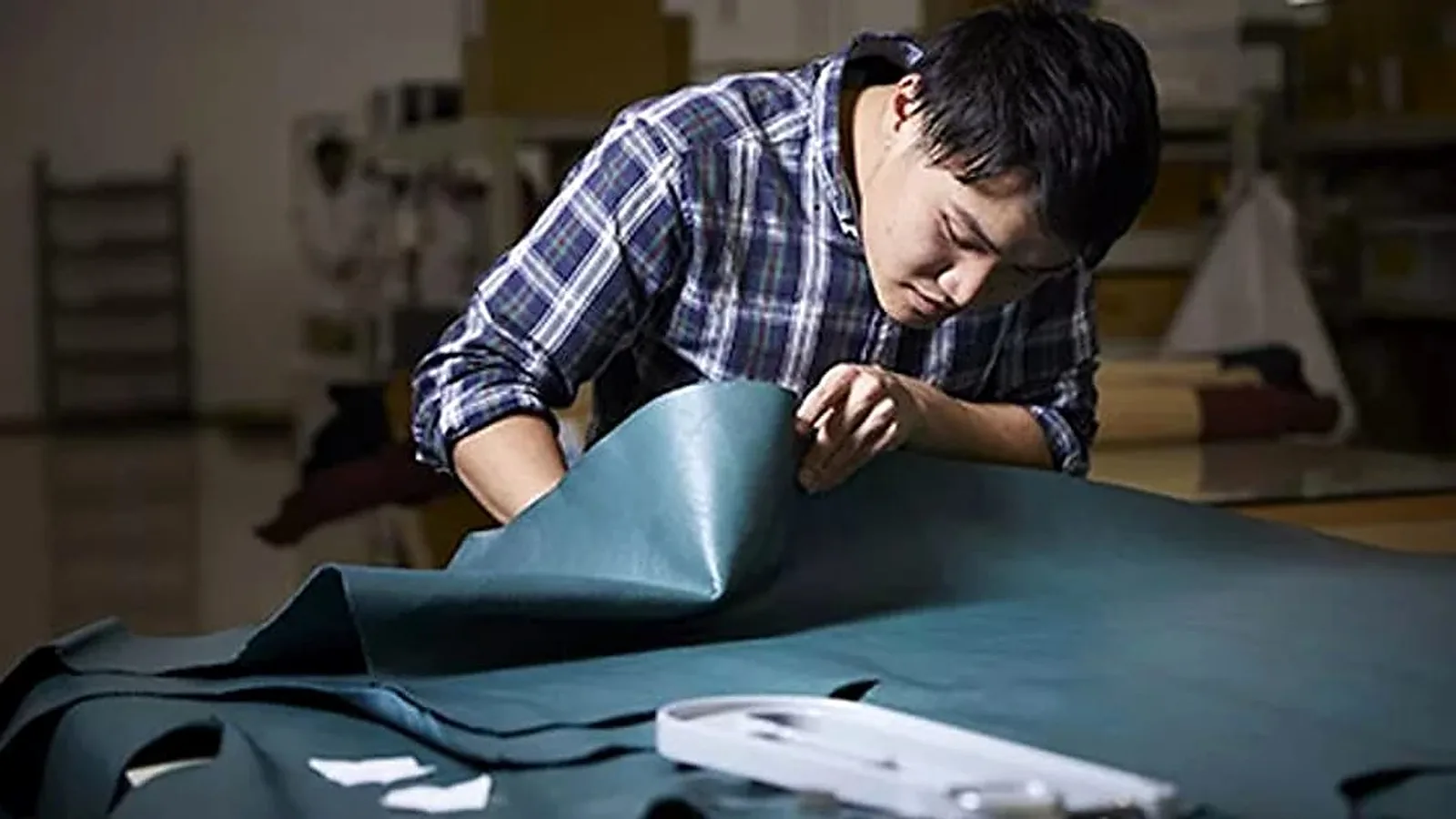
The families above come with real constraints, and they are specific.
MOQ Reality Is Component-Level, Not Just Bag-Level
A low bag MOQ does not mean a low component MOQ. Custom metal hardware often needs a 500-piece mold. Dyed leather needs a full dye lot.
Printed jacquard lining runs to 1,000 meters, which is why handbag lining choices move the order size. Leather yield can turn a 100-unit order into a 300-hide purchase. In these records, 40% of first-time projects stalled here.
Last quarter a 100-unit satchel run needed custom locks. The mold minimum was 1,500, so a stock lock with a logo plate kept the order at 100 units.
- Hardware: stock 50-100 units; custom mold 500-1,500
- Leather/canvas: stock color 100; custom color 300-500
- Lining: standard 100; custom jacquard 1,000 meters
- Packaging: poly bag 100; rigid gift box 500
⚠️ Critical Warning: Some OEM factories hide component engineering inside a low quote. A custom metal handle on a tote still needs a mold.
Do not trust a low hardware minimum without seeing the component list. Check every part before accepting a low MOQ.
Luxury-Looking Bags Create Luxury-Level QC Pressure
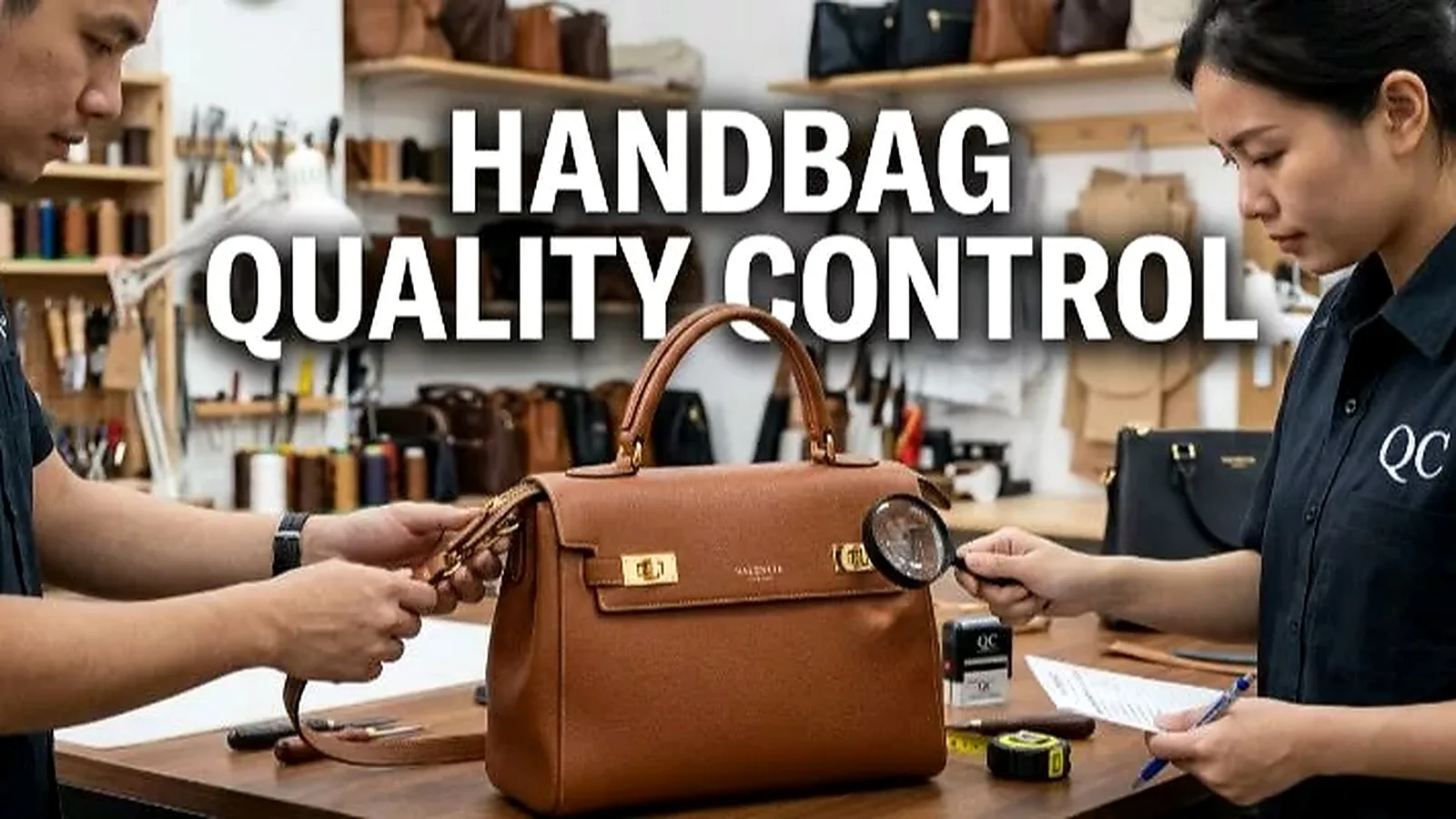
Structured satchels demand tighter tolerances. Edge alignment must hold within 2mm. Handle symmetry must hold or the bag leans. Edge paint can crack. Gusset memory fades with thin reinforcement.
Senior Leather Technologist Angela Zhao tests strap anchors at 30kg, salt spray for 48 hours per ASTM B117, and edge paint to 50,000 flex cycles.
One satchel failed at 12,000. A turned edge passed at 80,000 but added 12 minutes per bag.
⚖️ The Trade-off: Expect 3-5% defect rates on structured styles versus 1-2% on soft totes.
Sustainable Claims Create Paperwork and Process Burden
Recycled-looking material is not a claim. GRS and GOTS require chain-of-custody documents for fabric, coating, labels, inks, and metal parts.
A “recycled” tote was audited here: the fabric had GRS, the PU coating did not, and the claim failed at customs. 60% of sustainable requests lack matching documents. Verify each certificate before quoting.
🛡️ Mitigation: Build a component compliance matrix with certificate numbers.
Freight, Packaging, and Landed Cost Can Erase Margin
Soft totes flat-pack at 1.6x density. Structured satchels need rigid inserts to hold shape in a carton. Frame top-handles cannot collapse at all.
Carriers bill by box size, called dimensional weight, so the air inside a rigid carton still costs money. Landed examples per unit: soft tote $9.40, structured satchel $25.80, rigid top-handle $40.60.
Dimensional-weight rules govern carrier billing. The same math hits custom duffle bags and custom garment bags.
A rigid gift box can add $1.20 per unit in dimensional weight. Related programs, such as custom gift bags, face the same floor.
The handbag shipping guide and the handbag import duty guide carry the rest of the landed-cost math.
⚖️ The Trade-off: Premium unboxing loses margin to freight. Run landed cost before retail price.
Final Verdict: Build a Line, Not a Silhouette
Handbag type is a structural and commercial choice, not a mood board decision. The right style depends on the target customer, the material story, the sales channel, and the margin goal.
After two years of production data and line teardowns, the smartest brands start with a coordinated mix, not the most complicated silhouette.
🧠 Author’s Verdict: Pick the family that survives sampling, QC, and freight at the target price, then let the logo follow. A launch dies on a bag that costs more to make than it sells for, not on an ugly one.
The Four-Question Filter
Before a sample is committed, answer these questions:
- What must the customer carry? (Size and load define structure.)
- What price tier is the target? (Structured premium demands tighter QC and higher MOQ.)
- Which material story fits the brand and channel? (PU converts inquiries; leather and GOTS canvas convert production.)
- Can the chosen silhouette survive sampling, QC, and shipping at the budget? (Run landed cost, not just FOB.)
Recommended First-Collection Path
For most emerging brands: one tote or shopper, one crossbody or shoulder bag, and one structured premium SKU only if margin and QC can support it.
Add one small accessory (mini or baguette) when it shares materials and trims with the rest.
That mix spreads tooling cost and gives buyers three price points without overwhelming QC. Lock the design brief before the first sample leaves the line.
Next Step
Send the shortlist. The custom handbag manufacturer team reviews silhouette, MOQ, and return risk against the price point. Compare handbag material types before locking a brief.
For leather builds, bring in the leather goods manufacturer early. Expanding beyond handbags? The custom backpack manufacturer line uses the same feasibility review.
Transparency Note on This Handbag Type Guide
This guide reflects LeelineBags production experience and internal data. Each project still needs a style-specific feasibility review, because materials, hardware, compliance scope, and destination market change the answer.
I receive no manufacturer kickbacks for these findings. Send reference images, dimensions, target materials, and expected MOQ for a faster feasibility assessment.
Frequently Asked Questions About Types of Handbags for Brands
1. What counts as a type of handbag for a brand?
A type is a commercial style category defined by construction and carry method, not appearance alone. Tote, shoulder bag, crossbody, satchel, hobo, bucket, clutch, baguette, and top-handle are the categories production runs on daily.
The four basics behind every category are body structure, carry system, closure, and base or gusset. Get those four right and the spec sheet follows.
2. Which handbag types are easiest for a first production run?
Totes, shoppers, and roomy shoulder bags are the simplest. They use broad panels, clean logo areas, and a flat pattern logic, so pattern errors and packing problems stay low.
Structured satchels and top-handles sit at the other end. Board, boxed corners, skiving consistency, and a handle that must sit level all add assembly time and reject risk.
3. Why do structured satchels carry higher MOQ and defect risk?
A structured satchel needs board, boxed corners, and edge finishing that holds within a 2mm alignment. Three-coat edge paint alone adds 12 minutes of hand labor per bag, and handle symmetry must hold or the bag leans.
Expect 3-5% defect rates on structured styles versus 1-2% on soft totes. Component MOQ stacks on top: a custom lock mold can range from 500 to 1,500 pieces.
4. How many styles should a first collection include?
Most emerging brands start with one tote or shopper, one crossbody or shoulder bag, and one structured premium SKU only when margin and QC support it. Add one small accessory when it shares materials and trims with the rest.
That mix spreads tooling cost, gives buyers three price points, and keeps QC load manageable across a first order.
5. Do sustainable handbag claims need certificates per component?
Yes. GRS and GOTS require chain-of-custody documents for fabric, coating, labels, inks, and metal parts, not just the main textile. A claim that covers the fabric but not the PU coating fails at the border.
One “recycled” tote audited here carried GRS on the fabric and nothing on the coating, and the claim failed at customs. Verify every certificate against the issuer’s live register before quoting.
6. Can bag MOQ stay at 100 with custom hardware and lining?
It depends on the component list, not the bag count. Stock hardware runs at 50-100 units, while a custom mold starts at 500. Printed jacquard lining can run to 1,000 meters.
A 100-unit satchel run here needed custom locks with a 1,500-piece mold, so a stock lock with a logo plate kept the order at 100 units.