
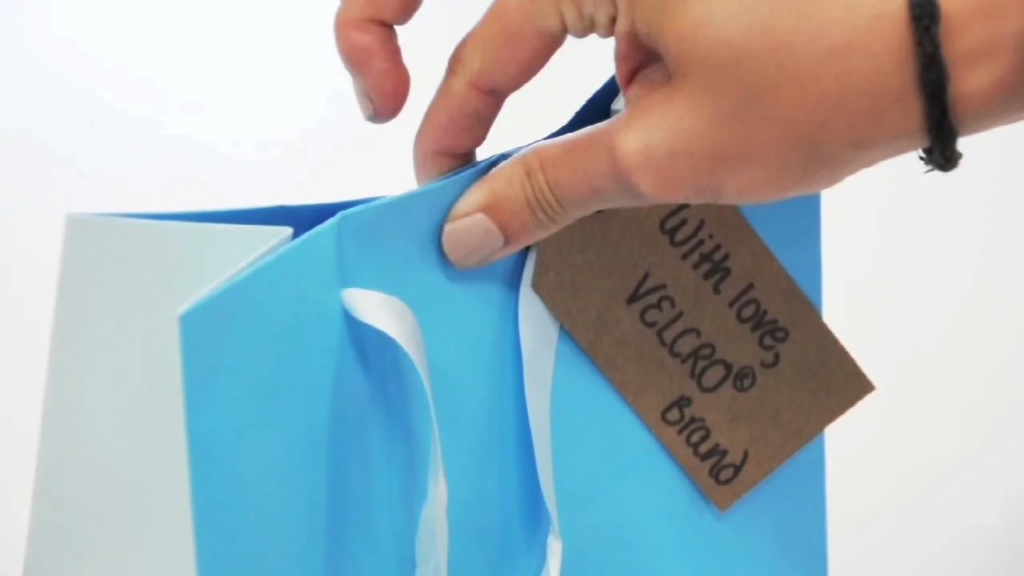
The most reliable way to close a gift bag without tape is to thread each handle through the hole on the opposite side, then pull gently upward. The crossing handles lock the top shut on their own.
Paper bags with string or ribbon handles carry this well when the grip stays taut. Anything heavier, or any bag whose handles are too short to reach across, needs a second tie or a stiff base.
Tissue paper and handle threading solve different problems. Tissue paper shapes how the gift looks when it is opened; handle threading stops the bag from coming apart in transit. The method became popular on social media, but what decides whether it holds is quieter: how far the hole sits below the top edge, and what the handle cord is rated to carry.
Traditional vs Modern Gift Bag Closing Methods
Two approaches dominate: the classic tissue paper fold, and the handle-thread that spread on social media.
The Classic Tissue Paper Technique
The traditional way uses tissue paper to create an elegant look. On top of that, it works especially well with oddly shaped items that aren’t too heavy for the bag. That covers a lot of handmade gifts, and checking Etsy coupon codes before you buy one can leave more of the budget for the wrapping. To look professional, use tissue paper that matches the bag’s design or colors.

The Viral Handle-Threading Hack
This modern approach has caught much attention across social media platforms. The technique lets you thread the bag’s handles through opposite holes, which holds the top closed. Here’s how to do it:
- Locate the bag’s string or ribbon handles.
- Thread each handle through the opposite hole.
- Pull gently upward until the handles lock.
- (Optional) Add a decorative bow to make it special.
When to Use Each Method?
The classic tissue paper technique shines where presentation matters most. The handle-threading method is best for keeping things secure during transport.
The tissue paper method excels at:
- Adding color and personality to a gift.
- Creating an elegant, professional appearance.
- Handling irregularly shaped items.
The handle-threading technique works best when:
- A tamper-proof seal is the goal.
- The gift has to survive transport.
- No extra materials are wanted.
Each method has its own strengths. Pick the one that fits the occasion and the practical need.
Other Ways to Tie the Top Closed
A handle is not the only tool that works. Materials already in the house close a bag without tape:
- Fabric strips from leftover materials
- Decorative twine ties
- Package seal stickers for a professional finish
- Natural elements like jute string
Pro Tip:
Weigh the occasion against the weight of the gift when choosing a close. For heavier items, reinforce the handles with ribbon or string for added security while keeping the look polished. Twine is one option, though a jute fibre string weakens once it gets damp.
— Sally Peng, Custom Bag Team Manager, LeelineBags
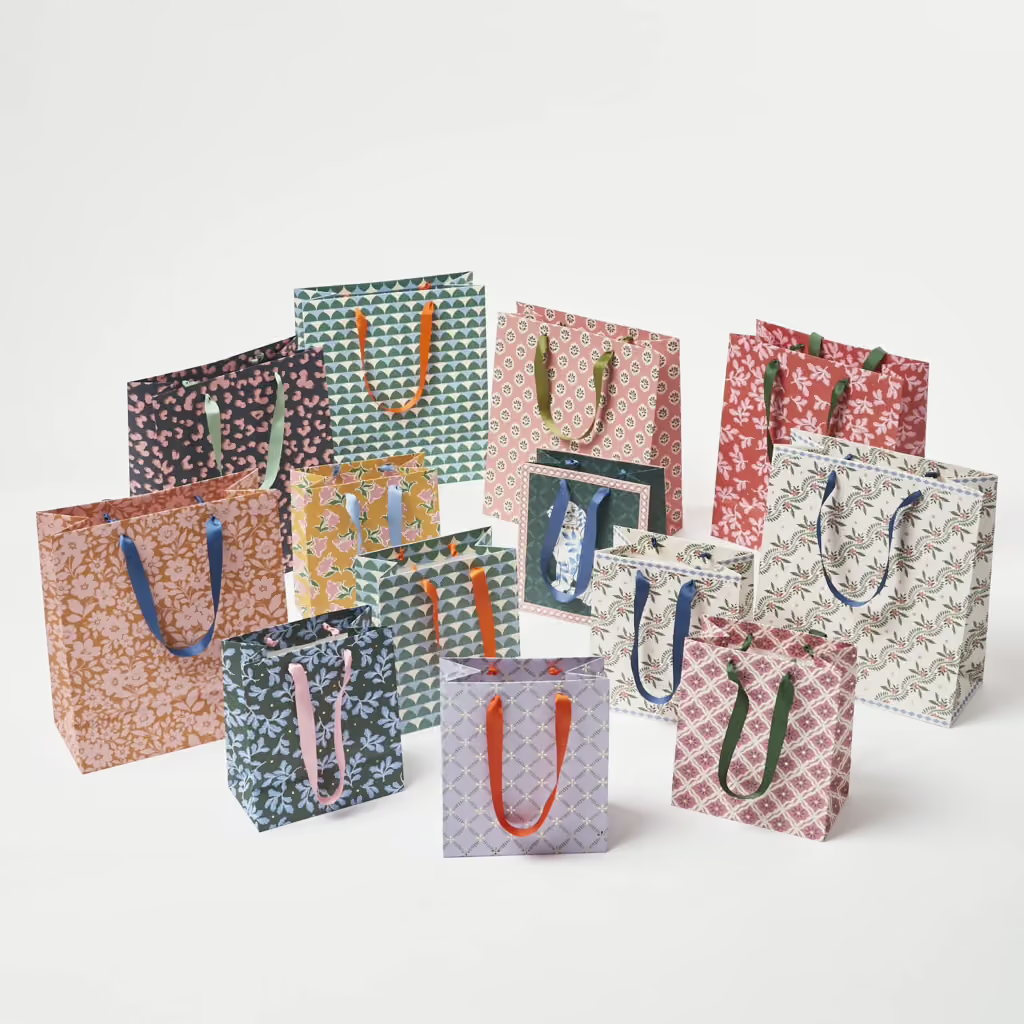
Troubleshooting Common Gift Bag Problems

Gift bags can give anyone trouble, even the most careful gift wrappers. A few quick fixes cover most of them, and most of what goes wrong traces back to the handle rather than the paper.
Fixing Torn Handles
A torn handle is repairable more often than it looks, so a bag is rarely lost to one. Here is a sequence that holds:
- Take off any loose threads with care
- Flip the bag inside out
- Pick a thread that matches the color
- Make short stitches to keep it strong
- Tie it off with solid knots
Big tears? A self-adhesive fabric patch on the inside covers a hole that regular sewing cannot close.
Dealing with Oversized Gifts
A gift too big for a regular bag needs support rather than a bigger bag. Two rules cover most cases:
- A strong cardboard base takes the weight off the handle holes.
- Wrap the fragile parts in bubble wrap before they go in.
For weight rather than size, run sturdy string several times around the opening and finish with a ribbon-reinforced thread. A rubber band adds grip without marking the paper. If the bag is carrying something sharp, check the handle holes before you fill it — a chipped rim is where the seal fails first.
Pro Tip:
When tissue paper is doing the closing, pick an acid-free sheet that folds without creasing hard. The closure stays neat when the bag is not overstuffed — a little slack at the top holds the shape better than a tight pack.
— Sally Peng, Custom Bag Team Manager, LeelineBags
Preventing Bag Damage
Nobody wants their gift bags falling apart. Here are some mistakes to avoid:
- Excessive Material Use: Too much tape or glue can ruin the bag’s structure
- Poor Quality Materials: Good ribbons and strings last longer
- Structural Neglect: The bag’s design should guide how you close it, so pick a method your handle can actually carry.
Reusing gift bags helps the environment, but storage decides how long they last. Keep them flat and sorted by size, and store tissue paper separately so colors do not bleed into the sheet below.
Good gift bags need protection during transport. Add extra padding for breakable items, and keep the wrapped gift in a safe, dry spot until it leaves the house.
Where a Threaded Closure Actually Fails
A threaded close looks like it depends on the method, but on the production floor the outcome is set earlier, at the punching and the cord spec.
The handle hole sits at a fixed distance below the top edge, and that distance is set during production rather than left to the buyer’s eye. Punch it too close to the edge and the two handles cannot lie at a steep enough angle to lock, so the bag reopens inside the carton long before anyone unwraps it.
The same applies to cord diameter: a thin cord pulls back through its own hole under load, which is why handle webbing is rated under the ASTM D6775 breaking-strength test rather than judged by eye.
Paper weight matters in a quieter way. A lighter sheet creases and springs back around the hole, so the punch marks soften after a few openings; a heavier sheet holds the mark but cracks at the rim if the punch is blunt. Neither failure shows up on a sample handed across a table — both show up after a filled carton has been stacked.
What Changes for Bulk Orders
A single gift bag closes fine with either method. At volume the variables multiply: one handle spec has to hold across the color and paper-weight range in the run, the hole has to be punched to the same tolerance on all bags, and finished pieces have to survive being packed loose in a carton.
That is why a closure spec is quoted per order rather than per method. A custom gift bag manufacturer builds from a filled sample and runs a free-fall drop test before the run is approved.
A retail order is where those specs get tested. The corporate gifting case study shows a closure spec holding across a full run.
Ask what handle spec suits your gift weight
Further reading:
Conclusion
Which method you use depends on what the bag is carrying. Tissue paper suits presentation and odd shapes; handle threading suits anything that has to stay closed in transit. A heavy item usually wants both, with a board underneath taking the load off the handle holes.
If a run needs gift bags built around a specific handle and closure, the custom gift bag team can work from a sample. The China gift bag supplier guide covers what to check before requesting quotes.
Frequently Asked Questions About How To Close A Gift Bag
1. How can I close a gift bag without using tape?
Thread each handle through the hole on the opposite side, then pull both gently upward so the handles cross and lock. It needs no tape or glue, and it holds as long as the handles are long enough to reach across the bag’s opening.
2. How do I close a gift bag for oddly shaped or heavy items?
Point loads are what break a closure, not the item’s overall weight. Spread the mass across a cardboard base, then let the handles take only the tension they were threaded for. Tape and extra knotting add little once the load path is already wrong.
3. Which handle material closes most securely?
Cord and rope handles hold a threaded closure best because they will not slide back through the hole under load. Flat ribbon handles look better but slip more easily, so they usually need to be knotted or taped as well.
4. Do all gift bag types work with handle threading?
It depends on the handle. String, rope, and ribbon handles long enough to reach the opposite hole work well. Punched-out paper or die-cut handles that cannot pass through the hole do not, and neither do bags whose handles are glued short on each side.
5. How can I fix a gift bag with torn handles?
Match the repair to the failure. A pulled-out anchor needs the original hole re-stitched from inside the bag; a snapped cord needs a splice hidden behind the fold. Adhesive patches are a stopgap for paper tears, not a fix for a handle that failed at the seam.
6. How should brands choose closure design for bulk gift bags?
Specify three things in writing: the hole-to-top distance, the handle cord’s breaking strength, and the pack-out. A closure that works on one bag can still fail across a carton, and the failure usually traces back to one of those three numbers rather than to the method.